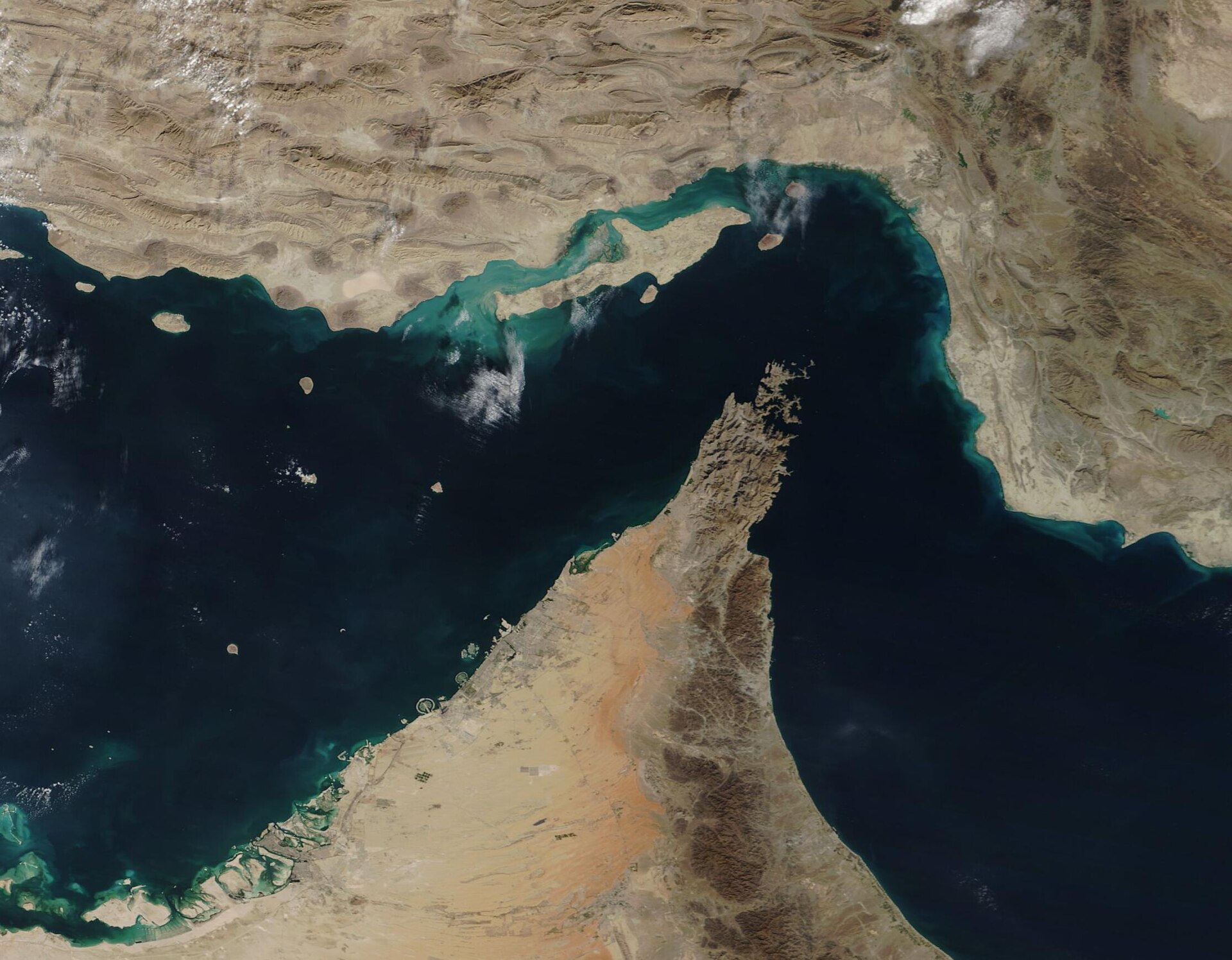

TEHRAN — Iran’s regular army commander-in-chief Amir Hatami declared on November 28 that the Strait of Hormuz will stay closed “under the leadership and command of Mojtaba Khamenei until the conditions of the Islamic Republic are met,” according to Iran International’s Persian-language live blog. His statement followed a similar declaration by the Army Navy commander at Friday prayers a day earlier and accompanied remarks by President Masoud Pezeshkian and an Artesh operations deputy, all within 48 hours — an alignment of military, political, and clerical messaging that underscored the closure’s institutional roots across Iran’s overlapping security apparatus.
The coordinated statements carry weight because they come not from the Islamic Revolutionary Guard Corps, which often dominates public threat-making, but from the Artesh — Iran’s conventional armed forces — and from the presidency. The Artesh chain of command reports directly to the Supreme Leader through the Armed Forces General Staff, a separate hierarchy from the IRGC. Hatami’s explicit invocation of Supreme Leader Mojtaba Khamenei’s name placed the Hormuz closure within the highest constitutional authority Iran recognizes, nine months after Iran first closed the strait on February 28.
The House of Saud Daily Briefing
Saudi Arabia's news in 3 minutes, every morning. Free. See today's issue
Table of Contents
What Did Artesh Commander Hatami Say on November 28?
Amir Hatami, Commander-in-Chief of the Islamic Republic’s Army, stated at 14:22 GMT on Saturday November 28 that “the Strait of Hormuz will remain closed under the leadership and command of Mojtaba Khamenei until the conditions of the Islamic Republic are met,” according to Iran International’s Persian-language live blog. He also said the army’s navy, “together with the Islamic Republic’s other armed forces, has inflicted repeated defeats on its enemies in the Strait of Hormuz and the Sea of Oman.”
Hatami has served as Artesh Commander-in-Chief since June 14, 2025, when he succeeded Abdolrahim Mousavi, according to public records. Mousavi was promoted to Chief of the Armed Forces General Staff and died on February 28, 2026 — the same day Iran first declared Hormuz closed.
The choice of words was precise in one respect: Hatami named Mojtaba Khamenei, who has served as Supreme Leader since March 8, 2026, as the authority ordering the closure. The phrase “leadership and command of Mojtaba Khamenei” anchored the policy in the constitutional office that sits above both the Artesh and the IRGC, making it a statement of standing orders rather than an operational update.
How Does the Artesh Chain of Command Differ From the IRGC?
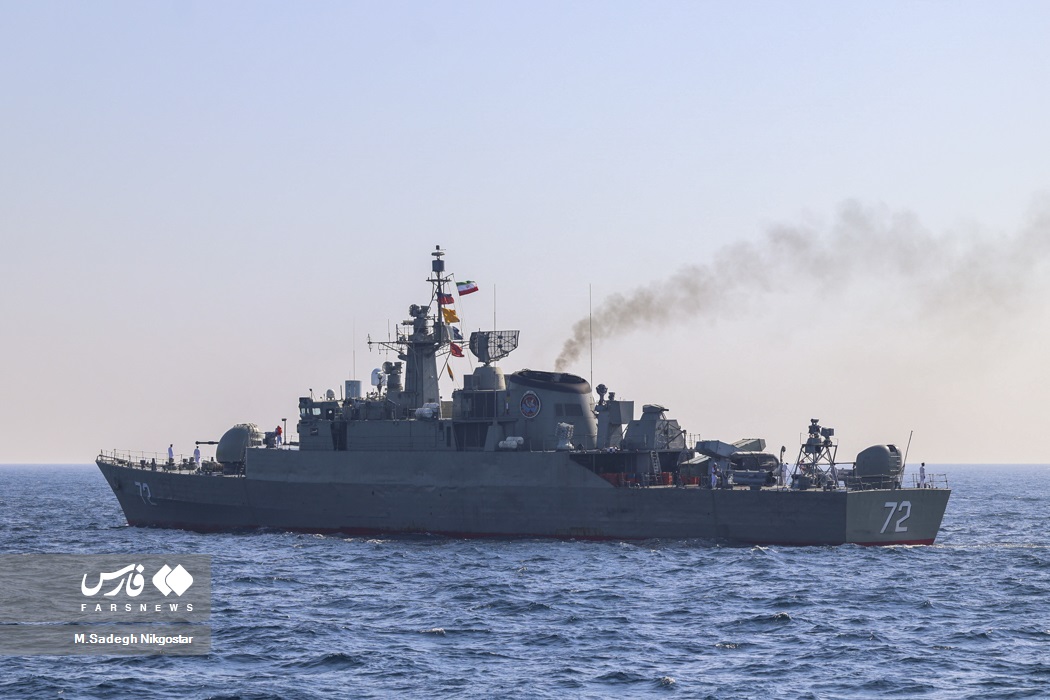
Iran maintains two parallel military forces. The Artesh — the regular army, with its own ground forces, navy, air force, and air defence — reports to the Supreme Leader through the Armed Forces General Staff. The IRGC operates under a separate chain of command, also reporting to the Supreme Leader but through its own commander-in-chief, Ahmad Vahidi, who has held that post since March 1, 2026, formalized on August 10.
The Ministry of Defence and Armed Forces Logistics (MODAFL) handles procurement and logistics for both forces but does not sit in the operational chain. The Armed Forces General Staff coordinates between the two when joint operations require it. Farhad Fattahi, the Artesh Navy’s deputy of operations, stated on November 28 that control of ship transit through Hormuz is “done in coordination with IRGC Navy, based on measures taken by the General Staff of Armed Forces,” according to Mehr News Agency.
This coordination point matters because Iran’s Hormuz operations have involved both forces. The IRGC Navy, which operates fast attack craft and coastal missile batteries, has dominated public statements about mine-laying and tanker interdiction since the conflict began. The Artesh Navy, which operates Iran’s larger warships, frigates, and submarines, has until recently appeared less prominently in Hormuz messaging.
When Hatami speaks, he does so as a military commander whose authority derives from the Supreme Leader through a chain that parallels but does not overlap with IRGC Commander-in-Chief Vahidi’s. That both institutions are now publicly aligned on the same message — the strait stays closed on Khamenei’s orders — signals a whole-of-military posture that the Artesh chain had not previously stated so explicitly.
A 48-Hour Messaging Sequence
Hatami’s statement did not arrive in isolation. It was the latest in a sequence of public declarations from multiple Iranian institutions within 48 hours.
On November 27, Rear Admiral Shahram Irani, commander of the Iranian Army’s Navy, stated at Friday prayers in Tehran that “all these efforts will come to nothing. The order is for the Strait of Hormuz to remain closed,” according to Mehr News Agency. Irani also claimed that Army Navy commandos had retaken two Iranian oil tankers from US naval forces, a claim that could not be independently verified.
On November 28, alongside Hatami’s declaration, Artesh Navy operations deputy Fattahi told Mehr News Agency that Iran’s forces are “not engaged in a symmetrical conflict” with the United States but that “this does not imply an inability on the part of Iran’s Armed Forces.” His statement framed the Hormuz operations as asymmetric warfare conducted under General Staff coordination.
President Masoud Pezeshkian added a political layer at 16:47 GMT the same day, stating that “given the security and economic competition in the region’s strategic waterways, especially the Strait of Hormuz, the role of the Islamic Republic’s navy in protecting maritime borders, securing sea routes and preserving the country’s strategic interests has become more important,” according to Iran International’s Persian live blog.
Iran’s air defence also claimed to have shot down a reconnaissance drone over the Strait of Hormuz and Persian Gulf waters on November 28 at 15:31 GMT, using what it described as “indigenous air defence systems,” according to Iran International, which noted it could not independently verify the claim.
“All these efforts will come to nothing. The order is for the Strait of Hormuz to remain closed.”— Rear Admiral Shahram Irani, Commander of the Iranian Army’s Navy, at Friday prayers in Tehran, November 27 (Mehr News Agency)
The sequence — a Navy commander at Friday prayers, the Artesh commander-in-chief invoking the Supreme Leader by name, an operations deputy explaining the inter-service coordination, the president endorsing the navy’s role, and an air defence shoot-down claim — spanned the religious, military, operational, and executive branches of Iranian governance within two days.
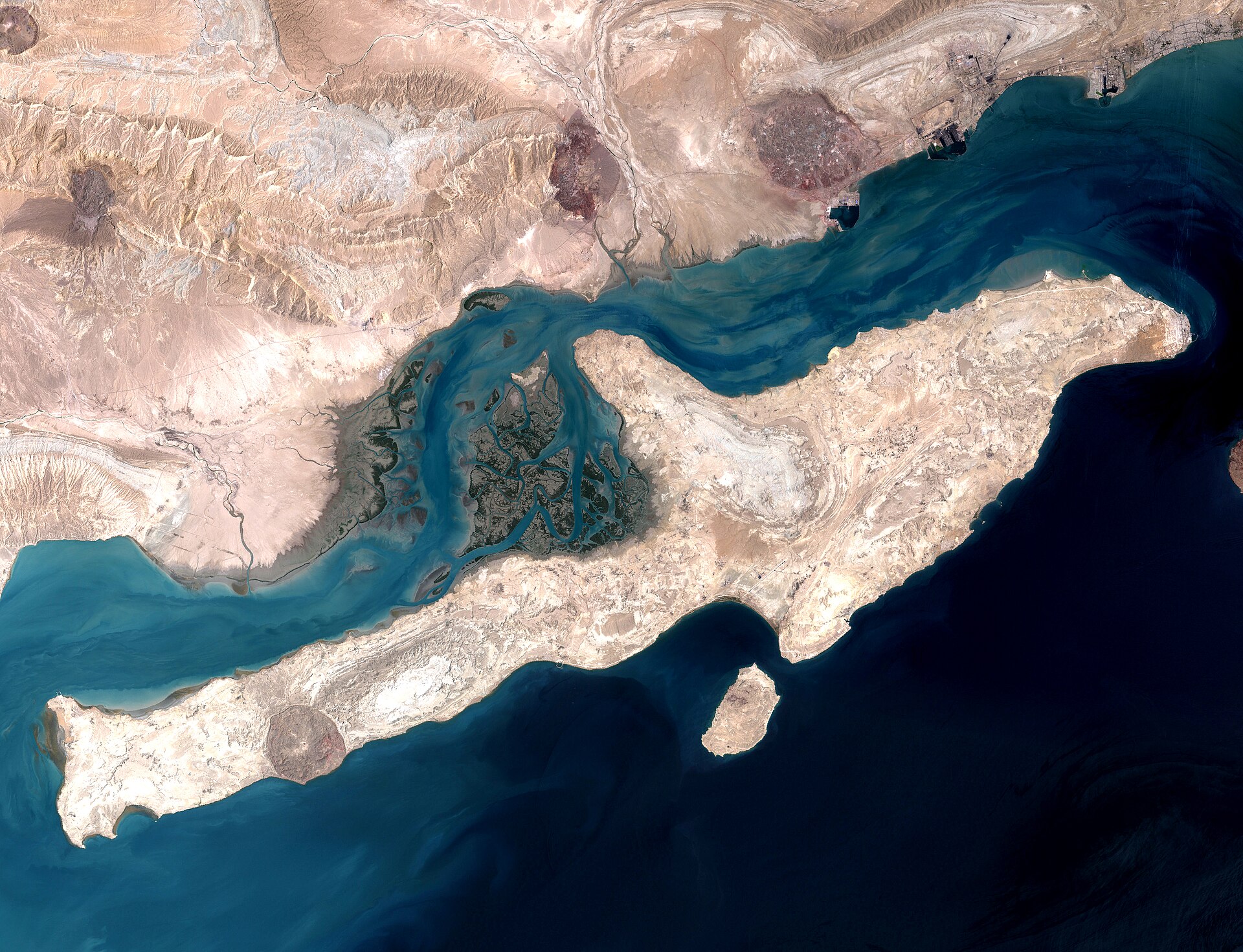
What Are Iran’s Conditions for Reopening Hormuz?
Iran’s Supreme National Security Council set out five conditions on August 8, according to Al-Monitor citing AFP. These were: ending the war “on all fronts,” lifting the US counterblockade of Iranian ports, ending sanctions, releasing frozen assets, and paying wartime compensation. The IRGC said at the time that it would keep the closure in place “until the enemy accepts all our conditions.”
Majlis Speaker Mohammad Bagher Ghalibaf stated on November 24 at an open parliament session that Iran would not negotiate with the United States until its conditions are met, according to Mehr News Agency. He cited Iran’s seven conditions as the bar that must be met before talks, without enumerating each one, according to Mehr News Agency and Tasnim.
The conditions have shifted in emphasis across different diplomatic channels. Foreign Minister Abbas Araghchi presented a seven-day roadmap via Qatari mediators at the United Nations in New York on September 25, under which Hormuz would reopen on day six if the US lifted its naval blockade, waived sanctions on Iranian oil sales, released approximately $12 billion in frozen Iranian assets, and observed a regional ceasefire including Lebanon and Yemen, according to Al Jazeera. The Wall Street Journal reported that President Trump rejected this plan.
A Qatari-brokered deal reported on November 9 proposed narrower terms: Iran would reopen Hormuz and halt tanker attacks in exchange for the US lifting its blockade and releasing $8 billion in frozen funds. Iran reportedly dropped its transit-fee demand. Neither government confirmed the terms. Araghchi said at the time that Iran’s offer to reopen Hormuz within two days “stands, on condition that the war ends on all fronts,” according to Oilprice.com citing CNBC.
As recently as November 26, Araghchi told Mehr News Agency: “This is a normal process. If specific ideas or proposals have been put forward that could open a way forward, they are being reviewed.” The diplomatic language contrasted with the military language of the 48 hours that followed.
Oil Market and Shipping Impact
The closure’s economic consequences have rippled across global energy markets for nine months. Brent crude averaged $124 per barrel in October 2026, the highest monthly average since the conflict began, according to the US Energy Information Administration’s November 19 analysis. By November 18, Brent had fallen more than $30 per barrel from that peak. The EIA forecast Brent at $99 per barrel for December 2026 and $86 per barrel for 2027.
Tanker traffic through Hormuz showed a partial recovery in early November. Between November 1 and 19, the seven-day moving average count exceeded 26 crude oil, fuel, and LNG tankers per day, up from below 25 on at least two-thirds of October’s days, according to Oilprice.com citing Bloomberg and Vortexa data. The prewar baseline was approximately 138 ships per day across all vessel types, according to the Joint Maritime Information Centre.
Middle East crude output rose to 23.1 million barrels per day in October, the highest since the conflict began, according to the EIA. Middle East chokepoint oil shipments rose 19 percent in the third quarter of 2026 versus the second quarter, with smaller vessels and ship-to-ship transfers filling some of the gap. Global oil inventories stood approximately 400 million barrels lower at the end of October than at the start of April 2026, according to the same EIA report.
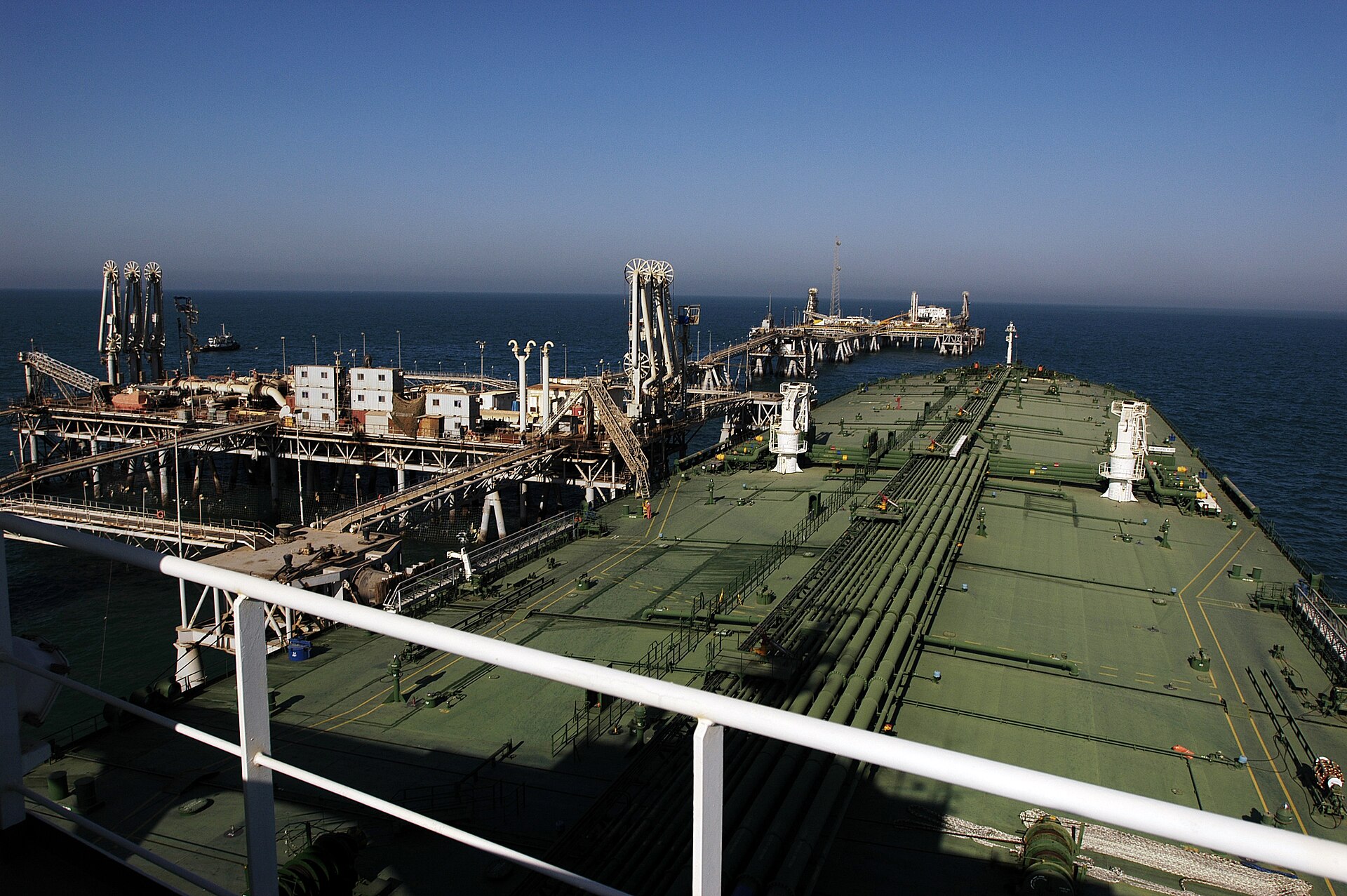
The US naval blockade, which began on July 14, had turned around 135 ships as of October 10, according to CENTCOM. CENTCOM’s enforcement has included disabling vessels attempting to breach the blockade, and Hormuz oil throughput has fallen to 54 percent of prewar levels as ship-to-ship transfer routes hit capacity limits.
| Date | Event | Source |
|---|---|---|
| Feb 28 / Mar 2–4 | Iran first closes Hormuz | Context extract |
| Apr 18 | Iran re-closes Hormuz | Context extract |
| Jul 12 | Iran re-closes Hormuz again | Context extract |
| Jul 14 | US naval blockade begins | CBS News, Oct 10 |
| Aug 8 | SNSC sets five conditions for reopening | Al-Monitor/AFP |
| Sep 25 | Araghchi presents seven-day roadmap at UN | Al Jazeera |
| Oct 10 | CENTCOM: 135 ships turned around | CBS News |
| Nov 9 | Qatari-brokered $8bn deal reported | Oilprice.com/CNBC |
| Nov 27 | Army Navy CiC Irani: “Order is for strait to remain closed” | Mehr News |
| Nov 28 | Artesh CiC Hatami: closure continues under Khamenei’s command | Iran International |
Diplomatic Track and Stalled Negotiations
The gap between Araghchi’s diplomatic language on November 26 and the military declarations of November 27–28 is not necessarily contradictory in Iran’s political system. The foreign ministry, the military, and the presidency operate under different mandates from the Supreme Leader, and simultaneous hard and soft messaging has been a feature of Iranian statecraft throughout the conflict.
Araghchi’s September 25 seven-day roadmap and the November 9 Qatari-brokered framework both proposed narrower packages than the five SNSC conditions of August. The November 9 framework dropped its frozen-asset figure from $12 billion to $8 billion and eliminated the transit-fee demand. Neither was confirmed by either government.
Ghalibaf’s November 24 statement that Iran would not negotiate until its conditions are met, followed by the military messaging of November 27–28, may serve domestic audiences as much as international ones. Iran has consistently threatened escalation against the US naval blockade even as back-channel discussions reportedly continue.
Iranian parliamentarians have claimed Iran can break the US blockade entirely, while Saudi Arabia has pressed Hormuz navigation rights at the G7 in Paris. The US position, as stated by CENTCOM, has been to maintain the blockade at “full force,” a phrase Trump used on October 8, according to The National.
Iran first closed Hormuz on February 28 — the same day that Hatami’s predecessor Mousavi died and the same day that would trigger a chain of leadership changes culminating in Mojtaba Khamenei’s assumption of the Supreme Leadership on March 8. That the Artesh commander who replaced Mousavi is now publicly attributing the closure to Khamenei’s personal command closes a symbolic circuit that links the closure’s origins to its current institutional form.
Iran’s Army previously ordered Hormuz closed further each day until conditions were met on November 24, and the closure’s downstream effects have forced ADNOC to restrict export terminals as recently as November 26.
Frequently Asked Questions
Who is Amir Hatami and when was he appointed?
Amir Hatami is the Commander-in-Chief of Iran’s regular army, known as the Artesh. He was appointed on June 14, 2025, succeeding Abdolrahim Mousavi, who was promoted to Chief of the Armed Forces General Staff and later died on February 28, 2026. The Artesh is a separate institution from the IRGC, with its own navy, air force, ground forces, and air defence, all reporting to the Supreme Leader through the Armed Forces General Staff rather than through the IRGC command structure.
Has Iran reopened Hormuz at any point since February 2026?
Iran first closed Hormuz on February 28 / March 2–4, 2026, then re-closed on April 18 and again on July 12 after the US naval blockade began on July 14. Each closure has followed a cycle of escalation and failed negotiation, with the current closure — now in its fifth month since the July 12 re-closure — the longest continuous period.
What role does the IRGC play compared to the Artesh in Hormuz operations?
The IRGC Navy operates fast attack craft, coastal missile batteries, and mine-laying capabilities in the Hormuz area and has made the majority of public claims about tanker interdiction and mine strikes. The Artesh Navy operates Iran’s larger warships, frigates, and submarines. Artesh operations deputy Fattahi stated on November 28 that ship transit control is conducted “in coordination with IRGC Navy, based on measures taken by the General Staff of Armed Forces,” indicating joint operations under General Staff authority.
How has the Hormuz closure affected global oil prices?
The EIA reported that Brent crude averaged $124 per barrel in October 2026 — the highest monthly average since the conflict began — before falling more than $30 per barrel by mid-November. The diesel premium to Brent averaged $82 per barrel in October, up from $57 per barrel in the second quarter of 2026. Global oil inventories fell roughly 400 million barrels between April and October 2026, while Middle East crude output paradoxically rose to 23.1 million barrels per day in October as producers pushed ship-to-ship transfers and alternative routes.
Is there a diplomatic deal in progress to reopen Hormuz?
Multiple frameworks have been proposed and none confirmed. The latest publicly reported was a November 9 Qatari-brokered package involving $8 billion in frozen funds, US blockade withdrawal, and Iran dropping its transit-fee demand. FM Araghchi said on November 26 that proposals were “being reviewed,” but no government has confirmed active negotiations. Trump rejected Araghchi’s earlier September 25 seven-day roadmap, according to the Wall Street Journal.
The House of Saud Daily Briefing
Saudi Arabia's news in 3 minutes, every morning. Free. See today's issue