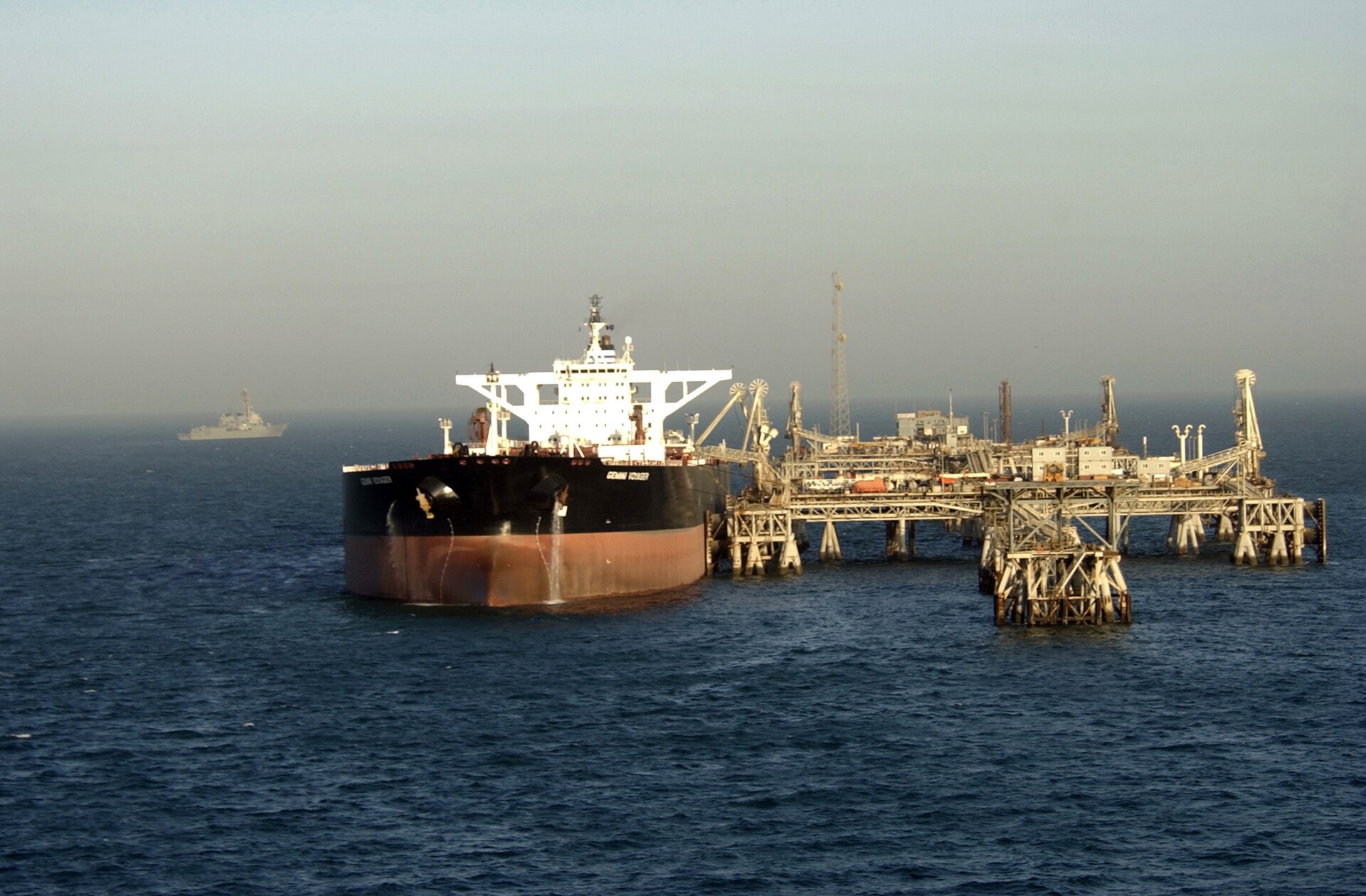

TEHRAN — Major General Amir Hatami, Commander-in-Chief of the Iranian Army, ordered the Strait of Hormuz closed “further day by day” until Iran’s conditions are met, in a directive issued at the Army’s Command and Staff University in Tehran on Sunday. Hatami’s statement brings the full Artesh into public alignment with the IRGC’s closure campaign — a role the Revolutionary Guard has claimed almost exclusively for nine months.
The order came on a day when the IRGC said three more oil tankers struck mines in the strait under US escort, and hours after the US and Iran exchanged strikes near the waterway. By claiming the chokepoint directive for the regular military — which oversees the eastern strait and the Sea of Oman — Hatami brought the full institutional weight of Iran’s armed forces behind a campaign that Tehran now frames not as aggression but as sovereign management of its territorial waters.
The House of Saud Daily Briefing
Saudi Arabia's news in 3 minutes, every morning. Free. See today's issue
Table of Contents
What Did Hatami Order?
Speaking to the commander of the Iranian Navy at the Army’s Command and Staff University, Hatami said “robust management will be implemented regarding the control of the Strait of Hormuz,” according to Trend.az. The strait, he said, “must become increasingly closed off each day, making things difficult for the opposing side.” Euronews reported the same directive as the strait being closed “further day by day” until Iran’s conditions are met.
Hatami cited direct orders from Ayatollah Mojtaba Khamenei, Iran’s Supreme Leader since March 8, 2026, as the authority behind the directive. That framing matters. It places the Army’s Hormuz operations under the Supreme Leader’s explicit instruction — the highest tier of authority in Iran’s command chain, to which the Artesh reports via the Armed Forces General Staff. This is not a field commander freelancing. It is an institutional order with a named chain of authority running to the top of the state.
“If the US starts another war, the blows will be more severe, more crushing and without geographical limitation.”
— Major General Amir Hatami, Commander-in-Chief of the Iranian Army, Euronews, November 24
The escalation warning carried weight precisely because Hatami commands the Artesh — the branch with conventional naval power, submarines, and the capacity to extend operations beyond the Persian Gulf into the Sea of Oman and the Arabian Sea. The IRGC’s mine-laying campaign has dominated headlines for nine months. Hatami’s statement signals that the regular military is now publicly aligned with the same objective: a ratchet that only turns one direction until Washington yields.
Iran’s Foreign Ministry spokesman Esmaeil Baghaei reinforced the message on the same day, calling the US naval blockade “tantamount to military aggression” and saying Iran would use all its tools against it, according to Euronews. The IRGC weighed in separately, stating that “military escort by the US army is no substitute for compliance with maritime regulations,” Euronews reported.
What Are Iran’s 7 Conditions for Reopening Hormuz?
Iran’s conditions for reopening the strait have been restated by multiple officials across multiple months but have never been published as a single official list. Reconstructed from public statements by Majlis Speaker Mohammad Bagher Ghalibaf, Foreign Minister Abbas Araghchi, Iranian Army spokesman Brigadier General Mohammad Akraminia, and Supreme National Security Council Secretary Mohsen Rezaei, the conditions break down into seven demands.
The first three concern the US naval presence and economic warfare: end the US naval blockade, lift oil export sanctions, and release frozen Iranian assets. The fourth extends the demand to all US sanctions — not just those tied to oil. The fifth requires a halt to military operations against Iran and its allies, explicitly including Lebanon’s Hezbollah, Yemen, and Iraq. The sixth demands that the US explicitly announce the war is over. The seventh — advanced by the SNSC — calls for full compensation for war damage, though this condition has drawn less consistent support from other officials.
Ghalibaf, the Majlis Speaker, told Al Jazeera on November 11 that there would be “no action or negotiation before Iran’s seven conditions are implemented.” He repeated the message on November 24, saying Washington was trying to impose a “neither-war-nor-peace” situation and threatening “military ways to break the blockade,” according to Euronews. Akraminia, the Army spokesman, had already declared on November 6 that “the US’ acceptance of Iran’s seven conditions is the only way to reopen the Strait of Hormuz,” Tasnim reported.
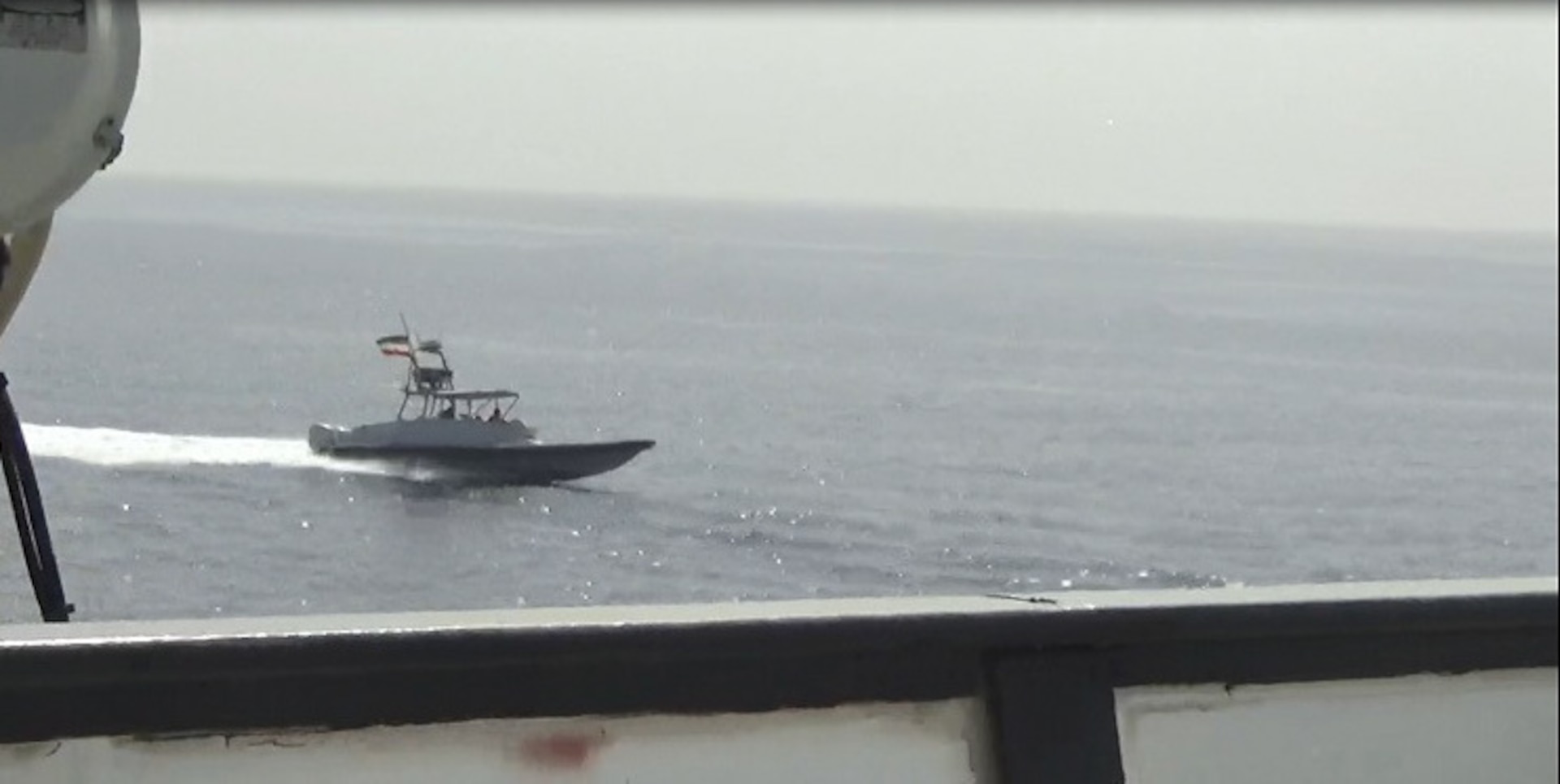
Araghchi, the Foreign Minister, struck a slightly different tone on November 22, telling Tasnim that reopening “is not difficult” if the US “only needs to accept Iran’s reasonable conditions, which are in line with international law.” He called the US blockade “completely illegal,” Middle East Monitor reported. The gap between Araghchi’s diplomatic phrasing and Ghalibaf’s flat refusal to negotiate reveals a tension Tehran has not resolved: whether the conditions are an opening bid or a wall.
US Secretary of State Marco Rubio dismissed the demands on November 9, calling them “outrageous and ridiculous,” Al-Monitor reported. That response has hardened into the American position. The conditions require Washington to dismantle its entire pressure campaign against Iran — sanctions, blockade, military operations, and allied campaigns — in exchange for a waterway returning to the status it had before Iran closed it. From Washington’s perspective, that is not a negotiation. From Tehran’s, it is the minimum price for reversing what it considers an act of war.
Why Does It Matter That the Artesh Gave This Order?
Iran’s military operates as two parallel structures. The IRGC — the ideological force that answers directly to the Supreme Leader — has controlled the western approaches to Hormuz and conducted the mine-laying campaign that has defined the nine-month blockade. The Artesh — the regular military, descended from the Shah-era armed forces — oversees the eastern section of the strait and the Sea of Oman. These are distinct chains of command, distinct equipment inventories, and until now, distinct public postures on the blockade.
The IRGC has been the face of the closure. IRGC Commander-in-Chief Ahmad Vahidi, IRGC spokesmen, and IRGC Navy commanders have issued the daily mine claims, the tanker interdiction announcements, and the warnings to foreign navies. The Artesh has been quieter — operating in its zone, cooperating on paper, but not stepping in front of cameras to claim credit for choking the world’s most important oil transit point. Hatami’s statement changes that balance. It says the regular military is not a bystander. It owns this too.
The practical consequences are worth spelling out. The Artesh Navy operates Iran’s three Kilo-class submarines, its conventional frigates, and its longer-range maritime patrol capability. If the IRGC’s contribution to the closure has been fast boats, mines, and drones in the western strait, the Artesh controls what happens to vessels once they pass into the Sea of Oman — the stretch where US escorts are most exposed and where chokepoint tactics give way to open-water interdiction. Hatami’s directive signals that this zone, too, is now explicitly part of the tightening.
Hamidreza Azizi, a senior Iran analyst and visiting fellow at the German Institute for International and Security Affairs (SWP Berlin), told ABC News on November 22 that “Tehran now seems determined to make these arrangements more costly and less reliable.” Hatami’s order is the institutional expression of that determination — a formal declaration that the entire military establishment, not just the IRGC, is committed to making Hormuz harder to transit with every passing day.
How Bad Is November in the Strait?
The United Kingdom Maritime Trade Operations recorded 31 attacks on vessels in the Strait of Hormuz in October 2026, ABC News reported on November 22. By that same date, November had already logged at least 22 attacks — the highest monthly rate since the war began in February, with more than a week still left in the month. The International Maritime Organization’s cumulative count stood at 138 confirmed attacks on vessels since February 28, ABC News reported.
Traffic through the strait has collapsed. The Joint Maritime Information Center recorded 114 vessel passages “with the assistance of the United States” over the three-day period from November 19 to 21 — roughly 38 per day, Euronews reported. That figure measures only escorted traffic. Without US assistance, JMIC has tracked single-digit to low-double-digit daily transits, against a pre-war baseline of 138 per day. Oil flows through the strait have fallen to approximately 10 million barrels per day as of November 21, down sharply from pre-war volumes.
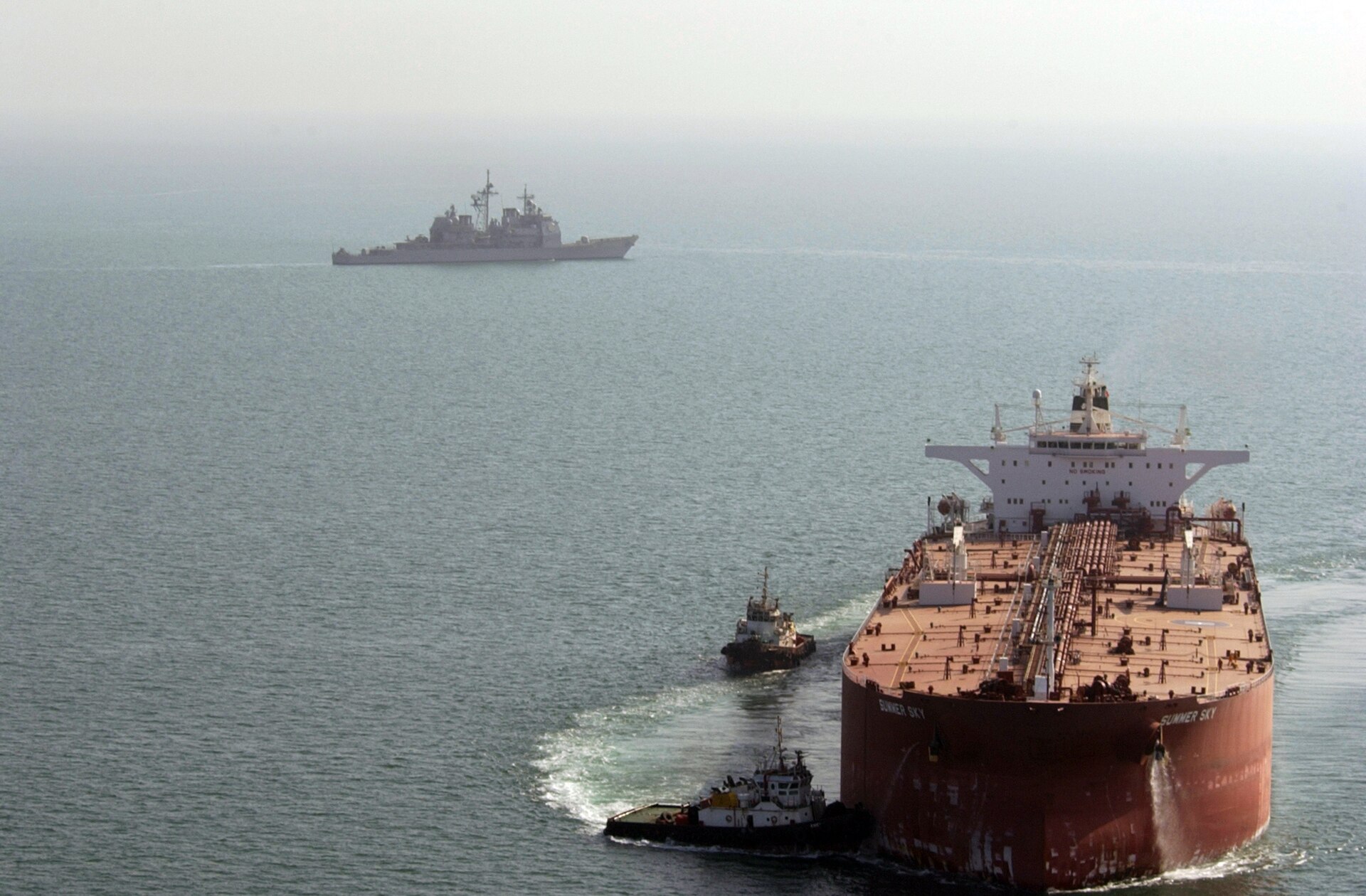
The US naval blockade has kept more than $25 billion of Iranian crude off the market, according to Asia Times. But the escorts themselves are under constant pressure. Three more tankers hit mines under US escort on the morning of November 24 alone, the IRGC claimed, bringing the month’s interdiction claims to their highest level. Each incident forces the question that undercuts the entire escort model: if tankers hit mines while under the protection of the US Navy, what exactly is the escort guaranteeing?
The commercial fallout extends well beyond the strait itself. Iran’s Persian Gulf Strait Authority, created on May 5, 2026 to formalize transit control, has received applications from more than 300 shipping companies for passage permits, according to its founding documentation. The US Treasury’s Office of Foreign Assets Control warned on May 1, 2026 that paying Iran for transit creates sanctions exposure — forcing shipowners to choose between Iranian mines and American regulators. Brent crude was trading around $80 a barrel on November 24, Investinglive reported, suppressed by demand concerns even as supply risks intensified.
Qatar’s Shuttle and the Diplomacy Backdrop
Against the military escalation, Qatar’s Prime Minister Sheikh Mohammed bin Abdulrahman Al Thani was in Washington on November 23, meeting Secretary of State Rubio and Vice President JD Vance. After the Rubio meeting, the Qatari premier said the region “cannot bear a renewed escalation of tensions between the United States and Iran,” Euronews reported. The meeting with Vance lasted approximately 10 minutes, AP noted — a brevity that may reflect either the simplicity of the message or the difficulty of the sell.
Qatar has been the primary mediator since Foreign Minister Araghchi submitted his 7-day roadmap via Qatari intermediaries at the UN in New York on September 25. That plan proposed reopening the strait if the US lifted its blockade, waived oil sanctions, and agreed to a ceasefire covering Lebanon. Washington rejected it. In the two months since, the gap between the two sides has only widened. Iran has added conditions. The US has dismissed them. President Trump has claimed “total control” of the strait while Iran has threatened “all available means” in response to the blockade.
Ghalibaf’s statement on November 11 — that Hormuz will “never return” to its pre-war status — may be the most consequential line any Iranian official has delivered since the conflict began. Speaking to Al Jazeera, he said Iran and Oman had “reached an understanding to oversee the waterway” and that “there are no ‘free waters’ there,” insisting the strait is “governed by the laws of the two littoral states.” If Tehran holds to that position, there is no negotiated reopening. There is only a new permanent regime in which Iran and Oman control transit and the pre-February status quo — open passage under international maritime law — ceases to exist.
The conditions require the US to concede on every lever of pressure it currently holds. Qatar’s shuttle diplomacy continues, but neither side has shown any willingness to move off positions that are fundamentally incompatible. Hatami’s order — close it further, every day — is what filling that diplomatic vacuum looks like.
Background: Nine Months of Closure
Iran first closed the Strait of Hormuz on February 28, 2026, the same day Ali Khamenei was killed. The closure lasted through March 2 to 4 before a partial reopening. Iran re-closed the strait on April 18 and again on July 12, after the US reinstated its naval blockade on July 14. The IRGC formally declared the strait closed on October 26. Each closure has tightened the restrictions rather than replicated the previous round.
The institutional architecture supporting the closure has expanded alongside the military campaign. The Persian Gulf Strait Authority, created May 5, 2026, charges tolls for transit and positions Iran as a regulatory body rather than a belligerent — a framing the IRGC’s statement on November 24 about “compliance with maritime regulations” reinforced. The US naval escort mission launched to push merchant vessels through. The two operations have been in direct confrontation ever since.
The dependency numbers explain why the strait still commands global attention even after nine months. China and India together account for 44 percent of crude imports transiting Hormuz, according to the IEA via Asia Times. Japan depends on the Middle East for 94 percent of its crude, with 93 percent of that flowing through the strait, Japan’s trade ministry data shows. The closure has not broken global oil markets — alternative routes, US escorts, and demand softness have absorbed some of the shock. But it has redrawn the risk map for every barrel that moves through the Persian Gulf, and Hatami’s order promises to redraw it further with each passing day.
FAQ
Who is Amir Hatami and how does his role differ from IRGC commanders?
Major General Amir Hatami is Commander-in-Chief of the Artesh, Iran’s regular military. The Artesh reports to the Supreme Leader through the Armed Forces General Staff — a separate chain of command from the IRGC. Hatami previously served as Iran’s Defense Minister from 2017 to 2021 under President Rouhani. His current command includes the Iranian Army Navy, which operates Kilo-class submarines and a conventional surface fleet — assets the IRGC Navy does not possess.
Has Oman publicly confirmed Ghalibaf’s claim of a joint transit arrangement?
Oman has not issued a public statement confirming or denying Ghalibaf’s November 11 assertion that Iran and Oman “reached an understanding to oversee the waterway.” Muscat’s foreign policy relies heavily on quiet mediation between Tehran and Washington, and publicly endorsing Iran’s claim to joint sovereignty over transit rights would jeopardize that role. Foreign Minister Sayyid Badr al-Busaidi met Araghchi in Muscat on November 17 without any public statement on strait management.
What happens to ships that pay Iran’s PGSA tolls?
Ships that pay the Persian Gulf Strait Authority for passage risk US secondary sanctions. OFAC’s May 1, 2026 advisory warned that any payment to Iranian entities for transit access creates sanctions exposure under existing Iran sanctions programs. In practice, this forces shipping companies into a binary choice: pay Iran and risk US penalties, or use US escorts and risk mines. More than 300 companies had applied for PGSA permits, suggesting many are hedging or operating under non-US jurisdictions where OFAC enforcement is weaker.
Could Iran physically close the strait completely?
Total physical closure would require Iran to prevent all traffic including its own exports and imports — an economic self-embargo. Iran’s strategy has instead been graduated restriction: mines, drone strikes, and regulatory barriers that increase the cost and risk of transit without shutting it entirely. The JMIC data showing 38 US-escorted transits per day, against a pre-war baseline of 138, suggests Iran has achieved roughly a 70 percent reduction in normal traffic without attempting a complete seal.
What is Araghchi’s 7-day roadmap and why did it fail?
Foreign Minister Araghchi submitted a 7-day reopening proposal via Qatari mediators at the UN in New York on September 25, 2026. The plan proposed a phased reopening in exchange for lifting the US blockade, waiving oil sanctions, and a ceasefire covering Lebanon. Washington rejected the proposal, reportedly objecting to linking Hormuz transit to the Lebanon conflict and to the absence of any mechanism for verifying Iranian compliance. Since then, Iran has hardened its demands from a 7-day roadmap to seven non-negotiable preconditions.
The House of Saud Daily Briefing
Saudi Arabia's news in 3 minutes, every morning. Free. See today's issue