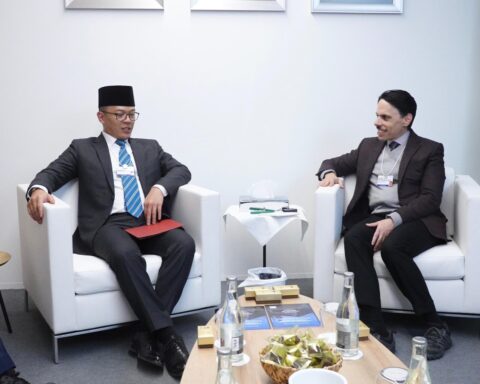

ISLAMABAD — The Makkah Alliance’s Strategic Political and Defence Committee opened its 3rd session in Islamabad on Friday, Pakistan Observer reported. Foreign and defence ministers attended from Saudi Arabia, Turkey and Pakistan, alongside senior military officers. The talks are meant to turn the alliance’s mutual defence commitments into working procedures, including rapid deployments to Saudi Arabia, rules of engagement, air-defence cooperation and intelligence-sharing, Particle reported.
On the same day, Turkey’s Official Gazette announced that President Recep Tayyip Erdogan had formally approved the Mecca Joint Defence Agreement, completing Turkey’s ratification, Reuters reported. The session follows an emergency committee meeting in Riyadh on October 5 that pledged immediate practical implementation of the alliance’s collective defence commitments. That statement left operational details unspecified, al-Monitor noted, and none of the pre-meeting reports on Islamabad cited any.
The House of Saud Daily Briefing
Saudi Arabia's news in 3 minutes, every morning. Free. See today's issue
Table of Contents
- Who is at the table in Islamabad?
- What the October 5 Riyadh statement promised
- How would forces reach Saudi Arabia under each country’s law?
- Turkey’s ratification and the two gazette dates
- Yemen on the agenda, Iran left unanswered
- What has Iran said about the alliance?
- Background: from Mecca to Islamabad
- Frequently Asked Questions
Who is at the table in Islamabad?
Pakistan’s side includes Defence Minister Khawaja Muhammad Asif, Deputy Prime Minister and Foreign Minister Ishaq Dar, and Field Marshal Asim Munir, the Associated Press reported from Islamabad. Retired Lt. Gen. Nauman Mahmood, the alliance’s first secretary-general, is also attending.
Saudi Arabia was expected to send Foreign Minister Prince Faisal bin Farhan and Defence Minister Prince Khalid bin Salman, according to Pakistan Observer and Aaj News. Turkey’s delegation was expected to include Foreign Minister Hakan Fidan and Defence Minister Yaşar Güler. The AP said on Friday that the Turkish and Saudi delegations were arriving in Islamabad; Particle reported that Faisal bin Farhan, Khalid bin Salman and Fidan took part, alongside Dar and Asif.
Pakistan declared a local holiday and set road diversions for the session, the AP reported. Aaj News said heavy traffic was barred from entering Islamabad and Rawalpindi from 6pm on November 26 until 12:30am on November 29. Metro and electric bus services between Seventh Avenue and Pak Secretariat were suspended over the same window.
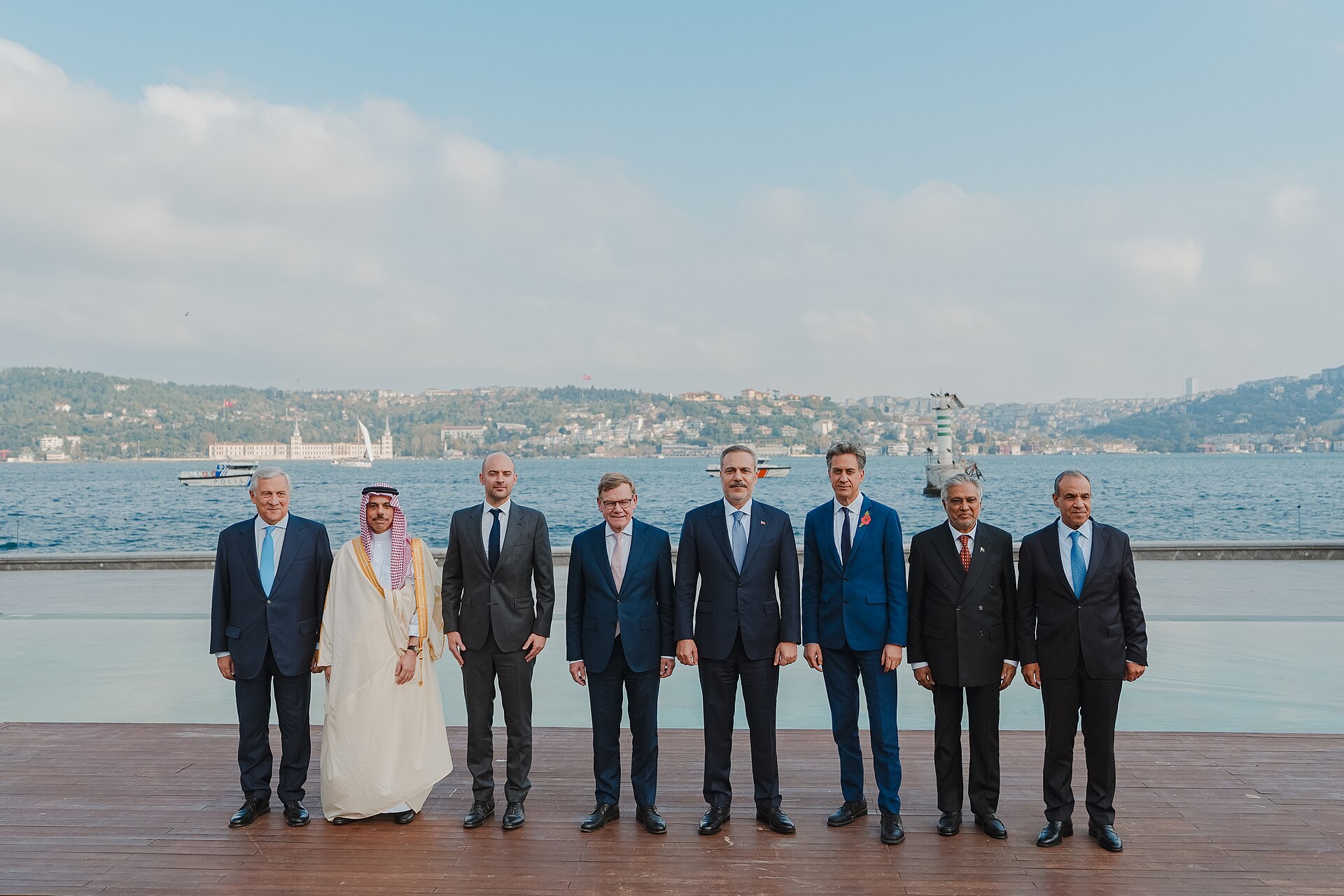
Aaj News described the agenda as a review of the alliance’s institutional structure and of coordination among the three armed forces, with expected discussion of “potential military assistance, intelligence sharing and enhanced cooperation in air defence.” The AP said officials expected talks on deterring threats, expanding military cooperation, sharing intelligence and strengthening defence industry ties.
Particle reported that officials said the pact “remains at an early stage and requires repeated meetings and a permanent secretariat” to finalise command arrangements. Visiting ministers were also expected to meet Pakistan’s senior leadership, Aaj News said.
What the October 5 Riyadh statement promised
The emergency session in Riyadh on October 5 produced the alliance’s most specific public commitment. The joint statement, published by Turkey’s Ministry of Foreign Affairs, committed to providing agreed forces and capabilities and to “ensure their rapid deployment in the Kingdom.”
“decided to move immediately to the practical implementation of the collective defense commitments”Joint statement of the Strategic-Political and Defense Committee, Riyadh, October 5, 2026 (Turkish Ministry of Foreign Affairs)
The same sentence carried a qualifier. Deployment would follow “the approved arrangements and the national legislation of the Parties,” according to the statement and Anadolu Agency’s report of it. The statement did not name Yemen or the Houthis, Al Jazeera noted.
Al-Monitor’s reading of the October statement was blunt about what was missing: it gave “no troop numbers, missions, command arrangements, costs or duration.” The same session appointed Mahmood as secretary-general.
Pre-meeting reporting on Islamabad describes the same unfinished items. Particle listed rapid deployments to Saudi Arabia, rules of engagement and air-defence cooperation as the matters under discussion. Those are the mechanics the October 5 statement left out.
| Item | October 5 Riyadh statement | Islamabad agenda (pre-meeting reports) |
|---|---|---|
| Force commitment | Provide agreed forces and “ensure their rapid deployment in the Kingdom” | Rapid deployments to Saudi Arabia (Particle) |
| Troop numbers | None given (al-Monitor) | None reported |
| Rules of engagement | Not addressed (al-Monitor: no missions or command arrangements) | Under discussion (Particle) |
| Air defence | Not specified | Air-defence cooperation (Aaj News, Particle) |
| Intelligence | Not specified | Formal intelligence-sharing arrangements (Particle) |
| Legal condition | “the national legislation of the Parties” | Turkey: separate parliamentary mandate expected (Reuters) |
How would forces reach Saudi Arabia under each country’s law?
The phrase “national legislation of the Parties” means something different in each capital. For two of the three members, it is where the operational question sits.
Pakistan: troops already there, no vote
Pakistan’s forces in the kingdom did not arrive under the Mecca pact. Reuters reported that Pakistan “had sent about 8,000 troops to the kingdom by May” under a 2025 Saudi-Pakistani pact, al-Monitor said in an October 8 analysis. The Mecca agreement builds on that bilateral arrangement.
Al-Monitor reported that Pakistan agreed to deploy more forces to Saudi Arabia “without a parliamentary vote.” Pakistan’s Information Ministry said the alliance “has gone through all necessary government procedures,” but did not say whether the cabinet or parliament took part, and called deployment details “a matter of operational confidentiality.”
The precedent is 2015. That year, Pakistan’s parliament “unanimously resolved to stay neutral while pledging to defend the kingdom’s territory and holy sites,” according to al-Monitor, when the Saudi-led coalition sought Pakistani participation in Yemen.
Pakistani spokesperson Sajjad Haider Khan said on October 9 that troops stationed in Saudi Arabia would not cross into Yemen, Al Jazeera reported. “It is an alliance intended to defend the three countries against aggression,” he said.
Muhammad Faisal, a Sydney-based security and foreign policy analyst, told Al Jazeera that “Pakistan’s existing military presence and defence coordination with Saudi Arabia largely predate the Mecca Pact.” Umer Karim, an associate fellow at the King Faisal Center for Research and Islamic Studies in Riyadh, said: “Saudi Arabia wants Pakistan to contribute to its defence against the Houthis.”
Turkey: ratification is not a deployment order
Turkey’s path runs through parliament twice. The Grand National Assembly ratified the agreement on November 5 with 279 votes in favour and 119 against, Al Jazeera reported. That vote approved the treaty; it did not send anyone.
A ruling party lawmaker told Reuters in October that Turkey would submit a separate mandate to parliament, allowing military personnel to be deployed to Saudi Arabia under the pact. The Reuters report was carried by The Times of Israel on November 27. That report did not say whether the mandate had been submitted or approved, and no source reviewed for this report said it had.
Turkish ministers have set out limits in advance. Defence Minister Yaşar Güler said, according to Al Jazeera: “We absolutely do not foresee entering into any conflict with the Houthis.” He said Turkish support “would be to strengthen deterrence.”
Fidan said on November 21: “Our current policy is aimed at the defence of Saudi Arabia; no decision has been made on deploying troops inside Yemen,” Al Jazeera reported. The AP said on Friday that Turkey is considering military aid to Saudi Arabia but says no Turkish troops would be deployed to fight in Yemen or attack the Houthis.
Omer Ozkizilcik, an Ankara-based analyst and nonresident senior fellow at the Atlantic Council, told Al Jazeera: “The Mecca Pact does not include a superpower.”
Saudi Arabia: the host, and the target
Saudi Arabia completed its ratification alongside Pakistan; Pakistan’s ministry said on October 23 that both had finished their processes, Al Jazeera reported. For the kingdom, the question is not authorisation but what arrives. At least 26 people have been killed in suspected Houthi drone and missile attacks in Saudi Arabia since September 23, Saudi authorities told Al Jazeera. Twenty-three of the deaths were in strikes on airports.
On November 24, 11 people were injured when a Houthi attack hit a tower in Riyadh’s financial centre, Al Jazeera reported. HOS covered that attack and its aftermath in its report on the SAIF expo opening at KAFD.
Nawaf Obaid, a senior research fellow in the Department of War Studies at King’s College London, told Al Jazeera that “defensive military operations can involve direct combat.” Pakistani and Turkish officials have said their forces will defend Saudi territory and stay out of Yemen.
Turkey’s ratification and the two gazette dates
Reuters, as carried by The Times of Israel and Shafaq News, reported on November 27 that Turkey’s Official Gazette had announced Erdogan’s formal approval of the agreement, “completing the country’s ratification after parliament passed the pact earlier this month.” Al Jazeera reported that Erdogan “signed off on the ratification on Friday.”
Azerbaijan’s 1news.az, reporting the same gazette publication, described it as a presidential decree stating: “It has been decided to approve the attached” agreement, signed on August 7, 2026, in Mecca. It said the document provides for “entry into force after the transfer of the last instrument of ratification” to the secretariat of the joint defence committee.
An earlier step is reported separately. Clash Report said Erdogan signed Law No. 7597 approving ratification of the agreement on November 13 and that the law was “published in Türkiye’s Official Gazette on Nov. 14.” Clash Report describes a law; 1news.az describes a presidential decree.
None of the sources reviewed for this report gave a date on which the final instrument of ratification was transferred to the secretariat. HOS covered the Islamabad ceremony marking the treaty’s status at secretary-general level in its November 25 report; Friday’s session is a separate, ministerial-level meeting.
Yemen on the agenda, Iran left unanswered
Asif named the subject before the session opened. “Continuous turmoil south of Saudi Arabia” would be on the agenda, he told AFP, in a reference to Yemen, where the Houthis are based, according to reporting by AFP carried in pre-meeting coverage.
“Any threat to Saudi Arabia is a threat to Pakistan and Turkiye according to the pact, which is absolutely clear.”Khawaja Asif, Pakistan Defence Minister, quoted by Al Jazeera, November 27, 2026
Asif told the AP that Pakistan would use “whatever means are available” to defend Saudi Arabia against Houthi attacks. He declined to tell AFP how the pact would respond to a direct Iranian attack on Saudi Arabia, according to Al Jazeera, and named Israel instead: “The possibility of some conflict, or aggression from the Israeli side exists.”
Pakistan says the pact is “purely defensive in nature” and is not against anyone, including Iran, the AP reported. The Express Tribune reported that Islamabad “has maintained that the agreement is defensive in nature and is not directed against any country.”
Dar spoke by telephone with Iranian Foreign Minister Abbas Araghchi on Thursday, November 26, as Pakistan prepared to host the meeting, the Express Tribune reported. The two “exchanged views on the wider regional situation and efforts to promote peace and security,” the paper said.
The alliance has dealt with Tehran directly before. On October 26, Prince Khalid bin Salman, Field Marshal Munir and Turkish intelligence chief Ibrahim Kalin met Mohsen Rezaei, secretary of Iran’s Supreme National Security Council, in Tehran, Al Jazeera reported, in a meeting widely believed to have been facilitated by Islamabad.
What has Iran said about the alliance?
Iranian state-linked outlets framed the October deployment pledge in hostile terms. Tasnim described the development as “Turkey and Pakistan join the Saudi war against the Yemeni people,” Iran International reported on October 9. Nour News asked: “Mecca alliance or alliance against the oppressed people of Yemen?!”
In a commentary, Tasnim warned that if the two countries join attacks on Yemen, “they may be directly harmed through attacks on their ships, interests and perhaps even their own territory,” according to Iran International.
Iranian lawmaker Ebrahim Rezaei wrote on X that “a paper agreement with Turkey and Pakistan will not bring them security,” addressing the Saudis, Iran International reported. “Correct your policies so that you do not have to beg others for security,” he wrote.
Not every Iranian voice is hostile. Javad Heiran-Nia, director of the Persian Gulf Studies Group in Tehran, told Al Jazeera: “Iran welcomes any mechanism that creates a balance against Israel and weakens the American order in the region.”
Background: from Mecca to Islamabad
Saudi Crown Prince Mohammed bin Salman, Erdogan and Pakistani Prime Minister Shehbaz Sharif signed the agreement in Mecca on August 7, 2026, Al Jazeera reported. It treats “an attack on any member as an attack on all three,” according to the AP. Article 2 says that if a party is attacked, “the parties shall immediately provide assistance to the party under attack,” Al Jazeera reported.
The Strategic Political and Defence Committee was established under the agreement. The Express Tribune reported on August 31 that the committee would meet in Istanbul that day, with Fidan, Güler, Turkish military chief Selçuk Bayraktaroğlu, Dar, Asif and Munir expected to attend.
The three countries’ military chiefs met in Riyadh in late September and condemned attacks on Makkah and on civilian and economic infrastructure, the Express Tribune reported. Reports date that meeting to September 25 or 26.
Eyup Ersoy, a visiting research fellow at Pembroke College, University of Oxford, pointed to “the speed and scale of the formation of legal and institutional foundations of the agreement,” Al Jazeera reported. The open question in Islamabad is whether the military arrangements keep pace with the legal ones.
HOS has tracked the gap between commitment and capability in Can the Makkah Defence Agreement Fight the War It Was Invoked For? and its November 2 report on the pact’s command structure. Pakistan’s existing deployment is covered in Pakistan Deploys 8,000 Troops to Saudi Arabia Without Parliament Vote. Prince Faisal bin Farhan’s diplomacy this week is covered in our report from the G7 meeting in Paris and his November 22 call with Pakistan.
| Date (2026) | Event | Source |
|---|---|---|
| August 7 | Agreement signed in Mecca | Al Jazeera |
| August 31 | Committee meeting, Istanbul | Express Tribune |
| September 25/26 | Military chiefs meet in Riyadh | Express Tribune |
| October 5 | Emergency committee session, Riyadh; rapid-deployment pledge | Turkish MFA, Anadolu |
| October 23 | Pakistan says it and Saudi Arabia completed ratification | Al Jazeera |
| November 5 | Turkish parliament ratifies, 279 to 119 | Al Jazeera |
| November 14 | Law No. 7597 published in Turkey’s Official Gazette | Clash Report |
| November 27 | Gazette publishes Erdogan’s approval; Islamabad session opens | Reuters, AP |
Frequently Asked Questions
How long does the Mecca Joint Defence Agreement last?
The agreement runs for 10 years, and a member must give three months’ notice to leave, according to the AP. Its secretariat is in Saudi Arabia.
How long is the secretary-general’s term?
Retired Lt. Gen. Nauman Mahmood of Pakistan was appointed for a three-year term, according to the October 5 joint statement published by Turkey’s Ministry of Foreign Affairs.
Is the Makkah Alliance linked to the GCC’s new command in Kuwait?
No link has been announced. GCC defence ministers agreed at a meeting of the Joint Defence Council to set up an advanced headquarters for the GCC’s Unified Military Command in Kuwait, Al Jazeera reported on November 10. Al Jazeera presented it as a framework separate from the Mecca pact, and said its location within Kuwait, troop numbers and force types had not been disclosed.
Have Pakistani aircraft deployed to Saudi Arabia?
Yes, under the earlier bilateral pact. On April 11, Saudi Arabia’s Ministry of Defence said “a Pakistani force, including fighter and support aircraft,” had arrived at King Abdulaziz airbase in the Eastern Province, Al Jazeera reported. No aircraft count was given.
Is Pakistan also talking to Iran this week?
Yes. In the November 26 call, Araghchi repeated Iran’s invitation for Pakistan to attend the 18th Economic Cooperation Organization summit in Tehran on December 3 and 4, the Express Tribune reported.
The House of Saud Daily Briefing
Saudi Arabia's news in 3 minutes, every morning. Free. See today's issue