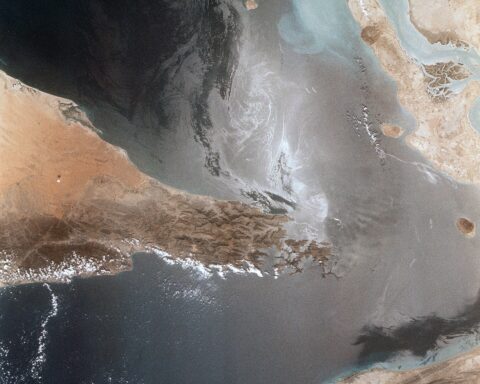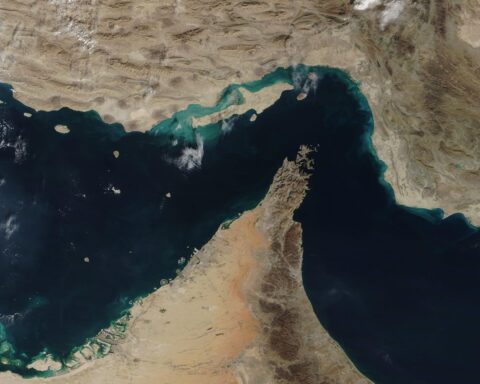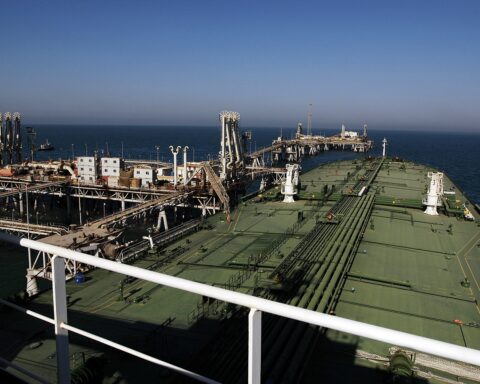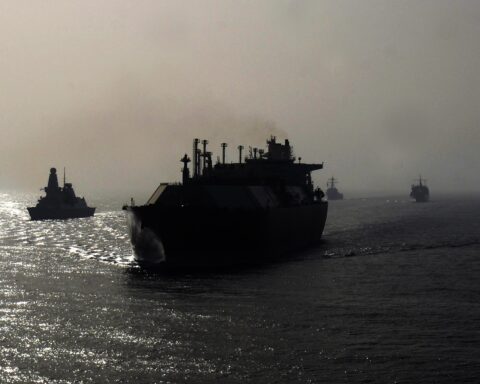

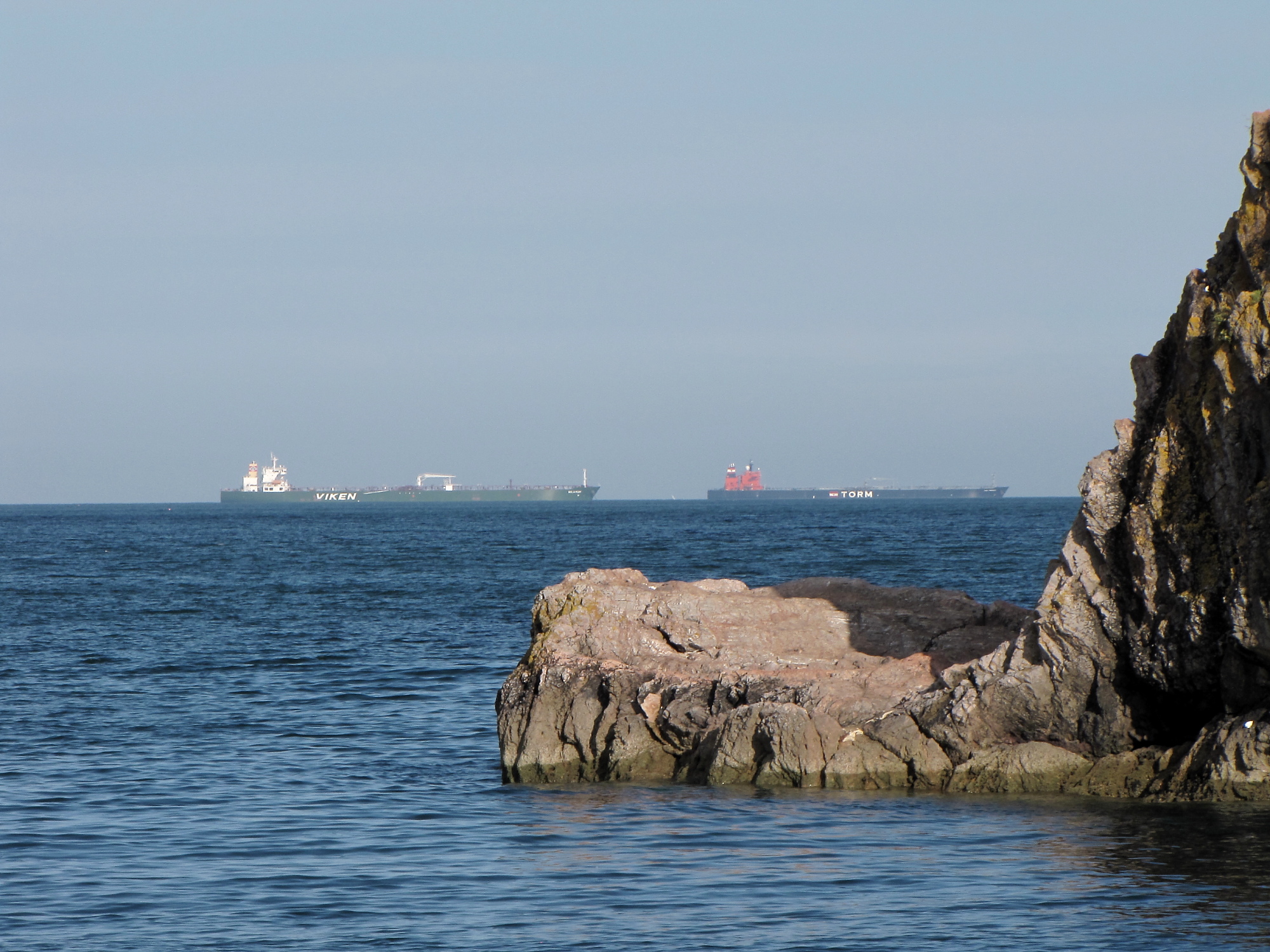
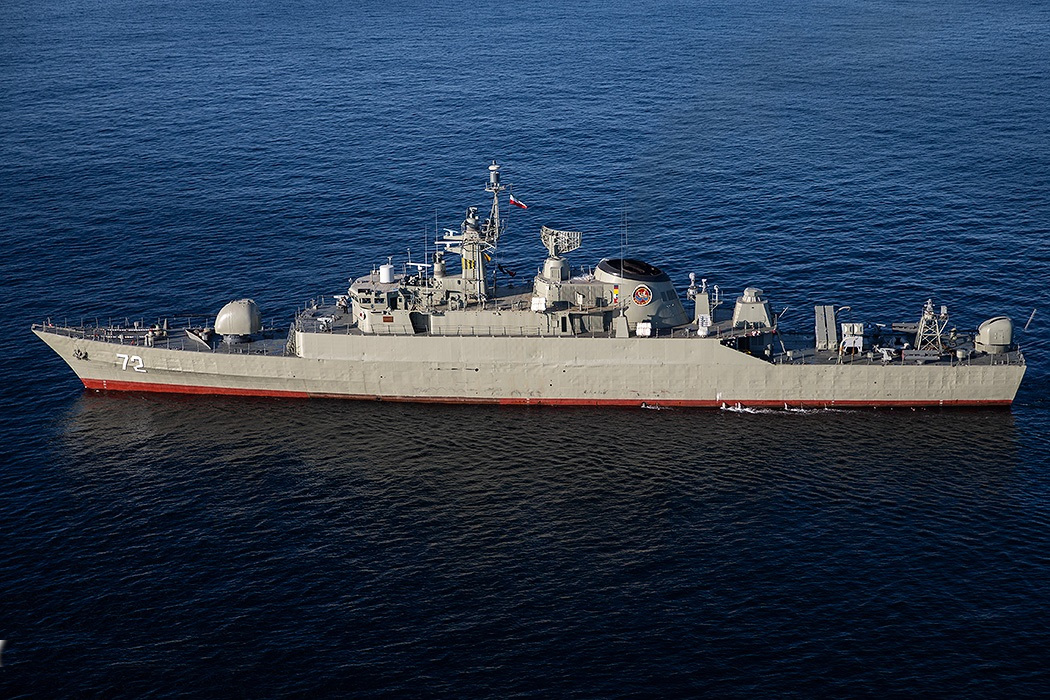
TEHRAN — Iran has expanded its non-compliance blacklist for the Strait of Hormuz to 266 vessels and placed 26 tugboats on the list on November 24, gCaptain reported, as military commanders pledged to make the nine-month-old strait closure “progressively tighter.” Some 608 commercial ships waited at anchorages on both sides of the strait as of November 29, tracking platform hormuz.now reported, with the longest recorded wait stretching beyond 41 days.
The blacklist has grown from 45 vessels at its August baseline to 266 in late November — a nearly sixfold increase in three months, according to gCaptain — while visible commercial transits through the strait averaged 4.9 per day over the past seven days, down from a Joint Maritime Information Center baseline of 138 per day in 2025. Artesh Commander-in-Chief Amir Hatami called the closure “a sacred and resolute mission” on November 28, ABNA and Mehr News reported, as Iran’s ambassador to Pakistan confirmed that mediated message exchanges with the United States continued through Qatar and Pakistan at a slower pace than earlier rounds.
The House of Saud Daily Briefing
Saudi Arabia's news in 3 minutes, every morning. Free. See today's issue
Table of Contents
The Blacklist and Iran’s Permit Regime
Iran established its Hormuz permit system in May 2026, according to ABC News Australia, requiring ship operators to apply by email to the IRGC for passage clearance. Fees have in some cases been collected through cryptocurrency, ABC News Australia and Eurasia.ro reported. A Reuters report on August 4, citing an unnamed senior Iranian source, described Iran’s broader objective as “inbound control, outbound oversight” of strait traffic, with exit clearance issued through Oman for ships leaving the Persian Gulf.
The 26 tugboats blacklisted on November 24 had assisted ships attempting to bypass the permit system by using a southern route through Omani waters, gCaptain reported. The crackdown on auxiliary vessels extended enforcement beyond the tankers, container ships and bulk carriers that made up the original list. Iran’s parliament has also weighed a bill authorizing the seizure of 20 percent of cargo from non-compliant vessels, Al Jazeera reported on November 6.
India, China, Qatar and Iraq hold exemptions from the permit regime, the same Al Jazeera report noted, though exemptions have not guaranteed safe passage — a Qatari LNG carrier was struck on October 30 despite Doha’s exempted status. The pattern suggests the permit system functions as a political lever as much as a commercial one, granting diplomatic favour to states that have maintained working relations with Tehran while penalising those aligned with the US blockade.
The GCC Secretary-General on November 13 condemned what he called “unlawful restrictions or transit fees” on Hormuz shipping, according to Arab News, in a statement that also cited more than 7,000 missiles and drones fired by Iran at Gulf states since February 28. The condemnation aligned with broader Gulf opposition to Iran’s claim of authority over the strait.
How Are Iran’s Military Forces Coordinating Hormuz Control?
Artesh Commander-in-Chief Amir Hatami said on November 28 that “the Strait of Hormuz will remain closed until Iran’s conditions are met,” calling the closure “a sacred and resolute mission,” ABNA and Mehr News reported. Four days earlier, on November 24, Hatami told Tasnim that the closure should be “progressively tighter, with stronger management imposed.” Iran’s army has ordered the closure tightened further each day until conditions are met.
Control of this vital passage is not a claim but our operational reality.
Ali Ozmaei, IRGC Navy Commander, November 26 — Iran International
The IRGC Navy Commander’s claim on November 26 aligned with what Army Navy Operations Deputy Farhad Fattahi told Mehr News on November 28. Fattahi confirmed that Hormuz transit control is divided between the IRGC Navy in the western sector and the Army Navy in the eastern sector, coordinated under the Armed Forces General Staff, ABNA reported. The General Staff reports directly to the Supreme Leader — not through the Defence Ministry, whose role is limited to logistics — making the Hormuz closure a Supreme Leader-directed operation with both branches of Iran’s military under unified command.
The coordination has been paired with kinetic enforcement. The JMIC recorded 17 tankers struck in the strait since the start of November, gCaptain reported on November 26. Iran’s Navy said on November 28 that one of three tankers hit a mine and caught fire in Hormuz, Mehr News reported.
Are the US and Iran Still Exchanging Messages?
Iran’s ambassador to Pakistan, Reza Amiri-Moghadam, said on November 27 that “messages are being exchanged through Qatar and Pakistan,” at a slower pace than earlier rounds, the Tehran Times reported on November 28. The confirmation came alongside months of alternating denial and acknowledgment from Tehran.
SNSC Secretary Mohsen Rezaei on November 10 called reports of ongoing talks with the United States “a pure lie,” Al Mayadeen reported. Deputy Foreign Minister Kazem Gharibabadi told Tasnim on November 3 that “communications and exchanges of messages through mediators are ongoing, with Iran’s seven-day proposal as the basis and Qatar mediating.” Foreign Minister Abbas Araghchi had presented that seven-day roadmap at the UN General Assembly in New York on September 25, channeled through Qatari mediators — Hormuz would reopen in return for the US lifting its blockade, sanctions waivers and the release of roughly $12 billion in frozen assets, IRNA and GlobalSecurity reported. No agreement followed.
A senior official denying talks, a diplomat confirming them, and a third official detailing the terms: the cycle has repeated for months without resolution. Amiri-Moghadam also warned on November 27 that “in the event of a new attack, we will have more surprises for the world,” ANI News reported.
Iran had suspended its message exchanges with the United States on June 1, 2026, after Israeli attacks on Lebanon, Reuters and Al-Monitor reported. The ambassador’s confirmation that Qatar and Pakistan channels remained active on November 27 indicated those exchanges had since resumed.
Ali Vaez, deputy program director at the International Crisis Group, described the standoff on November 20 as “an increasingly fragile status quo” more likely to break “toward escalation than resolution,” writing in Iran Policy Watch. The assessment reflected a growing consensus among Iran watchers that the mediated channels, while still open, have produced no movement toward a deal.
The US Counter-Strategy
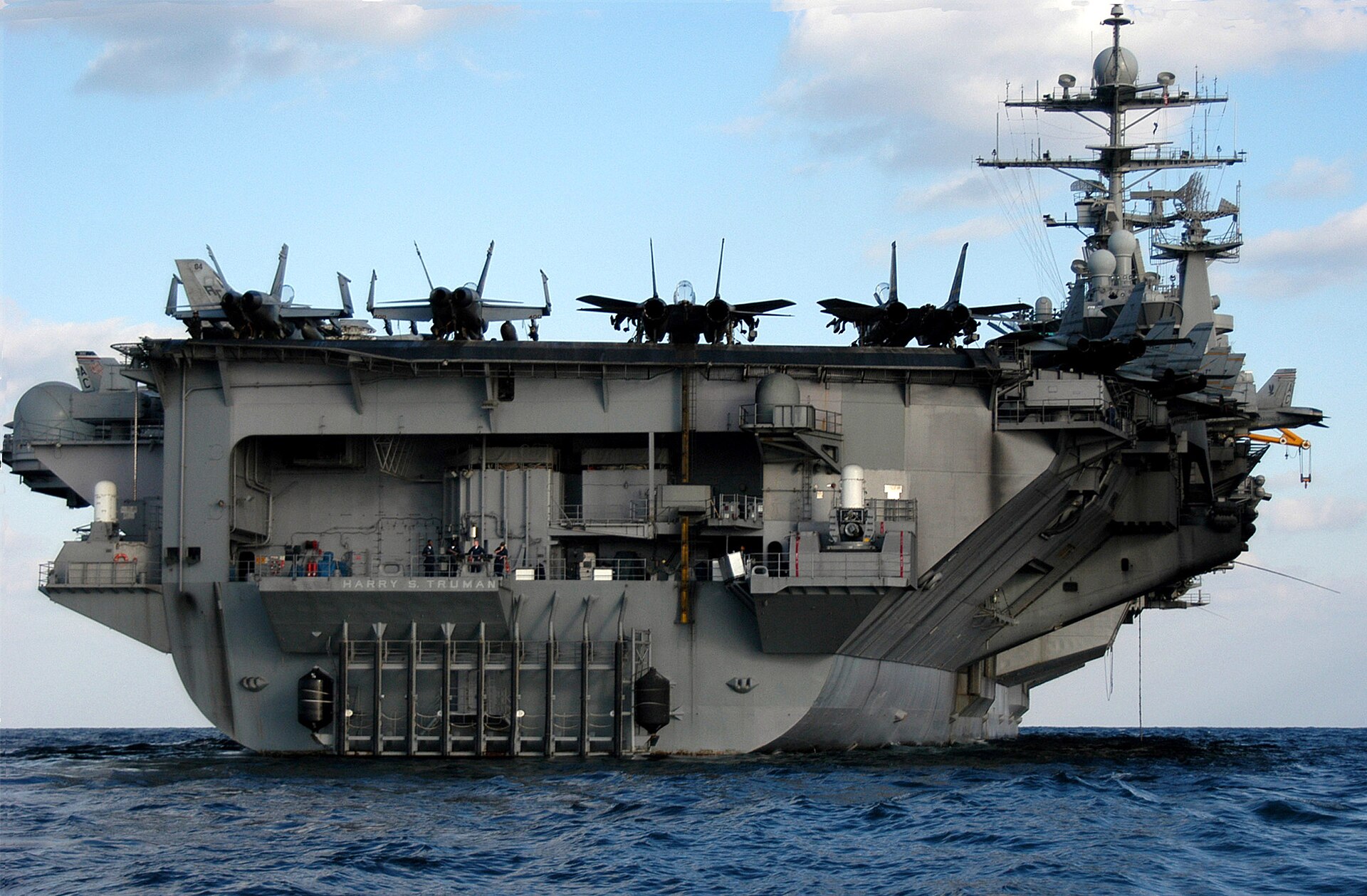
CENTCOM responded directly to Iran’s permit regime on November 28: “There are no transit fees for ships. US forces and regional partners control the strait,” CENTCOM said, according to NewsMinimalist. US forces had redirected 158 merchant ships as of November 27, Inquirer.com reported, citing CENTCOM figures.
The US Treasury’s “Operation Economic Outcast,” which had been running since August 2026, sanctioned new targets on November 23 including Iranian exchange houses, shadow banking networks and energy export revenue streams, CBS News reported. The latest round warned companies that they risked US sanctions penalties for responding to Iranian transit coordination demands — an attempt to undercut the financial infrastructure behind the IRGC’s permit regime from the demand side rather than the supply side.
Trump told Al Jazeera on November 27: “We’re giving them every chance to make a deal and save a lot of lives,” adding, “I’m not sure if they are gonna take advantage of that.” He had told Alhurra on November 24 that Iran had until early 2027 to reach an agreement. Secretary of State Rubio told CNBC on November 9 that a diplomatic breakthrough was unlikely given what he called Iran’s “outrageous” demands. Rubio had said in October that “Iran has lost complete control of the Hormuz Strait,” a claim Iran disputed.
Iran declared at the UN Security Council on November 24 that it would use “all available measures” to oppose the US naval blockade, according to Security Council Report. Tehran had made a similar declaration days earlier, calling the US naval presence an act of economic war.
What Does the Shipping Data Show?
| Indicator | Current | Prewar | Source |
|---|---|---|---|
| Daily commercial transits (7-day avg) | 4.9 | 138 | hormuz.now; JMIC via gCaptain |
| Oil throughput (mb/d) | ~9.25 | 17.14 | Kpler via marketcalls.in |
| Vessels in queue | 608 | — | hormuz.now |
| Longest wait (days) | 41+ | — | hormuz.now |
| War-risk premium (% hull) | 7–9% | ~0.25% | hormuz.now |
| Non-compliance blacklist | 266 vessels | 45 (Aug) | gCaptain |
| Ships redirected by US | 158 | — | CENTCOM via Inquirer.com |
The 608 vessels in queue divided into 472 on the Gulf of Oman side and 136 on the Gulf side, hormuz.now reported as of November 29. Oil throughput has fallen to roughly 54 percent of prewar volume, according to Kpler data reported by marketcalls.in. War-risk insurance premiums have risen to 7 to 9 percent of hull value, from roughly 0.25 percent before the conflict — a 28- to 36-fold increase, hormuz.now reported.
The queue on the Gulf of Oman side — 472 vessels — represents ships waiting to enter the strait, while the 136 on the Gulf side are waiting to leave. The asymmetry reflects the inbound/outbound control model that Reuters described in August, with Iran exercising tighter restrictions on vessels entering from the Indian Ocean approach than on those departing through the Persian Gulf.
Background
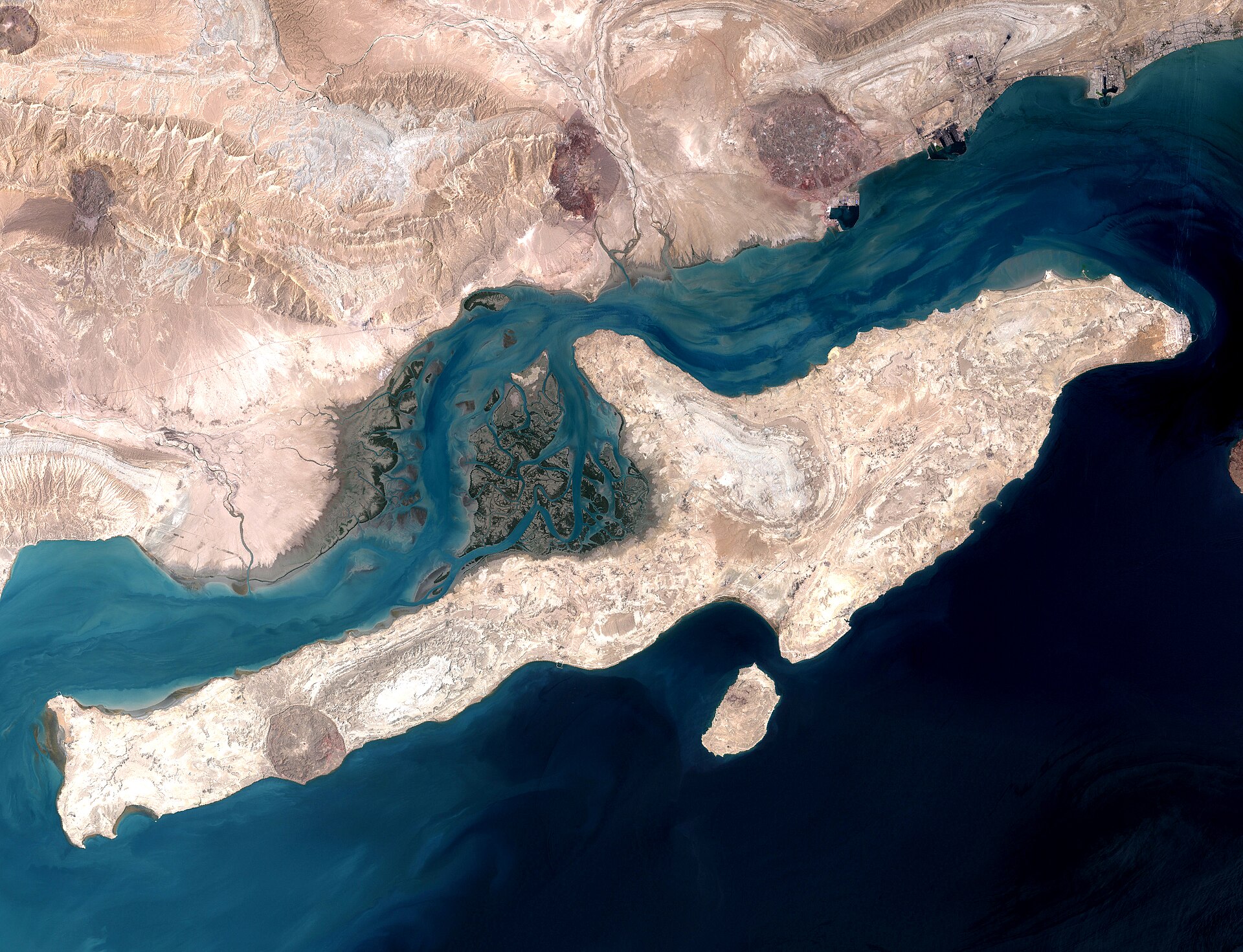
Iran first closed the Strait of Hormuz on February 28, 2026, with full closure taking effect between March 2 and March 4. The strait reopened briefly before re-closing on April 18 and again on July 12, in what has become a cycle of closure, negotiation and re-closure spanning nine months. The permit system established in May 2026, the growing blacklist, and the pending cargo-seizure legislation represent the institutional formalization of what began as a military blockade nine months ago.
The Supreme National Security Council published conditions for reopening on August 8, Al-Monitor and AFP reported. Araghchi’s September 25 roadmap at the UN General Assembly in New York — channeled through Qatari mediators — was the most detailed public offer for a deal. No agreement has been reached. Both the US blockade and Iran’s closure remain in force, with the war’s effect on oil output now complicating OPEC+ quota negotiations and no mechanism in place to verify production levels from Gulf exporters locked behind the closure.
Frequently Asked Questions
What off-ramp scenarios have analysts described for Hormuz?
Dennis Ross, a former US negotiator, told Reuters in a September 2026 analysis that one possible off-ramp involved Iran dropping its toll demand while retaining charges for legitimate maritime services such as pilotage and navigation. Gregory Brew, an analyst at the Eurasia Group, wrote on August 28 that “the MOU is dead” and that “the US is succeeding, to a partial but notable extent, at reopening the strait without another deal,” calling Iran’s resumption of attacks after the memorandum “a likely miscalculation.”
Has Iran struck any US naval vessels at Hormuz?
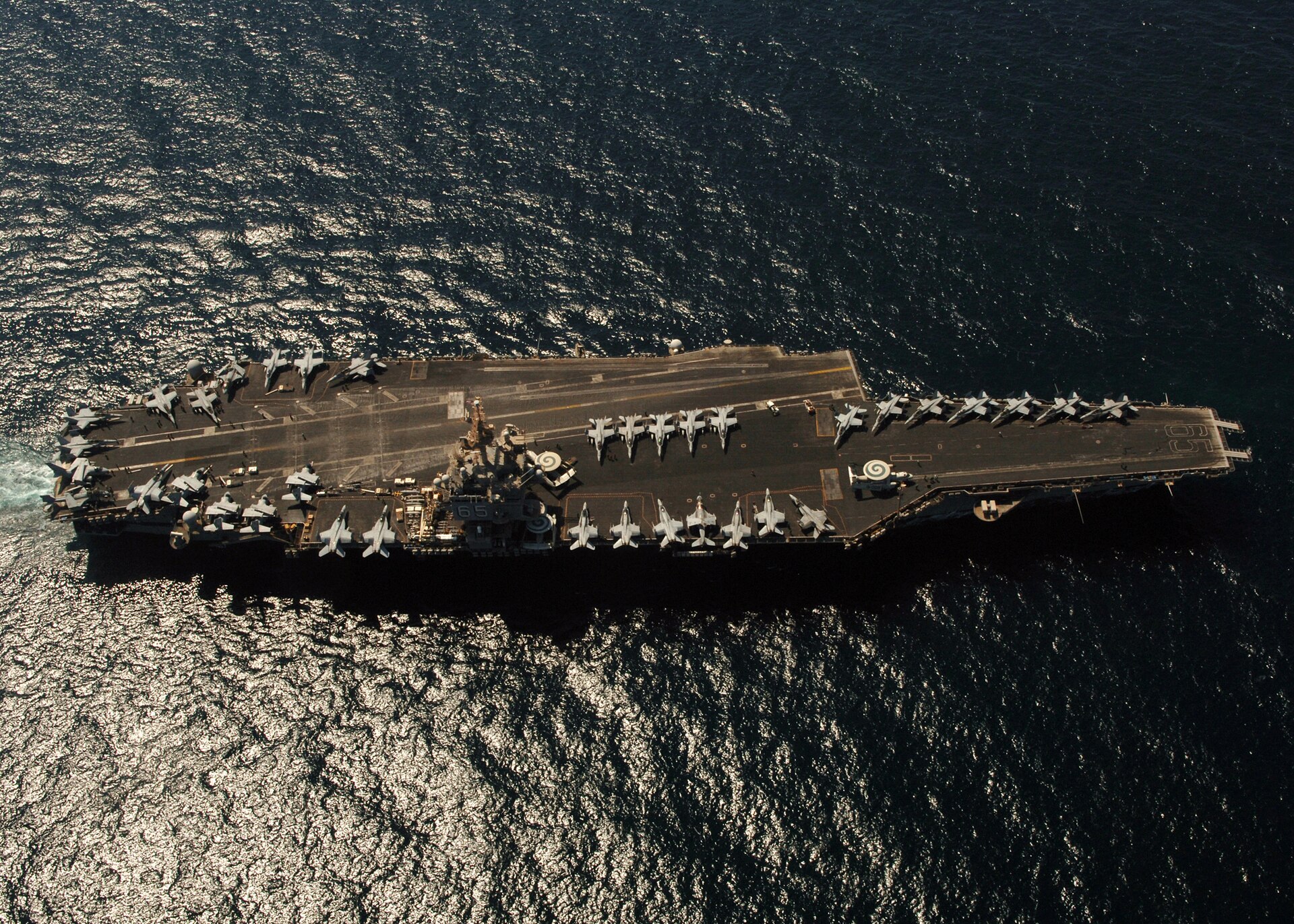
Iran claimed on November 28 that missiles struck the USS Abraham Lincoln carrier group. CENTCOM denied the claim, Al Arabiya English reported the same day. The exchange followed months of competing claims over Hormuz engagements in which Iran’s IRGC has regularly announced strikes on US assets that the US military has not confirmed.
What happened to the US-Iran memorandum signed in June 2026?
Trump and Iran’s President Masoud Pezeshkian signed a memorandum of understanding in Islamabad on June 17, 2026. Iran accused Washington of violating “nearly all parts” of the agreement within 25 days, CDM Press reported on August 15. The memorandum is now functionally defunct — no party treats it as operative — though Iranian officials continue to reference it as evidence of American bad faith in diplomatic exchanges with mediators.
How many conditions has Iran set for reopening Hormuz?
The Supreme National Security Council published five conditions on August 8, 2026, Al-Monitor and AFP reported. Majlis Speaker Mohammad Bagher Ghalibaf referenced “seven conditions” in late November, Tasnim and Mehr News reported, but no Iranian source has publicly listed all seven. The discrepancy between the SNSC’s five and Ghalibaf’s seven has not been explained, and the specifics of any additional demands remain unclear.
The House of Saud Daily Briefing
Saudi Arabia's news in 3 minutes, every morning. Free. See today's issue