
RIYADH — Saudi Economy Minister Faisal Alibrahim told CNBC on November 27 that Saudi Arabia has shifted Vision 2030 from “spending and delivery at any cost” to “spending and delivery at the right cost,” three days after the Cabinet approved a SAR 1.392 trillion budget for 2027 and amid a third consecutive quarter of economic contraction.
The statement puts official language on a reorientation that contractors, analysts and the Public Investment Fund itself have been telegraphing since early 2026 — project deferrals at NEOM, the end of PIF funding for LIV Golf, and a strategy document in April that replaced “rapid expansion” with “consolidating efficiency.” What Alibrahim’s interview adds is a minister on the record framing the shift not as a reaction to the Iran war but as a deliberate efficiency upgrade, even as the GDP data he was discussing showed the oil sector still sharply down year on year in the third quarter.
The House of Saud Daily Briefing
Saudi Arabia's news in 3 minutes, every morning. Free. See today's issue
Table of Contents
- Q3 GDP: Contraction Narrows but Oil Decline Persists
- What Alibrahim Said and What He Did Not
- How Does the 2027 Budget Square With the Efficiency Pivot?
- The Deferrals That Preceded the Pivot
- Has the PIF Already Moved On?
- Why Do Saudi and IMF Growth Forecasts Diverge by Three to Five Points?
- Background
- FAQ
Q3 GDP: Contraction Narrows but Oil Decline Persists
Saudi Arabia’s real GDP contracted 3.8 percent year on year in the third quarter of 2026, according to a flash estimate published by the General Authority for Statistics. The figure marked an improvement over the second quarter’s 4.8 percent decline but extended the economy’s streak of contraction into a third consecutive quarter, driven by a war-disrupted oil sector that showed few signs of recovery.
Oil activity fell 20.4 percent year on year, subtracting 4.7 percentage points from annual growth, GASTAT data compiled by Argaam showed. In the second quarter, oil activity had fallen 24.7 percent. The improvement in the headline number came almost entirely from the non-oil sector, which grew 1.9 percent year on year after expanding just 0.9 percent in Q2, according to Arab News reporting on the GASTAT release.
Government activity contracted 2.7 percent year on year and fell 1.2 percent on a seasonally adjusted quarter-on-quarter basis, GASTAT data showed. Total real GDP rose 1.3 percent quarter on quarter on a seasonally adjusted basis — the first sequential expansion in three quarters, Argaam reported.
Oxford Economics projected Saudi GDP at negative 3.4 percent for the full year of 2026, analyst Akanksha Samdani said in CNBC coverage reported by TokenPost. The IMF’s October World Economic Outlook put the figure at negative 3.3 percent. The Saudi Finance Ministry’s own pre-budget statement in September estimated negative 3.6 percent for 2026, according to Reuters via Zawya.
What Alibrahim Said and What He Did Not
Alibrahim told CNBC that Saudi Arabia had moved from “spending and delivery at any cost” to “spending and delivery at the right cost,” according to TokenPost’s aggregation of the interview. He described a phase in which “every riyal is deployed with greater precision,” TokenPost reported, paraphrasing the CNBC interview. He acknowledged the economic damage from the Iran war directly: “The human cost of crisis has been real, and so has been the economic cost,” TokenPost reported him as saying.
What he did not do was name a single project that had been cut. He did not mention NEOM, The Line, Trojena, or LIV Golf. He did not reference the PIF’s April strategy shift. He spoke in the language of optimization — precision, efficiency, right cost — rather than in the language of retreat. The framing treated deferrals and cancellations as the natural output of a maturing program rather than as forced concessions to a war economy and an oil price below what the budget requires.
Akanksha Samdani of Oxford Economics, also speaking in the CNBC segment aggregated by TokenPost, said “the overarching goal of economic diversification remains unchanged” but that Vision 2030 was “entering a phase focused on returns.” She noted the PIF was becoming more selective and seeking more private-sector participation, with some giga-projects scaled back while investment continued in manufacturing, logistics, tourism, mining and technology.
How Does the 2027 Budget Square With the Efficiency Pivot?
The Cabinet approved the 2027 budget on November 24, three days before Alibrahim’s CNBC appearance. Total spending was set at SAR 1.392 trillion, roughly $371 billion, with revenue projected at SAR 1.202 trillion, approximately $320 billion, leaving a deficit of about SAR 190 billion — 3.6 percent of GDP, according to Xinhua’s reporting on the budget announcement.
Defense absorbed approximately SAR 263 billion, about $70.1 billion, the largest single allocation. Finance Minister Mohammed Al-Jadaan said there was “no price tag or cap” on military spending if the fighting required more, IBTimes reported — a statement that sits uneasily alongside the Economy Minister’s message of riyal-level precision.
The 2026 budget had been set with a projected deficit of SAR 165 billion. By September, the Finance Ministry had revised that to SAR 245 billion, a 48 percent increase, Reuters reported via Zawya. The first half of 2026 alone produced a deficit of SAR 160 billion, nearly the entire original annual projection.
The government’s pre-budget statement in September projected 12.8 percent GDP growth for 2027, Reuters reported via Zawya. A CNBC aggregation suggested the Finance Ministry may have since revised that figure to 10.9 percent, though the basis for the revision was not specified in the coverage. The IMF’s October World Economic Outlook forecast 7.9 percent growth for Saudi Arabia in 2027 — a gap of three to five percentage points below the government’s own projections.
The Deferrals That Preceded the Pivot
The projects that give Alibrahim’s efficiency language its concrete meaning were cut months before he spoke. NEOM halted construction on The Line, the 170-kilometer linear city that was Vision 2030’s most visible mega-project, until at least 2030, Semafor reported in May. The same report said NEOM had cut its 2030 population target for The Line to up to 100,000 residents from 1.5 million, frozen new investment in the Trojena mountain resort, and allocated roughly $3 billion more for the OXAGON industrial port.
Two major Trojena contracts had already been terminated by March. NEOM ended Webuild’s dam contract, about $4.7 billion, effective March 29 when the work was about 30 percent complete, AGBI reported. Eversendai’s steel contract for the Trojena ski village was terminated effective March 26, citing “geopolitical developments in the Middle East,” ME Construction News reported.
The 2029 Asian Winter Games, which were to be hosted at Trojena, had been indefinitely postponed in a joint announcement by the Saudi Olympic and Paralympic Committee and the Olympic Council of Asia on January 25, The National reported. No replacement date has been set.
Neil Quilliam of Azure Strategy, cited in CNBC mega-project coverage, said investors were assessing whether Houthi attacks demonstrated a persistent vulnerability that could increase the cost and complexity of delivering Vision 2030 projects.
Has the PIF Already Moved On?
The Public Investment Fund’s own language preceded Alibrahim’s by seven months. PIF’s board approved its 2026–2030 strategy in April, describing a shift “from rapid expansion to consolidating efficiency” and toward enabling the private sector, as reported by Jawlah. The fund’s assets under management stood above $900 billion, with revenue rising 9 percent to $120 billion in 2025.
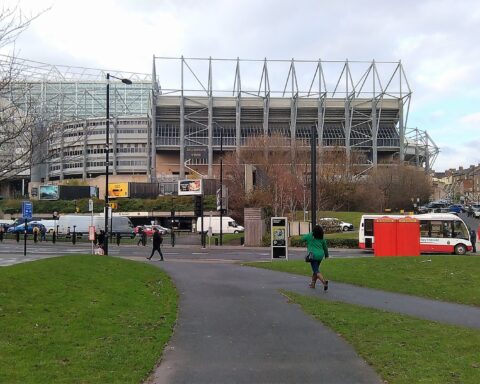
The practical consequences arrived in quick succession. PIF announced in April that it would fund LIV Golf only through the 2026 season, saying a longer commitment “is no longer consistent with the current phase of PIF’s investment strategy,” Al Jazeera reported. PIF had backed the tour since its 2021 launch. In November, PIF hired JPMorgan to sell up to 25 percent of Newcastle United, and earlier reporting showed PIF was exploring securitization and stake sales as returns fell to 5.8 percent.
The fund also capped foreign investment at 20 percent amid a $51 billion budget gap, redirecting capital toward domestic projects that the government considers strategically essential. The 10th Future Investment Initiative Summit was postponed to October 2027 — the second postponement in FII’s history, the first being FII4 in 2020, delayed to January 2021 due to COVID-19.
Why Do Saudi and IMF Growth Forecasts Diverge by Three to Five Points?
The distance between Riyadh’s growth projections and those of international institutions has widened with each revision cycle in 2026. The IMF cut its Saudi growth forecast repeatedly: in April, June and July, before the October World Economic Outlook landed at negative 3.3 percent for 2026 and positive 7.9 percent for 2027, Arab News reported.
The government’s September pre-budget statement projected negative 3.6 percent for 2026 and positive 12.8 percent for 2027, according to Reuters via Zawya. The gap on the 2027 rebound — roughly three to five percentage points between the government and the IMF — reflects differing assumptions about how quickly oil production and exports recover, how much non-oil activity accelerates, and whether defense spending crowds out the capital investment that generates growth.
Saudi Arabia’s non-oil economy has grown as a share of GDP, rising to roughly 56 percent from about 47 percent in 2016, according to a CSIS analysis marking Vision 2030’s tenth anniversary. The structural diversification is real but remains well short of Vision 2030’s original targets, and in a quarter where oil activity subtracted 4.7 percentage points from GDP, non-oil growth of 1.9 percent could not come close to compensating.
The efficiency pivot is explicitly meant to address that tension from the cost side rather than waiting for the revenue side to recover — a strategy that depends on whether defence spending, which Al-Jadaan placed beyond any cap, is eventually brought back within a fiscal framework.
Background
Vision 2030, launched in April 2016 by Crown Prince Mohammed bin Salman, aimed to reduce Saudi Arabia’s dependence on oil revenue by building new industries, tourism infrastructure and a technology sector. The program’s centerpieces included NEOM, a $500 billion planned city in the northwest; a massive expansion of entertainment and sports; and PIF’s transformation into a global investment vehicle.
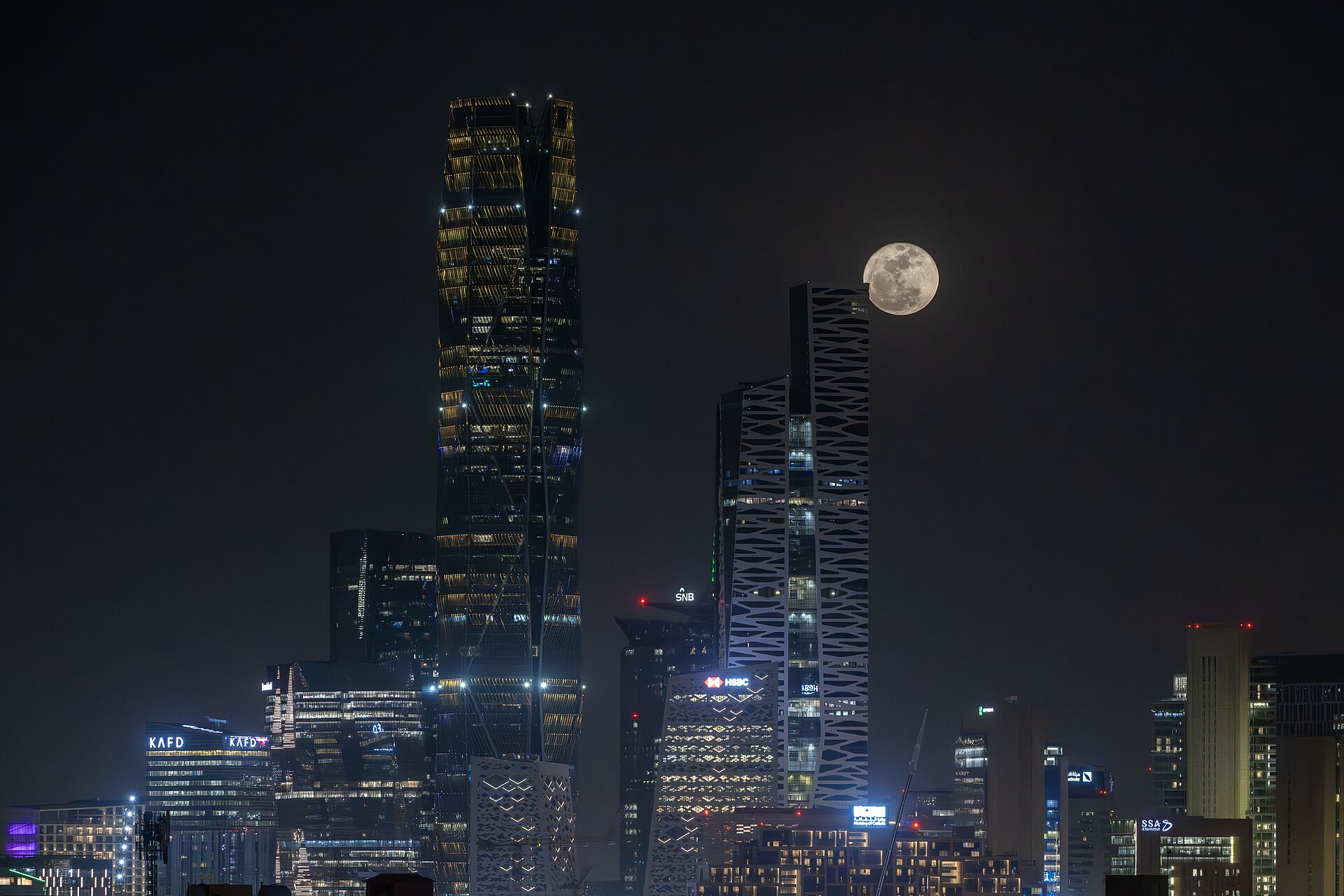
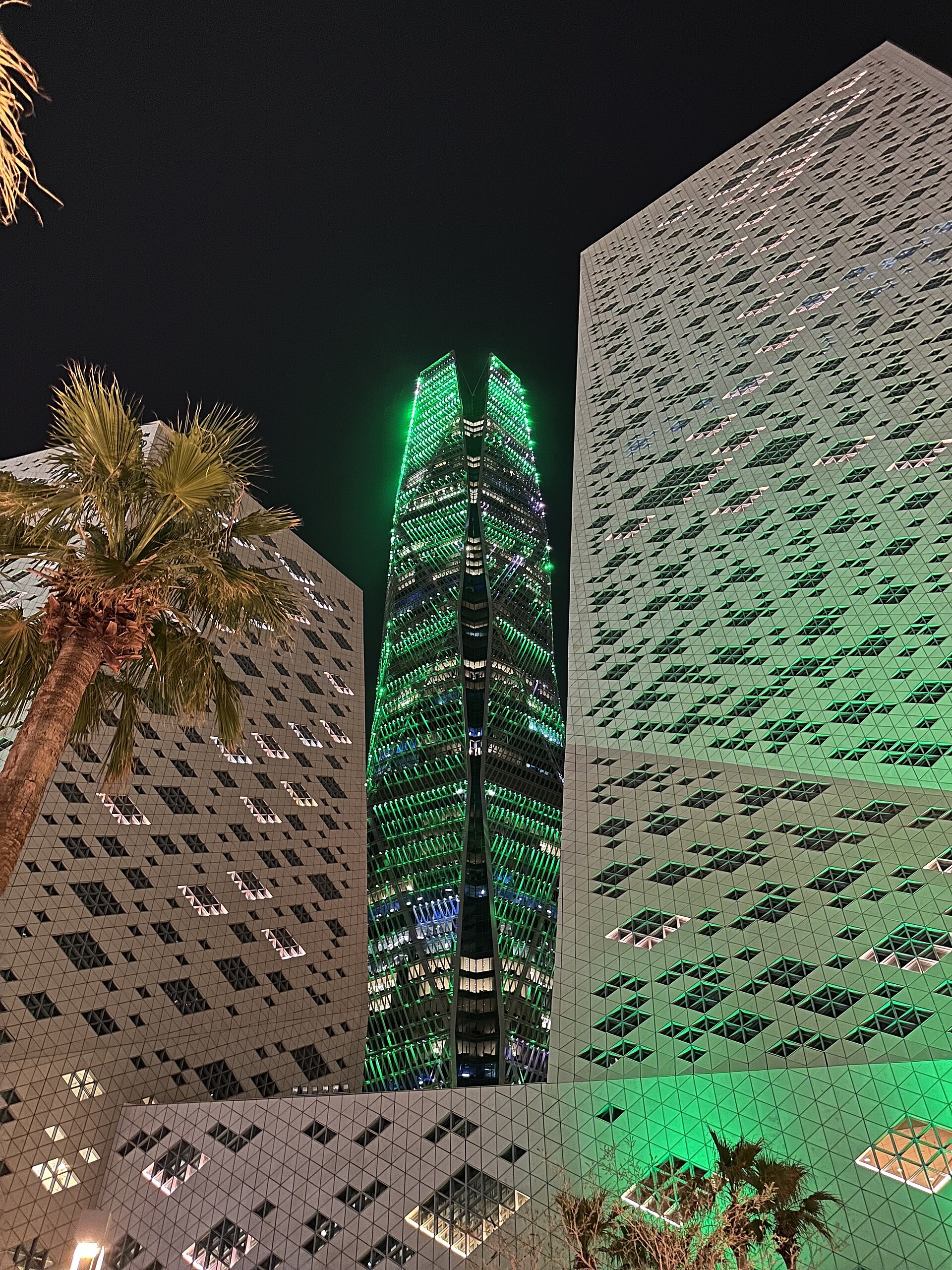
The Iran war, which began in early 2026 with Iran’s first closure of the Strait of Hormuz on February 28 and March 2–4, disrupted oil exports, damaged energy infrastructure and diverted budget resources to defense. Houthi attacks struck deep into Saudi territory, including the PIF Tower at KAFD on November 19 and November 24 and prompting tariff increases and wage support activation as the government sought to manage the economic fallout on households.
The ZATCA announced a 15 percent minimum effective tax rate on multinational profits effective January 2027, aligning Saudi Arabia with OECD global minimum tax standards — one of the fiscal measures designed to diversify revenue sources beyond oil.
FAQ
What is Saudi Arabia’s current oil production level?
Aramco’s nine-month output through September 2026 fell 13.7 percent compared to the same period in 2025, with pipeline attacks leaving the Yanbu export terminal operating below 3 million barrels per day. Hormuz oil flows fell to roughly 10 million barrels per day across all exporters by late November as attacks mounted, according to reporting on JMIC data. Saudi Arabia’s voluntary OPEC+ production cuts, combined with war-related disruptions, have kept output well below the kingdom’s roughly 12 million barrel per day capacity.
Has Vision 2030 been officially cancelled or scaled back?
No official announcement has cancelled Vision 2030 as a program. The government has not published a revised master timeline, and Crown Prince Mohammed bin Salman has not publicly addressed the deferrals. The key unresolved question is whether the pivot to efficiency is a temporary adjustment that reverses once oil revenues recover, or a structural narrowing of Vision 2030’s ambitions — a distinction that Alibrahim’s framing deliberately leaves open.
How does Saudi Arabia’s 2026 contraction compare to other Gulf economies?
The IMF’s October 2026 World Economic Outlook projected Saudi GDP at negative 3.3 percent for the year, the steepest contraction among major Gulf economies. The UAE, Qatar and Kuwait also faced disruption from the Hormuz crisis and elevated defence costs, but their exposure to direct Houthi attack was more limited than Saudi Arabia’s. Qatar’s LNG exports largely use routes that do not transit Hormuz, providing some insulation from the strait’s closure effects that Saudi crude exporters did not share.
What is the breakeven oil price for the Saudi budget?
The 2027 budget’s SAR 1.392 trillion in spending, with a projected deficit of 3.6 percent of GDP, implies the government is budgeting for oil prices below the fiscal breakeven. Various international forecasters have estimated Saudi Arabia’s fiscal breakeven well above $80 per barrel. With Brent crude posting three consecutive weekly losses in November 2026 and falling below $89, the gap between the price needed and the price available has widened through the second half of the year.
What happened to the NEOM workforce after project deferrals?
NEOM has not disclosed workforce figures following the March and May 2026 deferrals. The termination of the Webuild dam contract alone affected a project valued at about $4.7 billion that was 30 percent complete, and Eversendai’s ski-village steel contract involved a separate construction workforce. Industry publication MEED reported that NEOM was reallocating resources toward OXAGON, the industrial port component that received roughly $3 billion in continued investment, suggesting some labor was redirected rather than released.
The House of Saud Daily Briefing
Saudi Arabia's news in 3 minutes, every morning. Free. See today's issue