
TEHRAN — The most consequential document to emerge from the Strait of Hormuz crisis in April was not a threat. It was, on its face, a business proposition. On April 30 — Persian Gulf National Day — Iran’s new supreme leader, Mojtaba Khamenei, issued a written statement declaring “a new chapter” for the strait, promising that Iran’s management of the waterway would bring “calm, progress and economic benefits to all Gulf nations.” The offer arrived wrapped in the language of common destiny, regional solidarity, and economic partnership. It also arrived with no verifiable evidence that the man who issued it is conscious.
That conjunction — a sovereignty pitch backed by military coercion and undermined by a legitimacy vacuum at the top of the issuing state — creates a problem for GCC capitals that is genuinely novel. Saudi Arabia, the UAE, Kuwait, Qatar, Bahrain, and Oman have all rejected the offer categorically. The Jeddah summit of April 28-29 produced a joint declaration calling Iran’s Hormuz fees “unlawful” and ordering urgent bypass infrastructure. But rejection does not resolve the dilemma. Iran controls the exit side of a double blockade through which only 45 vessels have transited since the April 8 ceasefire — 3.6% of pre-war volume. The offer may be illegitimate, but the coercive power behind it is real.
Table of Contents
- What Mojtaba’s Statement Actually Proposed
- The IRGC’s Legislative Architecture
- Which GCC States Are Most Exposed to the Wedge?
- Saudi Arabia’s Specific Bind
- Is There a Verifiable Sovereign Behind the Offer?
- Why the 2026 Version of HOPE Is Different from 2019
- Can GCC States Exploit the Legitimacy Vacuum?
- The Fourteen-Point Counterproposal and What It Reveals
- Frequently Asked Questions
What Mojtaba’s Statement Actually Proposed
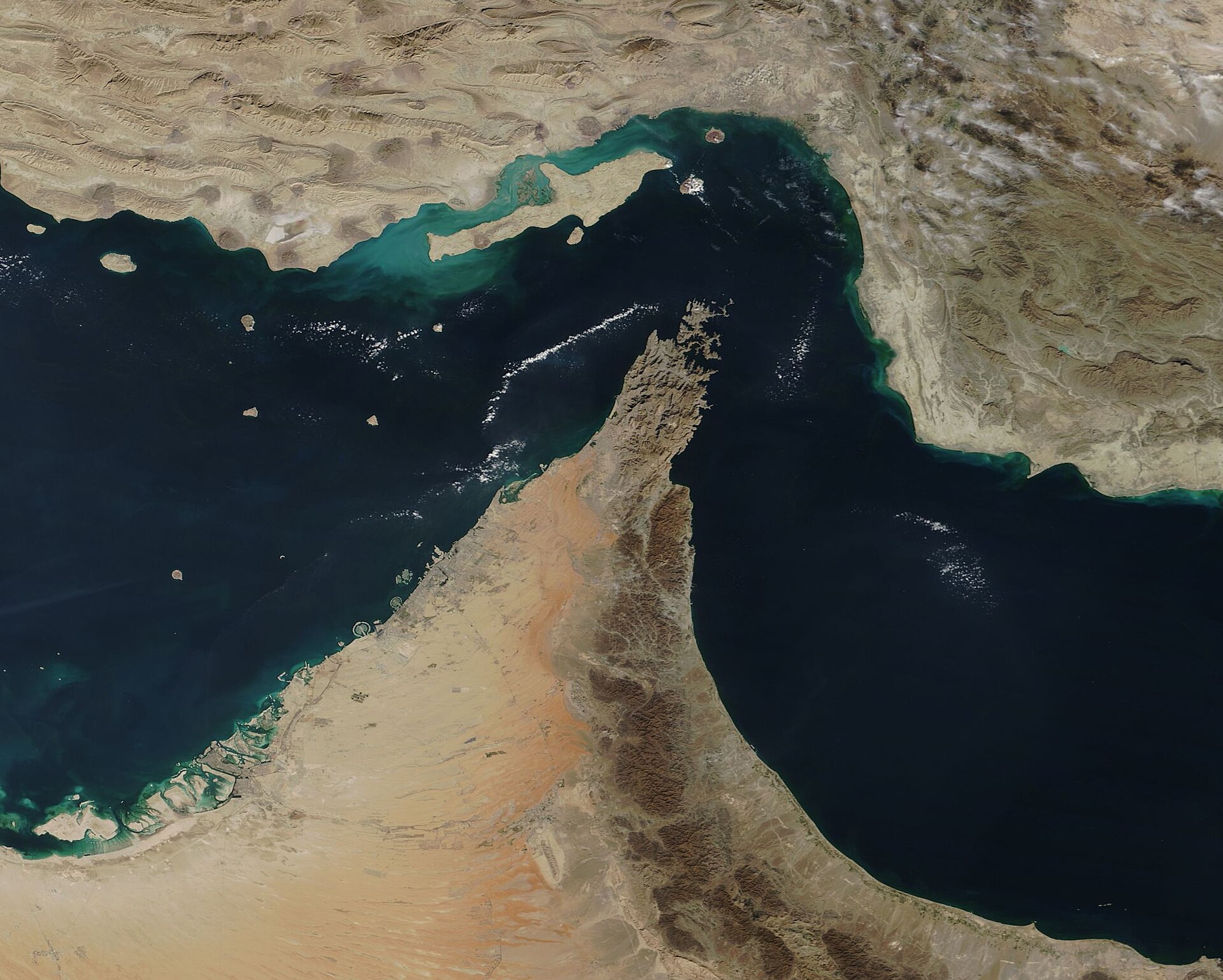
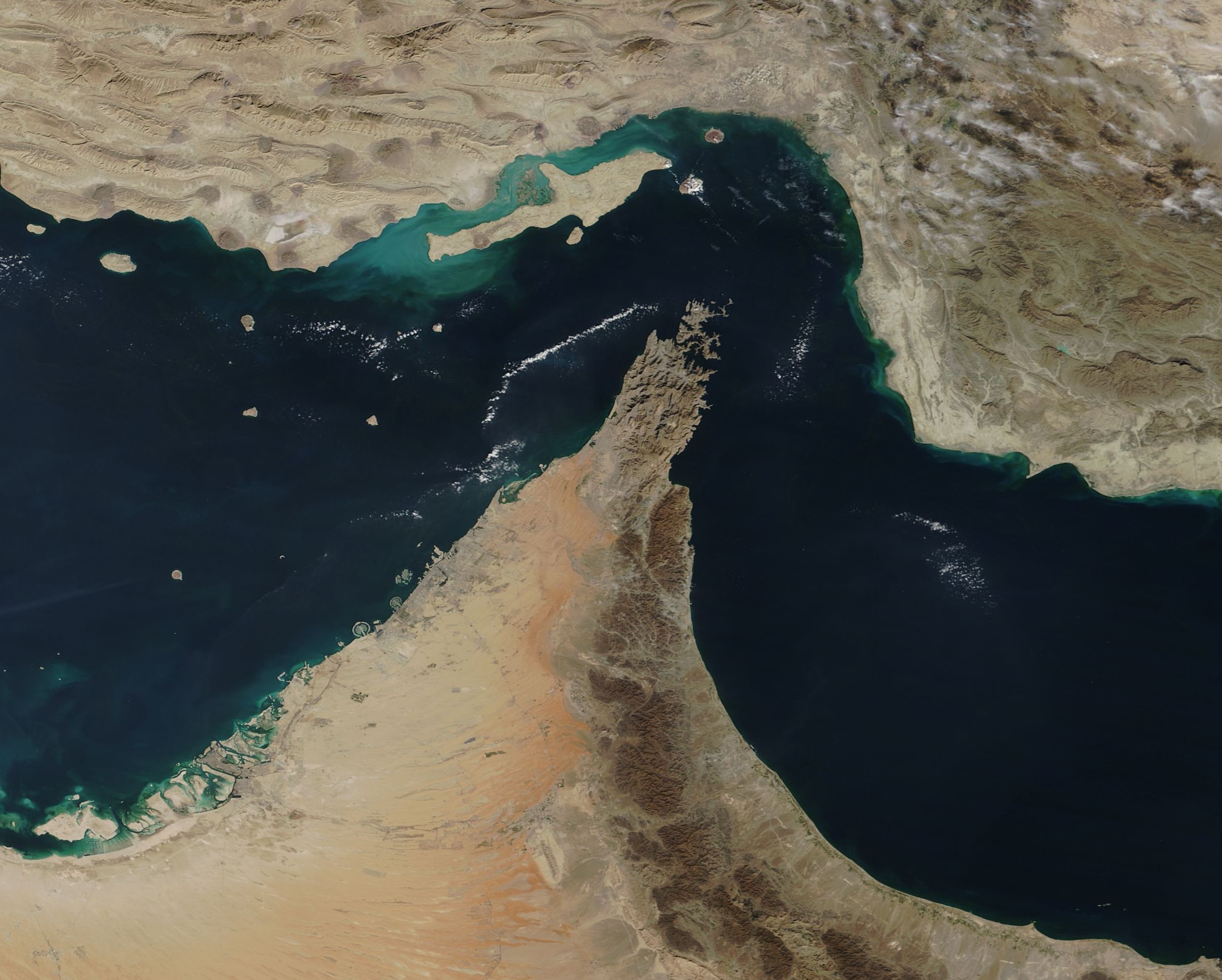
The April 30 statement, released through Iranian state media and read on national television, contained three distinct layers that GCC foreign ministries would have parsed separately. The first was aspirational: “The bright future of the Persian Gulf region will be a future without America, one serving the progress, comfort and prosperity of its people.” The second was an explicit offer of partnership: “We and our neighbours across the waters of the Persian Gulf and the Gulf of Oman share a common destiny.” The third was a threat dressed as observation — foreigners “who come from thousands of kilometres away to act with greed and malice there have no place in it, except at the bottom of its waters.”
The combination matters because of what it reveals about Tehran’s theory of the war’s aftermath. The statement did not demand Hormuz as an Iranian possession. It framed IRGC control as a shared regional benefit — a management arrangement that Gulf states should welcome because it replaces American naval hegemony with something locally owned. The phrasing tracked almost exactly with the Hormuz Peace Endeavour framework that Hassan Rouhani first proposed at the United Nations General Assembly in September 2019, an eight-nation structure explicitly excluding non-regional powers.
Within 24 hours, the IRGC Navy translated the aspirational language into operational terms. On May 1, its command announced that “the equations and rules governing the new management of the Persian Gulf have been set, and will be enforced, based on the historic directive” of the Leader. The IRGC pledged to make Hormuz “a source of livelihood and strength for the noble people of Iran, and a source of security and prosperity for the region.” The speed of the follow-through — supreme leader’s written statement on day one, IRGC enforcement directive on day two — suggested coordinated rollout, not spontaneous enthusiasm.
The IRGC’s Legislative Architecture
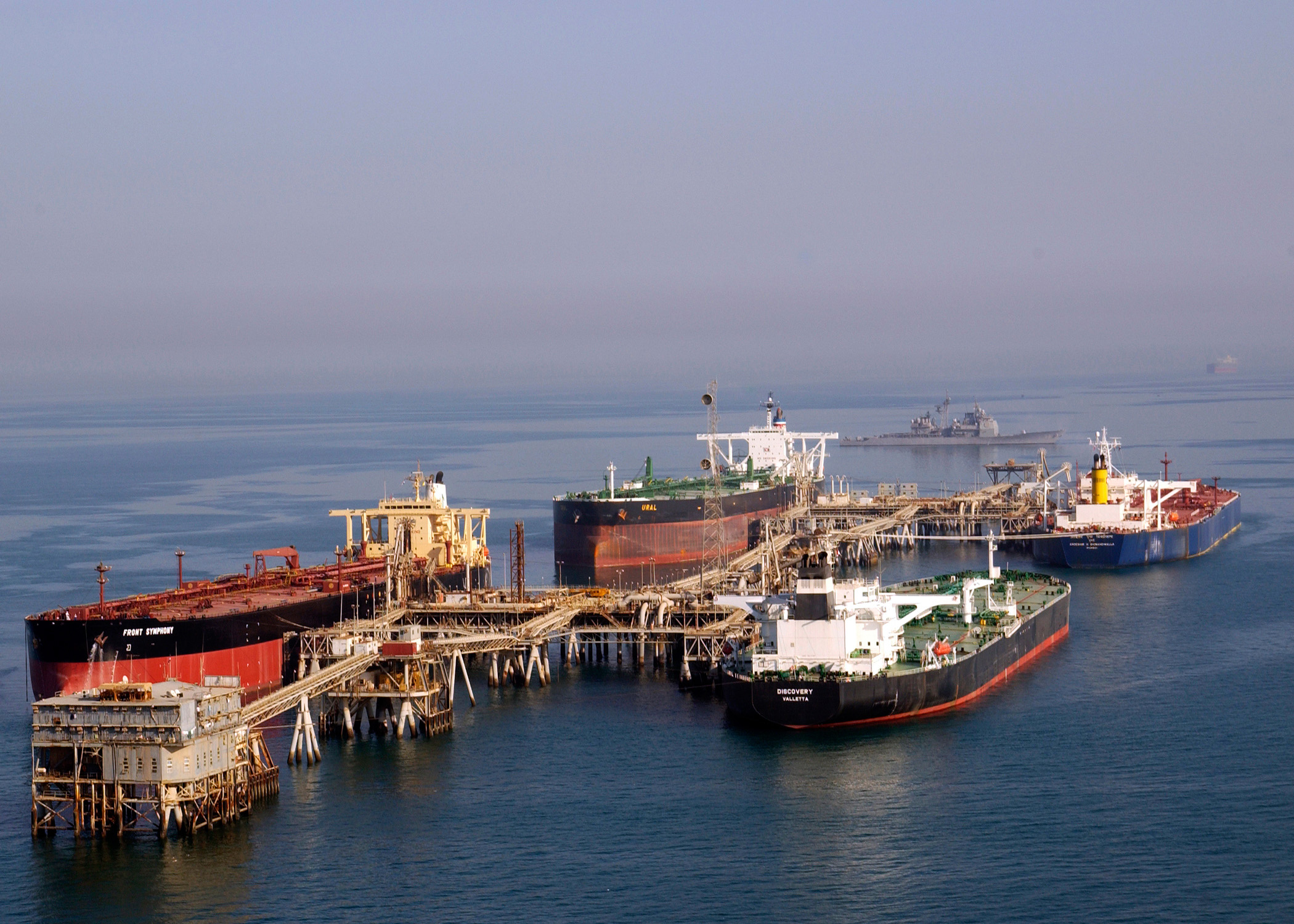
The offer did not arrive in isolation. It sat atop a legislative framework that the Iranian parliament’s National Security and Foreign Policy Committee had been building since late March. On April 21, the committee ratified a 12-article draft law titled “The Law on Establishing Iran’s Sovereignty over the Strait of Hormuz.” The provisions were specific enough to function as a regulatory code: tolls on all transiting vessels payable in Iranian rial; a ban on vessels affiliated with Israel; prohibition of transit for countries deemed “hostile to Iran” or those that decline to use “Persian Gulf” in shipping documents; mandatory passage coordination with Iranian authorities; and seizure of disobeying ships with confiscation of 20% of cargo value.
The Middle East briefing 3,000+ readers start their day with.
One email. Every weekday morning. Free.
The rial-denominated toll is the detail that GCC treasury officials would have noticed first. It is not primarily a revenue mechanism — Iran’s currency has lost roughly 80% of its value against the dollar since 2018. It is a de-dollarization instrument, forcing every vessel through the strait to hold Iranian currency and creating a structural demand floor for the rial. The 20% confiscation clause is the enforcement teeth: a 300,000-deadweight-ton VLCC carrying two million barrels of crude at $90 per barrel represents $180 million in cargo value, of which 20% is $36 million — a deterrent calibrated to make compliance cheaper than resistance.
The law was drafted to be adopted “immediately after the resumption of the work of the Iranian parliament,” according to Mojtaba Ahmadi, a member of the committee, and sent to the government for implementation. The timeline matters because it suggests Tehran intends to present GCC states and the international community with a fait accompli — a domestic law governing an international waterway, enforceable regardless of whether any other state recognizes it.
Which GCC States Are Most Exposed to the Wedge?
Qatar and Kuwait face existential exposure: both have zero bypass alternatives and have declared force majeure. Saudi Arabia holds a partial bypass via Yanbu but retains a 1.1–1.6 million bpd structural gap. Oman, south of the strait, faces diplomatic rather than transit pressure. The Jeddah declaration of collective rejection conceals these asymmetries.
The six GCC states face Iran’s offer from radically different positions of exposure, and Tehran’s diplomacy — whatever its ultimate source of authority — has been calibrated to exploit those differences.
| State | Pre-War Hormuz Dependence | Bypass Capacity | Specific Exposure |
|---|---|---|---|
| Qatar | 100% of LNG exports (77 MTPA from Ras Laffan) | None — no pipeline alternative for LNG | ~19% of global LNG trade offline |
| Kuwait | ~95% of crude exports | None operational | KPC declared force majeure March 7 |
| UAE | ~85% of crude exports | Fujairah terminal (damaged by drone strikes) | ADNOC Habshan-Fujairah pipeline partially operational |
| Bahrain | 100% of imports/exports via Gulf | None — sole alternative was King Fahd Causeway (closed April 7) | Airspace closed since Feb 28 |
| Oman | South of strait — not transit-dependent | Ports face Gulf of Oman, not Gulf | Co-custodianship offer rejected; geographic proximity = diplomatic pressure |
| Saudi Arabia | ~50% of pre-war exports via Hormuz | East-West Pipeline to Yanbu (damaged, 5.9M bpd ceiling) | 1.1-1.6M bpd structural gap vs pre-war throughput |
Qatar and Kuwait are the most exposed. Qatar’s 77-million-tonne LNG capacity at Ras Laffan — the largest liquefaction complex in the world, supplying roughly 19% of global LNG trade according to the International Energy Agency — has no bypass alternative. There is no pipeline that can move liquefied natural gas to a port outside the strait’s chokepoint. Replicating the infrastructure to bypass Hormuz for LNG would cost hundreds of billions of dollars and a decade of construction, according to industry estimates cited by CNBC. For Qatar, Iran’s offer is not an abstraction. It is the only path to resuming the revenue stream that funds the state.
Kuwait declared force majeure through the Kuwait Petroleum Corporation on March 7 and faces the same structural problem: no pipeline, no bypass, no alternative except Hormuz reopening. Bahrain sits in a category of its own — airspace closed since February 28, the King Fahd Causeway (its sole international access corridor after the closure) shut temporarily on April 7 during an Iranian missile barrage, and the US Navy’s Fifth Fleet headquarters at NSA Bahrain already damaged in the February 28 strike.
Oman occupies the most delicate position diplomatically. Sitting on the southern shore of the strait, Oman is not transit-dependent in the way Qatar and Kuwait are — its ports face the Gulf of Oman. But Iran specifically offered Oman co-custodianship of Hormuz, modeled on the Panama and Suez Canal authorities. Foreign Minister Araghchi flew to Muscat to make the pitch. Oman rejected it, with Transport Minister Said Al-Maawali noting that Oman had “signed all international maritime transport agreements” barring transit fees. Some analysts, however, read Oman’s rejection as tactical. The Jerusalem Post cited regional diplomatic assessments suggesting Muscat “may be silent for now but is expected to join once the war ends.” That sourcing is secondary and unverifiable; Oman’s public posture has been consistent with its UNCLOS commitments.
Saudi Arabia’s Specific Bind
Saudi Arabia occupies a middle position in the vulnerability matrix, and that middle position is the source of its particular dilemma. Unlike Qatar and Kuwait, Saudi Arabia has a functioning bypass — the East-West Pipeline to Yanbu on the Red Sea. Unlike Oman, Saudi Arabia is the GCC’s largest oil exporter and its de facto security guarantor. The bypass works, but not well enough.
The numbers tell the story. Saudi Arabia’s pre-war crude exports ran at approximately 7-7.5 million barrels per day through Hormuz. The East-West Pipeline, even at full operational capacity, delivers a ceiling of roughly 5.9 million bpd to Yanbu, according to Aramco’s infrastructure disclosures. That leaves a structural gap of 1.1 to 1.6 million bpd that cannot be bypassed regardless of how much money Riyadh invests in pipeline infrastructure. The gap is the residual hold that makes Iran’s offer something more than diplomatic theater, even for the GCC state best positioned to resist it.
Saudi production has already collapsed under the weight of the crisis. March 2026 output fell to 7.25 million bpd, down from 10.4 million in February — a 30% decline, according to IEA data. The Khurais field, producing 300,000 bpd before the war, went offline with no timeline announced for restoration. Asia-bound exports dropped 38.6% according to Kpler tracking data. Goldman Sachs estimated a war-adjusted fiscal deficit of 6.6% of GDP, roughly double the official 3.3% projection.
The fiscal pressure creates a timeline problem. Saudi Arabia’s break-even oil price sits at $108-111 per barrel when PIF obligations are included, according to Bloomberg’s calculations. Brent crude closed at $90.38 on the day the GCC summit opened — $18-21 below break-even. Every month the strait remains functionally closed, the gap between revenue and expenditure widens. The Jeddah summit ordered “urgent execution” of bypass pipelines and railways, but urgent execution of energy infrastructure means years, not months. Iran’s offer exploits the temporal mismatch between Saudi Arabia’s immediate fiscal needs and its long-term infrastructure plans.
Is There a Verifiable Sovereign Behind the Offer?
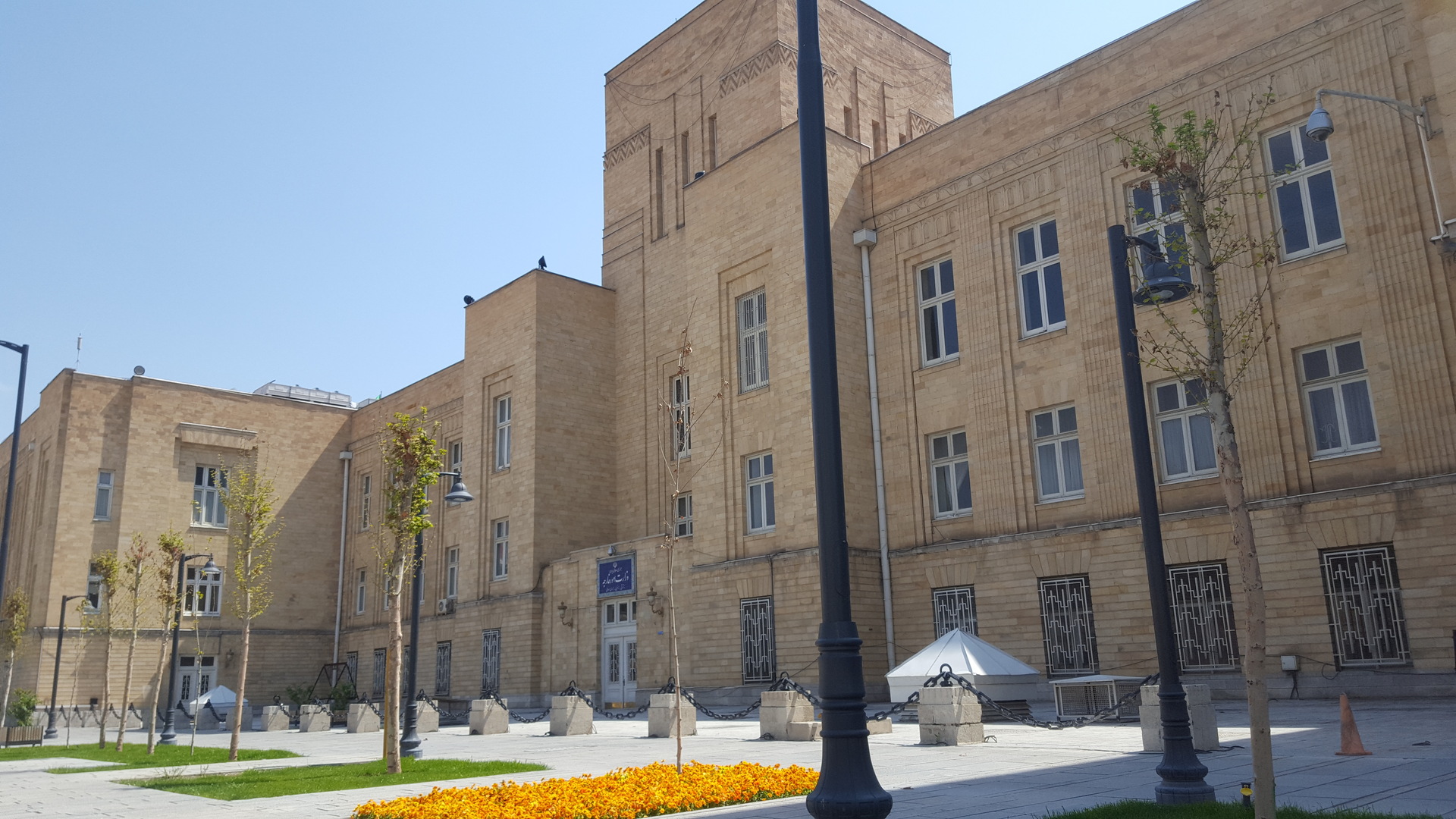
No verified live footage of Mojtaba Khamenei has existed since his March 9 appointment. US and Israeli intelligence assessments describe him as unconscious following multiple surgeries. An IRGC-affiliated media outlet briefly designated him a martyr in April, then corrected the language without formal retraction. The constitutional mechanism for incapacity declaration exists; the political will to use it does not.
The question that GCC foreign ministries and Western intelligence services have been circling since mid-March is whether the person who issued the April 30 statement is capable of issuing anything at all. Mojtaba Khamenei was announced as supreme leader on March 9, 2026, after the Assembly of Experts convened in emergency session following his father’s assassination in the February 28 strike.
On April 7, the Times of London published details from a classified intelligence memo, based on US and Israeli assessments shared with Persian Gulf allies, stating that Mojtaba Khamenei was “unconscious and receiving treatment” in Qom. The memo described “multiple surgeries on his legs and arms” and reported that he “struggled to speak due to severe burns to his face and lips.” Intelligence agencies noted preparations for a “large mausoleum in Qom” with space for “more than one grave.” The memo’s sourcing — US and Israeli intelligence, shared through diplomatic channels — gives it institutional weight even as its claims remain unverifiable from open sources.
What is verifiable is the absence. More than six weeks after his appointment, as CNN reported on April 21, no authenticated live footage of Mojtaba Khamenei existed. Iranian state media and government-backed channels circulated AI-generated videos “depicting the new leader delivering speeches to large crowds and standing beside his father at key moments — scenes that never actually occurred.” One Tehran resident, quoted by CNN, captured the public mood: “They’re calling him the AI supreme leader.”
Then came the Mashhad mural. On April 26, a mural titled “Martyrs of the Epic Struggle” was unveiled in Mashhad depicting Mojtaba Khamenei alongside Qassem Soleimani, Ebrahim Raisi, and Ruhollah Khomeini — all deceased. Tasnim News Agency, editorially linked to the IRGC, referred to Mojtaba as “the martyred leader of the revolution” before officials characterized the phrase as “an error.” No formal retraction was published. The phrase appeared under Tasnim’s institutional voice, not attributed to a junior editor or social media manager. In Iranian political culture, martyr murals produced by IRGC-affiliated media outlets are not bureaucratic accidents. They are signals, tested against public reaction before becoming official narrative.
The constitutional implications are precise. Article 111 of Iran’s constitution states that “whenever the Leader becomes incapable of fulfilling his constitutional duties” he shall be dismissed. The authority to make that determination rests with the Assembly of Experts. If the intelligence reporting is accurate — if Mojtaba Khamenei is unconscious in Qom, unable to speak, undergoing repeated surgeries — then the Article 111 trigger for incapacity has already been met. But the Assembly of Experts has never dismissed or even publicly questioned a sitting supreme leader in the Islamic Republic’s 47-year history. Its sessions are confidential, its membership dominated by IRGC-allied clerics. The constitutional mechanism exists. The political will to activate it does not.
Why the 2026 Version of HOPE Is Different from 2019
The 2019 Hormuz Peace Endeavour was a diplomatic alternative to confrontation. The 2026 version is a management structure for a waterway Iran has already closed. The IRGC enforces; selective transits have reached only 45 since the April 8 ceasefire; the economic cost has changed what refusal means for every GCC capital.
Iran’s framing of the Hormuz offer as a continuation of an existing diplomatic framework is deliberate and partially accurate. The Hormuz Peace Endeavour, first proposed by President Rouhani at the UN General Assembly in September 2019, was designed to bring together eight countries — Saudi Arabia, Iraq, Oman, the UAE, Kuwait, Qatar, Bahrain, and Iran — in a regional security architecture that explicitly excluded non-regional powers. Saudi Arabia and the UAE declined to participate. The framework went nowhere.
The 2026 revival is structurally identical but operationally different in three ways that matter. First, it arrives backed by military force. The IRGC controls the Gulf of Oman exit; the US Navy controls the Arabian Sea entry. The offer is not “join our framework or face disruption.” The disruption already exists. The offer is “join our framework to end it.”
Second, the 2019 version came from a president with clear constitutional authority and a diplomatic track record. Rouhani had negotiated the JCPOA. His government controlled foreign policy. The 2026 version comes from a supreme leader whose physical existence is unconfirmed, transmitted through written statements read by others, backed by an IRGC that operates with effective autonomy from civilian government. President Pezeshkian himself named IRGC commanders Vahidi and Abdollahi as ceasefire wreckers in an extraordinary public statement in April. The question of who authorized HOPE’s revival — and who has the authority to deliver on its promises — has no clear answer.
Third, the economic context has inverted. In 2019, GCC states could afford to ignore the proposal. Their oil revenues were stable, their export routes secure, their relationship with the US Fifth Fleet uncomplicated. In 2026, Qatar’s LNG exports are at zero, Kuwait has declared force majeure, Saudi production has fallen 30%, and the IEA’s executive director Fatih Birol has called the disruption “the biggest energy security threat in history.” The cost of dismissing the framework has changed even if the framework itself has not.
Can GCC States Exploit the Legitimacy Vacuum?
Partially, but not decisively. A sovereign who cannot be verified cannot deliver the guarantees the offer requires. But the same vacuum that weakens Iran’s credibility does not weaken IRGC enforcement. GCC states can use the uncertainty to delay engagement and invest in bypass infrastructure; they cannot use it to make the IRGC stand down.
The legitimacy question cuts both ways. If Mojtaba Khamenei is incapacitated or dead, then the April 30 statement has no binding sovereign authority behind it. Any agreement reached on its basis could be repudiated by a successor leader, an interim council, or the IRGC commanders who hold de facto power. For GCC states, this makes engagement with the offer legally meaningless — a treaty signed with a ghost.
But the reverse logic applies with equal force. If no verifiable authority stands behind the offer, then no verifiable authority can enforce the commitments that would make the offer attractive. Iran cannot guarantee that IRGC naval commanders will honor passage agreements made in Mojtaba’s name. It cannot guarantee that the 12-article Hormuz sovereignty law will be applied consistently rather than selectively. It cannot guarantee that tolls collected today will not be repudiated as extortion by a future government. The legitimacy vacuum does not just weaken Iran’s bargaining position. It makes Iran structurally incapable of delivering the thing it is selling — a stable, predictable Hormuz management regime.
Reuel Marc Gerecht and Ray Takeyh, writing in the Wall Street Journal in March 2026, identified Mojtaba’s appointment as representing “the collapse of the last egalitarian pillar of the revolution, namely that the mullahs, unlike decadent Persian shahs, don’t do dynastic succession.” Mojtaba lacked the religious qualifications the constitution requires — he is a mid-level cleric who has published no scholarly work, and no cleric of the highest authority confirmed that he possesses the independent juristic reasoning (ijtihad) required of a supreme leader under the velayat-e faqih doctrine. His authority rested on IRGC institutional backing, not clerical consensus.
The practical question for Riyadh, Abu Dhabi, and Doha is whether this thin legitimacy can be turned into a bargaining instrument. One approach — the one the GCC has adopted publicly — is categorical rejection, followed by bypass investment. The Jeddah summit’s declaration that “our security is a red line; any attack on one is an attack on all” represents collective defiance. The problem is that bypass infrastructure takes years and the fiscal bleeding is measured in months. A second approach, visible in Oman’s careful positioning and in Saudi Foreign Minister Faisal bin Farhan’s April 13 phone call to Araghchi on the day the US blockade took effect, is quieter — keeping diplomatic channels open without endorsing Iran’s framework. This is not acceptance. It is acknowledgment that the price of the strait’s closure is higher than the price of talking.
The Fourteen-Point Counterproposal and What It Reveals
On May 2, Iran submitted a 14-point response to the US 9-point ceasefire proposal through Pakistani intermediaries. The document demanded an end to hostilities within 30 days — half the US-proposed two-month timeline — along with US withdrawal from Iran’s periphery, an end to the naval blockade, release of frozen assets, payment of reparations, lifting of sanctions, cessation of fighting in Lebanon, and “a new mechanism governing the Strait of Hormuz.” Trump responded that he was “not satisfied.”
The Hormuz clause is the one that matters for this analysis. Its inclusion in a ceasefire counterproposal — alongside military demands like withdrawal and de-escalation — confirms what the April 30 statement and the 12-article parliamentary law both implied: Tehran treats Hormuz control as a war aim, not a bargaining chip. The waterway’s management is not something Iran will trade away for sanctions relief or asset unfreezing. It is the objective around which the other demands are organized.
This creates the deepest layer of the GCC dilemma. A ceasefire that includes “a new mechanism governing the Strait of Hormuz” — language broad enough to encompass anything from a joint monitoring body to full IRGC regulatory control — would require GCC states to accept some version of the Mojtaba offer as part of the war’s settlement. The alternative is indefinite disruption: the double blockade persists, 45 transits since the ceasefire at 3.6% of baseline, roughly 2,000 vessels stranded in or near the Gulf.
The IRGC Navy’s “full authority” declaration of early April — issued while Araghchi was in Islamabad negotiating — demonstrated that Iran’s military and diplomatic tracks operate independently. The IRGC does not wait for diplomatic authorization to enforce its Hormuz position. Any mechanism that emerges from negotiations will need to account for this dual-track reality, and no mechanism can do so without a functioning chain of command that terminates in a living, conscious sovereign authority.
The Responsible Statecraft analysis published in late April captured the strategic logic precisely: “Hormuz is not a tool to end the war but how Iran wins the aftermath.” If the waterway’s management becomes embedded in a ceasefire framework — anchored in domestic law, enforced by an IRGC that answers to a supreme leader who may not be alive to give orders — then Iran will have converted a military crisis into a permanent institutional presence in the world’s most important energy chokepoint. The offer’s legitimacy is almost beside the point. Its power derives from geography and from the absence of alternatives.
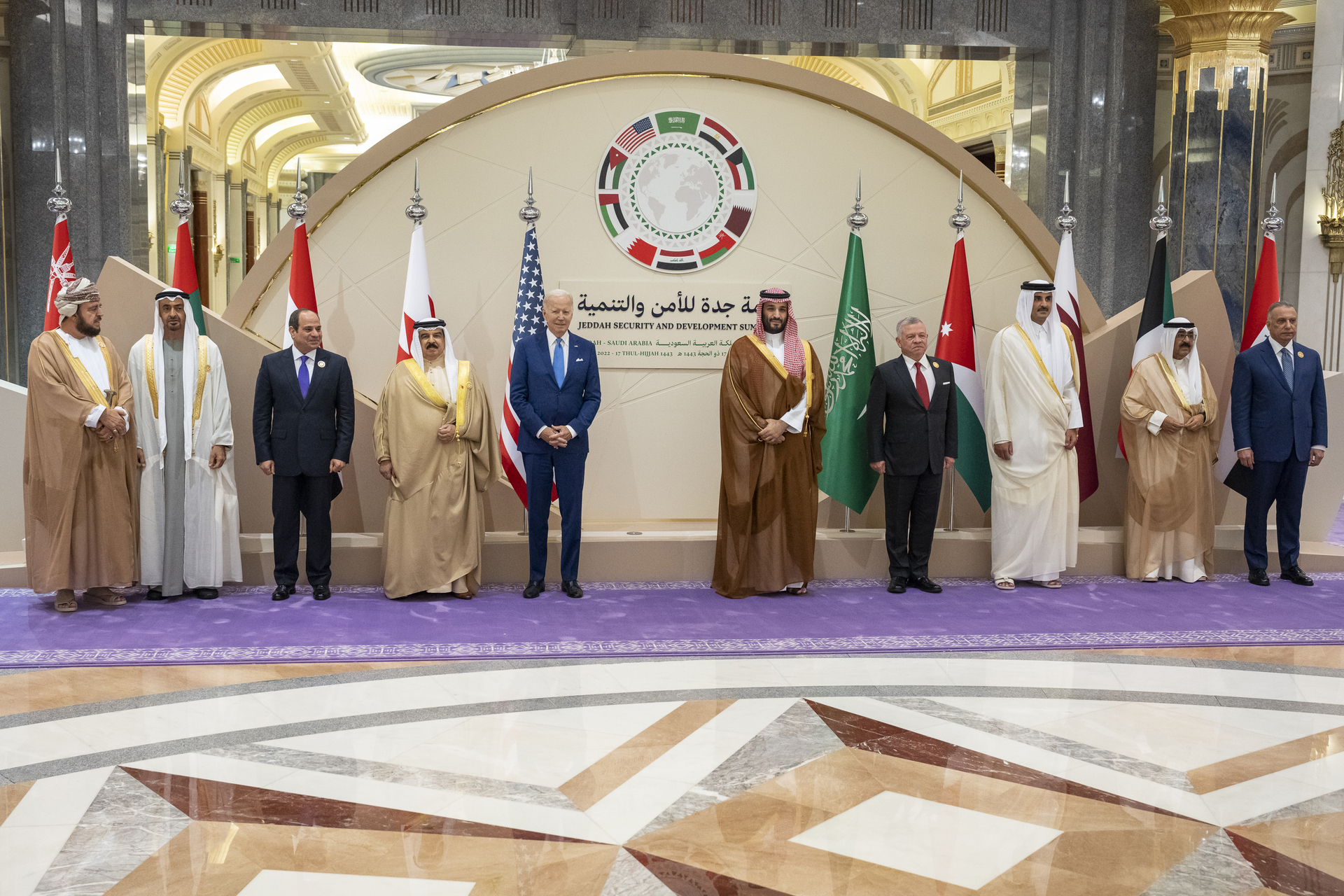
The Carnegie Endowment’s April 2026 scenario paper on Gulf states after the Iran war identified one “hopeful scenario” in which GCC states use the crisis to deepen economic integration as a buffer against precisely this kind of coercion — building redundancy into energy export infrastructure, diversifying fiscal revenue away from hydrocarbon dependence, and strengthening collective defense commitments. The Jeddah summit’s bypass directives — the unified Gulf railway, cross-border pipelines, electricity interconnection — are the institutional expression of that scenario. Whether they arrive fast enough to change the calculus before the next round of negotiations is the question that Mojtaba’s offer, whoever actually wrote it, was designed to make urgent.
The dual-track architecture of Iranian decision-making means that the offer and the threat will continue to operate on separate channels regardless of what happens to the man whose name appears at the top. The IRGC enforces; the diplomatic apparatus negotiates; the supreme leader — if he exists as a functioning authority — provides constitutional cover. If he does not exist as a functioning authority, the first two tracks continue without the third. That is the condition GCC states are navigating now: an offer with real coercive power and no verifiable counterparty. Rejecting it is simple. Living with the consequences of rejection, while 1.1 to 1.6 million barrels per day remain structurally stranded on the wrong side of the strait, is not.
Frequently Asked Questions
What is the Hormuz Peace Endeavour (HOPE) and has any GCC state ever participated?
The Hormuz Peace Endeavour is a regional security framework first proposed by Iranian President Hassan Rouhani at the UN General Assembly in September 2019. It was designed to include eight littoral states — Saudi Arabia, Iraq, Oman, the UAE, Kuwait, Qatar, Bahrain, and Iran — while explicitly excluding the United States, the United Kingdom, and other non-regional naval powers. No GCC state joined the initiative in 2019. Oman was considered the most likely early participant given its traditional role as a Gulf mediator, but Muscat declined. The 2026 revival adds military enforcement to what was originally a diplomatic proposal.
What would happen constitutionally if Mojtaba Khamenei were confirmed dead or incapacitated?
Article 111 of Iran’s constitution provides for an Interim Leadership Council comprising the president, the chief justice, and one member of the Guardian Council if the supreme leader becomes “incapable of fulfilling his constitutional duties.” This council would assume the leader’s powers temporarily while the Assembly of Experts selects a replacement. In practice, however, the IRGC’s institutional dominance — commanders hold de facto authority over defense and foreign policy regardless of who occupies the supreme leader’s office — means that a formal incapacity declaration might change the constitutional letterhead without altering the command structure that enforces Hormuz policy.
How does Iran’s proposed Hormuz toll compare to historical precedents for waterway transit fees?
The closest historical parallel is the Sound Dues that Denmark levied on all vessels transiting the Danish straits from the fifteenth century until 1857, when an international convention abolished the tolls multilaterally — not bilaterally. The Suez Canal charges transit fees averaging $300,000-700,000 per vessel, but these are contractual fees for a constructed waterway operated under international treaty, not unilateral charges on a natural strait. Iran’s proposed toll of approximately $1-2 million per VLCC, payable in Iranian rial, would represent the first unilateral toll on a natural international strait in modern maritime history. UNCLOS Article 26 explicitly prohibits charges on foreign ships “merely for passage through the territorial sea.”
Could China broker a compromise on Hormuz given its role in facilitating Qatar LNG transits?
Beijing facilitated the transit of Qatari LNG carriers Al Daayen and Rasheeda through Hormuz in early April, with CNPC and Sinopec holding 8 MTPA in contracted offtake and 5% equity in Qatar’s North Field East expansion. China’s influence is real but asymmetric — it can broker individual transits through commercial relationships with both Iran and Qatar, but it cannot impose a multilateral governance framework on GCC states that view any acceptance of Iranian Hormuz authority as a sovereignty concession. China’s strategic interest is in keeping energy flowing, not in adjudicating the legal architecture that governs the waterway.
What is the J.P. Morgan estimate of Iran’s potential Hormuz revenue?
A J.P. Morgan research note — cited in regional financial media but not publicly available in full — estimated that Iran could raise $70-90 billion annually if permitted to charge tariffs on Hormuz transit, assuming full pre-war volumes and compliance. That figure would dwarf Iran’s current oil export revenues. The Amir Handjani analysis for the Quincy Institute placed the range lower, at $1.5-3.9 billion per month ($18-47 billion annually), based on partial compliance scenarios — a spread that reflects how sensitive the estimate is to assumptions about enforcement and participation. That ambiguity has since been superseded by a more durable instrument: Iran’s Hormuz sovereignty law, a 12-article statute that codifies IRGC transit controls into domestic legislation and removes the question of sovereign authority from personal declarations entirely.
The sequencing disclosure that followed — Iran surfacing Washington’s rejection of the “Hormuz first” framework within 24 hours — is analyzed in Iran Told Everyone Washington Rejected the Hormuz Deal — Because the Rejection Was the Product, which explains why the proposal was structured for public blame assignment rather than genuine negotiation.