TEHRAN — On the evening of May 1, Iran submitted a revised 14-point peace proposal to the United States via Pakistan offering to reopen the Strait of Hormuz simultaneously with the lifting of the American naval blockade. Twelve hours earlier, the IRGC Navy had announced that “the equations and rules governing the new management of the Persian Gulf have been set, and will be enforced, based on the historic directive” of the Supreme Leader — the same man whose written statement the previous day declared that foreigners have “no place” in the Persian Gulf “except at the bottom of its waters.” The IRGC Navy named that statement a “historic directive.” Iran’s foreign ministry submitted a peace proposal. Neither document references the other.
Mojtaba Khamenei’s April 30 declaration — issued on Persian Gulf National Day, read by a state television anchor because the Supreme Leader has not appeared in public for 65 days — functions as a political floor below which no Iranian negotiator can concede. The 14-point proposal operates above that floor. Any agreement Foreign Minister Abbas Araghchi signs in the Pakistan channel must survive public ratification against Mojtaba’s stated maximalist red lines, now permanently attached to a date the Iranian calendar will revisit every year. The IRGC Navy adopted those red lines as its governing operational framework on May 1.
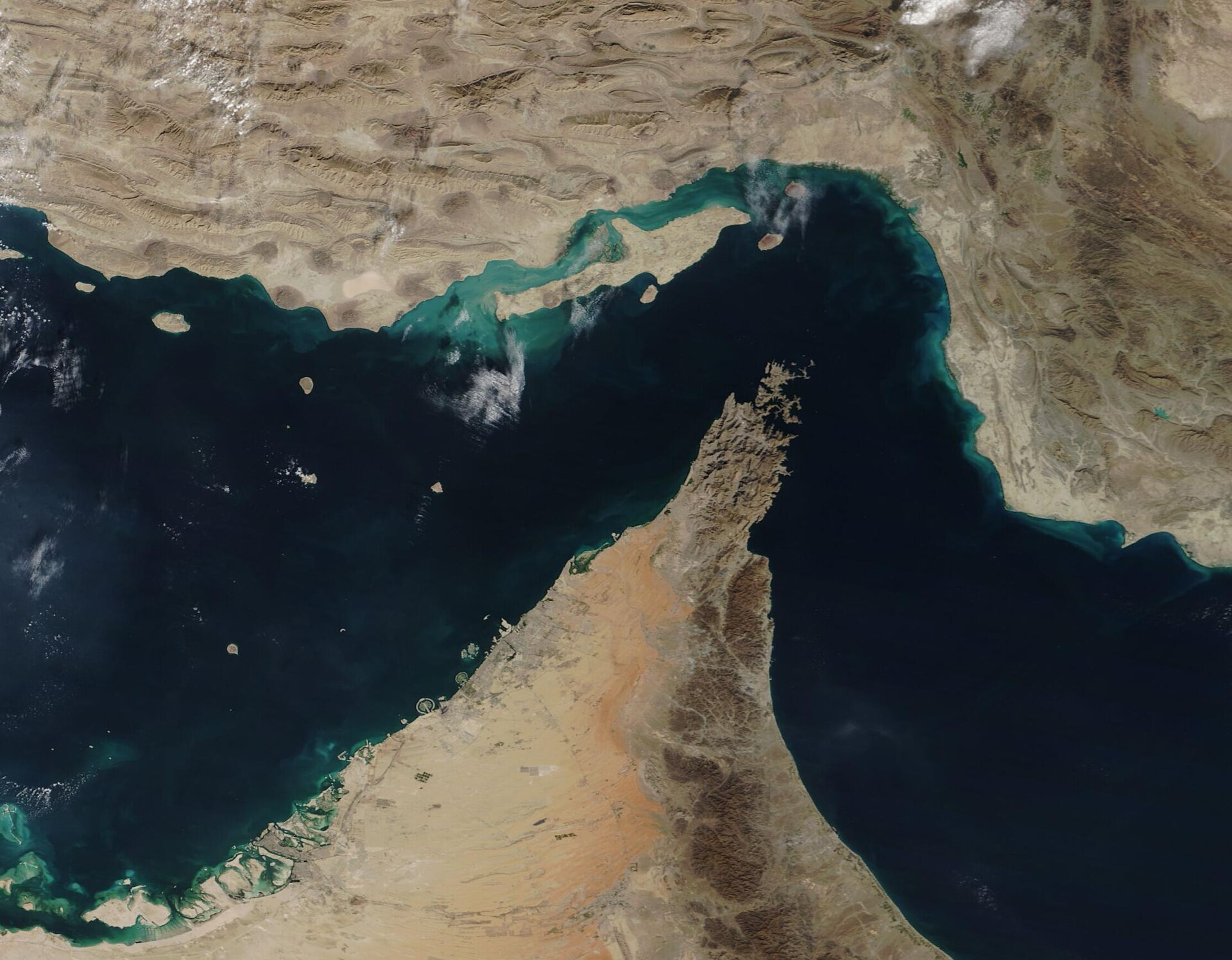
Table of Contents
- The April 30 Statement — Floor, Not Ceiling
- What Does Iran’s 14-Point Proposal Actually Offer?
- Why Did the IRGC Navy Call It a “Historic Directive”?
- The Authorization Ceiling Goes Public
- Can Araghchi Sign Anything That Survives?
- Three Clocks Converging on May 1
- What Does This Mean for Saudi Arabia?
- The Invisible Commander
- Frequently Asked Questions
The April 30 Statement — Floor, Not Ceiling
Mojtaba Khamenei’s April 30 statement arrived in written form, read aloud by a state television anchor. No video, no audio, no photograph accompanied it — consistent with every communication since the Assembly of Experts named him Iran’s third Supreme Leader on March 8 (Times of Israel, April 30; CNN, April 21). The delivery method is now the established pattern: surrogate voices for an invisible leader whose physical condition has not been independently confirmed by Tehran.
The timing was not incidental. April 30 is Persian Gulf National Day in Iran — an annual commemoration that transforms any policy declaration issued on that date into a doctrinal marker, something the national calendar will surface again next year and every year after (Fortune, April 30; PBS NewsHour, April 30). Mojtaba chose this anchor point deliberately. His statement named “all of Iran’s identity-based, spiritual, human, scientific, industrial and technological capacities — from nanotechnology and biotechnology to nuclear and missile capabilities — as national assets,” pledging to “protect them just as they protect the country’s waters, land and airspace” (PBS NewsHour, April 30; Washington Times, April 30).
“Foreigners who come from thousands of kilometers away to act with greed and malice there have no place in it — except at the bottom of its waters.” — Mojtaba Khamenei, written statement read on state television, April 30, 2026
By binding nuclear capabilities, missile programs, and Gulf sovereignty into a single declarative sentence — and doing so on Persian Gulf National Day — Mojtaba has created a public record against which every future concession will be measured. Any Iranian diplomat who agrees to limit enrichment, constrain missiles, or share Hormuz management must do so knowing that the Supreme Leader’s position, tied to a national holiday, sits in the permanent archive. Iranian state media — PressTV, IRNA, Fars — amplified the statement as sovereign doctrine.
The Middle East briefing 3,000+ readers start their day with.
One email. Every weekday morning. Free.
Mojtaba’s statement did not address the Pakistan diplomatic channel, the 14-point proposal under preparation, or any specific negotiating position. Its function is atmospheric: a declaration of maximum ambition that precedes and conditions everything that follows. On the same day, a companion PressTV editorial declared that “Iran’s resilience pays off with major strategic gains as US pressure tactics fail,” embedding the directive inside a victory narrative aimed at domestic audiences.
What Does Iran’s 14-Point Proposal Actually Offer?
Iran’s revised 14-point proposal, submitted via Pakistan on May 1, offers to reopen the Strait of Hormuz simultaneously with the lifting of the US naval blockade — dropping Tehran’s prior demand that Washington act first. Nuclear negotiations are deferred to a subsequent phase. Missile programs are excluded from the framework (Wall Street Journal via Iran International; Al-Monitor, May 2).
The proposal is the second iteration in roughly five days. The April 27 version — floated after Araghchi visited Pakistan twice, Muscat, and Moscow in a 48-hour diplomatic shuttle — demanded the US lift its blockade before Hormuz negotiations could begin. Washington rejected the precondition immediately. The May 1 revision concedes on sequencing while preserving the same structural logic: Hormuz first, nuclear later, missiles never.
The demand that survived both versions is the structural poison pill: Iran insists that Washington recognize Iran’s right to enrich uranium for peaceful purposes, even if Iran agrees to suspend enrichment (Reuters via Al Jazeera; Iran International liveblog). Recognition of the right is distinct from permission to exercise it. Tehran wants the principle codified before discussing the practice — a demand that any future administration could use to resume enrichment under legal cover.
Trump’s response arrived within hours. “They’re asking for things I can’t agree to,” he said on May 1 (Al Jazeera, May 1; CNBC, May 1). Separately: “I’m not satisfied with it” (Times of Israel, May 1; PBS NewsHour). His core objection is the deferral of the nuclear file — the one element Mojtaba’s April 30 statement textually locked in place as a “national asset.”
An Iranian government official told Al-Monitor the rejected proposal “would open the strait before nuclear talks” — an unusually direct confirmation of the sequencing Iran sought (Al-Monitor, May 2). The phrasing reveals the internal hierarchy: Hormuz is the concession card; nuclear is the thing to be protected. That hierarchy maps precisely onto Mojtaba’s April 30 statement, where Gulf waters and nuclear capabilities are named in the same breath but ordered by what can be traded and what cannot.
| Element | April 27 Proposal | May 1 Proposal (14-point) |
|---|---|---|
| US blockade | US lifts first (precondition) | Simultaneous unwinding |
| Hormuz reopening | After blockade lifts | Simultaneous with blockade lift |
| Nuclear program | Deferred to Phase 2 | Deferred to Phase 2 |
| Enrichment right recognition | Demanded | Demanded |
| Missile programs | Excluded | Excluded |
| Diplomatic channel | Pakistan | Pakistan |
| Key shift | Sequential (Iran acts only after US) | Parallel (both sides act together) |
Why Did the IRGC Navy Call It a “Historic Directive”?
The IRGC Navy’s May 1 announcement was the first to name Mojtaba Khamenei’s April 30 statement as its constitutional source — converting two months of Hormuz enforcement into formally sanctioned state policy. In IRGC communications, “historic” signals a directive that diplomatic agreements cannot supersede without a countermanding Leader order (PressTV, May 1; TASS, May 1; Xinhua, May 2).
The prior IRGC Navy declarations — April 5 and April 10 — asserted “full authority” over the strait without naming the Supreme Leader as their source. That omission was constitutionally consequential. Under Article 110 of Iran’s constitution, the Supreme Leader alone holds authority to appoint and dismiss IRGC commanders, ratify Supreme National Security Council decisions, and authorize military force. An IRGC claim without explicit Supreme Leader attribution is operationally real but constitutionally informal — a military assertion, not a state directive.
The May 1 announcement closes that gap. By naming Mojtaba’s April 30 statement as a “historic directive,” the IRGC Navy retroactively converts its two months of Hormuz enforcement into constitutionally sanctioned policy. What was previously a military fait accompli — the IRGC acting in a period when no visible or functional Supreme Leader sat atop the chain of command — is now formal state doctrine bearing the Leader’s written imprimatur.
“The equations and rules governing the new management of the Persian Gulf have been set, and will be enforced, based on the historic directive of the Leader.” — IRGC Navy Command, May 1, 2026
The IRGC Navy has locked Mojtaba’s April 30 floor into its own operational doctrine. Any future Hormuz reopening arrangement must now contend not only with the April 30 statement itself but with its formal adoption as the IRGC’s governing framework — a distinction that requires the Leader to issue a countermanding order, not merely a diplomat to sign an agreement.
PressTV’s coverage of the May 1 announcement omitted any mention of the simultaneous Pakistan peace proposal. The IRGC’s information apparatus treats the military track and the diplomatic track as parallel and unrelated. For domestic audiences, there is no dual track. There is only the directive.
The Authorization Ceiling Goes Public
Since February 28, the central structural problem of Iran’s war governance has been what this site has tracked as the authorization ceiling: the gap between what diplomats can negotiate and what the IRGC will accept. President Pezeshkian named it explicitly when he publicly accused Vahidi and Abdollahi of blocking ceasefire compliance — a sitting president identifying IRGC generals he has no constitutional authority to command. Under Article 110, only the Supreme Leader can direct the IRGC.
Mojtaba’s April 30 statement does not lower that ceiling — it publishes it. Previously, the authorization ceiling operated through institutional back-channels: SNSC vetoes, IRGC walkouts at Islamabad, Vahidi’s demand to place his deputy Zolghadr on the negotiating team. Diplomats like Araghchi could plausibly claim to be negotiating in good faith while the ceiling operated invisibly above them. The gap between Araghchi’s authority and the IRGC’s veto was a feature, not a defect — it allowed Iran to engage diplomatically without committing to outcomes the military would enforce.
The April 30 statement removes that ambiguity. Mojtaba has publicly declared nuclear and missile capabilities non-negotiable. The IRGC Navy has publicly named his words as the “historic directive” governing Hormuz enforcement. Any negotiating partner — Pakistan, Oman, or the United States — can now read the public record and identify exactly where the floor sits.
Three people familiar with internal deliberations told Reuters that Mojtaba’s role is “largely to legitimize decisions made by his generals, rather than issue directives himself” (Reuters via Time Magazine, April 21). If accurate, the April 30 statement represents not a Supreme Leader commanding his military but a military securing permanent public authorization from its Supreme Leader. The directive flows upward — from IRGC operational need to Leader endorsement — then is presented publicly as flowing downward. The troika of Taeb, Rezaei, and Ghalibaf that reportedly governs actual decision-making gets the constitutional cover of a Leader’s signature on a statement it likely drafted.
Whether Mojtaba commands the IRGC or the IRGC commands Mojtaba, the public output is identical: a written maximalist standard, published on a national holiday, that every potential spoiler inside Iran can now cite against any diplomat who concedes too much.
Can Araghchi Sign Anything That Survives?
Any agreement Araghchi signs must survive public comparison against Mojtaba Khamenei’s April 30 declaration naming nuclear and missile programs “national assets” — and against the IRGC Navy’s adoption of that statement as its operational mandate. The structural challenge is not persuading Araghchi to sign. It is ensuring the signature holds. That challenge became more complex on May 6, when Araghchi landed in Beijing to pre-condition Xi Jinping’s posture before Trump’s arrival in the same city eight days later — testing whether Iran’s diplomatic circuit could convert China’s Blocking Rules invocation into a formal ceasefire guarantee before the floor Mojtaba built makes any guarantee impossible to enforce.
Araghchi has been here before. When he declared Hormuz “completely open” on April 17, the IRGC reversed him within hours via Tasnim, calling the strait “returned to previous state, strict management and control.” Parliament Speaker Ghalibaf validated the override with operational language: decisions are made “in the field, not on social media.” Lawmaker Mahmoudi threatened impeachment. Any diplomatic concession that crosses the IRGC’s operational reality gets reversed at speed, with institutional allies providing political cover for the reversal.
The May 1 framework makes future reversal even easier. If Araghchi agrees to enrichment suspension in a later Phase 2, opponents need only quote Mojtaba’s Persian Gulf National Day statement to frame the agreement as a betrayal of “national assets.” The annual calendar ensures the quote will resurface every April 30 in perpetuity — a political weapon pre-loaded for any faction seeking to torpedo a deal it did not authorize.
The 14-point proposal’s own structure reflects this constraint. It offers Hormuz concessions because Mojtaba’s statement, while threatening about foreigners in the Gulf, does not explicitly prohibit a managed reopening. But nuclear and missile programs are textually locked. The proposal’s sequencing — Hormuz tradeable, nuclear deferred, missiles invisible — is a map of the authorization ceiling translated into diplomatic bullet points: items Araghchi might plausibly deliver below the red line, items he cannot deliver above it.
The Pakistan channel, which has evolved from venue host to active mediator since the Islamabad Accord, faces its own version of this problem. Pakistan can transmit proposals and facilitate meetings. It cannot guarantee that an agreement signed by Iran’s foreign minister will survive the institutional gauntlet between the Foreign Ministry and the IRGC’s operational command — a gauntlet that Mojtaba’s April 30 statement has now widened by giving every potential spoiler a public text to cite.
Three Clocks Converging on May 1
The convergence on May 1 of Iran’s proposal submission, the IRGC Navy announcement, and the US War Powers Resolution deadline was not coincidental — even if it was not fully coordinated across Tehran and Washington.
Trump told Congress on May 1 that hostilities “have terminated,” invoking the ceasefire to claim the War Powers Resolution’s 60-day clock — which began when he notified Congress on March 2 — had been paused (CNBC, May 1; Al Jazeera, May 1; CBS News, May 1). Secretary of Defense Pete Hegseth argued that an ongoing ceasefire “pauses” the deadline. Senator Tim Kaine rejected the claim, saying he did not “believe the statute would support that” (CBS News, May 1). The legal question — whether a ceasefire short of a formal cessation of hostilities satisfies the War Powers Resolution — has no settled precedent, which is precisely why the administration chose that framing.
On the same day Trump declared hostilities terminated, the US naval blockade of Iranian ports — operational since April 13 — remained in effect. The tension is structural: a blockade is an act of force under international law, and maintaining one while claiming hostilities have ended invites the legal challenge Kaine signaled.
| Event | Actor | Function |
|---|---|---|
| IRGC Navy “historic directive” announcement | IRGC Navy / Mojtaba Khamenei | Constitutional formalization of Hormuz control; locks April 30 floor into military doctrine |
| 14-point proposal submitted via Pakistan | Iran Foreign Ministry / Araghchi | First offer of simultaneous Hormuz/blockade unwinding; signals tactical flexibility above the public floor |
| War Powers Resolution 60-day deadline | Trump / US Congress | Administration claims ceasefire pauses clock; Congress disputes; blockade continues despite “terminated” hostilities |
Iran’s proposal arrived on the same day Trump needed a legal basis to continue operations without congressional authorization. On the same day, the IRGC Navy declared its Hormuz authority “based on the historic directive of the Leader” — language that frames enforcement as sovereign governance rather than an act of war. Trump told Congress hostilities “have terminated.” The IRGC told PressTV the strait is under new management.
What Does This Mean for Saudi Arabia?
Saudi Arabia faces a diplomatic path to Hormuz reopening that has become longer, not shorter. Mojtaba’s public floor means any deal must preserve Iran’s nuclear program, constrain no missiles, and affirm Iranian sovereignty over Gulf waters — conditions that leave Riyadh’s exposure to Iranian military capability permanently unresolved under any agreement Tehran can actually deliver. How the April 30 CENTCOM briefing exposed that trap — and why Saudi Arabia’s indispensability to US military options may itself become leverage against Riyadh — is examined in Trump’s 45-Minute Hormuz Briefing and Saudi Arabia’s Indispensability Trap.
Any deal that emerges from the Pakistan channel — if one emerges — must satisfy Mojtaba’s public standard: nuclear and missile programs preserved as “national assets,” Iranian sovereignty over Gulf waters affirmed, foreign military presence rejected. A deal meeting those conditions would leave Saudi Arabia facing a nuclear-capable Iran with an internationally recognized claim to Hormuz management and no constraint on its missile inventory. A deal that falls short of those conditions will not survive the IRGC’s institutional veto — the same veto that reversed Araghchi on April 17, that Pezeshkian named but could not override, that the IRGC Navy has now formally attributed to the Leader’s directive.
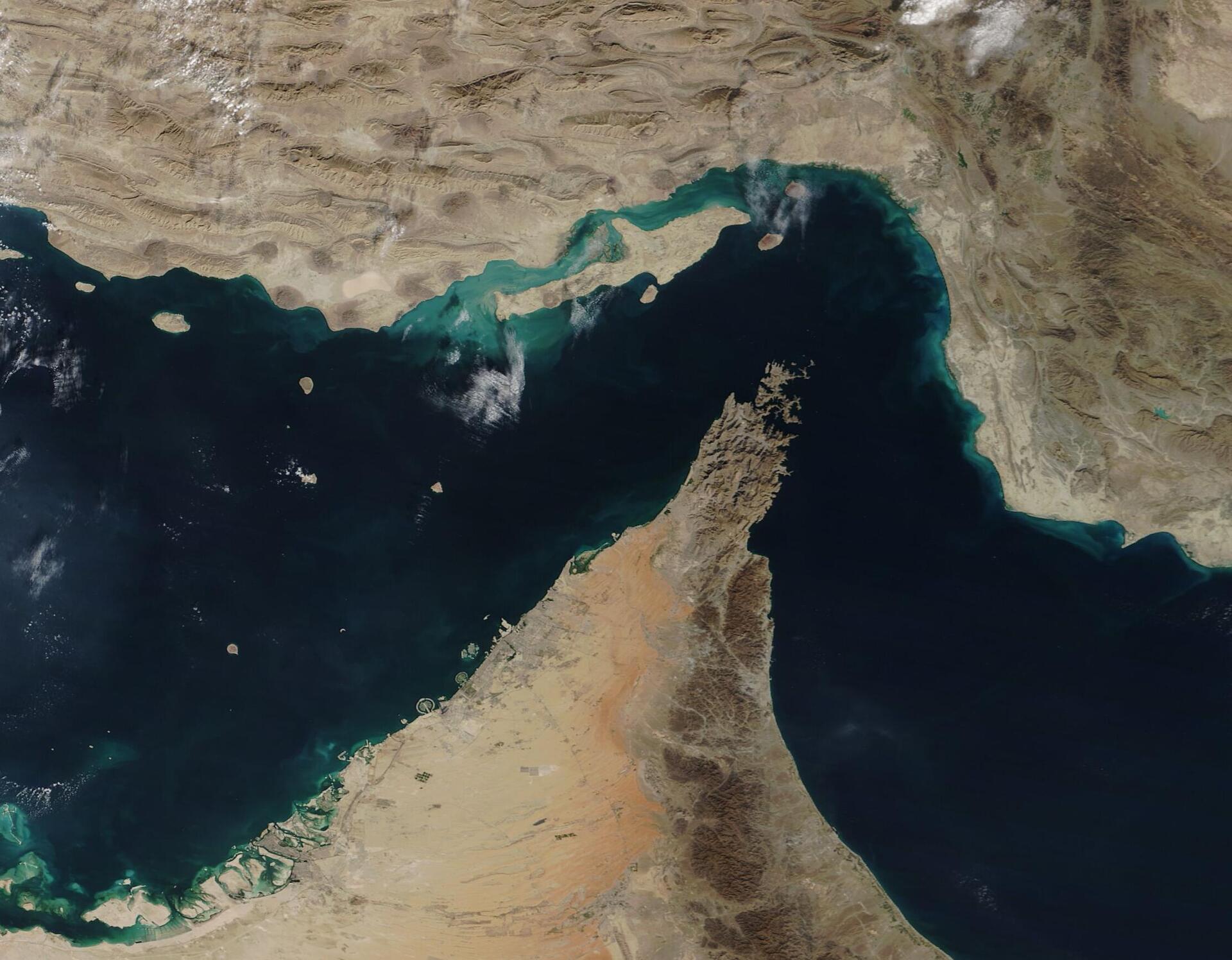
The Hormuz double blockade remains the physical expression of this impasse. The US controls the Arabian Sea approach since April 13; the IRGC controls the Gulf of Oman exit since March 4; vessels need both approvals to transit. Forty-five transits since the April 8 ceasefire represent 3.6% of pre-war baseline traffic — a 96.4% reduction in the waterway that carried roughly 21% of global petroleum consumption before February 28.
The UAE’s departure from OPEC, announced approximately April 28 (Washington Post), was Abu Dhabi’s answer to this structural bind — an exit from the cartel framework that had become irrelevant to an energy market governed by military checkpoints rather than quotas. Saudi Arabia does not have that option. The Custodian of the Two Holy Mosques cannot abandon the regional framework.
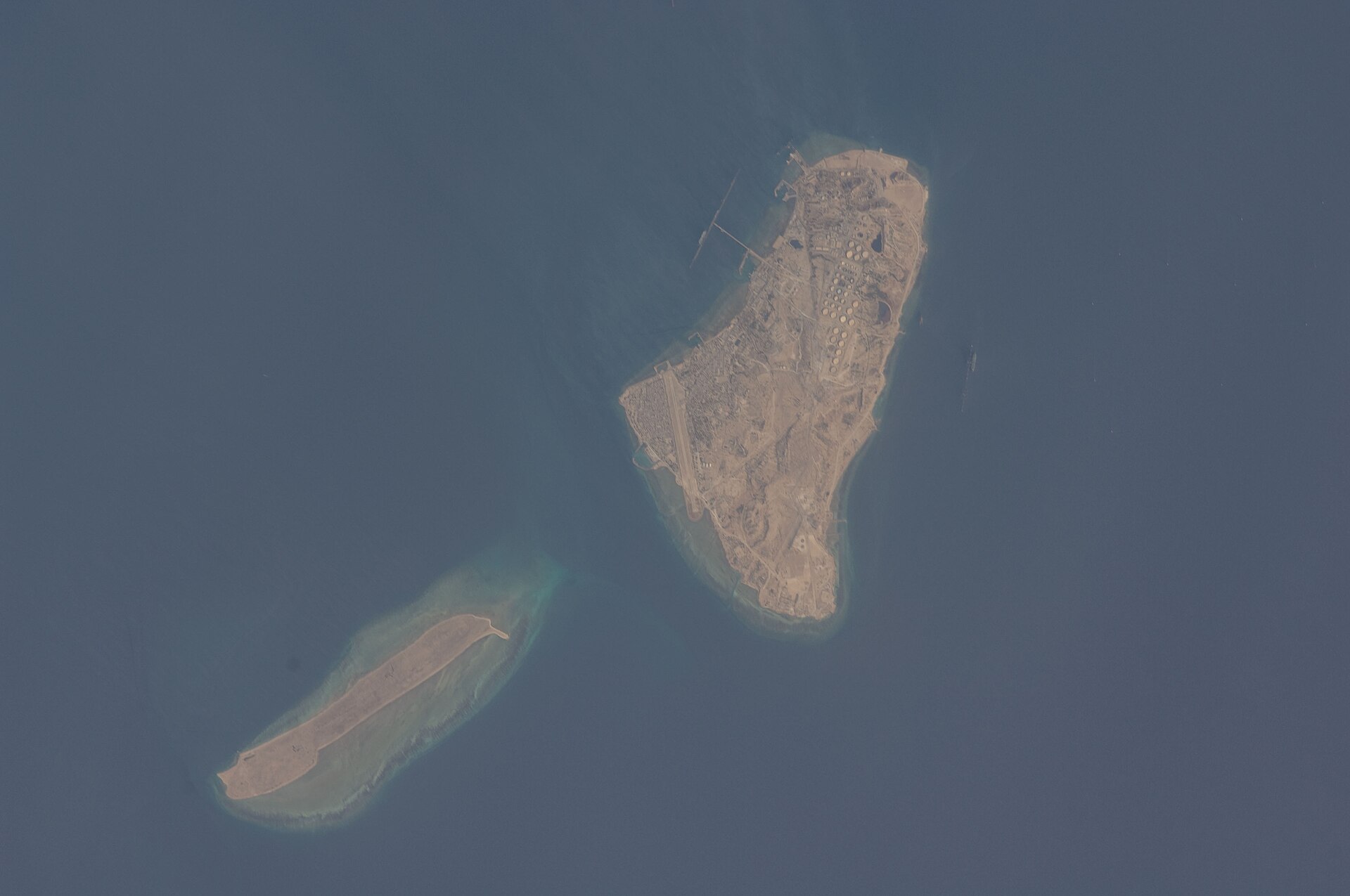
The Yanbu pipeline bypass ceiling of 5.9 million barrels per day against pre-war Hormuz throughput of 7 to 7.5 million leaves a gap of 1.1 to 1.6 million bpd that no infrastructure can close. March production fell to 7.25 million bpd (IEA), down from 10.4 million in February — a 30% drop that no OPEC+ quota adjustment can address while the strait remains militarized. The physical pressure is compounding on Iran’s side as well: Wood Mackenzie estimates Iran has 12–22 days of unused storage capacity remaining at Kharg Island before blocked exports force production cuts.
For Riyadh, the April 30 statement means the diplomatic timeline is now measured in calendar years, not negotiating rounds. Each April 30 will resurface Mojtaba’s declaration. Each resurfacing will remind any Iranian faction inclined to compromise that the Supreme Leader’s position — on nuclear rights, on missile sovereignty, on foreign presence — was set on a date the national calendar commemorates annually.
The Invisible Commander
Mojtaba Khamenei has not been seen in 65 days. No video, no audio, no photograph since the Assembly of Experts appointed him on March 8 — a process the IRGC orchestrated through the Assembly (Times of Israel; Iran International, March 2026). His father, Ali Khamenei, was last seen publicly on January 31, 2026, and was killed in an Israeli airstrike on his compound on February 28.
The son inherited an office, a war, and — according to three independent accounts from Reuters and the New York Times, unverified by Tehran — injuries that make public appearance impossible: burns to face and lips impeding speech, three surgeries on one leg with a prosthetic pending, one hand still in recovery. He communicates through written messages transported by couriers. His location is concealed to prevent Israeli targeting. The practical consequence for any Hormuz offer issued under his name is examined in detail in the legitimacy vacuum analysis: a sovereign who cannot be verified cannot be held to a commitment.
On May 1, an aide told Iranian state media that Mojtaba is in “perfect health” and overseeing “negotiations” (India TV News, May 1, citing state media). The health denial arrived on the same day as the IRGC’s “historic directive” announcement — a coordinated information operation addressing the legitimacy gap while reinforcing the directive’s authority. PressTV ran both items without connecting them.
Modern Diplomacy argued on May 1 that the invisibility itself is a governance strategy. The logic is defensible: a leader who communicates only through written directives creates a constitutional ambiguity that serves both the leader and the IRGC. Mojtaba cannot be directly challenged, quoted in real-time, or forced into public contradictions. His written statements arrive pre-edited, approved by whatever committee produces them, and untethered from the spontaneity that creates political risk.
But the strategy carries a structural cost. Written directives delivered by television anchors cannot calibrate. They cannot signal flexibility through tone, body language, or the diplomatic grammar of in-person communication. The April 30 statement is maximalist in part because the medium demands maximalism — a written Supreme Leader statement on Persian Gulf National Day leaves no room for deliberate ambiguity, no space for the careful hedging that in-person diplomacy allows.
The floor, once published, is permanent because it was designed to be permanent. Mojtaba’s written statements arrive through couriers, read by anchors — there is no live press conference, no face-to-face, no moment in which an interlocutor can probe for flexibility or register a reaction. The April 30 statement was the medium’s only available output: maximum, unambiguous, cited to a national holiday.
Three internal sources described to Reuters a “board” model of governance: actual decisions made by Hossein Taeb, Mohsen Rezaei, and Ghalibaf, with Mojtaba providing institutional legitimacy (Reuters via Time; Euronews; The Vibes). If that model holds, the April 30 statement was drafted by committee and attributed to a leader — making retraction even harder, since walking it back would require the committee to publicly overrule the very signature it manufactured.
The April 30 directive and the May 1 proposal exist in parallel — on the same calendar page, from the same government, addressed to different audiences. Neither document references the other. A third track emerged May 6 when Wang Yi added Beijing’s voice to the reopening demand — while Iran’s own readout deleted it, demonstrating the authorization ceiling in real time. That dynamic is examined in Beijing Sets the Clock: Wang Yi’s Hormuz Demand Is a Pre-Summit Signal, Not a Peace Plan.
Frequently Asked Questions
Why hasn’t Mojtaba Khamenei appeared publicly since becoming Supreme Leader?
Three independent accounts from Reuters and the New York Times — not confirmed by Iranian authorities — describe injuries sustained in the February 28 Israeli strike that killed his father Ali Khamenei (whose last confirmed public appearance was January 31, 2026): burns to face and lips making speech difficult, three surgeries on one leg with a prosthetic pending, and one hand still recovering from surgery. He communicates via written messages carried by couriers, and his location is concealed to prevent further Israeli targeting. The IRGC orchestrated his selection through the Assembly of Experts on March 8 — itself a closed-door process with no public proceedings — and every communication since has followed the same pattern of surrogate delivery: statements read on state television or posted to social media accounts managed by his office.
How does the May 1 proposal differ from the version submitted around April 27?
The April 27 version demanded the US lift its naval blockade before Hormuz reopening talks could begin — a sequential precondition Washington rejected within hours. The May 1 revision offers simultaneous action: Iran reopens the strait as the US lifts the blockade, with both sides moving in parallel rather than one conceding first. Both versions defer nuclear negotiations to a subsequent phase, exclude missile programs entirely, and demand US recognition of Iran’s right to enrich uranium for peaceful purposes.
Araghchi’s April 27-28 diplomatic shuttle — two visits to Pakistan, one to Muscat, and a meeting with Putin in Moscow — laid the groundwork for the revised submission. The sequencing logic (Hormuz tradeable, nuclear protected, missiles invisible) is identical across both iterations; only the precondition structure changed.
What legal authority does the War Powers Resolution give Congress over Iran operations?
The War Powers Resolution (1973) requires the president to withdraw US forces from hostilities within 60 days of notifying Congress, unless Congress provides a formal authorization for the use of military force. Trump notified Congress on March 2, starting the clock that expired May 1. The statute’s text contains no ceasefire exception — it speaks of “hostilities” and “situations where imminent involvement in hostilities is clearly indicated,” not of ceasefires or pauses. The administration’s argument that the ceasefire stops the clock relies on executive interpretation, not statutory language.
Senator Tim Kaine has publicly disputed this reading. If Congress forced the issue through a concurrent resolution, the administration would face either a mandated withdrawal timeline or a formal AUMF vote — a vote many members of both parties prefer to avoid because it would place their names on the record of a war whose outcome remains uncertain.
Who actually makes military decisions in Iran right now?
Three sources familiar with internal deliberations told Reuters the central players in actual decision-making are Hossein Taeb (former IRGC intelligence chief), Mohsen Rezaei (former IRGC commander-in-chief and current Expediency Council secretary), and Mohammad Bagher Ghalibaf (Parliament Speaker and former IRGC Aerospace Force commander from 1997 to 2000). Mojtaba’s role, according to these sources, is “largely to legitimize decisions made by his generals, rather than issue directives himself.” The Supreme National Security Council — where Vahidi, who holds an INTERPOL red notice for the 1994 AMIA bombing, operates as a gatekeeper — must ratify any military or diplomatic decision under Article 176 of the constitution. The IRGC Navy’s operational chain, still formally headless after Admiral Tangsiri was killed on March 30 with no named successor announced in 33 days, executes Hormuz enforcement through decentralized command authority that predates and may outlast any specific Supreme Leader directive.
Has Iran’s IRGC Navy actually enforced its Hormuz claims beyond rhetoric?
Enforcement has been operational since early March. The container feeder Selen (6,800 dwt) was turned back on March 24 — the first formal administrative rejection of a vessel attempting transit. On April 22, the IRGC seized the MSC Francesca (11,660 TEU) and the Epaminodas (6,690 TEU) — on the same day Iran’s Foreign Ministry declared Hormuz “completely open.” The IRGC published detailed mine charts between February 28 and April 9 marking the standard shipping lanes as a danger zone, redirecting vessels to a five-nautical-mile corridor between Qeshm and Larak islands inside Iranian territorial waters. Of approximately 1,250 pre-war transits expected over the period since the April 8 ceasefire, only 45 vessels have passed through — a 96.4% reduction in throughput. Mine clearance, once any agreement is reached, would require sweeping roughly 200 square miles — estimated at 51 days based on the 1991 Kuwait benchmark — with only two Avenger-class MCM ships currently in theater after four were decommissioned from Bahrain in September 2025.