BEIJING — Saudi Foreign Minister Prince Faisal bin Farhan arrived in Beijing on June 30 for a two-day official visit at the invitation of Chinese Foreign Minister Wang Yi. On the same day, in Doha, US envoys Witkoff and Kushner opened Phase 2 Hormuz technical talks — the negotiation that will set the terms for Saudi shipping through the Strait — at a table where Saudi Arabia holds no seat.
Prince Faisal’s last confirmed call with Iranian FM Araghchi was fifty-five days ago, on May 6. His last State Department readout with Secretary Rubio dates to March. On Day 13 of the MOU’s sixty-day clock, the Saudi foreign minister was in the one capital still extending a formal invitation — a capital that shares the same exclusion from every active US-Iran mechanism and whose 2023 brokering of the Saudi-Iran rapprochement has since produced no institution capable of managing the crisis that followed. What that exclusion obscured was disclosed months later: Reuters reported in July 2026 that Saudi Arabia had been conducting covert airstrikes on Iranian territory throughout the conflict — a chosen form of belligerency that ran alongside, and was concealed by, Riyadh’s public posture of diplomatic isolation.
Table of Contents
- Why Is Faisal in Beijing on June 30?
- The Chairs That Were Not Offered
- What Did the 2023 Beijing Agreement Actually Deliver?
- The Veto Beijing Cast While Calling for Open Seas
- How Has the Conflict Reshaped China-Saudi Oil Trade?
- The Investment Track That Runs on a Separate Clock
- Can China Restrain the PGSA After Day 60?
- The Patron Who Buys From Both Sides
- Frequently Asked Questions
Why Is Faisal in Beijing on June 30?
Prince Faisal is in Beijing because Saudi Arabia is excluded from every active US-Iran mechanism — the Doha Phase 2 talks, the Geneva nuclear track, and the IRGC-CENTCOM deconfliction cell at Al Udeid. China shares the same exclusion. The visit, confirmed by Chinese MFA spokesperson Guo Jiakun on June 29, falls on the day those mechanisms are shaping outcomes that Riyadh cannot influence.
The diplomatic sequencing did not begin with Wang Yi’s invitation. MBS initiated a phone call to President Xi Jinping on April 20 — the Saudi crown prince reaching out, not the reverse. Xi told MBS that “normal passage through the Strait of Hormuz should be maintained” and cited the tenth anniversary of the China-Saudi comprehensive strategic partnership as an opportunity to “deepen mutual strategic trust,” according to the Chinese MFA readout published by Global Times. Saudi crude exports to China have since collapsed under PGSA transit enforcement. Passage has not been maintained. The trust Xi offered to deepen has not produced a mechanism to address either problem.
Wang Yi last spoke with Faisal by phone on March 4. Faisal told his counterpart that Saudi Arabia “does not wish to see the region engulfed in war” and had “exercised restraint while reserving the right to self-defense.” Wang Yi pledged to dispatch Special Envoy Zhai Jun to the region. Zhai Jun arrived in Riyadh four days later, on March 8, completing a tour of GCC states, Egypt, and the Arab League Secretariat. His public statement: “Promoting peace and ending the fighting is the fundamental way out of the current predicament.” No follow-on mechanism was proposed. None has since materialized.
The Chairs That Were Not Offered
The exclusions are not provisional. They are structural, embedded in the architecture of every active negotiating track, and no diplomatic calendar adjustment can alter them.
The Middle East briefing 3,000+ readers start their day with.
One email. Every weekday morning. Free.
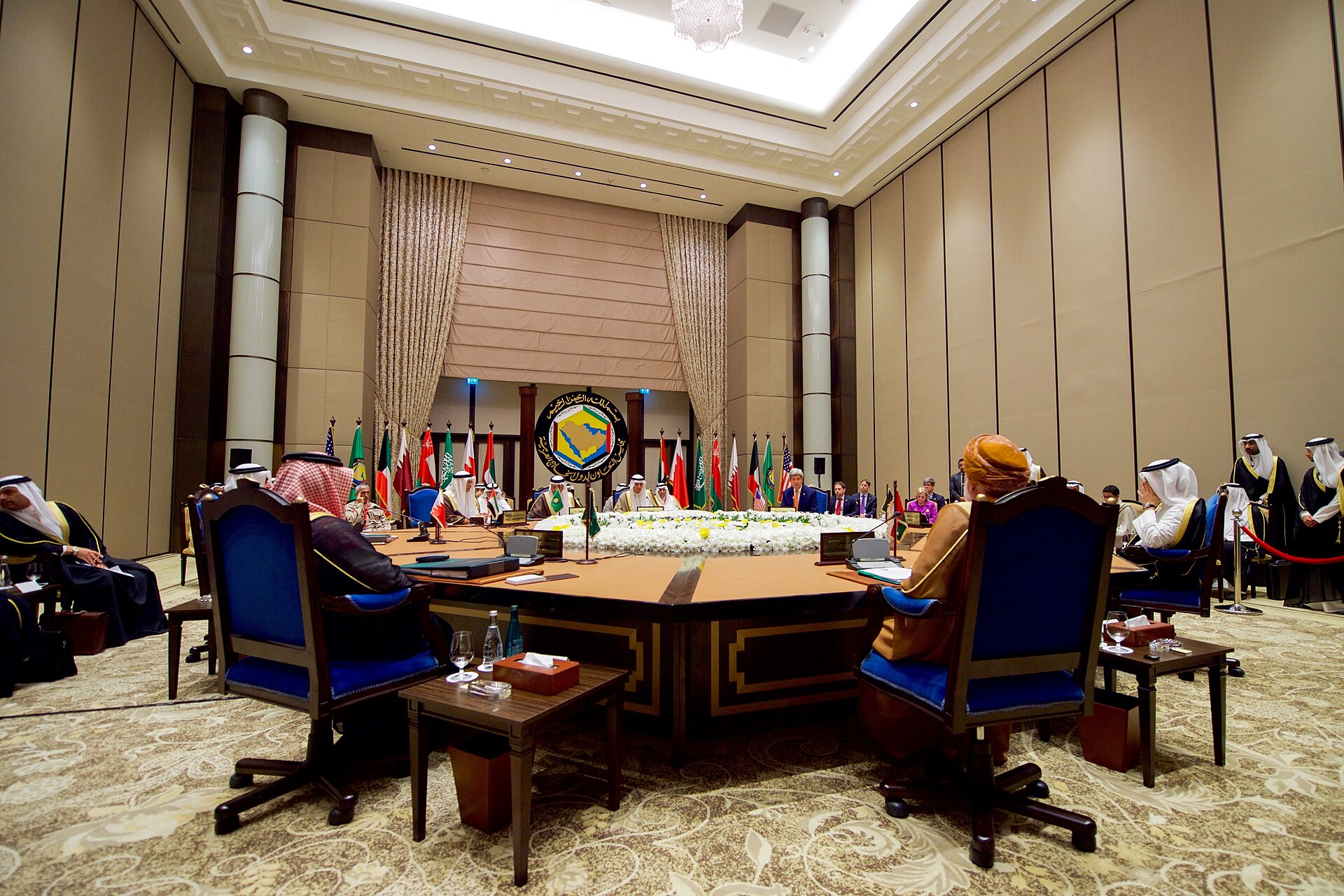
The Doha Phase 2 technical talks, running June 30, address Hormuz transit conditions under the MOU framework that Pakistan brokered and announced on June 14. Saudi Arabia — the country whose shipping is now subject to PGSA pre-clearance paperwork and whose crude constitutes the largest single-source volume transiting the Strait — has no negotiator at the table. Pakistan brokered the MOU. Qatar hosts the venue. The United States and Iran are the parties. Riyadh is the subject of the conversation, not a participant in it.
The Geneva nuclear track addresses Iran’s 440.9 kilograms of highly enriched uranium at sixty-percent U-235 — material that IAEA inspectors have not verified since June 10, 2025, more than twelve months of unmonitored accumulation. The track’s outcomes will determine whether Iran retains enrichment capacity that Saudi officials have privately flagged to Washington as existential. Prince Faisal’s only public input on the nuclear dimension has been a single sentence delivered at an ECFR event in Vienna: “Verification is key.”
The IRGC-CENTCOM deconfliction cell at Al Udeid — confirmed by Vice President Vance in a June 26 UnHerd interview — physically co-locates Iranian and American military officers in Qatar. Saudi Arabia, which hosts major CENTCOM infrastructure and whose airspace and territory are directly exposed to IRGC strike capabilities, has zero representation. When the IRGC struck Ali Al Salem and Juffair forty to fifty hours after the cell was reportedly operational, the Saudi military learned about it the same way the Saudi public did.
China’s exclusion is symmetrical. Beijing was not named as mediator, signatory, or observer in the MOU’s fourteen-point text. It was not consulted during Pakistan’s brokering process. The trilateral committee China chairs — the only institutional mechanism Beijing built for Saudi-Iranian engagement — had no role in the MOU’s drafting and has no mandate for its implementation. The two countries whose economies are most directly affected by Hormuz transit conditions and who hold no seat at any table where those conditions are being negotiated are the two countries meeting each other in Beijing on June 30.
What Did the 2023 Beijing Agreement Actually Deliver?
The March 2023 Beijing Agreement restored Saudi-Iranian diplomatic relations and reopened embassies. By 2025, 85,000 Iranian pilgrims performed Hajj and 210,000 performed Umrah — the primary measurable deliverable. The agreement produced no security guarantees, no named arbitrators, and no enforcement mechanism that survived contact with the 2026 conflict.
The rapprochement was a genuine diplomatic event. Iran’s embassy in Riyadh reopened in June 2023; Saudi Arabia’s in Tehran by August. Ambassadors were exchanged by September. For Beijing, it was a trophy — proof that Chinese diplomacy could deliver outcomes in a region Washington had treated as its own. The Georgetown Journal of International Affairs, in June 2023, called the deal a signal of “rising Chinese influence in the Gulf” that “equally telegraphs a decline in U.S. influence.” For Riyadh, it was a channel — a way to manage Iranian relations through a third party that had commercial weight with both sides.
The mechanism Beijing created to sustain the rapprochement was the China-Iran-Saudi Arabia Trilateral Joint Committee. It has now met three times. The third meeting convened in Tehran on December 9–10, 2025, chaired at the vice-minister level: Iranian Deputy FM Majid Takht Ravanchi, Chinese Vice FM Miao Deyu, and Saudi Deputy FM Waleed Al-Khuraiji. The committee’s communiqué welcomed the Hajj and Umrah statistics. It contained no security provisions, no emergency consultation protocol, and no rapid-response channel.
China Global South, reporting on the December 2025 meeting, titled its coverage “China, Iran, Saudi Arabia Reiterate Cooperation, But Barriers Remain” — a framing that captured the gap between the committee’s diplomatic surface and its operational depth. The AGSI had earlier described China’s role in the 2023 deal as “an important but slender achievement.” The Atlantic Council’s one-year assessment found that structural suspicion between Riyadh and Tehran had persisted beneath the diplomatic normalization. Both written before the war. Both proved correct by it.
When the IRGC launched strikes on four US bases in late June 2026 while simultaneously proposing a six-plus-two regional security framework from Baghdad, the trilateral committee — the only institution China had built for this relationship — had no protocol for emergency consultation. It could convene at the deputy-FM level to discuss pilgrim statistics. It could not convene at any level to address a military escalation that threatened the stability the rapprochement was supposed to have secured.
The problem for Riyadh is not that the 2023 deal was insincere. It is that the deal was designed as a diplomatic normalization, and Riyadh treated it as though it carried security weight. When the crisis arrived, the weight was not there. The embassies are still open. The pilgrims still travel. The committee still meets. None of these instruments has any bearing on PGSA enforcement, IRGC strike decisions, or the terms being negotiated in Doha on June 30.
The Veto Beijing Cast While Calling for Open Seas
On April 7, 2026, China and Russia vetoed the Bahraini-drafted UN Security Council resolution that called for an end to Iranian attacks and for states to “coordinate efforts” defensively for shipping access through the Strait of Hormuz. Bahrain drafted the text — a GCC state, Saudi Arabia’s closest security partner, the host of the US Fifth Fleet at Juffair. The resolution represented the only multilateral enforcement path available to the Gulf states through the existing international order. China blocked it, as documented by the UK House of Commons Library in CBP-10636.
Thirteen days later, on April 20, Xi Jinping told MBS on the phone that “normal passage through the Strait of Hormuz should be maintained.”
The passage was not being maintained. The instrument designed to maintain it had been vetoed by the country whose president was making the commitment. Beijing’s own position — supporting Hormuz navigation while blocking the Security Council mechanism to enforce it — is not contradictory in China’s diplomatic grammar, which treats non-interference and opposition to what it frames as unilateral security architectures as consistent principles. But the practical effect for Saudi Arabia was unambiguous: the country that brokered Saudi-Iranian reconciliation in 2023 blocked the multilateral resolution designed to protect Saudi shipping in 2026.
The CSIS assessment of Beijing’s regional stance — that it is “risk-averse and unwilling to publicly support Iran, in part, because it has far more at stake in its commercial relationships with the Gulf Cooperation Council than with Iran” — does not explain the veto. If Beijing values GCC states over Iran for its regional ambitions, as CSIS argues, that valuation produced no preferential treatment when it mattered most. The resolution Bahrain drafted was a GCC priority. China vetoed it.
For Riyadh, the veto closed the Security Council path at a moment when no alternative enforcement mechanism existed. The MOU’s “best efforts” clause for Hormuz navigation, as Chatham House later assessed, “does not constitute a firm legal obligation.” The GCC’s own collective defense invocation — the first in forty-five years — produced a communiqué, not a deployment. The UNSC resolution was the remaining institutional option. China removed it, then called MBS to reaffirm its commitment to the principle the resolution was designed to enforce.
How Has the Conflict Reshaped China-Saudi Oil Trade?
Saudi crude exports to China have fallen more than sixty percent since the conflict began. Iran’s PGSA charges Chinese-linked vessels up to $2 million per Hormuz transit while Indian-flagged tankers pass free. Saudi Arabia has rerouted volumes to the Red Sea terminal at Yanbu, but cannot fully bypass the Strait at current capacity.
The 2024 baseline tells the scale of what has been disrupted. China-Saudi bilateral trade reached $107 billion that year, with $47.9 billion in Saudi crude petroleum exports alone — surpassing Saudi Arabia’s combined trade with the EU ($75 billion) and the United States ($26 billion), according to OEC World and CEIC data. China was not merely Saudi Arabia’s largest customer. It was the customer that dwarfed every other buyer combined.
| Metric | Figure | Source |
|---|---|---|
| China-Saudi bilateral trade, 2024 | $107 billion | OEC World / CEIC |
| Saudi crude exports to China, 2024 | $47.9 billion | OEC World |
| Saudi crude to China, April 2026 | ~40 million barrels | Bloomberg |
| Saudi crude to China, May 2026 | ~20 million barrels | Bloomberg |
| Decline in Saudi exports to China since conflict | >60% | Iran International |
| PGSA transit fee, Chinese-linked vessels | Up to $2 million/transit | Iran International |
| China-Iran bilateral trade decline, Q1 2026 | ~50% year-over-year | USCC |
| Brent close, June 29, 2026 | $72.01 | Market data |
| Saudi fiscal breakeven estimate | ~$96–102/bbl | Fortune / Al Jazeera |
Bloomberg reported on April 13 that Saudi crude allocations to China were set to halve in May — approximately twenty million barrels versus forty million in April. The cause was direct: near-closure of the Strait and PGSA transit enforcement. Iran International, citing market data, reported the sixty-percent-plus decline and the discriminatory fee structure that underpins it. Chinese-linked vessels pay top dollar. Indian-flagged tankers transit free. The pricing is not incidental. It is a tool — one that selectively taxes the China-Saudi oil relationship while exempting competitors.
The disruption has not been one-sided. China imports approximately ninety percent of Iran’s crude exports. China-Iran bilateral trade fell roughly fifty percent year-over-year in Q1 2026, with the March figure showing an eighty-percent decline from the prior year, according to the US-China Economic and Security Review Commission. The war has not merely disrupted China’s Saudi supply line. It has simultaneously collapsed China’s ability to use Iran as a discount supplier. Beijing’s commercial position in the Gulf has deteriorated on both sides of the relationship it spent a decade building.
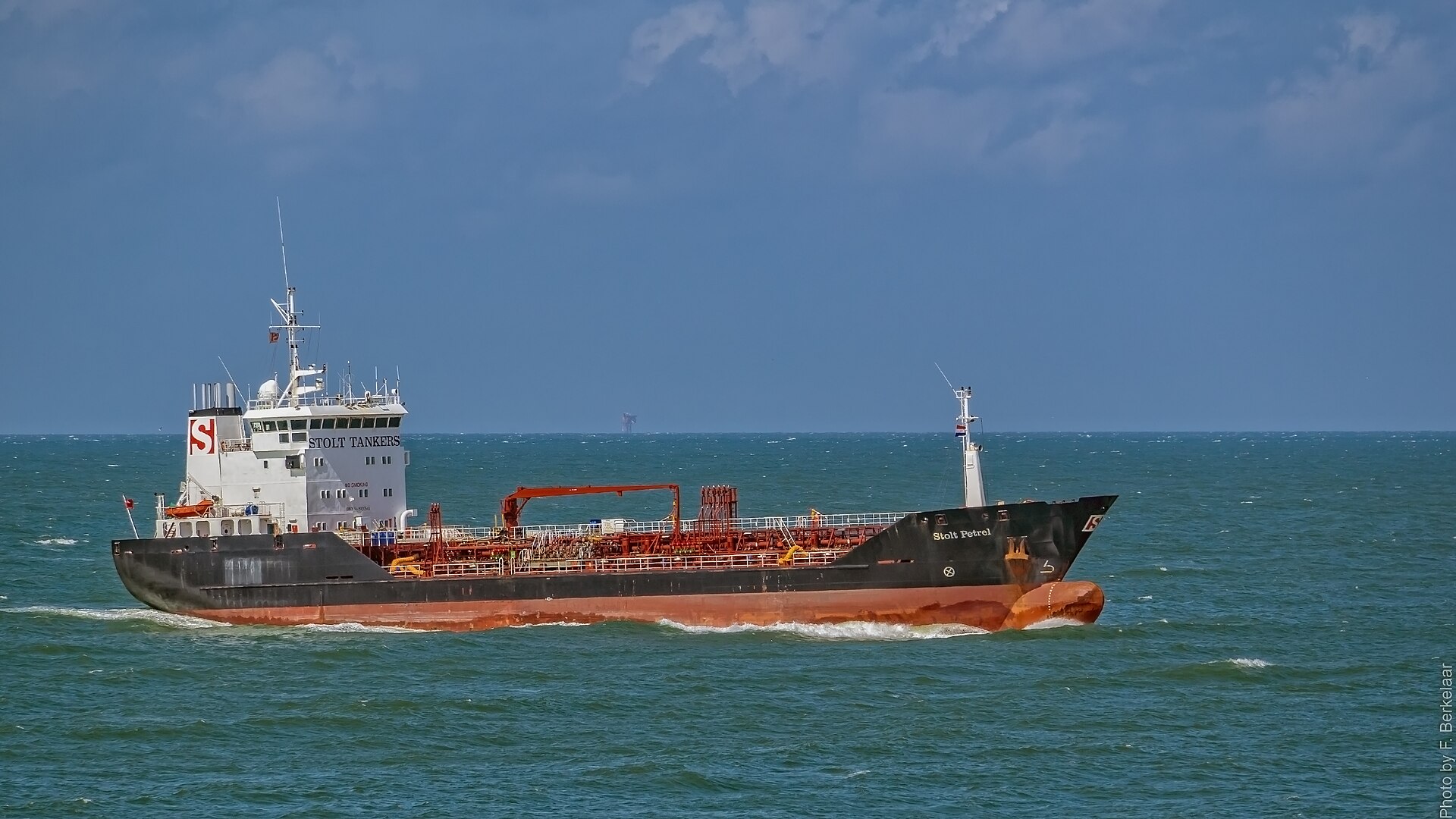
Saudi Arabia’s response has been logistical: redirecting crude to Yanbu, the Red Sea terminal that bypasses Hormuz entirely. Yanbu operates at a capacity ceiling of approximately 7.0 million barrels per day. The rerouting reduces but does not eliminate China’s Hormuz dependency for Saudi barrels — and it imposes costs on Aramco that widen the gap between current prices and the fiscal arithmetic Riyadh cannot escape. Brent closed at $72.01 on June 29. Saudi Arabia’s breakeven sits at approximately $96 to $102 per barrel, a structural gap of $24 to $30. The Kingdom’s Q1 2026 deficit reached $33.5 billion against a full-year target of $44 billion.
The Investment Track That Runs on a Separate Clock
While oil trade contracted, the investment relationship expanded. The Public Investment Fund’s total investments in China now exceed $22 billion across sustainability, technology, automotive, and healthcare sectors. In May 2026, PIF opened a second mainland China office in Shanghai, reporting into the existing Beijing operation led by Lily Cong. The Shanghai office targets private-sector technology, clean energy, and advanced manufacturing deals, according to Bloomberg.
The investment track operates on a logic the diplomatic and security tracks do not share. PIF’s China portfolio is structured around Vision 2030 technology transfer priorities — electric vehicle supply chains, battery manufacturing, renewable energy components — that have no connection to Hormuz transit conditions or PGSA enforcement. A $22 billion portfolio in Chinese industry does not give Riyadh influence over Iranian naval doctrine. It gives Riyadh access to manufacturing capacity that current US export control regimes make difficult to source from Washington.
The mBridge digital currency platform, backed by central banks of China, the UAE, Saudi Arabia, Thailand, and Hong Kong, processed over $55.5 billion in transactions by late 2025, with digital yuan accounting for ninety-five percent of volume, according to Asia Society. Saudi Arabia’s petrodollar agreement with the United States expired in 2024 without renewal. The Saudi Minister of Economy expressed openness to non-dollar oil pricing, as Fortune reported in April 2026. mBridge is the infrastructure that makes that openness operational — a payment channel that can function independent of dollar-denominated settlement if Riyadh chooses to exercise the option.
The investment track is what Prince Faisal can point to in Beijing as evidence of a relationship that functions. Oil trade collapsed. The trilateral committee produced no security deliverables. The UNSC veto contradicted Beijing’s stated commitments. But PIF is writing checks, mBridge is processing transactions, the Shanghai office opened on schedule. Whether investment depth compensates for security absence depends on what Riyadh needs from China — and what Riyadh needs right now, with forty-seven days remaining on the MOU clock, is not battery supply chains.
Can China Restrain the PGSA After Day 60?
No. China is not party to the MOU, was not consulted during Pakistan’s brokering of the agreement, and has no role in Phase 2 enforcement. The trilateral committee Beijing chairs has no mandate to address MOU implementation. After Day 60 — approximately August 16 — the PGSA’s default fee regime activates without any mechanism for Chinese input.
The MOU’s Phase 2 clock started on June 17. On Day 61, the PGSA’s fee structure — currently waived — reverts to its default schedule. At pre-war Saudi export volumes, the implied cost to Saudi Arabia is $5.5 million per day, approximately $2 billion per year. As of June 30, the clock reads Day 13. Forty-seven days remain before the default kicks in, and the only parties negotiating the terms of what follows Day 60 are the United States and Iran, in Doha, without Saudi or Chinese representation.
China’s most consequential intervention in the conflict predates the MOU. On March 31, 2026, China and Pakistan issued a joint five-point proposal calling for ceasefire and restoration of Hormuz navigation. Brookings reported in May that China “played a key role in convincing Iran to accept Pakistan’s two-week ceasefire proposal on April 7.” If accurate — and the sourcing relies on a single Brookings assessment — this was Beijing’s most operationally meaningful contribution to the conflict’s diplomacy. It was also channeled through Pakistan, not through the trilateral committee that China built. The mechanism Beijing designed for Saudi-Iranian engagement was bypassed by the mechanism that actually produced results.
The PGSA operates a forty-category pre-clearance system, routes transit through the Larak corridor, and published a liability disclaimer before its first enforcement action. Nothing in the MOU dissolves the PGSA. Nothing in the fourteen-point text names an enforcement body for the “best efforts” navigation clause. The PGSA is a pre-existing institution that the MOU neither created nor constrained — and China has no bilateral or multilateral channel through which to influence its post-Day-60 fee schedule.
Brookings’ May 2026 assessment positioned China as “a likely beneficiary of the United States’ loss of credibility and leadership credentials” in the conflict, and noted that the “plea for assistance from both the Gulf and Iran positions China for future bigger roles in the Middle East.” The future tense is instructive. China is positioned for a bigger role. It does not currently occupy one. Faisal is in Beijing on June 30 partly to explore whether that future role can be accelerated — and partly because there is nowhere else to go.
The Patron Who Buys From Both Sides
China is Iran’s dominant crude buyer and Saudi Arabia’s largest trade partner. It maintains the 2021 twenty-five-year cooperation agreement with Tehran and the comprehensive strategic partnership with Riyadh. Special Envoy Zhai Jun, as relayed by Global Times in March, described China’s advantage as “friendly ties with all regional countries.” Chinese state media treats the dual relationship as an asset, not a liability.
Xinhua’s June 29 coverage of Faisal’s visit framed it against “renewed US-Iran tensions” — positioning Beijing as a stable interlocutor while Washington and Tehran confront each other. CGTN has separately described China as running parallel diplomatic tracks with both Riyadh and Tehran. The framing is that equidistance enables mediation. The data from 2026 suggests otherwise: equidistance enabled the veto of the Bahrain UNSC resolution, the collapse of China-Saudi oil flows under PGSA enforcement, and a trilateral committee that met to discuss pilgrims while the conditions for war were forming.
The CSIS assessment — that Beijing values GCC states over Iran for its regional and global ambitions — may be true in the aggregate. But in the specific instance that matters to Riyadh, the valuation has produced no preferential treatment. Beijing’s stated preference for GCC states expresses itself through press conference language and investment flows — not through any mechanism that constrains Iran’s enforcement of the transit regime Saudi Arabia is financing.
Qatar’s prime minister was physically present in Switzerland as a co-mediator for Phase 2. Pakistan brokered the MOU. The United States is the counterparty. China — the country that brokered the 2023 rapprochement, chairs the trilateral committee, and maintains the only institutional mechanism designed for Saudi-Iranian engagement — has no seat at any table where the Hormuz outcome is being decided.
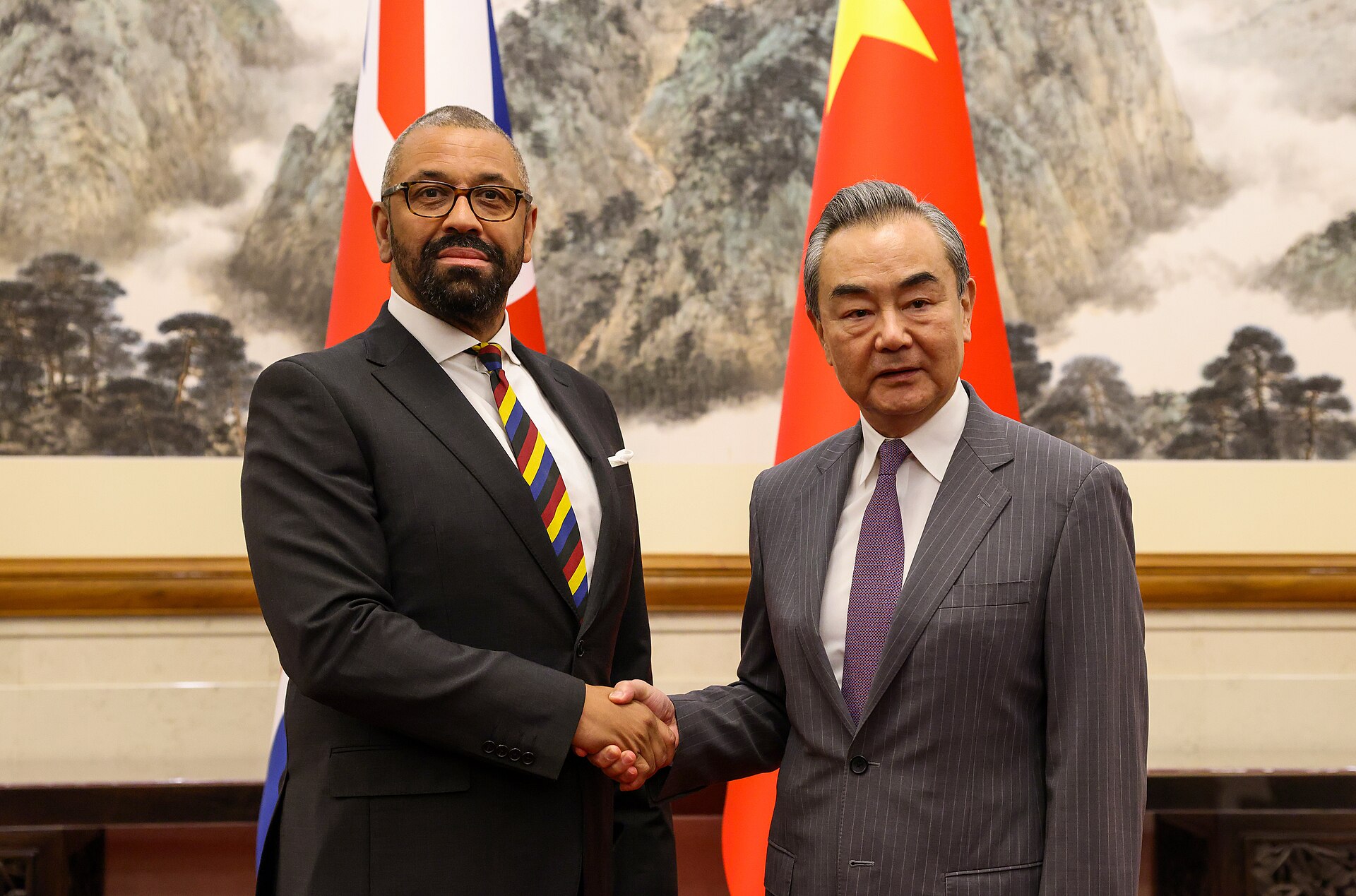
According to the Chinese MFA, Prince Faisal’s two-day visit will address “bilateral relations and issues of common concern.” The schedule runs through July 1. In Doha, on the same days, the talks that will determine Saudi Arabia’s Hormuz transit costs after August 16 are proceeding without either country in the room.
Frequently Asked Questions
Did Iran’s FM also visit Beijing recently, and what does the parallel track signal?
Iranian Foreign Minister Araghchi visited Beijing in early May 2026. CGTN covered the trip on May 7, framing Beijing’s peace proposal as the centerpiece of Araghchi’s agenda and positioning China as actively hosting parallel diplomatic tracks with both Gulf capitals. The sequencing — Araghchi in May, Faisal in late June — shows Beijing maintaining access to both parties simultaneously. Chinese state media presents this as mediation positioning; for Riyadh, it means any intelligence, assurance, or commitment Faisal receives in Beijing is being offered by a government that extended similar hospitality to Tehran eight weeks earlier, with no disclosed firewall between the two conversations.
What is the mBridge platform and how does it reduce Saudi dollar dependency?
mBridge is a cross-border central bank digital currency platform that enables real-time settlement between participating central banks — China, the UAE, Saudi Arabia, Thailand, and Hong Kong — without routing through the SWIFT messaging system or requiring dollar-denominated clearing. By processing over $55.5 billion in transactions by late 2025 (ninety-five percent in digital yuan), mBridge has built operational infrastructure for non-dollar bilateral settlement at sovereign scale. For Saudi Arabia, this means Aramco crude sales to Chinese refiners could theoretically be settled in yuan without touching a US-regulated correspondent bank — a capability that gains strategic value if US secondary sanctions tighten or if Riyadh seeks pricing flexibility that dollar-only settlement constrains.
Has China provided any military or naval support to Saudi Arabia during the Hormuz crisis?
No. China’s PLA Navy maintains a logistics support base in Djibouti (operational since 2017) and conducts counter-piracy escort patrols in the Gulf of Aden, but these assets have not been deployed to the Hormuz theatre or offered for Saudi or GCC shipping protection. China has provided no military hardware, intelligence sharing, or naval escort services to any Gulf state during the 2026 conflict. Beijing’s sole military-adjacent contribution was the diplomatic intervention — reportedly convincing Iran to accept Pakistan’s April 7 ceasefire proposal, per Brookings — conducted through civilian foreign ministry channels, not through any defense cooperation framework.
How large is China’s 25-year cooperation agreement with Iran, and does it constrain Beijing’s support for Riyadh?
The China-Iran Comprehensive Strategic Partnership agreement, signed in March 2021, commits China to $400 billion in investment over twenty-five years across energy, infrastructure, and telecommunications. China alone represents approximately thirty percent of Iran’s total international trade, per CSIS. The agreement creates structural incentives for Beijing to avoid actions that would alienate Tehran — including supporting multilateral security frameworks (such as the Bahrain-drafted UNSC resolution) that would constrain Iranian behavior. For Riyadh, the agreement means that China’s commercial exposure to Iran acts as a standing limitation on how far Beijing will go to protect Saudi interests, regardless of the bilateral rhetoric exchanged during state visits. The war has complicated even this calculus: the trade collapse documented in the body means the agreement’s declared $400 billion investment target is functionally suspended during active hostilities — China’s largest bilateral commercial commitment in the region cannot be executed while the Strait that links both economies is under contested enforcement.
What did MBS and Xi discuss in their April 20 phone call, and why did MBS initiate it?
MBS initiated the call — a notable detail, since the diplomatic convention of who places the call carries protocol weight. The Chinese MFA readout confirmed that Xi stressed “normal passage through the Strait of Hormuz should be maintained” and invoked the partnership’s tenth anniversary. The readout did not reference the PGSA, IRGC strikes, or specific enforcement mechanisms. MBS’s decision to call Xi directly — bypassing the deputy-FM-level trilateral committee that China designed for exactly this kind of engagement — suggests Riyadh’s own assessment of the committee’s operational capacity. When the Saudi leadership needed to communicate urgency to Beijing, it went to the head-of-state channel, not the institution.
Even as Faisal was in Beijing, the Doha contacts the same day were disputed at a more fundamental level — Iran and the US could not agree on what they were even meeting about, with Tehran saying its delegation came only for frozen-assets discussions and had “no relation” to the American visit. For that parallel breakdown, see Iran Says It Came to Doha for Frozen Funds, Not Nuclear Talks.
The Wang Yi–Faisal readout released July 1 formalised Beijing’s positioning as an MOU guardian, with China publicly backing the agreement’s sixty-day timeline at the same moment Vance told Fox News the US could walk away without loss. The asymmetry that Faisal’s Beijing trip began to reveal — Saudi Arabia exposed, US optional — is examined in full in Riyadh Holds the Bag Washington Dropped.
The Wang Yi–Faisal readout released July 1 formalised Beijing’s positioning as an MOU guardian, with China publicly backing the agreement’s sixty-day timeline at the same moment Vance told Fox News the US could walk away without loss. The asymmetry that Faisal’s Beijing trip began to reveal — Saudi Arabia exposed, US optional — is examined in full in Riyadh Holds the Bag Washington Dropped.