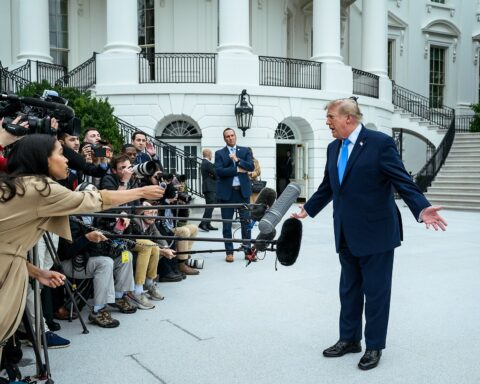
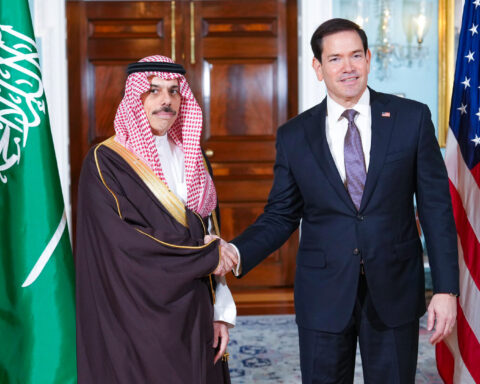
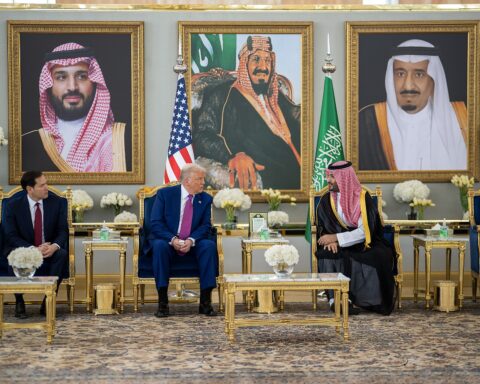
RIYADH — Iranian Foreign Minister Abbas Araghchi stood in Baghdad on June 28 and proposed a regional security framework — six GCC states plus Iran and Iraq, meeting at the UN General Assembly sidelines in September — that would exclude the United States. He made the offer hours after IRGC missiles struck Ali Al Salem airbase in Kuwait and the US Fifth Fleet headquarters in Bahrain. From the same podium, he declared Iran’s “total oversight and management” of the Strait of Hormuz for the next thirty days. Iraqi FM Fuad Hussein co-announced the initiative and proposed the “6+2” format. The proposal names no secretariat, no arbitration clause, no membership criteria beyond geography — a structural absence that distinguishes it from Iran’s 2019 HOPE initiative, which offered specific mechanisms and failed. Saudi Arabia, the GCC state most exposed to Hormuz disruption, most excluded from Phase 2 nuclear talks, and most dependent on the US security umbrella the framework removes, issued no public response. FM Faisal’s last call with Araghchi, on June 25, had not included any discussion of the framework. That public silence, it would later emerge, did not reflect Saudi passivity: Reuters reported in July 2026 that the Royal Saudi Air Force had conducted covert airstrikes on Iranian territory throughout the war, a belligerency the Kingdom maintained while offering no public response to Iran’s diplomatic overtures.
Table of Contents
- What Did Araghchi Propose in Baghdad?
- Strikes First, Dialogue Second
- Why Does the Framework Exclude the United States?
- The Architecture of Absence
- The Coercive Sequence
- Riyadh’s Structural Silence
- What Can Saudi Arabia Actually Say?
- Baghdad’s Mediation Precedent
- How Does the MOU Clock Shape the Framework?
- Frequently Asked Questions
What Did Araghchi Propose in Baghdad?
Iran’s foreign minister proposed a “6+2” regional security framework — six GCC states plus Iran and Iraq — to convene at the September 2026 UN General Assembly sidelines. The framework explicitly excludes all non-regional powers, including the United States. Iraqi FM Fuad Hussein co-announced the initiative and offered Iraq as institutional host.
Araghchi arrived in Baghdad on June 28 for scheduled bilateral talks covering MOU implementation, Iraq-Iran debt payments, border security, and the suppression of anti-Iran groups operating from Iraqi soil. The regional security proposal emerged alongside these discussions — presented as a natural extension of existing Iraq-Iran cooperation rather than a standalone Iranian initiative.
“We should reach a new framework that includes all countries in the region and without the presence or interference of any country from outside the region,” Araghchi told reporters. The formulation — “any country from outside the region” — avoids naming the United States while admitting no other reading.
Hussein proposed the specific format: six GCC members plus Iran and Iraq. Araghchi “welcomed” the suggestion. The choreography gave the framework an appearance of multilateral origin. But Araghchi had pre-positioned its logic fourteen days earlier, on June 14: “Any attempt to shape regional security without Iran [is] doomed to fail.” The June 28 proposal was the affirmative face of that warning.
“Regional security cannot be shaped based on the exclusion or disregard of Iran,” Araghchi said from Baghdad, echoing his June 14 formulation almost word for word. The repetition connected a warning delivered two weeks earlier to a proposal delivered on a day when Iranian missiles had struck two GCC member states.
The Middle East briefing 3,000+ readers start their day with.
One email. Every weekday morning. Free.
The GCC was not entirely unprepared for this kind of proposal. Qatar’s Prime Minister Sheikh Mohammed bin Abdulrahman Al Thani said in June 2024 that Gulf countries were “working on a regional security framework with Iran” — a process the GCC had been exploring on its own terms, before the war, without coercive instruments attached. The June 28 proposal colonizes that pre-war process. What the GCC had considered as a voluntary multilateral initiative now arrives as an offer backed by active Hormuz closure, ongoing IRGC strikes, and a 14-point MOU that names no arbitrator.
Strikes First, Dialogue Second
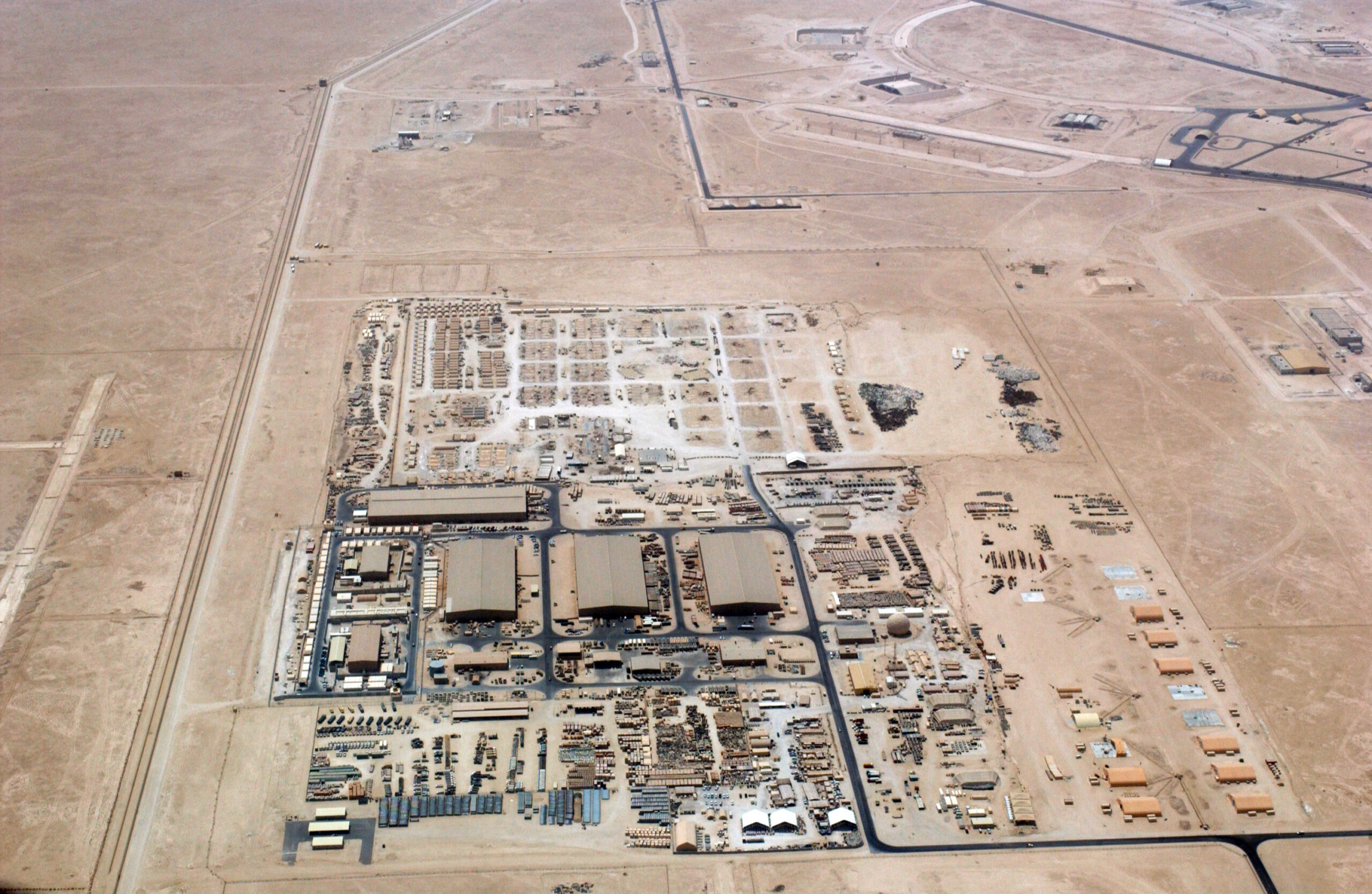
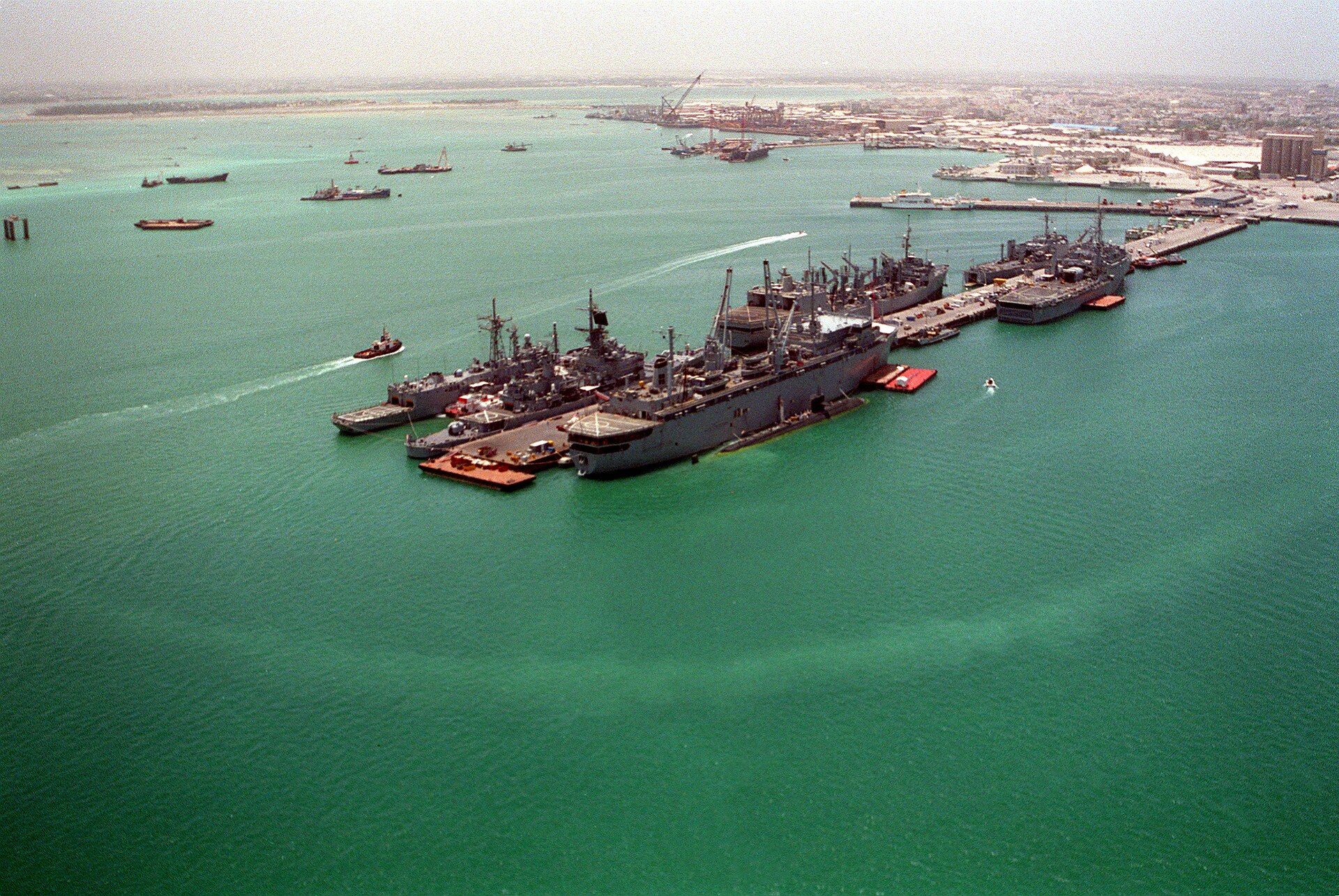
Between approximately 02:00 and 03:00 local time on June 28, IRGC missiles struck Ali Al Salem airbase in Kuwait and the US Fifth Fleet headquarters and Port Salman in Bahrain. Iran’s military claimed to have destroyed “eight important US military facilities.” CENTCOM reported “no casualties or major impacts.” These were the second consecutive nights of strikes on the same targets — the June 27 attacks had hit Al Udeid in Qatar, Al Dhafra in the UAE, Ali Al Salem, and Juffair.
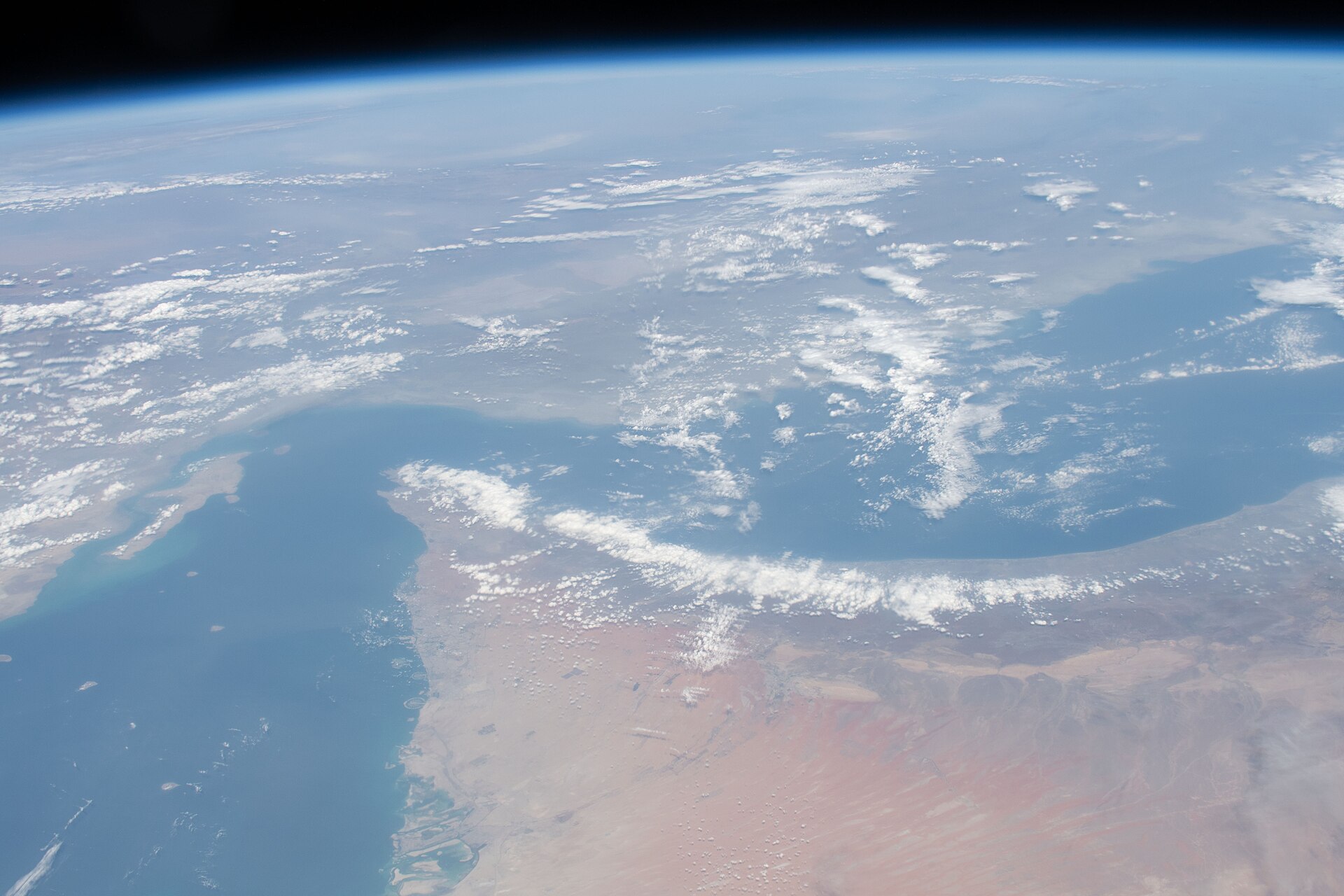
By midday, Araghchi was at a podium in Baghdad. He proposed the 6+2 framework, and in the same press conference declared that “the Strait of Hormuz remains under the total oversight and management of Iran through the 30 coming days.” He added: “Any intervention or any unilateral action will result in exacerbating the situation and also delay the reopening of the strait.”
Bahrain’s Foreign Ministry called the attack “a flagrant violation of Bahrain’s sovereignty, a blatant threat to the safety of its citizens and residents,” and placed “the sole responsibility for undermining peace efforts on Tehran.” Kuwait’s response focused on the US presence on its territory rather than on the Iranian framework offer.
Saudi Arabia condemned the strikes but made no defense pledge — the same pattern it had followed after the June 27 attacks. The GCC’s Sakhir Declaration holds that member-state stability is “indivisible” and that a sovereignty violation against one member constitutes “a direct threat to the bloc.” On June 28, Saudi Arabia acknowledged the declaration’s language and committed to nothing beyond the condemnation itself. That same morning, Araghchi issued a separate post-strike demand to Kuwait and Bahrain to deny US forces the use of their territory — a legal pre-authorization mechanism for future IRGC strikes examined in Iran Struck First, Then Issued the Rules.
An unnamed Gulf official had told CNN on June 24 that the US-Iran MOU was “a disastrous turning point” for Gulf security. Four days later, IRGC missiles struck two GCC member states, and Iran’s foreign minister offered those same states a regional security partnership — from Baghdad, in the presence of Iraq’s foreign minister, under conditions that excluded the ally whose bases had been the targets.
Why Does the Framework Exclude the United States?
The framework’s exclusion of Washington exploits a structural inversion in Gulf security. US military bases in Kuwait, Bahrain, Qatar, and the UAE were positioned as deterrents against regional threats. The June 2026 war reversed their function: they became the targets that drew Iranian fire onto GCC territory, converting host states into combatants by proximity in a conflict none of them initiated.
The original logic of U.S. basing in the Gulf was that the U.S. military presence would deter major threats against host states, but the bases ultimately increased exposure once deterrence broke down, as Iran’s targeting logic helped define those states as legitimate sites of reprisal.
Lawfare, “The Future of the Gulf’s Security Order,” 2026
Araghchi’s framework offers Gulf states what amounts to a transaction. The American military presence is what Iran targets. Remove it, and the strikes stop. AGSI’s assessment of Gulf thinking suggests the argument lands in a receptive environment: “America as a strategic ally that can be relied upon is now very much in question in the Gulf states.”
The problem is structural. Saudi Arabia hosts US forces at Prince Sultan Air Base and maintains interoperability agreements anchored in the defense package signed in May 2025. The Kingdom cannot accept a framework that excludes Washington without dismantling its own defense architecture. But it also cannot publicly defend an American presence that has, over the past eleven days, drawn Iranian strikes onto Bahraini, Kuwaiti, Qatari, and Emirati soil — strikes Saudi Arabia condemned but did nothing to prevent or deter.
Araghchi’s warning from Baghdad reinforced the bind: “Any attempt to adopt new or separate arrangements compared to what is underway by the Islamic Republic of Iran, will only lead to more complicated situations and delays in the reopening of the Strait of Hormuz, and will increase the tensions, as we witnessed in the past two nights.” The reference to “the past two nights” pointed at Ali Al Salem and Juffair.
The Architecture of Absence
The June 28 proposal is not Iran’s first attempt at a regional security framework. In September 2019, President Rouhani unveiled the Hormuz Peace Endeavor — HOPE — at the UN General Assembly, offering all Persian Gulf littoral states a WMD-free zone, military hotlines, non-aggression pacts, and a freedom-of-navigation framework. HOPE came during the Trump administration’s maximum pressure campaign but under peacetime conditions. It failed to gain traction among GCC states already committed to the US security umbrella.
The June 28 framework departs from HOPE in every structural dimension.
| Element | HOPE (September 2019) | Baghdad Framework (June 2026) |
|---|---|---|
| Context | Peacetime; US maximum pressure | Active war; Hormuz closed; ongoing strikes |
| Proposed mechanisms | WMD-free zone, hotlines, non-aggression pacts, FoN framework | None specified |
| US role | Not explicitly excluded | Explicitly excluded (“no outside interference”) |
| Format | All Persian Gulf littoral states | 6+2: GCC + Iran + Iraq |
| Proposed venue | UNGA | UNGA sidelines, September 2026 |
| Coercive lever | None immediate | Hormuz closure, PGSA fee regime, IRGC strikes on GCC territory |
| Institutional host | Iran | Iraq (proposed by Hussein) |
HOPE’s specificity was its weakness. GCC states could evaluate each mechanism — a WMD-free zone, a hotline — and find technical grounds to object. The Baghdad framework offers nothing to evaluate. Its only content is the principle that regional states should talk to each other without external interference. Rejecting that principle requires rejecting dialogue itself.
The European Leadership Network’s post-mortem on HOPE noted that the initiative “failed amid an environment of distrust and competition.” The June 28 proposal operates in a far more hostile environment but carries instruments HOPE lacked. In 2019, Iran could not pair its dialogue offer with active Hormuz closure or strikes on GCC military installations. In June 2026, the Strait is already closed, the PGSA fee regime is active, and Ali Al Salem had been hit before dawn the same day the press conference was held.
The Coercive Sequence
The hours-long window between the IRGC strikes and the Baghdad press conference follows a pattern multiple analysts have identified in Iran’s wartime conduct.
Iran’s campaign looks like Thomas Schelling, who in his classic study of military coercion defined risk strategy as the deliberate manipulation of shared danger.
Stimson Center, “Iran Isn’t ‘Flailing’ — It’s Executing a Coercive Risk Strategy,” 2026
Schelling’s framework describes a coercer who raises the cost of non-compliance, then offers an exit that requires accepting the coercer’s terms. On June 28, the IRGC strikes on Ali Al Salem and Juffair raised the cost — two GCC states absorbed Iranian ordnance for the second consecutive night. The Baghdad press conference offered the exit — a regional order anchored in Tehran, convened in September, without the United States.
The same contradiction — peace framework in one room, missiles in the air from the next — ran through Secretary Rubio’s Manama visit four days earlier, where the GCC signed a joint commitment demanding Iran’s missiles be placed on the Geneva agenda. They were not. The Manama missiles pledge Geneva will not honor is documented here.
The exit is not free. The framework asks Saudi Arabia to participate in a structure it did not design, at a venue it did not choose, under conditions that exclude its primary security partner. The compellent pressure behind the invitation is the ongoing Hormuz closure. Saudi crude — eight million barrels loaded at Ras Tanura — cannot reach markets without passage through a strait Araghchi claimed Iran controls “totally.” The PGSA fee regime imposes an implied cost of $5.5 million per day on Saudi transit alone, accumulating to $2 billion annually.
The Stimson Center’s broader assessment of Iran’s GCC strategy reinforces the pattern: “Iran seeks to exploit existing rifts among GCC members, especially between the UAE and Saudi Arabia.” The 6+2 format does this structurally. Each GCC member will calculate its response to the Baghdad framework independently — Oman, which co-manages Hormuz with Iran through the Hormuz Committee institutionalized on June 24, has different interests from Bahrain, whose territory was struck hours before the offer was made. The format atomizes the GCC while presenting a unified Iranian-Iraqi front.
PressTV and IRNA framed Araghchi’s Baghdad visit as proactive peace diplomacy — “arriving in Baghdad for talks on bilateral ties, regional developments.” Iranian state media positioned the framework as evidence that Tehran is the party seeking dialogue while Washington and its GCC partners obstruct it. In this narrative, GCC silence or refusal — not Iranian strikes on GCC territory — is what delays Hormuz reopening. Araghchi’s statement that “any intervention or any unilateral action will result in… delay[ing] the reopening of the strait” inverts causation: the target’s non-compliance, not the coercer’s strikes, becomes the obstacle to resolution.
Riyadh’s Structural Silence
Saudi Arabia’s position on June 28 is defined by accumulating absences. The Kingdom is absent from the Phase 2 nuclear talks — FM Faisal’s sole input to the nuclear track has been the phrase “verification is key,” delivered at an ECFR event in Vienna on June 18. It is absent from the IRGC-CENTCOM deconfliction cell confirmed by Vice President Vance on June 26, which physically co-locates Iranian and American military personnel at or near Al Udeid without Saudi participation. It has “no details” about the $300 billion Iran reconstruction fund that President Trump committed Gulf funding to, according to CNN’s reporting on June 24.
The Carnegie Endowment captured the structural dimension of this exclusion in April 2026: “The GCC has no seat at the table, despite its entreaties, for negotiations that will shape the bloc’s economic and security environment for years to come.” The Baghdad framework does not remedy this exclusion. It recasts it under new terms — terms that replace US-anchored security architecture with an Iranian-anchored alternative while offering Saudi Arabia the same marginal role it already occupies.
Riyadh’s silence on June 28 extends a pattern. On June 27, after IRGC strikes hit four US bases across three GCC states, Saudi Arabia condemned the strikes but made no defense pledge. On June 28, after the second consecutive night of strikes and the Baghdad framework proposal, Saudi Arabia’s public posture repeated the same formula: condemnation without commitment. Tehran’s narrative of the past 48 hours — articulated explicitly by Araghchi at the Baghdad press conference — positions GCC silence not as neutrality but as tacit acceptance that the American military presence is the source of instability.
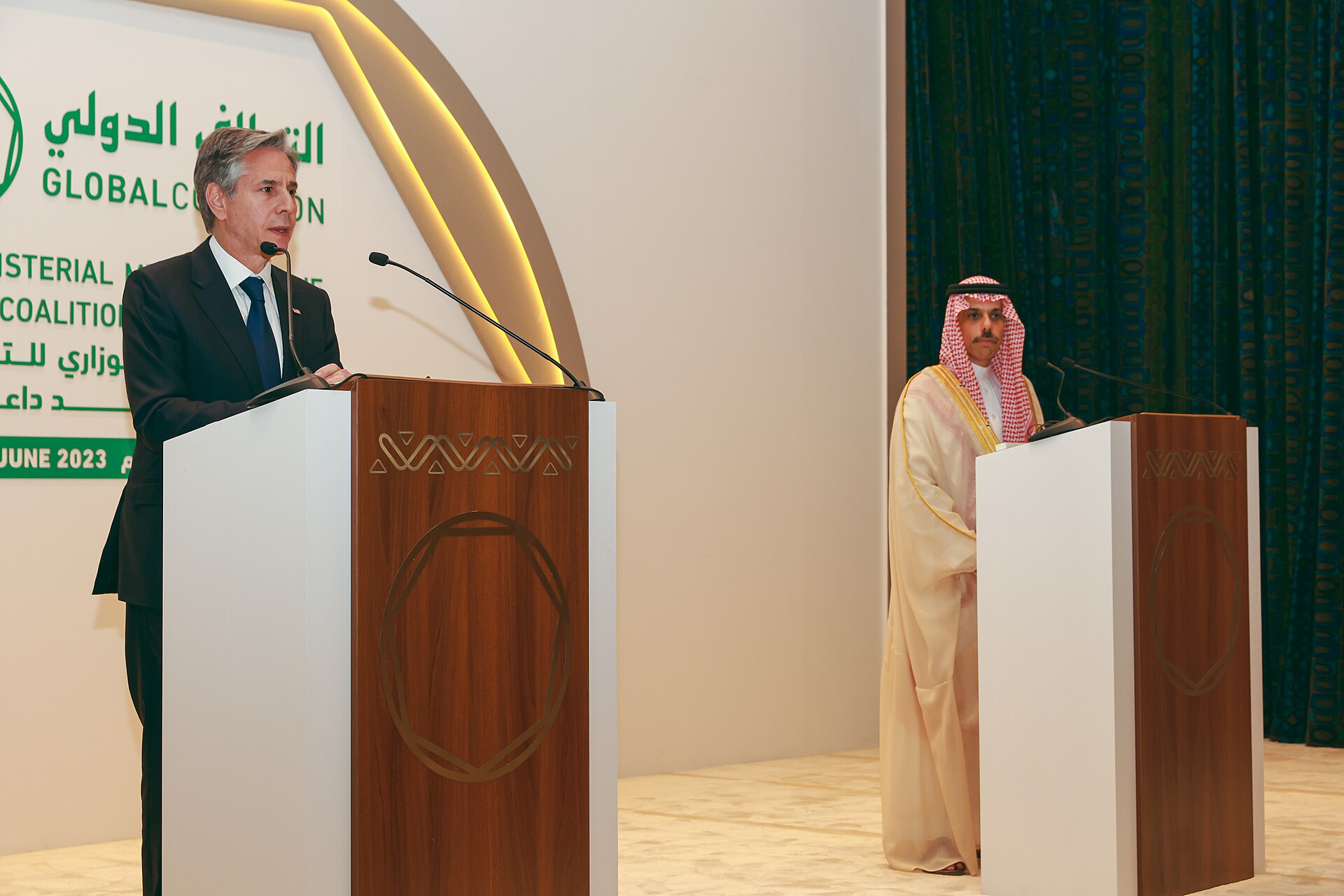
The Araghchi-Faisal phone call on June 25, three days before the Baghdad proposal, illustrates the asymmetry. Both ministers stressed “continuing consultations” and “maintaining diplomatic channels,” according to Asharq Al-Awsat and Middle East Monitor. Araghchi briefed Faisal on “the latest course of negotiations, progress achieved in implementing agreed understandings.” The framework was not among the items discussed. Saudi Arabia was consulted on MOU implementation — a process it has no formal role in — and given no advance notice of the institutional architecture that would reshape Gulf security.
What Can Saudi Arabia Actually Say?
Saudi Arabia faces a binary designed to produce no good outcome. Accepting the Baghdad framework means joining a regional security architecture that excludes the United States — the partner that supplies Riyadh’s THAAD and PAC-3 air defense systems, signed a $142 billion defense package in May 2025, and stations forces at Prince Sultan Air Base. Rejecting it means being positioned, in Iranian and Iraqi state media, as the GCC state that refused dialogue while Iranian missiles were landing on its neighbors’ territory.
The third option — silence — is the one Riyadh has adopted. But silence is not neutral in this context. Araghchi’s narrative framework treats GCC non-response as evidence that Gulf states privately recognize their security is better served without the United States but cannot say so publicly because of defense dependencies. Saudi silence feeds the Iranian argument rather than rebutting it.
FM Faisal’s available diplomatic instruments are limited. He has maintained a bilateral channel with Araghchi — the June 25 call was the sixth documented contact between the two ministers since the war began. He has used that channel for consultation on the MOU, not for negotiation of regional architecture. His one public intervention on the nuclear track was delivered at a European think-tank event in Vienna, not at a Phase 2 negotiating table where he has no seat.
A counter-proposal — a Saudi-led or GCC-led security framework that includes the United States — would contradict the post-war dynamic that Lawfare’s analysis described. US bases are now what Iran uses to justify striking GCC territory. Any framework that keeps those bases keeps the Iranian targeting rationale. Any framework that removes them dismantles Saudi Arabia’s air defense posture. Araghchi’s proposal sits in that gap. It does not need to be accepted to succeed. It needs only to demonstrate that no Saudi counter-proposal is available — and on June 28, none was.
Baghdad’s Mediation Precedent
Iraq’s role as venue and co-sponsor draws on established precedent. The Baghdad Conference I, held in August 2021 under Prime Minister Kadhimi and co-organized with France, brought Iran’s foreign minister and Saudi Arabia’s to the same table under Iraqi mediation. It was the highest-level direct contact between Riyadh and Tehran in years and helped lay the groundwork for the March 2023 Beijing agreement that restored diplomatic relations.
Baghdad Conference II, held in Amman in December 2022 and again organized by Iraq with French co-sponsorship, expanded the format to twelve participants: Iraq, Egypt, Saudi Arabia, the UAE, Qatar, Kuwait, Turkey, Iran, France, Bahrain, Oman, and representatives from the UN, Arab League, GCC secretariat, and OIC. The format was inclusive, the venue was neutral, and no state’s security umbrella was excluded as a precondition for participation.
The June 28 proposal breaks from this precedent in three ways. It shrinks the format from twelve to eight, removing non-regional participants — Turkey, Egypt, and France, the last of which co-hosted the original Baghdad Conference. It drops the institutional observers — the UN, Arab League, GCC secretariat, and OIC — that gave Baghdad II multilateral legitimacy. And it moves the initiative from peacetime mediation to wartime compellence, transforming Iraq’s role from honest broker to co-sponsor of a framework that one party announced while the other parties’ territory was under fire.
Hussein’s contribution at the June 28 press conference attempted to preserve Iraq’s mediating posture. He stated that Iraq “does not support expanding the war on Gulf states and does not back attacks on Iran” while calling for reopening Hormuz and lifting the US naval blockade. Iraq’s June 26 ultimatum to raise its OPEC quota or exit the cartel — delivered two days before the framework proposal — positions Baghdad as both energy policy disruptor and diplomatic mediator. The equidistance Hussein claims is harder to sustain when one party to the proposed dialogue struck two member states hours before the joint press conference and the framework excludes the other party’s primary security partner.
How Does the MOU Clock Shape the Framework?
The Baghdad framework operates within a sixty-day window that is already nearly one-fifth elapsed. June 28 is Day 11 of the MOU’s Phase 2 timeline. Forty-nine days remain before the August 16 deadline. On Day 61, the PGSA’s $1-per-barrel transit fee — currently waived — reverts by default.
The September UNGA meeting proposed by Hussein falls after the MOU deadline. If Phase 2 negotiations fail — or if they produce an agreement that does not address the PGSA fee or Hormuz access — the 6+2 framework would convene in an environment where Iran has already transitioned from waived fees to active collection. Saudi Arabia’s Bahri VLCCs, which crossed Hormuz for the first time since February 28 on June 18, would be transiting under a formalized Iranian toll regime by the time the framework holds its first meeting.
Araghchi’s claim of “total oversight and management” of Hormuz for “the 30 coming days” introduces a second clock. If taken at face value, Iranian control of the Strait extends to approximately July 28 — eighteen days before the MOU’s August 16 deadline. The gap between July 28 and August 16 is the space in which the transition from wartime closure to peacetime toll collection would occur. The September framework meeting follows this transition, not precedes it.
The MOU’s 14-point text names no arbitrator for disputes between the parties. The Lake Lucerne monitoring group has no emergency protocol. Neither the MOU nor the proposed 6+2 framework provides Saudi Arabia with a mechanism to contest Iran’s Hormuz claims or PGSA fee architecture. Brent sat at approximately $75 on June 28 — $33 to $36 below Saudi Arabia’s fiscal breakeven of $108 to $111 per barrel. Each day the MOU clock runs, the Kingdom’s revenue gap widens by an estimated $160 to $175 million.
Frequently Asked Questions
Has Iran proposed regional security frameworks before the 2026 war?
Iran has made at least three formal proposals. President Rouhani’s Hormuz Peace Endeavor (HOPE), unveiled at the September 2019 UN General Assembly, was the most detailed — it was accompanied by personal letters from Rouhani to all Gulf heads of state, none of whom responded formally. Foreign Minister Zarif had used his “World Against Violence and Extremism” (WAVE) platform from 2013 onward to propose broader Middle Eastern dialogue mechanisms. Iran also pursued bilateral security cooperation with Oman, resulting in the Iran-Oman Hormuz Committee institutionalized on June 24, 2026 — a working bilateral arrangement that functions independently of any multilateral framework. The June 28 Baghdad proposal is the first framework offer made during active hostilities by a state currently striking GCC member territory.
Could the 6+2 format include a Hormuz maritime patrol arrangement?
The Stimson Center reported in 2026 that Iran has proposed joint Hormuz maritime patrols in exchange for Saudi and Egyptian involvement securing the Bab al-Mandeb strait and Suez Canal. If introduced at a 6+2 meeting, this arrangement would offer Saudi Arabia a role — Red Sea maritime security — it cannot publicly reject while embedding it within an Iranian-led Hormuz architecture. The proposal would link two waterways that have historically been governed under separate security frameworks, creating interdependencies where none currently exist. Earnest Will deployed thirty-plus warships under US command for tanker convoy escort in 1987-88; Iran was not a participant in the convoy framework but was the party whose mines the convoys were designed to evade.
Why did Iraq’s FM propose the format rather than Iran’s?
Iraqi diplomatic choreography allows the framework to appear multilateral rather than imposed by a single party. Iraq’s mediator role dates to Prime Minister Kadhimi’s 2021 shuttle diplomacy between Riyadh and Tehran, which preceded the March 2023 Beijing agreement by eighteen months. Baghdad has institutional interest in maintaining mediator status — it provides Iraq diplomatic weight disproportionate to its military or economic position in the region. Hussein’s specific contribution — the 6+2 UNGA format — gives Iraq a structural role in any resulting framework, potentially establishing Baghdad as a permanent institutional host for Gulf-Iran dialogue and building on the precedent of Baghdad Conference I.
What is the GCC’s existing collective defense capability?
The Peninsula Shield Force, established in 1984, has been deployed once in earnest — to Bahrain in March 2011 during the Arab Spring protests, primarily as a Saudi-led ground stabilization force. Saudi Arabia’s 2015 announcement of a 34-nation Islamic Military Counter Terrorism Coalition produced a headquarters in Riyadh but no deployed operational capability. The GCC Unified Military Command, approved at the 2013 Kuwait summit, has not been operationalized in the decade since its creation. Carnegie’s “most likely” post-war scenario for the GCC is “status quo” — ad hoc coordination without unified command, and no collective force with a deployed operational capability.