
MANAMA — Saudi Foreign Minister Prince Faisal bin Farhan signed the Gulf Cooperation Council’s strongest collective defense commitment in 45 years on June 10–11, while Iranian missiles were actively striking two of the GCC’s member states. Saudi Arabia then deployed no forces, activated no defense mechanism, and blocked the United States from using Saudi airspace for offensive operations against Iran — the state attacking Saudi Arabia’s own treaty partners. Reuters reported in July 2026 that Saudi Arabia had conducted covert airstrikes on Iranian territory throughout the war — a role that reframes what the public GCC non-response concealed rather than represented.
That sequence is not a contradiction to be resolved. It is a data point to be read. The GCC collective defense clause was never a security guarantee; it was a diplomatic instrument whose utility depended on never being tested. Iran tested it — with over 1,372 ballistic missiles across 91 days of conflict. Kuwait’s response was to file independently at the United Nations under Article 51, bypassing the GCC entirely. Bahrain authored UNSC Resolution 2817, gathering 135 cosponsors through the Security Council rather than through any Gulf mechanism. Both attacked states chose the UN track over the GCC track, and that procedural choice is the clearest available signal that even the countries taking Iranian fire do not believe the Gulf’s collective defense architecture can protect them.
What Did the 167th Ministerial Council Actually Declare?
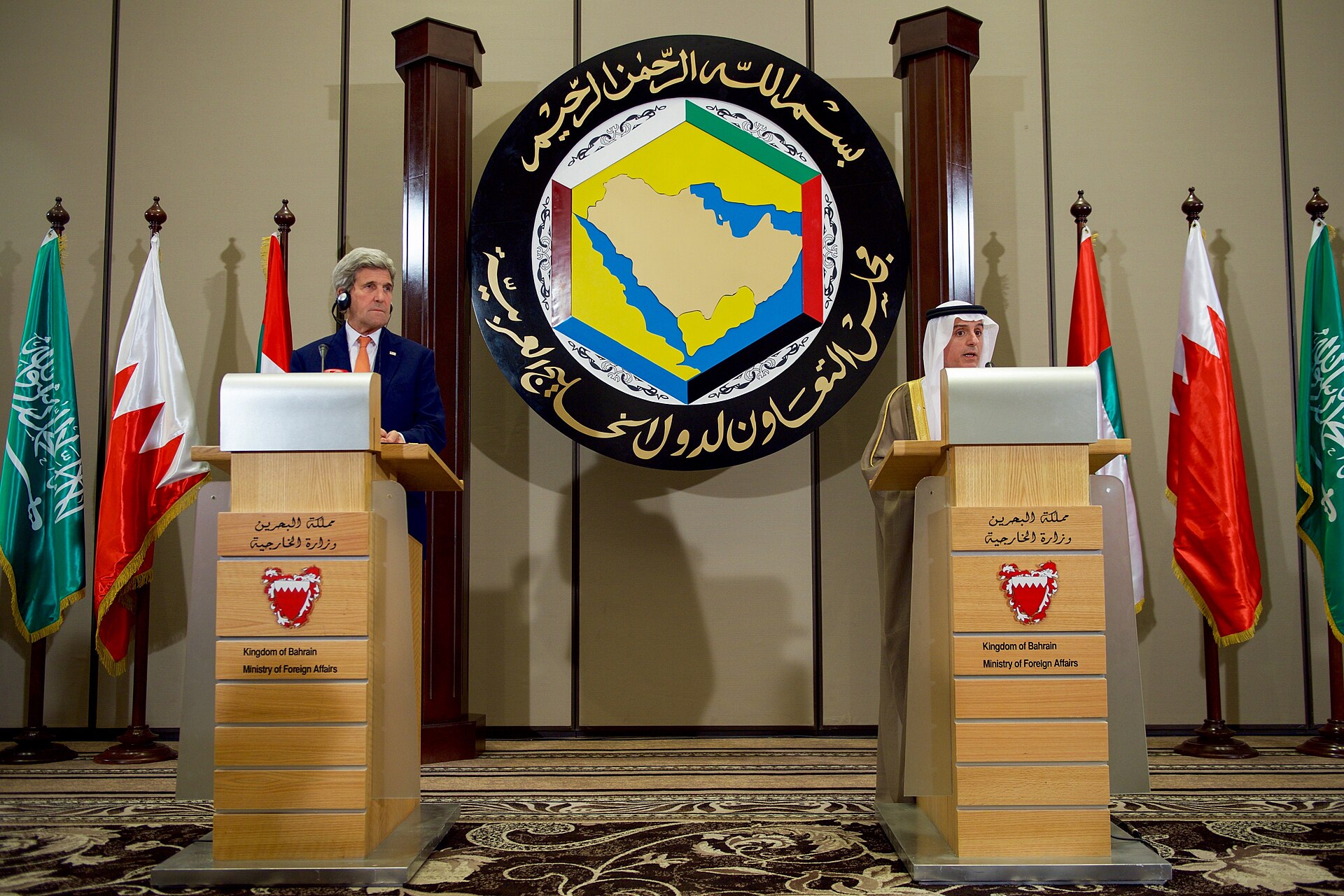
The GCC’s 167th Ministerial Council, meeting in Manama on June 10–11, 2026, issued the first collective defense invocation in the organization’s 45-year history, declaring that “the security of the GCC states is indivisible, and that any attack against one of them is an attack against them all.” The session was convened while Iranian ballistic missiles were actively striking Bahrain and Kuwait, and nothing operational followed the declaration.
GCC Secretary General Jasem Albudaiwi presided over the session and praised what he described as a “high level of coordination among Council States to address Iranian aggressions’ repercussions,” citing “over 150 extraordinary ministerial and technical meetings” held since the conflict began. The communiqué that emerged affirmed “the established and legitimate right of its states to defend themselves, individually and collectively, and to respond to this aggression by all legitimate means, in accordance with Article 51 of the Charter of the United Nations.” It was the strongest language a GCC ministerial body had ever committed to paper.
The timing was not symbolic — it was literal. The communiqué was not a retrospective assessment of threats or a prospective warning issued from a position of safety. It was drafted and issued in real time, with GCC sovereign territory under fire, by a body whose stated purpose included coordinating the defense of its member states. That the communiqué arrived as a document rather than an operational order is the defining feature of what the 167th session produced.
What the session did not contain matters more than what it said. No activation of the Unified Military Command — the renamed Peninsula Shield Force, the GCC’s only standing military formation — was announced or discussed in any public statement. No joint procurement initiative was proposed. No operational mandate for any existing GCC defense mechanism was altered. No timetable for any military response was offered. Albudaiwi’s metric — 150 meetings — quantified bureaucratic activity, and he offered it in the space where a military readiness figure would have gone. The most consequential collective defense declaration in the GCC’s history produced, in material terms, a communiqué.
The Middle East briefing 3,000+ readers start their day with.
One email. Every weekday morning. Free.
The Text Saudi Arabia Signed — and What It Requires
The GCC Joint Defense Agreement, signed at the December 2000 summit in Bahrain and ratified by all six member states by 2001, contains obligations that are specific, unambiguous, and currently unmet. Article 2 states: “Member States shall be committed to proceed promptly to assist any State or States within the Gulf Cooperation Council that suffer aggression or the threat thereof, by taking any necessary action, including the use of military force, to repel such aggression and restore the original status of legitimacy, security and peace, and shall immediately notify the League of Arab States and the UN Security Council.” That text is hosted on the Al Meezan Qatari Legal Portal, where it remains the authoritative English-language source for the agreement’s full language.
The operative word is “shall.” The operative phrase is “including the use of military force.” Saudi Arabia signed this obligation 26 years ago, and the two conditions it describes — member states suffering aggression, and the requirement to proceed promptly — are both now satisfied. Bahrain and Kuwait are under sustained Iranian military attack. Over 1,372 ballistic missiles have been fired at GCC states across 91 days of war. Saudi Arabia’s response has been diplomatic: condemnation, solidarity, and participation in a seven-nation joint statement. Crown Prince Mohammed bin Salman publicly called the Iranian strikes “direct military aggression” that “may be considered an act of war,” according to Arab Center DC analysis of his remarks. He simultaneously blocked US military use of Saudi airspace and bases for offensive operations against Iran — the state conducting the aggression that Article 2 was drafted to address.
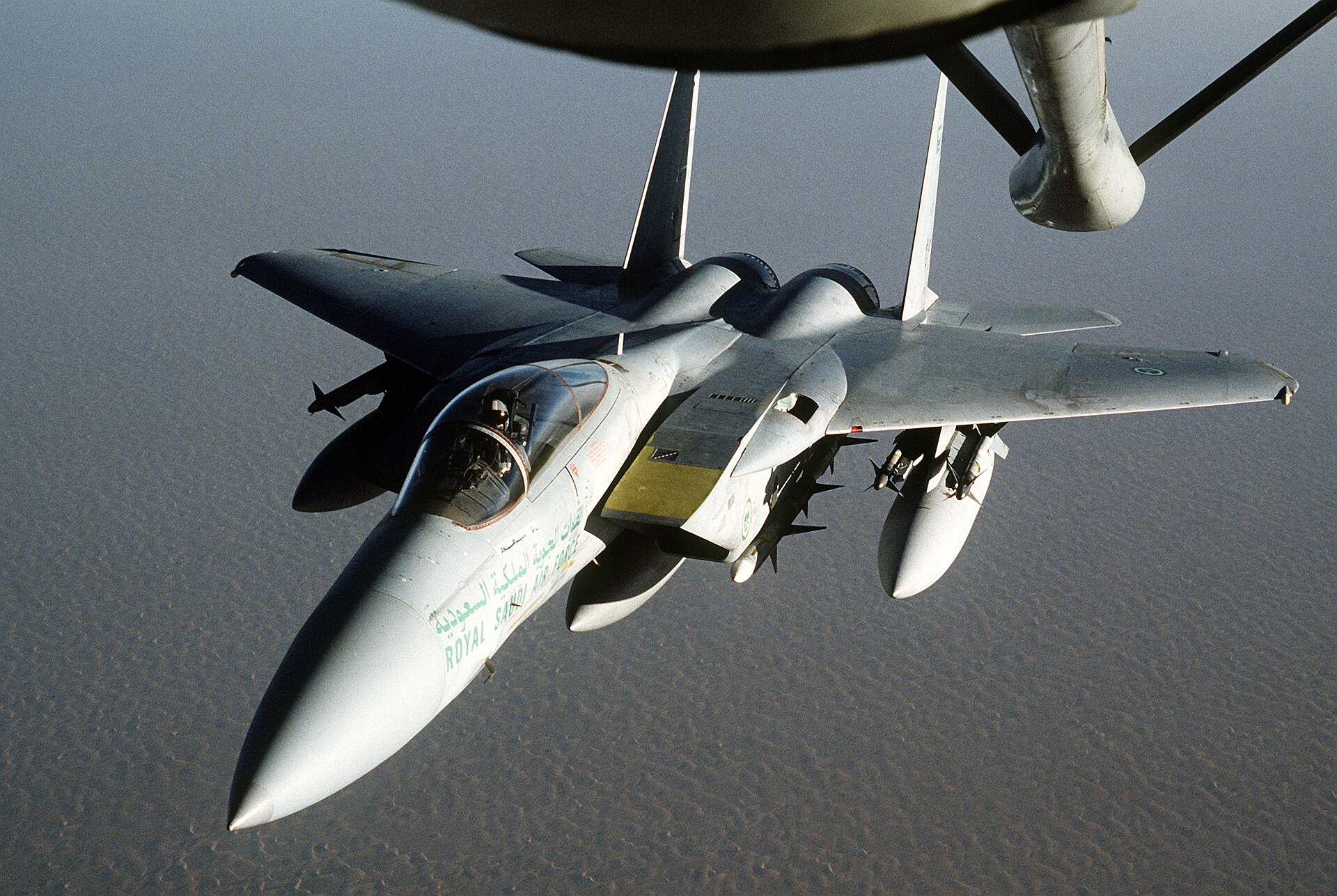
The gap between “shall proceed promptly” and “condemned the attacks” is not ambiguity. It is a policy choice, and the Joint Defense Agreement’s architecture was designed to permit it. Unlike NATO Article 5, the GCC agreement contains no automatic trigger for mobilization; activation remains contingent on each individual member state’s political decision, as the Congressional Research Service documented in Report RS20831. The Washington Institute for Near East Policy reached the same conclusion, describing the GCC defense framework as “an exercise in ambiguity” — a formulation that accurately captures the distance between Article 2’s mandatory language and the discretionary reality. The “shall” in Article 2 reads like an obligation on the page but functions like an option in practice, because no mechanism exists to compel a signatory to honor it and no consequence follows from declining.
Saudi Arabia condemned Iran’s strike on Bahrain and reaffirmed solidarity with the attacked states, joining a collective statement with six other nations. But condemnation is not what Article 2 describes, and solidarity is not what it requires — the text specifies “military force,” and Riyadh’s contribution to the defense of its two attacked treaty partners has remained diplomatic, not operational, through every day of the 91-day conflict.
Why Did Kuwait and Bahrain Go to the UN Instead of the GCC?
Both attacked states chose the United Nations over the GCC mechanism for seeking a collective response to Iranian military operations against their territory. Kuwait filed under UN Charter Article 51 on June 3, 2026, through its Permanent Representative to the UN, Ambassador Nasser Al-Hain. Bahrain authored UNSC Resolution 2817, cosponsored by 135 nations — the largest cosponsor count for any Security Council resolution in history. Neither state invoked the GCC Joint Defense Agreement as the primary framework for its defense.
Kuwait’s filing was procedurally deliberate. Ambassador Al-Hain affirmed Kuwait’s “inherent and inalienable right to self-defense in accordance with Article 51 of the United Nations Charter,” as reported by ArabTimesOnline. The filing was submitted directly to the UN Security Council, not channeled through the GCC Secretariat, and it invoked individual and collective self-defense under international law rather than under any Gulf regional instrument. Kuwait — a founding GCC member whose 1990 invasion by Iraq was the formative event that demonstrated Gulf vulnerability to external state aggression — chose the UN as the institution through which it would assert its right to respond to attack. That choice carries a judgment about institutional credibility that is difficult to read as anything other than a verdict on the GCC mechanism.
Bahrain’s approach was architecturally more ambitious. UNSC Resolution 2817, adopted March 11, 2026, condemned Iran’s “egregious attacks,” explicitly invoked Article 51, and was drafted by Bahrain on behalf of the GCC states and Jordan, according to UN Press release SC16315 and Security Council Report analysis. The GCC name appeared on the document — but the instrument was a Security Council resolution, not a GCC defense activation, and the 135-nation coalition Bahrain assembled represented a diplomatic achievement built through the UN system rather than through the six-member Manama-based Secretariat. No prior Security Council resolution had attracted cosponsorship at that scale, and Bahrain’s decision to invest its diplomatic capital at the UN rather than within the GCC reveals where Manama assessed it would receive a return.
When an attacked state files under Article 51, it is asserting self-defense rights under the most authoritative collective security framework in international law. When it does so independently — bypassing its own regional defense pact to reach a broader institution — it is making a judgment about which framework it expects to produce results. Kuwait and Bahrain did not supplement the GCC track with a UN track. They replaced it. The GCC communiqué declared “attack on all.” The attacked states filed at the Security Council as though the communiqué had not been issued, because they assessed — correctly, based on 91 days of evidence — that the GCC mechanism behind the communiqué would not activate.
What Does the GCC Defense Architecture Actually Look Like?
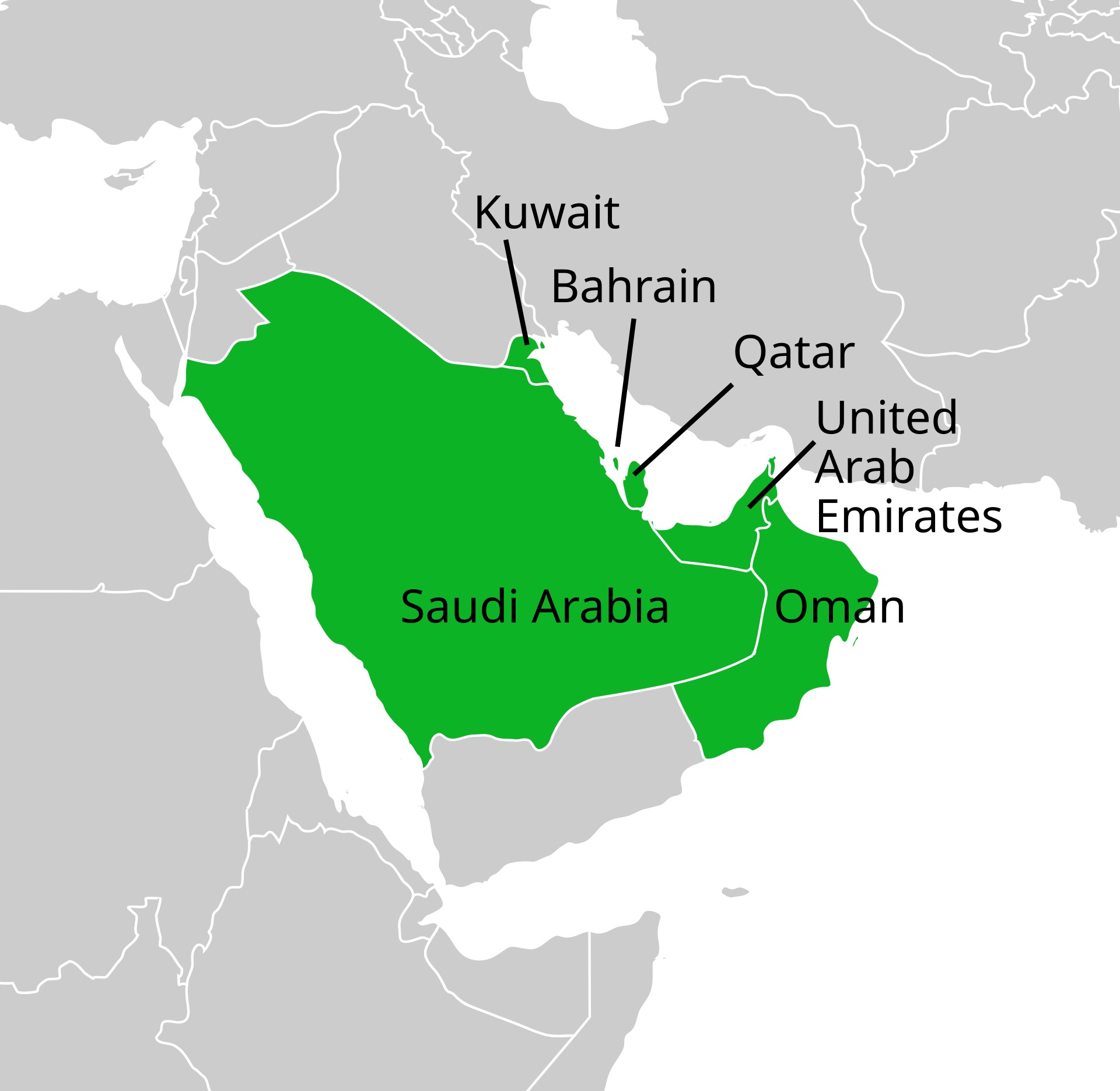
The GCC was founded in 1981 without any mention of defense or military cooperation in its charter’s stated objectives. The defense architecture was built through separate instruments over two decades — the Peninsula Shield Force in 1984 and the Joint Defense Agreement in 2000 — that were never designed to interlock automatically. Unlike NATO, the GCC agreement contains no integrated command structure with operational authority, no joint planning process with binding outputs, and no consultation mechanism equivalent to NATO’s Article 4.
The charter’s omission of defense was deliberate. The Washington Institute for Near East Policy documented that the founding members intentionally avoided security language to prevent provoking Tehran and Baghdad during the Iran-Iraq War. Brahim Saidy’s analysis for ETH Zurich reached the same conclusion: the GCC was conceived as an economic and political coordination body, and the security architecture was retrofitted through instruments that were bolted onto a charter designed without them.
The Peninsula Shield Force was established in 1984 with approximately 7,000 troops based at Hafar al-Batin in Saudi Arabia, and it was redesignated the Unified Military Command on January 5, 2021, without any publicly disclosed change to its operational mandate. The Joint Defense Agreement followed in December 2000 — a full 19 years after the founding charter — creating the Article 2 “proceed promptly” obligation. No mechanism was built to connect the treaty obligation to the standing force, and that gap has never been closed.
The comparison with NATO is structural, not rhetorical. NATO Article 5 creates an obligation for each member to take “such action as it deems necessary, including the use of armed force” — language no stronger than the GCC’s “shall be committed to proceed promptly…including the use of military force.” The difference is infrastructure. NATO’s enforcement rests on an integrated command structure under the Supreme Allied Commander Europe (SACEUR) with operational authority to direct multinational forces, a joint planning process that generates binding contingency plans reviewed annually, and Article 4 consultation procedures that allow members to raise security concerns before an attack occurs.
The GCC’s Joint Defense Agreement specifies none of these. It creates an obligation and assumes the political will to honor it, without providing any mechanism to test whether that will exists. The 167th Ministerial Council — invocation without activation — proved what the architecture was always designed to avoid proving. The same gap applies at the platform level: Saudi Arabia’s Patriot PAC-3 batteries and the US contractor-dependent data links that bind them represent a defense capability that was never fully transferred to Saudi operational control.
The only operational deployment of the Peninsula Shield Force in its 42-year history was the March 2011 intervention in Bahrain during the Arab Spring — an internal security operation supporting the Bahraini government against domestic unrest, led by Saudi Arabia and executed without a formal collective decision process, according to the FPRI’s assessment. It was not defense against an external state actor, and it tested neither the Joint Defense Agreement nor the force’s capacity for interstate military operations. When the first external state actor struck GCC territory with sustained ballistic missile campaigns in 2026, the force that Article 2 implied would respond had never been asked to do so against an external threat, and no institutional mechanism existed for issuing the request.
How Iran Read the Room
On June 28, 2026, between approximately 02:00 and 03:00 local time, the IRGC launched ballistic missile and drone strikes against Ali Al Salem Air Base in Kuwait and the Juffair naval facility hosting the US Fifth Fleet headquarters in Bahrain. The same morning, Iranian Foreign Minister Abbas Araghchi was in Baghdad presenting a 6+2 regional security framework to Iraqi Foreign Minister Fouad Hussein — a diplomatic initiative proposing Gulf regional cooperation while explicitly excluding the United States. The framework had been developed through channels that already excluded Saudi Arabia from the negotiating table, and Araghchi’s Baghdad presentation ran simultaneously with IRGC ordnance striking two GCC member states.
The dual-track was not a scheduling coincidence. Iran had already established the pattern of citing the MOU to justify breaking it, and the June 28 operation followed the same logic of simultaneous contradiction: commerce and diplomacy for Baghdad, ballistic missiles for Kuwait, same government, same morning. The IRGC described the strikes as a “decisive response” to renewed American aggression and warned that “the enemy should understand that violating the ceasefire constitutes a breach of Clause One of the Islamabad understanding and will result in the complete suspension of all related processes,” according to PressTV. The IRGC’s targeting language was carefully calibrated: every strike was framed as hitting “US military installations,” not GCC sovereign territory. Within hours of the strikes, Araghchi issued a formal post-strike demand to Kuwait and Bahrain that they “must not allow their territory or facilities to be used for attacks” against Iran — a legal pre-clearance architecture for future strikes analyzed in Iran Struck First, Then Issued the Rules.
That framing is legally and diplomatically operative, and it works precisely because of what the GCC did not do. Iran’s position is that it struck American military assets operating from Kuwaiti and Bahraini soil — not the member states themselves. If the GCC had activated its collective defense mechanisms, deployed forces, or established a unified command posture, the strikes would have to be framed as acts of war against a functioning military alliance. Because the GCC produced a communiqué and then produced nothing operational, Iran can sustain its narrative that the targets were American infrastructure, not Gulf sovereignty. The pattern was already visible when a drone struck the Hormuz corridor eight days into the MOU with no coordinated Gulf military response — Tehran internalized the signal and calibrated subsequent operations accordingly.
Iran’s Foreign Ministry had already revealed its assessment of GCC collective defense two days before the June 28 strikes. On June 26, it condemned the GCC-US Manama joint statement issued the previous day as “interventionist, irresponsible, and provocative,” per Al Jazeera’s reporting. The ministry did not treat the GCC’s June 10–11 collective defense invocation as a red line, a deterrent, or even a relevant development warranting a diplomatic response. Less than 48 hours after the Manama statement, the IRGC struck two GCC member states — the attacked states named in the very communiqué that declared their security “indivisible.” Tehran has assessed that GCC collective defense language is rhetorical, that Saudi Arabia will not activate Article 2, and that military operations against Gulf territory can be framed as anti-American operations without triggering a Gulf military response. Every element of that assessment has been confirmed by events since June 10.
The Falklands Precedent
The structural pattern — an anchor state declining to honor a collective defense obligation it signed — has a direct historical analog, and it killed the treaty it occurred under. In 1982, Argentina invoked the Inter-American Treaty of Reciprocal Assistance (the Rio Treaty) after the United Kingdom launched military operations to retake the Falkland Islands. The Organization of American States voted 17–0 in favor of Argentina’s collective defense claim. The United States — the anchor state of the Western Hemisphere security system — abstained from the vote and then actively supported NATO ally Britain with intelligence sharing and logistical assistance, according to declassified CIA documents and Stimson Center analysis.
Washington’s justification was technical: the aggression “did not come from outside the hemisphere,” an interpretation that Latin American states regarded as a legal fiction designed to avoid an inconvenient obligation. But the effect was structural and permanent. The anchor state had demonstrated that its alliance commitments to a different bloc — NATO — took priority over its obligations under the hemisphere’s collective defense treaty. The Rio Treaty’s Article 3, which obligated members to assist a state under attack, became understood as aspirational rather than binding, because the one state whose participation was necessary for collective action to be meaningful had shown it would not participate when its broader strategic interests pointed elsewhere.
Mexico formalized that conclusion twenty years later. In 2002, Mexico withdrew from the Rio Treaty and explicitly cited the 1982 Falklands episode as proof the mechanism had never functioned, according to the Stimson Center’s analysis of the treaty’s decline. No replacement treaty was negotiated. The withdrawal did not precipitate a diplomatic crisis because the treaty was already understood to be inoperative — Mexico’s departure was a legal formality confirming a political reality that every OAS member had been calculating around for two decades.
Saudi Arabia’s position within the GCC mirrors Washington’s 1982 position with uncomfortable precision. Saudi Arabia is the GCC’s largest economy, largest military, dominant political actor, and the state whose participation is the precondition for any Gulf collective action carrying meaningful weight. Its signature on the Joint Defense Agreement gave Article 2 its credibility. Crown Prince Mohammed bin Salman publicly labeled the Iranian attacks “direct military aggression” that “may be considered an act of war” while simultaneously blocking US military use of Saudi airspace — the same Saudi Arabia that signed the obligation to assist attacked members “including the use of military force.” That gap between the label and the action is precisely what the Falklands revealed for the Rio Treaty: the anchor state has strategic interests that override its treaty obligations, and the treaty’s credibility depends on the assumption that those interests will never diverge from the text. The Carnegie Endowment for International Peace, in an April 2026 analysis, identified the structural ceiling: “The historical record of the GCC suggests [limited cooperation] is the ceiling of new cooperation, as the member monarchies have weighed their collective concerns against numerous intra-GCC conflicts including border disputes, ideological differences, economic competition, and even spy rings, which have hindered larger projects such as a currency union or a joint security force.” The joint security force remains unbuilt, the Joint Defense Agreement remains unactivated, and the gap between them has widened with every missile that has landed on GCC territory since June 10.
150 Meetings and Zero Deployments
Albudaiwi’s figure — over 150 extraordinary ministerial and technical meetings convened since the conflict began — deserves examination not for what it claims but for what it replaces. The Secretary General offered a coordination metric in a context that required an operational one. The GCC Secretariat can convene meetings, produce communiqués with strong language, coordinate diplomatic positions across six capitals, and generate joint statements with external partners. Those are real institutional capabilities, and the 150-meeting count demonstrates that the bureaucratic apparatus has operated at sustained capacity throughout the conflict.
What the 150 meetings did not produce is what Article 2 describes. Across 91 days of war involving over 1,372 ballistic missiles fired at GCC member states, those meetings generated no coordinated Gulf military operation — not a joint patrol, not a shared air defense posture, not a combined naval deployment. The Unified Military Command was not deployed, not activated, and not mentioned in any GCC statement responding to the June 2026 attacks. The International Institute for Strategic Studies, in a March 2026 assessment titled “Mapping the Damage: Iranian Strikes on the GCC,” called for “a united defense architecture of Gulf states with genuine collective leadership” — a formulation that the IISS structured precisely to avoid stating what it implied, which is that the existing architecture has neither unity nor genuine collective leadership.
The institutional design explains the gap between meetings and military output. The GCC has demonstrated the capacity to run multiple diplomatic tracks simultaneously — it can convene three negotiations in a single city while none of them place Saudi Arabia in a decision-making role. But the mechanism for translating diplomatic consensus into military action was supposed to be the Joint Defense Agreement, and the trigger for activating that mechanism was supposed to be an attack on a member state. The attack occurred and the agreement was invoked, but the translation mechanism — the step between declaring “attack on all” and deploying any military asset — did not engage. What followed was 150 more meetings, a communiqué with historic language, and the continued absence of the operational response that Article 2’s drafters had assumed the language would produce.
What Is Left of GCC Collective Security?
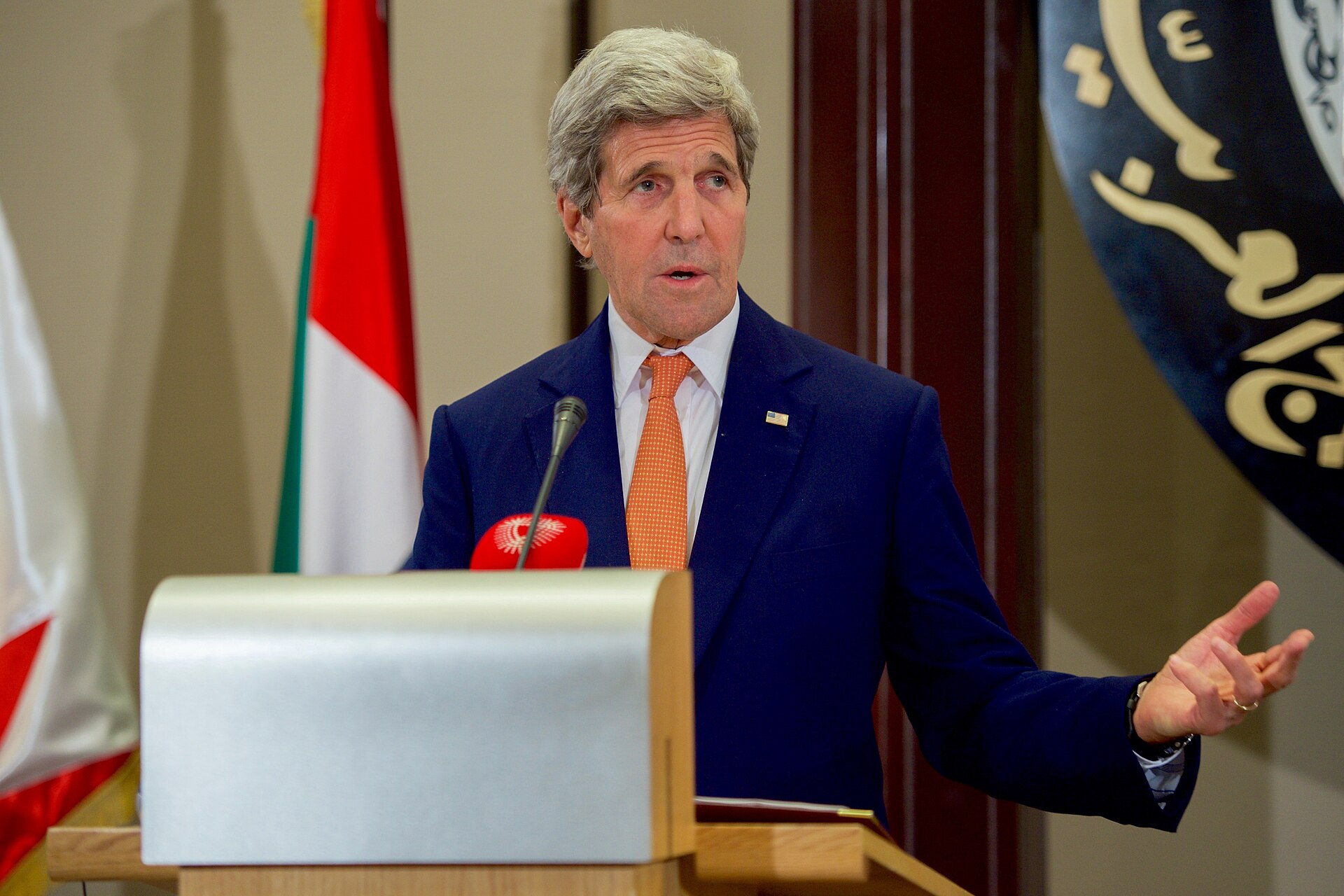
The GCC has produced no coordinated military operation against the state attacking its members. Both attacked states sought security guarantees through the United Nations rather than through the Gulf mechanism. What remains functional in GCC security cooperation is bilateral, not collective, and it operates through Saudi political will rather than institutional obligation.
The historical comparison is clarifying, and the sample size is large. The Arab League Joint Defense and Economic Cooperation Treaty, signed in 1950, contains language stronger than the GCC’s: signatories “shall go without delay to the aid” of a state under attack. In 75 years, the mechanism has never been operationally activated. The Arab League authorized intervention in Libya in 2011, but actual Arab military participation was limited to Qatari and UAE air power operating under NATO command; the League itself never fielded a collective force. The Collective Security Treaty Organization — Russia’s NATO analog, comprising six post-Soviet states — contains an “attack on one is attack on all” formulation structurally identical to the GCC’s 167th Ministerial language. During Russia’s 2022 invasion of Ukraine and the ensuing conflict, the CSTO was not invoked by any party. Collective defense clauses in multilateral organizations that lack integrated military command structures and joint planning processes share a consistent historical record across seven decades: they do not activate when tested.
Saudi Arabia maintains functional defense relationships with individual GCC states — intelligence sharing, arms transfers, diplomatic coordination on Iran policy, and bilateral security consultations that predate the Joint Defense Agreement by decades. Those bilateral channels work because they depend on Saudi political will exercised case by case, not on institutional mechanisms that might constrain Saudi discretion or commit Saudi forces to operations Riyadh has not individually approved. That discretion has since driven a deeper fracture: the UAE’s May 2026 OPEC exit formalized a Saudi-UAE structural rift rooted in incompatible Iran war strategies, opposing security architectures, and the Abraham Accords divide — the two most powerful GCC economies now operating in parallel, not in concert. On June 30, rather than any active Gulf security forum, FM Faisal bin Farhan was in Beijing for talks with Chinese FM Wang Yi — the bilateral channel Saudi Arabia is pursuing outside every active table where the conflict’s terms are being set. The Joint Defense Agreement’s architecture, by design or by default, preserves that discretion while providing the diplomatic vocabulary of obligation. That vocabulary was tested on June 10–11 in Manama, and it produced six words — “attack on one is attack on all” — “with nothing behind them.
The GCC’s structural failure accelerated a deeper realignment: Saudi Arabia responded by assembling the emerging post-war coalition of Qatar, Turkey, Pakistan, and Egypt — a five-state axis defined precisely by the absence of the UAE and the irrelevance of the GCC’s collective defense architecture.
Kuwait’s Article 51 filing and Bahrain’s UNSC Resolution 2817 are the institutional consequences of the gap between those six words and the reality they did not produce. Both attacked states reached for the framework they assessed could deliver a response, or at minimum generate international legal standing for their own defensive actions. Neither reached for the GCC. If the 1982 Falklands killed the Rio Treaty’s credibility over a single episode involving a territorial dispute between an occupying state and a distant colonial power, the effect of 91 days of sustained ballistic missile attacks on two GCC member states — met by a communiqué and 150 meetings — will define what the GCC’s collective defense clause is worth for as long as the organization exists. The question is no longer whether the clause will be activated. The question is whether any GCC member will plan its national defense as though it might be.
Frequently Asked Questions
Has any GCC member state faced consequences for failing to meet Joint Defense Agreement obligations?
No. The GCC charter contains no expulsion mechanism, no suspension provision, and no penalty clause for non-compliance with the Joint Defense Agreement. Qatar’s 2017 blockade — in which Saudi Arabia, the UAE, and Bahrain severed diplomatic and economic ties with Doha for three and a half years — was conducted entirely outside GCC institutional channels and was driven by political disputes over Doha’s foreign policy alignment, not defense obligations. The organizational structure assumes consensus among member monarchies and provides no formal recourse when a signatory state declines to honor a collective commitment. Article 2’s “shall” carries no enforcement mechanism, no mandatory review process, and no institutional consequences for inaction.
How does UNSC Resolution 2817’s 135-cosponsor count compare to other major Security Council resolutions?
Resolution 2817’s cosponsor total exceeds any prior Security Council resolution by a substantial margin. UNSC Resolution 2334 (December 2016), which condemned Israeli settlements in occupied territories, was adopted 14–0 with a US abstention and carried no cosponsors — it was a drafted text put to vote, not a cosponsorship exercise. UNSC Resolution 1973 (March 2011), which authorized the Libya no-fly zone, had ten affirmative votes and five abstentions, again without a formal cosponsor process. The 135-nation figure reflects a deliberate Bahraini diplomatic campaign to assemble multilateral support through UN institutional channels rather than through the GCC’s six-member structure. Bahrain invested its diplomatic resources where it calculated they would generate the broadest coalition — and that calculation bypassed the Gulf mechanism entirely.
Did the GCC invoke collective defense after the 2019 Aramco Abqaiq attacks?
No. The September 14, 2019, drone and cruise missile attacks on Saudi Aramco’s Abqaiq processing facility and the Khurais oil field — which temporarily removed approximately 5.7 million barrels per day of Saudi production capacity, halving the kingdom’s output overnight — produced GCC solidarity statements and individual condemnations from member states but no collective defense invocation. The 2026 167th Ministerial declaration was explicitly the organization’s first “attack on one is attack on all” language in 45 years, which means the GCC mechanism was not triggered even when the anchor state itself — Saudi Arabia, the state whose military weight gives Article 2 its meaning — was the target of a devastating attack on its most critical energy infrastructure. Saudi Arabia did not invoke collective defense on its own behalf in 2019, and it would not activate it on behalf of Kuwait and Bahrain seven years later.
What is the current operational status of the Unified Military Command?
The Unified Military Command, redesignated from the Peninsula Shield Force on January 5, 2021, remains headquartered at King Khalid Military City near Hafar al-Batin in northeastern Saudi Arabia — not at the GCC Secretariat in Riyadh, a geographic separation that reflects the force’s operational dependence on Saudi hosting rather than collective Gulf governance. Its authorized strength and actual personnel numbers have not been publicly disclosed since the redesignation. The force’s 2011 Bahrain deployment — the only operational activation in its history — involved an estimated 1,000 Saudi troops and 500 UAE police personnel, according to IISS assessments, deployed to secure government infrastructure against civil unrest; the UAE contribution was police, not military, a distinction that tracks the operation’s internal-security rather than collective-defense character. The Unified Military Command was not referenced in any GCC statement responding to the 2026 Iranian attacks, and no public evidence has emerged that its mandate, rules of engagement, or force posture were discussed at the 167th Ministerial session or the 150-plus extraordinary meetings that preceded it.
Has Iran formally responded to the GCC’s collective defense invocation?
Iran has not acknowledged the GCC collective defense invocation as a distinct development requiring a diplomatic or military response. The IRGC’s operational statements frame all strikes against GCC territory exclusively as targeting “US military installations” — a legal posture that refuses to engage with the collective defense question by denying the strikes were directed at GCC member states as sovereign entities. Iran’s Foreign Ministry, on June 26, condemned the GCC-US Manama joint statement as “interventionist, irresponsible, and provocative” but addressed it as a US-aligned diplomatic product rather than as a collective defense posture with military implications that Iran needed to account for. Tehran’s operational behavior — striking two GCC member states within 48 hours of the Manama statement, without referencing or acknowledging the June 10–11 collective defense invocation — is the most direct available evidence of how Iran assesses the declaration’s weight. That assessment, based on the operational evidence, is that the invocation is diplomatically interesting and militarily meaningless.