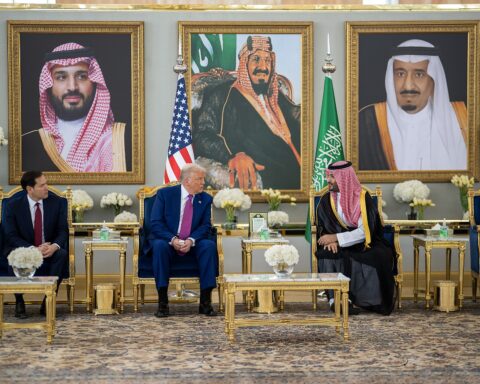
MUSCAT — Iran and Oman established a bilateral working group on June 23 to define the “future administration of navigation in the Strait of Hormuz” and the “costs associated” with maritime services, according to a joint statement released by the Omani Ministry of Foreign Affairs. Two days later, the Islamic Revolutionary Guard Corps struck a container ship transiting an IMO-Oman evacuation corridor, and the International Maritime Organization suspended its plan to move more than 600 vessels and 11,000 stranded seafarers through the strait.
The combined effect left one governance framework for Hormuz navigation standing: the Iran-Oman bilateral dialogue mandated by Article 5 of the US-Iran Memorandum of Understanding signed at the Palace of Versailles on June 17. Iran’s Foreign Ministry on June 26 rejected the GCC-US Manama joint statement — which had categorically opposed “any tolls, fees, or attempts to assert control over the Strait” — and cited Article 5 as the binding framework for the strait’s future management, according to Al Jazeera. Oman signed the GCC-US statement, but Foreign Minister Badr Albusaidi used narrower language at Manama: “future arrangements regarding the Strait do not entail the imposition of any transit fees,” according to The Peninsula Qatar.
Table of Contents
The Joint Statement in Muscat
The Iran-Oman joint statement, issued after meetings between Omani officials and an Iranian delegation led by Parliament Speaker Mohammad Bagher Qalibaf and Foreign Minister Abbas Araghchi, committed both countries to a working group comprising officials from their foreign ministries. The group’s mandate, as stated in the document published by fm.gov.om, is to “reach agreement on the future administration of navigation in the Strait of Hormuz and the services that will be provided in this regard and the costs associated with them in accordance with international standards.”
The statement also included a sovereignty assertion. “Iran and Oman, as the Coastal States of the Strait of Hormuz, reaffirm their commitment to the safe passage through the Strait, in line with applicable international law, while emphasising their sovereignty and sovereign rights over their territorial waters in the Strait of Hormuz,” the joint text read, according to PRNewswire.
Araghchi reinforced the bilateral track two days later. “After recent Joint Statement in Muscat, had productive call with @badralbusaidi,” Araghchi wrote on X on June 25. “We re-emphasized that Iran and Oman will conduct dialogue ‘to define future administration and maritime services in Strait of Hormuz.’ We’re determined and will do so in discussion with our neighbors.” The Oman Ministry of Foreign Affairs confirmed the call and said the two officials “discussed understandings on a joint cooperation mechanism to achieve the objectives of the US-Iran Memorandum of Understanding regarding freedom of navigation in the Strait of Hormuz,” according to fm.gov.om.
Iran’s Deputy Foreign Minister for Legal Affairs, Kazem Gharibabadi, framed the arrangement as an obligation rather than a discretionary initiative. Iran and Oman “bear greater responsibility” for strait security as the two coastal states, he told PressTV on June 26.
The Middle East briefing 3,000+ readers start their day with.
One email. Every weekday morning. Free.
What Did the IRGC Strike Accomplish?
The IMO and Oman announced on June 23 — the same day as the Iran-Oman joint statement — a phased evacuation plan for vessels stranded at Hormuz anchorages since the early stages of the conflict. The plan designated two temporary corridors: a northern route through Iranian territorial waters and a southern route through Omani waters, with organized transits of approximately 40 vessels at a time, according to the Maritime Executive.
Iran rejected the corridor immediately. The IRGC stated that the route “was announced without prior notification to or coordination with the Islamic Republic of Iran and was unacceptable,” according to Al Jazeera. Hours before the Ever Lovely was struck, the IRGC warned that vessels using routes “not approved by Tehran” were “extremely dangerous and prohibited” and that “violators will be dealt with,” according to Al Jazeera’s live reporting on June 25.
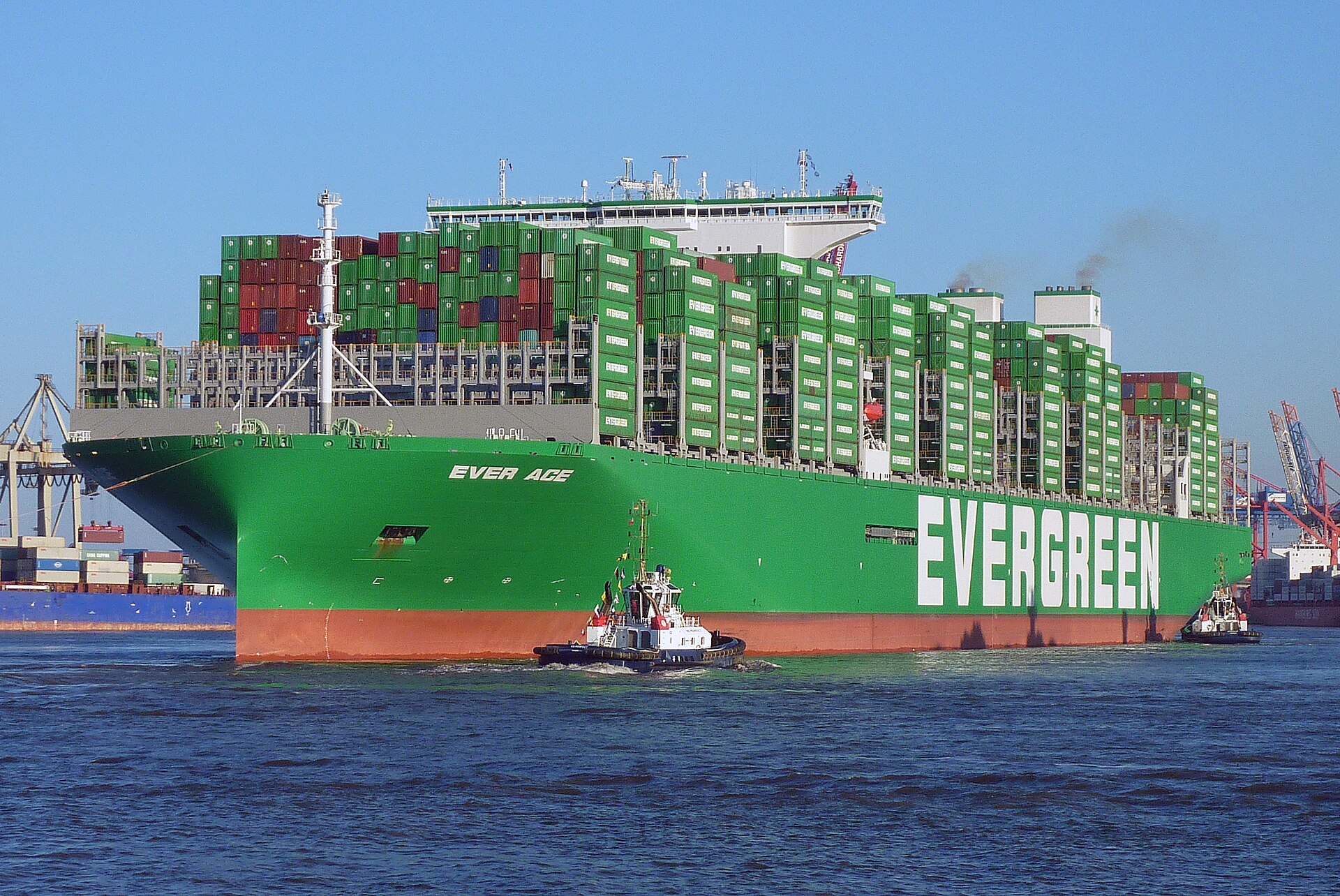
On June 25, a drone struck the 9,532-TEU Singapore-flagged container ship Ever Lovely, operated by Evergreen Marine, at 7.5 nautical miles southeast of Dahit, Oman, as the vessel transited the Omani coastal corridor. The drone hit the starboard side, damaging bridge eaves and two bridge windows, according to UKMTO. No casualties were reported. The Ever Lovely had been stranded for more than 100 days before attempting the evacuation transit.
IMO Secretary-General Arsenio Dominguez responded within hours. “I have decided to temporarily pause [the evacuation plan’s] implementation in order to reconfirm that the necessary safety guarantees continue to be in place for the ships on our evacuation list and all those in the region,” Dominguez said in an IMO press briefing. As of June 26, approximately 850 vessels remained at Hormuz anchorages, according to shipping data tracked by FreightWaves.
The pause removed the only multilateral transit mechanism operating at Hormuz. Gharibabadi warned the same day that safe passage through the strait could not be guaranteed under ambiguous arrangements, parallel routes, or decision-making that did not account for Iran’s role as a coastal state, according to PressTV. The IRGC separately declared that “the only authorised transit routes through the Strait of Hormuz are those designated by the Islamic Republic of Iran,” according to Al Jazeera.
The Gap Between ‘No Fees’ and ‘No Transit Fees’
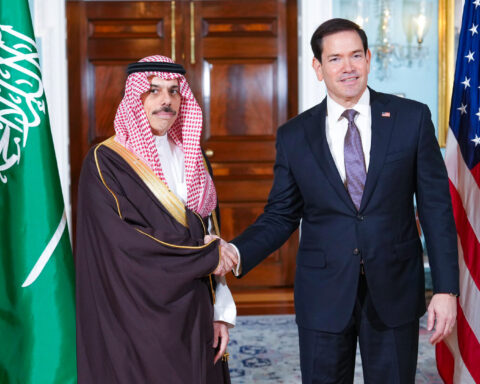
At the GCC-US ministerial meeting in Manama on June 25, all six GCC foreign ministers and US Secretary of State Marco Rubio signed a joint statement that “rejected any tolls, fees, or attempts to assert control over the Strait,” according to the US State Department.
Oman’s Albusaidi signed that statement. But in separate remarks at the same meeting, he used a different formulation: “future arrangements regarding the Strait do not entail the imposition of any transit fees,” according to The Peninsula Qatar and Arab News. The GCC statement rejected “fees.” Albusaidi rejected “transit fees.”
The distinction tracks a specific legal argument Iran has been constructing since the Persian Gulf Shipping Authority was established on May 5. The PGSA has consistently framed its charges not as transit fees or tolls but as fees for “specific services rendered” to vessels — navigational coordination, safety monitoring, environmental protection — invoking UNCLOS Article 26(2), which permits levies on foreign vessels only for “specific services rendered to the ship.” The PGSA’s 40-category pre-clearance form requires vessels to declare cargo type, insurance status, and destination, building a comprehensive shipping-data infrastructure regardless of whether the $1-per-barrel fee is collected during the current 60-day waiver period.
Rubio addressed the fee question directly at Manama. “If in fact we accepted that you can charge money to use an international waterway because it happens to be near your territorial space, well then this will spread throughout the world like a contagion,” the Secretary of State said, according to Arab News. The PGSA’s published fee schedule, however, does not use the term “transit fee” — it describes its charges as fees for navigational and environmental services rendered to vessels under UNCLOS Article 26(2).
Iran’s Foreign Ministry on June 26 dismissed the entire GCC-US Manama statement as “interventionist, irresponsible and provocative,” according to Al Jazeera. The ministry stated that “the Strait of Hormuz lies within the territorial waters of Iran and Oman, and said its future management would be governed by Article 5 of the recently signed memorandum of understanding,” according to Al Jazeera and Deccan Herald.
What Does Article 5 Actually Require?
Article 5 of the US-Iran MOU, signed at the Palace of Versailles on June 17, reads: “The Islamic Republic of Iran will conduct dialog with the Sultanate of Oman to define the future administration and maritime services in the Strait of Hormuz in discussion with other Persian Gulf littoral states in line with the applicable international law and the sovereign rights of coastal states of the Strait of Hormuz,” according to the full text published by Arab Center DC.
The provision names Oman as the bilateral partner. Other Persian Gulf states are referenced as parties to be consulted “in discussion” — not as equal negotiating partners. Iran’s Foreign Ministry emphasized this distinction in its June 26 rejection of the Manama statement, citing Article 5 rather than any GCC-inclusive mechanism. The phrase “sovereign rights of coastal states” appears in both Article 5 and in the PGSA’s founding documentation. The term “maritime services” — the same term the PGSA uses to describe the activities it charges for — appears in the MOU text, in an agreement the United States co-signed.
The Iran-Oman joint statement of June 23 adopted near-identical language. Where Article 5 says “define the future administration and maritime services,” the Muscat text says “the future administration of navigation in the Strait of Hormuz and the services that will be provided in this regard and the costs associated with them.” The Muscat statement added what Article 5 leaves implicit: “costs associated with them.” The bilateral working group’s written mandate explicitly includes pricing.
The 60-day Phase 2 negotiating window, which began June 17, is scheduled to close around August 16. If Phase 2 negotiations do not produce an alternative framework for Hormuz governance, the PGSA’s $1-per-barrel fee — currently waived — reverts by default, according to the MOU’s 60-day timeline.
The Geography Beneath the Legal Argument
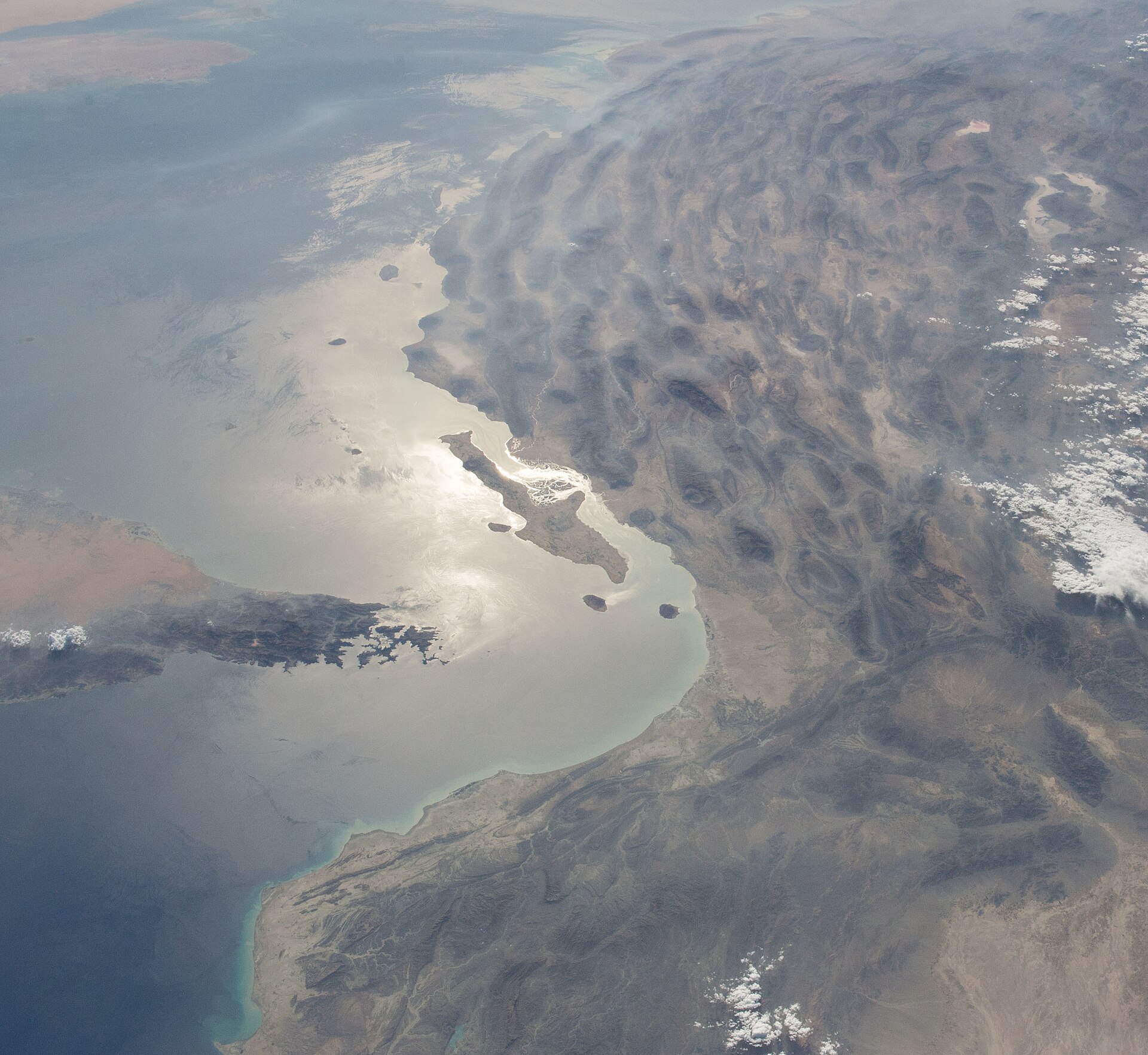
Iran’s claim to co-administer the strait rests in part on the 1974 Iran-Oman continental shelf and maritime boundary treaty, which divided the Strait of Hormuz between Iranian and Omani territorial waters. Under this treaty, documented in US State Department Limits in the Seas No. 67, the IMO’s Traffic Separation Scheme — the mandatory shipping lanes jointly proposed by Iran and Oman and adopted by the IMO — runs through the territorial waters of both states. The inbound lane lies within Omani waters; the outbound lane runs through Iranian waters.
UNCLOS Article 38 establishes a right of transit passage through straits used for international navigation, which includes Hormuz. Article 43 provides that “user states and bordering states should by agreement cooperate in the establishment and maintenance in a strait of necessary navigational and safety aids” — language Iran cites as a legal hook for bilateral administration of “navigational services.” An analysis published in 2026 by EJIL Talk — the blog of the European Journal of International Law — challenged this reading under the title “Codifying Coercion,” noting that Iran’s implicit legal theory “appears to rest on an analogy to the Suez and Panama Canals, both of which charge transit fees. However, artificial canals are engineered waterways constructed, maintained, and administered through sovereign territory, whereas the Strait of Hormuz is a natural geographic feature, created without Iranian investment.”
Chatham House observed in June 2026 that “temporary measures cannot infringe on the iron-clad guarantee to shipping of all nations of unimpeded passage through straits used for international navigation.” The June 23 joint statement, however, does not describe itself as temporary. It contains no sunset clause, no reference to the MOU’s 60-day timeline, and no provision for third-party review.
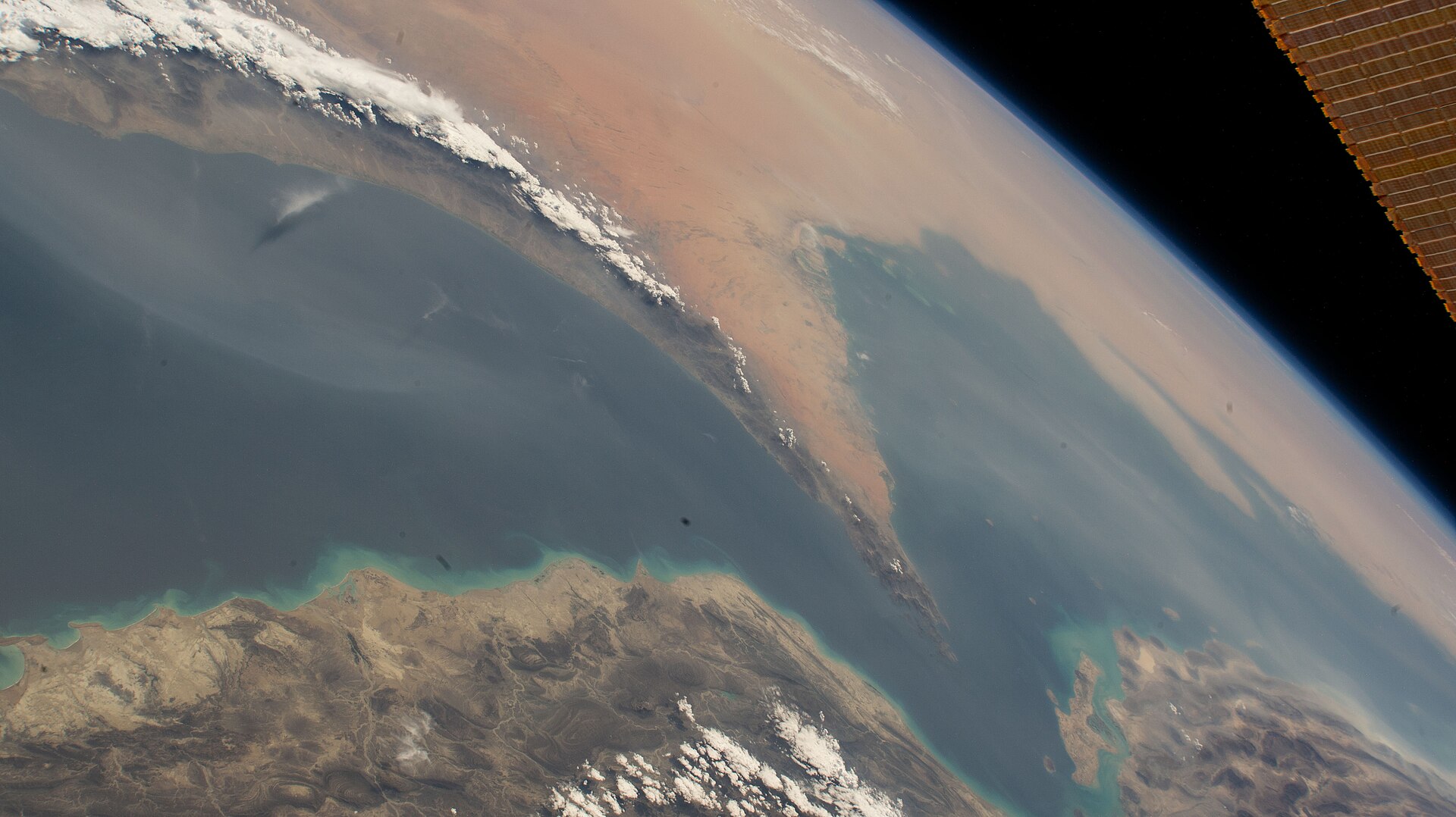
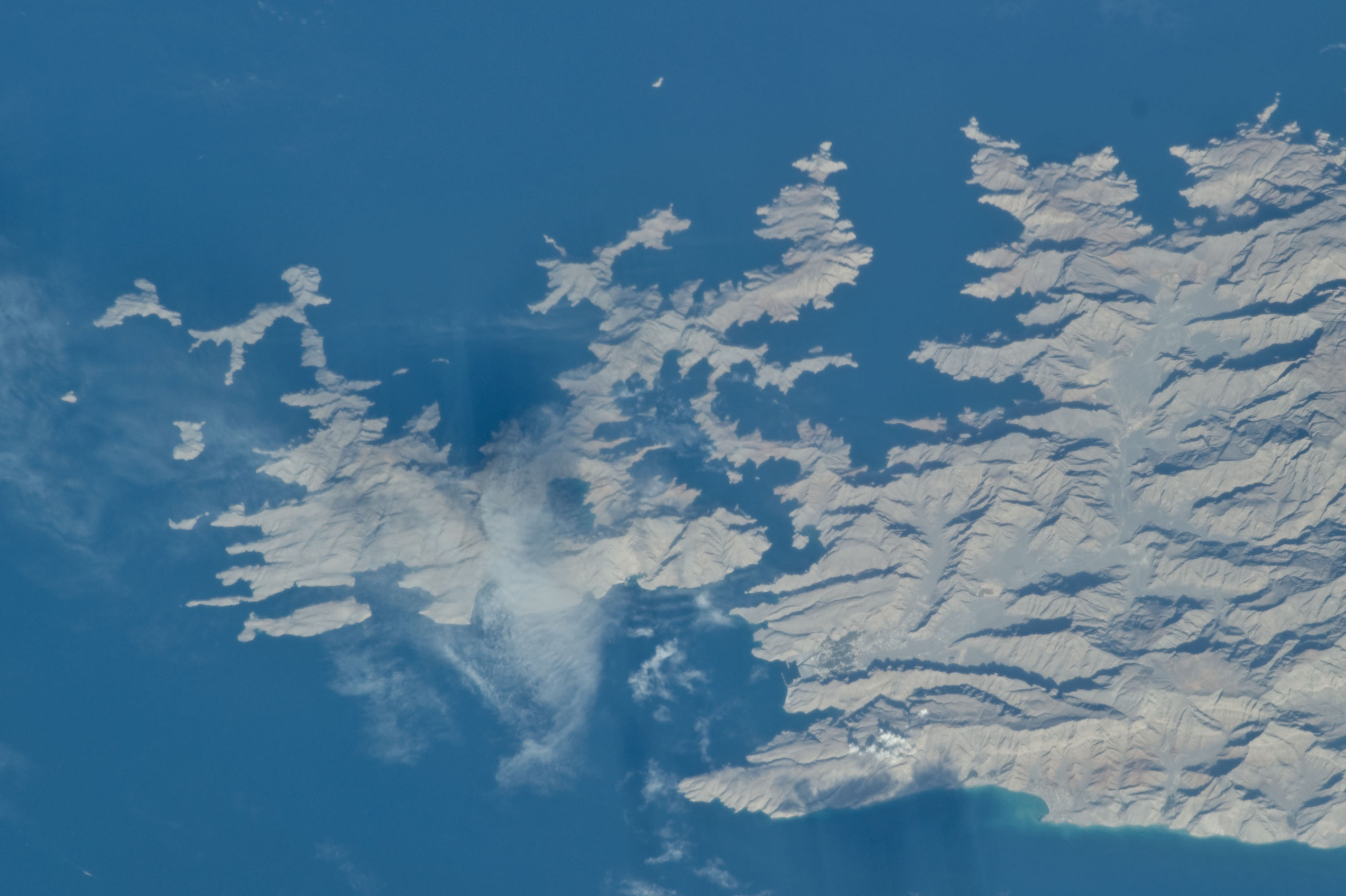
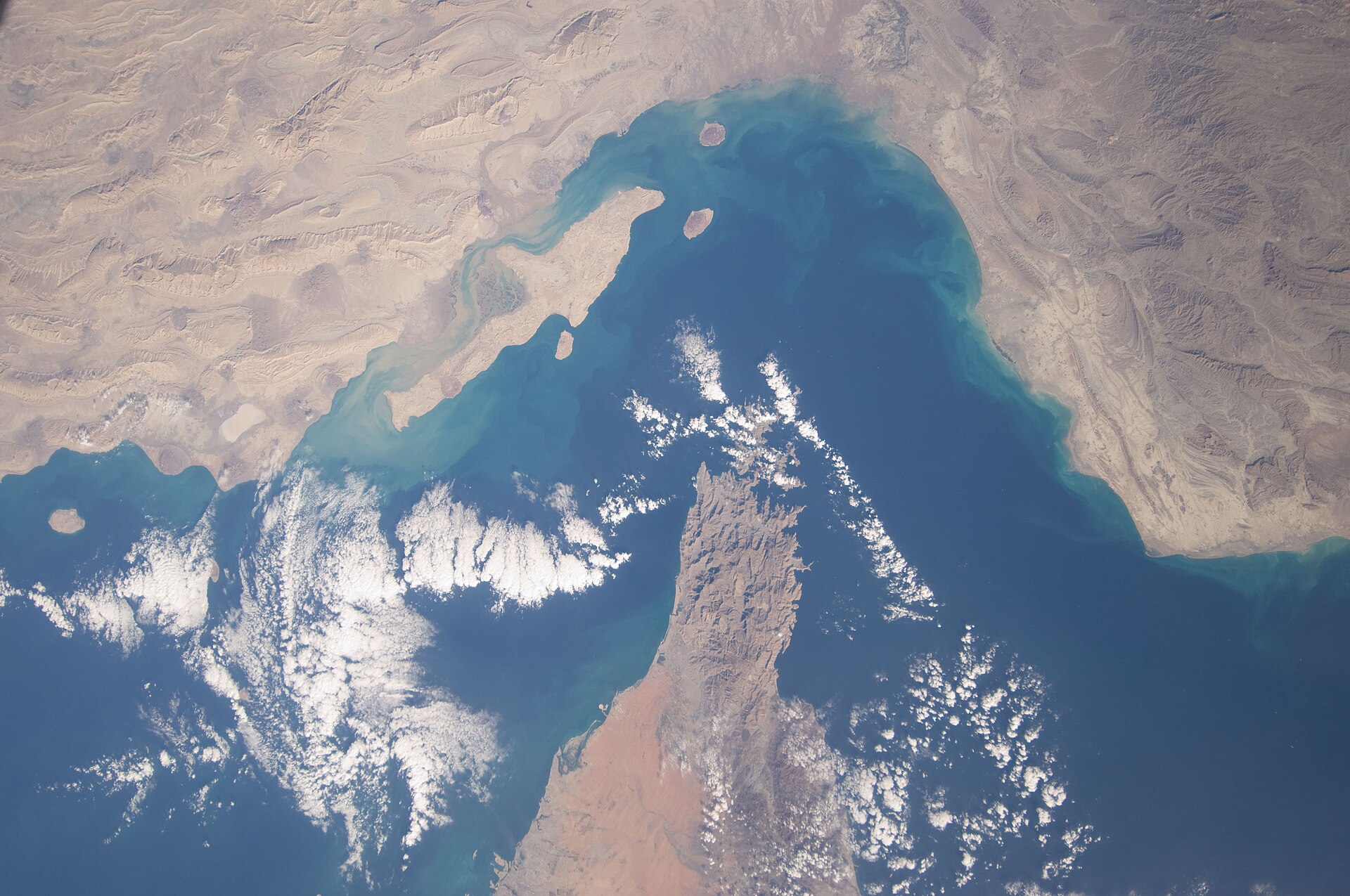
Oman’s geography gives the bilateral structural weight independent of the legal arguments. The Musandam Peninsula, an Omani exclave, forms the southern shore of the strait. Oman shares both a land border and a maritime boundary with Iran at Hormuz — the only GCC state with that geographic relationship. Any corridor through the strait, whether the IMO’s suspended evacuation lanes or a permanent shipping route, must transit Omani territorial waters.
Where Does This Leave the Other Gulf States?
Saudi Arabia’s PGSA exposure is calculated at $5.5 million per day, or approximately $2 billion per year, once the 60-day fee waiver expires around August 16. Saudi Arabia has no seat at the Iran-Oman bilateral table — Article 5 references it only among the “other Persian Gulf littoral states” to be consulted “in discussion.” The GCC-US Manama statement represented the primary instrument available to Riyadh for opposing the PGSA framework, and Iran rejected it within 24 hours.
Oman’s own economic exposure to the strait is substantial but different in character. The country produces approximately 1 million barrels per day, and petroleum accounts for roughly 64 percent of Omani export revenue and about 30 percent of GDP, according to Worldometer and AGBI. Unlike Saudi Arabia, which has the Yanbu terminal on the Red Sea coast, Oman’s oil and gas exports transit exclusively through or adjacent to the strait. Oman is simultaneously the state most economically dependent on Hormuz remaining open and the state most directly involved in defining what “open” means.
The Phase 2 negotiations, which are intended to resolve nuclear, missile, and regional issues within the 60-day window, have already experienced one collapse — the Bürgenstock Day 1 cancellation on June 19, when Iran suspended its delegation citing Israeli strikes in Lebanon as a violation of MOU Clause 1. The Iran-Oman bilateral working group has met independently of Phase 2. Araghchi confirmed its continuation on June 25, the same day Iran rejected the GCC-US Manama statement.
Oman is the only GCC member state that maintained uninterrupted diplomatic relations with Tehran through the 1979 Iranian Revolution and has sustained them since, according to Responsible Statecraft. Sultan Qaboos brokered the secret 2012-2013 US-Iran back-channel talks that produced the framework for the Joint Comprehensive Plan of Action. At Manama, Oman signed a statement rejecting Iranian fees — and within hours, its foreign minister reaffirmed the bilateral working group mandate with the Iranian foreign minister by phone, according to fm.gov.om.
Frequently Asked Questions
What is the difference between UNCLOS transit passage rights and Iran’s “maritime services” framework?
UNCLOS Article 38 guarantees all ships the right of transit passage through straits used for international navigation, a right that coastal states cannot suspend. Iran’s framework, administered through the Persian Gulf Shipping Authority, does not formally deny transit passage. Instead, it layers a “services” regime on top — requiring 40-category pre-clearance forms, designating specific corridors through the Larak Island passage, and attaching fees characterized as charges for “specific services rendered” under UNCLOS Article 26(2). The practical question is whether a services overlay that requires pre-clearance, corridor compliance, and payment amounts to a de facto restriction on the Article 38 right, even if it never formally invokes the word “toll.”
Can Oman unilaterally withdraw from the bilateral working group?
The June 23 joint statement contains no withdrawal mechanism. Article 5 of the US-Iran MOU directs Iran to “conduct dialog” with Oman using mandatory language — “will conduct” — and the provision was embedded in an agreement between the United States and Iran, not in a separate Oman-Iran document. Oman could decline to attend working group sessions, but it cannot unilaterally dissolve a provision of the US-Iran MOU that names it as a mandatory party. The Oman MFA confirmed the bilateral track as recently as June 25, acknowledging the Albusaidi-Araghchi phone call and describing it as aimed at “a joint cooperation mechanism.”
What happens if the IMO does not resume its evacuation plan?
The IMO described its decision as a “temporary pause” pending reconfirmation of safety guarantees. If the pause extends, the vessels and seafarers currently stranded would remain at anchorages until a transit mechanism receives both coastal-state coordination and physical safety guarantees. The Iran-Oman bilateral is positioned as that mechanism — Iran has stated through the IRGC that only routes “designated by the Islamic Republic of Iran” are authorized, and the Muscat working group is the only forum where Iran is actively negotiating corridor terms. Fourteen seafarers had already died during the broader Hormuz crisis before the evacuation plan was announced, according to the Maritime Executive.
Does the GCC-US Manama joint statement carry legal force?
The Manama statement is a political declaration, not a treaty or binding instrument under international law. It expresses the policy position of seven signatories — six GCC states and the United States — but creates no enforceable obligations and does not override existing agreements including the MOU. Iran treated it accordingly, dismissing it within 24 hours and citing Article 5 as the operative framework. The statement’s practical effect depends on whether its signatories back the language with operational measures — sanctions enforcement, insurance restrictions, or naval action — rather than on the document itself. As of June 26, no signatory had announced specific enforcement measures tied to the statement.
Has Iran charged any vessel under the PGSA fee schedule?
The PGSA’s $1-per-barrel fee is currently waived for a 60-day period that began with the MOU signing on June 17, expiring around August 16. During this window, vessels are still required to complete the PGSA’s pre-clearance process and transit through designated corridors. Iran has not publicly confirmed collecting fees from any vessel during the waiver period, including from the Saudi Bahri supertankers that crossed Hormuz on June 18. The waiver does not apply to the pre-clearance and corridor requirements — only to the fee itself. PGSA pre-published a liability disclaimer on X before the Bahri transit, and neither Aramco nor Bahri has confirmed or denied payment.