
VIENNA — The International Atomic Energy Agency cannot say where Iran’s enriched uranium is. In its June 4 quarterly report, the agency stated it “cannot provide any information on the current size, composition or whereabouts of the stockpile of enriched uranium in Iran” — language the Institute for Science and International Security cited in its June 9 analysis as the basis for declining to publish a breakout timeline.
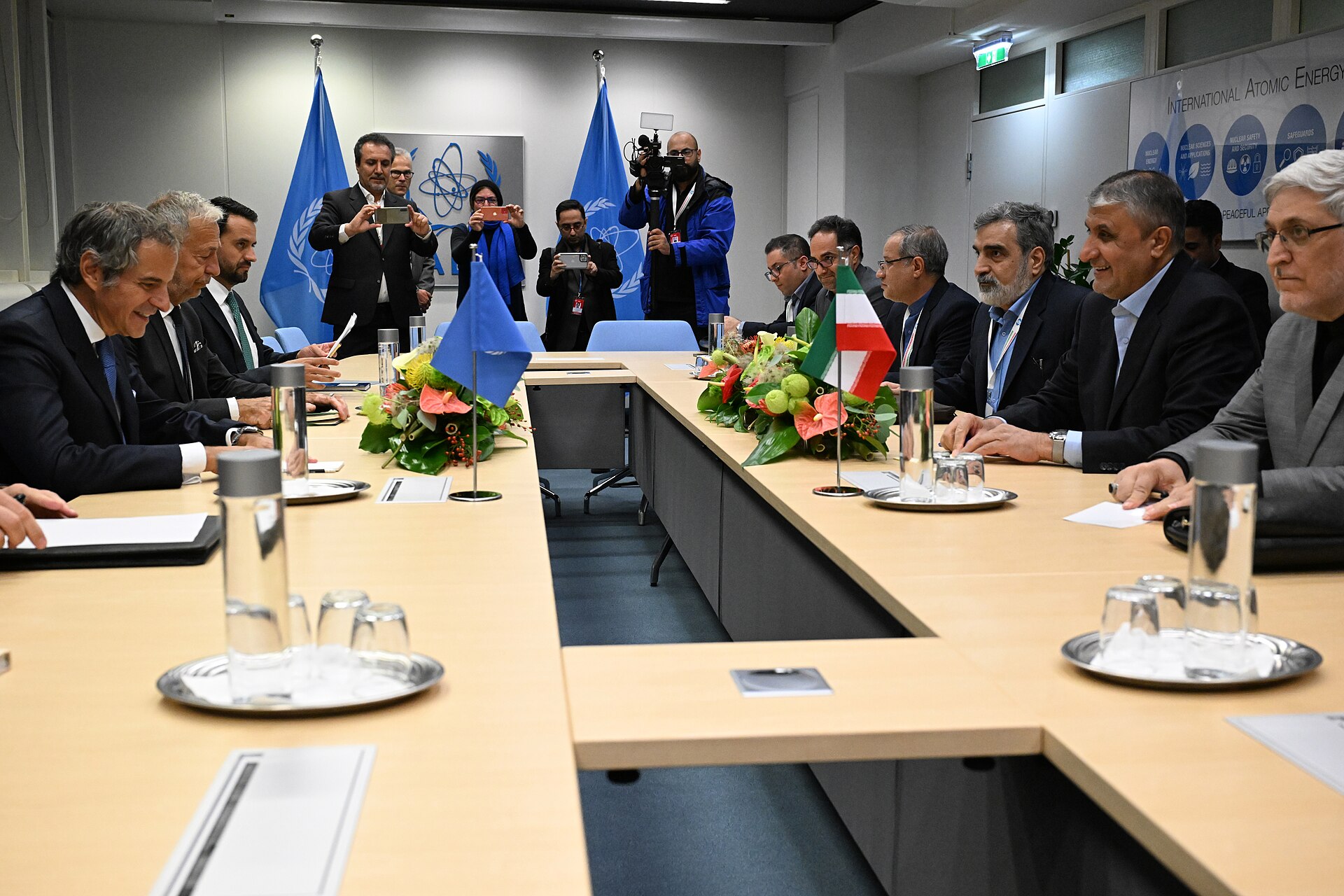
The 440.9 kilograms of uranium hexafluoride enriched to 60 percent U-235 — material sufficient for up to ten nuclear weapons, by Director General Rafael Grossi’s own estimate — was last formally accounted for in the IAEA’s February 27 Board of Governors report. That was 110 days before the US-Iran memorandum of understanding was signed. The diplomatic press has treated the standoff between Grossi and Iranian Deputy Foreign Minister Kazem Gharibabadi as an access dispute: Iran bars inspectors, talks stall, a familiar cycle. The ISIS analysis reframed the problem. The IAEA has not simply been denied entry to facilities where it knows the material sits. It has lost physical custody tracking of the material itself — and the MOU’s Phase 2 nuclear track contains no mechanism to restore it.
Table of Contents
- What Did the IAEA Last Verify?
- The Blue Barrels Convoy
- Where Does the IAEA Think the Uranium Is?
- Two Problems, One Label
- What Does MOU Point 8 Actually Require?
- Why Did ISIS Refuse to Publish a Breakout Timeline?
- The 110-Day Inheritance
- Iran’s Legal Defense
- The Table Saudi Arabia Cannot Reach
- Frequently Asked Questions
What Did the IAEA Last Verify?
The IAEA’s last formal custody document for Iran’s enriched uranium is GOV/2026/8, dated February 27, 2026. It recorded 440.9 kilograms of uranium hexafluoride enriched to 60 percent U-235, plus additional quantities at lower enrichment levels. The measurements were taken before Operation Midnight Hammer struck Iran’s enrichment infrastructure in June 2025.
| Enrichment Level | Quantity (kg UF6) | Last Verified | Current IAEA Status |
|---|---|---|---|
| 60% U-235 (HEU) | 440.9 | Pre-June 2025 | Location unknown |
| 20% U-235 | 184.1 | Pre-June 2025 | Unverified since strikes |
| 5% U-235 | 6,024.4 | Pre-June 2025 | Unverified since strikes |
| 2% U-235 | 2,391.1 | Pre-June 2025 | Unverified since strikes |
Source: IAEA GOV/2026/8, February 27, 2026; ISIS June 2026 analysis.
The 60-percent material drives the proliferation concern. Under the IAEA’s Comprehensive Safeguards Agreement, stockpiles enriched above 20 percent require physical verification at least once every 30 days. As of June 29, 2026, the 440.9 kilograms has gone unverified for more than twelve consecutive monthly cycles — a gap that extends well beyond the current 97-day inspector-access blackout to encompass the entire post-strike period.
Laura Rockwood, a former senior IAEA safeguards inspector, described the consequences in terms the agency uses internally. Iran’s refusal to admit inspectors is “disrupting what she terms ‘continuity of knowledge’ — meaning ‘the IAEA has lost track of what Iran has and where it is,’” she told RFE/RL on June 25. The phrase is precise. “Continuity of knowledge” is a technical designation meaning the IAEA’s chain-of-custody record for specific nuclear material has been broken — and once broken, cannot be reconstructed from external observation alone.
The Middle East briefing 3,000+ readers start their day with.
One email. Every weekday morning. Free.
The IAEA has lost track of what Iran has and where it is.
Laura Rockwood, former IAEA Senior Safeguards Inspector, RFE/RL, June 25, 2026
The camera systems that once provided continuous monitoring were disabled by Iran in June 2022. The IAEA halted all in-field verification during the June 2025 strikes for safety reasons, then withdrew its inspectors from the country. Iran formally suspended cooperation in July 2025. After Operation Epic Fury on February 28, 2026, the IAEA “stopped conducting verification activities in Iran in accordance with the NPT safeguards agreement.” Iran informed the agency that standard safeguards were “legally untenable and materially impracticable” as a consequence of “threats and acts of aggression.”
The Blue Barrels Convoy
On June 9, 2025, a commercial satellite captured a scene at Iran’s Esfahan nuclear complex that has since become the evidentiary centerpiece of two independent nonproliferation analyses. A large flatbed truck carrying 18 blue barrels or casks, each approximately 1.1 meters in diameter, was photographed moving toward the southern tunnel entrance of the Esfahan underground complex. A truck-mounted crane and three escort vehicles accompanied the convoy. Four days later, Operation Midnight Hammer began.
François Diaz-Maurin, the Bulletin of the Atomic Scientists’ editor for nuclear risk, published a detailed assessment on March 29, 2026. He identified the 18 containers as likely matching VPVR/M transport casks — Czech-manufactured units, 120 centimeters in diameter, designed for radioactive material transport. The convoy’s total carrying capacity, Diaz-Maurin assessed, was enough to encompass Iran’s entire declared 440.9-kilogram HEU inventory.
Diaz-Maurin wrote that the imagery suggests Iran may have transferred “up to 540 kilograms — possibly all — of its highly-enriched uranium inventory” into the underground complex before the first strike landed. The relocation was not improvised. Iran had moved enriched material into the same Esfahan facility in June 2022 when tensions rose — a pattern suggesting systematic pre-positioning as standing operational protocol rather than crisis response.
If the relocation occurred as assessed, Midnight Hammer destroyed Iran’s enrichment production infrastructure — centrifuge halls, chemical laboratories, a uranium conversion plant, metallurgy facilities — while the actual HEU inventory was already underground. Operation Epic Fury, which struck on February 28, 2026, also left the Esfahan tunnel complex intact. The material that constitutes the proliferation threshold was never in the target set.
Where Does the IAEA Think the Uranium Is?
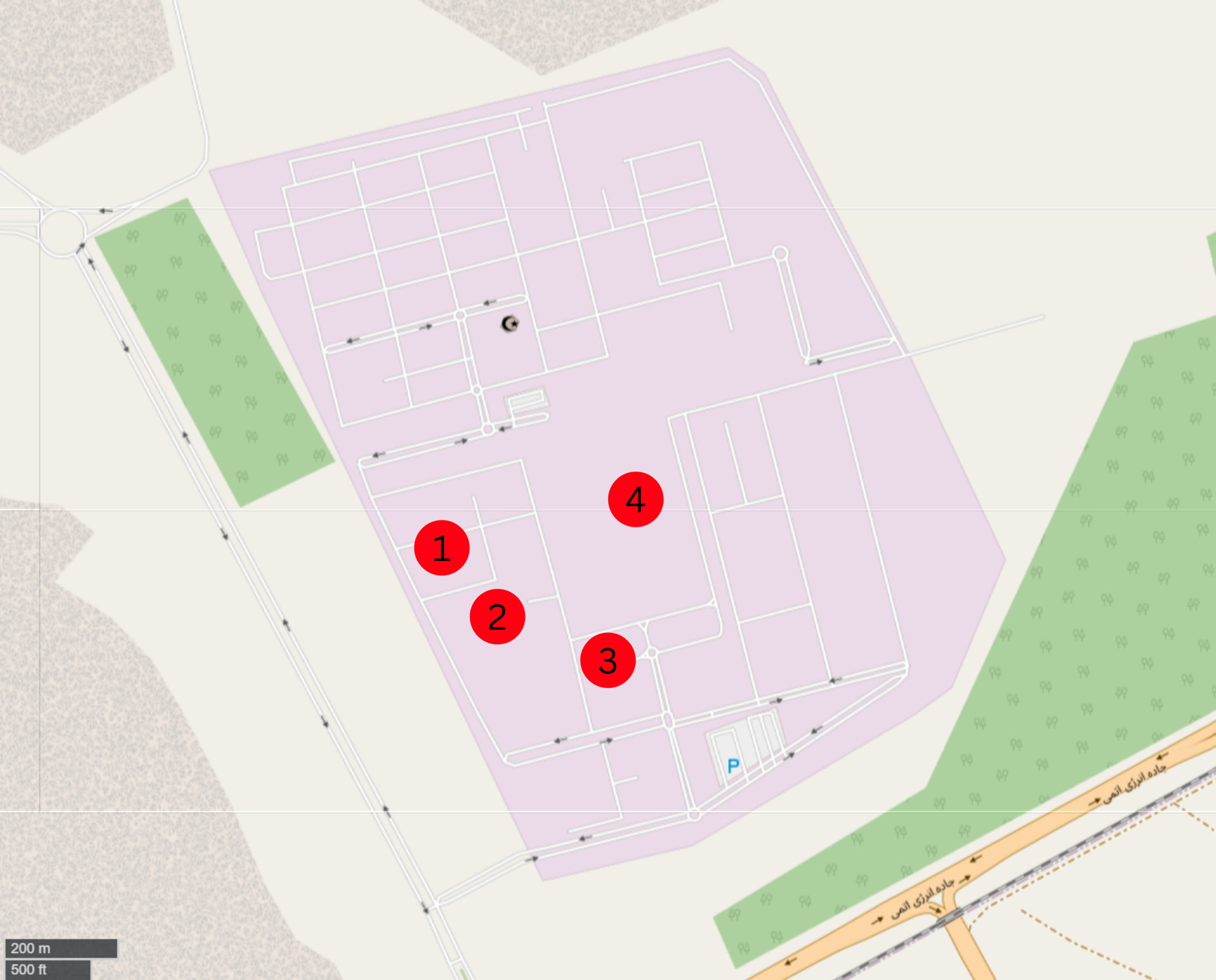
Director General Grossi has offered one partial answer. He stated the IAEA believes “most of the HEU, but less than 70 percent of the stock” is inside the Esfahan tunnel complex. Applied to the 440.9-kilogram baseline, that estimate places between 265 and 287 kilograms inside the mountain — and between 154 and 176 kilograms somewhere else.
Where “somewhere else” is, the IAEA does not know. Grossi has not elaborated because, by his own account, he cannot.
Joseph Rodgers of CSIS framed the possibilities without narrowing them. Iran’s HEU, he wrote, could be “buried in rubble at Natanz or Fordow, stored in Pickaxe Mountain, or hidden in another clandestine facility.” The CSIS analysis concluded that Iran “still maintains a stockpile of 440.9 kg of 60 percent enriched uranium stored in several clandestine facilities” — using the plural deliberately.
The Esfahan tunnel complex itself — the location the IAEA considers most likely for the majority of the stockpile — presents its own verification wall. It survived both Midnight Hammer and Epic Fury structurally intact. IAEA satellite monitoring noted “regular vehicular activity” around the tunnel entrances in February 2026. Iran denied the resulting access request. In June 2025, Iran declared a “new enrichment facility” inside the complex, a facility the IAEA has never been permitted to enter and whose operational status remains unknown.
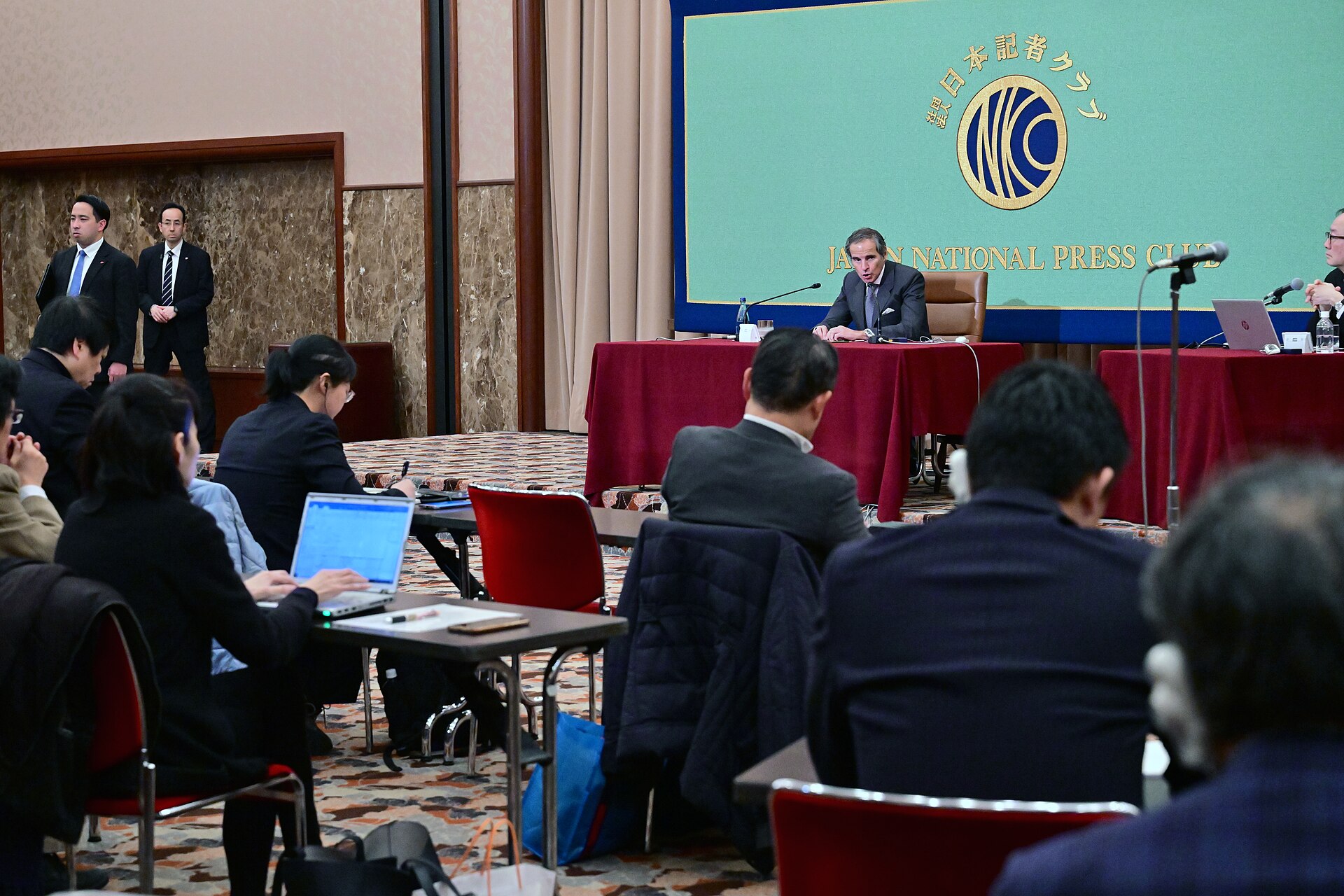
Grossi told Al Jazeera on June 24 that “nuclear activities that are going to be carried out with regards to nuclear material facilities will be supervised by the IAEA.” On timing: “Whether this happens today, after tomorrow, or in one week, or in 10 days, it’s important but not essential. This is going to happen.” The confidence sits uneasily next to his own admission that the agency cannot account for roughly a third of the stockpile. As Grossi warned at Japan’s National Press Club days later when he named a “war of statements” between the US and Iran on inspection access, the gap between procedural assurances and verification reality has been widening for months. On June 25, Tehran’s deputy foreign minister placed that verification not on the current MOU timeline but on “the framework of a final agreement” after sanctions are terminated.
Two Problems, One Label
The coverage of the Iran nuclear file has collapsed two categorically different verification failures into a single narrative: “Iran won’t let inspectors in.” The distinction between them matters because the resolution paths diverge completely.
The first problem is access denial. Iran has barred IAEA inspectors for 97-plus consecutive days. This is a political problem with precedent — Iran restricted access in 2006, 2012, and intermittently after 2019. The resolution path runs through negotiation, pressure, or a new agreement that restores monitoring rights. The shape of a solution is known even if the timeline is not.
The second problem is material location unknown. The IAEA cannot say where between 154 and 176 kilograms of 60-percent-enriched uranium physically is. This is a technical problem with a different character entirely. Restoring inspector access to known facilities does not resolve it, because the material may not be in any facility the IAEA has previously catalogued. Even if Iran reopened Natanz, Fordow, and the Esfahan tunnel complex tomorrow, the agency would face the question of whether the full inventory was present — and it would have no pre-existing baseline measurement against which to verify.
Matthew Sharp, a former National Security Council director for Iran nuclear issues, described the measurement problem directly. “If IAEA inspectors were able to measure and characterize both the high and low enriched material before the downblending, then simple arithmetic gives a good sense of what the product is,” he told OilPrice.com. The inverse scenario is the one that applies: “If Iran does the downblending itself and then provides the product to inspectors, it would be much more difficult to know how much HEU Iran started with, which could create uncertainties.” Sharp added that Iran’s HEU “could be buried under rubble in a bunker beneath a mountain, or the Iranian authorities may have moved some or all of it elsewhere to hide it.”
If Iran does the downblending itself and then provides the product to inspectors, it would be much more difficult to know how much HEU Iran started with, which could create uncertainties.
Matthew Sharp, former NSC Director for Iran Nuclear Issues, OilPrice.com, June 2026
Kelsey Davenport, director of nonproliferation policy at the Arms Control Association, framed the structural consequence: “any suspension on uranium enrichment is relatively meaningless if it cannot be verified and if the IAEA does not have the access to ensure that there are no covert nuclear activities related to enrichment going on elsewhere in the country.” The Phase 2 talks that opened in Geneva without inspectors present are operating inside the first problem — access denial — while the second problem, the one with no negotiation path, accumulates underneath it.
What Does MOU Point 8 Actually Require?
Point 8 commits Iran to downblend its enriched uranium “on site under the supervision of the IAEA.” It does not define “on site,” require Iran to declare the stockpile’s location, mandate a pre-downblending IAEA measurement, or establish chain-of-custody verification. The mechanism for downblending is deferred to future mutual agreement.
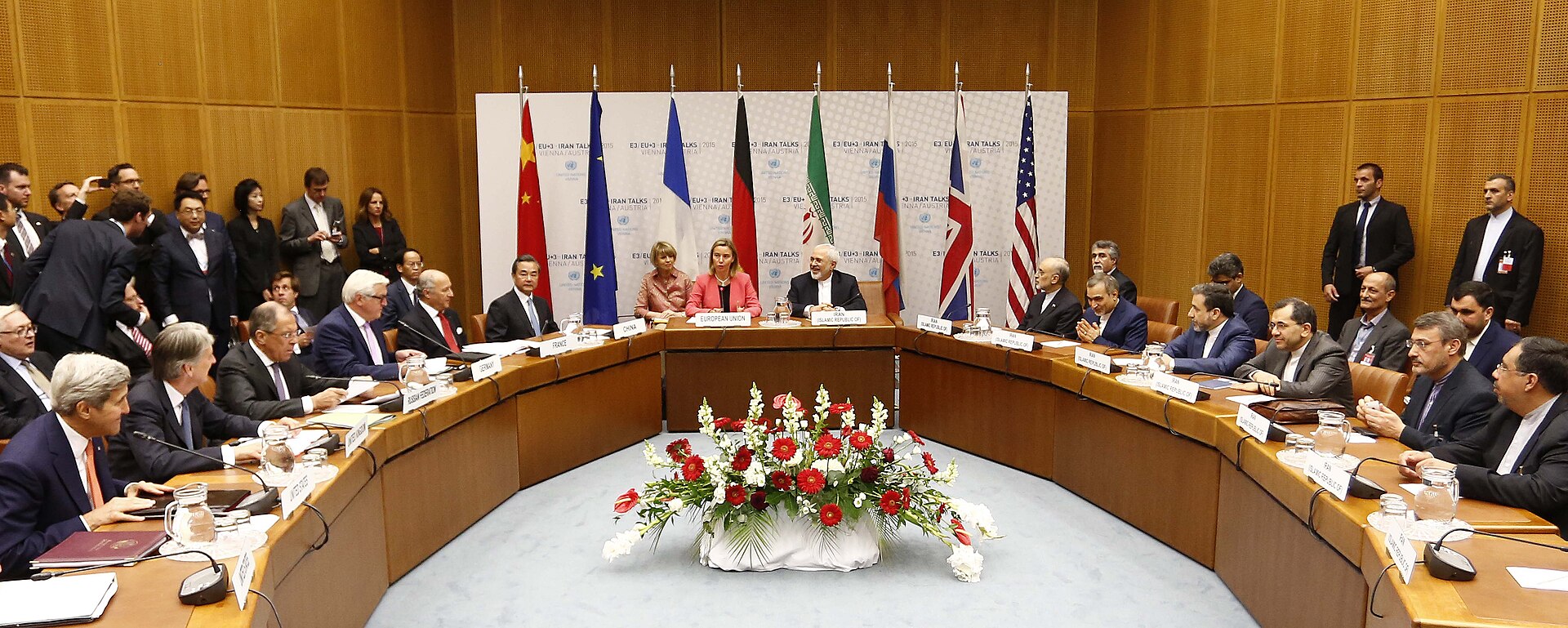
The full operative passage reads: “The United States of America and the Islamic Republic of Iran have agreed to resolve the disposition of stockpiled enriched material pursuant to a mechanism that will be mutually agreed upon in accordance with the schedule mentioned in paragraph seven, with the minimum methodology to be down blended on site under the supervision of the IAEA.” The passage is 93 words. The word “location” does not appear. The phrase “chain of custody” does not appear. No pre-downblending measurement is stipulated.
The phrase “on site” carries the weight of the entire verification structure, and it is undefined. Iran could designate the Esfahan tunnel complex — currently inaccessible to inspectors, never visited by the IAEA, housing an undeclared enrichment facility — as the downblending site. Nothing in Point 8 prevents this. Nothing requires the IAEA to have verified the stockpile’s quantity or location before the process begins.
| Verification Mechanism | JCPOA (2015) | MOU Point 8 (2026) |
|---|---|---|
| Continuous camera surveillance | Yes (2015–2022) | Not included |
| Additional Protocol (short-notice inspections) | Implemented 2016–2021 | Not included |
| Environmental sampling | Yes | Not included |
| Access dispute resolution timeline | 24 days (Section T) | Not included |
| Physical inventory verification schedule | Monthly per CSA | “Mutually agreed” timeline |
| Pre-downblending IAEA measurement | N/A (no downblending required) | Not required |
| Declared-location requirement | Yes (modified Code 3.1) | Not included |
| Chain-of-custody verification | Continuous | Not included |
Sources: GAO-16-565; Arms Control Association; US-Iran MOU full text, June 17, 2026.
Rockwood identified the operational question that Point 8 does not ask: “The key thing is to find out where in particular the enriched uranium is.” The Phase 2 schedule — 60 days from the MOU’s June 17 signing — does not allocate time for answering it. As the Gulf’s unmet missiles pledge and Iran’s invocation of the MOU to justify its own military strikes have already demonstrated, the document’s enforcement architecture cannot withstand the pressures being applied to it. Point 8’s verification language is thinner still.
Why Did ISIS Refuse to Publish a Breakout Timeline?
The Institute for Science and International Security stated that publishing a breakout estimate would require “unsubstantiated speculation about the existence and operability of centrifuges that were not destroyed in the strikes.” The IAEA cannot confirm how many centrifuges Iran retains or whether any are operational inside the undeclared Esfahan facility.
ISIS has published breakout estimates for Iran’s nuclear program for over a decade. Its June 9, 2026 analysis — authored by David Albright, Sarah Burkhard, Spencer Faragasso, and Andrea Stricker — broke with that practice entirely. The refusal is more informative than any number would have been. A breakout estimate requires two known quantities: the amount of fissile material available and the enrichment capacity available to process it. The IAEA can confirm neither. The material location is unknown. The centrifuge inventory is unknown — Midnight Hammer and Epic Fury destroyed the aboveground enrichment halls at Natanz and Fordow, but whether Iran retains operable centrifuges elsewhere is a matter ISIS was unwilling to guess at.
The Bulletin of the Atomic Scientists published one conditional calculation. Diaz-Maurin estimated that “a simple cascade of about 200 Iranian IR-6 centrifuges would be enough to enrich 50 kilograms of uranium — enough for about a nuclear bomb — from 60-percent HEU to 90-percent weapon grade in about 10 days.” Both qualifiers — that 200 centrifuges exist and that they are operational — are assumptions the IAEA cannot verify from outside the Esfahan tunnel.
Iran’s declaration of a “new enrichment facility” inside the Esfahan underground complex in June 2025 is the specific unknown that makes the centrifuge question unanswerable. The facility has never been inspected. Its capabilities, contents, and operational status remain open. The IAEA’s access request, submitted after satellite monitoring noted vehicular activity around the tunnel entrances in February 2026, was denied. Iran’s institutional infrastructure has outlasted every diplomatic pause designed to constrain it — and the declared-but-sealed Esfahan facility has never appeared in a verified inventory.
Any public reference to a “12-month breakout timeline” or comparable figure draws on assumptions the IAEA has explicitly said it cannot verify. The June 9 report’s operative sentence is not the one that calculates a number — it is the one that declines to.
The 110-Day Inheritance
The MOU was signed on June 17, 2026. The last IAEA document to formally account for Iran’s enriched uranium was GOV/2026/8, dated February 27. Between those two dates — 110 days — no IAEA verification of any kind occurred on Iranian soil. The Phase 2 nuclear track did not create the verification gap. It inherited one.
GOV/2026/8 was itself a document of limited confidence. It recorded the pre-strike stockpile figures but noted that the IAEA had already lost “continuity of knowledge” regarding Iran’s nuclear materials. Operation Epic Fury struck one day after the report’s date — February 28 — adding a second military disruption to an already-degraded monitoring baseline. The agency’s assessment of the stockpile, frozen as of that report, is now four months old and was flagged as incomplete at the time of publication.
Phase 2’s 60-day clock started on June 17 and runs to approximately August 16. The clock does not pause for lack of access, for unresolved material-location questions, or for the absence of any mechanism to answer them. Rockwood described what rebuilding verification would require: “There will be uncertainties, and there may be more uncertainties than there were before…really, a heavy slog.”
Reconstructing continuity of knowledge after a gap of this duration — during which the material was relocated, the production infrastructure was destroyed, a new facility was declared and sealed, and two military operations disrupted the monitoring baseline — is not a task measured in diplomatic weeks. It is an open-ended technical reconstruction requiring physical access, baseline measurements, environmental sampling, and chain-of-custody re-establishment across multiple sites, some of which the IAEA may not yet know exist. The 60-day clock and the verification clock are running on different tracks, toward different endpoints, at different speeds.
Iran’s Legal Defense
Iran’s position is internally consistent, even as its implications are structurally incompatible with Phase 2’s timeline. Gharibabadi told Al Jazeera and Xinhua on June 25 that IAEA inspector access to struck nuclear sites and materials would “solely be examined and resolved within the framework of a final agreement” with the United States, contingent on “the other party’s practical action in terminating all sanctions.”
On social media, he added: “Media noise cannot be used to impose facts on the ground.” Under this reading, MOU Point 8 creates no immediate inspection obligation. The IAEA’s right to verify the stockpile exists only after a comprehensive deal is finalized and sanctions are lifted. Neither has occurred. On June 30, Gharibabadi formally extended that sequencing demand to all 20 declared nuclear sites — confirming that IAEA inspector access remains blocked until a final deal is concluded and all sanctions terminated.
Iran’s February 2026 notification to the IAEA — that standard safeguards were “legally untenable and materially impracticable” as a consequence of military aggression — provides the legal scaffolding. Iran frames the verification blackout not as a violation of its NPT obligations but as a justified suspension in response to the strikes. In this telling, the party that was attacked owes no obligation to the attacker’s verification demands until political preconditions are met.
There is an implicit acknowledgment inside Iran’s position that complicates it. In February 2026, Foreign Minister Araghchi offered to “down-blend” Iran’s enriched uranium — an offer the Bulletin of the Atomic Scientists noted “implicitly acknowledges that the material exists in a state and location that Iran can control.” If the HEU were inaccessible — buried in rubble, destroyed in the strikes — a downblending offer would be meaningless. Iran’s willingness to discuss the process tells the IAEA something the inspection blackout otherwise conceals: the material is intact, and Iran knows where it is.
Two parties possess location knowledge: Iran, which has it, and the IAEA, which does not. Point 8 provides no mechanism to bridge that asymmetry within 60 days — or, based on its text, at all.
The Table Saudi Arabia Cannot Reach
Saudi Arabia holds zero seats in the MOU’s Phase 2 nuclear negotiations. It is not a party to the memorandum, has no representative in the Geneva technical talks, and was not consulted on Point 8 — the provision whose verification architecture will determine whether Iran retains access to weapon-quantity fissile material at the end of the 60-day window.
Foreign Minister Faisal bin Farhan’s only public input on the nuclear track has been a single statement — “verification is key” — delivered at the European Council on Foreign Relations in Vienna. It is an accurate observation and also the full extent of Saudi influence over the verification framework for a stockpile that represents a proliferation threshold in Saudi Arabia’s immediate neighborhood. On June 30, as Phase 2 Geneva sessions continued without Saudi input, Prince Faisal was in Beijing for talks with Chinese FM Wang Yi — the bilateral channel Riyadh is pursuing while the nuclear and Hormuz tracks proceed without it. Riyadh’s absence from the MOU process is structural, not incidental: Pakistan serves as primary mediator, Qatar as co-mediator, Saudi Arabia as neither.
The exclusion is not separate from the verification gap. Saudi Arabia bears the highest Gulf-state exposure to the PGSA’s $5.5-million-per-day fee structure, its Bahri VLCCs remain unable to transit the strait, and the fiscal pressures documented in recent weeks — a Q1 deficit of $33.5 billion against a $44-billion full-year target, Brent crude at $72 against a $108–111 breakeven — are downstream of a regional security environment whose nuclear dimension Saudi Arabia has no formal mechanism to shape.
A Phase 2 process that fails to verify and secure the stockpile within 60 days leaves Saudi Arabia facing the same proliferation overhang it faced before the MOU, with an added complication. The strikes destroyed Iran’s enrichment production capacity without eliminating the fissile material — an outcome that advanced the timeline for a Saudi nuclear posture decision without resolving the conditions that would make one unnecessary. Saudi Arabia has no seat at the table where that question is being answered, and no formal mechanism to acquire one before August 16.
Frequently Asked Questions
What does downblending enriched uranium actually involve?
Downblending is the physical process of mixing highly enriched uranium with low-enriched or natural uranium to reduce the overall fissile concentration below the 20-percent proliferation-concern threshold. The process is well understood technically and has been conducted at multiple facilities worldwide, including US Department of Energy sites that downblended HEU from dismantled warheads under the 1993 US-Russia Megatons to Megawatts agreement.
The verification challenge with MOU Point 8 is not whether downblending can be performed but whether the IAEA can confirm the starting quantity. If the full 440.9 kilograms enters the process but only 400 kilograms is presented for downblending, the IAEA — absent a pre-process inventory measurement — would have no independent basis for detecting the 40.9-kilogram shortfall. That quantity alone would be sufficient for approximately one nuclear weapon at 90-percent enrichment.
What happened to the IAEA surveillance cameras at Iran’s nuclear facilities?
Iran disconnected 27 IAEA surveillance cameras at enrichment and nuclear facilities in June 2022, following the IAEA Board of Governors’ passage of a resolution criticizing Iran’s cooperation record. The cameras were part of the continuous monitoring infrastructure installed under the JCPOA and had operated from 2016 to 2022. Camera data was stored locally in Iran under IAEA seal; Iran denied the agency access to retrieve the stored footage in September 2022. Whether that stored data still exists is unknown — several facilities where cameras were installed were struck during Operation Midnight Hammer in June 2025.
Has Iran relocated nuclear material before the June 2025 convoy?
Iran moved enriched uranium into the Esfahan underground complex in June 2022 during a period of elevated tensions, establishing the pre-positioning pattern that the June 9, 2025 satellite imagery appears to repeat. An earlier precedent is Iran’s transfer of uranium-enrichment activities from aboveground facilities at Isfahan to the fortified Fordow site — built inside a mountain near Qom — beginning in 2011, following the Stuxnet cyberattack on the Natanz centrifuge plant. The pattern across multiple escalation cycles is relocation of material to hardened underground facilities before anticipated military or political pressure, suggesting the June 2025 convoy was a rehearsed protocol rather than an improvised response.
Could some of Iran’s enriched uranium have been destroyed in the strikes?
This is one of the scenarios CSIS analyst Joseph Rodgers identified — that a portion of the stockpile may be “buried in rubble at Natanz or Fordow.” If HEU was stored at aboveground facilities that were subsequently struck, some material could have been physically dispersed or rendered irrecoverable. Three data points weigh against this as the primary scenario: the June 9, 2025 satellite imagery of a convoy with capacity exceeding the full HEU inventory heading toward Esfahan’s tunnels four days before strikes began; Iran’s February 2026 offer to downblend, which implies the material is intact and accessible to Iranian authorities; and Grossi’s assessment that the majority of the stockpile is inside the Esfahan complex rather than at struck facilities. The IAEA cannot confirm or exclude any scenario without physical access.
The June 30 Doha contacts showed the same US-Iran definitional gap on the diplomatic track as on the nuclear track — Iran and the US were simultaneously unable to agree on what they were meeting about, just as they remain unable to agree on what verification would mean. For that diplomatic parallel, see Iran Says It Came to Doha for Frozen Funds, Not Nuclear Talks.
That verification deadlock hardened further on July 2, when parliament speaker Ghalibaf went further than the Foreign Ministry: he publicly called IAEA access to bombed sites “false” and invoked two domestic laws to argue that the MOU cannot override Iranian statute barring inspections of damaged facilities.