TEHRAN — Mojtaba Khamenei has not been seen alive on camera in 45 days. A US-Israeli intelligence memo shared with Gulf allies in early April describes him as “being treated in Qom in a severe condition, unable to be involved in any decision-making by the regime” — unconscious, incapacitated, with mausoleum groundwork reportedly underway in Qom “capable of accommodating more than one grave.” The Islamic Republic’s constitution contains an explicit protocol for precisely this contingency. Article 111 triggers dismissal when a Supreme Leader becomes “incapable of fulfilling his constitutional duties,” transferring authority to an interim council of president, chief justice, and a Guardian Council jurist until the Assembly of Experts designates a successor.
That protocol has not been activated. It is being actively suppressed. In its place, Iran’s state television has moved through a sequence of diminishing authenticity — a written statement read by a news anchor on March 12, an audio-only Nowruz address on March 20, and AI-generated war-room footage circulated on IRGC-linked channels — while IRGC Commander Ahmad Vahidi has captured the functional authority the constitution reserves exclusively for a ratified guardian jurist.
Table of Contents
- The Incapacitation Evidence
- What Does Article 111 Actually Require?
- Why the Assembly of Experts Has Stayed Silent
- The Vahidi Capture
- Why Is the Regime Using AI-Generated Videos?
- The Junta Assessment
- Operational Acts Without Ratified Authority
- What Happens to Velayat-e Faqih?
- Who Are Foreign Governments Actually Negotiating With?
- How Does This End?
- Frequently Asked Questions
The Incapacitation Evidence
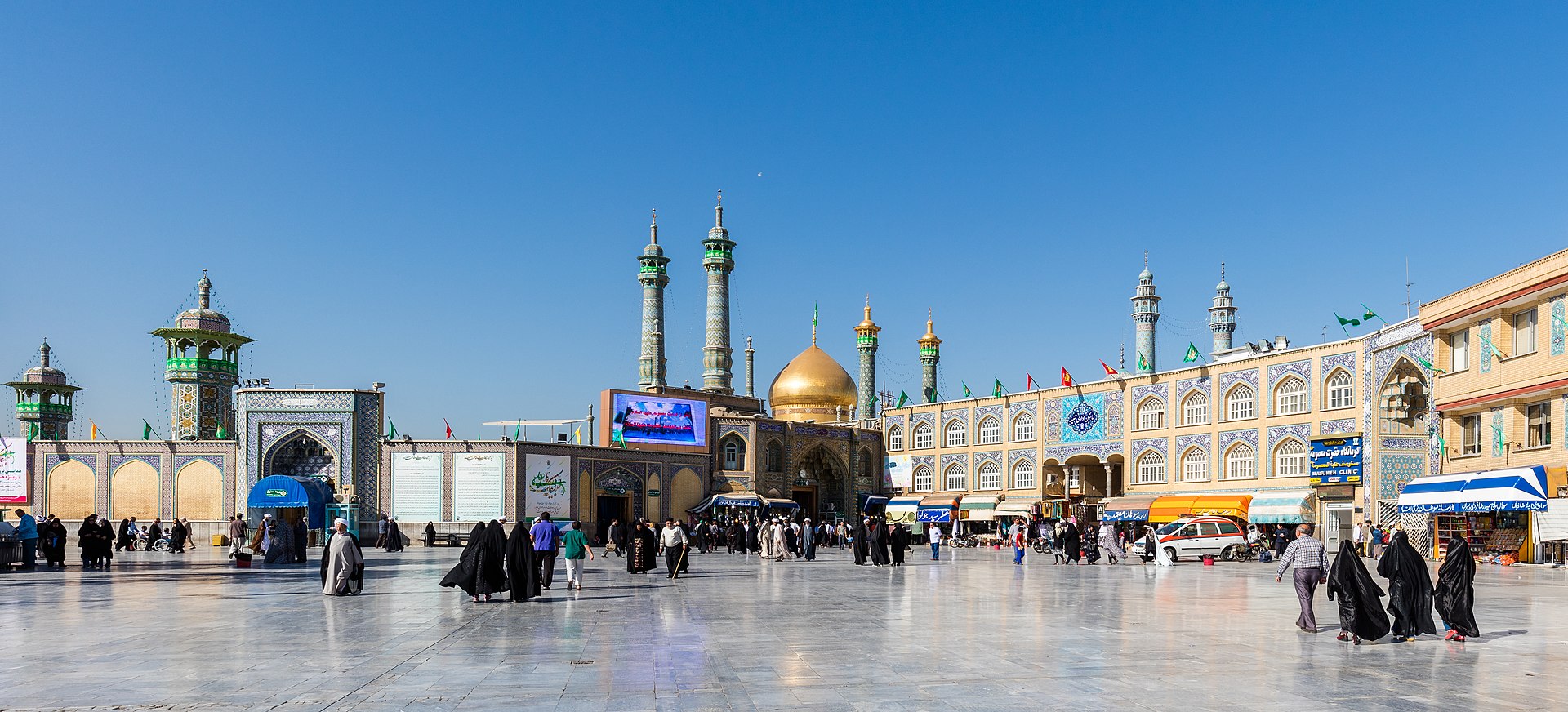
The assessment of Mojtaba Khamenei’s physical condition rests on a diplomatic memo shared by US and Israeli intelligence with Gulf capitals in the first week of April. The Times of London obtained its contents and reported them on April 7. The memo’s language is clinical and unambiguous: Mojtaba is “being treated in [Qom] in a severe condition, unable to be involved in any decision-making by the regime.” He is described as “unconscious.” He is described as “incapacitated.”
The memo contains a second detail that has received less attention than it warrants. Groundwork, according to the intelligence assessment, is being laid in Qom for a mausoleum “capable of accommodating more than one grave.” The implication — that senior Western and Israeli intelligence assessors consider Mojtaba’s survival sufficiently uncertain to prepare a burial site for him alongside his father — is not drawn in the memo itself. It does not need to be.
Ali Vaez, Iran Project Director at the International Crisis Group, has moved close to the same conclusion using more diplomatic language. “Mojtaba is not in a state where he can actually make critical decisions or micromanage the talks,” Vaez told CNN on April 21. “The system is using him to get final approval for key broad decisions and not for the tactics of negotiations.” Vaez is describing, in the gentler register of a think-tank assessment, what the intelligence memo states directly: the Supreme Leader of the Islamic Republic is functionally absent from the decision-making apparatus that bears his title.
The public record corroborates the assessment through its silences. Mojtaba was named Supreme Leader on March 9, 2026, after the interim council period that followed his father’s assassination. In the 45 days since, no live video of him has been broadcast. No photograph has been released showing him in a current setting. His first post-elevation communication was a written statement read aloud by a state television news anchor on March 12 — text on a screen, no voice, no image, and no explanation offered for the absence of either. His second was an audio-only message on Persian New Year, March 20, claiming Iran’s unity had “defeated the enemy.” His third communicative event, and every one since, has been AI-generated.
The Middle East briefing 3,000+ readers start their day with.
One email. Every weekday morning. Free.
What Does Article 111 Actually Require?
Article 111 of the Iranian constitution is the operative incapacitation clause. It states that if the Supreme Leader becomes “incapable of fulfilling his constitutional duties,” he “shall be dismissed.” Jurisdiction to make that determination rests with the Assembly of Experts, an 88-member clerical body elected every eight years, which must then convene “as soon as possible” to appoint a successor. During the interregnum, authority passes to an interim council consisting of the president, the chief justice, and one jurist from the Guardian Council selected by the Expediency Council.
The interim council mechanism is not hypothetical. It was activated once in the current crisis — between March 1 and March 8, 2026, after Ali Khamenei’s assassination and before Mojtaba’s formal elevation. During those eight days, executive authority flowed through President Masoud Pezeshkian, Chief Justice Gholamhossein Mohseni-Eje’i, and Grand Ayatollah Alireza Arafi as the Guardian Council jurist. The council dissolved the moment the Assembly of Experts named Mojtaba on March 9.
The constitutional design contains a particular logic the IRGC has every reason to resist. Should Article 111 be triggered now, the interim council reactivates with the same composition: Pezeshkian at its head, alongside Mohseni-Eje’i and Arafi. Pezeshkian is the same president who named Vahidi and Khatam al-Anbiya commander Abdollahi on April 4 as the architects of the ceasefire’s collapse, accusing them of “acting unilaterally and driving escalation” and steering Iran “toward a huge catastrophe.” Transferring authority to an interim council led by the president who has publicly accused the IRGC’s two most senior operational commanders of wrecking diplomacy would, at minimum, subject IRGC operational autonomy to constitutional review for the first time since the Islamic Republic’s founding.
That is the architecture the hardline coalition is suppressing. Article 111 is not a dormant clause — it is a live mechanism whose activation would immediately install the IRGC’s most vocal domestic critic at the apex of the constitutional order.
Why the Assembly of Experts Has Stayed Silent
The Assembly of Experts has never, in 47 years, dismissed or publicly questioned a sitting Supreme Leader. That is not a trivial observation. The body was designed as a supervisory check on the guardian jurist; it has functioned, in practice, as a body that ratifies succession and holds closed-door meetings whose records remain confidential. IranWire’s long-running analysis of the Assembly concludes that it has moved “from player to pawn” — an institution whose formal authority is plenary and whose practical authority has never been exercised against the coalition that dominates its membership.
There is also a physical fact that has altered the Assembly’s operational capacity. On March 3, during the succession proceedings that followed Ali Khamenei’s death, Israeli strikes struck the Assembly of Experts’ office in Qom, according to multiple reports. The strikes occurred before Mojtaba’s elevation and their immediate intent remains contested; the operational result is that the body’s institutional infrastructure in its home city was damaged at precisely the moment it was conducting the most consequential deliberation in its history. Whether that damage persists six weeks later is unclear. What is clear is that the Assembly has held no publicly announced meeting to consider the Supreme Leader’s capacity since the intelligence memo became public on April 7.
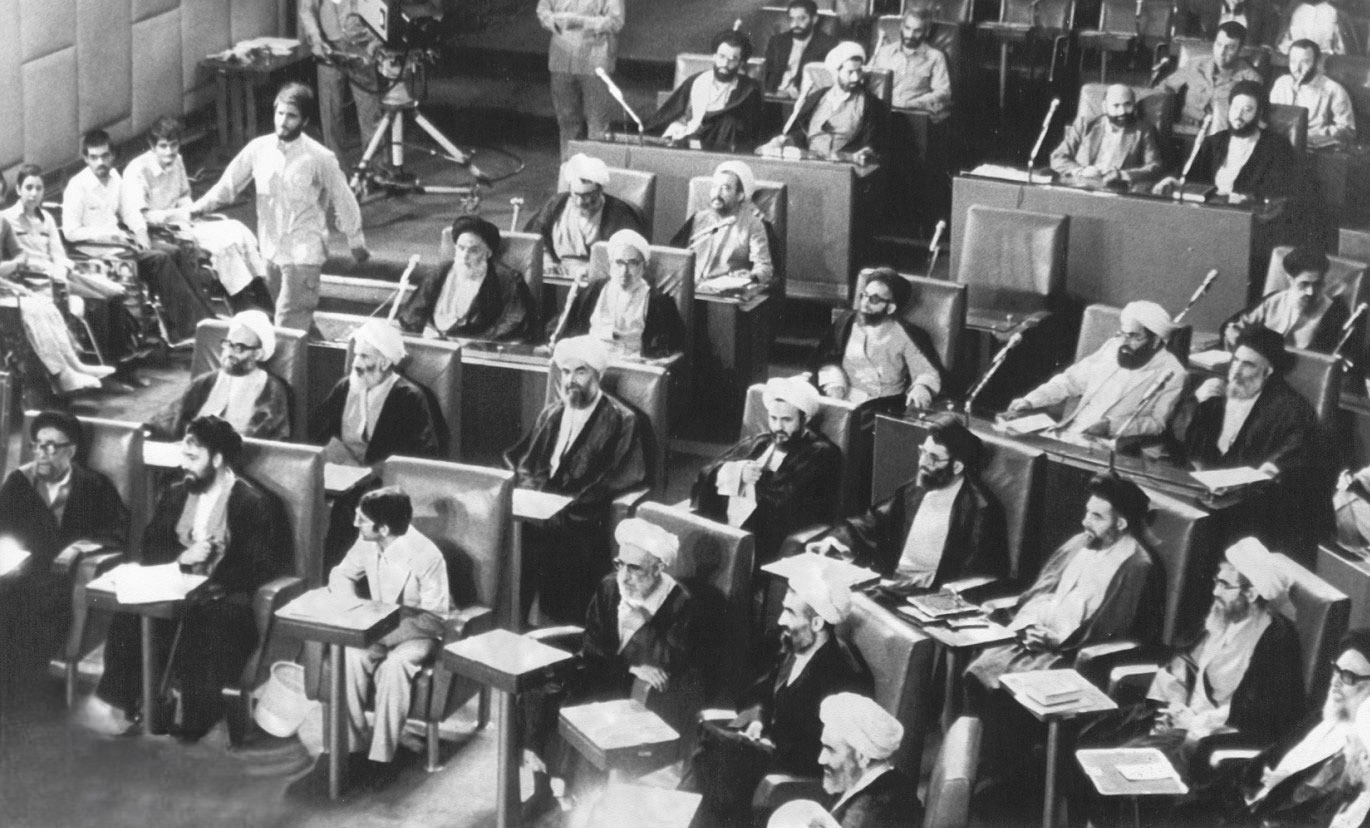
The incentive structure for individual Assembly members points in one direction. Invoking Article 111 requires a majority of the 88 members to conclude, on the record, that the Supreme Leader they elected on March 9 has been incapable of governing for the 45 days since. Such a vote would constitute a public repudiation of the IRGC-aligned coalition that pushed Mojtaba’s elevation — by accounts in Euronews and PJ Media, Vahidi personally lobbied hard for the March 8 selection. Assembly members who vote to trigger Article 111 are voting, in effect, against the coalition that controls operational Iran.
None have done so publicly. The body’s silence since April 7 is, in itself, a form of ratification — not of Mojtaba’s capacity, but of the coalition’s decision to keep the incapacitation protocol inactive.
The Vahidi Capture
Ahmad Vahidi, the IRGC commander whom Pezeshkian named by name on April 4, is the individual in whom de facto executive authority now resides. He holds no elected office. He commands the Islamic Revolutionary Guard Corps under Article 110 authority that belongs, constitutionally, to the Supreme Leader and cannot be delegated. The operational record since Mojtaba’s incapacitation describes a man exercising authority the constitution does not grant him.
On March 28, Pezeshkian moved to appoint former Defense Minister Hossein Dehghan as Minister of Intelligence. Vahidi blocked the appointment. According to reporting in Fox News and Euronews on April 22, and in PJ Media on April 19, Vahidi has demanded that all sensitive wartime appointments remain under IRGC approval “until further notice.” He forced the installation of Zolghadr as Secretary of the Supreme National Security Council over presidential objection — the same Zolghadr who has, by Pezeshkian’s account, operated as the principal obstacle to ceasefire negotiations.
None of these authorities belong to Vahidi under Iranian constitutional law. Article 110 assigns exclusively to the Supreme Leader the power to declare war and peace, to command the armed forces, to appoint and dismiss IRGC commanders-in-chief, and to authorize nuclear decisions. The president, under Article 113, is the head of the executive and second-ranking official, but has no constitutional authority over IRGC commanders — that authority is the Supreme Leader’s alone. When Vahidi blocks a presidential appointment, he is not exercising his own authority; he is exercising the Supreme Leader’s authority, without a Supreme Leader capable of granting him the mandate.
What is taking shape in Iran is no longer an Islamic Republic in its original sense, but a military junta in every respect.
— Western intelligence assessment (Euronews, April 22, 2026)
The FDD characterization of “5 men running Iran,” which has circulated in Washington since early April, explicitly excludes Pezeshkian from the list. It names IRGC commanders, security officials, and hardline clerical figures. The constitutional president does not appear on it because he has been locked out of the decision-making structure that bears his office’s name. Vahidi carries an active INTERPOL red notice for the 1994 AMIA bombing in Buenos Aires, which killed 85 people at the Argentine Israelite Mutual Association building — a fact that will shape any Gulf, European, or Argentine response to negotiations in which he is the ultimate counterparty.
Why Is the Regime Using AI-Generated Videos?
Iranian state media’s handling of Mojtaba’s public image has progressed through three stages, each less authentic than the last. Stage one was a written statement read by an anchor — text on a screen, attribution to the Supreme Leader, no voice or image from the man himself. Stage two was an audio-only Nowruz address. Stage three is the circulation of AI-generated video on IRGC-linked channels, the most widely reported example being a clip showing Mojtaba entering a war room to examine a map of Israel’s Dimona nuclear facility.
The Dimona war-room clip was flagged as AI-generated by Grok, by X’s own fact-checking overlay, and by external fact-checkers including Yahoo News. No official Iranian government account posted the video. It circulated on an IRGC-linked channel, was amplified by regime-aligned accounts, and was not rebutted by the state when the fact-check conclusions became public. PressTV, the English-language flagship of Iranian state media, continues to attribute policy statements to “Leader Ayatollah Seyyed Mojtaba Khamenei” without providing live verification or publishing a rebuttal of the “unconscious” intelligence memo.
| Date | Medium | Authenticity tier | Verification status |
|---|---|---|---|
| March 12, 2026 | Written statement | Anchor read text on-screen | No voice, no image |
| March 20, 2026 | Audio only | Nowruz address | No video, 34 days since |
| Post-March | AI-generated video | IRGC-linked channels | Flagged as AI by Grok, X, Yahoo News |
| March 9 onward | Live video | None | Zero confirmed broadcasts in 50+ days |
The sequence matters. A regime that possessed a living, functioning Supreme Leader would, under conditions of war, find it trivially easy to produce short live video — a statement to the nation, a meeting with commanders, a televised address on the ceasefire. The absence of such content is its own evidence. The progression to AI-generated video suggests an information operation by the hardline coalition to sustain the appearance of a governing Supreme Leader for domestic and external audiences who would otherwise begin asking the question the intelligence memo answers.
The Dimona war-room clip is the specific tell. Mojtaba, as a clerical heir, had no operational military background; staging him in a war room examining a strike map against Israeli nuclear infrastructure is not a credible representation of how he functioned even when he was conscious. It is a representation of the IRGC’s preferred public image of the Supreme Leader — a commander-in-chief fully integrated with the hardline military program — projected through synthetic media because the underlying subject is unable to produce real media of any kind.
The Junta Assessment
The Western intelligence characterization quoted in Euronews on April 22 is the blunt version: “What is taking shape in Iran is no longer an Islamic Republic in its original sense, but a military junta in every respect.” The International Crisis Group’s Iran Crisis Monitor #2, published April 21, offers the more measured version. ICG describes the regime as operating “less as a hierarchy organized around a single dominant figure and more as a hardline coalition trying to manage war, diplomacy, and internal competition simultaneously.”
Both formulations converge on the same observation: the unitary guardian-jurist model that Article 57 of the constitution establishes as the sovereign principle of the state has ceased to describe how Iran is actually governed. In its place is a committee — a coalition that includes Vahidi, Zolghadr, Abdollahi, and several IRGC-aligned security officials — operating without the constitutional ratification that would come from a functioning Supreme Leader’s explicit command authority.
This regime is not yet out of the woods. It is a battle of survival to this day. Factionalism is just built into the DNA of this system.
— Ali Vaez, Iran Project Director, International Crisis Group (CNN, April 21, 2026)
Operational Acts Without Ratified Authority
The IRGC’s operational record over the past 45 days describes a command structure acting on authority it does not constitutionally possess. Each major decision — Hormuz seizures, toll enforcement, ceasefire rejection, blocking of Pezeshkian’s diplomatic mandates — was taken without a ratified authorization chain from a functioning Supreme Leader. Each can be described, with clinical accuracy, as an act of the state undertaken outside the constitutional structure that authorizes acts of the state. The reason that chain cannot be restored is not political but physical: Mojtaba Khamenei’s physical incapacitation — three leg surgeries, facial burns severe enough to make speech difficult, and communication reduced to handwritten notes via motorcycle courier — means the constitutional instrument for ratifying any SNSC order no longer functions in real time.
Consider April 22. The IRGC seized the MSC Francesca and the Epaminondas in the Strait of Hormuz during what both sides had announced as an active ceasefire extension. Tehran’s public justification — “unauthorized operation and tampering with navigation systems” — was delivered through IRGC channels. No ratified presidential order authorized the seizures. No Supreme Leader order authorized them in a form that could be verified. They were announced by the same military coalition that has operated as functional sovereign since Mojtaba’s incapacitation. The same day, an Iranian adviser told Time that the ceasefire “means nothing.”
Consider April 12. The IRGC Navy declared “full authority to manage the Strait” while Foreign Minister Abbas Araghchi was simultaneously in Islamabad representing a diplomatic position that was inconsistent with IRGC Navy operational control. Pakistan and the United States, the parties to the talks, were presented with two contradictory Iranian negotiating positions on the same day, from institutions that each claimed to speak for the Iranian state. Neither Pakistan nor the US could determine which position carried the Supreme Leader’s ratified authority, because the Supreme Leader’s capacity to ratify anything had been publicly called into question by the intelligence memo five days earlier.
Consider April 17. The IRGC’s reversal of Araghchi’s declaration that Hormuz was “completely open” was executed through IRGC-aligned media within hours of the Foreign Minister’s tweet. The IRGC joint command statement, published via Tasnim, declared that the strait had “returned to previous state, strict management and control.” Speaker of Parliament Mohammad Bagher Ghalibaf — himself a former IRGC Aerospace Force commander — publicly validated the override with the formulation that Iranian policy was determined “in the field, not on social media.”
Consider the $0 in toll revenue collected over the 36-day Hormuz toll enforcement campaign. The architecture — 60 permits issued, 8 payment requests sent, zero paid — was designed, promulgated, and enforced by the IRGC operating without constitutional cover. IMO Secretary-General Arsenio Dominguez has called it “illegal.” UNCLOS Article 26 prohibits transit charges in territorial straits. The structural failure of the toll program is not incidental; a command structure that cannot produce ratified authority cannot compel international compliance with revenue mechanisms that require legitimacy as their principal enforcement tool.
Consider April 13, when CENTCOM’s coercive blockade against Iranian ports and toll-vessels began. Foreign Minister Araghchi placed calls the same day to the Saudi and French foreign ministers — behavioral evidence of a diplomatic track operating on a frequency the IRGC does not control. Neither call was announced as coordinated with the Supreme Leader’s office; neither needed to be, because the Supreme Leader’s office is not, at present, a meaningful coordinating node.
What Happens to Velayat-e Faqih?
The Islamic Republic’s theory of sovereignty, codified in Article 5 and Article 57, makes the guardian jurist — the vali-ye faqih — the sole legitimate source of political authority during the absence of the Twelfth Imam. Every governmental institution in Iran derives its authority, in theory, from the Supreme Leader’s ratification. The IRGC commands under Article 110 authority explicitly designated to flow from the Supreme Leader’s person. The nuclear program operates under the Supreme Leader’s fatwa. The armed forces swear loyalty to the office.
A command structure that bypasses a functioning guardian jurist does not merely commit an administrative irregularity. It violates the foundational jurisprudential theory on which the entire state is built. There is no provision in velayat-e faqih doctrine, as developed by Ayatollah Ruhollah Khomeini and institutionalized by the 1979 constitution, for the IRGC to operate as an autonomous source of sovereign authority during the Supreme Leader’s incapacitation. The constitution designed the interim council mechanism precisely to avoid such a vacuum — to ensure that ratified authority always flowed through an identifiable chain, even during transitions.
The Assembly of Experts’ silence, combined with the IRGC’s operational expansion, has produced a state that is simultaneously a military coalition in practice and an Islamic Republic in constitutional text. The coalition cannot formally acknowledge itself as the governing body without dissolving the legitimacy doctrine that produced the institutions it now controls. So it continues to attribute authority to Mojtaba Khamenei — via written statements, audio addresses, and AI-generated video — while exercising the authority itself.
The theological problem is acute because Shia jurisprudence treats the legitimacy of the guardian jurist as inseparable from the personal characteristics and active governance of the individual holding the office. A Supreme Leader who cannot fulfill his duties cannot, in the doctrine’s own terms, be the source of valid political authority. Orders issued in his name when he is incapacitated are not, under velayat-e faqih’s internal logic, orders of the state. They are the private acts of whoever is issuing them, dressed in the robes of an office that is — in the moment of issuance — vacant.
Who Are Foreign Governments Actually Negotiating With?
The diplomatic paralysis this situation produces is not theoretical. Pakistan learned it during the Islamabad talks that ended with Iran refusing to attend the second round on April 20. Araghchi accepted the first-round framework; the IRGC rejected it. The IRGC’s Tasnim statement that the strait “will not be opened to the enemies of this nation through the ridiculous spectacle by the president of the US” was the operative Iranian position, not the position delivered at the table by Iran’s Foreign Minister.
Pakistan’s role as ceasefire enforcer under the Islamabad Accord depends on the Iranian government having a single ratified position to enforce. The Pakistani foreign ministry has, since April 9, been attempting to build pressure on an Iranian negotiating track that its IRGC counterparts publicly repudiate. Field Marshal Asim Munir’s visit to Khatam al-Anbiya headquarters on April 16 was the Pakistani military’s acknowledgment of this reality — Pakistan is now routing enforcement diplomacy through the command that Pezeshkian himself has publicly accused of wrecking the ceasefire.
The Saudi FM’s call to Araghchi on April 13 (the same day as the CENTCOM blockade) fits the same pattern. Riyadh is maintaining diplomatic channels with the Iranian Foreign Ministry while knowing that the Foreign Ministry’s positions are routinely overridden by the IRGC within hours. Gulf foreign policy toward Tehran has become an exercise in selecting which Iranian institution to engage for which transaction, because no single Iranian institution any longer speaks for the Iranian state.
The US-Iran direct talks — Vance-Ghalibaf in Islamabad — produced the same structural problem. Ghalibaf, as current Speaker of Parliament and a known quantity to the hardline coalition, was positioned by Tehran as acceptable. But Ghalibaf himself cannot issue a ratified order; he can signal, on behalf of the coalition, what the coalition will accept. The US delegation had no means of verifying that the coalition’s acceptance constituted the Supreme Leader’s acceptance, because the Supreme Leader’s acceptance is not, at present, obtainable in any verifiable form.
How Does This End?
Three scenarios describe the plausible trajectories from here, and each depends on variables outside IRGC control.
The first is that Mojtaba recovers or that a replacement Supreme Leader is designated by the Assembly of Experts. A designation would require the Assembly to acknowledge, at least implicitly, the incapacitation it has so far declined to acknowledge formally. The IRGC-aligned coalition would have incentive to manage the succession to produce a clerical figure compatible with its operational autonomy — a candidate whose ratification functions would not threaten the coalition’s existing command relationships. The shortlist that has circulated in Tehran since March includes figures who have been vetted precisely for this compatibility.
The second is that the coalition continues to operate indefinitely as a de facto junta without activating Article 111, attributing authority to an incapacitated or deceased Mojtaba through synthetic media, anchor-read statements, and audio messages of increasingly ambiguous provenance. The operational costs of this arrangement — the zero toll revenue, the diplomatic paralysis, the FDD estimate of $435 million per day in economic damage — are substantial but have not yet produced internal pressure sufficient to force a constitutional reckoning. On April 23, Iran confirmed a first toll deposit into the Central Bank, formally ending the zero-collection streak — yet the revenue routing ran through IRGC cryptocurrency wallets rather than conventional banking channels, a structural outcome that illustrates why the costs of IRGC autonomy have not yet forced a constitutional correction.
The third is external forcing. The closing window on Iran’s nuclear program, Saudi and Israeli operational pressure, and the expiry of OFAC general licenses applicable to Iran-related trade could produce a shock sufficient to destabilize the coalition. Vaez’s observation applies: “It is easier to imagine that the regime would try to make a concession to the West in order to ensure its survival than to its own people.” A coalition that cannot survive further economic and military pressure without a concession will, under this logic, make a concession — and then find itself having to explain to its domestic constituencies why it accepted terms its rhetoric has long ruled out.
The second-order effects on Saudi Arabia are already visible. Riyadh’s Hormuz exposure, its defense-architecture dependencies on US Patriot replenishment, and its fiscal break-even of $108–$111 per barrel against Brent at $90 all require an Iranian counterparty capable of delivering on bilateral understandings. That counterparty does not currently exist. The Kingdom is negotiating with a coalition whose operational decisions can be reversed by subordinate commanders within hours, whose diplomatic positions can be overridden by IRGC media statements, and whose ultimate ratifying authority is an unconscious man in Qom.
Frequently Asked Questions
Has the Assembly of Experts ever invoked Article 111 in the Islamic Republic’s history?
No. The 88-member body has never dismissed or publicly questioned a sitting Supreme Leader in 47 years. The closest historical parallel is the 1989 transition following Ayatollah Khomeini’s death, which was a succession upon natural cause of death rather than an incapacitation determination. The Assembly’s constitutional supervisory role — established in Article 111 to allow dismissal of a Supreme Leader who has become incapable, deviates from Islamic law, or loses the qualifications of office — has existed on paper since 1979 and has never been exercised, despite periodic speculation during Ali Khamenei’s later years that his capacity was diminishing.
What happens to Iran’s nuclear fatwa if the Supreme Leader is incapacitated?
Ali Khamenei’s fatwa against nuclear weapons, first articulated in the mid-1990s and reiterated as recently as 2019, was issued in his capacity as guardian jurist. Under Shia jurisprudential principle, a fatwa requires a living, capable marja to remain binding on the state institutions that implement it. An incapacitated Supreme Leader cannot reaffirm, amend, or revoke the ruling. Mojtaba, in the period between his March 9 elevation and his subsequent disappearance, issued no nuclear-specific ruling. The 440.9 kilograms of uranium enriched to 60 percent that Iran possesses as of June 2025 therefore exist in a jurisprudential grey zone — legally prohibited under a fatwa whose originator is dead and whose current nominal holder is unconscious.
Could Pezeshkian unilaterally invoke the interim council mechanism?
The president cannot unilaterally trigger Article 111; the Assembly of Experts holds exclusive jurisdiction to make the incapacitation determination. Pezeshkian could, in theory, publicly call for the Assembly to convene, but doing so would constitute open rupture with the IRGC-aligned coalition and would depend on the Assembly’s willingness to respond — a willingness it has not demonstrated in 47 years. Pezeshkian’s April 4 accusation of Vahidi and Abdollahi was as far as any constitutional actor has gone toward challenging the informal command structure, and it produced no Assembly response.
What role does the Guardian Council play in this crisis?
The Guardian Council — distinct from the Assembly of Experts — vets legislation and candidates for constitutional compliance. It does not have authority to trigger Article 111, though one of its jurists joins the interim council if Article 111 is activated. The Council’s current composition includes figures closely aligned with the hardline coalition, and its jurist most likely to be seated on any reconstituted interim council would be unlikely to vote against IRGC operational preferences. The body has held unusual closed-door sessions through April, according to Tehran-based reporting, the subject matter of which has not been made public.
How does Iran’s incapacitation crisis compare to past cases of leadership absence in other states?
The closest comparable cases are the Soviet succession crises of 1982–1985 (Brezhnev, Andropov, Chernenko), during which the Politburo concealed the severity of each leader’s decline while formally exercising authority through collective bodies. The Soviet cases involved a party structure explicitly designed for collective leadership, even if the formal position of General Secretary was held by a single person. Iran’s constitutional architecture, built on velayat-e faqih, has no analogous provision for collective rule — the guardian jurist doctrine requires a single ratifying figure. The closer structural parallel may be Franco’s final months in 1975, during which the Spanish state operated through a council while the head of state was clinically incapacitated, or Mao’s final year in 1976, during which Politburo factions exercised power while attributing decisions to a declining Chairman. Neither parallel is exact, because neither state rested its sovereign legitimacy on a theory that required a functioning individual to occupy the apex office.
The IRGCâs capture of constitutional authority has a kinetic dimension that extends beyond institutional politics: during the April ceasefire window, IRGC Navy units continued laying GPS-guided influence mines in Hormuz shipping lanes, a physical manifestation of the authorization ceiling that no civilian ceasefire agreement could reach. The operational consequenceâa Pentagon-estimated six-month clearance timeline under best-case conditionsâis examined in Iranâs Ceasefire Mines Will Keep Hormuz Closed Until Winter.