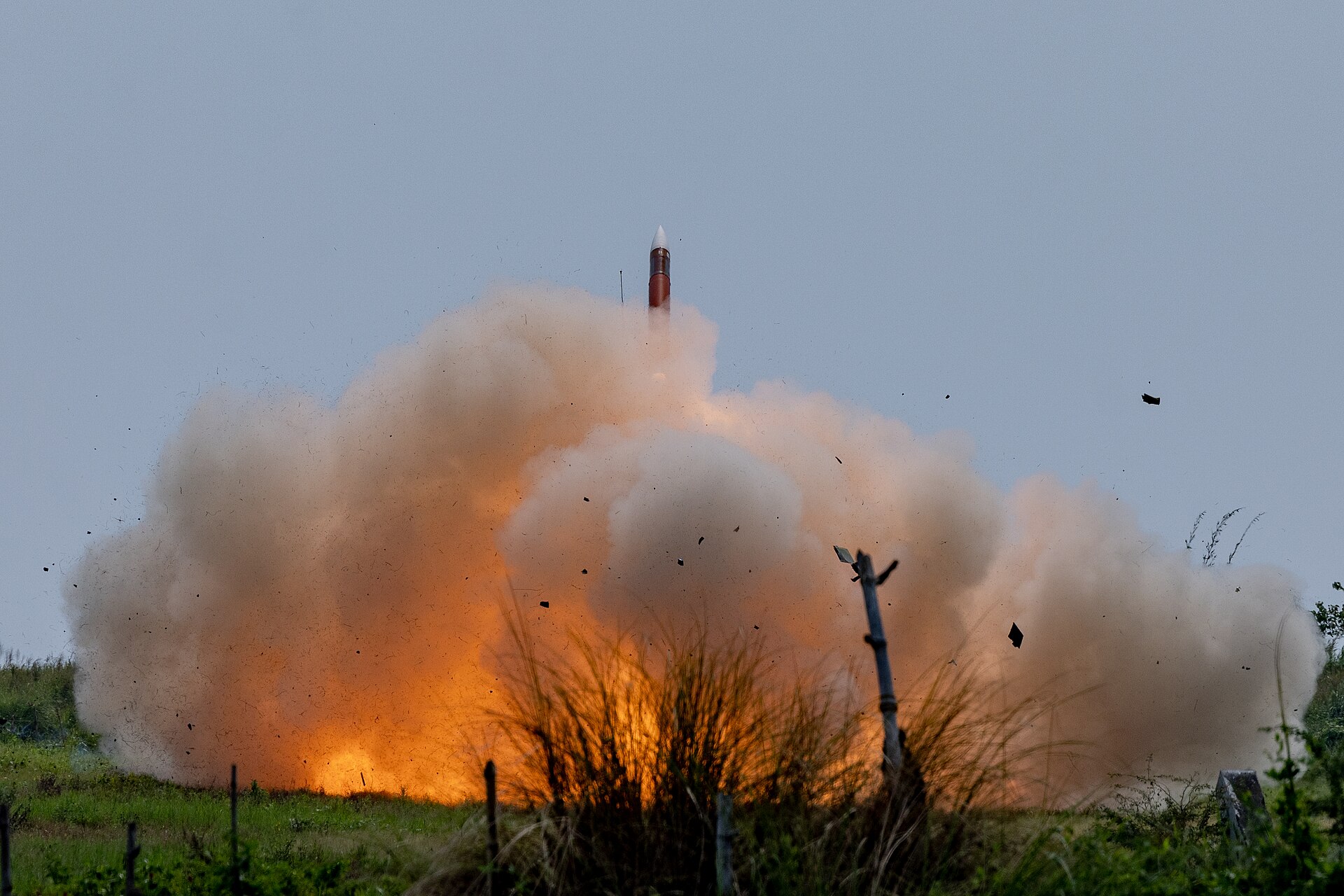

JEDDAH — Saudi Civil Defense said debris from two Houthi ballistic missiles, intercepted and destroyed by Saudi air defences, fell in the Makkah region on Wednesday, November 11. Fragments came down at Sabuhah village, about 35 kilometres northeast of the Grand Mosque, and in Wadi al-Maghmas, about 21 kilometres east of it, with no casualties reported.
The statement, reported by Reuters on Thursday, November 12, called the targeting of civilian objects “a flagrant violation of international humanitarian law.” Saudi state television named the two sites. Interception debris had already landed in the same valley during an earlier barrage on October 24, when Siasat placed Wadi al-Mughammas about 7 kilometres from Arafat.
The House of Saud Daily Briefing
Saudi Arabia's news in 3 minutes, every morning. Free. See today's issue
The Houthis deny aiming at the holy city. Their military spokesman, Yahya Saree, denied on Wednesday that the group had targeted Mecca with a drone and claimed an attack on a Yanbu pumping station instead. The coalition’s tally for the same day, the distance between the debris and the sites of the Hajj, and the movement’s own slogan, which ends with the words “Victory to Islam,” sit uneasily beside that denial.
Table of Contents
- What Fell in the Makkah Region on November 11?
- How Close Did the Debris Come to Arafat and the Grand Mosque?
- Why a Successful Intercept Still Puts Metal on the Ground
- Did the Houthis Target Mecca?
- “Victory to Islam” and the Western Corridor
- Interceptions and Alerts Near Makkah Since September
- How Is Saudi Arabia Using the Holy-Site Argument?
- What the Statements Leave Out
- Frequently Asked Questions
What Fell in the Makkah Region on November 11?
Debris from two intercepted Houthi ballistic missiles fell at two named sites in the Makkah region on November 11, according to Saudi Civil Defense: Sabuhah village, about 35 kilometres (22 miles) northeast of the Grand Mosque, and Wadi al-Maghmas, about 21 kilometres east of it. Civil Defense reported no casualties or damage.
Civil Defense said the missiles had been launched toward the region before they were intercepted and destroyed. Its statement, as reported by Reuters via Daily Maverick, described the targeting of civilian objects as “a flagrant violation of international humanitarian law.” The phrase is legal rather than religious, and it came from the civil emergency agency rather than the foreign ministry.
The coalition’s own count of the day was larger. Spokesman Turki al-Maliki said air defences intercepted and destroyed five missiles and two drones on Wednesday, Anadolu Agency reported. Three were cruise missiles launched toward the Riyadh region, and the two ballistic missiles were intercepted in western Saudi Arabia. The two drones were brought down over the Makkah region and the southern region.
Alerts went out across the west and south during the day. Saudi Civil Defense issued danger warnings for Taif, Yanbu and Khamis Mushait, then announced that the danger had passed, Cyprus Mail reported, citing state television. On Thursday the coalition reported one more interception, a drone over the Eastern Province (Anadolu Agency).
Wednesday’s pattern followed the rhythm of the previous days, when the coalition described three Houthi missiles intercepted a day after strikes on Sanaa missile plants. The difference on November 11 was where the fragments came down.
How Close Did the Debris Come to Arafat and the Grand Mosque?
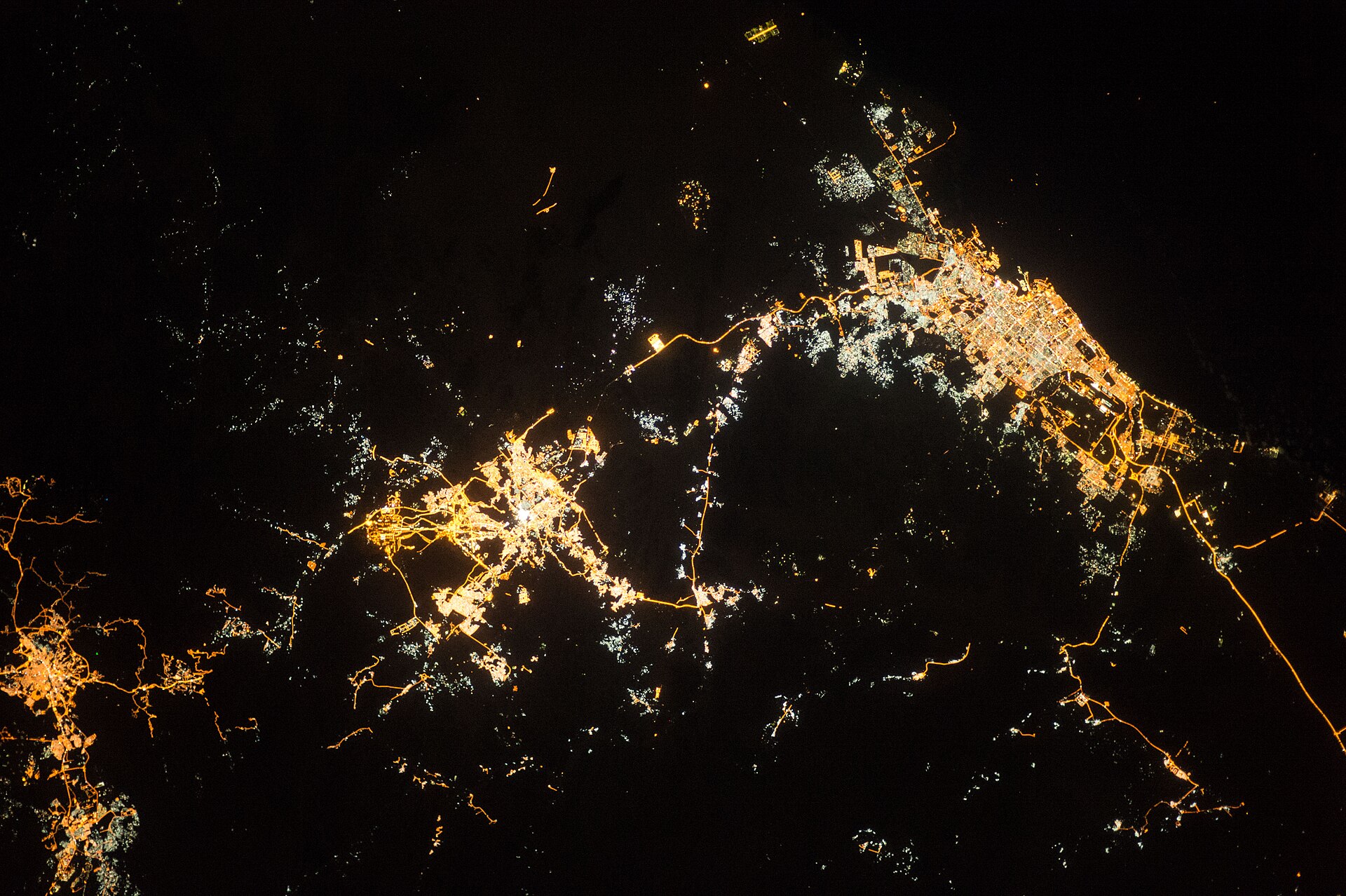
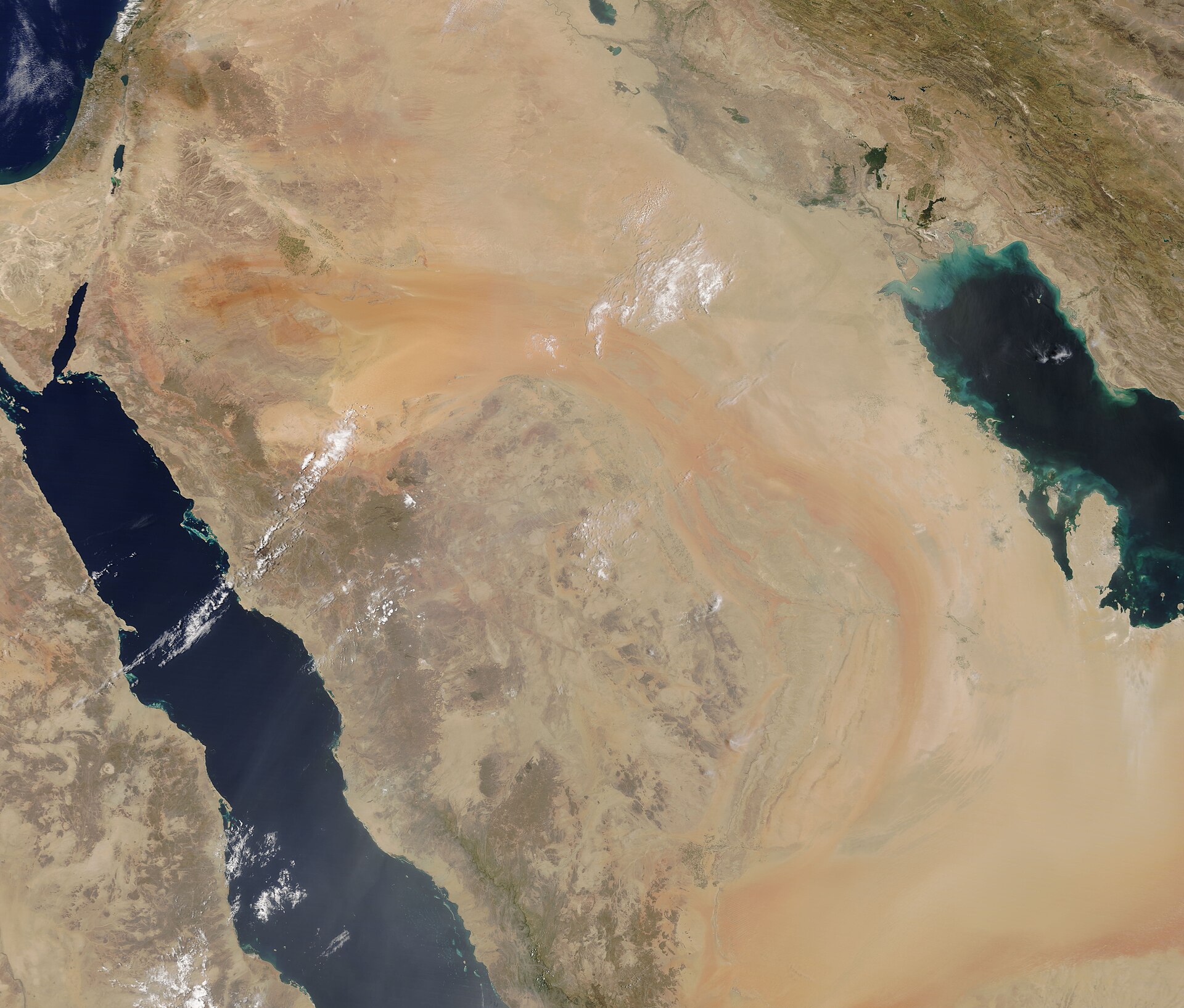
The nearest November 11 debris fell in Wadi al-Maghmas, about 21 kilometres east of the Grand Mosque. When debris landed in the same valley on October 24, Siasat placed it about 16 kilometres from Mina and about 7 kilometres from Arafat. Mina and Arafat are key sites of the annual Hajj pilgrimage, and both lie east of Mecca.
The valley’s name is spelled several ways in English. Siasat used Wadi Al-Maghmmas and Wadi Al-Mughammass in a single article; Al Jazeera and Asharq Al-Awsat wrote Wadi Al-Mughammas; the Reuters copy for November 11 used Wadi al-Maghmas. The distances differ slightly too. Siasat put the valley about 21 kilometres from the Grand Mosque, while Asharq Al-Awsat wrote about 20 kilometres east.
Anyone who has performed the Hajj pilgrimage knows this ground, the road from Mecca out through Mina toward Arafat. Asharq Al-Awsat described Wadi al-Mughammas as lying near the Arafat ritual site, and the OIC Secretary-General referred on October 25 to “targeting Wadi al-Mughammas in the vicinity of Mount Arafat.”
Sabuhah, the second November 11 site, lies further out, about 35 kilometres northeast of the Grand Mosque. No source has published a map of either fall zone, and Civil Defense gave no description of the size or number of fragments.
On October 24, the same agency listed four debris sites from two ballistic missiles aimed at the Makkah and Madinah regions: Wadi al-Mughammas; the Al-Nuzha neighbourhood of Jeddah; Wadi Jalil in Taif; and the Masturah centre in Rabigh governorate, which Siasat described as a resort centre. No injuries or material damage were reported then either. Of the October 24 sites, only the valley east of Mecca appeared again in the November 11 statement.
Why a Successful Intercept Still Puts Metal on the Ground
By the coalition’s own measure, November 11 was a defensive success. Every projectile it reported was described as intercepted and destroyed, and nobody was hurt. Even so, a destroyed missile does not vanish. Fragments of it, and of whatever destroyed it, still come down somewhere below.
Saudi authorities do not publish intercept altitudes, engagement points or the weapons used, so the relationship between where a missile was destroyed and where its debris landed cannot be reconstructed from public statements. What the record does show is the spread. On October 24, two missiles produced debris across four locations in three governorates, from the Masturah centre in Rabigh to Wadi Jalil in Taif.
Debris statements are also the exception rather than the rule. In the same October 24 and 25 barrage, Saudi forces reported intercepting a drone and a ballistic missile over Riyadh, a cruise missile aimed at Khamis Mushait and ten ballistic missiles aimed at the southern region, Al Jazeera reported. Only the two missiles in the west produced a Civil Defense list of named fall sites.
Falling debris has caused harm elsewhere in the kingdom. On October 29, debris from two intercepted Houthi ballistic missiles fell in Riyadh, where a citizen suffered minor injuries and a house and a vehicle were damaged, according to Civil Defense statements carried by the Saudi Press Agency and reported by Kuwait Times.
Around Mecca, the absence of casualties owes something to where the fragments fell. Wadi al-Maghmas and Sabuhah lie outside the city, in a region that also holds Mina and Arafat. No Saudi official has said where the November 11 missiles were heading.
Did the Houthis Target Mecca?
The Houthis say no. Military spokesman Yahya Saree denied on November 11 that the group had targeted Mecca with a drone, saying its operations “target oil facilities and military bases,” Cyprus Mail reported. He claimed an attack on a pumping station in Yanbu instead. There was no Saudi confirmation of that claim.
Saree’s denial, as reported, concerned a drone. Cyprus Mail did not record him addressing the two ballistic missiles whose debris fell in the Makkah region. Saudi Civil Defense said the missiles were launched toward the region, while the coalition’s announcement, as reported by Anadolu Agency, placed their interception in western Saudi Arabia without naming a target.
The denial follows a set pattern. After the coalition said on September 16 that it had downed a drone heading for Makkah, Hazem al-Assad of the Houthi politburo wrote on X that “the claims about targeting Makkah are a worn-out lie that has been used before and no longer fools anyone,” Khaleej Times reported. After the October 24 barrage, the group called Saudi allegations a “huge lie,” according to Gulf News. On October 30, Saree called Saudi claims about a drone near Mecca “fabrications and lies propagated by the criminal Al Saud regime,” Breitbart reported.
The group has also tried to draw a public line around the holy cities. On October 11, after King Khalid International Airport in Riyadh was attacked, the Houthis said all Saudi airports except those of Mecca and Medina were potential targets, CNN reported. After the October 24 barrage, Saree announced seven operations against Saudi oil facilities and military bases, according to Al Jazeera.
Yanbu, Saree’s declared target on November 11, sits on the Red Sea coast north of Mecca. The Houthis have repeatedly claimed attacks on Saudi energy sites, including the four operations announced on November 10 against KKIA, Abqaiq and Riyadh’s financial centre. Yanbu and Taif, the targets named in the September 24 interceptions, lie in the same western half of the kingdom as Mecca.
Why the Yanbu claim is not implausible
The Houthi account deserves a fair hearing on one point: Yanbu is a real strategic target. With Hormuz disrupted, the East-West pipeline was moving its full 7 million barrels a day of capacity in late March, with Yanbu crude exports of about 5 million barrels a day, Bloomberg reported via Reuters. Aramco declined to comment at the time. Reuters had earlier reported, citing Kpler, that Yanbu exports rose to nearly 4 million barrels a day in the week starting March 16, against about 770,000 in January and February.
The port has drawn Houthi claims for months. The group claimed attacks on Aramco facilities at Yanbu and Jazan on July 25, according to Long War Journal. On September 24, Brent crude rose more than 3 percent and briefly topped $108 a barrel after Houthi claims of strikes on Aramco facilities in Yanbu, Al Jazeera reported. A day later, France confirmed it was sending soldiers, radars and defence systems to protect the Yanbu oil terminal.
None of that settles what the two November 11 missiles were aimed at. It does mean the Houthi claim of a Yanbu operation names a target the group has repeatedly and publicly pursued, and one foreign governments have moved forces to defend.
“Victory to Islam” and the Western Corridor
The Houthi movement’s slogan is called the sarkha, the “scream.” In full it reads: “God is great, Death to America, Death to Israel, Curse the Jews, Victory to Islam.” The last phrase, “النصر للإسلام,” is the one that frames the movement as a defender of the faith rather than of one Yemeni faction.
That self-image has been turned directly on Saudi Arabia. In late August, in a speech marking the Prophet Muhammad’s birthday, Houthi leader Abdul-Malik al-Houthi pointed to what he called a contradiction between restrictions imposed on Yemenis and “the opening of the skies of Makkah and Medina to ‘Israelis,'” Al Mayadeen reported, as cited by Breitbart. The charge was that the kingdom had failed as custodian of the holy cities’ airspace.
On November 11, two Houthi ballistic missiles launched toward the region of that same holy city were intercepted and destroyed, and their fragments fell in a valley near Arafat. Al Jazeera describes the group as a Zaydi Shia movement that denies targeting Muslim holy sites in Saudi Arabia. Nothing in the public record of November 11 proves otherwise.
The Saudi argument, set out below, rests on the distance between a movement that claims the cause of Islam and a launch pattern that keeps producing interceptions over the region of Islam’s holiest city. Houthi officials answer that the pattern is invented. Civil Defense answers with place names: Sabuhah, and Wadi al-Maghmas.
Interceptions and Alerts Near Makkah Since September
The coalition and Saudi Civil Defense have reported a run of incidents in or toward the Makkah region since mid-September. The table lists those with an identifiable date and source. It is not a complete count, and no official body has published one.
| Date | What Saudi authorities reported | Debris or damage | Houthi response | Source |
|---|---|---|---|---|
| Sept 15 | Drone intercepted before entering Makkah’s prohibited airspace; spokesman called it “the second hostile and terrorist attempt to target Makkah” | None reported | Politburo’s Hazem al-Assad: “a worn-out lie” | Asharq Al-Awsat; Khaleej Times |
| Sept 24 | Six ballistic missiles aimed at Taif and Yanbu intercepted after alerts including one for Makkah | Not specified | Not reported in source | Express Tribune |
| Oct 24 | Two ballistic missiles aimed at Makkah and Madinah regions intercepted | 4 sites; no injuries or damage | “Huge lie”; Saree announced 7 operations on oil and military targets | Siasat; Al Jazeera; Gulf News |
| Oct 30 | Drone intercepted and destroyed over the Makkah region | None reported | Saree: “fabrications and lies” | Breitbart; Kuwait Times |
| Nov 3 | Drone intercepted and destroyed in the Makkah region | None reported | Not reported in source | QNA |
| Nov 6 | Drone intercepted and destroyed in the Makkah region, announced on X | None reported | Not reported in source | Siasat |
| Nov 11 | Two ballistic missiles intercepted; one of two drones downed over the Makkah region | 2 sites; no casualties or damage | Saree denied targeting Mecca with a drone; claimed Yanbu pumping station | Reuters/Daily Maverick; Anadolu; Cyprus Mail |
The September 15 entry carries a detail that later coverage dropped. When the coalition spokesman called that drone “the second hostile and terrorist attempt to target Makkah,” he was counting back to 2017: the first, he said, took place on July 27, 2017, according to Asharq Al-Awsat. The coalition has not published a running count since, and the Houthis dispute every entry.
The weapons vary. The September 15, October 30, November 3 and November 6 entries were drones, which the coalition reported intercepting without any debris statement. The October 24 and November 11 entries were ballistic missiles, and both produced Civil Defense notices of fragments on the ground.
How Is Saudi Arabia Using the Holy-Site Argument?
Saudi Arabia frames Houthi fire near Mecca as an attack on Islam’s holiest sites, not only on Saudi territory. King Salman condemned the “terrorist militia’s” attempt to repeat its targeting of Makkah on September 22, and Saudi religious leaders, the GCC, the OIC and the Muslim World League have each used the language of sanctity since.
The vocabulary splits by audience. Civil Defense speaks in the terms of international humanitarian law and civilian objects, language aimed at governments and courts. The religious establishment speaks of sanctity. After the October 24 barrage, Sheikh Abdulrahman Al-Sudais, President of Religious Affairs at the Grand Mosque and the Prophet’s Mosque, condemned the Houthis’ “continued targeting of Makkah and Madinah” as “a blatant assault on the sanctity of the two holy cities,” Asharq Al-Awsat reported.
“Targeting holy sites, civilians, and facilities is a crime forbidden by Islamic law.”
Sheikh Abdulrahman Al-Sudais, President of Religious Affairs at the Grand Mosque and the Prophet’s Mosque, October 25, 2026 (Asharq Al-Awsat)
Sudais described the security and sanctity of Mecca and Medina as a “red line that must not be breached,” Gulf News reported, and said the attacks “will not undermine the Kingdom’s security and stability,” Asharq Al-Awsat reported. GCC Secretary-General Jasem Mohamed Albudaiwi called the October 24 attack “a criminal escalation that threatens regional security and stability” and said putting Makkah at risk amounted to a “violation of the sanctity of the holy sites,” according to the GCC Secretariat.
Albudaiwi’s statement also carried the regional argument. “The security of the Kingdom of Saudi Arabia is an integral part of the security of the GCC countries,” he said, according to Asharq Al-Awsat. The sanctity language turns a Houthi-Saudi exchange into a concern of the whole Muslim world; the security language turns it into a concern of the Gulf bloc. The two framings reach different capitals.
The OIC moved early. Its General Secretariat said on September 15 that the Houthi attacks on Makkah and the Madinah region “constitute terrorism that runs counter to Islamic values and to international norms, principles, and law.” After October 24, Secretary-General Ismail Ould Cheikh Ahmed called the attacks on Makkah, Madinah, Taif and Jeddah “cowardly and unacceptable” and asked for “urgent action by the international community,” Radio Pakistan reported. “Violating the sanctity of Islamic holy sites is an attack on the entire Islamic ummah,” he said, according to Asharq Al-Awsat. The Muslim World League condemned the incidents as a violation of the sanctity of religious sites and of humanitarian principles, according to Siasat.
The argument suits the kingdom because it does not depend on proving intent. Whether a Houthi missile was aimed at Mecca or at Yanbu, debris in a valley near Arafat lets Saudi officials address the wider Muslim world over the heads of the Houthis’ own audience. It sits alongside the kingdom’s broader maritime case, set out when the Saudi Cabinet called for an immediate end to threats in Hormuz and Bab al-Mandeb.
A defence pact named after the holy city
The holy-site framing also has a military form. Saudi Arabia, Turkey and Pakistan signed the Makkah Joint Defense Agreement on August 7, under which an attack on any member counts as an attack on all, Kuwait Times reported. Its military chiefs held their first joint meeting in Riyadh on September 25, according to Gulf News, the day after the foreign ministers of the three states met to arrange it, Al Jazeera reported.
On October 5, an emergency meeting of the pact’s committee in Riyadh agreed to deploy Pakistani and Turkish forces to Saudi Arabia and to “activate collective deterrence measures,” Al Jazeera reported. Defence Minister Prince Khalid bin Salman said the measures were “in response to the attacks and all those responsible for them.” Two days later, Donald Trump said of the deployments: “I think they want to help Saudi Arabia, and I think that’s good,” Gulf News reported.
The pact was named before any of the debris fell, but each Makkah-region interception makes the name easier to explain to Turkish and Pakistani publics whose troops are now in the kingdom. In its September 16 statement the coalition said the security of Makkah, its visitors and pilgrims was a “red line,” The National reported, citing Reuters.
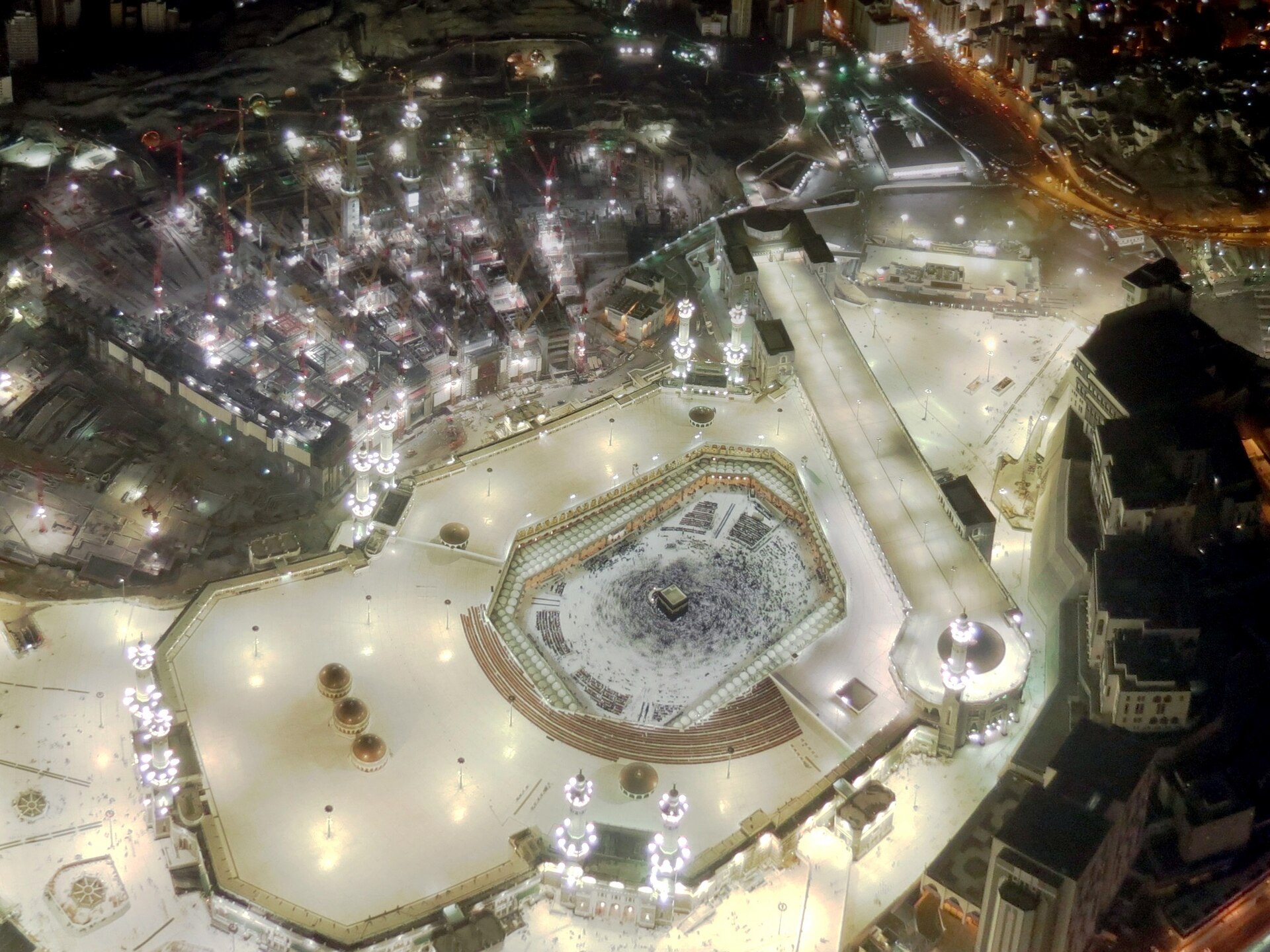
The city of Mecca itself has not been hit in any incident Saudi authorities have reported. Every statement in the record describes interceptions, debris in the wider region, or alerts that were later lifted.
What the Statements Leave Out
Several things a reader would want to know about November 11 are not in any public statement. Saudi authorities have not said where the two ballistic missiles were launched from, what their target was, at what altitude they were intercepted, or which air defence system destroyed them. Civil Defense said they were launched toward the region; the coalition said only that they were intercepted in the west.
The Houthi side is no more complete. Saree’s claim of a strike on a Yanbu pumping station has not been confirmed by Saudi Arabia or by any independent source found. His November 11 denial, as reported, addressed a drone rather than the ballistic missiles.
Even the dates in the series need care. Asharq Al-Awsat, in a story timestamped early on September 16, said the drone was intercepted “on Tuesday,” which was September 15. Khaleej Times and the verified record describe the coalition’s accusation as made on September 16. Both dates refer to the same incident: an interception on one day, reported widely the next.
The wider war adds noise to any reading. A 2022 UN-brokered truce largely froze the Yemen conflict until hostilities resumed this year, Reuters noted. The Houthis’ October 10 strike on King Khalid International Airport killed 12 and wounded 309, according to Al Jazeera; the toll subsequently rose to 14 after a second Indian national died of injuries in early November, Saudi Gazette and other outlets reported. Inside Yemen, the government’s armed forces reported 736 strikes on Houthi positions over 24 hours, Al Jazeera reported on October 25.
Against that background, two missiles that injured nobody could have been a line in the daily log. Instead Civil Defense issued a statement naming both sites and invoking international humanitarian law. By Thursday, the coalition was reporting a drone over the Eastern Province.
Frequently Asked Questions
Where does the Houthi slogan “Victory to Islam” come from?
The slogan, known as the sarkha, was first chanted in January 2002 at the Imam al-Hadi school in Marran, in Saada province, and is credited to Hussein al-Houthi. It is modelled on a motto from revolutionary Iran, and the Houthis adopted it formally around 2003, after the US invasion of Iraq, according to accounts compiled on Wikipedia. Its exact origin is disputed.
Have Houthi attacks affected facilities serving the Prophet’s Mosque in Medina?
Yes. On September 29, a drone attack hit a power distribution station in Medina that supplies the Prophet’s Mosque, putting one transformer out of service, the coalition said. It later said examination of the drone wreckage confirmed Houthi involvement, GDN reported. Separately, a cruise missile was shot down near Medina on October 15, which the Houthis denied, according to Breitbart.
What do the Houthis say about Saudi airstrikes in Yemen?
The Houthis publish their own tallies. On November 6, Yahya Saree claimed Saudi warplanes had carried out 61 air raids in 24 hours, and said the cumulative number of airstrikes and missile attacks since the escalation began had reached 4,197, Siasat reported. Saudi Arabia has not confirmed those figures.
What is Operation Dawn of Yemen?
Operation Dawn of Yemen is the offensive that Yemen’s internationally recognised government forces launched on October 5 to retake territory lost to the Houthis, according to Al Jazeera. It followed a September Houthi offensive that captured Yemen’s western coast, including Mocha. Houthi missile and drone launches toward Saudi Arabia have continued throughout the campaign.
The House of Saud Daily Briefing
Saudi Arabia's news in 3 minutes, every morning. Free. See today's issue