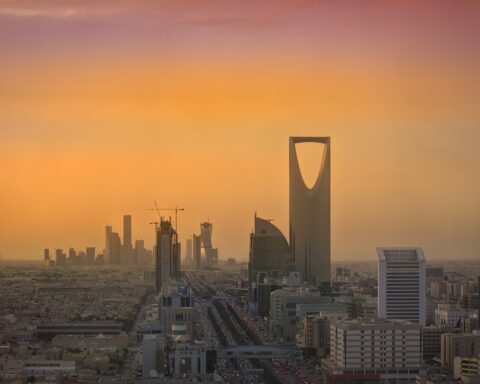

RIYADH — Saudi Arabia’s National Infrastructure Fund and HUMAIN signed two financing agreements totalling up to SAR 2.5 billion (~$667 million) in Riyadh on November 8, deploying the first capital under an AI data centre financing programme the two entities announced at the World Economic Forum in Davos in January, according to Zawya and Arab News.
The deals are the first transactions under Infra’s AI Data Center Financing Program, converting a non-binding SAR 4.5 billion (~$1.2 billion) framework into funded commitments for GPU procurement and power-grid construction, according to Zawya and enterprise AM. They arrive one week after Aramco completed a SAR 9.9 billion (~$2.6 billion) acquisition of a 49 percent stake in HUMAIN, giving the company both a new co-owner with energy assets and a substantially larger capital base, according to PIF and Aramco press releases.
The House of Saud Daily Briefing
Saudi Arabia's news in 3 minutes, every morning. Free. See today's issue
“Saudi Arabia has everything required to become the largest AI token exporter.”Tareq Amin, CEO, HUMAIN — PIF Private Sector Forum, February 2026 (Arab News)
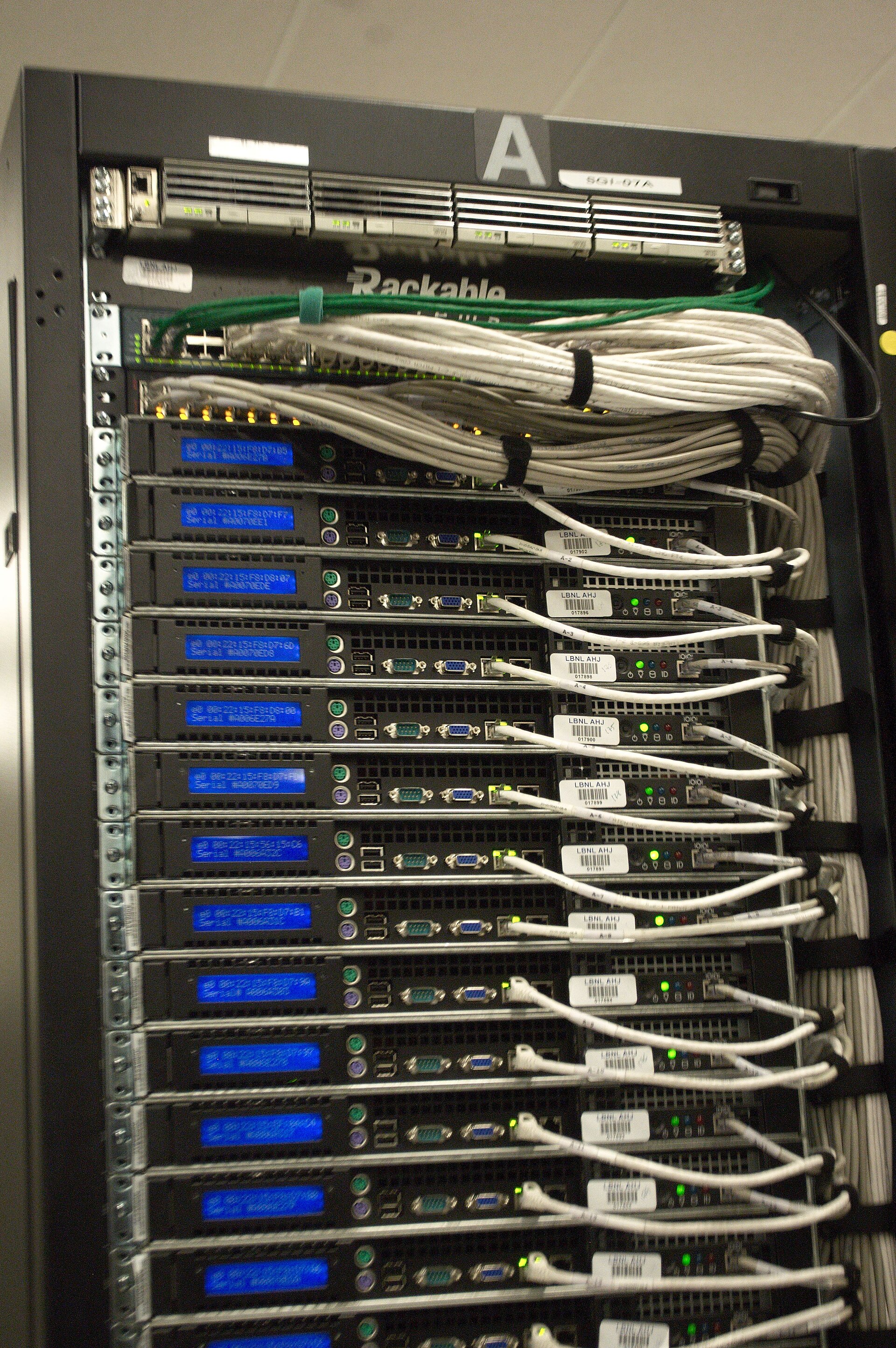
Table of Contents
What Do the 2 Agreements Cover?
The first agreement provides up to SAR 1.1 billion (~$293 million) for the procurement and deployment of graphics processing units representing approximately 25 megawatts of IT load, according to Arab News and Arabian Business. GPUs are the processors that train and run artificial intelligence models. At current chip densities, 25 MW is enough to house several thousand high-performance accelerators.
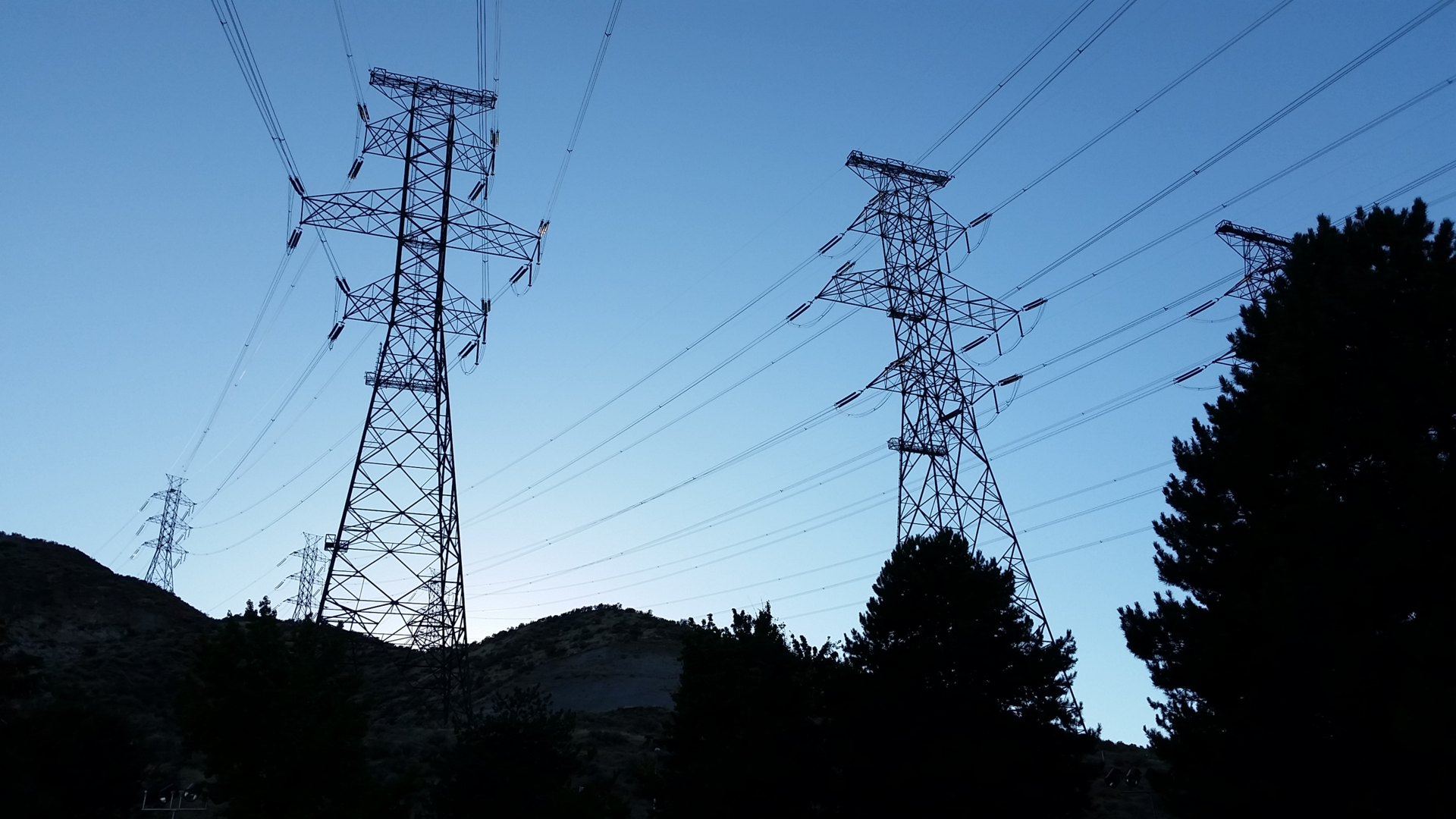
The second agreement allocates up to SAR 1.4 billion (~$373 million) for substations, transmission lines, and grid connections supporting HUMAIN’s data centres, according to Arab News. Arabian Business reported that the grid infrastructure is designed to accommodate up to 1 gigawatt of future IT capacity — a figure that, if accurate, would provide a power envelope large enough to serve expansion well beyond the initial 25 MW GPU deployment without requiring a second round of substation construction.
The split between the two agreements reflects the capital structure of a data centre build: the power envelope costs more than the first tranche of chips it feeds. The 25 MW of GPU capacity the first agreement will fund amounts to a fraction of the capacity HUMAIN committed to with NVIDIA at GTC Berlin in October, according to The National News, leaving the bulk of HUMAIN’s announced NVIDIA capacity without disclosed project financing.
The power deal is the larger of the two, and it addresses a bottleneck that runs through every Gulf data centre project: facilities cannot draw load until grid connections are live. Saudi Arabia’s electricity network is absorbing new demand from several directions simultaneously. The kingdom has approved power and water tariff increases for 2027 as its industrial base expands.
From Davos Framework to First Drawdown
HUMAIN and Infra announced the non-binding financing framework at Davos in January 2026, covering up to SAR 4.5 billion (~$1.2 billion) for up to 250 megawatts of AI data centre capacity, according to Saudi Press and enterprise AM. The November 8 agreements, at SAR 2.5 billion for hardware and grid infrastructure, represent the programme’s first funded commitments. The framework was described as non-binding at announcement, according to tbreak, with terms to be finalised per tranche as projects reach financial close.
Infra — formally the National Infrastructure Fund — is designed to mobilise private investment in strategic infrastructure. The fund has said it aims to bring data centre projects to financial close to demonstrate their investment viability to private cloud companies and major institutional investors, according to enterprise AM. In practice, Infra absorbs the early-stage capital risk — purchasing GPUs and building substations — so that commercial operators encounter a project with working hardware and grid connections rather than an unfunded proposal.
Both deals announced on November 8 are between sovereign entities: Infra and HUMAIN, which is jointly owned by PIF and Aramco. The fund’s stated goal is to attract private cloud companies and institutional investors as follow-on participants once initial infrastructure demonstrates viability, according to enterprise AM. No private co-investor in the AI Data Center Financing Program has been publicly announced — the programme remains, for now, an entirely sovereign-funded effort. Saudi Arabia’s broader FDI strategy faces similar questions about the pace at which government-backed projects attract private capital.
How Large Is HUMAIN’s Data Centre Pipeline?
HUMAIN has set a target of 3 gigawatts of AI data centre capacity by 2030 and more than 6 GW by 2034, according to The National News. Saudi Arabia’s broader national goal, announced at LEAP 2026 in February, is 6.9 GW of total data centre capacity by 2034, according to Economy Middle East. The Infra-financed 25 MW is a fraction of those targets, but it is the first tranche to move from announcement to signed agreement.
The company expanded its NVIDIA partnership at GTC Berlin in October 2026 to cover approximately 84 megawatts — around 27,000 GPUs — in Saudi Arabia, The National News reported. Phase 1 calls for 14 MW of Blackwell HGX B300 systems, approximately 6,000 GPUs, with deployment beginning in the fourth quarter of 2026, according to Data Centre Magazine. Phase 2 would add 70 MW of Vera Rubin infrastructure — NVIDIA’s next-generation platform after Blackwell — from June 2027, subject to final agreements, Data Centre Magazine reported. The two phases span consecutive NVIDIA chip generations: Blackwell for the initial 14 MW, Vera Rubin for the remaining 70 MW.
The broader NVIDIA relationship, announced during President Trump’s Riyadh visit in May 2025, covers deployment of up to 600,000 GPUs across Saudi Arabia and the United States over three years, including GB300 systems, according to PRNewswire.
Elon Musk’s xAI will be the first customer for NVIDIA-backed compute at a flagship HUMAIN facility of more than 500 MW in Saudi Arabia, CNBC reported in November 2025. AWS will deploy and manage up to 150,000 NVIDIA GPUs within a dedicated AI Zone in Riyadh, according to CNBC and Data Centre Magazine.
HUMAIN and Microsoft agreed in August 2026 to integrate HUMAIN’s ALLAM Arabic-language models into Microsoft Foundry and Microsoft 365 Copilot, Arab News reported. The ALLAM integration gives HUMAIN a distribution channel for Arabic-language AI services through Microsoft’s existing global enterprise platform, while the xAI and AWS arrangements commit large-scale compute customers to Saudi-based facilities.
Taken together, the partnerships give HUMAIN anchor tenants from across the American technology industry for the capacity that Infra’s financing is now building out. Saudi Arabia ranked 2nd and 4th in the 2026 IMD World Digital Competitiveness and AI Readiness tables, results released shortly before the Infra financing closed.
Aramco’s Entry and HUMAIN’s New Structure
The financing agreements arrived one week after HUMAIN’s ownership changed. PIF and Aramco closed a transaction on November 1 giving Aramco a 49 percent stake, with PIF retaining 51 percent, according to press releases from both entities. Aramco contributed approximately SAR 9.9 billion (~$2.6 billion) in cash plus AI assets — including SCAI, a separate PIF-owned AI company transferred into HUMAIN prior to closing — in exchange for its stake, according to Aramco’s third-quarter results and PIF’s announcement.
PIF launched HUMAIN in May 2025 with Tareq Amin, formerly CEO of Japanese telecom operator Rakuten Mobile, as chief executive. For approximately 18 months, the company operated as a wholly PIF-owned vehicle, announcing partnerships and capacity targets with NVIDIA, xAI, AWS, and Microsoft without a second institutional shareholder or a disclosed source of project-level debt financing.
Aramco’s entry changes that dynamic. The oil company brings captive energy assets — including power generation and grid access — and an operational interest in supplying the electricity that data centres consume at industrial scale. Its SAR 9.9 billion cash contribution also gives HUMAIN a capital base separate from — and substantially larger than — the Infra financing.
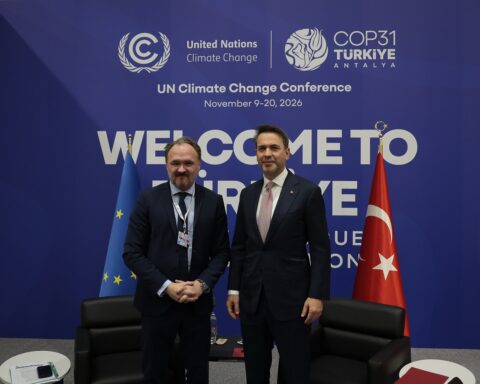
Saudi Arabia separately signed an electricity cooperation memorandum with Türkiye at COP31 in Antalya. The kingdom is pursuing energy cooperation agreements across multiple bilateral channels as domestic demand from data centres, megaprojects, and broader industrial expansion places increasing load on the national grid.
What Are the Geopolitical Constraints on Saudi AI?
Washington approved the sale of advanced NVIDIA chips to HUMAIN, authorising up to 35,000 chips, with the condition that Chinese frontier AI models cannot be trained on HUMAIN’s compute capacity, CNBC reported in November 2025. The restriction places HUMAIN in a position familiar across the Gulf: securing American hardware while maintaining commercially viable relationships with Chinese technology firms.
HUMAIN’s Arabic language model M3 is built on an open-source base from Chinese startup MiniMax, according to Rest of World. The Chinese commercial presence in Saudi Arabia’s technology sector extends beyond model architectures. Tencent Cloud has invested $150 million in the kingdom, and Huawei has planned a $400 million cloud-region investment, according to Asia Times. “Everyone expects two AI blocs. The Gulf is betting on both,” Semafor reported in September 2026.
HUMAIN is, in practice, building on American hardware while deploying Chinese model architectures and courting investors from both blocs — a position that mirrors the broader Gulf approach Semafor described. The sustainability of that position depends on how strictly Washington interprets the conditions attached to its chip exports, and on whether Beijing’s open-source model ecosystem remains accessible to Gulf companies.
The ongoing conflict with Iran introduces a separate dimension. The Center for Strategic and International Studies published analysis in 2026 examining “what the Iran war is costing joint Gulf-US ambitions for AI,” framing the conflict as a persistent source of uncertainty for the technology infrastructure programmes that deals like the Infra-HUMAIN financing are designed to advance.
Other large-scale data centre projects face the same set of dependencies. NEOM signed a $5 billion deal with DataVolt for a 1.5 GW data centre site at Oxagon, with first-phase operations expected by 2028, according to Bloomberg. Every project in the Saudi AI pipeline — HUMAIN’s, DataVolt’s, and the hyperscaler zones — depends on the same inputs arriving on schedule: grid capacity, fibre, and advanced semiconductors shipped through supply chains that geopolitics can disrupt.
Frequently Asked Questions
How does HUMAIN’s capacity target compare to the UAE’s G42?
G42’s Stargate UAE project in Abu Dhabi targets 1 GW of data centre capacity, with a first 200 MW phase and 400,000 NVIDIA chips due in 2026, according to the Sovereign AI Infrastructure Tracker and Rest of World. HUMAIN’s 3 GW target by 2030 is three times G42’s total ambition on paper, though G42’s first phase involves a larger initial GPU order. Both companies are drawing on the same constrained global supply chain of advanced NVIDIA semiconductors, which means chip allocation — not the size of announced targets — is likely to determine which pipeline delivers operational capacity first.
What does “AI token exporter” mean?
An AI token is a unit of text processed by a large language model — the basis on which AI compute is measured and sold commercially. When HUMAIN CEO Tareq Amin described Saudi Arabia as a future AI token exporter, he was outlining a business model in which the kingdom sells processing power to global customers rather than consuming it all domestically. The model is analogous to exporting crude oil rather than refining every barrel at home: it monetises raw capacity — in this case, GPU-hours and inference throughput — at scale.
What is SCAI?
SCAI — the Saudi Company for Artificial Intelligence — was a separate PIF-owned AI entity that was folded into HUMAIN as part of Aramco’s 49 percent stake acquisition, which closed on November 1, according to Unite.AI. The transfer consolidated PIF’s parallel AI investments under a single company before Aramco’s entry as a minority shareholder. SCAI’s specific assets, workforce, model portfolio, and operational scope at the time of transfer have not been publicly detailed by either PIF or Aramco.
The House of Saud Daily Briefing
Saudi Arabia's news in 3 minutes, every morning. Free. See today's issue