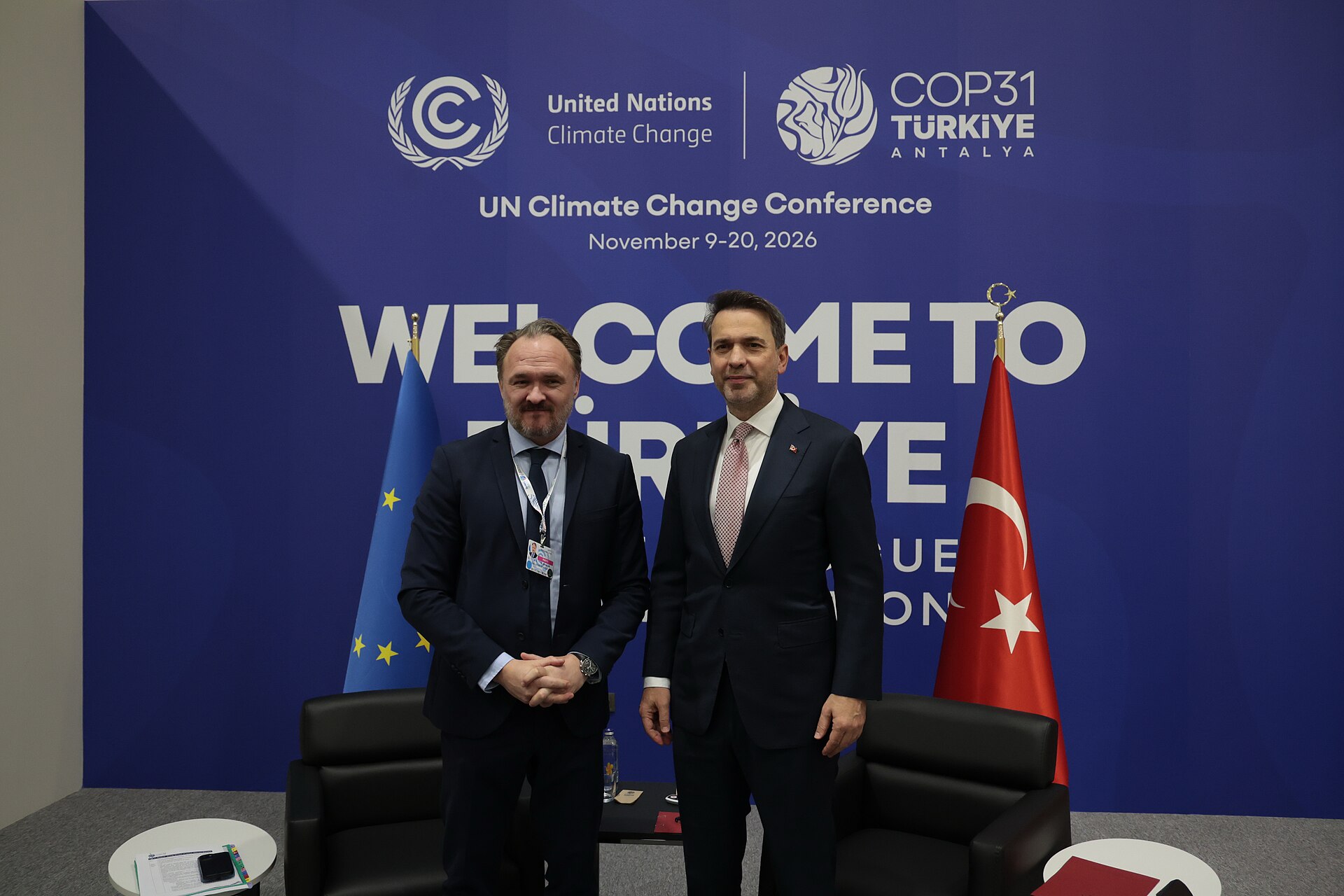
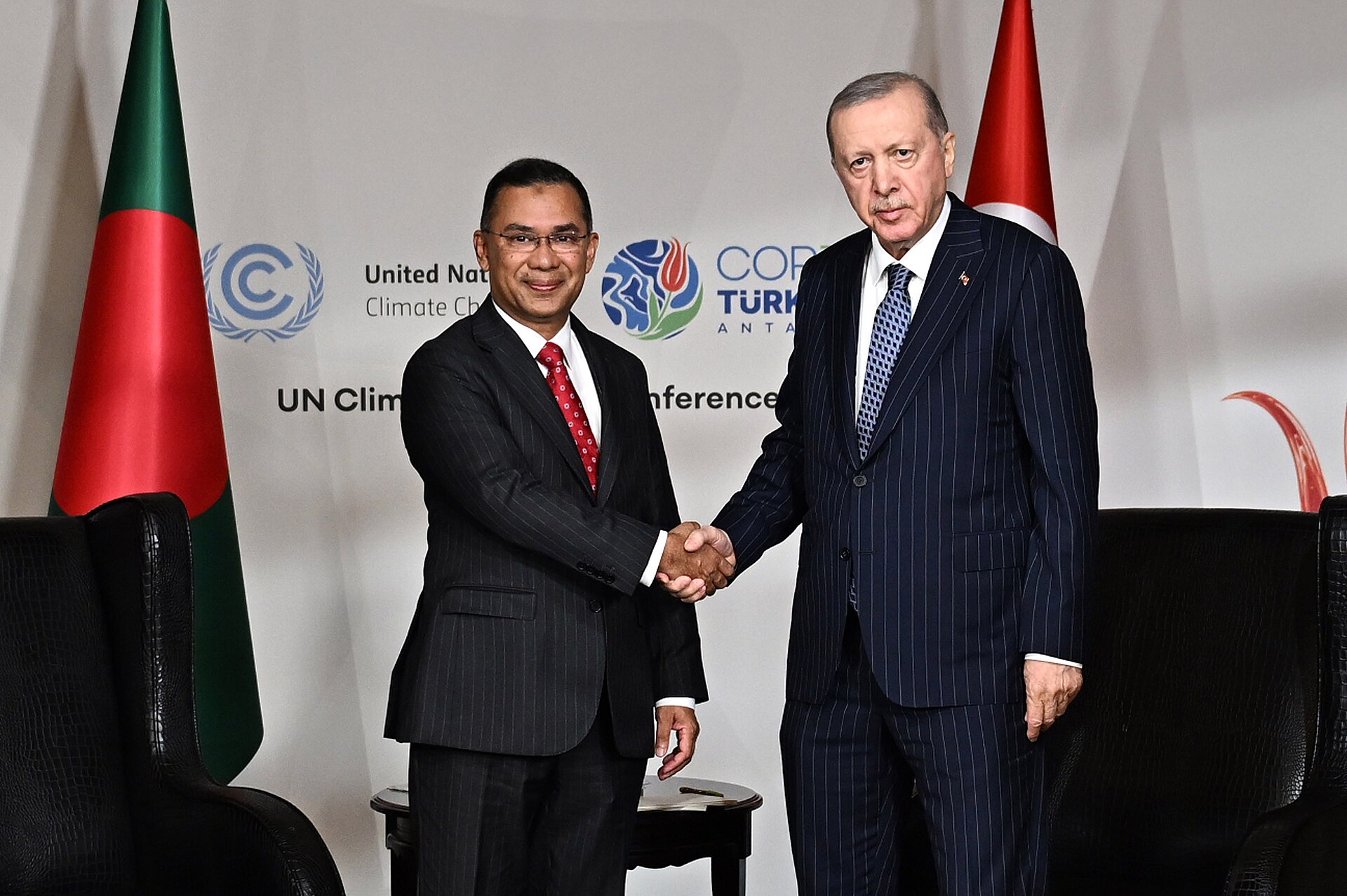
ANTALYA — Saudi Energy Minister Prince Abdulaziz bin Salman and Turkish Energy Minister Alparslan Bayraktar signed a memorandum of understanding on cooperation in electricity projects on the sidelines of COP31 in Antalya on November 10, the Qatar News Agency, Anadolu Agency and Asharq Al-Awsat reported. Turkish President Recep Tayyip Erdoğan attended the signing ceremony as a witness, according to QNA and Daily Sabah.
The MoU covers Phase 2 of a two-phase, 5,000-megawatt Saudi-funded renewable energy framework: 3,000 MW of wind power plants backed by high-voltage direct-current transmission infrastructure and battery energy storage systems, Anadolu Agency reported. ACWA Power, the Riyadh-headquartered developer 44 percent owned by the Public Investment Fund, will implement both phases. ACWA Power chairman Mohammad Abunayyan valued the full 5,000-MW framework at $4–5 billion when Phase 1 was signed in February 2026, he told Anadolu Agency.
The House of Saud Daily Briefing
Saudi Arabia's news in 3 minutes, every morning. Free. See today's issue
The signing delivered on a commitment Abunayyan made nine months earlier. “We are going to sign 3 gigawatts in renewable and storage by COP31,” he told Anadolu Agency in February 2026, at the Phase 1 project agreement for 2,000 MW of solar in Istanbul. Phase 1 covered solar power; Phase 2, signed at COP31, extends the framework to wind, battery storage and high-voltage transmission.
Table of Contents
What Did Saudi Arabia and Türkiye Sign at COP31?
Sources disagree on the characterisation of the November 10 document. QNA described it as a “Memorandum of Understanding on Cooperation in Electricity Projects.” Asharq Al-Awsat and Türkiye Today also used the term MoU. Anadolu Agency used “agreement” in its headline but “memorandum of understanding” in the article body. Arab News called it an “electricity cooperation agreement” in its headline; the article body was not accessible.
Bayraktar posted on social media that he had signed “a memorandum of understanding on electricity project cooperation with Saudi Energy Minister Abdulaziz bin Salman Al Saud,” Anadolu Agency reported, citing the minister’s post on November 10.
Erdoğan witnessed the ceremony but did not sign the document, QNA, Türkiye Today and Daily Sabah reported. COP31, the 31st Conference of the Parties to the UN Framework Convention on Climate Change, opened on November 9 at the Antalya EXPO Center in Antalya’s Aksu district and runs through November 20. Turkish Environment Minister Murat Kurum is serving as COP31 President, with the World Leaders’ Summit running November 11–12.
No direct quotes from Prince Abdulaziz bin Salman appeared in any of the primary sources covering the signing. The Saudi Press Agency communiqué was not accessible at the time of publication.
Phase 2: 3,000 MW of Wind and Storage
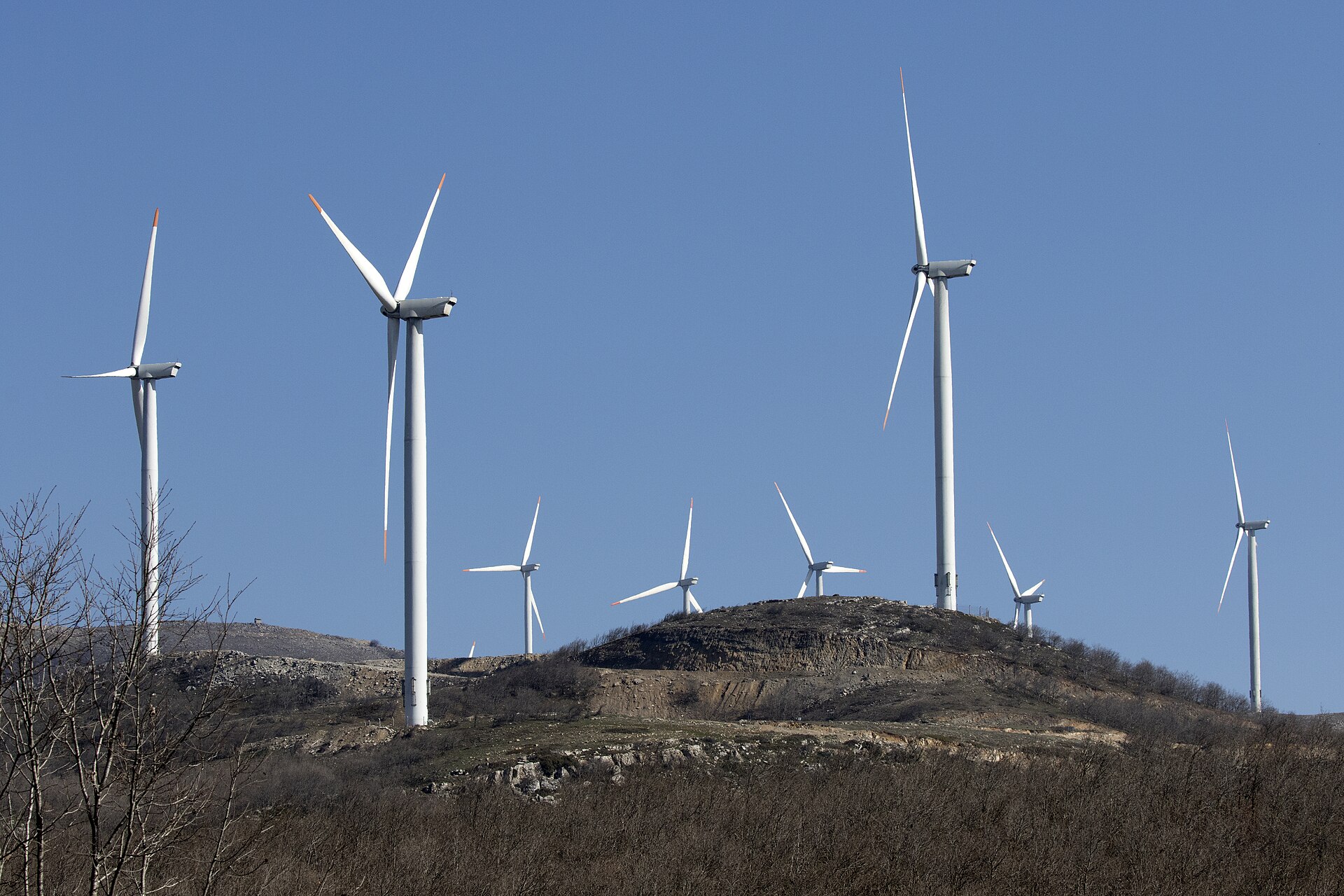
The MoU sets the terms for the second phase of the bilateral framework: 3,000 MW of wind power plants supported by HVDC transmission infrastructure and battery energy storage systems, Anadolu Agency’s energy desk and Daily Sabah reported on November 10 and 11 respectively.
HVDC lines carry electricity over long distances with lower energy losses than conventional alternating-current systems. Wind farms are typically sited where wind resources are strongest — in Turkey, that means the central Anatolian plateau and the Aegean coast — which can be hundreds of kilometres from the major consumption centres around Istanbul and Ankara. Pairing the wind plants with battery storage allows surplus generation during high-wind periods to be stored and dispatched when grid demand peaks.
Bayraktar said the MoU was signed to implement the additional 3,000 megawatts of capacity planned for the second phase, Anadolu Agency reported. He described the deal as “turning confidence in Türkiye’s energy transition and investment environment into concrete projects.”
“We are deepening our strategic energy cooperation with Saudi Arabia.”
— Alparslan Bayraktar, Turkish Energy Minister, via Daily Sabah, November 11, 2026
No source reporting on the November 10 MoU stated a dollar value for Phase 2 alone. The $4–5 billion figure cited by ACWA chairman Abunayyan in February 2026 covers the full 5,000-MW framework — both the 2,000-MW solar phase and the 3,000-MW wind phase — according to his interview with Anadolu Agency on February 22. The locations for Phase 2 wind farms were not specified in any source for the November 10 signing.
How Does the November MoU Build on the February Framework?
The bilateral energy relationship took shape in three stages. On February 3, during Erdoğan’s visit to Riyadh, the two governments agreed an intergovernmental framework covering 5,000 MW of renewable capacity to be built in Turkey by ACWA Power, France 24 reported on February 20.
On approximately February 20, ACWA Power and Turkey’s Ministry of Energy and Natural Resources signed the Phase 1 project-level agreement in Istanbul, covering 2,000 MW of solar plants at two locations: Sivas in central Turkey and the Taşeli plateau in Karaman province in the south, Anadolu Agency reported on February 22. Turkey’s investment portal invest.gov.tr confirmed the signing.
Abunayyan, speaking at the Phase 1 ceremony, said the framework would be structured through project finance with financial close targeted for 2027, according to Anadolu Agency. First electricity from Phase 1 was expected in early 2028, with full 2,000-MW solar output during that year, he said.
The underlying intergovernmental agreement entered into force on October 21, 2026, QNA and Anadolu Agency confirmed. Bayraktar said Phase 1 preparations were at an advanced stage at the COP31 signing, Daily Sabah reported on November 11. No specific construction milestone for the solar plants appeared in the sources covering the November 10 event.
ACWA Power and Saudi Capital Abroad
QNA and Asharq Al-Awsat described ACWA Power as the “Saudi-designated investor” for both phases of the framework. The company, headquartered in Riyadh, is 44 percent owned by the Public Investment Fund — its largest single shareholder and the sovereign wealth vehicle at the centre of Saudi Arabia’s Vision 2030 economic programme.
The Turkey framework is a deployment of Saudi capital abroad, not an addition to the kingdom’s domestic grid. Saudi Arabia has set a target of approximately 130 GW of renewable energy capacity by 2030, with renewables supplying about half its electricity. Grid-connected renewable capacity in the kingdom stood at approximately 12.3 GW as of 2025, according to GlobalData — a gap that analysts at GlobalData and AGBI assessed the kingdom was on course to fall short of closing by the 2030 deadline.
The kingdom planned to award approximately 14 GW of new renewable energy projects domestically in 2026 through its National Renewable Energy Program, according to GlobalData. Separately, Prince Abdulaziz and US Energy Secretary Chris Wright signed a US-Saudi civil nuclear agreement and bilateral safeguards agreement on July 22, according to Spectrum News — a distinct track of Saudi energy diplomacy focused on domestic nuclear capacity rather than overseas renewables.
Türkiye and Saudi Arabia “are not only giving promises or talks, they are implementing,” Abunayyan said at the February signing, according to Anadolu Agency.
Prince Abdulaziz bin Salman has been active on multiple energy fronts in recent weeks. He addressed Saudi energy infrastructure, including the East-West pipeline, at a US-Saudi Business Council session earlier in November. The kingdom’s industrial production rose 15.6 percent year-on-year in September, driven by mining, according to GASTAT.
On the oil side, Saudi Arabia told OPEC that its output surged 26 percent to 10.563 million barrels per day in October, while Aramco cut its November Arab Light official selling price to Asia by $3 to a six-year low.

Energy and Defence on Parallel Tracks
Bayraktar stated at the COP31 signing that Turkey has a target of 175 GW of wind and solar capacity by 2040, up from approximately 44–45 GW of installed capacity currently, Daily Sabah reported on November 11. The Saudi-funded 5,000-MW framework — solar and wind across two phases, with ACWA Power building both — will contribute to that target.
The COP31 energy signing came five days after Turkey’s parliament ratified the Makkah Joint Defense Agreement on November 5, voting 279–119, Anadolu Agency reported. Saudi Arabia, Turkey and Pakistan signed the defence pact on August 7 in Makkah, according to Kuwait Times.
The military chiefs of Saudi Arabia, Pakistan and Türkiye held a joint meeting under the Makkah agreement in Riyadh on September 26, Gulf News reported. The pact’s joint committee authorised the deployment of Pakistani and Turkish forces to Saudi Arabia on October 6, according to Al Jazeera. Saudi Arabia, Egypt, Pakistan and Turkey issued a joint condemnation of Houthi attacks on October 11, Anadolu Agency and Arab News reported.
The 5,000-MW intergovernmental framework entered into force on October 21, QNA reported, between the deployment authorisation and the parliamentary ratification of the defence pact.
Frequently Asked Questions
Where will the Phase 2 wind farms be built?
No locations were announced at the November 10 signing. Site selection typically follows an MoU and depends on wind resource assessments, land availability, environmental permits and proximity to grid connection points. Phase 1’s solar plants are designated for Sivas and Karaman’s Taşeli region — both inland sites in central and southern Turkey — suggesting ACWA Power is working across multiple provinces rather than concentrating capacity in one area. Phase 2 site announcements may accompany the project-level agreement or financial close that Abunayyan targeted for 2027.
Is a memorandum of understanding legally binding?
An MoU typically sets out the intent and framework for cooperation without creating enforceable legal obligations on its own. Binding commitments — construction timelines, power purchase agreements, tariff structures, grid-connection terms — usually follow in project-level contracts. The Phase 1 solar track moved from the February 2026 intergovernmental framework to a separate ACWA Power–Turkey ministry project agreement within approximately two weeks, suggesting Phase 2 may follow a similar path toward a binding contract. Once financial close is achieved — targeted by Abunayyan for 2027 — the project-level contracts, power purchase agreements and construction commitments would carry enforceable legal force.
When could Phase 2 wind farms start producing electricity?
No operational timeline for Phase 2 was stated in any source covering the November 10 signing. For Phase 1 solar, ACWA chairman Abunayyan targeted first electricity for early 2028 and full 2,000-MW output during that year. Large-scale wind farms with HVDC transmission generally take several years from financial close to commercial operation, covering detailed engineering, turbine and equipment procurement, construction and grid commissioning. If the 2027 financial close target holds for both phases, Phase 2 output would follow Phase 1 by some margin, though no confirmed schedule exists.
How will the 5,000 MW framework be financed?
ACWA Power chairman Abunayyan said in February 2026 that the projects would be structured as project finance, with financial close targeted for 2027, according to Anadolu Agency. Project finance typically combines equity from the developer with debt from commercial lenders, underpinned by long-term power purchase agreements with the host country’s electricity utility or grid operator. The specific financing terms — debt-to-equity ratios, the identity of lending institutions, and the tariff structure — have not been disclosed in any source covering the framework.
The House of Saud Daily Briefing
Saudi Arabia's news in 3 minutes, every morning. Free. See today's issue