RIYADH — Saudi Arabia ranked 2nd globally for corporate AI cybersecurity awareness and 4th for national AI strategy implementation in the IMD World Digital and AI Ranking 2026, according to results reported by the Saudi Press Agency and Saudi Gazette on November 12. The ranking assessed 70 countries across indicators spanning artificial intelligence adoption, digital skills and public access to emerging technologies.
The November release is the latest in a year of assessments from five distinct institutions — IMD, the International Telecommunication Union, Stanford University’s Human-Centered AI institute, Bloomberg and the publishers of the Global AI Index — that together constitute Saudi Arabia’s most comprehensive digital competitiveness record to date. Each used different methodologies and measured different dimensions of digital readiness, making precise attribution essential: these are not five versions of the same test.
The House of Saud Daily Briefing
Saudi Arabia's news in 3 minutes, every morning. Free. See today's issue

Table of Contents
- What Did Saudi Arabia Achieve in the IMD World Digital and AI Ranking 2026?
- IMD World Competitiveness Yearbook 2026 and the Cybersecurity Record
- How Does Saudi Arabia Rank in ITU Global Indices?
- What Do Stanford HAI and Bloomberg Say About Saudi AI and Data Centers?
- What the Rankings Measure and What They Do Not
- Vision 2030 and the Year of Artificial Intelligence
- Frequently Asked Questions
The table below summarises the key results across all five institutions. Each row identifies the specific product, its publisher and Saudi Arabia’s result — distinctions that the body of this article maintains throughout.
| Index | Publisher | Saudi Arabia’s Key Result |
|---|---|---|
| IMD World Digital and AI Ranking 2026 | IMD (Lausanne) | 2nd (AI cybersecurity awareness); 4th (AI strategy, corporate adoption); 7th (AI skills, bias mitigation) |
| IMD World Competitiveness Yearbook 2026 | IMD (Lausanne) | 13th of 70 countries; 3rd among G20; 1st in cybersecurity sub-index (3rd consecutive year) |
| ITU Digital Readiness Index | ITU | 1st globally (94 out of 100) |
| ITU ICT Development Index 2026 | ITU | 1st globally (159 countries) |
| Data center market attractiveness | Bloomberg analysis (cited by MCIT) | 2nd globally |
| Stanford HAI 2026 AI Index | Stanford University | 1st (AI security/privacy inventor share: 15%); 1st (women in AI); 3rd (AI talent share) |
| Global AI Index | Separate body | 14th globally; 1st in Arab world |
What Did Saudi Arabia Achieve in the IMD World Digital and AI Ranking 2026?
The IMD World Digital and AI Ranking 2026, released in November, evaluated 70 countries on their capacity to adopt and deploy artificial intelligence and digital technologies. Saudi Arabia’s strongest result was 2nd globally for companies’ awareness of AI-related cybersecurity risks and their protection of sensitive data in corporate AI systems, Economy Middle East and the Saudi Press Agency reported via the Saudi Gazette.
The kingdom placed 4th globally in three further categories: national AI strategy implementation, corporate AI adoption and public access to AI technologies, the Saudi Gazette reported. At 7th place, it appeared in indicators for AI skills development — the capacity of the workforce and educational institutions to acquire AI competencies — cities’ use of AI to improve public services, and corporate efforts to address bias in AI algorithms.
The bias-mitigation indicator is notable as a governance metric. It assesses whether companies are actively working to prevent AI systems from perpetuating or amplifying discrimination, an area where regulatory frameworks in most countries remain incomplete. Saudi Arabia’s 7th-place ranking suggests that corporate governance practices, at least as reported to IMD’s survey, are running ahead of the global median.
The results mark a substantial advance from the prior year. In the 2025 edition of IMD’s digital ranking — then titled the World Digital Competitiveness Ranking before being renamed to include AI — Saudi Arabia ranked outside the top 20.
IMD World Competitiveness Yearbook 2026 and the Cybersecurity Record
The IMD World Digital and AI Ranking is a distinct product from the IMD World Competitiveness Yearbook, which IMD publishes annually as a broader assessment of national economic performance, government efficiency and infrastructure. In the June 2026 edition of the Yearbook, Saudi Arabia climbed four places to 13th among 70 countries, up from 17th the previous year, and ranked 3rd among G20 economies, the Saudi Gazette reported.
Within the Yearbook’s cybersecurity sub-index, Saudi Arabia held 1st place globally for the third consecutive year. The National Cybersecurity Authority announced the result on June 18, 2026, crediting “the unwavering support and guidance” of King Salman and Crown Prince Mohammed bin Salman and naming the Saudi Information Technology Company as its technical partner.
“For the third year in a row, Saudi Arabia continues to rank first globally in the Cybersecurity Index of the IMD World Competitiveness Yearbook 2026,” the NCA said on its verified X account. The International Telecommunication Union separately classifies Saudi Arabia as Tier 1 “Role-modelling” in its Global Cybersecurity Index 2026, according to Telecom Review Middle East — a parallel assessment from a UN agency that reinforces the IMD finding.
The cybersecurity results carry particular weight in a year when cyber threats targeting Gulf states have intensified alongside the broader regional security environment. The NCA’s three-year record atop IMD’s cybersecurity sub-index now overlaps with a period in which Saudi Arabia’s digital infrastructure has faced sustained operational pressure.
How Does Saudi Arabia Rank in ITU Global Indices?
Two separate products from the International Telecommunication Union placed Saudi Arabia at the top of their respective rankings in 2026. In the ITU Digital Readiness Index, the kingdom ranked 1st globally with a score of 94 out of 100, climbing from 4th place in the previous edition. The index evaluates 117 indicators across nine pillars, according to WorldEF, which reported the result on April 15, 2026.
In the ITU ICT Development Index 2026, a separate product measuring information and communication technology infrastructure and usage, Saudi Arabia also ranked 1st globally among 159 countries, Asharq Al-Awsat reported on August 15, 2026. The 159-country sample makes it the widest field in which the kingdom holds a top position.
The two ITU products measure different dimensions. The Digital Readiness Index assesses a country’s institutional and regulatory capacity to benefit from digital transformation. The ICT Development Index focuses on underlying infrastructure — broadband penetration, mobile connectivity, internet access — and how effectively populations use it. First-place finishes in both indicate that Saudi Arabia’s digital infrastructure and its institutional readiness to deploy that infrastructure are advancing together rather than one outpacing the other.
These results feed into a wider economic picture in which Saudi industrial output rose 15.6% in September and the government’s 2027 tariff reforms signal a push to modernise regulated sectors alongside digital benchmarks. Digital readiness scores matter less if the non-digital economy cannot absorb the productivity gains they are supposed to enable.
What Do Stanford HAI and Bloomberg Say About Saudi AI and Data Centers?
Stanford University’s Human-Centered AI institute published its 2026 AI Index in April, placing Saudi Arabia 1st globally for the share of its AI inventors working in security, privacy and cryptography — 15% of the kingdom’s AI inventor base, compared with 13% in India and 12% in the UAE. This is a specialisation metric: it measures the concentration of AI research talent in security-adjacent fields, not a comprehensive assessment of national AI security policy or legal frameworks. The Saudi Press Agency reported the result on April 14, 2026.
The same Stanford index ranked Saudi Arabia 1st globally for women’s empowerment in AI. Women’s participation in the Saudi technology sector rose from 7% to 35%, according to Asharq Al-Awsat. Saudi Arabia’s AI talent share growth exceeded 100% between 2019 and 2025 — the fastest globally alongside the UAE and India — and the kingdom ranked 3rd globally for overall AI talent share and 4th for attracting international AI talent, the Stanford HAI report found.
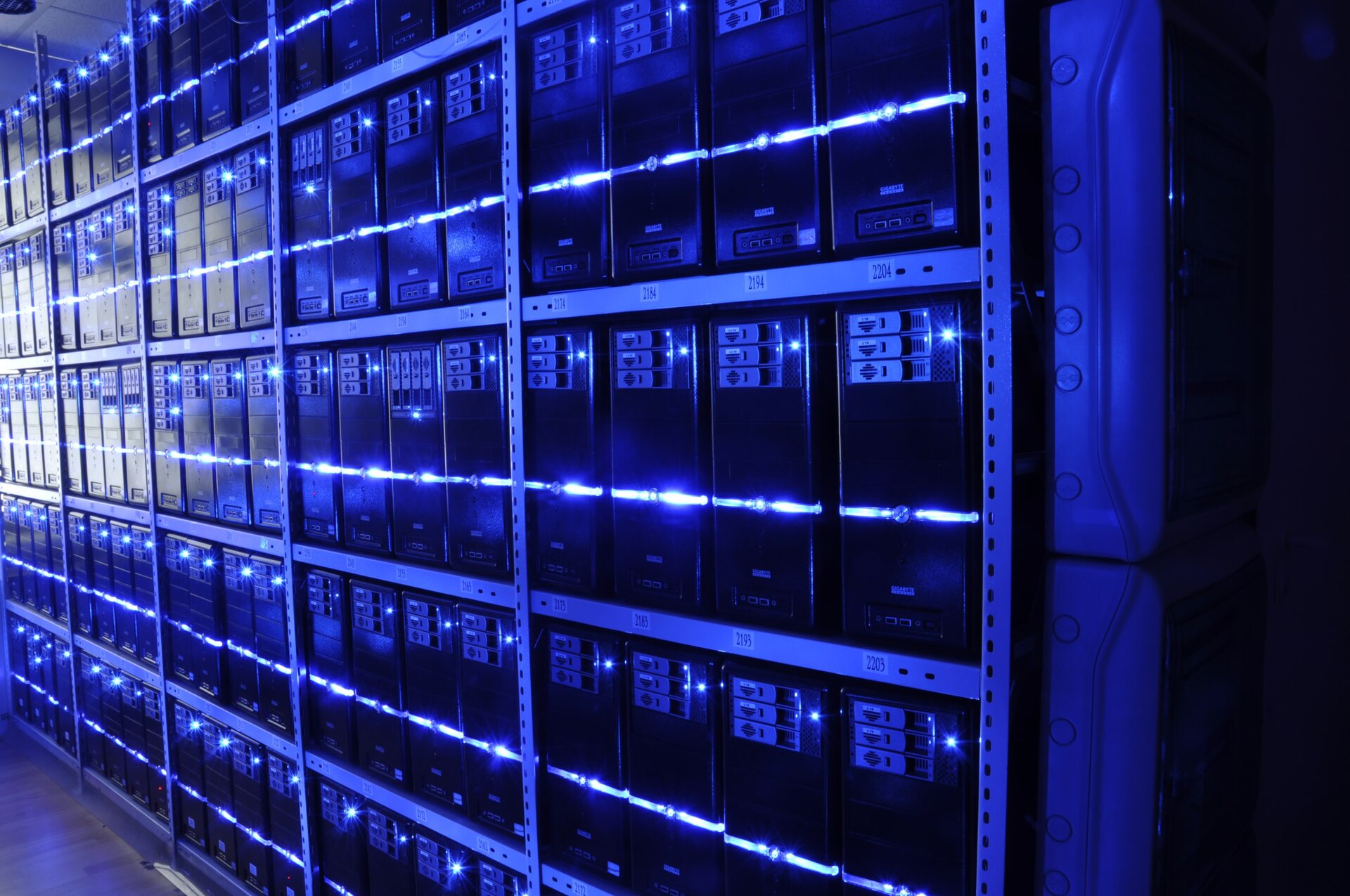
Separately, a Bloomberg analysis cited by the Ministry of Communications and Information Technology on May 5, 2026, placed Saudi Arabia 2nd globally in data center market attractiveness, behind only the United States. The Bloomberg finding is a market-attractiveness assessment — a forward-looking measure of where investors are most likely to build capacity — not a ranking of operational performance. Saudi operational data center capacity grew from 68 megawatts in 2021 to 467 megawatts in the first quarter of 2026, the MCIT statement said.
“This reflects the Kingdom’s growing position in the data center sector” and positions Saudi Arabia “among the most capable markets for attracting high-quality sector investment,” said Eng. Bassam Al-Bassam, head of MCIT’s Artificial Intelligence Enablement Office.
In the Global AI Index, a product published by a body separate from both Stanford and IMD, Saudi Arabia ranked 14th globally and 1st in the Arab world, Asharq Al-Awsat reported. The World Bank in 2026 placed Saudi Arabia among the top 10 countries globally for private AI investment, the Saudi Press Agency reported in August.
What the Rankings Measure and What They Do Not
The five institutions that assessed Saudi Arabia in 2026 used different methodologies, and the differences affect what the results can and cannot tell us. IMD’s World Competitiveness Yearbook and its World Digital and AI Ranking both rely partly on an executive perception survey conducted between February and April each year. Survey-based items carry roughly one-third of the total score, meaning that a country’s ranking reflects not only hard data but also how favourably its business environment is perceived by senior executives.
Stanford HAI’s metrics are narrower than they may appear at first reading. The kingdom’s 1st-place result in AI security, privacy and cryptography reflects the share of its AI inventors working in those subfields — a concentration metric. A country with a small but focused inventor base in one discipline can outrank a larger research community that spreads its talent across multiple fields. This is genuinely valuable information, but it is not the same as saying Saudi Arabia has the world’s strongest AI security framework.
The Bloomberg data center finding measures market attractiveness — where capital is most likely to flow — rather than current operational throughput. The 467-megawatt capacity figure cited by MCIT quantifies what exists today. The attractiveness ranking tells investors where to build next.
None of these indices directly measures the economic value that AI adoption has generated. The gap between ranking highly in adoption indices and generating measurable productivity gains or revenue from AI deployment remains a recognised challenge across the Gulf, one that adoption-focused rankings are not designed to capture. Saudi Arabia’s strong showing across multiple benchmarks is notable, but the harder question — whether digital spending is generating returns proportional to its scale — sits outside the scope of what these products measure. The kingdom’s broader investment targets face their own scrutiny on that front.
Vision 2030 and the Year of Artificial Intelligence
Saudi Arabia declared 2026 the Year of Artificial Intelligence in March, with the Saudi Data and AI Authority coordinating the national programme. The designation reflects the government’s position that AI will become a primary driver of economic diversification under Vision 2030, which the government estimates would see AI contributing more than SAR 74 billion — roughly $19.7 billion — to the national economy by 2030, according to SDAIA estimates.
The kingdom secured an estimated $9.1 billion in AI sector funding through approximately 70 investment deals in 2025, according to analyst estimates, underpinning the infrastructure on which the ranking results now rest. HUMAIN, the AI compute platform backed by Saudi sovereign investment, became available during the LEAP 2026 technology conference. Microsoft’s Azure public cloud region in Saudi Arabia is reportedly set to go live in the fourth quarter of 2026. These deployments address a structural constraint: until recently, Saudi organisations seeking large-scale AI compute had to provision capacity from hyperscaler regions outside the kingdom.
The Gulf’s data infrastructure has traditionally concentrated in the UAE and Bahrain. Saudi Arabia’s emergence as a data center and AI compute hub shifts that geography, though the test will be whether the kingdom can sustain the pace of investment while the regional security environment raises the cost of operating in the Gulf.
The Saudi Press Agency credited SDAIA with driving the kingdom’s rise in the IMD World Competitiveness Yearbook 2026. Neither SDAIA nor MCIT issued individually named official statements accessible through public channels in connection with the November IMD release. The rankings themselves, however, now constitute the most externally validated record of Saudi digital progress in any single year since Vision 2030 was announced in 2016.
Frequently Asked Questions
What is the difference between the IMD World Digital and AI Ranking and the IMD World Competitiveness Yearbook?
The IMD World Digital and AI Ranking focuses specifically on digital transformation, AI adoption, cybersecurity awareness and technology skills across 70 countries. The IMD World Competitiveness Yearbook is a broader annual assessment covering economic performance, government efficiency, business efficiency and physical infrastructure. The digital ranking was previously called the World Digital Competitiveness Ranking and was renamed for its 2026 edition to reflect the growing weight of AI-specific indicators in how countries compete for investment and talent.
What is SITE and what role does it play in Saudi cybersecurity rankings?
SITE, the Saudi Information Technology Company, is the technical partner cited by the National Cybersecurity Authority in its June 2026 announcement of Saudi Arabia’s 1st-place global cybersecurity ranking. SITE supports the NCA’s implementation of national cybersecurity standards and technical controls across government and critical-infrastructure entities. The NCA specifically named SITE as a contributor to the kingdom’s three consecutive years atop IMD’s cybersecurity sub-index.
Did Saudi Arabia’s ITU rankings improve from the previous year?
Saudi Arabia climbed from 4th to 1st globally in the ITU Digital Readiness Index, gaining three positions. The ITU ICT Development Index 2026 placed it 1st among 159 countries — the widest country sample of any index in which the kingdom holds the top position. Both products are published by the International Telecommunication Union, a United Nations specialised agency headquartered in Geneva that sets global standards for information and communication technologies.
How does the Global AI Index differ from the Stanford HAI AI Index?
The Global AI Index and the Stanford HAI AI Index are published by different institutions with different methodologies. The Global AI Index produces a single composite country ranking — Saudi Arabia placed 14th globally and 1st in the Arab world. The Stanford HAI AI Index, published annually by Stanford University’s Human-Centered AI institute, is a research report that tracks AI trends across talent, research, investment and policy. It does not generate a single composite country score; Saudi Arabia’s 1st-place results in the Stanford index apply to specific subfield metrics such as inventor concentration and women’s participation, not to an overall country ranking.
The House of Saud Daily Briefing
Saudi Arabia's news in 3 minutes, every morning. Free. See today's issue