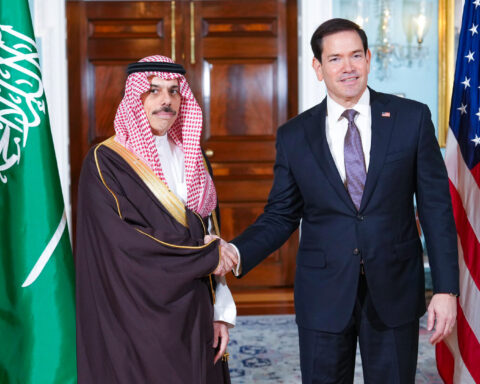
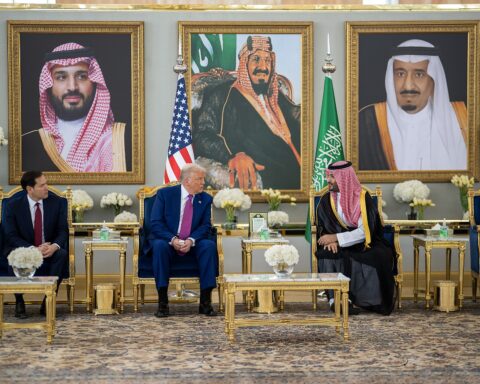
RIYADH — Saudi Arabia holds a seat on the IAEA Board of Governors that opened its June 8–12 session with Director General Rafael Grossi confirming ninety-seven days of zero inspector access to any Iranian nuclear facility. The US-drafted censure resolution before the Board demands exactly what Riyadh’s own nuclear agreement with Washington does not require: enrichment transparency, full inspector access, and Additional Protocol compliance. The Section 123 civil nuclear cooperation agreement Saudi Arabia signed on May 13 — alongside a $142 billion defence package — omits all three conditions that defined the 2009 US-UAE “gold standard.” A yes vote endorses safeguards the kingdom negotiated away for itself. An abstention, five days after Grossi personally briefed FM Faisal bin Farhan in Riyadh, reverses the public “welcome” Saudi Arabia extended to the November 2025 censure. The Board is deliberating on a nuclear programme whose last verified inventory — 440.9 kilograms of uranium enriched to 60%, recorded in GOV/2026/8 — is now three months stale. Grossi’s June 8 Board statement confirmed the full scope of that accounting gap for the first time.
Table of Contents
- What Is the IAEA Board Voting On?
- Why Saudi Arabia’s Board Seat Became a Liability
- What Did the Section 123 Agreement Omit?
- Does a Yes Vote Validate or Expose the Bargain?
- The UAE Enrichment Precedent
- What Did Grossi Discuss in Riyadh Five Days Before the Vote?
- How Does Tehran Read the Board’s Decision?
- Frequently Asked Questions
What Is the IAEA Board Voting On?
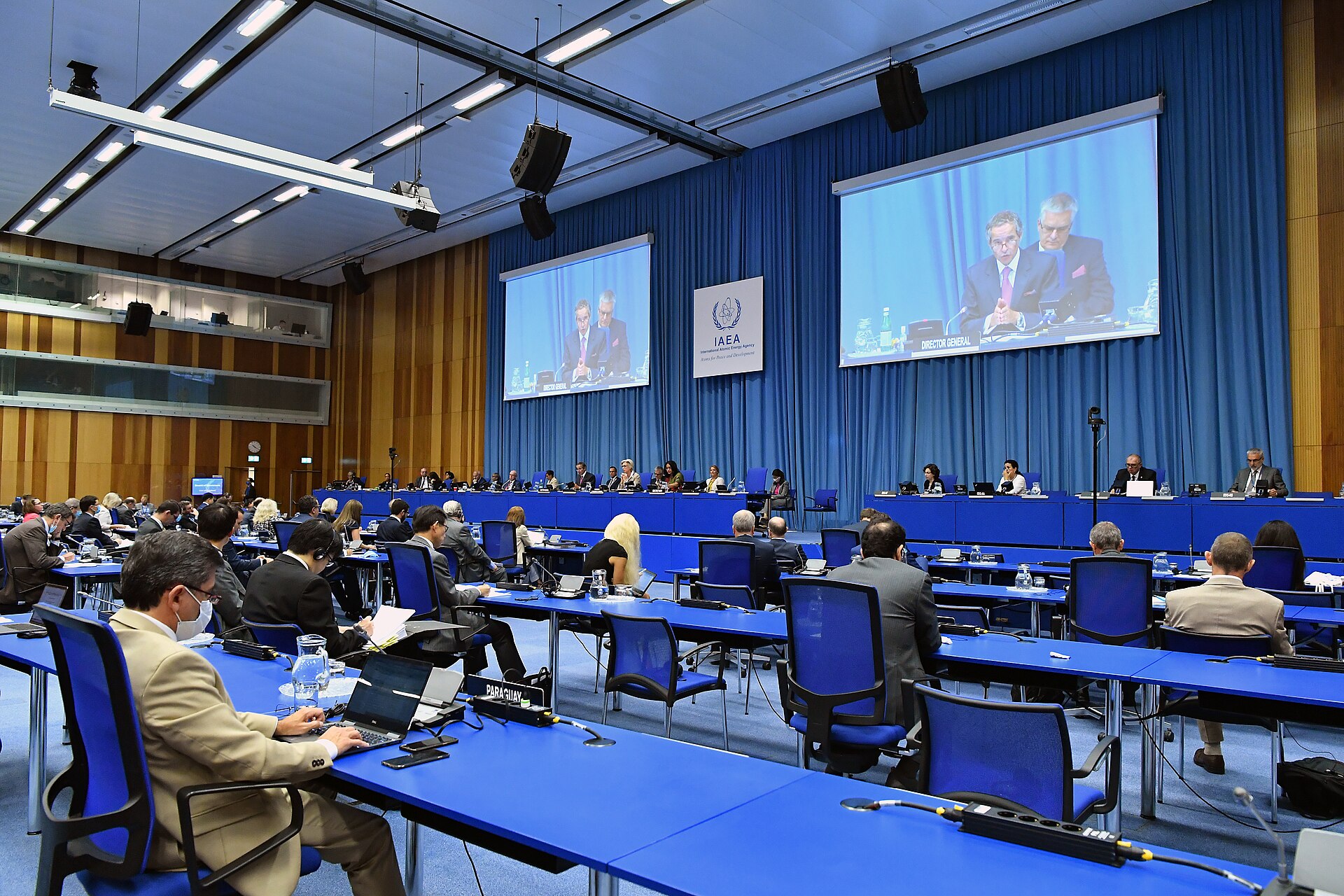
The 35-member Board of Governors is considering a US-drafted resolution to censure Iran for denying all inspector access to its declared nuclear facilities since February 28, 2026. The draft was circulated on June 5 — the same day Grossi told reporters that Iran and the United States appeared “pretty close” to a nuclear framework agreement.
The contradiction was immediate. Washington was circulating a punitive resolution against Tehran’s nuclear programme while its own envoys were reportedly narrowing the terms of a deal. GOV/2026/8, the most recent safeguards report, recorded 8,599.6 kilograms of lower-enriched uranium alongside the sixty-percent-enriched stockpile described in the February 27 snapshot. The Board is voting on a stockpile it can describe but cannot measure.
The resolution demands that Iran restore full inspector access immediately and provide a complete accounting of all nuclear material and activities during the monitoring gap. It calls on the Director General to report back within ninety days. Verifying what happened to nuclear material during three months of unsupervised custody would require extensive environmental sampling and physical inventory measurements that Iran has given no indication it would permit.
Grossi has been direct about the consequences. The IAEA’s ability to provide assurances about the peaceful nature of Iran’s programme, he told Foreign Policy in February, has been “fundamentally compromised.” The Bulletin of the Atomic Scientists described the broader dynamic in April: the United States and its partners were “taking a sledgehammer to the nuclear nonproliferation regime.” The target, the Bulletin argued, was not only Iran’s access denial but the erosion of the safeguards system from several directions at once.
The November 2025 Board vote on Iran passed 20–2, with Russia and China opposing and twelve members abstaining. That resolution triggered Iran’s formal termination of the Cairo Understanding, the last inspection access arrangement Grossi had personally brokered during a visit to Tehran. The pattern is consistent: each Board censure since 2022 has prompted Iran to rescind a monitoring concession. The Washington Institute for Near East Policy assessed the current draft directly: “How Tehran responds to the new IAEA censure is guesswork, but a response of some sort is almost certain.”
The Middle East briefing 3,000+ readers start their day with.
One email. Every weekday morning. Free.
Why Saudi Arabia’s Board Seat Became a Liability
Saudi Arabia was elected to the Board at the 69th General Conference in September 2025, for a term running through 2027. The seat was a routine diplomatic appointment — Riyadh had served in 2007–2008, 2011–2013, and 2022–2024 — and carried no special complications at the time. What changed was what Riyadh signed eight months later.
When the November 2025 resolution passed, Saudi Arabia publicly “welcomed” the Board’s decision, according to Asharq Al-Awsat. That statement was issued before the Section 123 agreement existed. Before Prince Abdulaziz bin Salman told Al Jazeera in January 2025 that the kingdom possessed approximately 90,000 tonnes of uranium in the Arabian Shield and intended to enrich it. Before the May 13 signing ceremony bundled nuclear cooperation and the defence package into a single diplomatic event, making the link between Saudi Arabia’s security architecture and its nuclear ambitions impossible to separate.
The November 2025 “welcome” carried strategic weight beyond the Board room. Saudi Arabia chose to associate itself publicly with the enforcement action while actively seeking the Section 123 agreement — a period when Congressional sceptics were evaluating whether Riyadh deserved nuclear cooperation the UAE had earned by accepting stricter conditions. The statement helped establish the kingdom’s nonproliferation credentials in Washington. Six months later, with the agreement signed and Congressional review under S.4243 pending, the same Board seat requires a vote that twelve members of Congress have already framed as a contradiction.
The Board vote arrives at Day 100 of the Iran-Gulf war. Israeli strikes hit targets in Tehran, Isfahan, Tabriz, Karaj, and Kermanshah on June 8 — the same day the Board session opened — in an escalation that collapsed what remained of the US-Iran negotiating track. FM Faisal bin Farhan has had no confirmed contact with Secretary Rubio or FM Araghchi in recent weeks. The kingdom’s MOFA has issued no public statement on any subject for over ten days.
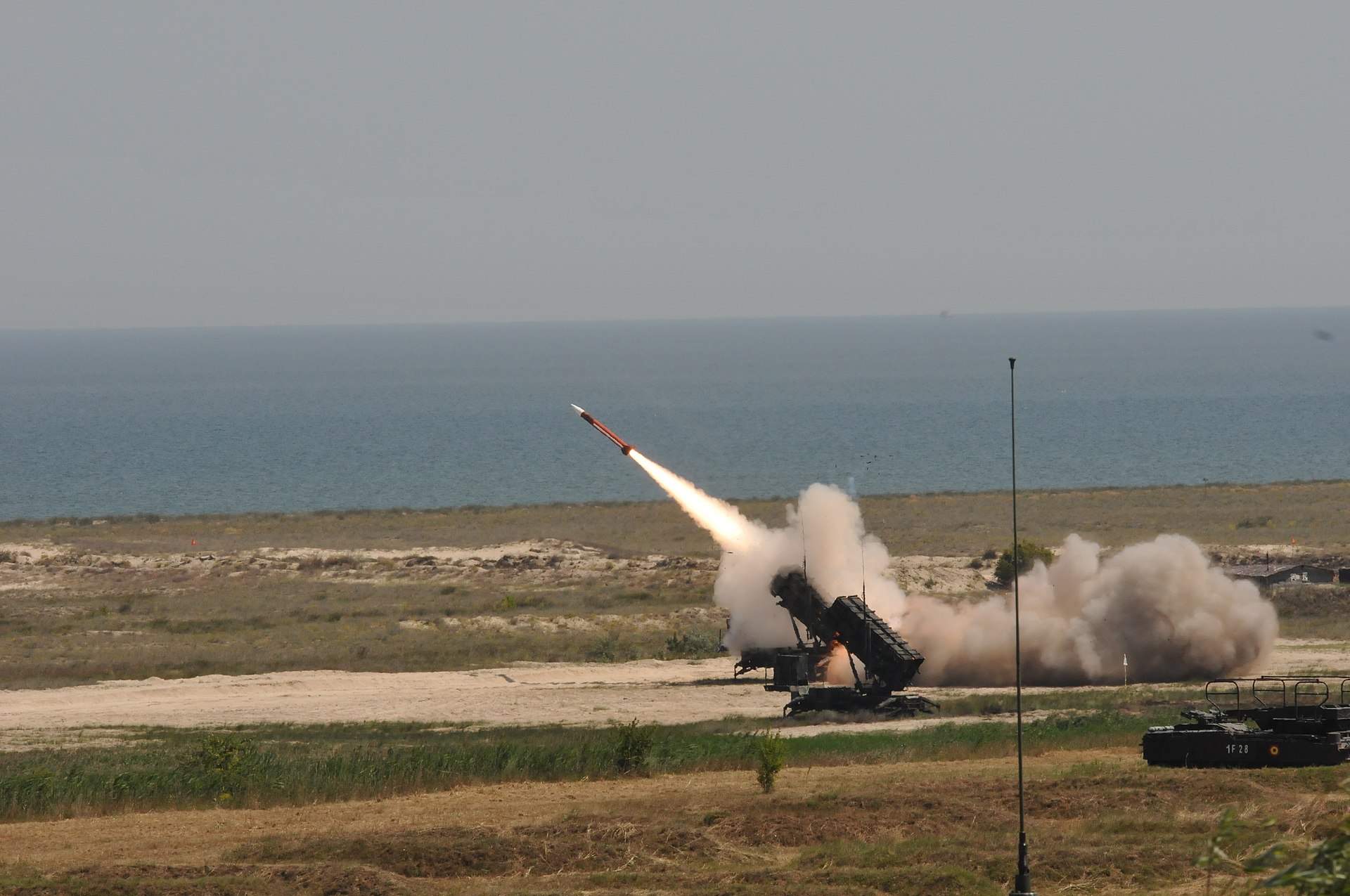
The convergence is specific. Saudi Arabia’s PAC-3 Patriot interceptor reserves have fallen to roughly 80–150 rounds — approximately fourteen percent of pre-war stocks — and the GCC’s air defence belt is approaching depletion. The defence package signed alongside the Section 123 agreement has produced no material Patriot resupply. Riyadh’s defence dependence on Washington, its nuclear dependence on Washington, and its diplomatic silence toward Tehran are all simultaneously visible at the Board table. The kingdom’s vote on a nonproliferation resolution will be cast by a delegation whose capital has said nothing publicly — about anything — in ten days.
What Did the Section 123 Agreement Omit?
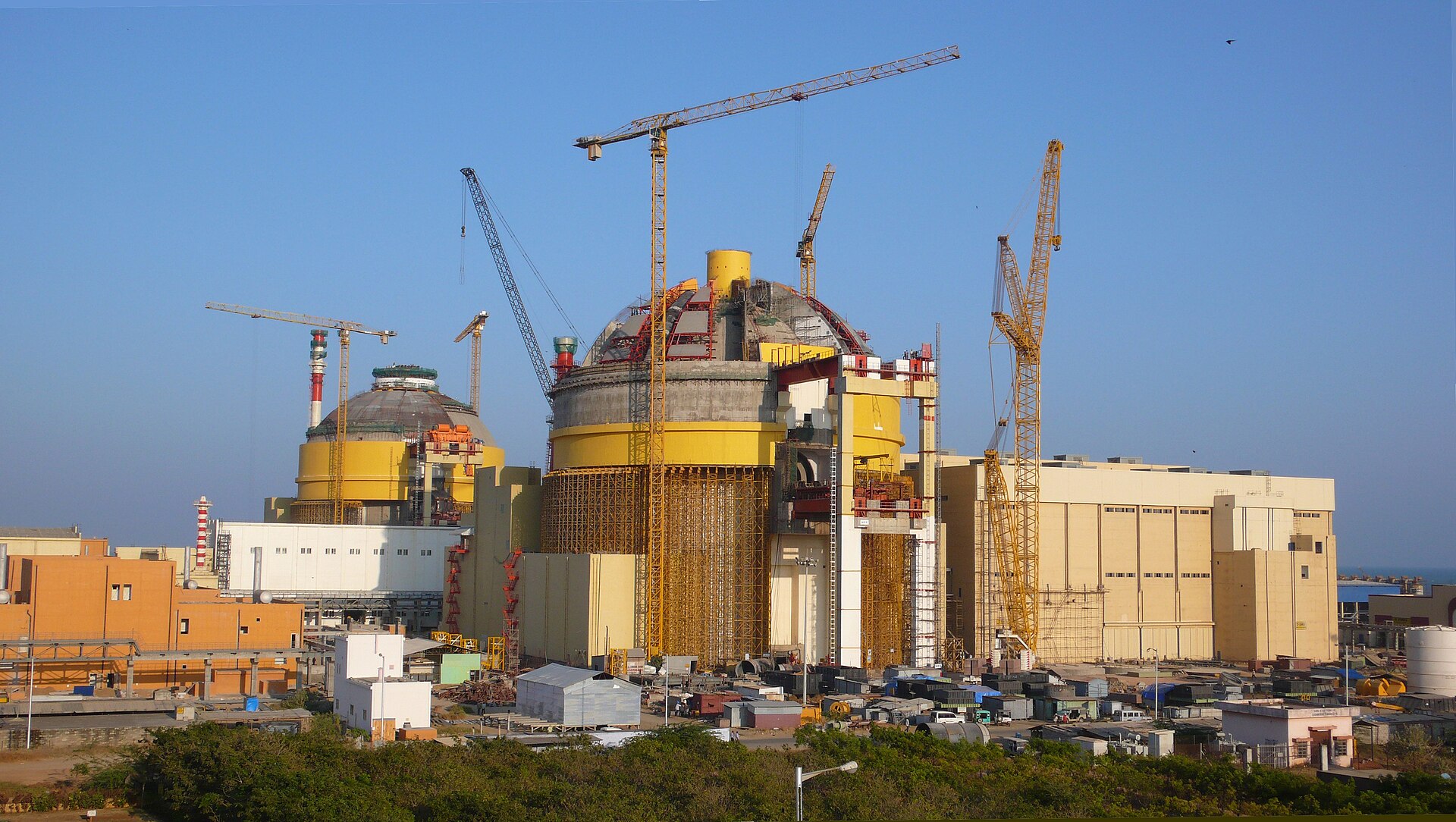
The US-Saudi Section 123 agreement omits three conditions that anchored the 2009 US-UAE “gold standard” for nuclear cooperation: an enrichment prohibition, a plutonium reprocessing prohibition, and a requirement to ratify the IAEA Additional Protocol. The agreement substitutes unspecified “additional safeguards,” leaving uranium enrichment as a permitted future activity under the deal.
The Joint Declaration underlying the agreement was first signed on November 18, 2025, by US Energy Secretary Chris Wright and Prince Abdulaziz bin Salman. Section 123 of the Atomic Energy Act lists nine statutory conditions for civil nuclear cooperation. An enrichment prohibition is not among them — it belongs to the category of additional conditions the executive branch may include at its discretion. The Obama administration added it for the UAE in 2009. The Trump administration chose not to add it for Saudi Arabia in 2026. The difference is a policy choice, not a legal constraint.
| Condition | UAE 2009 Agreement | Saudi 2026 Agreement |
|---|---|---|
| Enrichment prohibition | Yes — UAE forswore enrichment | No — enrichment permitted |
| Reprocessing prohibition | Yes — reprocessing banned | No — not prohibited |
| IAEA Additional Protocol | Ratification required | Not required |
| Safeguards language | “Gold standard” (voluntary conditions) | Unspecified “additional safeguards” |
| Reactor programme | 4 × APR-1400 at Barakah (operational) | 2 × 1,400 MWe PWR at Khor Duweihin (planned) |
Sharon Squassoni of George Washington University’s Elliott School, writing in Arms Control Today in June, called the result a “gilded sweetheart deal” that “abandons every nonproliferation standard Washington spent seventeen years building.” The assessment landed in a specific context: the United States was simultaneously circulating a Board resolution demanding from Iran the inspector access and enrichment transparency its own agreement with Saudi Arabia does not require.
“The administration is waging a reckless and illegal war with Iran over its uranium enrichment program while simultaneously enabling Saudi nuclear development.”
— Congressional letter signed by twelve members including Senators Markey and Merkley, 2026
Senator Edward Markey, who reintroduced the “No Nuclear Weapons for Saudi Arabia Act” (S.4243) on March 25, had accused the administration in February of “caving to Saudi demands” and “writing a recipe for nuclear disaster.” The bill would require affirmative Congressional approval before the agreement enters force. Under the Atomic Energy Act’s current default, 123 agreements take effect automatically unless Congress musters a disapproval resolution and survives a veto.
Prince Abdulaziz, for his part, has been explicit about Riyadh’s intentions. “We will enrich it and we will sell it and we will do a ‘yellowcake,’” he told Al Jazeera in January 2025, referring to the Arabian Shield reserves. The kingdom’s planned Khor Duweihin site — two 1,400 MWe pressurized water reactors on the coast between Qatar and the UAE — is designed for first concrete in the late 2020s and commercial operation in the early 2030s. No existing coverage of the Board session has connected the Section 123 agreement’s missing conditions to Saudi Arabia’s active Board seat and the timing of the censure vote. Arab News published the draft resolution text without analysing the 123 asymmetry. Asharq Al-Awsat covered the Grossi-Faisal meeting and the November 2025 “welcome” as separate stories. The collision of all three at the June 8–12 session is, as of the Board’s opening day, unexamined.
Does a Yes Vote Validate or Expose the Bargain?
A yes vote endorses the principle that enrichment transparency and full inspector access are Board-level requirements for any state’s nuclear programme. It ratifies the enforcement framework that the Section 123 agreement — which permits Saudi enrichment without requiring Additional Protocol ratification — quietly sidestepped. The vote will appear in the Board’s formal record as Saudi endorsement of standards the kingdom’s own agreement does not contain.
Riyadh would likely argue that the situations differ. Iran has a documented history of undeclared nuclear activities. Saudi Arabia’s programme has not begun. The censure addresses noncompliance with existing safeguards obligations, not the terms of a bilateral cooperation agreement. These distinctions are technically defensible and routinely made in bilateral diplomatic notes. They are harder to sustain in a multilateral forum where twelve states chose to abstain in November rather than engage with similar parsing.
An abstention carries different costs. Saudi Arabia “welcomed” the November 2025 resolution six months ago. Moving from welcome to silence — with the Section 123 agreement signed in the interval — would validate the selective-enforcement argument Iran has been assembling since the deal became public. The Arms Control Association’s verdict, published in Washington’s own nonproliferation journal, provides the framework for that argument without Tehran having to build it.
The twelve states that abstained in November included several maintaining commercial or diplomatic ties with Tehran. Saudi Arabia, by contrast, signed a nuclear cooperation agreement with the country that drafted the resolution, publicly welcomed the previous version, and is the subject of S.4243 — Congressional legislation questioning whether its nuclear ambitions are compatible with US nonproliferation obligations.
Voting no would place Saudi Arabia alongside Russia and China against its principal security guarantor on the specific issue the Section 123 agreement is meant to address. In November 2025, only Russia and China voted against the censure. No other Board member joined them.
The UAE Enrichment Precedent
The 2009 US-UAE agreement required Abu Dhabi to forswear enrichment and reprocessing and to ratify the Additional Protocol. The UAE accepted, built the Barakah nuclear plant — four APR-1400 reactors now generating power on the Gulf coast — and for seventeen years provided the template for civil nuclear cooperation in the region. The template assumed its terms would be standard.
If the Saudi agreement enters force without an enrichment prohibition, the UAE acquires a contractual basis to demand equivalent treatment, according to the Arms Control Association. The 2009 agreement contains a renegotiation clause triggered when a subsequent US nuclear deal with another Middle Eastern state offers more favourable terms. The clause was dormant for seventeen years. The May 13 signing activated it.
The renegotiation provision has never been invoked. The assumption held that any subsequent US nuclear deal in the Middle East would match or exceed the UAE’s conditions, making the clause a dead letter. The Saudi agreement reversed that assumption. Abu Dhabi has not publicly commented on the Section 123 deal, but the contractual mechanism does not require Abu Dhabi to initiate anything — the clause activates when a deal with more favourable terms is signed, regardless of whether the beneficiary state requests renegotiation.
The downstream consequences extend beyond bilateral contracts. The enrichment waiver anchoring Gulf nonproliferation policy — the principle that Gulf states accept enrichment restrictions in return for US cooperation — would lose its structural foundation if the state that declined those restrictions secured cooperation regardless. If the Saudi agreement enters force, the UAE becomes the only Gulf state whose nuclear cooperation deal required an enrichment prohibition.
At the Board table, the asymmetry becomes formal. Saudi Arabia will vote on Iran’s enrichment compliance as a state whose own agreement permits enrichment without the conditions Iran is being censured for violating. Abu Dhabi accepted restrictions Riyadh did not, and both sit on the same thirty-five-member body. The UAE’s Barakah plant, recently damaged by IRGC drones, was built under the gold standard terms its neighbour declined.
What Did Grossi Discuss in Riyadh Five Days Before the Vote?
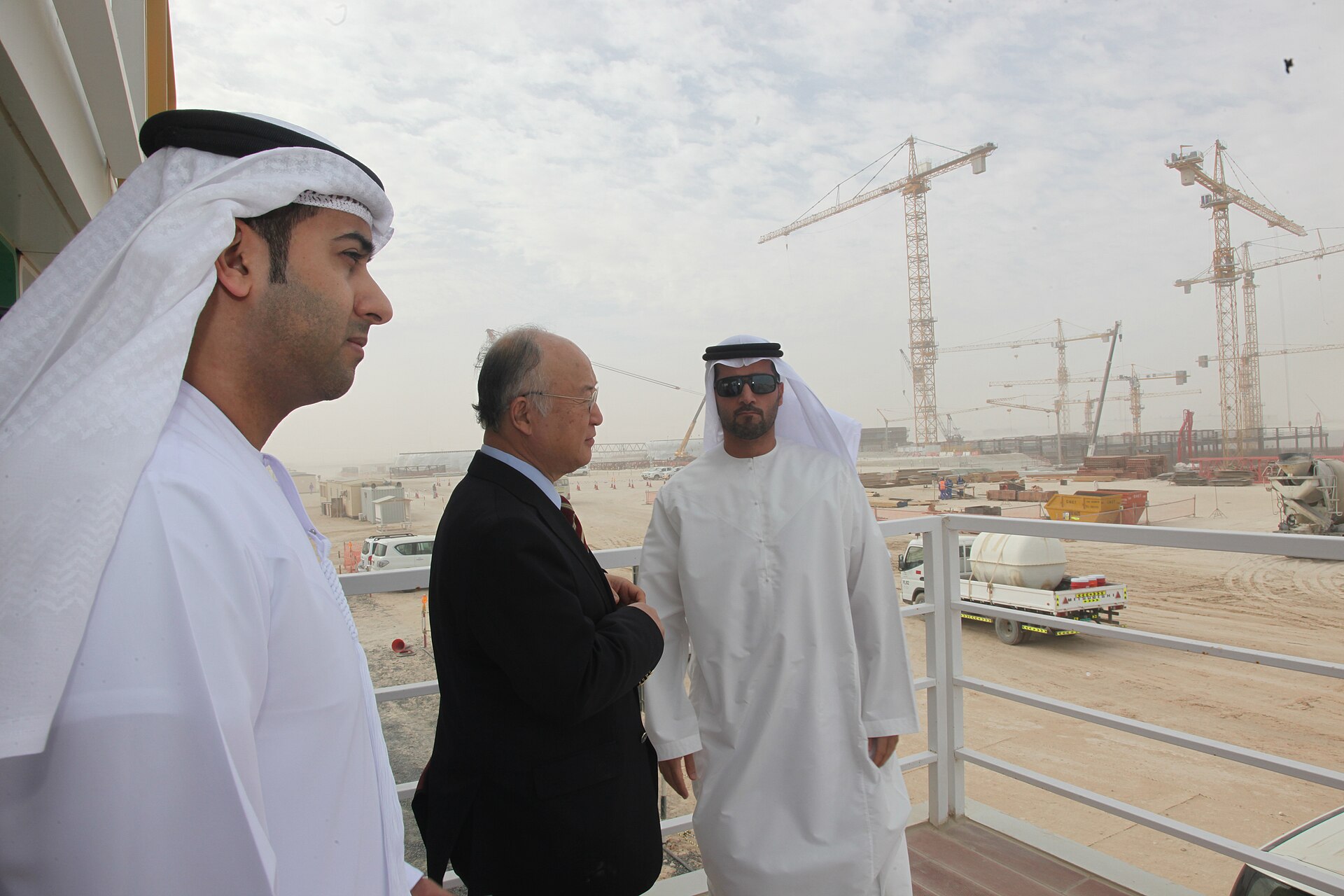
Grossi met FM Faisal bin Farhan and Energy Minister Prince Abdulaziz bin Salman in Riyadh on June 3, his final stop on a four-country Gulf tour that began with an assessment of drone damage to the Barakah nuclear plant. The IAEA’s readout cited discussions on “regional developments, including Iran, and the importance of diplomacy, multilateral cooperation and the role of the IAEA in supporting international peace and security.” No joint communiqué was issued.
The meeting’s timing places it at the intersection of three converging events. Two days later, on June 5, Grossi convened the first-ever emergency IAEA Board session called over a military strike on a nuclear facility during the Gulf war. The same day, the United States circulated the draft censure resolution. And Grossi told reporters the US-Iran talks appeared “pretty close” — a characterisation that dissolved within hours as the censure draft emerged.
The Riyadh stop served a dual function. Grossi was briefing the kingdom on the Barakah damage findings — directly relevant to Saudi Arabia’s Khor Duweihin plans, which would place two reactors on a Gulf coastline already within range of the IRGC drone fleet that struck the UAE. He was also, by the IAEA’s own description, discussing Iran and the agency’s role.
The sequence is compressed but readable. Grossi assessed Barakah — a civilian nuclear facility struck during wartime — then flew to Riyadh to discuss Iran and nuclear cooperation with the officials who signed the Section 123 agreement, then returned to Vienna and opened the emergency session and the regular Board meeting within five days. Saudi Arabia’s Board delegation walked into the June 8 session having been briefed by Grossi personally and having issued no public indication of how they intended to vote.
The absence of a joint communiqué follows a pattern. The kingdom’s MOFA has produced no public statement on any subject for over ten days. Saudi diplomatic channels have contracted sharply since the third front opened, and the Grossi meeting was substantive enough to merit an IAEA press release that Riyadh did not match with one of its own.
How Does Tehran Read the Board’s Decision?
Each IAEA censure since 2022 has prompted Iran to terminate an inspection arrangement. After the June 2025 resolution, FM Araghchi said it “killed” the Cairo inspection accord entirely. After November 2025, spokesman Baghaei confirmed Iran had sent a formal termination letter and stated that “other measures are certainly being considered.” With zero access already the status quo since February, the June 2026 censure arrives when there is almost nothing left to rescind.
The remaining Iranian escalation options are enrichment-level increases — moving from 60% to weapons-grade 90%, or expanding centrifuge cascades at facilities the IAEA cannot verify. After the June 2025 censure, Kamalvandi of Iran’s Atomic Energy Organization warned of a “proportionate” response and Tehran announced a third enrichment site “in a secure location,” pledging to replace first-generation centrifuges at Fordow with sixth-generation machines. The monitoring blackout means the Board cannot confirm whether those steps have already been taken. The last time an IAEA inspector entered an Iranian facility was February 28.
Tehran’s public framing is already set. Gharibabadi told PressTV on June 6 that the situation “did not arise in a vacuum” — Iran’s nuclear facilities “were targeted by military attacks by the United States and the Israeli regime.” Safeguards, he said, “are not strengthened by military action, threats, or resolutions.” Baghaei, speaking to Mizan Online the same day, described the resolution’s purpose as “to pressure Iran into abandoning its legitimate interests.”
The Section 123 asymmetry gives Tehran a ready-made argument. Iran is being censured for enrichment opacity at the same Board session where Saudi Arabia — a state whose agreement with Washington permits enrichment without Additional Protocol ratification — casts its vote. The Arms Control Association’s assessment of the Section 123 agreement was published by Washington’s own nonproliferation establishment, not by an Iranian outlet. Baghaei’s framing gains traction precisely because a parallel track exists in which another Board member’s enrichment interests were not merely tolerated but formally enabled by the state that drafted the censure.
The MOU framework that the censure was designed to complement was already fracturing. Iran’s formal rejection of the US memorandum was expected by June 9 — the day after the Board session opened. The $24 billion in frozen Iranian assets blocking the Phase 1 sequencing had not moved. An Iranian official, speaking on June 8 as Israeli missiles struck targets across Iran, told wire services the deal was “no longer feasible.” The war reached its hundredth day with the Board in session and the diplomatic track it was supposed to reinforce in collapse. When the June 10 vote came, Riyadh voted yes — and Saudi Arabia’s strategic exposure after the Cairo accord’s termination became the immediate consequence of its own ballot.
Within hours of that ballot, hardline members of Iran’s parliament invoked the censure as justification for a triple-urgency NPT withdrawal bill. The fracture between Araghchi’s institutional NPT defense and parliament’s withdrawal push is now public — and Saudi Arabia’s 123 Agreement assumes the treaty framework the hardliners want to exit. The mechanism by which the deal’s verification architecture creates a structural blind spot — specifically, why Saudi Arabia’s nuclear cooperation deal waives the same safeguards the Board just demanded from Tehran — was published in full on June 12 by the Arms Control Association.
Frequently Asked Questions
Has Saudi Arabia ever voted against an IAEA resolution on Iran?
No. During its 2011–2013 Board term, Saudi Arabia supported resolution GOV/2011/69 on Iran’s nuclear programme, which passed 32–2 with a single abstention on November 18, 2011 — the widest margin of any Iran censure at that time. The kingdom’s November 2025 statement publicly “welcoming” the Board’s decision continued the pattern. No Saudi Board representative has broken from the Western consensus position on Iran at the IAEA, though no previous vote occurred while Riyadh held a bilateral nuclear cooperation agreement omitting the conditions being demanded of Tehran.
Can the US Congress block the Section 123 agreement from taking effect?
Under the Atomic Energy Act, Congress has a ninety-legislative-day review window after the agreement is formally submitted. Either chamber can pass a joint resolution of disapproval, which would then require a presidential signature or a two-thirds veto override to take effect — a near-impossibility given current Republican majorities. S.4243, the “No Nuclear Weapons for Saudi Arabia Act” reintroduced by Senators Markey and Merkley on March 25, would raise the bar by requiring affirmative Congressional approval, but the bill has not advanced from committee.
What is the IAEA Additional Protocol and why does its absence from the Saudi deal matter?
The Additional Protocol grants IAEA inspectors expanded access beyond declared nuclear sites, including short-notice inspections at undeclared locations and environmental sampling across a state’s territory. Without it, the IAEA can verify only the facilities Saudi Arabia voluntarily declares. Iran signed its Additional Protocol in 2003 but never ratified it. The Saudi Section 123 agreement does not include ratification as a condition, meaning both states’ enrichment programmes could operate without the agency’s most comprehensive verification tool.
What happened to the Barakah nuclear plant during the Gulf war?
IRGC drones damaged the UAE’s Barakah facility — the only operating nuclear power plant in the Arab world, with four APR-1400 reactors — during the Gulf conflict. Grossi conducted a four-country Gulf tour in late May and early June that included an on-site damage assessment at Barakah before he flew to Riyadh for the June 3 meetings. Two days after his Riyadh stop, he convened the first-ever emergency IAEA Board session triggered by a military strike on a nuclear facility. The strike added an immediate security dimension to Saudi Arabia’s Khor Duweihin plans, which place two planned reactors within the same IRGC operating radius.
How did the November 2025 IAEA Board vote on Iran break down?
The resolution passed 20–2, with only Russia and China casting no votes. Twelve of the Board’s 35 members abstained — a larger bloc than in 2011, when the margin was 32–2 with one abstention. The shift reflects growing reluctance among non-aligned states to endorse censure-based enforcement while diplomatic tracks remain nominally active. The June 2026 draft is expected to pass, but the margin may narrow given the concurrent collapse of the US-Iran negotiating framework and the Israeli strikes on Iranian territory that coincided with the session’s opening day.