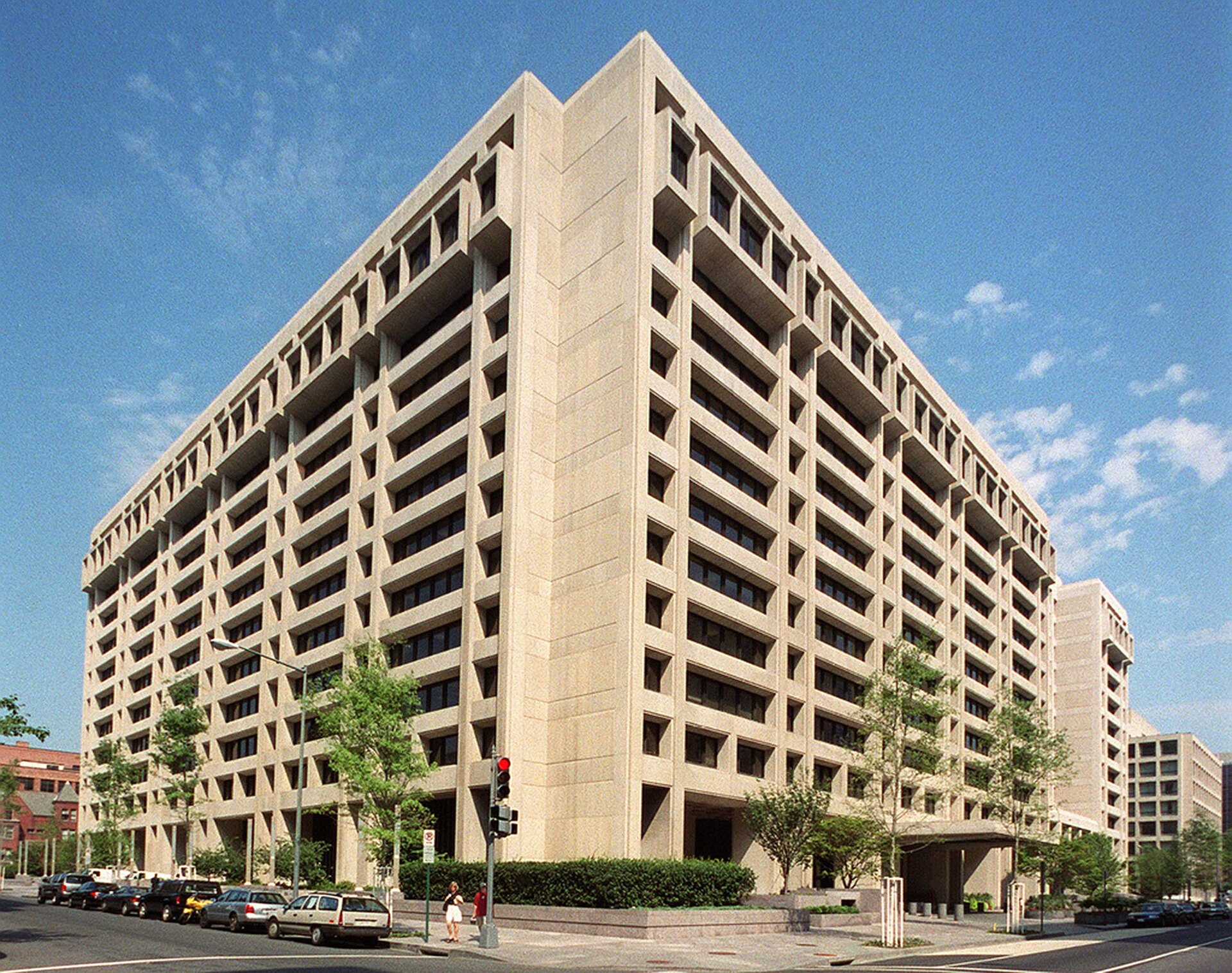

RIYADH — The International Monetary Fund cut Saudi Arabia’s 2026 growth forecast from 4.5% to 3.1% on April 14, and every headline treated the number as the story. It is not. The number is a conditional — a projection built on an assumption the IMF itself flagged as uncertain and that the physical evidence on the ground has already falsified. The base case requires the Strait of Hormuz to normalise “over the next few months,” a phrase Deputy Managing Director Bo Li used without specifying what normalisation means or who would enforce it. The mine-clearance timeline alone — 51 days minimum from ceasefire Day 1, using the 1991 Kuwait benchmark — puts the earliest possible completion at May 28, five weeks after the ceasefire expires on April 22. The 3.1% figure is not a forecast. It is a prayer dressed in methodology.
IMF Chief Economist Pierre-Olivier Gourinchas offered the quieter revelation: “We were planning to upgrade growth for 2026 to 3.4 percent” before the war began. The true cost of the conflict is not the distance between 4.5% and 3.1%. It is the distance between 3.4% — where Saudi Arabia was headed on momentum alone — and wherever the economy lands when the conditions attached to 3.1% fail to materialise. Riyadh has said nothing.
Table of Contents
- The Revision the IMF Built on Expired Data
- What Must Go Right for 3.1% to Hold?
- The Non-Oil Economy Was Breaking Before Hormuz
- How Bad Does the Downside Scenario Get for Saudi Arabia?
- Vision 2030 After the Growth Revision
- Why Has Riyadh Said Nothing About the IMF Downgrade?
- Georgieva’s Warning: Hormuz as the Next Bab el-Mandeb
- Frequently Asked Questions
The Revision the IMF Built on Expired Data
The April 2026 World Economic Outlook used commodity price data from February 10 to March 10 — a window that captured Brent crude above $110 per barrel and, for several sessions, brushing $120. By the time the WEO reached print, Brent had collapsed to roughly $95.72. The IMF’s own statistical appendix acknowledges the cutoff. It does not acknowledge what the cutoff excludes: the US naval blockade of Iranian ports, effective April 13, which restructured the physical flow of oil through the Gulf one day before the forecast was published.
The methodology matters because it determines what the 3.1% actually measures. The IMF modelled a Saudi economy operating at war-disrupted but recoverable levels, with Hormuz transit volumes depressed but trending toward normalisation by mid-year. The reality on April 14 was 10 vessel transits per day through the Strait, according to Windward maritime intelligence — down from 138 per day before the war. The IMF’s base case assumed a temporary dislocation. The blockade made it a structural one.
Three scenarios frame the WEO’s MENA outlook. The reference case projects 3.1% Saudi growth with 4.4% global inflation, assuming conflict disruptions ease by mid-2026. The adverse scenario — larger and more persistent energy price swings through the full year — drops global growth to 2.5% with 5.4% inflation. The severe case, in which disruptions extend into 2027, pushes global growth below 2.0% and inflation above 6%. The MENA regional forecast under the base case is 1.1%, a 2.8 percentage-point cut from January — the deepest regional downgrade in the entire WEO. Iran’s economy is projected to contract 6.1%.
Saudi Arabia’s 1.4 percentage-point cut is exactly half the MENA regional average. The framing is deliberate: buffered but not immune. The buffer is the East-West Pipeline to Yanbu, which bypasses Hormuz entirely and carries up to 7 million barrels per day. The immunity the IMF declined to grant reflects what the pipeline cannot fix — the petrochemical supply chains running through Jubail, the desalination infrastructure in the Eastern Province, and the shipping insurance markets that have repriced every Gulf-origin cargo.
The Middle East briefing 3,000+ readers start their day with.
One email. Every weekday morning. Free.
What Must Go Right for 3.1% to Hold?
The IMF’s base case requires three conditions to converge before the end of Q3 2026. Each is individually uncertain. Together, they describe a scenario that has no historical precedent in the region.
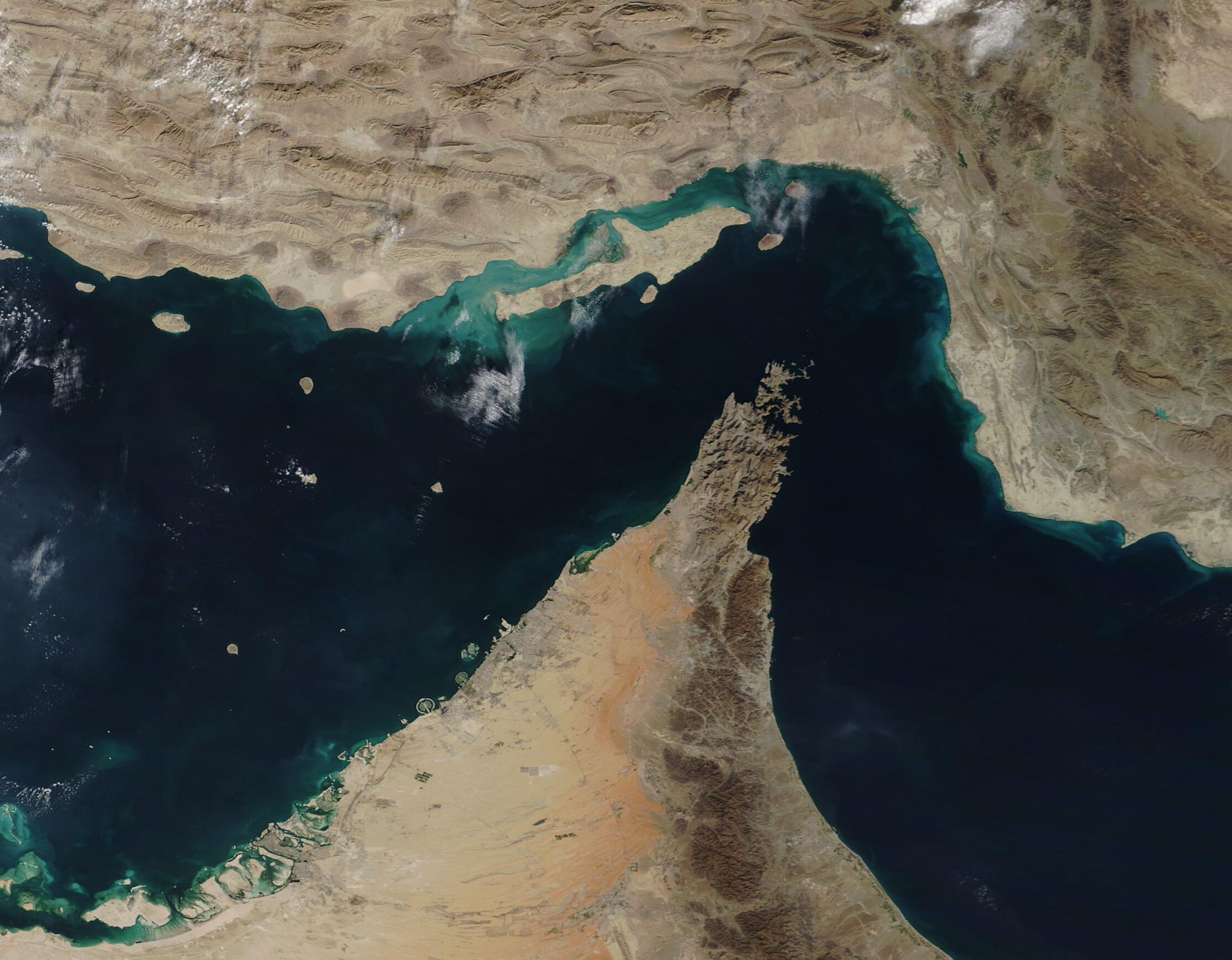
The first condition is Hormuz normalisation. Bo Li stated that forecasts “assumed energy production and transportation in the region are normalised over the next few months,” adding the caveat that projections “may need to be revised if the conflict drags on.” Normalisation means more than a diplomatic declaration. The IRGC published a chart between February 28 and April 9 designating standard shipping lanes through the Strait as danger zones, redirecting commercial traffic into a five-nautical-mile channel between Qeshm and Larak islands — inside Iranian territorial waters. That chart reflects physical mining, not political posturing. The 1991 Kuwait mine-clearance operation — a smaller theatre with full US Navy mine countermeasure capability — required 51 days. A former MCM commander has estimated 60 to 90 days for Hormuz, assuming Iran stops laying new devices. All four US Navy Avenger-class minesweepers — USS Devastator, Sentry, Dextrous, and Gladiator — were decommissioned from their Bahrain base in September 2025. The fiscal consequence of that timeline is now quantified: the EIA’s April STEO projects $96 annual Brent for 2026, a price path built on an assumption of conflict resolution by late April that has already been falsified — and one that delivers Q4 at $88, squarely inside Goldman’s $80–90 billion deficit scenario.
The second condition is non-oil PMI recovery. The Riyad Bank purchasing managers’ index fell to 48.8 in March — below the 50.0 expansion threshold — from 56.1 the prior month. Export orders posted their largest contraction in six years. Supplier delivery times hit their longest since June 2020. Order backlogs reached their highest since July 2018. These readings reflect domestic economic stress, not Hormuz transit volumes. A reopened Strait does not rebuild cancelled construction orders or restore confidence to private-sector firms that have already cut headcount.
The third condition is Public Investment Fund deployment at planned levels. The PIF’s 2026-2030 strategy document, published in early April, cut capital expenditure commitments from approximately $71 billion to $30 billion. The Line — the centrepiece megaproject of Vision 2030 — was formally suspended at 2.4 kilometres of its planned 170-kilometre build, with its population target slashed from 1.5 million to fewer than 300,000. The PIF recorded approximately 0% return in 2024. An $8 billion write-down accompanied the revised strategy. The IMF’s growth model incorporates PIF-driven non-oil investment as a structural contributor. The fund just told the market it is spending less than half of what was planned.
The Non-Oil Economy Was Breaking Before Hormuz
The temptation — and the one the IMF’s framing enables — is to attribute Saudi Arabia’s growth deceleration to a single variable: war-disrupted oil flows through the Strait of Hormuz. Reopen the Strait, the logic runs, and the 3.1% base case holds or improves. The non-oil economy tells a different story.
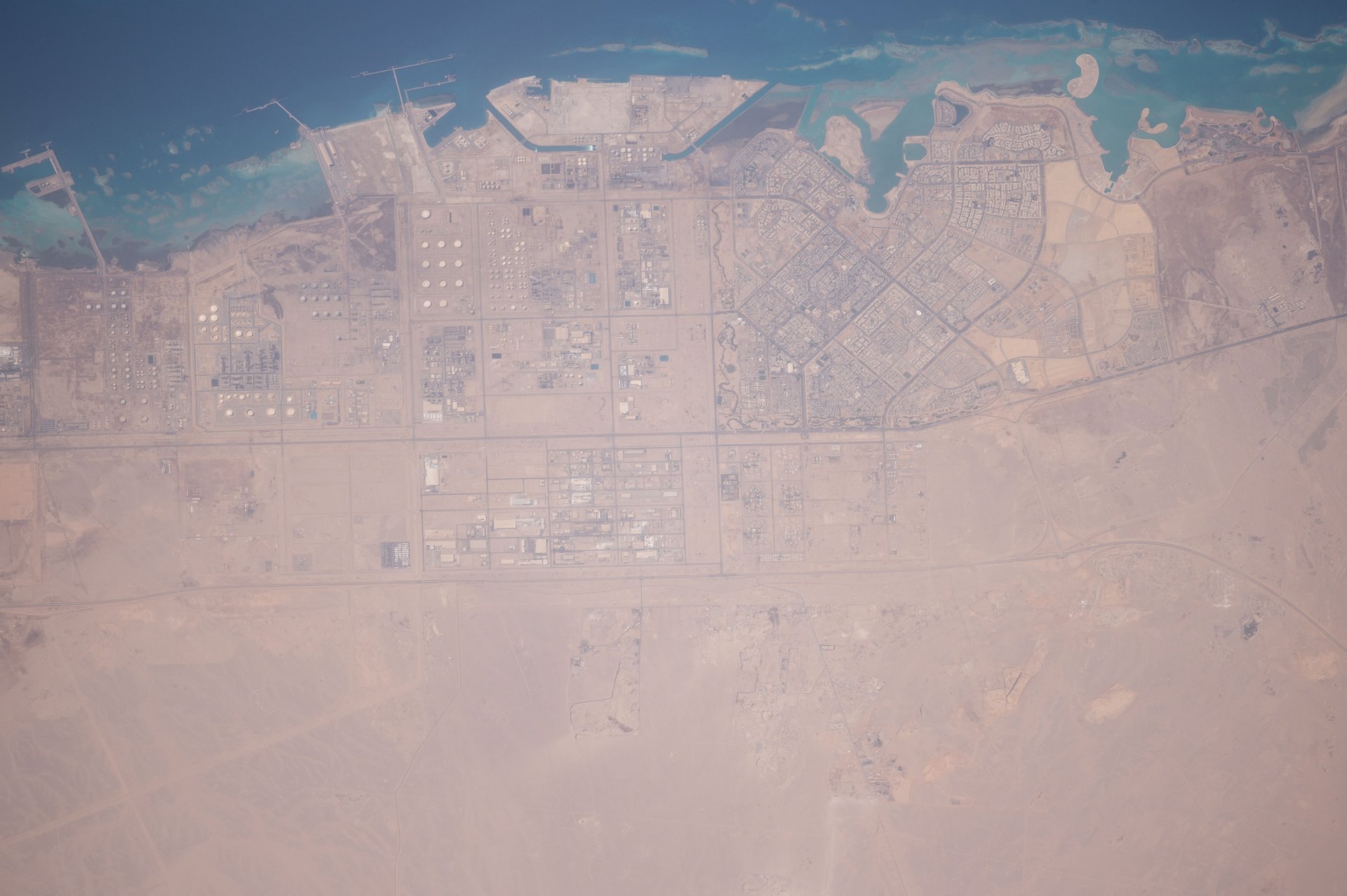
Sadara Chemical Company — the $20 billion Aramco-Dow joint venture in Jubail — has generated zero revenue since late March. Its 26 manufacturing units are offline. A $3.7 billion debt grace period expires on June 15. If Sadara cannot resume production and service its obligations by that date, the restructuring conversation begins — one that implicates both Aramco’s balance sheet and Dow’s exposure to a war zone it cannot insure.
SABIC, the kingdom’s second-largest listed company, declared force majeure on five product lines in late March after missile and drone strikes disrupted Eastern Province operations. On April 7, intercepted missile debris started a fire at a SABIC facility in Jubail — a city that absorbed 11 ballistic missiles and 18 drones in a single barrage. All 11 missiles were intercepted, but the PAC-3 system’s triage logic reveals a structural vulnerability: Ras Tanura, Saudi Arabia’s largest oil export terminal, sits 65 to 73 kilometres from Jubail. A battery cannot cover both simultaneously.
The cumulative air defence count through April 7 stood at 799 drones and 95 missiles intercepted — 894 objects in 35 days of war. The implied expenditure at $3.9 million per PAC-3 MSE round approaches $3.49 billion. Camden, Arkansas, the sole production facility, manufactures roughly 620 rounds per year. The stockpile, estimated at approximately 2,800 rounds pre-war, has been drawn down to an estimated 400. Poland refused a Patriot battery transfer request on March 31. The $16.5 billion in emergency US arms sales authorised since the war began went to the UAE, Kuwait, and Jordan — not Saudi Arabia.
A United Nations study published March 31 estimated that Arab nations may collectively lose $200 billion from the Iran war. Goldman Sachs economist Farouk Soussa projected in mid-March that Saudi GDP could contract by approximately 3% if the conflict ran through the end of April — a threshold now crossed. “For many Gulf economies, the war could have a bigger near-term impact than Covid,” Soussa said. “When the dust settles they will rebuild and they will recover, but the scars this conflict leaves on confidence remain to be seen.”
How Bad Does the Downside Scenario Get for Saudi Arabia?
The IMF’s MENA-wide downside of 1.1% growth is a regional composite dragged lower by Iran’s projected 6.1% contraction. Saudi Arabia’s position within that composite is more nuanced — and, on certain fiscal metrics, worse than the headline suggests.
The fiscal break-even price tells two stories depending on who calculates it. The IMF’s central government measure places Saudi Arabia’s break-even at $86.60 per barrel — comfortably below the current Brent price of roughly $95.72. Bloomberg Economics, using a PIF-inclusive methodology that captures the approximately $71 billion in committed fund disbursements the government treats as off-balance-sheet, puts the break-even at $108 to $111 per barrel. At current prices, Saudi Arabia is running a revenue shortfall of approximately $45 million per day against its actual spending commitments.
| Metric | IMF Base Case | Current Reality (April 15) | Gap |
|---|---|---|---|
| Saudi 2026 GDP growth | 3.1% | Tracking below | Unknown |
| Brent crude (IMF data window) | $110-120/bbl | ~$95.72/bbl | -$15 to -$24/bbl |
| Hormuz daily transits | Normalising | ~10/day | -128 vs pre-war 138 |
| Non-oil PMI | >50.0 (expansion) | 48.8 | -1.2 below threshold |
| Fiscal break-even (PIF-inclusive) | $108-111/bbl | $95.72/bbl | ~$45M/day shortfall |
| Saudi official deficit target | 3.3% of GDP | Tracking ~4% (CSIS) | +0.7 pp |
Tim Callen at the Arab Gulf States Institute in Washington projected that the deficit could shrink by 1% of GDP only if Saudi output averages 7.5 million barrels per day and Brent holds at approximately $90 per barrel. Neither condition is currently met. Saudi exports are running through the Yanbu bypass at an effective capacity of 5 to 6 million barrels per day — a structural ceiling imposed by pipeline and terminal constraints, not OPEC+ quotas. The official 2026 deficit target of 3.3% of GDP, set in December’s budget statement, is already tracking toward 4%, according to CSIS estimates.
The Aramco dividend — the single largest line item in the Saudi budget — faces its own arithmetic. May OSP pricing for Arab Light to Asia was set at a record +$19.50 per barrel premium when Brent was near $109. With Brent now roughly $14 below that reference level, the premium structure is underwater. Term contract buyers in Asia are locked into prices that no longer reflect spot market conditions. The pricing correction, when it comes in the June OSP announcement around May 5, will compress Aramco’s margins and, by extension, the dividend flow that funds both the central budget and PIF operations.
Vision 2030 After the Growth Revision
Vision 2030’s progress report, measured against its own benchmarks, showed genuine pre-war momentum. The private sector’s share of GDP rose from 40% to 45% between the programme’s launch and 2023 — against a 2030 target of 65%. Non-oil government revenue hit a record SR505.3 billion in 2025. Brent averaged well above fiscal break-even through that entire stretch.
The war has not destroyed Vision 2030. It has exposed which components are structurally fixed and which were always contingent on conditions that no longer hold. Two anchors cannot move: Expo 2030, awarded to Riyadh in November 2023, and the FIFA 2034 World Cup. Both carry international contractual obligations, sovereign reputation commitments, and infrastructure deadlines that operate independently of oil prices or GDP growth rates. Everything else is negotiable — and the PIF’s revised strategy document confirms that the negotiation has already happened.
The Line’s suspension is the most visible casualty, but the capex reduction from $71 billion to $30 billion across the PIF portfolio tells the structural story. Humain, the AI venture backed by $23 billion in partnerships with NVIDIA, AMD, AWS, Qualcomm, Cisco, xAI ($3 billion), Blackstone ($3 billion), and DataVolt ($5 billion at Oxagon), has replaced The Line as the flagship non-oil project. The pivot from concrete to compute is partly strategic — AI infrastructure has shorter construction timelines and higher margins than linear cities — and partly forced. PIF cannot simultaneously fund Expo 2030 site preparation, FIFA 2034 stadium construction, Humain data centre deployment, and a 170-kilometre megastructure in the Tabuk desert.
The IMF’s growth revision complicates the 2030 timeline in a specific way. The private sector’s path from 45% to 65% of GDP required sustained non-oil growth above 4% annually. At 3.1% — or lower, if the base case conditions fail — the private sector share flatlines or contracts, because government spending (particularly military and reconstruction expenditure) expands as a proportion of GDP. Eight planned IPOs identified in the PIF strategy as capital-recycling mechanisms depend on equity market conditions that a sub-3% growth environment does not support.
Why Has Riyadh Said Nothing About the IMF Downgrade?
Saudi Arabia’s Ministry of Finance issued its pre-war 2026 growth forecast of 4.6% in December’s Budget Statement — marginally above the IMF’s January figure of 4.5%. When the IMF published the January upgrade, Saudi state media carried it prominently. The Ministry’s own communications channels amplified the endorsement. The 4.5% figure appeared in investor presentations, in sovereign bond roadshow materials, and in PIF strategy documents as external validation of the kingdom’s economic trajectory.
On April 14, the IMF cut the forecast by 1.4 percentage points. As of April 15, the Ministry of Finance has issued no public statement. The Saudi Press Agency has not carried the revision. No minister has appeared to contextualise, dispute, or acknowledge the downgrade. The silence is the statement.
Riyadh’s options are constrained in three directions. Contesting the 3.1% figure publicly would require the government to articulate its own growth estimate — which, given the war’s trajectory, would likely be lower than the IMF’s conditional projection. Endorsing the figure would mean accepting that the economy has decelerated by a third from pre-war expectations, a message incompatible with the confidence-dependent investment flows that Vision 2030 requires. The third option — silence — avoids both traps at the cost of surrendering the narrative to external analysts and, eventually, to credit rating agencies whose sovereign reviews are scheduled for Q3.
The Saudi government celebrated every positive IMF assessment since 2016. It publicised the Article IV consultations. It featured WEO upgrades in Vision Realisation Program reports. The institutional habit of amplifying IMF endorsements makes the current silence legible. Riyadh is not ignoring the forecast. It is calculating which response carries the lowest cost — and evidently concluding that none of them is cheap enough to deploy.
Georgieva’s Warning: Hormuz as the Next Bab el-Mandeb
IMF Managing Director Kristalina Georgieva made the comparison that no Gulf official wants to hear. “Ship passages through Bab-el-Mandeb on the Red Sea have never quite recovered from the devastating disruptions there, and remain stuck at about half their 2023 level,” she said, warning that Hormuz could face “a new reality.” The comparison is not rhetorical. It is empirical.
Houthi attacks on Red Sea shipping began in November 2023. By April 2026 — 29 months later — transit volumes through Bab el-Mandeb remain at roughly 50% of pre-disruption levels despite multiple US-led military operations, a multinational naval coalition, and no active state-to-state conflict. The disruptions were caused by a non-state actor with limited naval capability. Hormuz faces a state actor — the IRGC Navy — that has declared “full authority to manage the Strait,” mined shipping lanes, and imposed a toll regime backed by physical interdiction.
The structural risk Georgieva identified is not that Hormuz remains closed. It is that Hormuz reopens partially, at reduced throughput, with permanent risk premiums baked into shipping insurance, and that this degraded state becomes the new baseline. At 10 transits per day versus the pre-war 138, the Strait is already operating at 7% of normal capacity. Even a tenfold improvement — to 100 daily transits — would leave Hormuz at 72% of pre-war levels, with war-risk insurance premiums adding $1 to $3 per barrel to every Gulf-origin cargo.
Gourinchas framed the supply dynamics bluntly: “Either they cannot export their energy… or it’s trapped because the facilities have been destroyed, or it’s trapped inside the Gulf, and it cannot come out.” For Saudi Arabia, the Yanbu bypass provides a partial answer — but partial is the operative word. The pipeline’s effective throughput of 5 to 6 million barrels per day against pre-war Hormuz flows of 7 to 7.5 million leaves a structural gap of 1.1 to 1.6 million barrels daily. That gap is the difference between the IMF’s 3.1% and something closer to Goldman Sachs’s 3% contraction scenario.
A supply shock that is large, global, and asymmetric.
Kristalina Georgieva, IMF Managing Director, April 2026
The IRGC authorization ceiling makes the diplomatic path to normalisation structurally unreliable. Admiral Tangsiri, the IRGC Navy commander, was killed on March 30. No successor has been named. The command structure has decentralised — operational authority distributed among regional commanders who take orders from a chain that terminates, in theory, at Supreme Leader Khamenei. Khamenei has been absent from public life for over 44 days. His son Mojtaba has communicated only via audio channels.
The IRGC’s Supreme National Security Council representation includes Zolghadr, who is under international sanctions, complicating any formal negotiation framework. Even if Foreign Minister Araghchi signs a Hormuz reopening protocol in Islamabad or Doha, the IRGC Navy’s autonomous operational posture — demonstrated repeatedly since the war began — means tactical compliance is not guaranteed.
The ceasefire itself expires on April 22. No extension mechanism exists. The mine-clearance timeline of 51 to 90 days from April 7 puts the earliest possible completion at late May — and the realistic completion, given depleted MCM assets, closer to early July. The IMF’s “next few months” window for normalisation does not close until September. But the fiscal damage accumulates daily: $139 million per day in Iranian oil revenue funds continued IRGC operations, and the investor confidence cost registers in no quarterly GDP print.
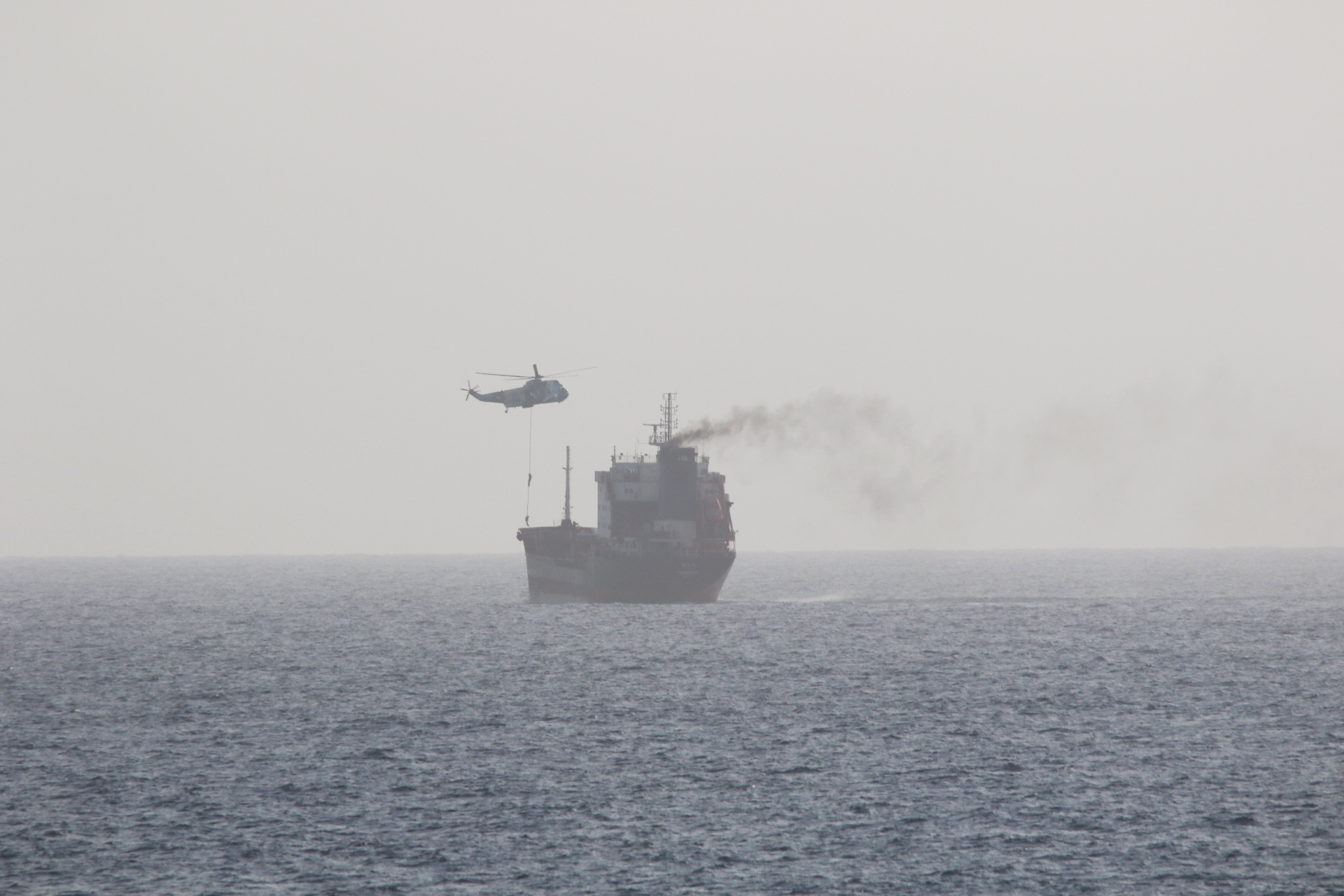
Gourinchas offered what amounted to a conditional prescription: “With the right policies — including a swift cessation of hostilities and the reopening of the Strait of Hormuz — the damage can remain limited.” Each clause carries a condition. Swift cessation — the ceasefire is unsigned and expiring. Reopening of Hormuz — mined, blockaded, and governed by a headless command structure. Damage can remain limited — at $45 million per day in revenue shortfall against PIF-inclusive break-even, the limitation is already strained. The 3.1% figure was built on a February-to-March commodity price window. The blockade took effect April 13.
Frequently Asked Questions
What is Saudi Arabia’s actual growth rate likely to be in 2026 if Hormuz does not normalise by Q3?
The IMF’s adverse scenario implies MENA-wide growth of approximately 1.1%, but Saudi Arabia’s position within that composite varies by methodology. Goldman Sachs modelled a roughly 3% GDP contraction if the conflict extended through April — a threshold already passed. The critical variable is not oil production volume, which the Yanbu bypass partially preserves, but petrochemical export revenue, shipping insurance repricing on all Gulf-origin cargoes, and the PIF’s ability to execute its reduced $30 billion deployment schedule without access to equity capital markets. Oxford Economics projects Qatar’s economy contracting by approximately 14% under the adverse case, with Kuwait facing a comparable figure, and both would transmit contagion through shared banking exposures and supply chain dependencies.
Why did the IMF raise Saudi Arabia’s 2027 forecast to 4.5% while cutting 2026?
The 0.9 percentage-point upgrade for 2027 reflects the IMF’s institutional judgment that the war’s economic impact is a one-year displacement, not a structural break. The fund is betting on a reconstruction and recovery cycle — similar to its post-Covid modelling — in which suppressed 2026 activity rebounds the following year. This framing depends on the war ending, Hormuz fully reopening, and PIF resuming pre-war deployment levels, all by early 2027. The 2027 upgrade is, in effect, the deferred half of the 2026 downgrade: growth delayed, not growth destroyed. Whether that distinction survives contact with the IRGC’s operational calendar is the $200 billion question the UN study quantified for the region as a whole.
How does the IMF’s Saudi forecast compare with Saudi Arabia’s own projections?
The Ministry of Finance Budget Statement, published in December 2025, projected 4.6% growth for 2026 — 0.1 percentage points above the IMF’s January estimate of 4.5% and 1.5 points above the current April revision of 3.1%. The Ministry has not updated its projection or publicly acknowledged the IMF downgrade. Saudi Arabia’s fiscal planning documents, including the Medium-Term Fiscal Framework underpinning the 2026 budget, were built on assumptions of sustained non-oil growth above 4%, Brent crude averaging above $80 per barrel, and OPEC+ production at agreed levels. All three assumptions have been disrupted. The 2026 budget allocated SR1.285 trillion ($342 billion) in spending against projected revenue of SR1.184 trillion — a planned deficit of SR101 billion (3.3% of GDP). CSIS estimates the actual deficit is tracking toward 4% of GDP.
What would it take for the IMF to revise the 3.1% forecast again before the October WEO?
The IMF publishes a WEO Update in July, which provides an interim revision window. Deputy Managing Director Bo Li explicitly flagged the April baseline as contingent on the conflict timeline, signalling the fund is not treating 3.1% as a floor. A July revision would be triggered by any combination of: Hormuz remaining below 50% of pre-war transit capacity, Brent sustaining below $90 per barrel through June, confirmed Sadara debt restructuring after the June 15 deadline, or a second-quarter non-oil PMI reading below 48.0. The commodity price data window for the July update would capture April and May prices — including the post-blockade and post-ceasefire-expiry period — giving the fund a materially different dataset than the February-to-March window used for the April WEO.
Does the IMF downgrade affect Saudi Arabia’s sovereign credit rating?
Not directly — the IMF does not rate sovereign debt. But Fitch, Moody’s, and S&P all use WEO projections as inputs to their sovereign review models, and all three agencies have Saudi Arabia scheduled for review in Q3 2026. Saudi Arabia currently holds an A+ rating from Fitch (affirmed February 2026, pre-war), A1 from Moody’s, and A from S&P. A downgrade from any agency would increase borrowing costs on the kingdom’s approximately $270 billion in outstanding sovereign and quasi-sovereign debt, including PIF-guaranteed bonds. Fitch noted in its February report that only $115 billion of the $147 billion in announced Vision 2030 projects had actually been awarded since 2019 — a structural underfunding that predated the war and that the IMF’s growth revision now compounds.