ISLAMABAD — Within the same 24-hour window on April 19-20, 2026, the United States confirmed it was exploring an “in principle” two-week extension of the Iran ceasefire while Iranian drones attacked American warships and IRGC gunboats fired on commercial vessels — including one carrying Iranian-issued transit clearance. The phrase “in principle” is doing no diplomatic work. It is a placeholder where an enforceable agreement would go, floated by a US administration that cannot compel Iran’s military command to honor terms Iran’s own foreign minister cannot enforce. Bloomberg reported on April 15 that Washington and Tehran were “weighing” an extension; a US official told Fortune the same day there was “continued engagement” but no formal agreement. Iran never issued reciprocal language. On April 19, IRNA announced Tehran would not attend the second Islamabad round, citing “excessive demands, unrealistic expectations, constant shifts in stance, and the ongoing naval blockade.”
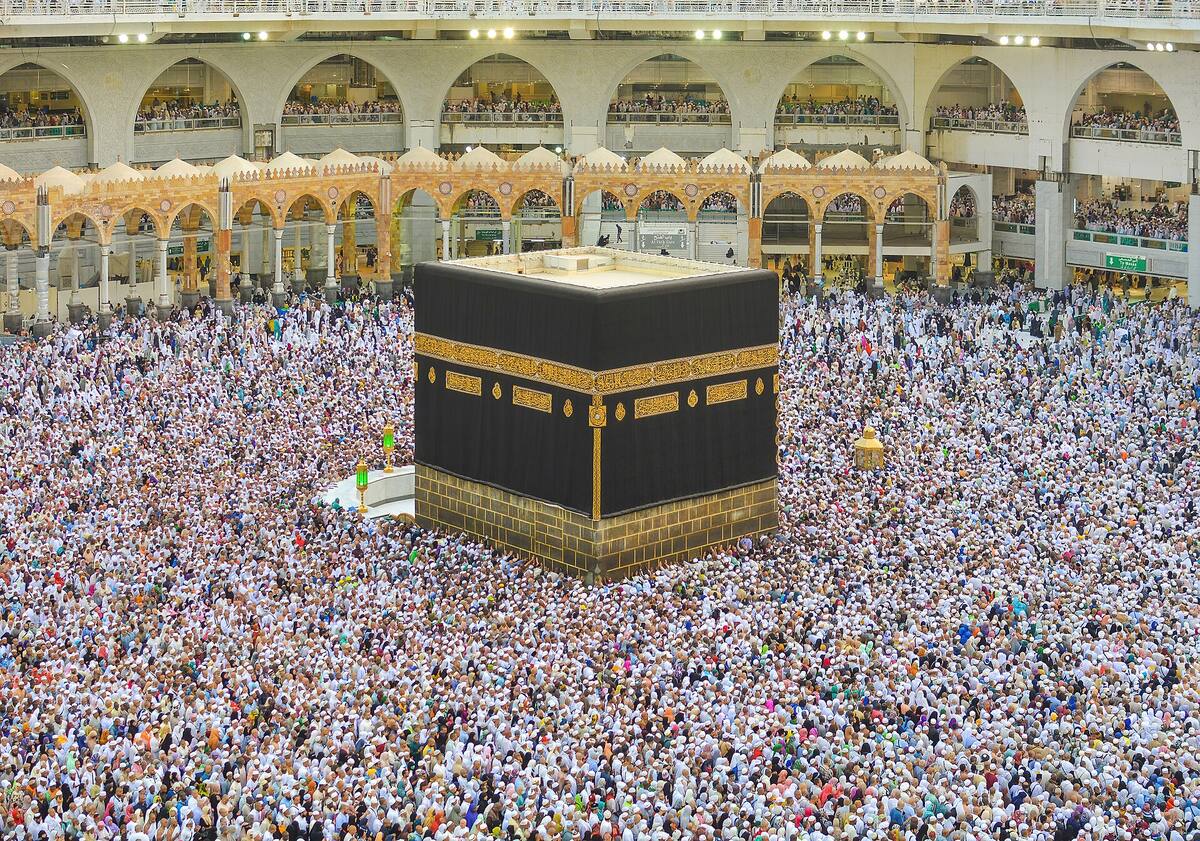
For Saudi Arabia — bearing the fiscal and physical cost of a war it did not start, with 1.2 to 1.5 million Hajj pilgrims arriving as the ceasefire expires on April 22 — the extension language describes a diplomatic fiction, not a diplomatic achievement.
Table of Contents
- What “In Principle” Means in Diplomatic Practice
- The 24-Hour Window: April 19-20
- The Touska Seizure and the Retaliatory Spiral
- Why Did the IRGC Fire on a Vessel It Had Cleared?
- What Is the Authorization Ceiling?
- The Araghchi Pattern: Friday Open, Friday Reversed
- Who Pays for a Ceasefire That Does Not Hold?
- Can the Ceasefire Survive Past April 22?
- The 1988 Precedent and What Is Missing
What “In Principle” Means in Diplomatic Practice
In United Nations usage, “in principle” signals conditional preliminary agreement — explicitly not binding, explicitly not operational. UN Security Council Resolution 1701, which ended the 2006 Lebanon war, used this language. That ceasefire held not because the text compelled compliance but because Hezbollah — the armed actor — unilaterally chose not to resume hostilities. The text was a frame around a military decision already made.
Academic literature on ceasefire durability makes the distinction explicit. A 2021 study published in the Journal of Conflict Resolution (Tandfonline) distinguishes between ceasefires with implementation machinery — verification mechanisms, enforcement provisions, third-party guarantors with coercive capacity — and those without. The latter routinely collapse. The current Iran ceasefire has no verification mechanism, no enforcement clause, no third-party guarantor with authority over the IRGC.
Pakistan’s Inter-Services Intelligence directorate, which brokered the original Islamabad Accord, has no treaty authority and no coercive authority over Iran’s military command. The Soufan Center confirmed that no extension mechanism exists in the original ceasefire text.
The International Crisis Group’s Iran Crisis Monitor, published April 15, framed Tehran’s posture with precision: “Tehran regards the ceasefire not as an endpoint but as an opportunity to shape the terms of the conflict’s next phase.” Iran’s conditions for a genuine agreement include the end of hostilities on all fronts including Lebanon, financial compensation for war damage, and international acknowledgment of Iran’s prerogatives in “regulating” the Strait of Hormuz. None of these conditions are close to being met. The “in principle” language papers over a structural impasse, not a narrowing gap. A senior Turkish official told Middle East Eye on April 19: “The gaps in several areas remain too wide to bridge.”
The Middle East briefing 3,000+ readers start their day with.
One email. Every weekday morning. Free.
The 24-Hour Window: April 19-20
The chronology is the argument.
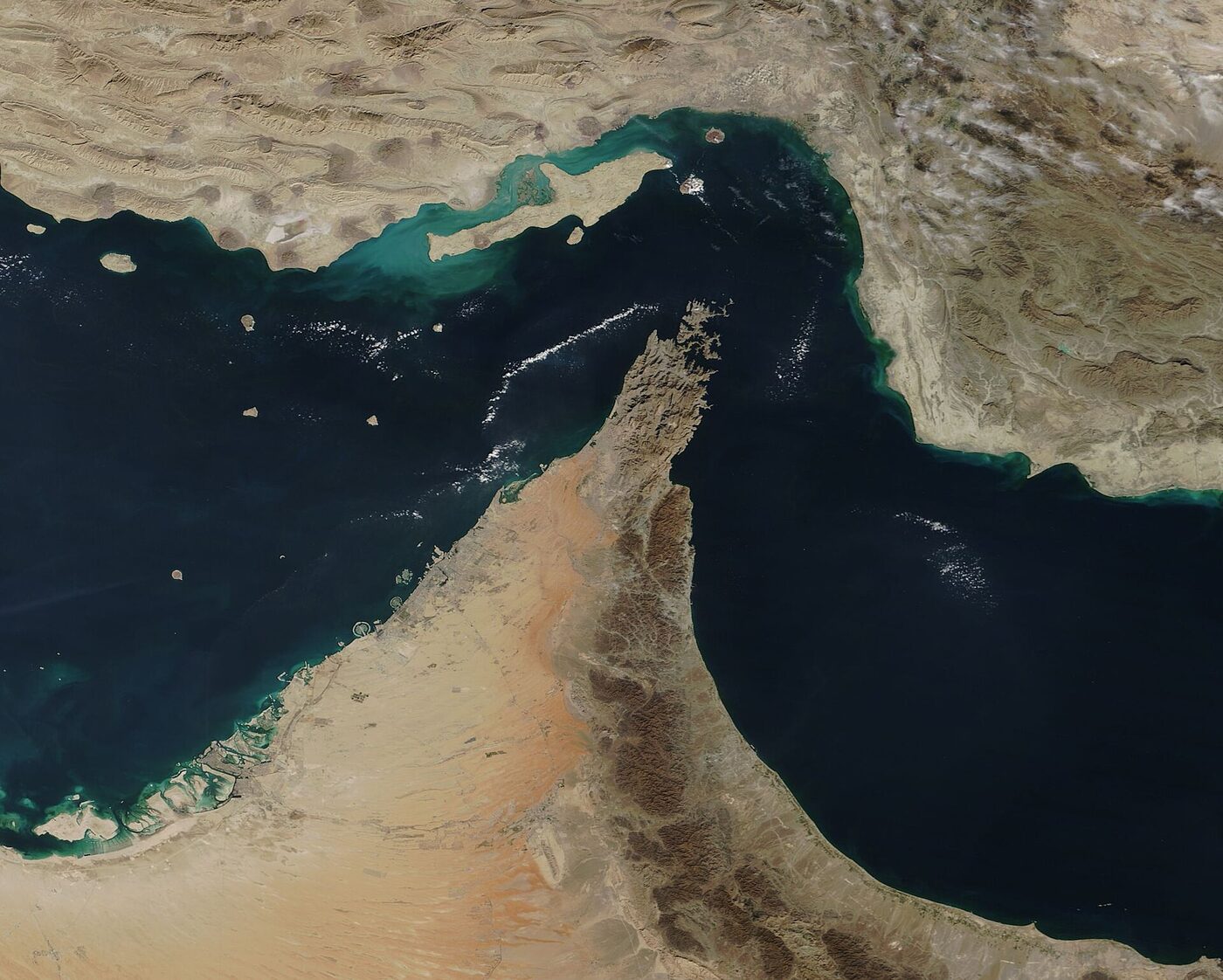
On Friday April 18, Iranian Foreign Minister Abbas Araghchi declared the Strait of Hormuz “completely open” — phrased as consistent with “the ceasefire in Lebanon.” Oil markets responded immediately. Brent crude fell approximately 10%, dropping to $90.38. The statement appeared to signal Iranian diplomatic flexibility at the exact moment extension talks were under discussion.
Within hours, the IRGC reversed it. Tasnim News Agency — aligned with the IRGC — called Araghchi’s announcement “a complete lack of tact in information dissemination.” The Strait returned to what IRGC-aligned media described as “strict management and control.” The reversal pattern was identical to the April 17-18 episode in which Araghchi’s opening was overridden by IRGC joint command within the same news cycle.
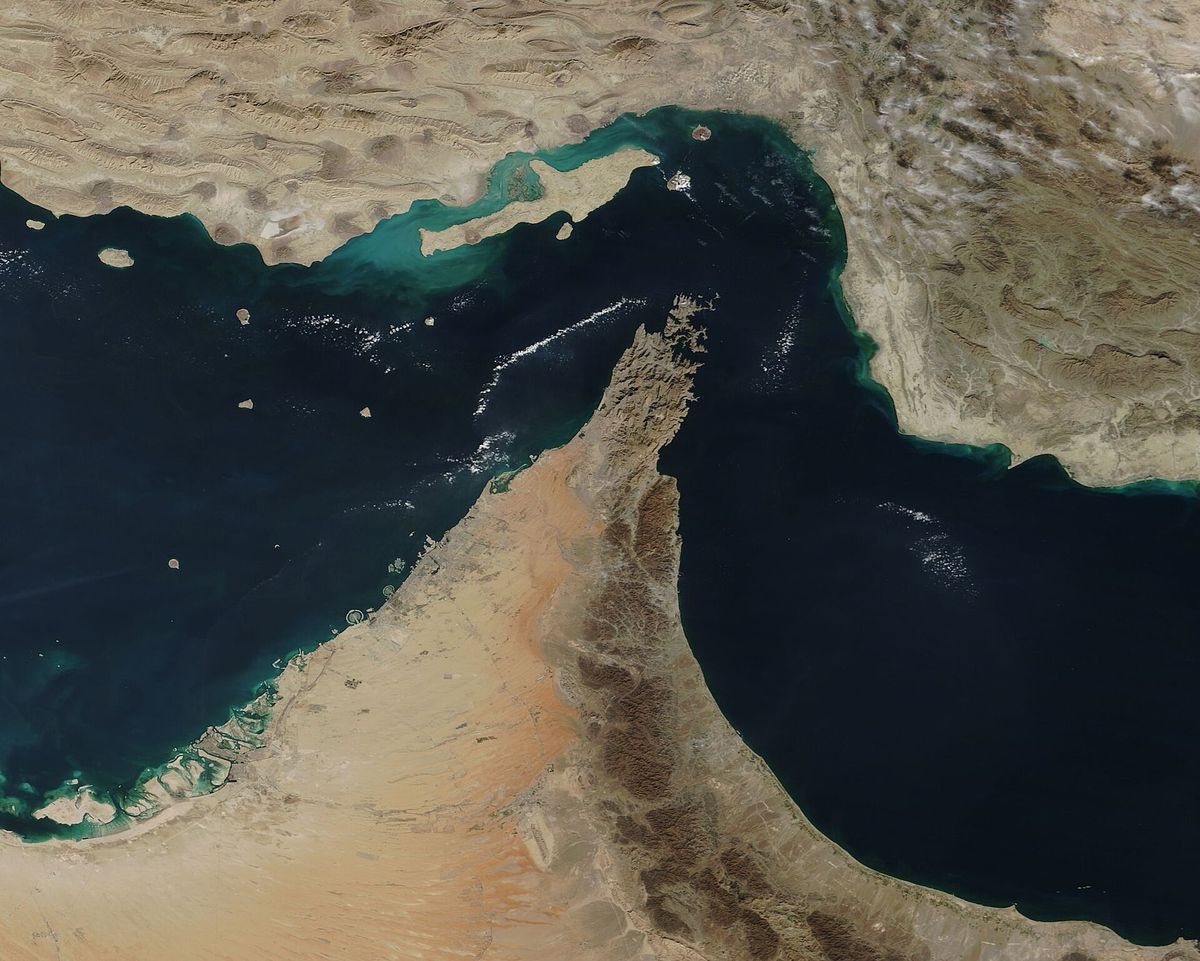
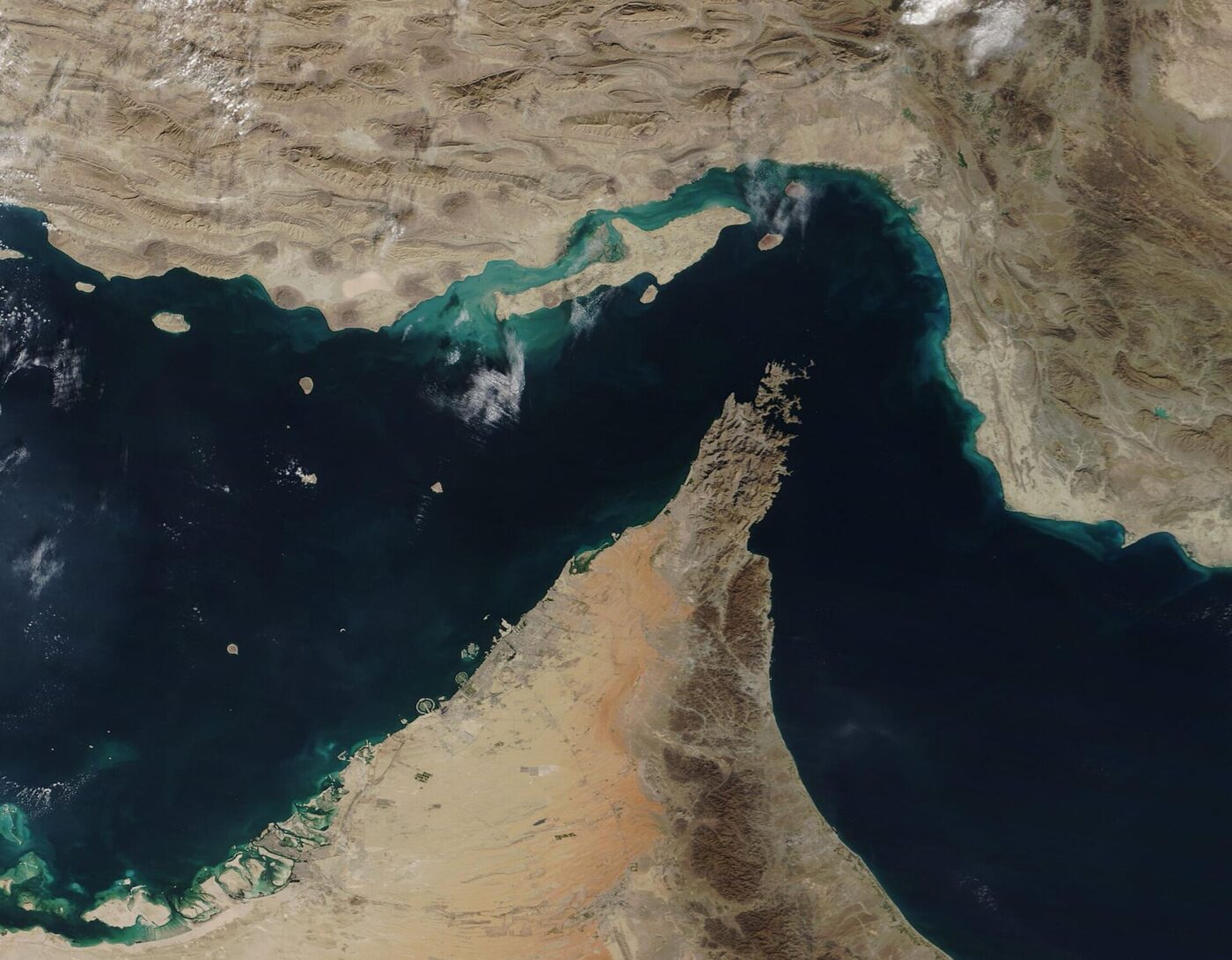
On April 19, three things happened simultaneously. IRNA announced Iran would boycott the second Islamabad round, citing the US naval blockade. The USS Spruance seized the Iranian-flagged vessel Touska — the first formal US naval seizure of an Iranian vessel during the ceasefire period. And IRGC gunboats opened fire on two commercial vessels transiting the Strait.
On April 20, with drone debris still being catalogued by CENTCOM, the “in principle” extension language remained the official US diplomatic position.
The Touska Seizure and the Retaliatory Spiral
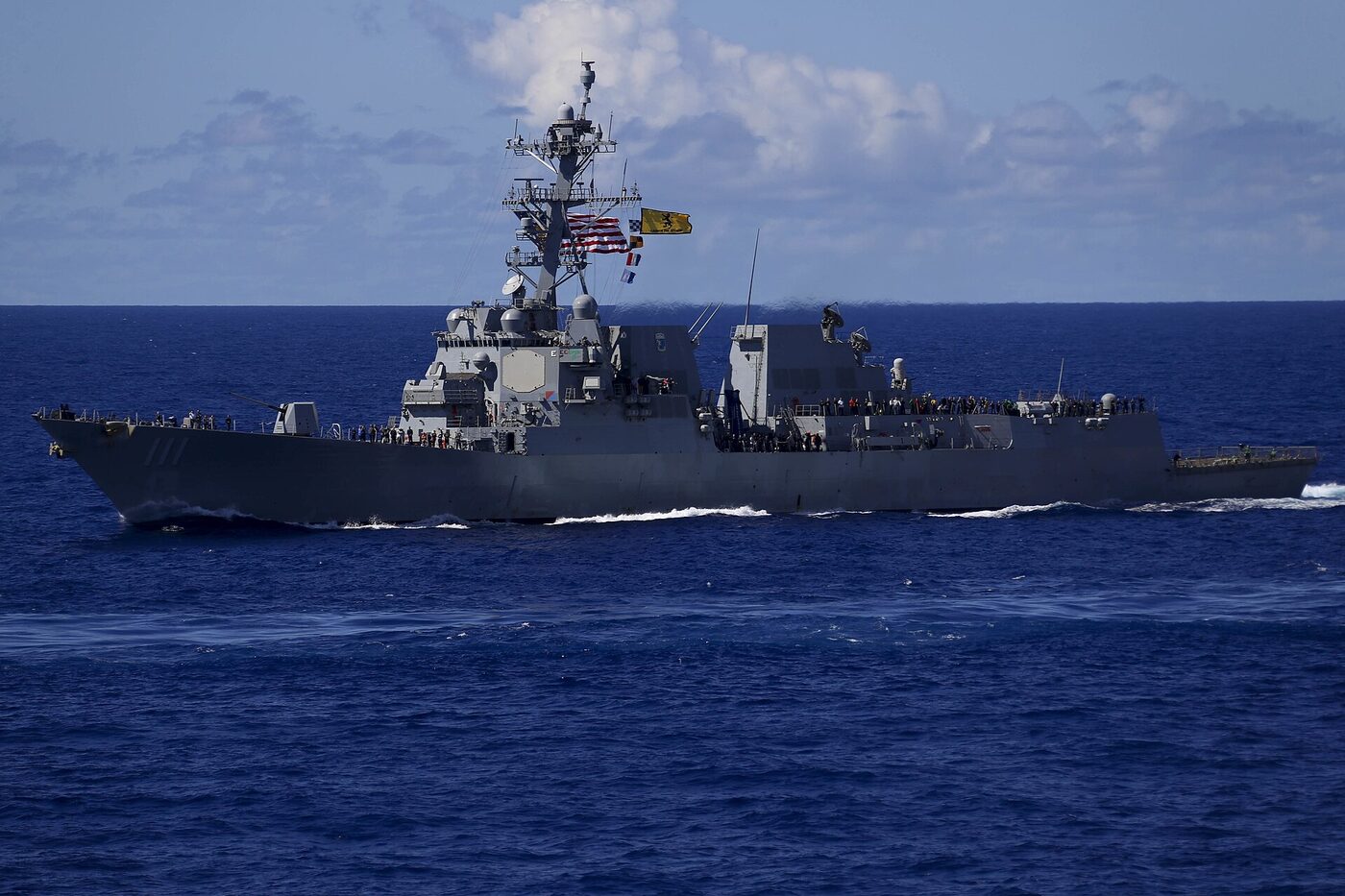
CENTCOM stated the USS Spruance (DDG-111) seized the Touska on April 19 after “repeated warnings over a six-hour period.” The seizure was the first direct US confiscation of an Iranian vessel since the blockade took effect on April 13. Iran’s response was immediate on two tracks: the Foreign Ministry called it “piracy and maritime theft,” and the military launched drone attacks on US warships.
Iran confirmed it had targeted “some American military ships with drones” in what it characterized as direct retaliation. No confirmed damage to US warships was reported. The sequencing — seizure, diplomatic condemnation, military retaliation within hours — demonstrated an Iranian command structure capable of rapid coordinated escalation even as the diplomatic track continued to produce conciliatory language.
President Trump responded on Truth Social: “Total Violation of our Ceasefire Agreement.” He threatened to “knock out every single Power Plant, and every single Bridge, in Iran.” The language echoed his April 5 “Power Plant Day and Bridge Day” threat formulation. In the same window, Trump dispatched Steve Witkoff and Jared Kushner to Islamabad — the diplomatic and military escalation tracks running on parallel rails with no institutional mechanism connecting them.
Why Did the IRGC Fire on a Vessel It Had Cleared?
The VLCC Sanmar Herald — Indian-flagged, carrying approximately 2 million barrels of Iraqi crude — was fired on by IRGC gunboats on April 19 despite holding Iranian-issued transit clearance. The vessel’s captain was heard on VHF radio pleading with IRGC gunboats to stop firing, stating he had official Iranian permission to cross. India summoned Iran’s ambassador in New Delhi.
A second vessel, the CMA CGM Everglade — French-flagged, a container ship — was struck north of Kumzar, Oman. The vessel sustained damage. Two commercial ships, two NATO-state flags, one carrying clearance issued by the Iranian government itself.
This is the authorization ceiling made operationally visible. The IRGC did not override a foreign government’s position or violate an international agreement. It disregarded its own government’s authorization in real time. The transit clearance system — which Iran established to regulate Hormuz traffic and which the international shipping industry had begun, reluctantly, to use — was rendered meaningless by the military arm of the state that created it. The captain of the Sanmar Herald followed Iran’s rules and was fired on by Iran’s navy.
The episode follows the pattern established since President Pezeshkian publicly accused IRGC commanders Vahidi and Abdollahi of sabotaging the first Islamabad round on April 4. The civilian government issues permissions. The military revokes them with live ammunition. Iran’s Hormuz toll system had collected zero revenue in 36 days by April 18 — not because no ships transited, but because the enforcement architecture was incoherent. Sixty permits issued, eight payment requests, zero paid.
The Institute for the Study of War (ISW), cited by Euronews on April 19, stated it directly: “The IRGC appears to be controlling Iranian decision-making instead of Iranian political officials who are engaging with the United States in negotiations, particularly Foreign Affairs Minister Abbas Araghchi.”
What Is the Authorization Ceiling?
Under Article 110 of Iran’s constitution, the Supreme Leader holds sole authority over the armed forces and the IRGC. The president has zero command authority. The IRGC reports to the Supreme Leader — not to the Foreign Ministry, not to the president, not to the National Security Council in any binding operational sense. This is not an analytical inference. It is the constitutional text.
The authorization ceiling is the structural limit of what Iran’s civilian diplomatic track can deliver. Araghchi can agree “in principle” to an extension. He can declare Hormuz open. He can accept a ceasefire framework.
He cannot order the IRGC to stop firing on commercial shipping. He cannot compel IRGC compliance with transit clearances his own ministry issued. The gap between what Araghchi can promise and what the IRGC will permit is not a policy disagreement. It is a constitutional feature.
Khamenei has been absent — Mojtaba Khamenei reportedly communicating audio-only — for over 50 days. No acting Commander-in-Chief has been appointed. The Supreme National Security Council, theoretically the coordinating body, is chaired by a president who publicly accused its own members of sabotage.
SNSC Secretary Vahidi holds an INTERPOL Red Notice for the 1994 AMIA bombing. Deputy Secretary Abdollahi commands Khatam al-Anbiya — the IRGC’s construction and logistics conglomerate, which also runs the Hormuz interdiction operations.
The FDD’s assessment — “five men running Iran” — excludes Pezeshkian entirely. When the IRGC declared “full authority to manage the Strait” on April 5 and reiterated it on April 10, Araghchi was in Islamabad. The declaration came from the IRGC Navy — whose commander, Tangsiri, was killed on March 30 with no named successor. A headless command, exercising authority its own government cannot override.
| Date | Diplomatic Track | Military Track |
|---|---|---|
| April 18 | Araghchi declares Hormuz “completely open” | IRGC reverses within hours; Tasnim: “lack of tact” |
| April 19 AM | IRNA: Iran boycotts Islamabad II | IRGC fires on Sanmar Herald (Indian VLCC, Iranian clearance) and CMA CGM Everglade (French container ship) |
| April 19 PM | “In principle” extension language circulates | Iran launches drone attacks on US warships; USS Spruance seizes Touska |
| April 20 | US maintains extension position; Witkoff/Kushner dispatched to Islamabad | Iran formally re-closes Strait |
The Araghchi Pattern: Friday Open, Friday Reversed
April 18 was the second time in two days that Araghchi’s public statements were overridden by the IRGC. On April 17, Araghchi declared Hormuz open — IRGC joint command reversed it the same day through Tasnim. On April 18, the identical cycle repeated: declaration of openness, IRGC override, market whiplash.
The market response tells its own story. Brent dropped approximately 9.5% on the first opening declaration, falling to $89.89. It recovered to $94-99 on the reversal. On April 18, Brent fell again to $90.38.
By April 20, with weekend attacks confirmed, it had climbed to $95.71 — a 5.9% spike. US oil futures rose 7.14% to $89.94. Dow futures fell 407 points.
The pattern is now predictable enough that traders are pricing it: Araghchi speaks, oil drops, IRGC acts, oil spikes. Lawmaker Mahmoudi had already threatened Araghchi’s impeachment after the first reversal. The IRGC-aligned media ecosystem — Tasnim, Fars, Mehr — has attacked Araghchi’s statements consistently since mid-April. Each Araghchi declaration that moves markets is an unauthorized act by a foreign minister whose own military treats his public commitments as noise.
For shipping companies, the practical consequence is terminal uncertainty. Hapag-Lloyd and Maersk were already avoiding the Strait before April 19. VLCC rates had reached $423,000 per day — a record. Over 150 tankers sat anchored.
The Sanmar Herald incident adds a new dimension: even vessels that comply with Iran’s own clearance system and pay whatever fees are demanded cannot rely on safe passage. The IRGC’s right hand fires on ships the left hand cleared.
Who Pays for a Ceasefire That Does Not Hold?
Saudi Arabia is absent from the Islamabad talks — excluded from the bilateral US-Iran format despite bearing the war’s heaviest economic cost. Saudi March production fell to 7.25 million barrels per day, according to the IEA — down from 10.4 million bpd pre-war, a 30% collapse the IEA called “the largest disruption on record.” Khurais, producing 300,000 bpd, remains offline with no timeline for restoration. The East-West Pipeline bypass to Yanbu operates at a ceiling of 4 to 5.9 million bpd against a pre-war Hormuz throughput of 7 to 7.5 million bpd — a structural gap of 1.1 to 1.6 million bpd that no pipeline capacity can close while Hormuz remains under IRGC interdiction.
The fiscal arithmetic is punishing. Saudi break-even sits at $108 to $111 per barrel (Bloomberg, PIF-inclusive estimate). Brent at $95.71 on April 20 leaves a $12 to $15 per barrel deficit. Goldman Sachs projects a war-adjusted deficit of 6.6% of GDP against the official projection of 3.3%. June OSP was reset at +$3.50 per barrel — a $16 drop from May’s +$19.50 war premium, reflecting Aramco’s acknowledgment that the May pricing was set at $109 Brent and is now $17 underwater.
Asia-bound exports are down 38.6%, according to Kpler tracking data. Saudi market share in India — once 16% — has fallen to 11% as Indian refiners, operating under the now-expired OFAC General License U, loaded Iranian crude settled in yuan through ICICI Bank Shanghai. Every week the ceasefire remains nominal rather than operational, Saudi Arabia loses market share that may not return.
| Indicator | Pre-War | Current (April 2026) | Source |
|---|---|---|---|
| Production | 10.4M bpd | 7.25M bpd | IEA |
| Production decline | — | -30% / -3.15M bpd | IEA |
| Brent crude | ~$80/bbl | $95.71/bbl | Market data, April 20 |
| Fiscal break-even | $78-84/bbl | $108-111/bbl (PIF-inclusive) | Bloomberg |
| Budget deficit (war-adjusted) | 3.3% of GDP | 6.6% of GDP | Goldman Sachs |
| Asia exports | Baseline | -38.6% | Kpler |
| Khurais field | 300K bpd | Offline | Aramco |
| PAC-3 interceptors | ~2,850 | ~400 (~14%) | MOD (published launcher photos) |
Can the Ceasefire Survive Past April 22?
The ceasefire expires on April 22. The same day, Indonesia’s first contingent of 221,000 Hajj pilgrims departs. Pakistan’s 119,000 pilgrims are already in Saudi Arabia. The convergence of the ceasefire expiry with Hajj arrivals is a structural vulnerability — Saudi Arabia cannot escalate militarily while serving as Custodian of the Two Holy Mosques during the pilgrimage, and Iran knows it.
Saudi air defense inventories reflect the constraint. Approximately 400 PAC-3 MSE interceptors remain — roughly 14% of the pre-war stockpile. The five-layer defense architecture (THAAD, PAC-3, KM-SAM, laser systems, Skyguard point defense) is intact but depleted. The Ministry of Defense published launcher photographs but withheld interceptor-count data — a disclosure pattern that signals confidence in architecture but anxiety about ammunition depth.
The Custodian title itself — adopted by King Fahd on October 27, 1986, in response to the 1979 Grand Mosque seizure and Khomeini’s challenges to Saudi religious legitimacy — makes the defense of Hajj pilgrims an existential obligation, not a policy choice.
The IRGC has zero Hajj stake. Iranian pilgrims have been barred since the 1987 Makkah incident (402 dead, 87% Iranian quota cut, three-year boycott). The asymmetry is structural: Saudi Arabia is defending a religious obligation the IRGC can threaten without cost to its own population. The Day of Arafah — May 26 — falls 34 days after ceasefire expiry, extending the vulnerability window well past any two-week extension.
Pakistan’s enforcement role is the final structural weakness. Munir visited Khatam al-Anbiya headquarters on April 16 — Abdollahi’s command, the same infrastructure Pezeshkian accused of wrecking Islamabad I. Pakistan’s enforcement architecture depends on appealing to the commanders its own diplomatic partner has publicly identified as saboteurs. The $5 billion Saudi loan maturing in June 2026 and the September 2025 Saudi-Pakistan SMDA treaty make Pakistan simultaneously Iran’s interlocutor and Saudi Arabia’s treaty ally — a structural contradiction that limits rather than enables enforcement capacity.
The 1988 Precedent and What Is Missing
The only successful ceasefire in the Islamic Republic’s history is UN Security Council Resolution 598, which ended the Iran-Iraq War in 1988. It worked because of a structural condition that does not exist in April 2026.
On June 2, 1988, Ayatollah Khomeini appointed Akbar Hashemi Rafsanjani as acting Commander-in-Chief of the armed forces. This vested one individual with simultaneous civilian and military authority — the capacity to commit Iran diplomatically and enforce that commitment operationally. Rafsanjani could negotiate and compel. He could make promises the IRGC had to honor because he commanded the IRGC.
No equivalent appointment has been made. Khamenei is absent. Mojtaba communicates audio-only. Pezeshkian has no IRGC authority under Article 110. Araghchi reports to a president who cannot override the commanders Araghchi is negotiating around.
The authorization ceiling is not a metaphor. It is a constitutional reality that makes “in principle” the maximum deliverable from Iran’s diplomatic track — because the diplomatic track cannot bind the military track, and the military track is operating without centralized command.
The IRGC Navy commander’s post has been vacant since Tangsiri’s death on March 30 — 20 days without a named successor, yet IRGC naval operations have continued uninterrupted. The command is headless but functional, decentralized but lethal. When CENTCOM destroyers DDG-121 and DDG-112 transited the Strait on April 11, the IRGC issued a “last warning” radio call. The US responded: “passage in accordance with international law.” The IRGC’s claim of “full authority to manage the Strait” is enforced operationally even without a named commander to take responsibility for it.
Resolution 598 also had an international enforcement architecture — the UN Security Council, with Soviet and American co-sponsorship during a moment of superpower convergence. The current ceasefire has Pakistan as its sole institutional guarantor, a country that has served as Iran’s protecting power in the United States since 1992 and simultaneously holds a treaty alliance with Saudi Arabia. The structural contradictions of Pakistan’s enforcement role were visible before the first round collapsed.
Frequently Asked Questions
What specific conditions has Iran set for a formal ceasefire extension?
Iran’s stated conditions go well beyond a simple cessation of hostilities. Through official channels (IRNA, Tasnim, and diplomatic communications reported by Reuters and Al Jazeera), Tehran has demanded: (1) an end to the war on all fronts, explicitly including Lebanon — a demand that requires Israeli compliance Iran cannot guarantee; (2) financial compensation for war damage to Iranian infrastructure; (3) international legal acknowledgment of Iran’s sovereign prerogatives in “regulating” Hormuz transit, which would legitimize the IRGC’s toll and clearance system under international law; (4) lifting of the US naval blockade effective since April 13; and (5) cessation of what IRNA called “excessive demands” regarding Iran’s nuclear program — a reference to the reported US proposal for a 20-year enrichment moratorium, which Iran countered with monitored down-blending. Araghchi reportedly told interlocutors the two sides were “inches away” from a memorandum of understanding before the Vance walkout at Islamabad I. The gap between “inches away” and the five conditions suggests the conditions are positional rather than operational.
How does the US naval blockade interact with ceasefire extension negotiations?
The CENTCOM blockade, effective April 13, applies specifically to Iranian ports and vessels engaged in Iran’s toll-collection operations — not to all Hormuz transit. Iran treats the blockade as a ceasefire violation that justifies both its diplomatic withdrawal (the Islamabad II boycott) and its military retaliation (the drone attacks on US warships). The FDD estimated the blockade’s cost to Iran at $435 million per day. However, Iran’s Hormuz toll had collected zero revenue in 36 days by April 18, suggesting the blockade’s primary impact is symbolic and escalatory rather than economic — it deprives Iran of revenue Iran was not collecting.
The blockade’s five-day coercive window (April 13-17, before Hajj raised the kinetic threshold) has already passed. Its continuation now functions less as economic pressure and more as the legal predicate for Iranian retaliation, which in turn undermines the extension the blockade was meant to compel.
What would a structurally enforceable ceasefire require from Iran?
Based on the 1988 precedent — the only successful Islamic Republic ceasefire — three structural conditions would need to be met: (1) appointment of an acting Commander-in-Chief or equivalent figure with simultaneous civilian and military authority, capable of binding the IRGC operationally; (2) the IRGC’s explicit, public acceptance of ceasefire terms — not acquiescence, not silence, but affirmative commitment from operational commanders; (3) a third-party verification mechanism with coercive capacity, meaning a guarantor that can impose costs on the violating party. None of these conditions are present or under discussion. The Islamabad format offers Pakistan as guarantor without coercive capacity, Araghchi as negotiator without command authority, and “in principle” language without implementation machinery. The academic literature (Tandfonline 2021) is unambiguous: ceasefires without implementation machinery routinely collapse.
What is the significance of the CMA CGM Everglade being French-flagged?
France is a NATO member, a UN Security Council permanent member, and — through the Macron government — one of the more active Western mediators in the Iran crisis. Macron called both Trump and Pezeshkian in the days surrounding the ceasefire. Foreign Secretary Cooper’s Mansion House speech explicitly stated that “Hormuz must be fully reopened” and there was “no place for tolls.” The IRGC’s decision to fire on a French-flagged vessel — not an American warship, not an Israeli-linked cargo — strikes at a country actively engaged in diplomatic mediation.
CMA CGM is the world’s third-largest container shipping line, headquartered in Marseille. The attack on the Everglade functionally tests whether France will respond as a naval power (it maintains assets in the UAE and Djibouti) or absorb the provocation as a diplomatic cost. It also signals to the broader shipping industry that flag-state identity provides no protection — if a French container ship is fired on near Omani territorial waters, no commercial flag offers safe passage.
Why did oil prices spike despite the “in principle” extension language?
Markets priced the extension language as operationally empty within 48 hours. The April 18 Araghchi declaration produced the fastest Brent drop since the war began — but traders have now been through the cycle twice and have calibrated accordingly: IRGC actions, not FM statements, determine Hormuz transit risk. The market is effectively short Araghchi and long IRGC — pricing the authorization ceiling as the operative constraint on Middle Eastern oil flows. By April 20, Brent had fully reversed the declaration-day loss and added a 5.9% weekend premium on top. Shipping companies’ response is the sharpest signal: Hapag-Lloyd and Maersk were already avoiding the Strait before the Sanmar Herald and Everglade incidents; after April 19, there is no commercial rationale to enter.