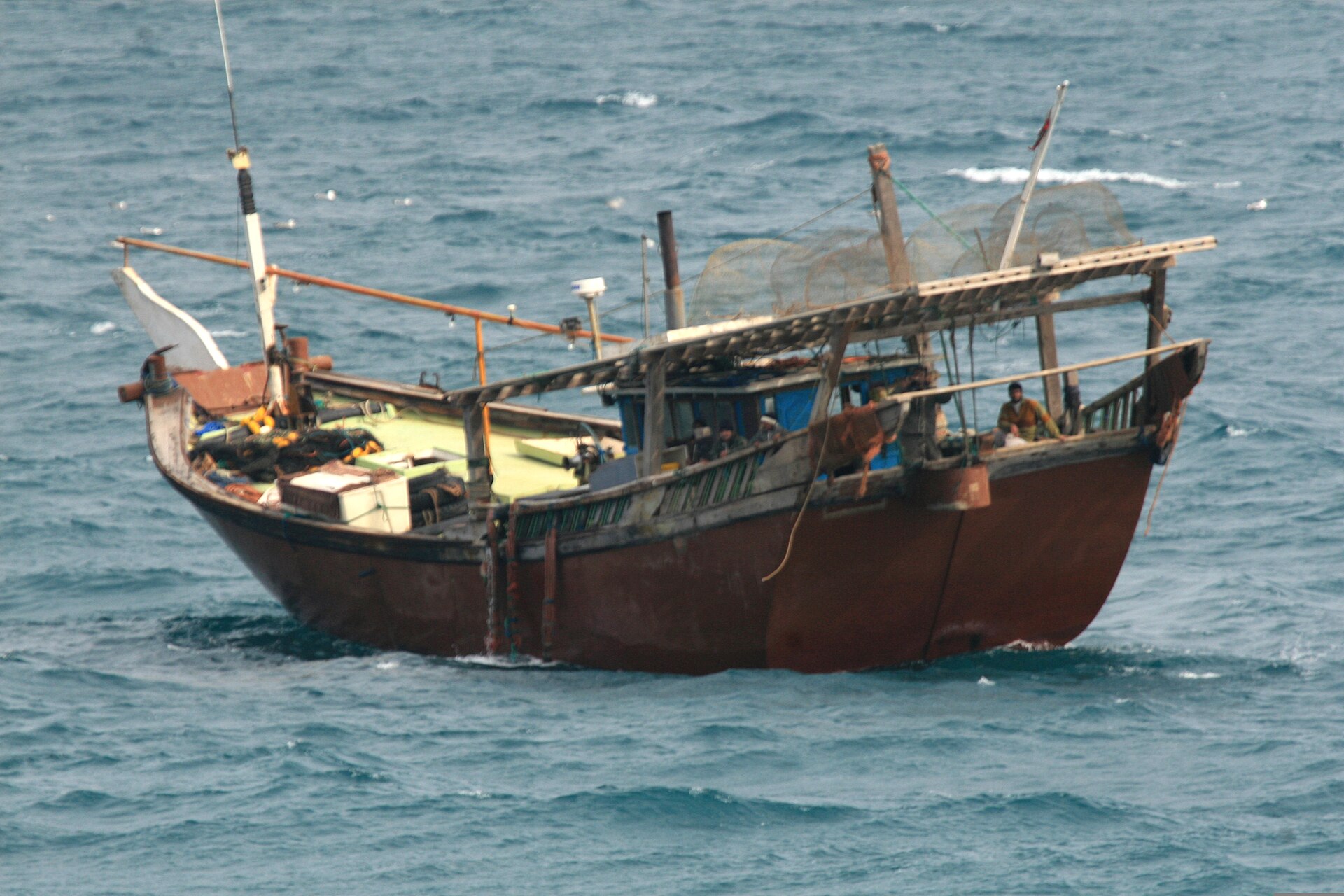

TEHRAN — Iran’s army said a US drone struck a fishing boat carrying three people off the coast of Sirik County, Hormozgan Province, at approximately 3:30 AM local time on Sunday, November 29, leaving one person missing. The incident, reported by Iran’s state news agency IRNA and the semi-official Fars News, is the latest point of friction between Iranian civilian maritime traffic and US enforcement operations in the Strait of Hormuz.
The claim — which the US military has not acknowledged — arrived on the same day that Iran’s ambassador to Pakistan confirmed Tehran was actively reviewing proposals from Qatari and Pakistani mediators aimed at de-escalating the broader conflict. That timing gives Iran a concrete civilian-harm narrative at the precise moment both sides are signalling willingness to talk, and Tehran is likely to press it.
The House of Saud Daily Briefing
Saudi Arabia's news in 3 minutes, every morning. Free. See today's issue
Table of Contents
What Did Iran’s Army Say About the Sirik Strike?
Iran’s Artesh — the regular army, distinct from the Islamic Revolutionary Guard Corps — issued a statement through its public relations office saying that “an enemy drone hit a fishing boat in the Sirik country area with three passengers,” according to IRNA’s English-language service. The statement identified the drone as belonging to the “US aggressor,” according to Fars News Agency as cited by Arab Times Online. Two of the three people aboard were rescued and transferred to a hospital in Sirik, the West Asia News Agency (WANA) reported.
The boat’s owner, identified by WANA as Mahmoud Alafteh — transliterations of the name vary across outlets — was missing as of the initial reports. Iran’s army said a search operation was underway. No Iranian source described the boat as a blockade-runner or suggested it was engaged in anything other than fishing.
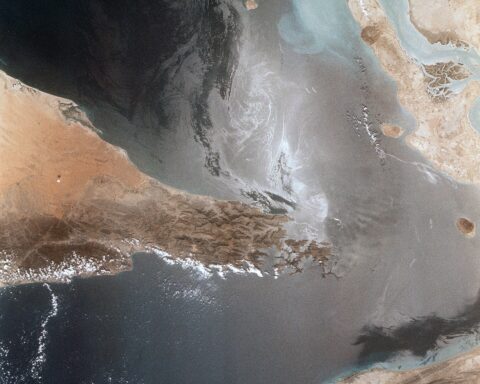
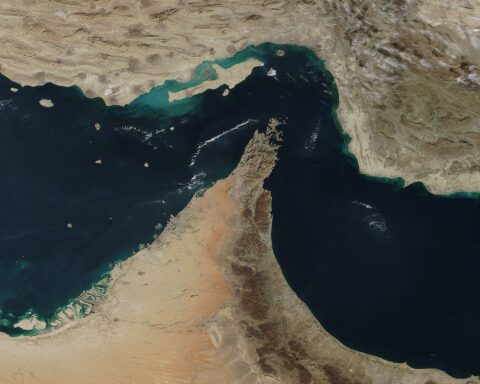
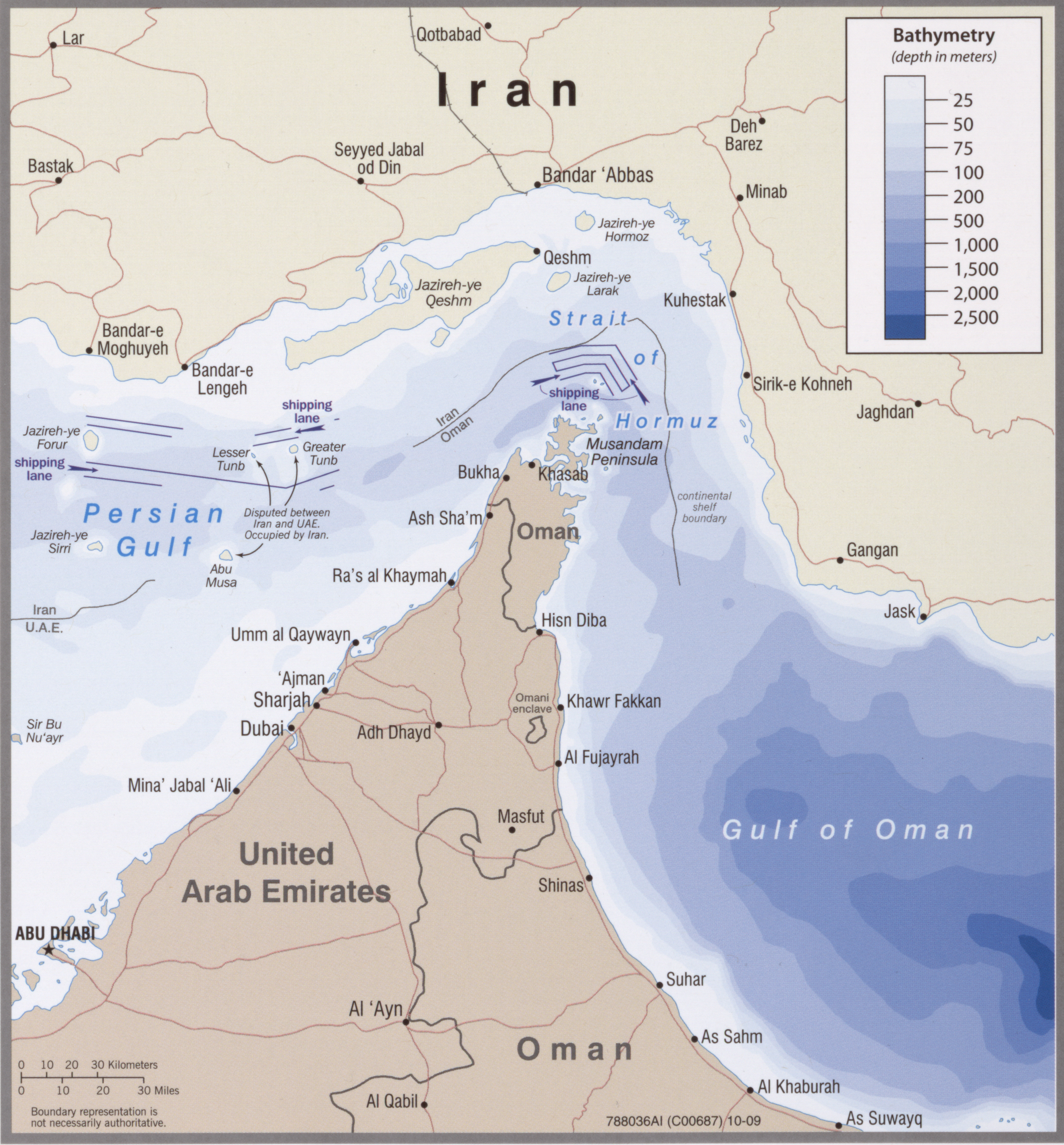
Sirik County sits on the southern Iranian coastline in Hormozgan Province, the same province that contains Bandar Abbas — Iran’s principal naval base — and Qeshm Island. The area has been a focal point of the broader conflict: in October, a strike on a Sirik telecom tower was reported alongside IRGC claims of a Bahrain radar hit, and earlier in November, Al Jazeera’s live blog recorded blasts in Sirik among other Hormozgan cities.
The statement came through the Artesh chain of command — not the IRGC. The two organisations operate under separate commanders: Amir Hatami leads the Artesh, while Ahmad Vahidi commands the IRGC. Both report to the Supreme Leader through the Armed Forces General Staff, and the Artesh Navy and IRGC Navy coordinate jointly under that body, according to Mehr News. That the Artesh issued the fishing boat statement, rather than the IRGC, is consistent with the incident occurring in waters where both forces operate under joint responsibility through the Armed Forces General Staff.
The identity of the drone has not been confirmed by any party other than Iran. No photographs, video, or debris analysis accompanied the initial reports. The incident has not been independently verified. One outlier headline from News Minimalist stated the strike “kills one,” but all other outlets — WANA, Arab Times Online, IRNA, Asharq Al-Awsat — describe the boat owner as missing, not dead.
CENTCOM Silence Fits a Pattern
US Central Command had not responded to the claim as of multiple reports published on November 29, according to Arab Times Online and other outlets covering the story. No statement from the Department of Defense was found.
The silence is consistent with CENTCOM’s posture on other recent Iranian claims. On November 28 — one day before the fishing boat report — Iran’s Artesh claimed it had shot down a US drone over the Strait of Hormuz, and CENTCOM did not respond to that claim either. In October, when Iranian state media reported that US forces attacked two fishing boats near Qeshm Island, injuring one fisherman and leaving two others initially missing, CENTCOM again offered no comment, according to Reuters.
The pattern leaves a gap that Iran fills with its own account. Without a US denial or confirmation, the Iranian version circulates as the only narrative. Al Jazeera’s live blog carried the fishing boat claim as a brief entry attributed to “Iran’s army.” Asharq Al-Awsat ran a straight news report noting two rescued and one missing. The Cradle reported “two injured, one missing.” No wire service — AP, Reuters, BBC, or Bloomberg — had published a standalone report on the specific incident as of the time of writing.
Are Fishing Boats Protected Under Blockade Law?
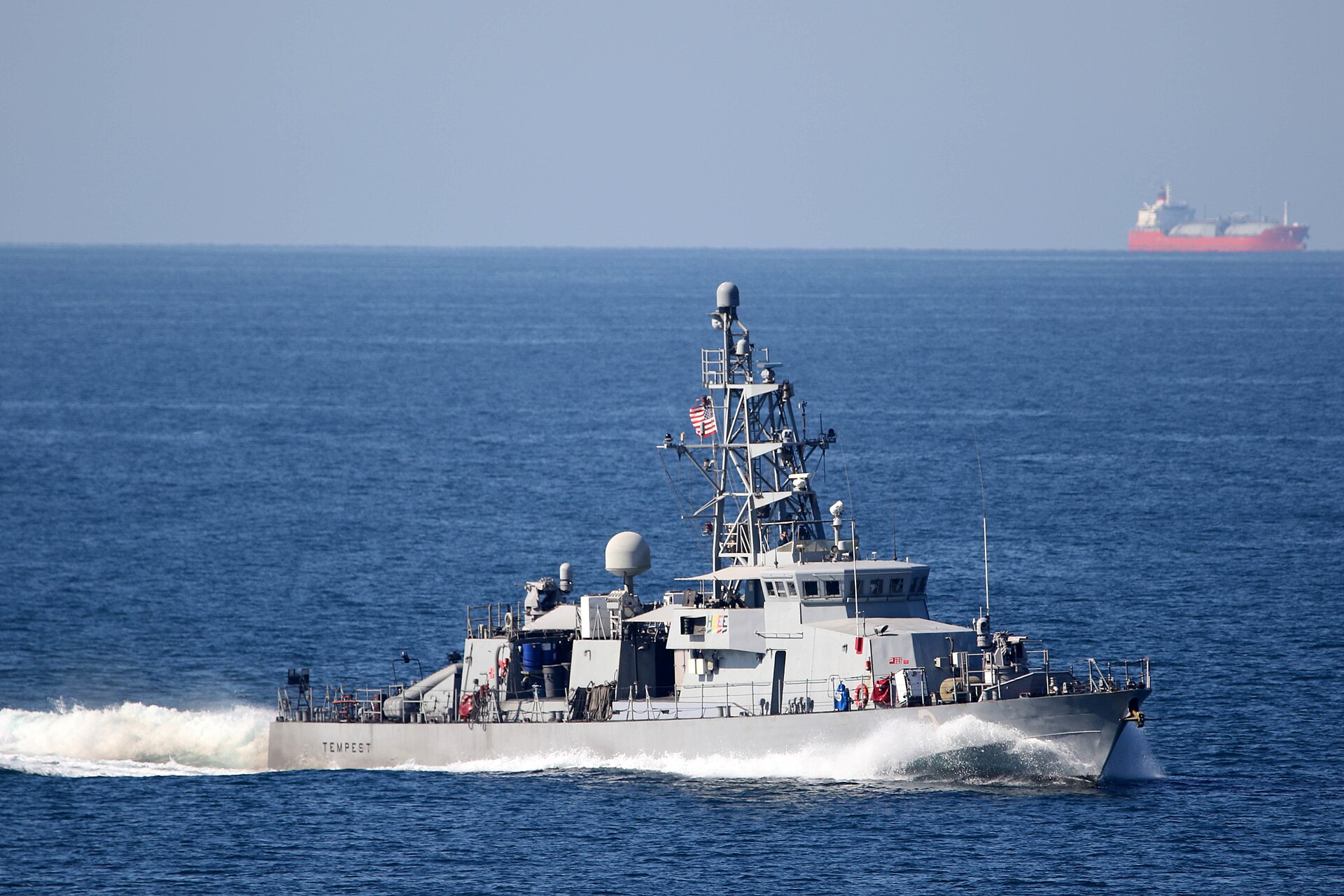
Small coastal fishing vessels occupy a specific category under the international rules that govern naval blockades. The San Remo Manual on International Law Applicable to Armed Conflicts at Sea — the most widely cited framework for maritime conflict — states in Rule 136 that “small coastal fishing vessels” are exempt from blockade enforcement, according to Mark P. Nevitt, associate professor of law at Emory University School of Law and a former commander in the US Navy Judge Advocate General’s Corps, writing in Just Security in 2026.
“Small coastal fishing vessels and small boats engaged in local coastal trade are also exempt” from blockade enforcement, Nevitt wrote. The exemption is longstanding and predates the San Remo Manual itself, drawing on customary international law that distinguishes between vessels contributing to an adversary’s war effort and those engaged in subsistence or small-scale civilian activity.
The legal picture around the US blockade is more complicated in practice. The Liberian International Ship and Corporate Registry (LISCR), which administers the world’s second-largest ship registry, issued Marine Security Bulletin MSB-07/2026 warning that non-compliant vessels in the blockade zone may be legally compelled with force. The Joint Maritime Information Center (JMIC) Advisory Note 007-26, published in June 2026, separately described enforcement actions including “disabling and destructive fires” for vessels that do not demonstrate immediate compliance with blockading forces. Jennifer Parker, a naval expert at the University of New South Wales, noted that warning shots can then be fired, depending on the enforcing country’s rules of engagement.
Whether any warning was given before the alleged strike on the fishing boat is unknown. Iran’s army statement did not mention warnings, and no US account exists. If the vessel was indeed a small fishing boat engaged in coastal activity, the San Remo exemption would apply — but enforcing states have historically argued that any vessel operating in a declared exclusion zone without authorization may be subject to interdiction, regardless of size or purpose.
How Does the Incident Affect the US-Iran Talks?
The fishing boat claim surfaced on a day when Iran’s diplomatic track was unusually active. Iran’s ambassador to Pakistan, Reza Amiri Moghadam, told Yeni Safak on November 29 that Tehran was “reviewing several ideas and proposals” from Qatari and Pakistani mediators. Iranian Foreign Minister Abbas Araghchi had said in the days prior that the Pakistani and Qatari mediation channels were “regularly exchanging proposals and conveying messages,” according to multiple outlets covering the diplomatic track confirmed the same day.
The convergence is not coincidental in its effect, even if the strike — assuming it occurred as described — was an operational matter rather than a diplomatic signal. A civilian casualty narrative gives Tehran leverage in mediation. The boat owner’s disappearance, the hospital transfer of two survivors, and the named victim all provide the kind of specific, human detail that plays differently in a negotiation room than aggregate statistics about tanker interdictions or mine detonations.
Iran has used similar incidents before. After the October 31 Qeshm Island episode, Iranian state media ran the story of two fishermen initially missing — later found alive — alongside broader coverage of what Tehran characterises as US aggression against civilian livelihoods. The pattern serves a dual purpose: it domestically reinforces the narrative that the US blockade harms ordinary Iranians, and it externally positions Iran as the aggrieved party in any mediation.
The Artesh commander, Amir Hatami, said on November 28 that the Strait of Hormuz would remain closed on Supreme Leader Mojtaba Khamenei’s orders. That declaration — a maximalist military posture — sits alongside Moghadam’s diplomatic language about “reviewing proposals.” Tehran is running both tracks simultaneously.
The US Naval Blockade Off Iran
The US naval blockade of Iranian ports was reinstated on July 14, 2026, after an initial blockade from April 13 to June 18 was paused under the Islamabad Memorandum of Understanding. That MOU collapsed 21 days after signing when three ships, including the Saudi-flagged Wedyan, were struck. CENTCOM responded by hitting more than 80 targets, and Trump declared the ceasefire “over,” according to The New Arab.
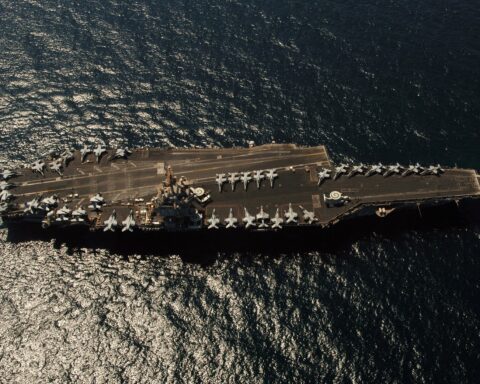
Operation Project Freedom, launched on May 4, 2026, provides the enforcement framework. The operation has used P-8 Poseidon maritime patrol aircraft, helicopter-fired Hellfire missiles, disabling gunfire, and drone operations to interdict vessels attempting to breach the blockade. CENTCOM stated that enforcement covers “the entirety of the Iranian coastline” and applies to vessels of all nations, according to LISCR’s Marine Security Bulletin.
By October 10, CENTCOM said it had turned around 135 ships since the blockade began, according to CBS News. The US disabled a sixth ship running the blockade as 158 others complied, and Iran’s own response has included blacklisting 266 vessels while 608 ships waited in queue. Oil throughput through the strait has fallen to 54% of prewar levels as ship-to-ship transfer routes hit capacity limits.
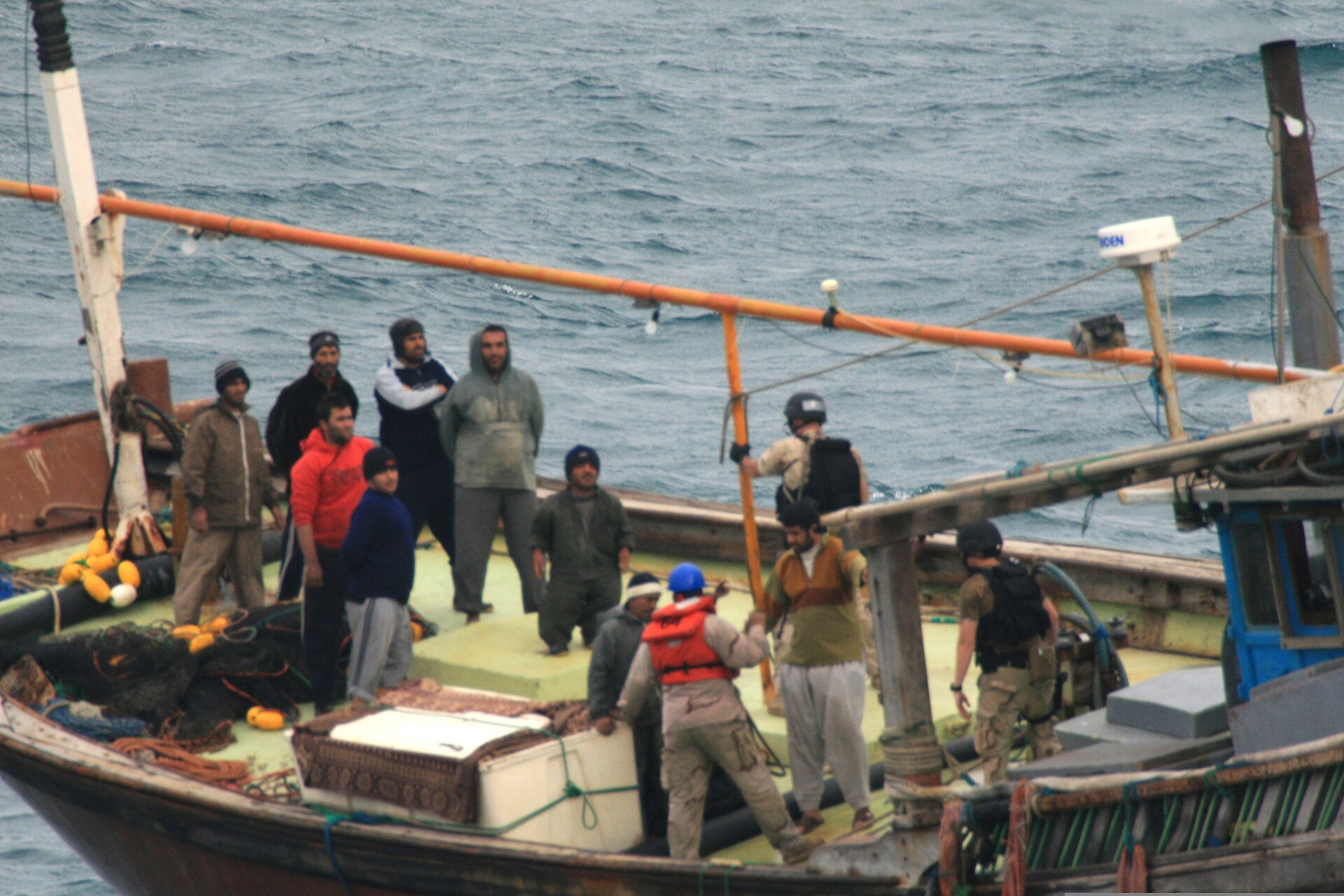
The blockade’s impact on small civilian vessels — fishing boats, coastal traders, ferry traffic — is less documented than its effect on tankers. The Qeshm Island incident on October 31 and the Sirik claim on November 29 are among a small number of reported encounters involving non-commercial civilian boats. Reuters confirmed the Qeshm episode; the two initially missing fishermen were later found alive, according to US News. Iran has not provided an authoritative public count of civilian vessel incidents.
Separately on November 29, the IRGC described two oil tankers as “ignoring regulations” in the strait — language that applied to commercial vessels, not to the fishing boat. The distinction matters: Iran’s own military apparatus treats the fishing boat incident as a civilian matter distinct from the tanker interdictions that form the core of the US-Iran maritime confrontation. The IRGC mine blockade has cut Hormuz tanker transits to single digits per day, but the fishing communities along the Hormozgan coast operate in the same waters under different circumstances and, under international law, different protections.
Frequently Asked Questions
Has the US confirmed or denied striking the fishing boat?
No. As of the initial reports on November 29, neither US Central Command nor the Department of Defense had issued any statement on the Sirik incident. This is consistent with the US military’s approach to Iranian claims throughout November: CENTCOM also did not respond to Iran’s November 28 claim of shooting down a US drone. The absence of a US response means the incident has not been independently verified, and the identity of the drone remains unconfirmed by any non-Iranian source.
What happened during the similar Qeshm Island incident in October?
On October 31, 2026, an Iranian provincial official reported via state broadcaster IRIB that US forces attacked two fishing boats off Qeshm Island in Hormozgan Province. Reuters confirmed that one fisherman was injured. Two fishermen who were initially reported missing were later found alive. As with the Sirik case, CENTCOM did not comment on the Qeshm incident. Qeshm Island sits approximately 90 kilometres west-northwest of Sirik along the Hormozgan coastline facing the Strait of Hormuz.
What does “disabling and destructive fires” mean in blockade enforcement?
The phrase comes from the Joint Maritime Information Center (JMIC) Advisory Note 007-26, which described enforcement actions including “disabling and destructive fires” for vessels that do not demonstrate immediate compliance with blockading forces. The parallel LISCR Marine Security Bulletin MSB-07/2026 advised that non-compliant ships may be legally compelled with force. In practice under Operation Project Freedom, the US has employed a graduated sequence: radio warnings, visual signals, warning shots, disabling fire aimed at engine rooms, and — for ships that did not comply after six or more hours of warnings — full disabling strikes. These measures have been applied to commercial vessels attempting to breach the blockade, not, in documented cases, to small fishing boats.
Could Iran take this case to an international body?
Iran could raise the incident at the UN Security Council, the International Court of Justice, or the International Maritime Organization, though practical obstacles are significant. The Security Council route is blocked by the US veto. The ICJ requires either both parties to accept jurisdiction or an applicable treaty basis, and proceedings typically take years. The IMO could address the matter through its Maritime Safety Committee, but its resolutions are non-binding. Iran has historically preferred to publicise such incidents through state media and diplomatic channels rather than pursue formal international legal action, which rarely produces timely results during active hostilities.
The House of Saud Daily Briefing
Saudi Arabia's news in 3 minutes, every morning. Free. See today's issue