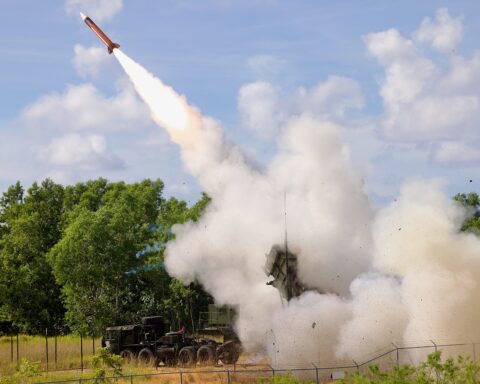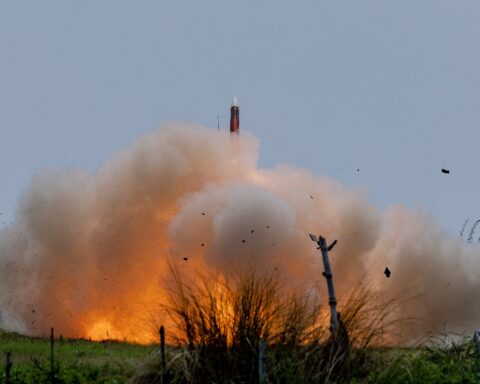

TEHRAN — A strike attributed to an unnamed “enemy” hit the port city of Sirik on Iran’s Hormuz shore on 12 November, and the IRGC followed a script it has used before — identify the target as a telecommunications tower, claim a retaliatory hit on a US radar in Bahrain, and refuse to name the attacker. The same target type, in the same city, was struck in June 2026, and the same sequence of accusation, alternative explanation, and claimed retaliation followed then, too.
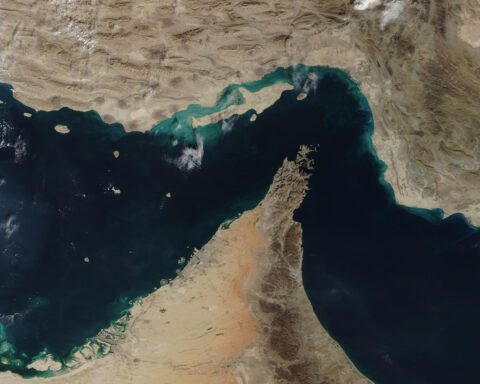
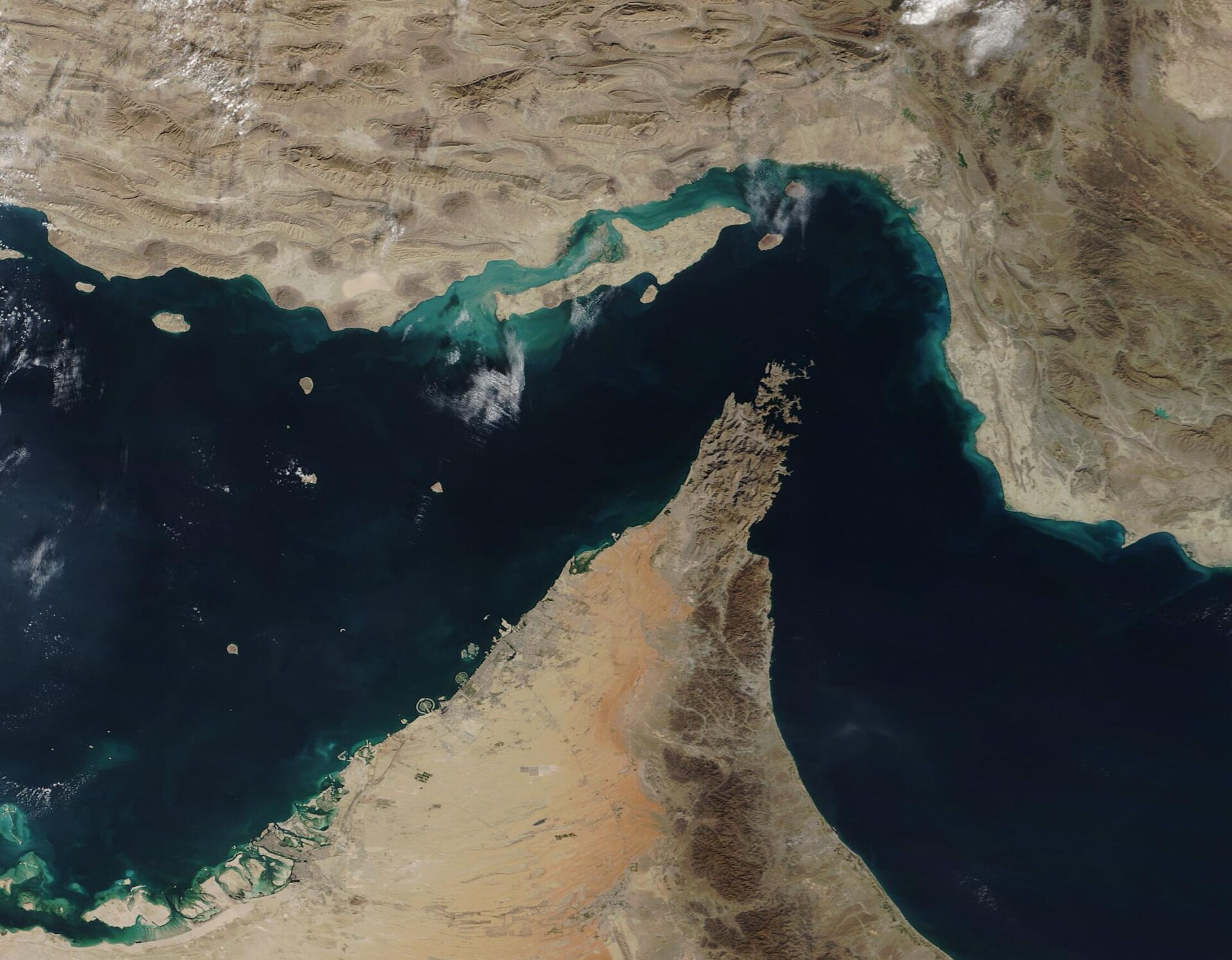
Sirik sits on the eastern flank of the Strait of Hormuz, home to the IRGC’s Shaheed Rahbari naval base and the shore-based surveillance infrastructure that allows Iran to track shipping through the world’s most contested waterway. Iran’s mine-laying capacity — the cheapest and most effective denial weapon in a narrow waterway — survived the opening military campaign largely intact, but mines without the communications network to direct them are a diminished threat, and someone appears to be degrading that network one tower at a time. For Saudi Arabia, whose cabinet called for an immediate end to threats to Hormuz navigation just two days before this latest strike, the erosion of Iran’s ability to enforce its declared strait closure is the variable that matters most.
The House of Saud Daily Briefing
Saudi Arabia's news in 3 minutes, every morning. Free. See today's issue
Table of Contents
- What Happened at Sirik on 12 November?
- What Is Sirik and Why Does the IRGC Station Forces There?
- A Pattern of Strikes on Iran’s Hormuz Shore
- Why Does Iran Offer Three Different Explanations for the Same Strike?
- What Does Degrading Iran’s Shore Infrastructure Mean for the Hormuz Closure?
- How Does This Affect Saudi Arabia’s Strategic Position?
- The Attacker Iran Will Not Name
- Frequently Asked Questions
What Happened at Sirik on 12 November?
Iran’s state news agency IRNA, citing official sources, reported that Sirik County in Hormozgan Province was struck in an “enemy attack” on 12 November (Anadolu Agency, 2026-11-12; IRNA, 2026-11-12). IRNA gave no details about the attacker, the specific target, the extent of damage, or casualties — a degree of vagueness that, as the record shows, is part of the pattern rather than an anomaly.
Within hours, the IRGC’s Aerospace Force offered a sharply different level of specificity. Speaking through the semi-official Fars News Agency, the IRGC identified the target as “a telecommunications tower in Sirik” and said it had responded by targeting “a US early-warning radar on Bahrain” (Iran International, 2026-11-13, entry timestamped 02:27 GMT). The framing was combative — the IRGC called the action “a serious warning to the aggressor enemy” over what it described as “aerial provocations and oil smuggling in the Strait of Hormuz” — but it stopped short of the one thing that would have changed the calculus entirely: naming the attacker.
“A serious warning to the aggressor enemy” over “aerial provocations and oil smuggling in the Strait of Hormuz.”
IRGC Aerospace Force, via Fars News Agency, 13 November 2026
No US Central Command statement confirmed or denied striking Sirik as of 13 November (Antiwar.com, 2026-11-12; Iran International, 2026-11-13). No Iranian or American officials made public comments specifically addressing the incident, and the gap between Iran’s accusation and the absence of any acknowledgement from the other side has characterised every documented strike on this stretch of coast. What makes the gap worth examining is that Sirik is not a random point on a map — it is one of the IRGC’s most recently built and most strategically positioned facilities on the Strait of Hormuz, and it keeps getting hit.
What Is Sirik and Why Does the IRGC Station Forces There?
Sirik County lies in Hormozgan Province on Iran’s southern coast, east of the Strait of Hormuz entrance, commanding a direct vantage point over one of the world’s busiest shipping lanes. Before the current war, the area hosted the province’s second-largest commercial port after Shahid Rajaee at Bandar Abbas, handling bulk cargo, petroleum-related trade, fishing fleets, and commercial shipping, alongside telecommunications towers and water infrastructure serving surrounding communities (The National News, 2026-06-11). It was, in peacetime, a working port town with military installations next door — the kind of dual-use geography that complicates targeting and that makes every strike a question about which function was the actual objective.
The IRGC opened the Shaheed Rahbari naval base near Sirik in September 2020, after approximately six years of construction, on a 31-hectare site on the eastern side of the strait (Bloomberg, 2020-09-24; Al-Manar, 2020-09-24). IRGC Commander Hossein Salami described the facility at its opening ceremony as serving “both defensive and offensive roles in the Gulf and Strait area.” A 2021 Middle East Institute policy paper by analyst Farzin Nadimi classified Sirik as one of the IRGC Navy’s independent bases, alongside Jask and Chabahar, and identified it as the newest IRGCN facility at the time — the most recent addition to the chain of forward positions that Iran uses to project naval power and deny access to the strait (MEI, November 2021).
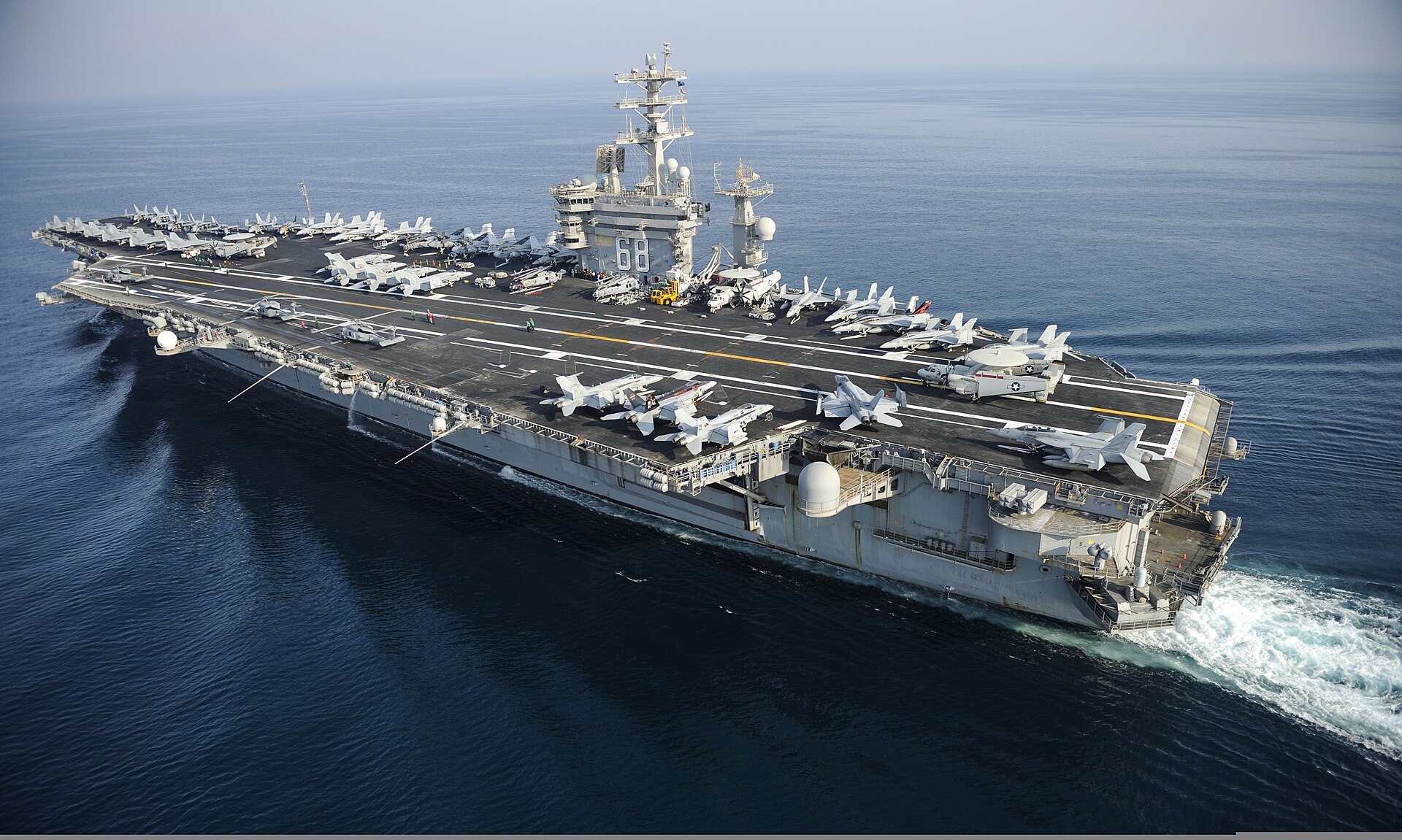
The base’s position east of the strait’s narrowest point gives the IRGC a forward operating location from which to monitor tanker traffic in both directions, direct fast-attack craft and mine-laying vessels, and maintain communications with other IRGC naval installations along the coast. The Jamestown Foundation assessed that Iran’s strait defence is “largely land-based,” relying on drones, land-based missiles, sea drones, and mines (Jamestown Foundation, 2026) — a doctrine that depends on shore facilities like Shaheed Rahbari being able to see what is in the water and communicate with the forces tasked to respond. Without that link, the mines and fast-attack craft still exist, but the system directing them loses coherence.
The telecommunications infrastructure that has now been struck repeatedly — towers serving both military coordination and civilian communications — is the connective tissue between Sirik’s watchers and the forces they coordinate. That it has been targeted specifically, rather than the base’s berths or its weapons stores, tells you something about what the campaign is optimised to degrade: not Iran’s capacity to threaten the strait, but its capacity to do so with precision.
A Pattern of Strikes on Iran’s Hormuz Shore
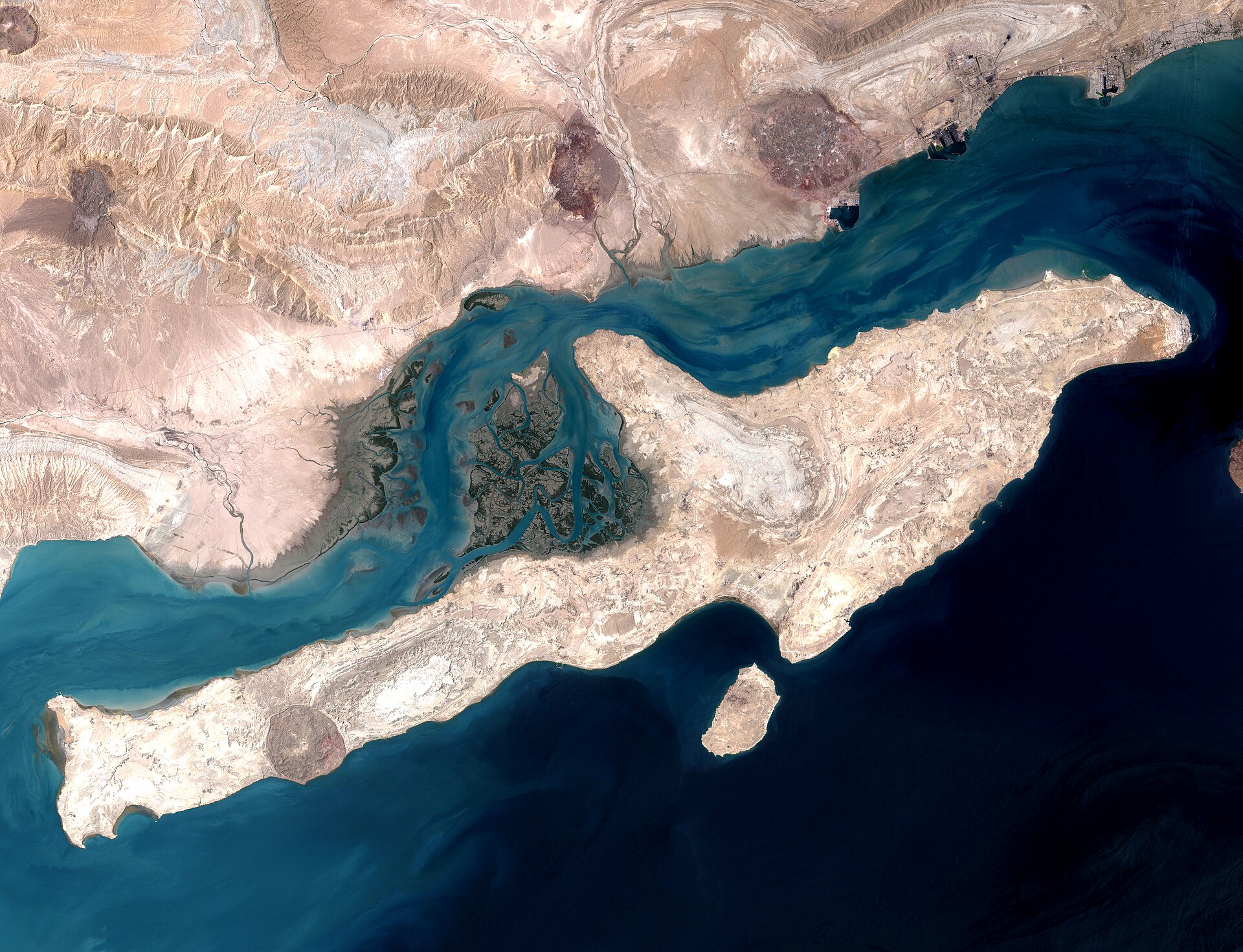
The 12 November strike is not an isolated event. The Jamestown Foundation, assessing Iranian naval infrastructure during the conflict, confirmed that the “year-old naval base at Bandar Sirik” was struck in the opening phase of hostilities, alongside facilities at Bandar Abbas, Chah Bahar, Bushehr, Jask coastal batteries, and the fast-attack craft base on Qeshm Island (Jamestown Foundation, 2026). Sirik was on the target list from the start — not as a peripheral site but alongside every major IRGC naval facility on the coast.
In June 2026, the pattern repeated with a specific focus on telecommunications infrastructure. The IRGC stated that US drones had hit “a telecommunications tower in Sirik and another in Qeshm,” then announced retaliatory strikes on the Ali Al Salem Air Base in Kuwait and the US Fifth Fleet headquarters in Bahrain — a retaliatory claim that Gulf News noted was “unverified” (Gulf News, 2026-06; Tribune Pakistan, 2026-06-06; Tasnim News, 2026-06-06). The target type was identical to what would be hit again in November: not a missile battery, not a naval vessel, not a fuel depot, but a communications tower. The response template was identical: claim a strike on a US facility in a Gulf state and frame it as proportionate retaliation for an aerial attack.
On 7–8 November, Iranian state media reported blasts “on Qeshm Island and in the cities of Jask, Sirik and Bandar Abbas” (Al Jazeera liveblog, 2026-11-08). Trump confirmed “minor strikes” on Qeshm Island to Fox News around that date but made no specific mention of Sirik (Haaretz, 2026-11-07/08). Four days later, on 12 November, the telecommunications tower in Sirik was struck again — and the IRGC reverted to the June template with almost no variation in language, framing, or claimed response.
What emerges from the documented record — the opening-phase strike confirmed by Jamestown, the June telecommunications hit reported by Gulf News, the 7–8 November blasts reported by Al Jazeera, and the 12 November strike reported by IRNA and Iran International — is not a random pattern of escalation but something that resembles a sustained campaign against a specific category of target. The strikes are hitting Iran’s shore-based surveillance and communications infrastructure along the Hormuz littoral, and they are hitting the same locations more than once, which means either the infrastructure is being rebuilt and re-targeted, or the initial strikes did not destroy it completely and follow-up attacks are intended to finish the job.
The intervals between documented Sirik incidents have compressed from months to days — from the opening phase to June, then from June to early November, then from 7–8 November to 12 November. Whatever the campaign’s objective, its tempo is increasing at a time when Iran’s formal position on the strait remains that it is closed and will stay closed until conditions are met.
Why Does Iran Offer Three Different Explanations for the Same Strike?
Every documented strike on Sirik has produced the same three-voice response from Iran’s information ecosystem, and the 12 November incident followed the template with the precision of a rehearsed performance. IRNA reported an “enemy attack” on Sirik County using the vaguest possible framing — no attacker named, no target specified, no damage assessment, no casualties (Anadolu Agency, 2026-11-12). The word “enemy” does maximum work with minimum commitment: it establishes that something happened and that Iran considers it hostile, without attributing it to any state or force that would require a defined response.
Tasnim News Agency, which operates closer to IRGC circles but maintains a semi-official status that allows it more interpretive latitude, offered a competing narrative entirely. Its unnamed sources suggested the explosions “may have resulted from warning shots fired at vessels allegedly violating maritime regulations” (Anadolu Agency, 2026-11-12). This is the face-saving alternative — a framing that attributes the blasts not to a hostile attack but to Iran’s own enforcement activity in the strait, turning a strike against Iranian infrastructure into evidence of Iranian control. Tasnim did not reconcile this with IRNA’s “enemy attack” framing, and no one in Tehran appeared to require it to do so.
The IRGC’s Aerospace Force, speaking through Fars News Agency hours later, abandoned both the vagueness and the alternative explanation. It identified the target as “a telecommunications tower,” explicitly called the incident “aerial aggression,” and announced a retaliatory strike on a US early-warning radar in Bahrain (Iran International, 2026-11-13). The IRGC’s version is the one that projects strength — the version that says Iran was attacked, Iran identified what was hit, and Iran struck back — regardless of whether the claimed retaliatory strike can be independently verified. Gulf News applied the label “unverified” to the identical retaliatory claim in June (Gulf News, 2026-06), and no US or Bahraini statement has confirmed the November claim either.
The three-voice system serves three audiences simultaneously, and the contradictions between them are a feature rather than a flaw. IRNA’s vagueness provides the diplomatic space to avoid escalation; Tasnim’s alternative offers domestic audiences reassurance that Iran remains in control of the strait; and the IRGC’s escalation narrative feeds the deterrence posture that underpins Iran’s Hormuz closure doctrine. The system requires that nobody in Tehran reconcile the contradictions — and nobody does, because reconciliation would require admitting either that Iran’s sovereignty over the strait is being challenged repeatedly and successfully, or that the IRGC’s retaliatory strikes are symbolic claims rather than operational realities.
What Does Degrading Iran’s Shore Infrastructure Mean for the Hormuz Closure?
Iran declared the Strait of Hormuz closed on 18 April 2026, with the IRGC announcing it “closed until further notice.” After a partial reopening under a June agreement, Iran re-closed the strait in July. As recently as 5 November, Majlis Speaker Mohammad Bagher Ghalibaf stated publicly that the strait would not reopen until seven conditions based on the June 2026 Islamabad memorandum are met, saying Iran’s position is “completely clear and firm” (Khaleej Times, 2026-10-04). Iran’s formal position is unambiguous: the strait is closed on Iran’s terms, and those terms have not been met.
Enforcing that closure, however, requires more than a declaration. The Jamestown Foundation assessed that “Iran’s defense of the strait is largely land-based, using drones, missiles, sea drones, and mines, and about 80 percent of mine-laying capacity survived the first two weeks of strikes” (Jamestown Foundation, 2026). That assessment is the foundation of Iran’s Hormuz doctrine — the mines are the weapon that makes the closure physical rather than rhetorical, and 80 percent survival means the capability was never decisively eliminated. What the Jamestown assessment did not address, because the pattern was not yet visible when it was written, is what happens when the infrastructure coordinating those mine-laying operations is systematically degraded.
Telecommunications towers do not launch missiles or deploy mines. What they do is allow the IRGC to monitor vessel movements in real time, relay targeting data to shore-based missile batteries and fast-attack craft, and coordinate the positioning of mine-laying assets in shipping lanes — the operational backbone that turns a declared closure into an enforced one. The fact that whoever is striking Sirik has hit telecommunications towers specifically, in both June and November, rather than missile launchers or the base’s physical infrastructure, suggests a campaign aimed not at destroying Iran’s Hormuz denial capability outright but at blinding it — degrading Iran’s ability to see what is moving through the strait and to direct its forces in response.
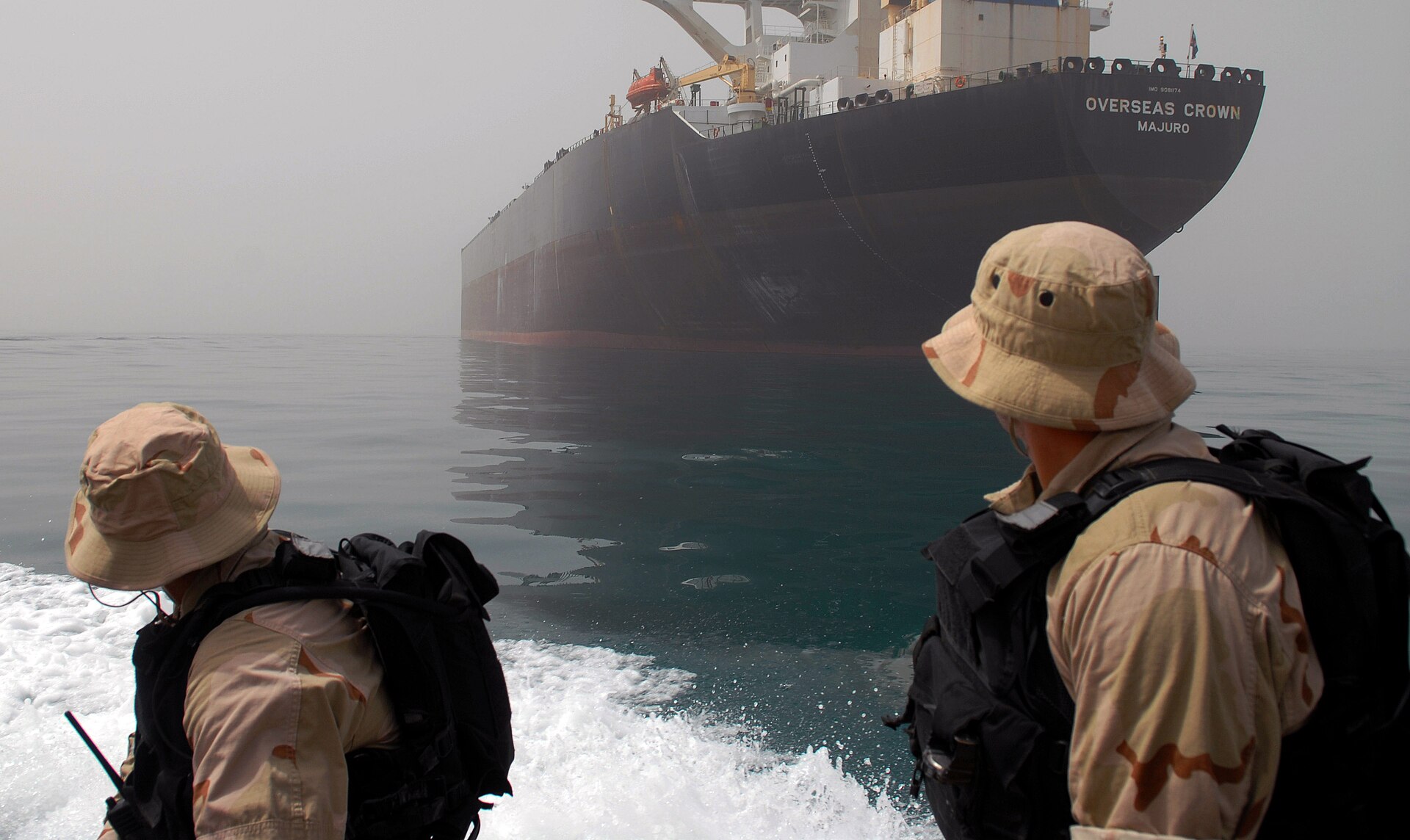
CENTCOM confirmed as of October that 135 ships had been turned around since the US naval blockade began on 14 July (Gulf News, 2026-10-12). Pre-war, roughly 130 to 140 ships a day transited the strait (Reuters, cited in accuracy baseline). Commercial traffic is already navigating a waterway under competing enforcement regimes — one American, one Iranian — and the question the Sirik strikes raise is whether Iran’s regime is losing its operational teeth even as its political rhetoric remains absolute. Mines laid without current intelligence on shipping patterns are less discriminate. Shore-based missiles directed without real-time communications feed are less accurate. And a closure maintained by institutional declaration rather than active enforcement starts to look, from the perspective of ship operators and their insurers, like something that can be tested.
How Does This Affect Saudi Arabia’s Strategic Position?
Saudi Arabia’s Cabinet, chaired by Crown Prince Mohammed bin Salman on 10 November — two days before the Sirik strike — “underlined the need for an immediate end to all acts that threaten the security of navigation” and named the Strait of Hormuz alongside the Red Sea and Bab al-Mandeb (Asharq Al-Awsat, 2026-11-11; Arab News, 2026-11-10). The language was calibrated to avoid naming either Iran or the United States, which is itself revealing: the strikes degrading Iran’s Hormuz infrastructure serve Saudi interests, but endorsing them publicly would complicate the kingdom’s positioning as a force calling for de-escalation rather than participating in it.
The stakes are not abstract. Saudi oil exports depend on the Strait of Hormuz, and when that route is disrupted, the fallback is the East-West pipeline to Yanbu on the Red Sea — a route that Houthi forces have themselves targeted. Iran’s Foreign Minister Araghchi proposed a seven-day roadmap under which the strait could reopen if the US lifts its naval blockade, provides sanctions waivers, and releases approximately $12 billion in frozen Iranian assets (Al Jazeera, 2026-09-25), but Trump rejected the proposal and the Wall Street Journal reported he expected renewed bombing after the midterms (Hurriyet/WSJ, 2026-09-26). Iran now says the closure is non-negotiable until all seven conditions are met (Khaleej Times, 2026-11-05), and the diplomatic track has produced nothing since.
For Riyadh, every strike that degrades Iran’s ability to enforce the closure without requiring Saudi forces to fire a shot or Saudi diplomats to endorse the operation is a strategic gain of the cleanest possible kind. It weakens the Hormuz threat that constrains Saudi oil revenue without drawing Saudi Arabia into direct confrontation with Tehran, and it does so at a time when the kingdom is managing a projected 2026 deficit of 245 billion riyals — up from a budgeted 165 billion — driven partly by a 21.8 percent drop in oil-sector activity (Reuters via Zawya, 2026-09-30). The IRGC’s continued attacks on tanker traffic and its mine-laying operations in the strait remain dangerous, but the erosion of Iran’s command-and-control infrastructure along the eastern shore changes the risk profile for vessels attempting the transit.
If vessels can transit the strait with diminishing risk that Iran will detect and respond to their passage in real time, the economic pressure behind Iran’s seven conditions shifts — the closure becomes a depreciating asset, and the leverage it was meant to produce erodes with every tower that goes down. The incentive for Iran to negotiate a reopening on terms less than its stated maximum increases as its enforcement capacity decreases, and Riyadh’s interest in that dynamic is as direct as the tanker route from Ras Tanura to Fujairah.
Trump, in reporting around 13 November, warned he “would not hesitate to use military force against Iran again if necessary” and claimed that Tehran “has lost control of the Strait of Hormuz” (Eurasia Review, 2026-11-13). Whether that claim is premature depends on a question nobody involved will answer on the record — whether the strikes on Sirik represent a deliberate, sustained campaign to make it true, or a series of tactical actions that happen to serve a strategic outcome that Washington, Riyadh, and the commercial shipping industry all want.
The Attacker Iran Will Not Name
No Iranian official has named the United States as the attacker at Sirik. No casualty figures have been released. No damage assessment has been made public. The IRGC’s framing — “the aggressor enemy” conducting “aerial provocations” — stops conspicuously short of the direct attribution that would, under Iran’s own stated doctrine, demand a proportionate military response against the attacker rather than a symbolic strike on a radar facility in a Gulf state. In June, after the same target type was hit at the same location, the IRGC followed the same ambiguous template, and no escalation followed beyond the claimed retaliatory strikes.
The ambiguity serves both sides of a relationship defined by mutual deterrence and mutual restraint. For Iran, refusing to name the attacker avoids the escalation pressure that formal attribution would create — pressure that Tehran’s Hormuz position, already contested by an active US naval blockade, cannot easily absorb without either responding militarily against the United States or admitting that it chose not to. For the unnamed party, the absence of acknowledgement maintains operational flexibility: what is not confirmed can be repeated, and what is repeated against the same target set produces cumulative degradation without a single decisive moment that forces a political crisis.
At the Shaheed Rahbari base, the facility Commander Salami described at its opening as built for “both defensive and offensive roles in the Gulf and Strait area,” the telecommunications tower the IRGC identified as the 12 November target was part of the infrastructure that made Iran’s claim to control the strait operational rather than rhetorical. It has now been hit at least twice in five months, in a city struck repeatedly since the opening phase of the war, and Tehran’s response — every time — has been the same three voices delivering three different versions of events while naming nobody at all.
Frequently Asked Questions
Has the IRGC’s claimed retaliatory strike on Bahrain been confirmed?
No US or Bahraini official statement has confirmed damage to a US early-warning radar in Bahrain following the IRGC’s 13 November claim. The IRGC made a near-identical retaliatory claim in June 2026, stating it had struck the US Fifth Fleet headquarters in Bahrain after a telecommunications tower in Sirik was hit — a claim Gulf News labelled “unverified” at the time (Gulf News, 2026-06). Retaliatory claims against US military facilities in Bahrain have not been independently confirmed by US or Bahraini authorities in either instance.
What are Iran’s stated conditions for reopening the Strait of Hormuz?
Iran has framed its conditions through overlapping proposals rather than a single consolidated document. Araghchi’s seven-day roadmap, submitted via Qatar in September 2026, outlined three preconditions centred on lifting the US naval blockade, sanctions relief, and the release of frozen Iranian assets (Al Jazeera, 2026-09-25). Ghalibaf’s seven-condition framework, announced separately, was tied to the June 2026 Islamabad memorandum (Khaleej Times, 2026-10-04), but neither the memorandum’s text nor a formal list of all seven conditions has been made publicly available — a gap that gives Tehran interpretive flexibility over what “met” would mean in practice and makes any future verification of compliance ambiguous by design.
How has the Hormuz disruption affected Saudi Arabia’s fiscal position?
Saudi Arabia’s pre-budget statement projects real GDP falling 3.6 percent in 2026 and rebounding 12.8 percent in 2027 — both forecasts contingent on resumed oil export flows that the Hormuz closure and separate Houthi attacks on the East-West pipeline have placed in doubt (Reuters via Zawya, 2026-09-30). Gulf-to-China VLCC shipping rates reached $1.2 million per day during the disruption, against roughly $80,000 a year earlier (bdnews24/LSEG, 2026-10-05).
The House of Saud Daily Briefing
Saudi Arabia's news in 3 minutes, every morning. Free. See today's issue