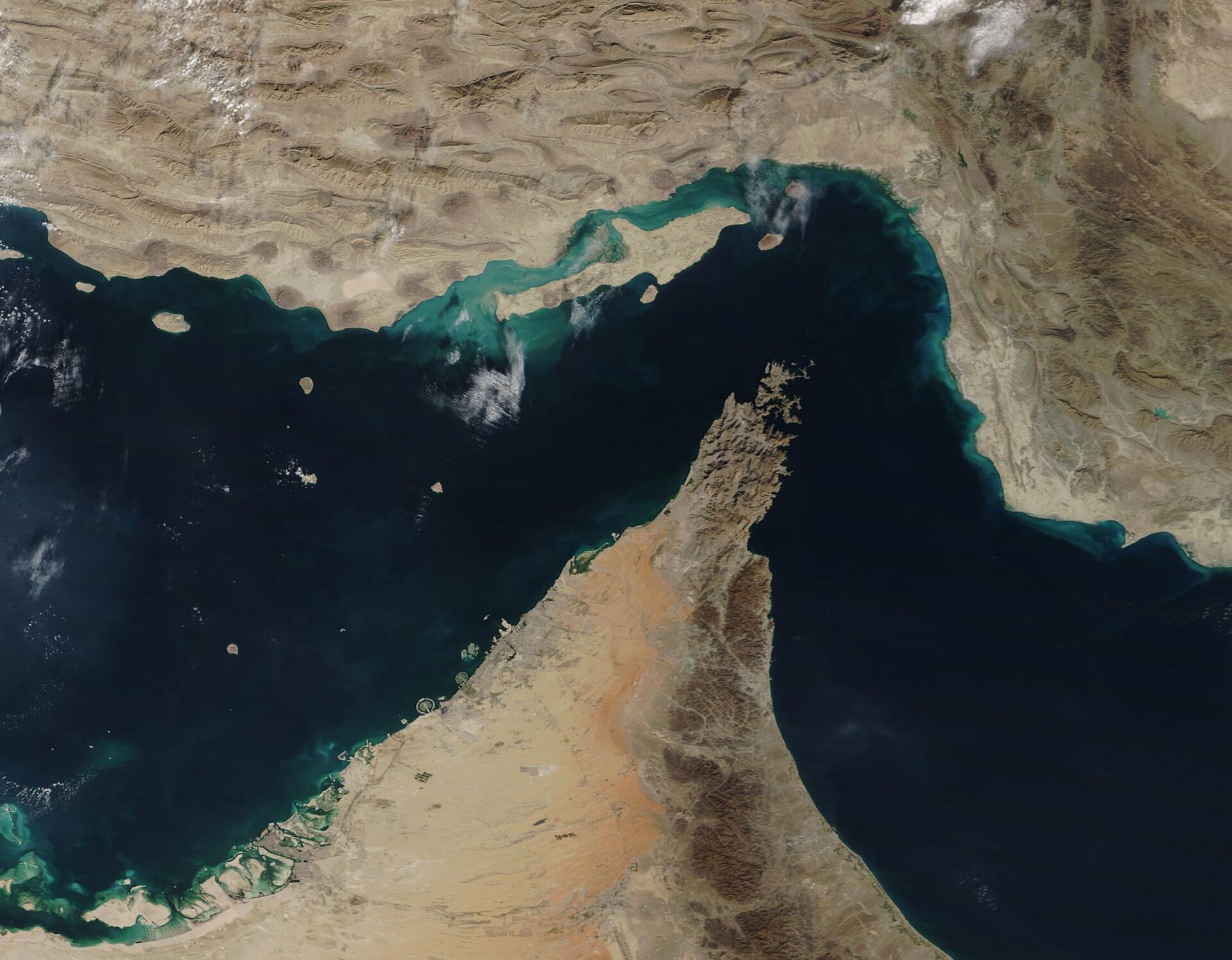
TEHRAN — Iran’s Army Navy Force claimed on November 13, 2026, that it shot down a US MQ-1 drone near Kuhestak on the Sirik coast in Hormozgan Province, approximately 100 kilometers east of the Strait of Hormuz’s narrowest point. The United States Central Command had not acknowledged or denied the claim as of approximately 19:05 UTC.
The announcement, carried by Mehr News citing the Public Relations Office of the Iranian Army Navy Force, marked the latest in a series of Iranian drone intercept claims in 2026 — and the first attributed to Iran’s regular military rather than the Islamic Revolutionary Guard Corps. It came on a day of at least four other Iranian military actions in the same theater, from a gas carrier mine explosion to IRGC drones fired at US forces in Bahrain. Brent crude settled at $95.82 per barrel on Thursday, up $3.06 from the prior session, as markets digested the overlapping incidents alongside the collapse of US-Iran diplomatic channels, according to CNBC and Newsquawk.
The House of Saud Daily Briefing
Saudi Arabia's news in 3 minutes, every morning. Free. See today's issue
Table of Contents
What Did Iran’s Army Navy Claim About the MQ-1 Drone?
The Iranian Army Navy Force — the regular military’s naval branch, organizationally separate from the IRGC Navy — said it downed the drone using “a new air defense system belonging to the Iranian Navy” operating under Iran’s integrated air defense command network, according to Mehr News and Trend.az.
Press TV, the Iranian state English-language broadcaster, published its report at 13:11 GMT on November 13, attributing the claim to the Army Navy and identifying the location as the Kuhestak area of the Sirik coast, Sirik County, Hormozgan Province. Nour News and Tehran Times carried matching accounts within hours.
All five Iranian state and state-affiliated outlets that reported the incident — Mehr News, Press TV, Tehran Times, Nour News, and Trend.az — identified the drone as an MQ-1. None used the MQ-9 designation for this specific event.
CENTCOM, which on the same day confirmed shooting down two IRGC one-way attack drones targeting US forces in Bahrain and denied a separate IRGC claim of destroying a US early-warning radar there, issued no statement about the Army Navy’s MQ-1 claim, according to CP24/AP and Al Hurra. No Reuters, AP, AFP, or Al Jazeera report independently confirmed the shootdown as of publication.
Iranian state media published images described as wreckage from the drone. These had not been independently verified.
The Branch Distinction: Artesh Versus IRGC
The attribution of this claim to the Army Navy Force, rather than the IRGC, carries institutional weight. Iran maintains a dual military structure: the Artesh, or regular armed forces, including the Army Navy Force, operates under the Supreme Leader as commander-in-chief, through the Armed Forces General Staff. The IRGC also reports directly to Supreme Leader Mojtaba Khamenei, but maintains a separate chain of command and operates with greater institutional autonomy.
Previous drone intercept claims in 2026 have overwhelmingly originated from the IRGC’s Aerospace Force. The IRGC claimed a “14th” MQ-1 destruction east of Sirik on October 29, according to Anadolu Agency. Tehran Times referenced a “16th” around the week of November 7. Those sequential numbers are Iranian state media claims with no independent verification.
The Army Navy’s public assertion of an air defense role in Hormozgan Province suggests the regular armed forces are now claiming airspace authority in the same zone where the IRGC has previously operated. The mention of an “integrated air defense command network” in the announcement, reported by Trend.az, implies coordination across both military branches rather than a unilateral action.
No sequential number was attached to the November 13 Army Navy claim by any Iranian source. The IRGC’s count and the Army’s count may not form a single series.
What Does the November 13 Operational Cluster Signal?
Five Iranian military actions were reported in the Hormuz theater on November 13.
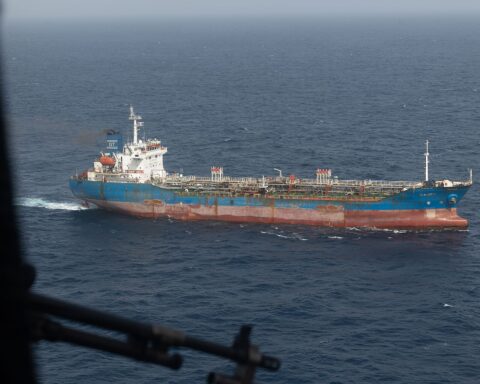
The IRGC Navy said an LPG carrier struck a mine east of Hormuz and exploded, with the vessel described as traveling an “unauthorized route” under US fighter jet protection, according to Iran International. Maritime security firm Ambrey characterized the same event as a stern strike rather than a mine detonation, Newsquawk reported.
The IRGC Aerospace Force warned of strikes “without geographical limits” and declared “unlimited response” readiness after what Iran described as an airstrike on a Sirik telecommunications tower attributed to “the enemy,” according to Al Jazeera.
CENTCOM confirmed the two drones were shot down. CNN described the Bahrain attack as “the first Iranian attempt against a US military site in a Gulf state in about two months.” The IRGC separately claimed it had destroyed a US early-warning radar in Bahrain; CENTCOM denied this, per Al Hurra.
The Army Navy Force then claimed the MQ-1 intercept, presenting it as a defensive action in the same Sirik theater where the telecom tower had been struck.
Tehran Times and Mehr News presented the day’s actions as a coherent retaliation sequence triggered by the Sirik telecom tower strike — not as a response to US President Donald Trump’s rejection of diplomatic talks the previous day. This framing attributed the entire escalation to a single triggering event, positioning each subsequent military action as defensive. None of the Iranian state media accounts cited Trump’s November 12 Truth Social post or Vance’s removal as a factor in the military operations.
Brigadier General Ali Reza Belaili, an adviser to the IRGC Aerospace Force, said that strikes against “enemies without geographical limits” would come “at the appropriate time,” adding: “The more Americans persist, the more they will sink into this swamp they created themselves,” according to Mehr News, as reported by Al Jazeera.
Kateryna Bondar, a senior fellow at the Wadhwani AI Center at the Center for Strategic and International Studies, wrote in a CSIS analysis that Iran uses drones “not just as strike assets, but as a campaign management tool.” The logic, Bondar wrote, is one of cost imposition — “accepting heavy drone attrition to force defenders to spend expensive interceptors.”
The MQ-1 Variant and Prior Confirmed Losses
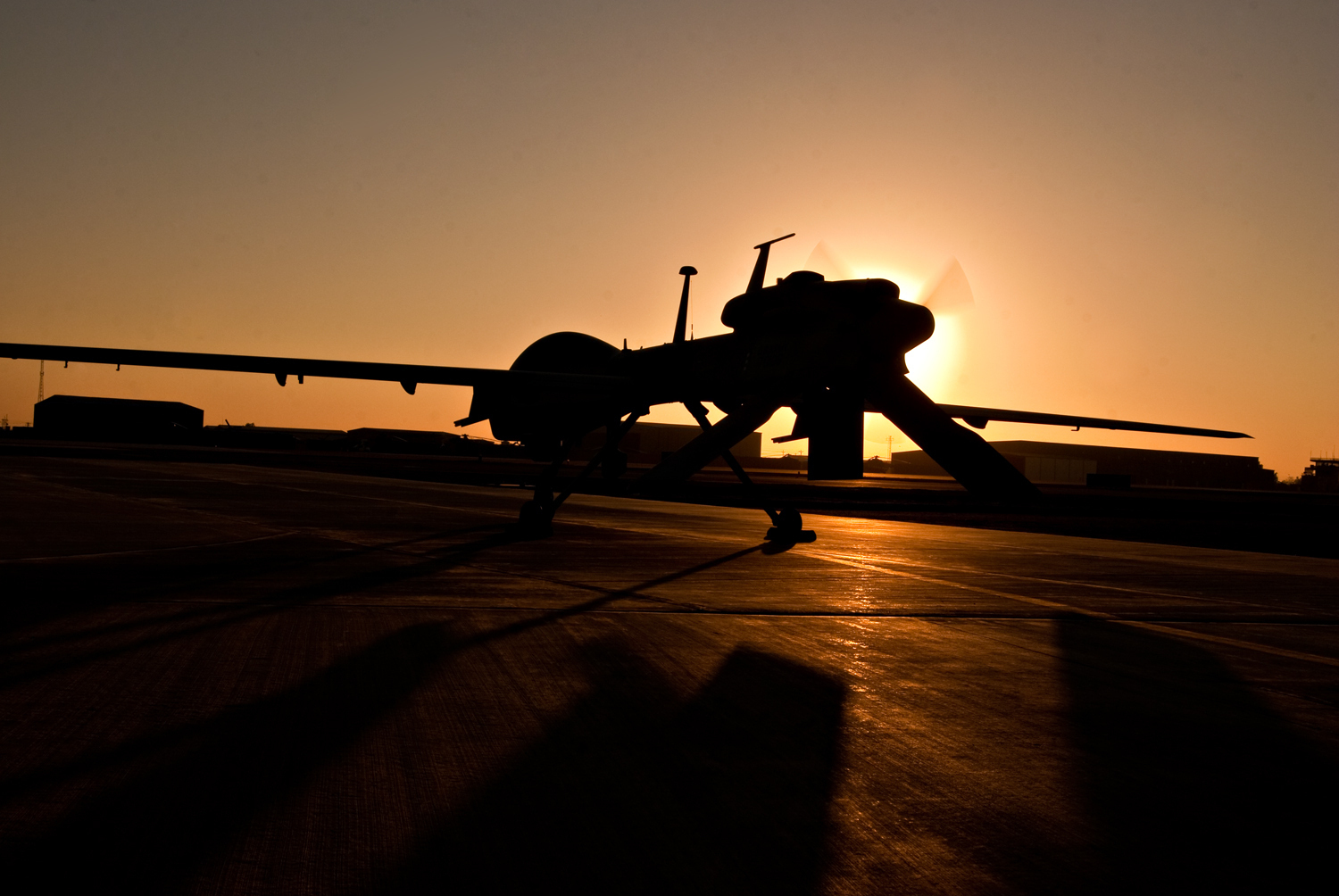
Every Iranian source for the November 13 incident identifies the drone as an MQ-1. The MQ-1B Predator, the original variant, was retired by the US Air Force in March 2018, according to Army Recognition. The variant most likely in US operational service near Hormuz is the MQ-1C Gray Eagle, which remains in active US Army inventory. CENTCOM has not publicly distinguished between variants in any incident.
The United States has previously acknowledged MQ-1 losses over Hormuz. CENTCOM confirmed on May 31, 2026, that a US MQ-1 drone was downed over international waters, Army Recognition reported. CBS News reported on September 17, 2026, that US officials confirmed “at least two MQ-1 aircraft” had been downed in the preceding days.
A separate MQ-1/MQ-9 discrepancy emerged on November 7, when the IRGC, via Mehr News and IRNA, identified a downed drone as an MQ-1, while the Iranian Army, via IRIB, and NBC News described it as an MQ-9. That discrepancy does not apply to the November 13 Army Navy claim, where all sources agree on MQ-1.
Is There Any Path Back to Diplomacy?
Trump posted on Truth Social on November 12 that “we don’t need a deal with Iran” and sidelined Vice President JD Vance from his role overseeing ceasefire and nuclear negotiations, according to CNBC and NBC News. The Wall Street Journal had reported that Vance was considering face-to-face talks with a senior Iranian security official before his removal, Al Jazeera reported. The US strikes on Qeshm Island confirmed by Trump on November 7 had already strained the diplomatic track.
On the Iranian side, the diplomatic picture is contradictory.
Foreign Minister Abbas Araghchi cited Article 51 of the UN Charter, arguing that any US military attack without valid legal justification would be “an internationally wrongful act,” according to Tehran Times and Mehr News. The framing implies Iran considers a legal channel for de-escalation still open.
Mohsen Rezaei, Secretary of Iran’s Supreme National Security Council, said on November 10 that Iran would not reopen the Strait of Hormuz until the US met all seven conditions, including ending the naval blockade, releasing frozen assets, and halting fighting on all fronts, Al-Mayadeen reported.
Majlis Speaker Mohammad Baqer Ghalibaf told Al Jazeera that the Strait “will never return” to pre-war free passage and that the 1982 UN Convention on the Law of the Sea does not apply, arguing that Iran and Oman as the two littoral states govern the strait’s rules.
Aniseh Bassiri Tabrizi, an associate fellow at Chatham House’s Middle East and North Africa Programme, described the situation as “no war, no peace” and told Al Jazeera that while things were unlikely to shift immediately, they could move within a couple of weeks.
Maritime Threat Level and Energy Markets
The Joint Maritime Information Centre rated the Strait of Hormuz threat level as SEVERE in an advisory issued November 12, according to Safety4Sea. The advisory recorded 181 vessel incidents since March 1, 2026. Approximately 211 vessels were waiting at anchorages east of the Strait, with JMIC describing daily transits as single-digit to low-double-digit, against the pre-conflict baseline of 138 ships per day.
CENTCOM said it had assisted more than 4,000 ships in transiting the area, carrying 1.7 billion barrels of crude, Al Jazeera reported on November 13. Those figures cover the entire period of US naval escort operations, but daily throughput remains a fraction of the 138-ship pre-conflict baseline.
The International Institute for Strategic Studies assessed in a June 2026 analysis that “there is no plausible military option for reopening the Strait of Hormuz” under current conditions. The IRGC’s formal October 26 declaration that the Strait was “closed” and the escalation documented in the JMIC’s SEVERE threat rating have since reinforced that assessment.
Frequently Asked Questions
What conditions has Iran set for reopening the Strait of Hormuz?
Mohsen Rezaei, Secretary of Iran’s Supreme National Security Council, said on November 10 via Al-Mayadeen that the conditions include ending the US naval blockade, releasing Iran’s frozen assets, and halting fighting on all fronts. The full list of seven conditions has not been publicly enumerated by any single Iranian official. In September 2026, Foreign Minister Abbas Araghchi presented a seven-day roadmap through Qatar that included sanctions waivers and approximately $12 billion in frozen asset releases, according to Al Jazeera. Trump rejected that plan, and the Wall Street Journal reported that Washington expected to resume military pressure after the midterms, according to Hurriyet.
Has Iran’s regular military previously claimed air defense intercepts in the Hormuz theater?
Not in the Hormuz theater in 2026. Prior claims have come exclusively from the IRGC’s Aerospace Force, which attached sequential numbers to each — reaching “14th” on October 29, per Anadolu Agency, and approximately “16th” around November 7, per Tehran Times. The Army Navy Force attached no sequential number to its November 13 claim. Because the two branches maintain separate chains of command and appear to run separate counts, there is no sourced basis for adding the Army Navy claim to the IRGC’s running total. Any combined tally would be an editorial construct unsupported by Iranian state media.
How has Qatar been involved in US-Iran mediation during the Hormuz crisis?
Qatar has served as the primary intermediary between Washington and Tehran since the Hormuz crisis escalated. Foreign Minister Araghchi presented Iran’s seven-day roadmap through Doha in September 2026, according to Al Jazeera. The Wall Street Journal reported that Vice President Vance had been considering face-to-face talks with a senior Iranian security official through the Qatari channel before Trump removed him from the negotiating role on November 12. Trump’s Truth Social post that “we don’t need a deal with Iran” effectively froze the Doha channel, according to CNBC and NBC News.
What did the IISS conclude about the military feasibility of reopening the Strait of Hormuz?
The International Institute for Strategic Studies, writing in Survival in June 2026, assessed that Iran could sustain a “sporadic nuisance campaign” through pop-up drone and missile attacks even if a comprehensive closure were blocked. The June assessment predates both the IRGC’s October 26 declaration of a “closed” Strait and the JMIC’s November 12 SEVERE advisory. The IISS’s overall judgment — that no plausible military option exists for fully reopening the Strait — has not been revised since publication.
The House of Saud Daily Briefing
Saudi Arabia's news in 3 minutes, every morning. Free. See today's issue