
MANAMA — Iran’s Revolutionary Guard launched two attack drones at a US military installation in Bahrain on Friday — the first Iranian strike on American forces in a Gulf state in more than two months, according to CNN and Reuters. The drones came less than twenty-four hours after President Trump declared on Truth Social that “we don’t need a deal with Iran” and directed Vice President JD Vance, who had led every round of US-Iran negotiations since April, to drop the file entirely.
US Central Command said both drones were shot down with no injuries or damage, and called the IRGC’s claim of destroying a US early-warning radar false. The physical result mattered less than the sequence: a two-month pause in Iranian attacks on American bases in the Gulf had overlapped almost exactly with the Qatar-mediated diplomatic window, and on Thursday Trump announced — publicly and in language that left no room for reinterpretation — that the window was shut.
The House of Saud Daily Briefing
Saudi Arabia's news in 3 minutes, every morning. Free. See today's issue
Table of Contents
What Did Trump Say About an Iran Deal?
Trump posted on Truth Social on November 12 that “we don’t need a deal with Iran,” adding: “Those days have long since passed.” He told Vance to drop the Iran file and focus instead on investigating alleged corruption in Democratic-led states, CNN and NBC News reported — a directive that, combined with no named replacement, left the administration without anyone publicly responsible for pursuing a ceasefire.
“We don’t need a deal with Iran. Those days have long since passed.”
Donald Trump, Truth Social, November 12, 2026
Vance had been the administration’s most visible advocate for a diplomatic resolution — he led the Islamabad talks in April and the Switzerland sessions in June, and represented the faction within the White House that believed a negotiated end to the conflict was still achievable, according to an Al Jazeera feature published on Friday. His removal left Qatar’s mediation channel without an identified American interlocutor, and the diplomatic apparatus he had built across three rounds of talks without anyone to operate it.
The statement marked a reversal from Trump’s position as recently as November 3, when he told Axios that a deal with Iran “can be made.” CNBC reported that oil prices rose immediately after the November 12 post, with traders reading it as the end of the diplomatic off-ramp that had kept crude on a downward path through much of the month. Roll Call framed the shift as political fallout from Republican losses in the midterm elections, which Trump blamed in part on the unresolved conflict with Iran.
Trump also said Saudi Arabia had asked him to hold off on major new strikes. “Saudi Arabia has asked me to please just let it be the way it is now for a while,” he told reporters, according to Al Jazeera — a public acknowledgment that Riyadh preferred restraint over escalation, and that Trump was honouring the request at the same moment he was dismantling the diplomatic process that could have made restraint something other than an indefinite holding pattern.
The IRGC Claim and CENTCOM’s Denial
The IRGC said it had “targeted and destroyed” a US early-warning radar at Jabal ad Dukhan, a hill in southern Bahrain, in retaliation for what it called “aerial aggression against a telecommunications tower in Sirik” in Iran’s Hormozgan province, according to statements carried by the Tasnim and Fars news agencies. The IRGC Aerospace Force added that it remained “on full alert to respond without geographical limits” if further attacks occurred, Al Jazeera reported. IRGC commander Ahmad Vahidi warned separately that “the smallest aggression will be answered with horrifying and painful blows,” Iran International reported.
CENTCOM’s denial was categorical. “The IRGC launched two one-way attack drones toward Bahrain and both were shot down by US forces,” the command posted on X. “There were no injuries or damage.” Bahrain’s government had not confirmed any attack on a radar installation as of Friday evening, according to Al Jazeera and Iran International. A separate analysis published earlier on Friday examined the Sirik tower strike and the IRGC’s initial Bahrain claims in detail.
Neither side’s account has been independently verified. Iranian state media (IRNA) reported on Thursday that the Sirik telecommunications tower was hit by “enemy fire” but named no attacker and provided no damage or casualty figures — a detail CENTCOM did not address in its own statement, RFE/RL noted. The IRGC released no imagery of the claimed Bahrain strike, and satellite photos posted on social media purporting to show damage at a radar site had not been authenticated by any third party as of Friday evening.
Why Did Iran Resume Strikes After a Two-Month Pause?
Iran had not claimed an attack on US military assets in a Gulf state since early September, when it struck US positions in Jordan, Bahrain, and Iraq on September 2, according to Sahara Reporters. The pause coincided with a period of indirect diplomacy via Qatar, during which Iran’s foreign minister Abbas Araghchi submitted a seven-condition roadmap on September 25 proposing the reopening of the Strait of Hormuz in exchange for lifting the US naval blockade, sanctions waivers, and the release of approximately $12 billion in frozen Iranian assets, Al Jazeera reported at the time.
The IRGC offered a narrower explanation for Friday’s operation: it framed the drones as retaliation specifically for the Sirik tower attack, not as a broader resumption of hostilities. IRNA named no attacker for the Sirik strike, and CENTCOM made no reference to it. Whether the Bahrain launch also marked the end of the wider restraint period remained unclear on Friday, with the IRGC’s warning of readiness for “unlimited” further action leaving both interpretations open.
The diplomatic track, however, collapsed from both ends in less than forty-eight hours. Mohsen Rezaei, the Secretary of Iran’s Supreme National Security Council, told Al-Mayadeen on November 10 that there were no negotiations with the United States and dismissed reports of ongoing talks as false, Iran International reported. Mohammad Bagher Ghalibaf, Iran’s parliament speaker, said the Strait of Hormuz “would never go back” to its pre-war state and that “the ball is now in the American court,” according to Al Jazeera. On the same day, Iran’s Assembly of Experts declared that withdrawal from the Nuclear Non-Proliferation Treaty had become “an unavoidable necessity,” RFE/RL reported.
Qatar disputed the characterisation of a total collapse. Its International Media Office denied that mediation had ended, calling social media reports to that effect “false and misleading,” according to Al Jazeera — though the gap between Doha’s insistence that a channel exists and the absence of any substantive content flowing through it has been widening since early November, when Iran publicly restated its seven conditions and dismissed any suggestion of flexibility.
What Does This Mean for Gulf Security?
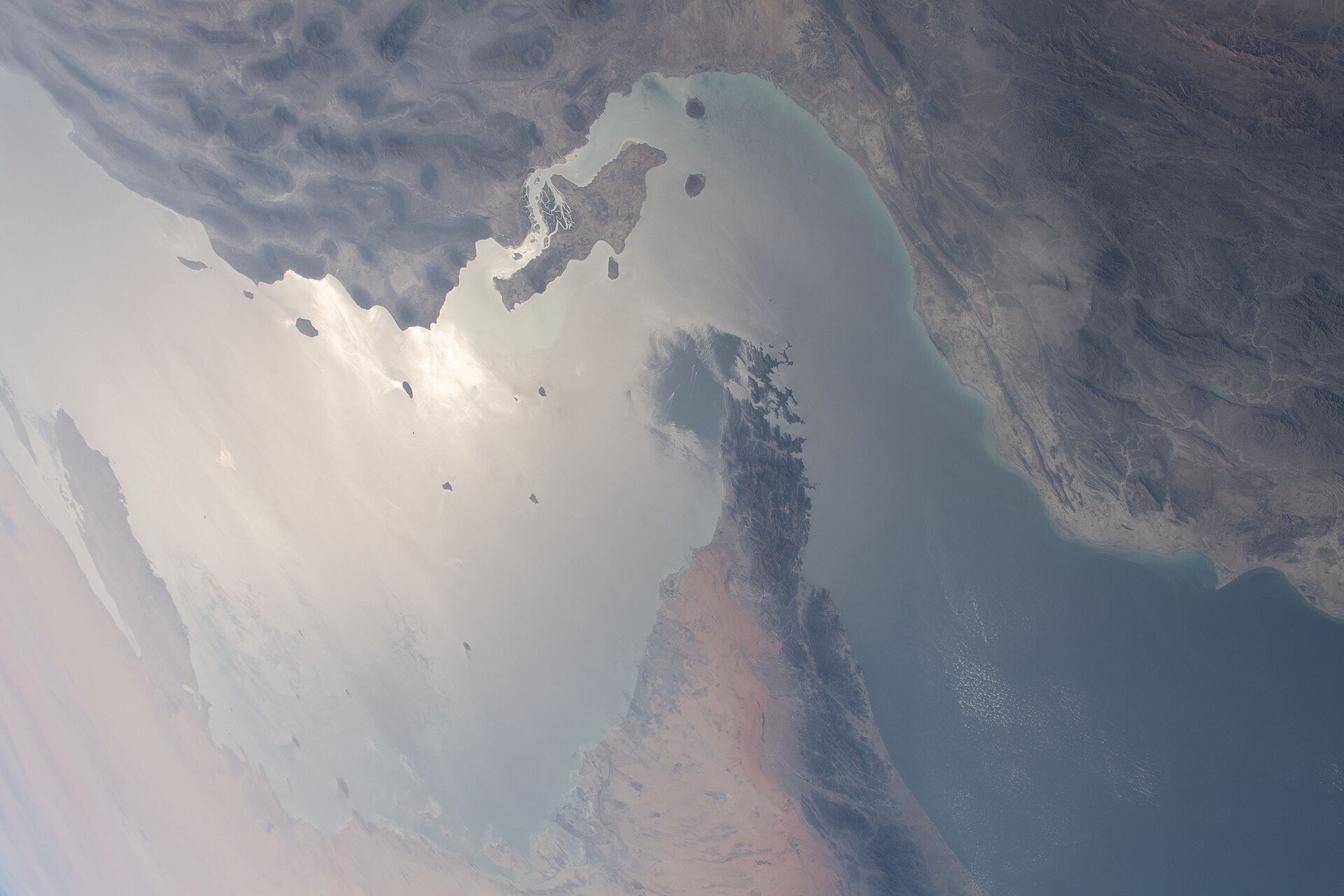
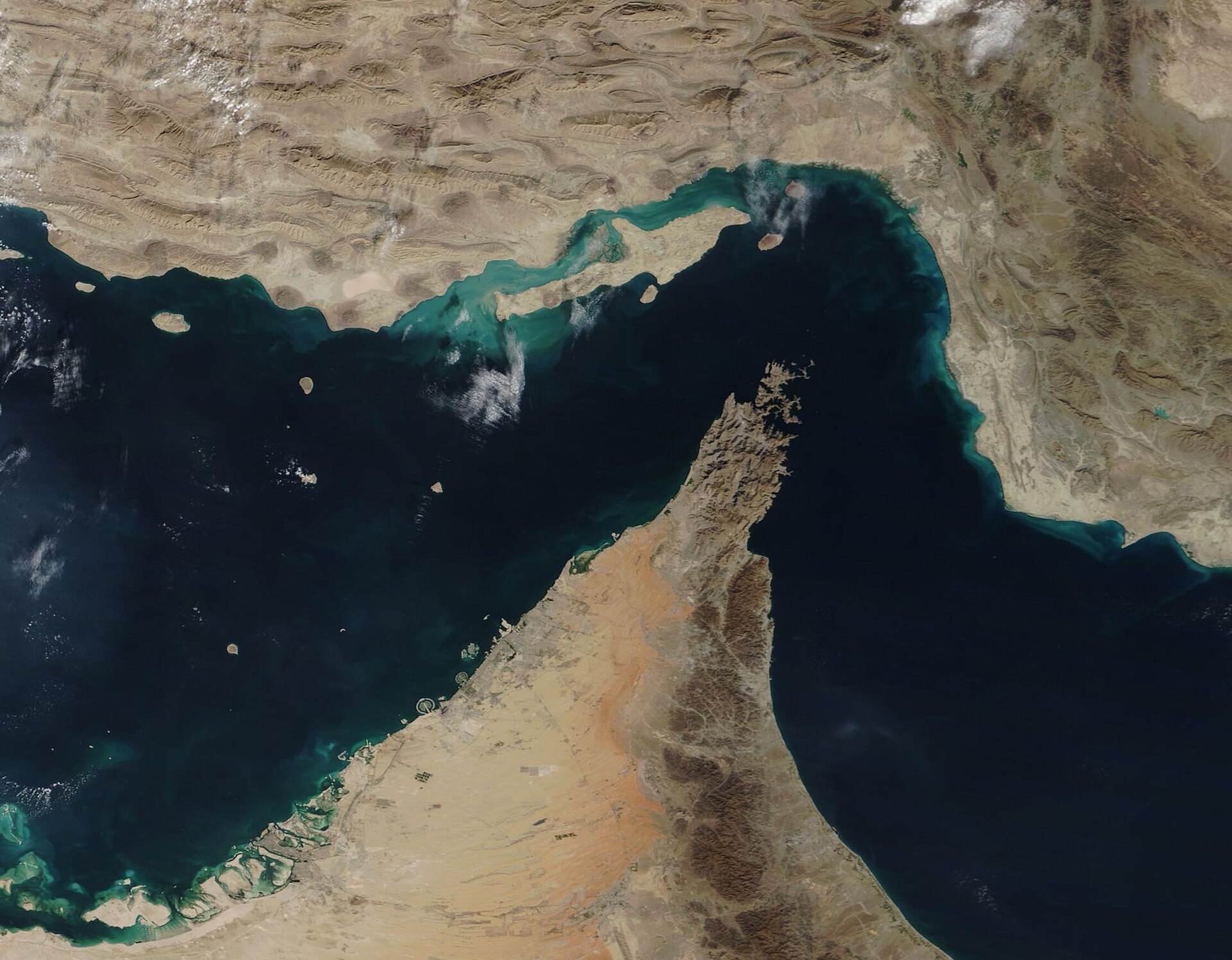
Bahrain hosts the headquarters of the US Navy’s Fifth Fleet at Naval Support Activity Bahrain, the command centre for American naval operations across the Persian Gulf, the Arabian Sea, and the Red Sea, according to Iran International and the US Naval History and Heritage Command. An Iranian drone targeting a facility this close to the fleet’s command infrastructure — regardless of whether it landed — signals that Tehran is prepared to strike the military assets Saudi Arabia and its neighbours depend on for their air and maritime defence. King Hamad of Bahrain visited Riyadh on November 10 to meet Crown Prince Mohammed bin Salman, with the Fifth Fleet’s exposure an unspoken dimension of the trip.
Saudi Arabia’s response to the conflict has been to pair military preparation with calls for restraint. The Makkah Joint Defence Agreement — ratified by Turkey on November 5 with a 279-119 parliamentary vote, according to Anadolu Agency, and backed by Egyptian troops who arrived at Riyadh’s request, as Egypt’s foreign minister confirmed on November 10 — gives the kingdom a multilateral military framework. But Trump’s confirmation that Saudi Arabia had asked him to hold off on strikes, delivered the same day he declared the deal track dead, exposed how heavily Riyadh’s strategy depended on a diplomatic process that no longer has a sponsor in Washington.
Oil shipments through the Gulf were running at 18.4 million barrels per day, 26 percent below prewar levels, according to IEA data cited by Gulf News, and CENTCOM has turned around 135 ships since the US naval blockade on Iranian ports began on July 14, CBS News reported. A Pentagon Inspector General report released in September found that Iranian attacks had damaged or destroyed hundreds of buildings at US installations in eight countries during the war’s first four months alone, Al Jazeera reported. The Saudi Cabinet called on November 10 for an immediate end to all acts threatening navigation in the Strait of Hormuz and Bab al-Mandeb, naming no adversary in what has become Riyadh’s default posture of deliberate ambiguity.
Aniseh Bassiri Tabrizi, an associate fellow in the MENA programme at Chatham House, described the conflict as “no war, no peace” in an Al Jazeera analysis published on Friday, adding that major strikes were unlikely in the near term but the situation could “shift within weeks.” Shayan Samii, an analyst at Radio Farda, told RFE/RL that Trump’s approach amounted to “neither war nor negotiation” — a description that offers Gulf states no timeline for resolution and no diplomatic framework to build contingency plans around. On the same Friday, a coalition force intercepted a drone over Saudi Arabia’s Eastern Province, part of a pattern of near-daily targeting since late October.
The Deal Track: Islamabad to Dead End
Vance led the first face-to-face US-Iran negotiations in Islamabad in April, where twenty-one hours of talks produced no agreement, according to Al Jazeera. A June memorandum of understanding collapsed over control of the Strait of Hormuz, followed by direct talks in Switzerland that also stalled, Al Jazeera’s Friday feature reported. The June MOU had been the closest the two sides came to a deal — its failure sent Tehran back to its maximal position of seven conditions with no flexibility, and Araghchi’s September roadmap through Qatar restated those seven conditions without flexibility.
Trump’s pre-midterm posture had been to keep the door ajar without walking through it — on October 8, he told reporters he would not order new strikes on Iran before the November 3 elections, according to The National. After the midterms handed Republicans losses in both chambers, he moved from “a deal can be made” on November 3 to “those days have long since passed” on November 12, a nine-day reversal that Roll Call attributed to the domestic political cost of an unresolved war rather than any shift in Tehran’s bargaining position.
Pressure from another direction was building at the same time. Axios reported on Friday that Mossad chief Roman Gofman was in Washington meeting CIA Director John Ratcliffe, with Israel pressing Trump for another major military campaign against Tehran, according to details in the Gulf News live blog. The IRGC’s Aerospace Force warned the same day that it stood ready to respond “without geographical limits” — a phrase that echoes Supreme Leader Mojtaba Khamenei’s October 31 doctrine of geographically unrestricted retaliation.
On Friday, as CENTCOM posted its denials from Tampa and the IRGC issued threats from Tehran, US Treasury Secretary Scott Bessent confirmed to CNBC that Iranian death threats had forced his relocation to a military base. The official charged with enforcing the sanctions at the centre of Iran’s seven conditions now lives under armed guard, and the Qatar-mediated channel that produced Araghchi’s September roadmap — the only diplomatic process either side had acknowledged — has been disowned by Washington and Tehran within the span of a single day.
Frequently Asked Questions
Has Iran attacked US forces in Bahrain before in this conflict?
The IRGC has claimed multiple strikes on US positions in Bahrain since the war began on February 28, 2026, including attacks in June and July that Bahrain’s military said it intercepted and destroyed. CENTCOM has routinely denied Iranian claims of successful strikes on the Fifth Fleet headquarters, though Bahrain’s foreign ministry confirmed in June that “a number of Iranian drones” struck the country. Friday’s attack was the first IRGC strike claimed against Bahrain since early September, according to CNN and Reuters.
What are Iran’s seven conditions for reopening the Strait of Hormuz?
Araghchi’s September 25 roadmap, submitted to the United States through Qatar, listed seven conditions: ending the US naval blockade on Iranian ports, guaranteeing safe passage for Iranian commercial vessels, issuing broad sanctions waivers, releasing approximately $12 billion in frozen Iranian assets, returning seized nuclear materials, granting exemptions for Iran’s oil customers, and a formal cessation of hostilities. The SNSC Secretary Mohsen Rezaei restated the full list in November, and no condition has been met.
What is Jabal ad Dukhan?
Jabal ad Dukhan is the highest point in Bahrain, located in the island’s southern interior and historically associated with Bahrain’s early oil extraction operations. The IRGC identified it as the site of a US early-warning radar it claimed to have targeted and destroyed on Friday, according to Fars news agency as cited by Al-Monitor. Neither CENTCOM nor Bahrain’s government confirmed any military installation at that specific location, and the site has not previously featured in public reporting on the Fifth Fleet’s defensive infrastructure.
What would Iran’s withdrawal from the NPT mean?
If the Assembly of Experts’ declaration that NPT withdrawal is “an unavoidable necessity” leads to formal action, Iran would become only the second country to leave the Nuclear Non-Proliferation Treaty after North Korea, which withdrew in 2003. Withdrawal would end Iran’s obligation to permit IAEA inspections of declared nuclear facilities and remove a legal barrier to enriching uranium beyond the 60 percent threshold it currently maintains, according to RFE/RL. No timeline for a withdrawal vote has been announced.
The House of Saud Daily Briefing
Saudi Arabia's news in 3 minutes, every morning. Free. See today's issue