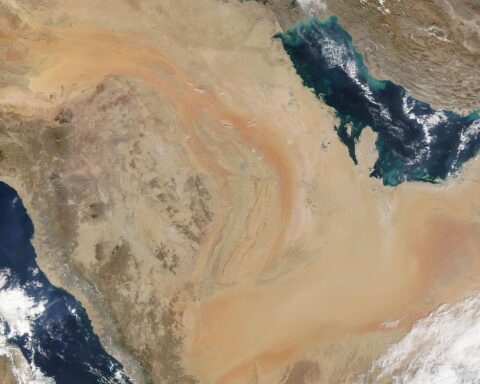
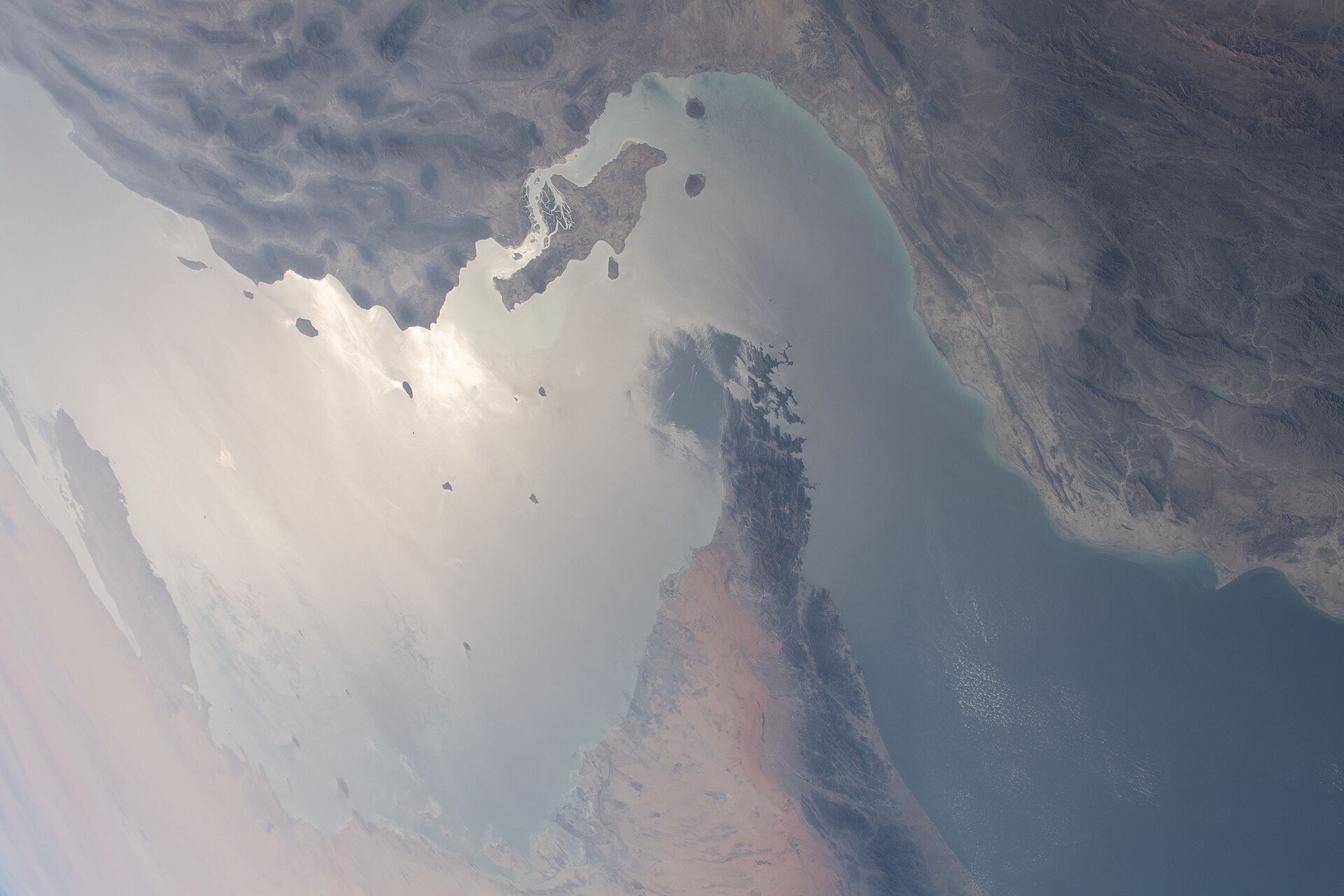
DUBAI — Iran’s Islamic Revolutionary Guard Corps Navy said on 13 November 2026 that a carrier transporting liquefied gas struck a naval mine and exploded in the eastern Strait of Hormuz, according to Reuters via Al Arabiya. No vessel name, flag state, operator, or crew status was immediately available.
The claim marks a new threshold in the IRGC’s campaign against commercial shipping. Previous attacks on gas carriers in this conflict — the Al Rekayyat in July, the GasLog Shanghai in August, the Al Mayeda in October — used drones or projectiles. A mine does not distinguish between a crude-laden supertanker and a vessel carrying pressurised, flammable gas. At least 10 ships were struck in the first 10 days of November alone, following 37 attacks in October, the highest monthly tally since the conflict began on 28 February, according to Noam Raydan of the Washington Institute for Near East Policy via Reuters.
The House of Saud Daily Briefing
Saudi Arabia's news in 3 minutes, every morning. Free. See today's issue
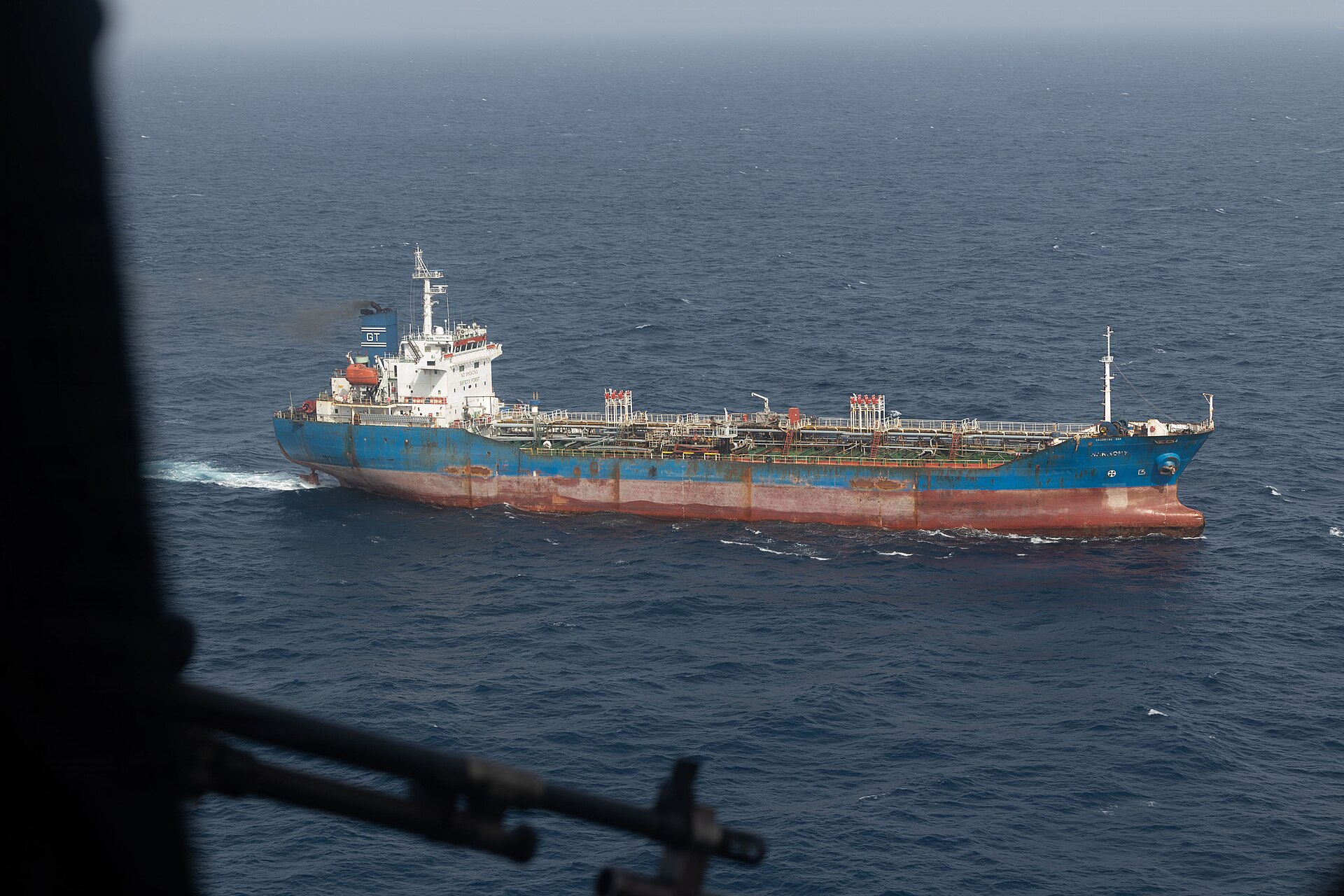
Table of Contents
- What Did the IRGC Say About the Gas Carrier Strike?
- Why Does a Mine Strike on a Gas Carrier Raise Different Risks?
- Mine Campaign Accelerates Through November
- Previous Attacks on Gas Carriers in This Conflict
- What Does This Mean for Global LNG Markets?
- The IRGC Mine Campaign: A Brief Timeline
- Frequently Asked Questions
What Did the IRGC Say About the Gas Carrier Strike?
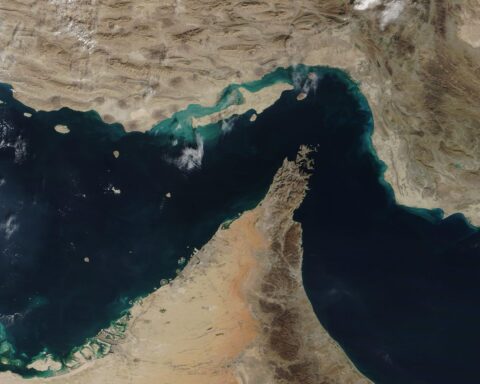
The IRGC Navy said a vessel carrying liquefied gas cargo struck a mine in the eastern sector of the Strait of Hormuz and exploded while attempting to transit under US military escort. No independent confirmation had emerged from CENTCOM, UKMTO, or any non-Iranian source at the time of reporting.
The IRGC stated that the vessel was navigating what it called an “unauthorized and dangerous” southern route, according to Mehr News Agency and TASS. It added that the gas carrier was travelling “under the cover of US fighter jets and destroyers,” per TASS — a claim no US or Western military source had confirmed.
The vessel “ignored repeated warnings” before entering the route, according to Mehr News. The IRGC warned that all ships entering restricted Hormuz routes would face the same outcome, Tasnim News reported via Türkiye Today.
No independent source had identified the vessel’s name, flag state, operator, cargo destination, or crew size as of 13 November. Reuters, TASS, Mehr News, and Al Arabiya all described the cargo as liquefied natural gas. Newsquawk’s market terminal, however, reported the IRGC described the vessel as an “LPG carrier” — a distinction that matters for both the cargo’s combustion characteristics and the affected supply chain. Without independent confirmation, “gas carrier” is the safest description.
The IRGC’s account is the sole source for the incident. Throughout the mine campaign, Iran has announced strikes that Western naval authorities have either not confirmed or have disputed. CENTCOM had issued no public statement on the 13 November claim at the time of reporting, according to Türkiye Today.
Why Does a Mine Strike on a Gas Carrier Raise Different Risks?
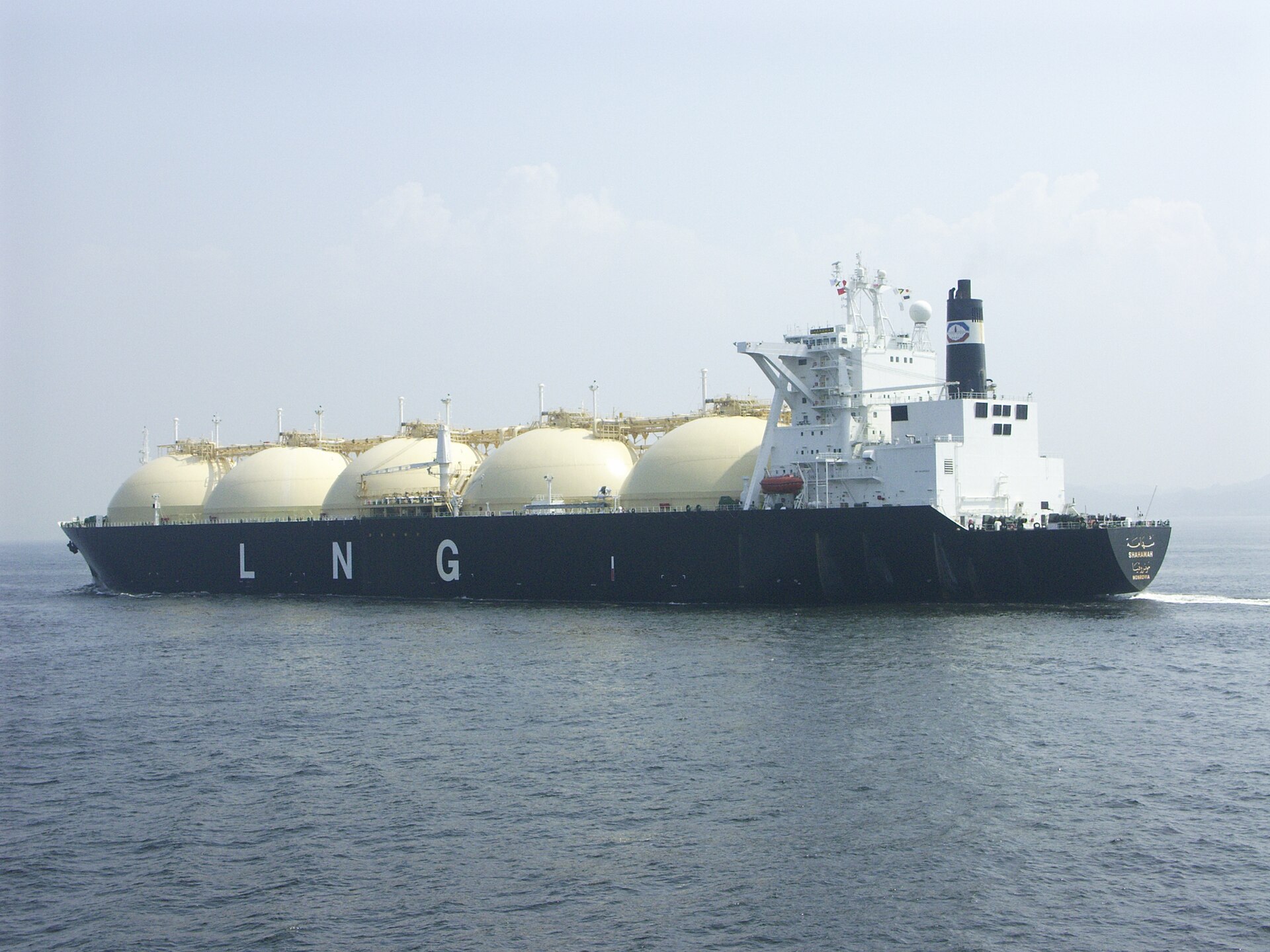
Gas carriers transport pressurised, cryogenic, or liquefied flammable fuel that behaves differently from crude oil when a hull is breached. A mine strike on such a vessel introduces hazards that crude tanker attacks do not — though no catastrophic cargo-tank explosion has ever occurred on a commercial LNG carrier at sea, as Reuters noted in a July 2026 explainer.
Tom Beney of the commodities brokerage StoneX observed that LNG carriers face “materially higher operational risks than crude tankers if attacked because of the nature of their cargo.” The closest real-world precedent dates to the 1980s Tanker War, when an Exocet missile hit an LNG tanker during the Iran-Iraq War but failed to breach the cargo tanks or cause an explosion, according to the Strauss Center.
The distinction matters for maritime insurers, port authorities, and rescue coordinators. A crude oil spill from a mine-damaged tanker is an environmental catastrophe. A fire on a gas carrier introduces different hazards — depending on the breach, the cargo state, and whether cryogenic LNG or pressurised LPG is involved — that regional maritime emergency services have not had to manage at scale during this conflict.
The International Institute for Strategic Studies wrote in its journal Survival in June 2026 that Iran could “run a sporadic nuisance campaign against shipping in Hormuz, using concealed fast boats, missiles and drones for pop-up attacks, plus possibly some midget submarines and mines laid from dhows,” and argued this would likely deter a return to normal shipping. Noam Raydan of the Washington Institute told Seatrade Maritime in October that Iran was not targeting specific ships and that the aim was to maintain broad shipping risk rather than halt individual vessel types. A mine that cannot distinguish between a crude-laden VLCC and a vessel carrying liquefied gas is, by definition, indiscriminate.
Mine Campaign Accelerates Through November
The pace of reported mine strikes has increased sharply. Through the end of October, Raydan counted 113 confirmed shipping attacks since the conflict began on 28 February, according to News of Bahrain. Of October’s 37 attacks, Raydan counted “at least 34 confirmed attacks, with at least 19 involving crude oil tankers,” per Seatrade Maritime.
The acceleration continued into November. On 3–4 November, the IRGC said four tankers struck mines south of Hormuz, according to IranWire. On 6 November, two more tankers were reported on fire after hitting mines, per Mehr News. On 8 November, the IRGC said three tankers were targeted; UK maritime authorities confirmed two incidents, Townhall reported.
On 11 November, the IRGC claimed two supertankers had exploded in the strait, according to The National. On 12 November, it said two supertankers carrying more than 4 million barrels were ablaze, according to Mehr News. The 13 November gas carrier claim came one day later and extended the campaign to a new vessel category.
Chatham House noted in June 2026 that the United States currently has only one ship available for mine-clearing in the Middle East, and that Iran’s mines are mainly Maham 3 and Maham 7 blast mines — contact-detonated weapons that do not discriminate by vessel type or cargo.
Previous Attacks on Gas Carriers in This Conflict
The 13 November claim is not the first time a gas carrier has been attacked during this conflict. But every previous gas carrier strike used a guided weapon — a drone or a projectile — rather than a mine.
On 7 July 2026, Qatar’s Marshall Islands-flagged LNG carrier Al Rekayyat was struck by a drone, causing an engine-room fire and forcing the crew to evacuate, according to gCaptain. Raydan told RFE/RL that it was “the first time during this war that we saw Tehran launch an attack against a laden LNG tanker.”
On 31 July, the Qatar-loaded GasLog Shanghai was struck while exiting the strait, according to Euronews. On 30 October, Qatar’s Nakilat confirmed that its LNG carrier Al Mayeda was struck by unidentified objects in the Gulf, per gCaptain.
The weapon type is what distinguishes the 13 November claim. Drones and projectiles can be aimed at specific vessels. Mines cannot. A mine detonation beneath a gas carrier in waters where crude tankers have been the predominant victims suggests either deliberate expansion of mine-laying into routes used by gas carriers, or indiscriminate placement across all navigable channels in the eastern strait.
What Does This Mean for Global LNG Markets?
Qatar’s LNG exports through the Strait of Hormuz have collapsed by approximately 96 percent since the conflict began, with only around 18 cargoes transiting compared with 509 in the same period a year earlier, according to gCaptain citing Reuters data. Qatar extended its force majeure on LNG deliveries through the end of 2026, per Bloomberg.
The UK Parliament’s Commons Library briefing estimated that around 20 percent of global LNG passes through the Strait of Hormuz each year and noted that almost no LNG carriers have transited since the conflict began. QatarEnergy has been purchasing US LNG cargoes to partially hedge supply commitments, according to Reuters via boereport.
Asian spot LNG prices, measured by the JKM benchmark, hit their highest level since December 2022, rising above $30 per million British thermal units in late October on Hormuz security concerns, according to IndexBox and lngpriceindex.com. Dutch TTF gas futures were trading at around EUR 93–97 per megawatt hour in mid-November, per Newsquawk. Brent crude stood at approximately $92–96 per barrel on 12–13 November, posting a second consecutive weekly loss, according to FXStreet citing Commerzbank analysis and OPEC output data.
The Center for Strategic and International Studies warned in August 2026 that the Hormuz fight “will reshape global LNG trade” and flagged the “risk of prolonged supply loss from unsafe shipping routes or further attacks on Ras Laffan.” Qatar’s Ras Laffan LNG plant has been running at reduced capacity since sustaining damage in March 2026, according to Bloomberg.
The IRGC Mine Campaign: A Brief Timeline
Iran began mining the main Hormuz shipping channel in early 2026. The strait carried an estimated 138 ships per day before the conflict, according to the Joint Maritime Information Centre.
Iran closed the strait on 18 April 2026; the US had imposed a naval blockade on 13 April. A reopening agreement in June gave way to Iran’s re-closure on 12 July and the US reinstating its blockade on 14 July. The IRGC declared Hormuz closed on 26 October.
Since then, mine strikes have accelerated from sporadic to near-daily IRGC announcements. Iran has simultaneously floated diplomatic reopening proposals while continuing operations in the strait, as Gulf states have pressed for an end to Hormuz threats.
The International Maritime Organization estimated in late June 2026 that approximately 80 mines remained in the strait’s main historical shipping lanes, according to gCaptain and Bloomberg. With the campaign now extending to gas carriers, the commercial and safety calculations for any vessel contemplating Hormuz transit have shifted again.
Frequently Asked Questions
Has any independent body confirmed the 13 November gas carrier mine strike?
No. As of 13 November 2026, CENTCOM, UKMTO, and the IMO had not confirmed the incident. Throughout the campaign, some IRGC mine strike claims have been corroborated days later by UKMTO incident reports or commercial tracking firms, while others have remained unverified. CENTCOM said in October that 135 ships had been turned around since the US blockade began on 14 July, according to a CENTCOM statement — a figure that reflects US enforcement activity but does not confirm or deny individual mine strikes claimed by Iran.
What types of mines has Iran placed in the Strait of Hormuz?
Chatham House identified two primary types in June 2026: Maham 3 and Maham 7 blast mines. These are contact-detonated weapons that sit on or near the seabed and explode on physical contact with a hull. The IISS noted that Iran deploys them from dhows and small boats — methods that are difficult to detect and interdict in busy commercial traffic. The strait’s relatively narrow inbound shipping lane makes mine placement practical and clearance slow.
How much LNG transited the Strait of Hormuz before the conflict?
The UK Parliament’s Commons Library estimated that approximately 20 percent of global LNG passed through the strait each year. Qatar, the world’s largest LNG exporter, shipped virtually all its seaborne cargoes through Hormuz before the conflict. Japan, South Korea, and several European states are the principal downstream buyers affected by the near-total shutdown.
Is the IRGC deliberately targeting gas carriers, or are the mines indiscriminate?
Available evidence points toward indiscriminate mine placement. Maham-series blast mines are contact-detonated and cannot distinguish between vessel types. The IRGC’s own framing — that the gas carrier entered a “restricted” route and ignored warnings — implies the mines were already in place rather than deployed against a specific vessel. A deliberate campaign against gas carriers specifically would more likely employ guided weapons such as drones or fast-boat strikes, as Iran used against the Al Rekayyat in July. The IISS assessed in June 2026 that Iran’s mine-laying strategy is designed to impose broad shipping costs, not to select individual targets.
Could an LNG cargo-tank explosion cause a catastrophic disaster at sea?
LNG carriers use double-hulled containment systems with multiple insulation layers designed to prevent cascading failure — the reason the risk has not materialised in decades of commercial operation, according to Reuters. The theoretical risk of a vapour cloud ignition exists, but the conditions required have never occurred on a commercial vessel.
The House of Saud Daily Briefing
Saudi Arabia's news in 3 minutes, every morning. Free. See today's issue