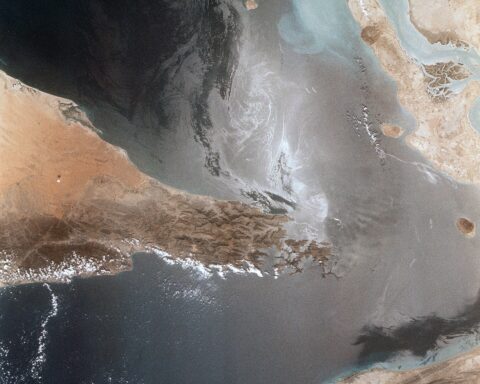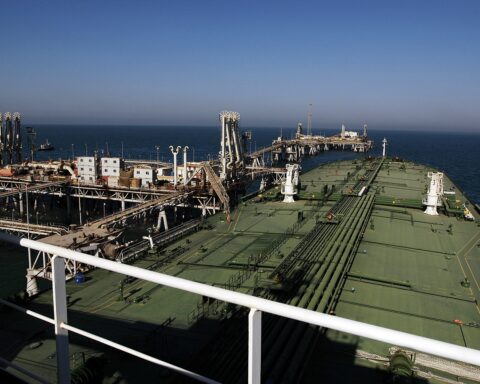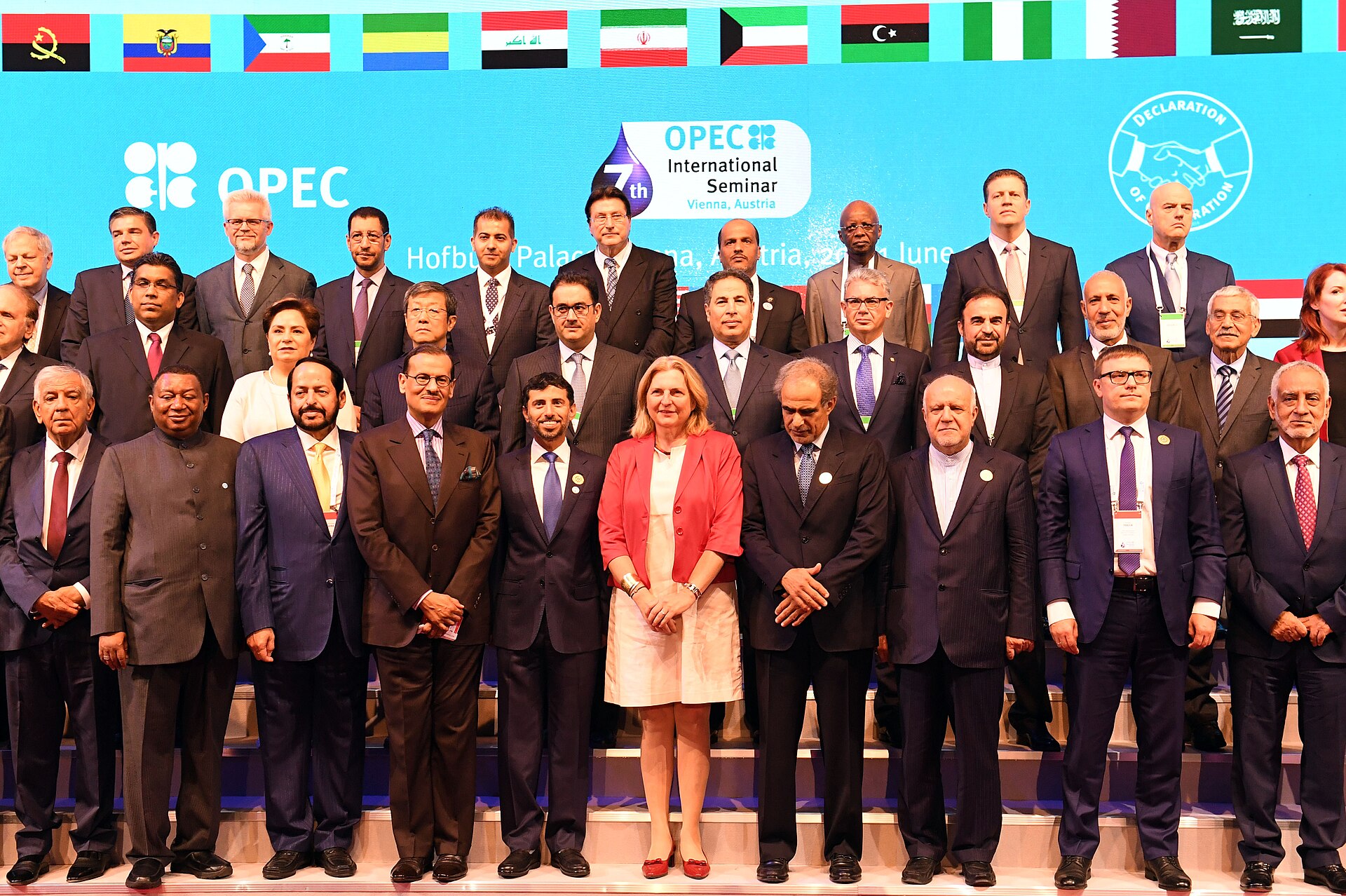

DHAHRAN — OPEC+ ministers meet today to set 2027 production quotas for a market in which the numbers they are negotiating bear no stable relationship to the oil anyone can actually pump. The Iran war has knocked nearly 10 million barrels per day off group output since February, stripped three of the cartel’s largest producers of verifiable capacity, and left the swing producer — Saudi Arabia — defending a formal target of 10.5 million barrels per day while the International Energy Agency recorded its crude supply at 5.97 million barrels per day as recently as August.
The question hanging over the November 29 session is not what number ministers choose. Pre-meeting reporting from Reuters and Rigzone suggests they will roll existing targets into the first quarter of 2027, deferring the full-year framework. The question is whether OPEC+’s core institutional mechanism — declare capacity, agree ceilings, monitor compliance — still functions when capacity itself is contested, unauditable, or destroyed. Jorge Leon of Rystad Energy called it “one of the most complicated OPEC+ meetings in years.” The complications are not political. They are physical.
The House of Saud Daily Briefing
Saudi Arabia's news in 3 minutes, every morning. Free. See today's issue
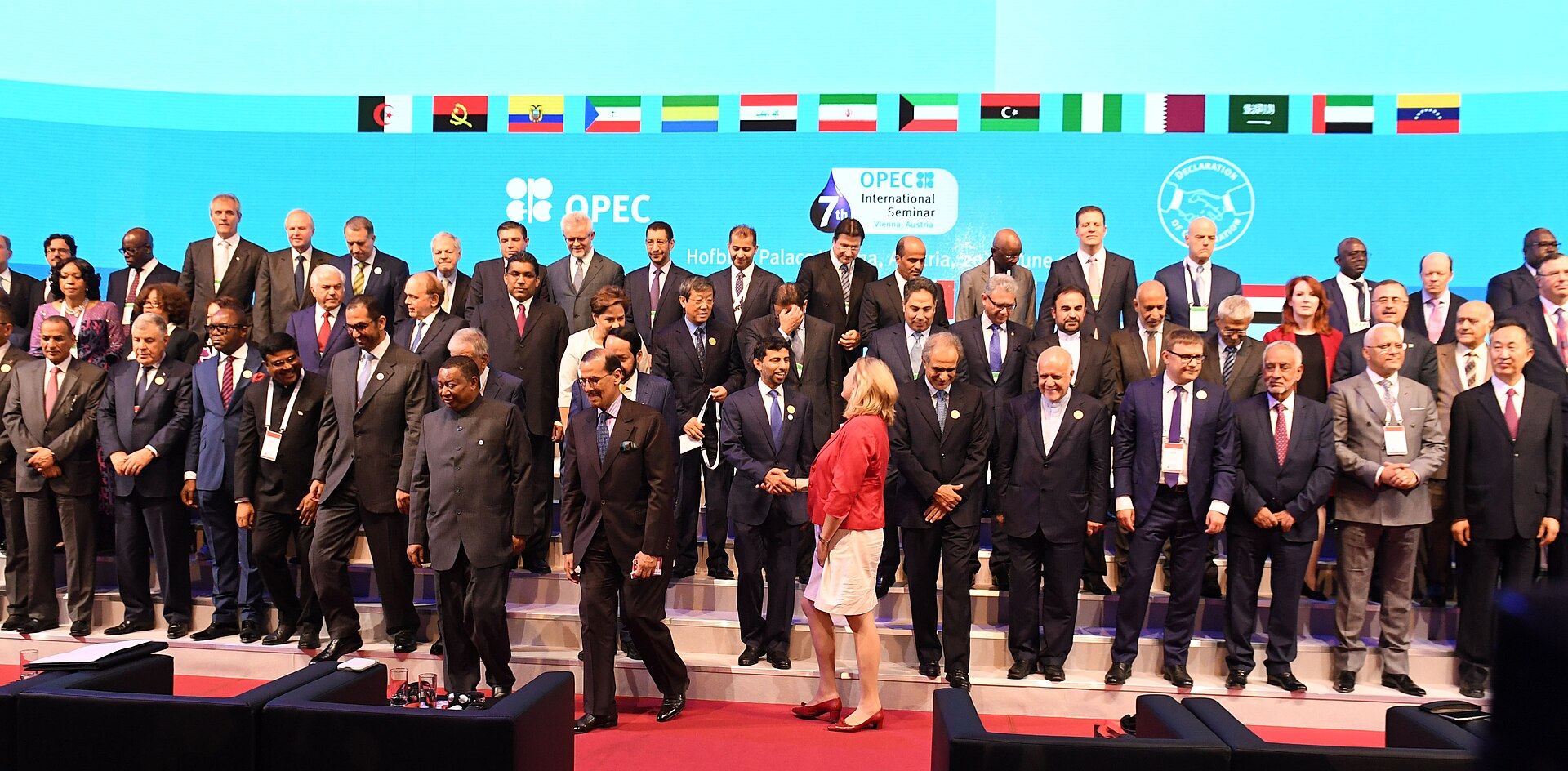
Table of Contents
- The Output Gap OPEC+ Cannot Close
- Why Is Iraq Demanding a 6 Million Barrel Baseline?
- What Does the Capacity Audit Actually Measure?
- Russia’s Quiet Shortfall
- Can Saudi Arabia Still Act as Swing Producer?
- The US Tried to Break OPEC From the Inside
- When Quotas Lost Meaning Before
- What Does This Cost Saudi Arabia?
- FAQ
The Output Gap OPEC+ Cannot Close
OPEC+ group output fell from 42.77 million barrels per day in February 2026 to 33.13 million barrels per day by May, a collapse of roughly 9.6 million barrels per day in three months, according to Al Jazeera. OPEC’s own crude output — excluding the plus-group partners — dropped 7.3 million barrels per day in March alone to 21.57 million barrels per day, the lowest since June 2020, according to a Reuters survey published by Baird Maritime.
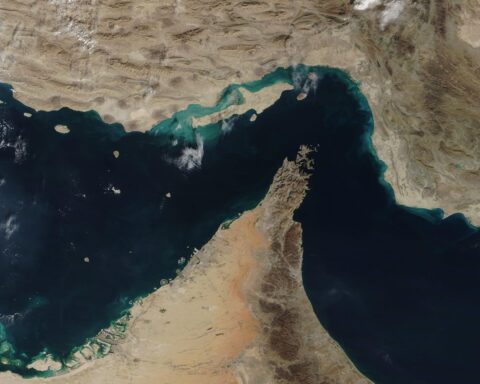
The loss was concentrated in the Gulf. Saudi crude production fell from 10,882 thousand barrels per day in February to 6,967 thousand barrels per day in March, per OPEC data reported by Hellenic Shipping News. The IEA put Saudi crude supply at 8.24 million barrels per day in July and 5.97 million barrels per day in August — a further decline even after the initial shock had passed, according to IEA data via Trend.az. Iran’s output, already constrained by the US naval blockade, stood at 2.48 million barrels per day in July according to OPEC secondary sources; the IEA estimates Iran’s sustainable capacity at 3.8 million barrels per day, but Kpler recorded zero Iranian crude exports in September. ANZ estimated Strait of Hormuz throughput at 49% of typical levels as of late November.
The formal production targets, meanwhile, have not moved. OPEC+ kept Saudi Arabia’s November target at 10.5 million barrels per day, according to Enerdata. The organization has no authorized output framework beyond December 31, 2026. Ministers are negotiating numbers for a year that begins in 33 days, against a physical backdrop that changes with every mine strike in Hormuz and every drone launched at a pipeline.
The Brent crude price reflects this instability without resolving it. After touching $126.41 on April 30, per Reuters via Aletihad, the benchmark fell roughly 20% through most of November before settling at $95.44 on November 27 — its first weekly gain of the month, according to NationThailand. A market that peaked on supply fear and declined on demand worry is now being asked to price production targets that the producers themselves cannot verify.
Why Is Iraq Demanding a 6 Million Barrel Baseline?
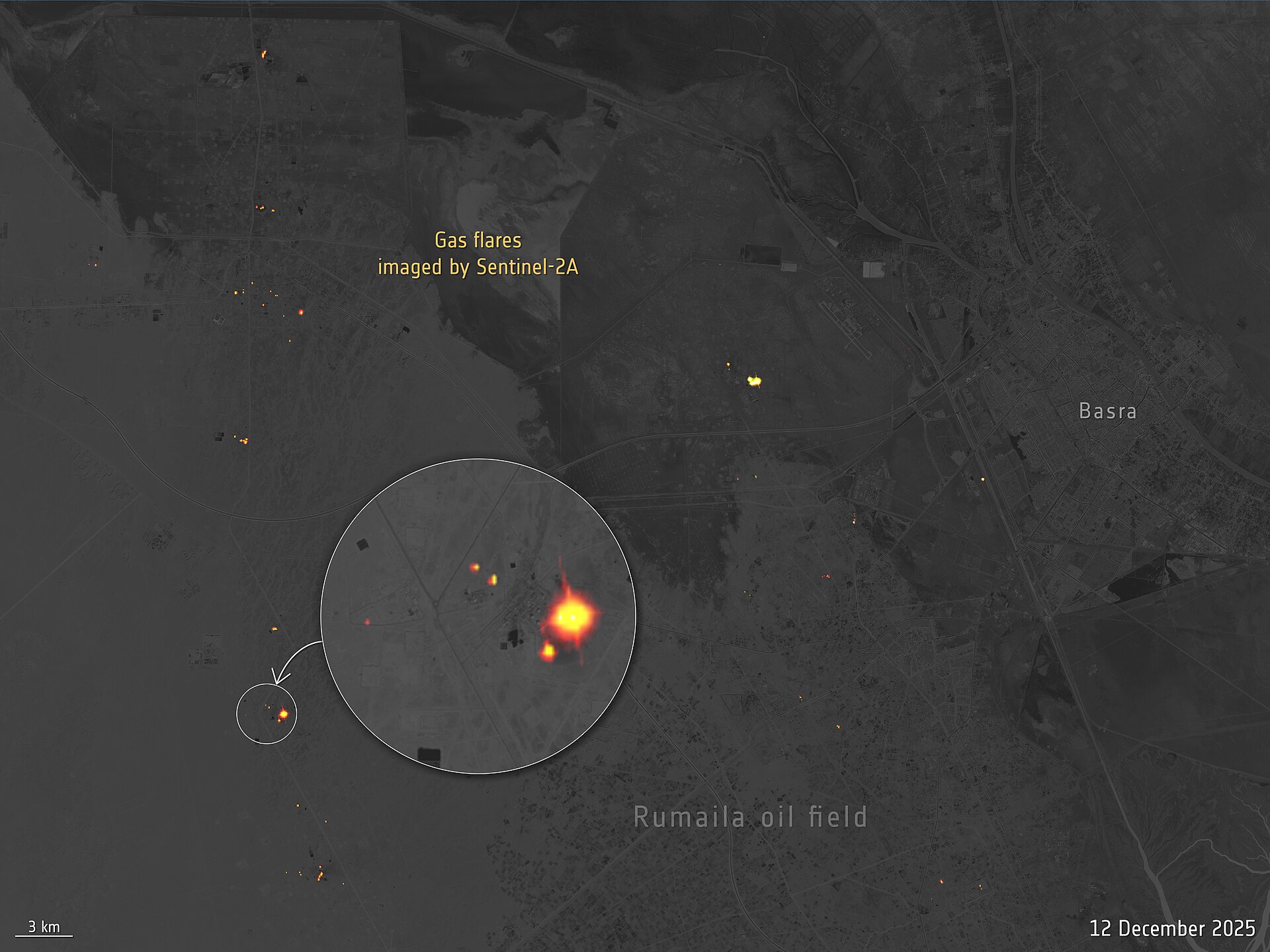
Iraq’s current OPEC+ quota is approximately 4.431 million barrels per day. Baghdad wants the 2027 baseline set at 6 million barrels per day — more than 35% above its existing allocation — and has rejected the preliminary assessment by DeGolyer & MacNaughton, the independent firm conducting OPEC+’s capacity audit, which placed Iraqi capacity at approximately 4.9 million barrels per day, according to Reuters via Le Private Banker.
Iraq cites its own claim of 5.2 million barrels per day of sustainable capacity. Its October production data offers a partial case: official Iraqi government figures put output at 4.888 million barrels per day, though OPEC secondary sources recorded 4.491 million barrels per day — a discrepancy of nearly 400,000 barrels per day on a single month’s figures, per Shafaq News and Rudaw citing OPEC data. Iraq’s exports rose 9.5% in October to 3.35 million barrels per day, approaching pre-war levels, according to Shafaq News and Bloomberg.
The dispute is structural, not new. Iraq has sought capacity audits for years; prior to the Iran war, Baghdad cited an aspiration of 8 to 10 million barrels per day within six years, according to CTV News and World Oil. What is new is that the UAE’s departure from OPEC and OPEC+ on May 1 — over the same kind of capacity-baseline grievance — gave Iraq a live precedent. Abu Dhabi argued its assigned quota understated its capacity. It left. Iraq is making the same argument and staying, but the institutional balance has shifted.
What Does the Capacity Audit Actually Measure?
DeGolyer & MacNaughton closed its member consultation meetings on November 16, according to Rigzone. The findings remain classified within OPEC+. Russian Deputy Prime Minister Alexander Novak said the audit “should be completed by year-end” and that ministers would “see the status of this work” at Sunday’s meeting.
The audit’s scope, though, has gaps that map neatly onto the war’s fault lines. Iran is not covered by DeGolyer & MacNaughton, citing US sanctions. Russia and Venezuela are assessed by a separate firm, Shri Chandra Energy & Data Processing, with no public explanation for the split, according to Modern Diplomacy. The three countries whose capacity is most contested — because of blockade, war damage, or sanctions — are the three assessed outside the main audit.
As Leon of Rystad put it: “Every country with a production shortfall has a credible argument that the shortfall is temporary.” That observation captures the audit’s central difficulty. A capacity study measures what a country could produce under normal conditions. No conditions in the Gulf are normal. The audit was originally scheduled for September and was delayed after the Iran war disrupted expansion plans, according to Reuters via Investing.com. It is now being completed in a physical environment that may change again before ministers act on it.
The practical result is that OPEC+’s compliance monitoring — the system of secondary-source estimates that determines whether members are meeting their targets — now measures something closer to involuntary disruption than deliberate policy. Saudi Arabia’s direct communication to OPEC reported October output at 10.563 million barrels per day. The secondary sources said 9.19 million barrels per day. Iraq’s official figure said 4.888 million barrels per day. The secondary sources said 4.491 million barrels per day. The gap between self-reported and independently estimated output has widened to the point where the two data series describe different markets. An organization that cannot agree on how much oil its members are producing today is being asked to agree on how much they should produce next year.
Russia’s Quiet Shortfall
The Iraq dispute absorbs most pre-meeting attention. Russia’s numbers tell a different story with less noise around it. The IEA estimates Russia’s sustainable crude capacity at 9.3 million barrels per day. Russia’s OPEC+ quota stands at 9.949 million barrels per day — a gap of roughly 650,000 barrels per day between what the quota permits and what Russia can sustain, according to IEA data cited by the Manila Times.
Actual production is lower still. Leon noted that Russia “produced 8.4 million barrels per day in October, and their quota was almost 10 million barrels per day.” That is a shortfall of 1.5 million barrels per day below the target — not because Moscow chose restraint, but because sanctions, war logistics, and infrastructure constraints have eroded output.
“The big question is Russia — they produced 8.4 million barrels per day in October, and their quota was almost 10 million barrels per day.”
Jorge Leon, Rystad Energy, via Rigzone, November 25, 2026
Russia’s shortfall is structurally different from Iraq’s. Iraq wants a higher quota because it believes it can produce more. Russia has a quota it already cannot fill. Both conditions undermine the same thing: the assumption that assigned ceilings constrain actual behavior. When quotas run above capacity, compliance becomes automatic and meaningless. The cartel is not managing production. It is describing it.
Can Saudi Arabia Still Act as Swing Producer?
The Saudi output discrepancy outlined above is not just an accounting problem. It is a planning problem. The formal November target remains 10.5 million barrels per day, and the last confirmed IEA figure, from August, was 5.97 million barrels per day. The range between these numbers defines the uncertainty in which OPEC+ is trying to set next year’s ceilings.
The physical constraints are concrete. The East-West pipeline, with a design capacity of 7 million barrels per day, was restarted on September 22 after a precautionary shutdown, but Baird Maritime reported via Reuters that full capacity could take six weeks or more. Hormuz throughput has fallen to 54% of prewar levels, and the Strait remains functionally contested — Iran’s Artesh commander said on November 28 that Hormuz stays closed on Khamenei’s orders.
Aramco’s total hydrocarbon production averaged 11,035 thousand barrels of oil equivalent per day over the first nine months of 2026, down 13.7% year-on-year from 12,787 thousand, according to the company’s third-quarter interim report as cited by Trend.az. CEO Amin Nasser said in the Q3 press release: “Geopolitical uncertainty and attacks on key energy facilities continued to amplify the global energy supply crisis in the third quarter of 2026, with serious implications for global energy security.”
Swing-producer status rests on the ability to add or withdraw barrels from the market to influence price. That ability depends on spare capacity — the gap between what a producer pumps and what it could pump. When the gap is created not by deliberate restraint but by pipeline damage, Hormuz closures, and naval blockades, the spare capacity is not available to deploy. It is physically absent.
The kingdom’s pricing signals reinforce this reading. Aramco set November’s Arab Light official selling price to Asia at $5 below the Oman/Dubai benchmark — the widest discount since June 2020, according to Reuters via bdnews24. Deep discounts are a tool to defend market share. They are also an admission that market share is under threat. Saudi Q2 real GDP fell 4.8% year-on-year, with oil activity down 24.7%, per GASTAT flash data reported by TradeArabia. A swing producer that is simultaneously fighting a war, defending its export infrastructure, and offering its deepest discounts in six years is not in a position to manage global supply. It is managing its own survival in the market.
The US Tried to Break OPEC From the Inside
Reuters reported on November 27, citing ten people familiar with the matter, that the Trump administration pushed both Venezuela and Iraq to consider leaving OPEC. The pressure on Venezuela included blocking the country from paying its annual OPEC membership dues. Saudi Crown Prince Mohammed bin Salman intervened and persuaded the administration not to press the issue, according to the same Reuters report via ThePrint and HuffPost.
In Iraq, Prime Minister Ali Faleh al-Zaidi reportedly raised the OPEC exit idea at a government meeting after talks with US officials. Iraq’s oil ministry pushed back and persuaded him to stay in the group and seek a higher quota instead. A State Department official told Reuters that lower-level US officials may have raised the idea with Venezuela, but that it “has not been among the issues raised by high-level officials.”
The episode — an attempt to peel members away from the cartel during wartime — did not succeed in its stated aim. Iraq stayed. Venezuela stayed. But the mere fact that a sitting US administration raised the question with two member states, while OPEC+ was attempting to hold together a production framework under wartime strain, introduced a category of risk that the organization has not had to manage since its founding. The UAE left of its own volition in May over capacity baselines. If Washington had succeeded with Iraq, two of OPEC’s founding members would have departed in the same year.
MBS’s reported intervention on Venezuela’s behalf is itself revealing. The Saudi crown prince — the dominant figure in OPEC’s pricing and production strategy — spent political capital with the Trump administration to keep a marginal Latin American producer inside the cartel, at a moment when the cartel’s ability to coordinate its core Gulf members’ output was already in question. The intervention protected institutional form. Whether the institution’s substance survives the November 29 meeting is the question the ministers are gathered to avoid answering.
When Quotas Lost Meaning Before
OPEC has confronted wars before. The institutional response follows a pattern: quotas bend, then break, then get rebuilt years later on whatever output levels happen to exist.
After the 1990-91 Gulf War, Saudi Arabia’s quota jumped from 5.38 million barrels per day to 8.034 million barrels per day, and its share of OPEC production rose from 23.9% to 36%, according to MERIP. By 1991, with the exception of Iraq, all OPEC members were producing “almost flat out, with only a nominal group limit in place,” per a Naval Postgraduate School analysis of the period.
| Producer | OPEC+ quota (mb/d) | Actual output (mb/d) | Gap | Source |
|---|---|---|---|---|
| Saudi Arabia | 10.5 | 9.19 (secondary) | −1.37 | Enerdata; OPEC secondary sources |
| Iraq | 4.431 | 4.491–4.888 | +0.06 to +0.46 | Shafaq News / Rudaw / OPEC |
| Russia | 9.949 | 8.4 | −1.55 | IEA; Rystad / Rigzone |
| Iran (exempt) | n/a | 2.48 (July) | n/a | OPEC secondary sources / alupetra.com |
Libya in 2011 offered another template. Output fell from approximately 1.65 million barrels per day before the civil war to a fraction of pre-war levels at its wartime low in mid-2011, according to an IEEJ academic study. OPEC could not agree on how to adjust quotas to accommodate the supply shock. As the study concluded, the organization “has not figured out a way to accommodate the new oil influx in their quota system in times of disruption and recovery.”
The 2026 disruption is larger than either precedent. The Gulf War removed one producer (Iraq) and briefly displaced Kuwait. The Libya crisis removed one relatively small producer. The Iran war has simultaneously degraded the output of Saudi Arabia, Iran, and — through sanctions and logistics — Russia, while removing the UAE from the organization entirely.
Kazakhstan illustrates yet another failure mode, one that predates the war. The country overproduced its OPEC+ quota by approximately 341,000 barrels per day in April 2025, accumulating a 1.3 million barrel per day cumulative shortfall from January 2024 to April 2025 per Interfax and Oilprice.com. Kazakhstan’s official position is that it cannot force the international consortiums operating its fields — Chevron leads the Tengiz expansion — to cut output. Compensation pledges have been doubted by analysts as structurally unenforceable. If the organization cannot compel compliance from a mid-sized Central Asian producer in peacetime, the assumption that it can coordinate output among Gulf states under active bombardment requires a kind of institutional faith that the numbers no longer support.
What Does This Cost Saudi Arabia?
Saudi Arabia’s year-to-date fiscal deficit through the third quarter of 2026 reached 244 billion riyals, against a planned full-year deficit of 165 billion riyals, according to MUFG Research. Third-quarter oil revenue fell 23% year-on-year to 116 billion riyals. External debt reached 638 billion riyals. The pre-budget statement projected a 2027 deficit of 191 billion riyals (3.6% of GDP) and forecast real GDP falling 3.6% in 2026 on a 21.8% drop in oil activities, then rebounding 12.8% in 2027, according to Reuters via Zawya.
The price of oil is high enough to generate revenue. The problem is volume. The kingdom cannot spend barrels it cannot ship. And the quota system, designed to match production to price, cannot function when the binding constraint on output is not policy but infrastructure damage and strait closures.
CNBC reported on November 28 that “the Iran war could shatter rising expectations of surplus oil supply in coming months.” Rystad’s own forecast projects a 2027 global crude surplus of roughly 5 million barrels per day — a figure premised on supply returning that may not return on any schedule OPEC+ can control.
| Metric | Figure | Source |
|---|---|---|
| YTD fiscal deficit (Q3 2026) | SAR 244 billion | MUFG Research, Nov 2026 |
| Planned full-year deficit | SAR 165 billion | Zawya / Reuters, Sept 2026 |
| Q3 oil revenue (y/y change) | SAR 116 billion (−23%) | MUFG Research, Nov 2026 |
| External debt (Q3 2026) | SAR 638 billion | MUFG Research, Nov 2026 |
| Projected 2027 deficit | SAR 191 billion (3.6% of GDP) | Zawya / Reuters, Sept 2026 |
| Brent crude (Nov 27 close) | $95.44 | NationThailand, Nov 2026 |
The tariff increases announced for January 2027 reflect a government planning for a war that will outlast whatever number OPEC+ prints on a quota table today.
Saudi Arabia leads OPEC. It is also the member most visibly bearing the costs of the organization’s inability to match its targets to physical reality. The pre-budget statement forecast real GDP growth of 12.8% in 2027, per Reuters via Zawya — a rebound that depends on oil production recovering to levels the current security environment does not guarantee. That Rystad forecast makes the same recovery assumption. If that supply does not come back — if Hormuz stays contested, if Iranian exports remain at zero, if Saudi pipeline capacity is attacked again — the surplus never materializes, the quota framework remains detached from output, and the fiscal projections built on those quotas lose their foundation. The numbers on paper rest on a war whose outcome is not on the agenda.
FAQ
How does OPEC+ enforce production quotas on members who overproduce?
Enforcement relies on a combination of secondary-source monitoring — where agencies like the IEA, Platts, and Argus independently estimate output — and compensation mechanisms requiring overproducers to cut more in later months. In practice, Kazakhstan’s cumulative 1.3 million barrel per day overproduction from January 2024 to April 2025 went unpenalized. The country argues it cannot force international consortiums like Chevron’s Tengiz operation to reduce output, making compensation pledges, as analysts have noted, structurally unenforceable.
Why did the UAE leave OPEC in 2026?
The UAE formally withdrew from OPEC and OPEC+ effective May 1, 2026, citing a review of production policy and what it considered structurally unfair capacity baselines, per Khaleej Times. Abu Dhabi had invested heavily in expanding production capacity and argued that its assigned quota did not reflect that investment. The departure marked the first time a Gulf founding member had left the organization and removed a producer whose compliance had historically been among the most reliable, weakening the coalition’s credibility as a coordinating body at the onset of the Iran war.
What happens if OPEC+ fails to agree on a 2027 framework?
Without an authorized framework after December 31, 2026, each member would technically have no binding production ceiling. Pre-meeting reporting from Le Private Banker and Rigzone suggests ministers will avoid this by rolling existing targets into at least the first quarter, buying time while the capacity audit is finalized. The last time OPEC faced a comparable framework vacuum was the November 2014 meeting, when the organization chose not to cut production in response to the US shale boom — a decision that sent Brent below $30 within 18 months and redefined the organization’s market management approach.
How much oil can still flow through the Strait of Hormuz?
ANZ estimated Hormuz throughput at 49% of typical levels as of late November 2026. Before the war, Hormuz handled roughly 140 transits per day, according to multiple reports. Ship-to-ship transfer routes have absorbed some diverted cargo, but as House of Saud reported on November 28, these workarounds are approaching their own physical limits. Iran’s Artesh commander stated on November 28 that the Strait remains closed on the Supreme Leader’s orders, and the US naval blockade — under which 158 ships have complied and 6 have been disabled — adds a second layer of restriction from the opposite direction.
Is the Rystad 5 million barrel per day surplus forecast realistic?
Rystad Energy’s 2027 global crude surplus projection of approximately 5 million barrels per day assumes supply recovery that depends on the resolution — or at least stabilization — of the Iran war. That assumption is contested. Hormuz closures, Saudi pipeline vulnerabilities, and the continuing US blockade of Iranian exports each represent independent variables that could individually prevent the forecast from materializing. CNBC noted on November 28 that the war “could shatter rising expectations of surplus oil supply,” reflecting market skepticism about recovery timelines that neither OPEC+ nor the IEA can verify.
Aramco’s third-quarter results, released November 3 during the same unverifiable output environment, show net profit rising 34.5% to $36.3 billion on a 234% surge in downstream earnings even as liquids production fell 19% — a split that is directly relevant to any OPEC+ production baseline discussion. Details are in Aramco Q3 2026 Net Profit Rises 34.5% to $36.3 Billion as Output Falls 17%.
The House of Saud Daily Briefing
Saudi Arabia's news in 3 minutes, every morning. Free. See today's issue