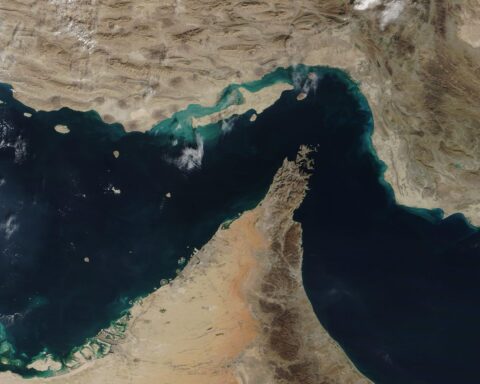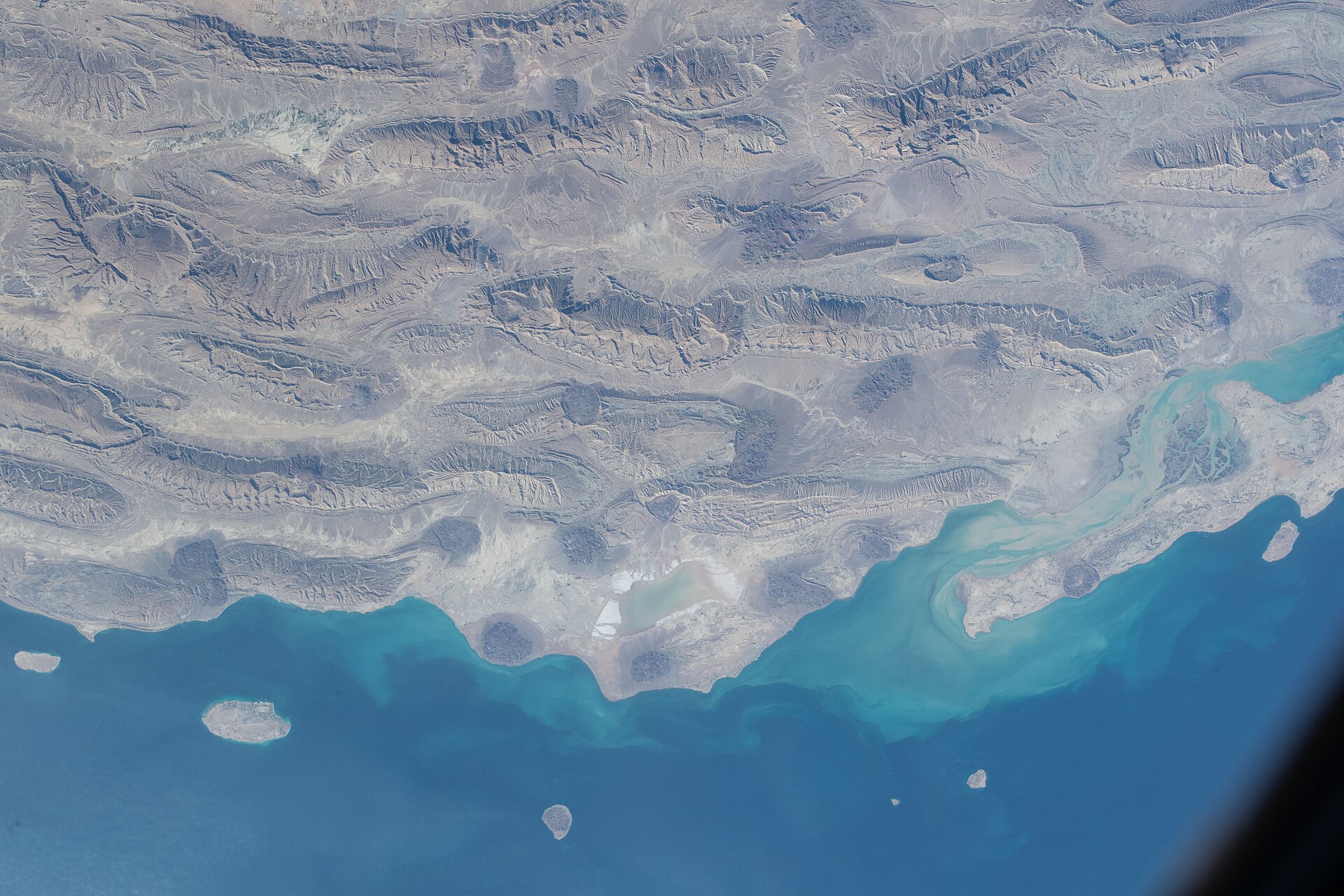

TEHRAN — Iran published the operational rulebook for its Persian Gulf Strait Authority on June 19, and the most consequential feature in the document is not the fee schedule — there isn’t one yet — but the forty-category “Vessel Information Declaration” that every ship must now file forty-eight hours before transiting the Strait of Hormuz. The form demands vessel identity, ownership chains, charterer details, crew nationalities, cargo manifests, and P&I club affiliations, all submitted before a vessel enters a five-nautical-mile corridor between Qeshm and Larak islands that lies entirely inside Iran’s twelve-nautical-mile territorial sea.
The sixty-day insurance waiver granted under the MOU signed on June 17 has dominated the coverage, framed as proof that Trump’s deal is delivering results. But the waiver is a grace period on a premium, not on the act of filing. More than three hundred non-Iranian vessels have already submitted their declarations since the PGSA began processing applications in early May, each one surrendering operational data to a body that OFAC designated on May 27 and the EU designated on June 8. The architecture does not require a fee to function — it requires ships to keep filing.
Table of Contents
- The Forty-Category Form
- Why Does Iran Need Crew Nationalities and Cargo Manifests?
- The Larak Corridor and the Law It Replaces
- How Many Ships Have Already Filed?
- What Happens After Sixty Days?
- The Sanctions Double Bind
- Saudi Arabia Cannot Contest a Permit It Must Use
- Can Any Court Reverse What Three Hundred Ships Have Accepted?
- Frequently Asked Questions
The Forty-Category Form
The document Iran circulated on June 19 is titled “Vessel Information Declaration,” and it runs to more than forty mandatory fields. Giovanni Staunovo, a commodities analyst who obtained and published the form, noted it “must be completed by all transiting vessels to ensure safe passage.” The PGSA’s own operational language is blunter: submit the form or do not transit the strait.
The categories begin with identification — vessel name, IMO number, any previous names, flag state, vessel type, gross tonnage, deadweight capacity, and current draft — then move into ownership and commercial structure. The form requires the registered owner’s name, the ship-management firm and its contact details, the charterer’s identity, and the vessel’s Protection and Indemnity club. It demands the nationality of the owner, the nationality of the operator, and the nationality of every crew member aboard. The final categories cover the country of origin, the destination port, and a full accounting of cargo type and volume.
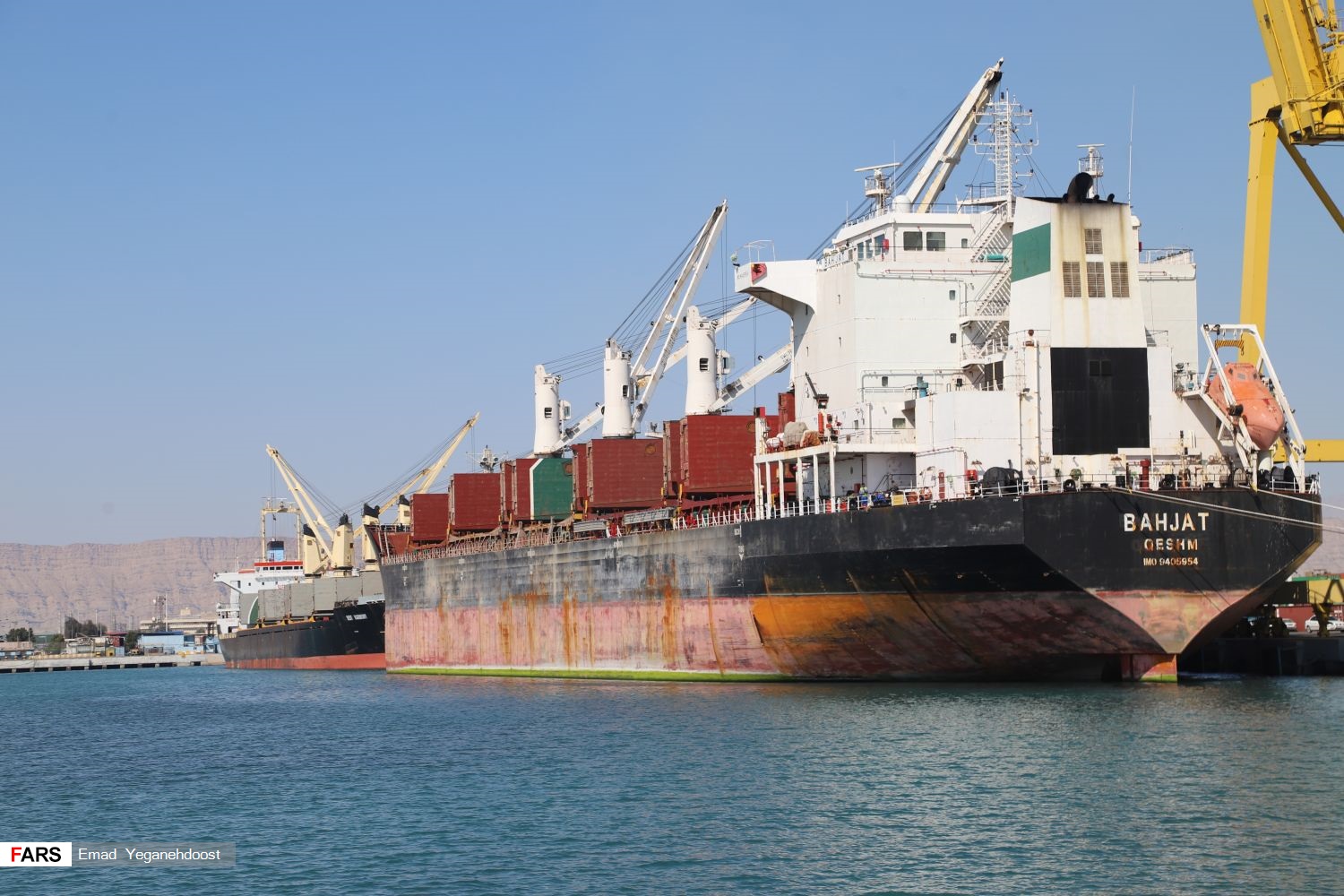
Each of these fields maps onto a sanctions-screening data point under the OFAC and EU designation frameworks that have applied to the PGSA since May and June respectively. OFAC’s May 27 action explicitly warned that shipowners face sanctions exposure for “arranging transits with or paying tolls or fees to the PGSA,” and the form is the arrangement mechanism — the digital handshake between a vessel operator and a sanctioned Iranian agency that precedes every barrel of crude through the strait. The form does not ask for payment; it asks for something more durable than payment.
The standard review period is forty-eight hours, and the PGSA retains full discretion over outcomes: it can approve, reject, or mark a submission “incomplete for further review,” a status that gives Tehran an operational veto over any individual transit it chooses to delay. Each permit covers a single passage and expires after five calendar days, ensuring that every transit generates a fresh filing and a fresh transfer of commercial data to the Iranian state.
The Middle East briefing 3,000+ readers start their day with.
One email. Every weekday morning. Free.
Why Does Iran Need Crew Nationalities and Cargo Manifests?
No navy in history has obtained this kind of granular, self-reported commercial intelligence from the ships it surveils. During the Tanker War of 1984-88, Iran struck vessels based on flag state and observable routing — crude targeting that produced 540 ship attacks over four years and eventually prompted the United States to reflag Kuwaiti tankers under Operation Earnest Will in 1987. The PGSA inverts that model entirely. Instead of expending ordnance to identify and interdict targets on the water, Iran now receives a voluntary manifest from every transiting vessel that includes the one category the 1980s IRGC Navy could never reliably determine: the full commercial chain — owner, charterer, insurer, manager — behind every cargo.
The crew-nationality field is particularly pointed in the current sanctions environment. A VLCC carrying Saudi crude might be Greek-owned, Liberian-flagged, managed from a Singapore office, and crewed by Filipino and Indian nationals — each jurisdiction carrying a different sanctions profile, a different P&I club exposure, and a different diplomatic relationship with Tehran. The form collapses that complexity into a single document filed before the vessel reaches the corridor, giving Iran forty-eight hours to cross-reference each data field against its own enforcement priorities before approving or denying the permit. Windward.ai’s analysis described the PGSA framework as “the first time Iran has created a positive corridor mechanism privileging its own state tanker company while charging third parties,” but the privilege extends well beyond NITC’s commercial advantage — every filing feeds the same intelligence architecture whether or not a fee is ever collected on it, and every filing is routed through a corridor that Iran has drawn inside its own territorial waters.
The Larak Corridor and the Law It Replaces
The standard international shipping lanes through the Strait of Hormuz pass through waters where, under UNCLOS Article 38, all vessels enjoy the right of transit passage — a right the coastal state cannot suspend, restrict, or condition on prior authorization. Iran’s PGSA does not use those lanes. Its mandatory corridor routes every vessel through a five-nautical-mile channel between Qeshm and Larak islands on the inbound leg and just south of Larak on the outbound, with alternative routes “strictly prohibited” under the June 19 rules. Both segments lie entirely within Iran’s claimed twelve-nautical-mile territorial sea. Iran’s UNCLOS Article 26 corridor architecture — and the insurance fee that will follow — is the subject of a separate analysis.
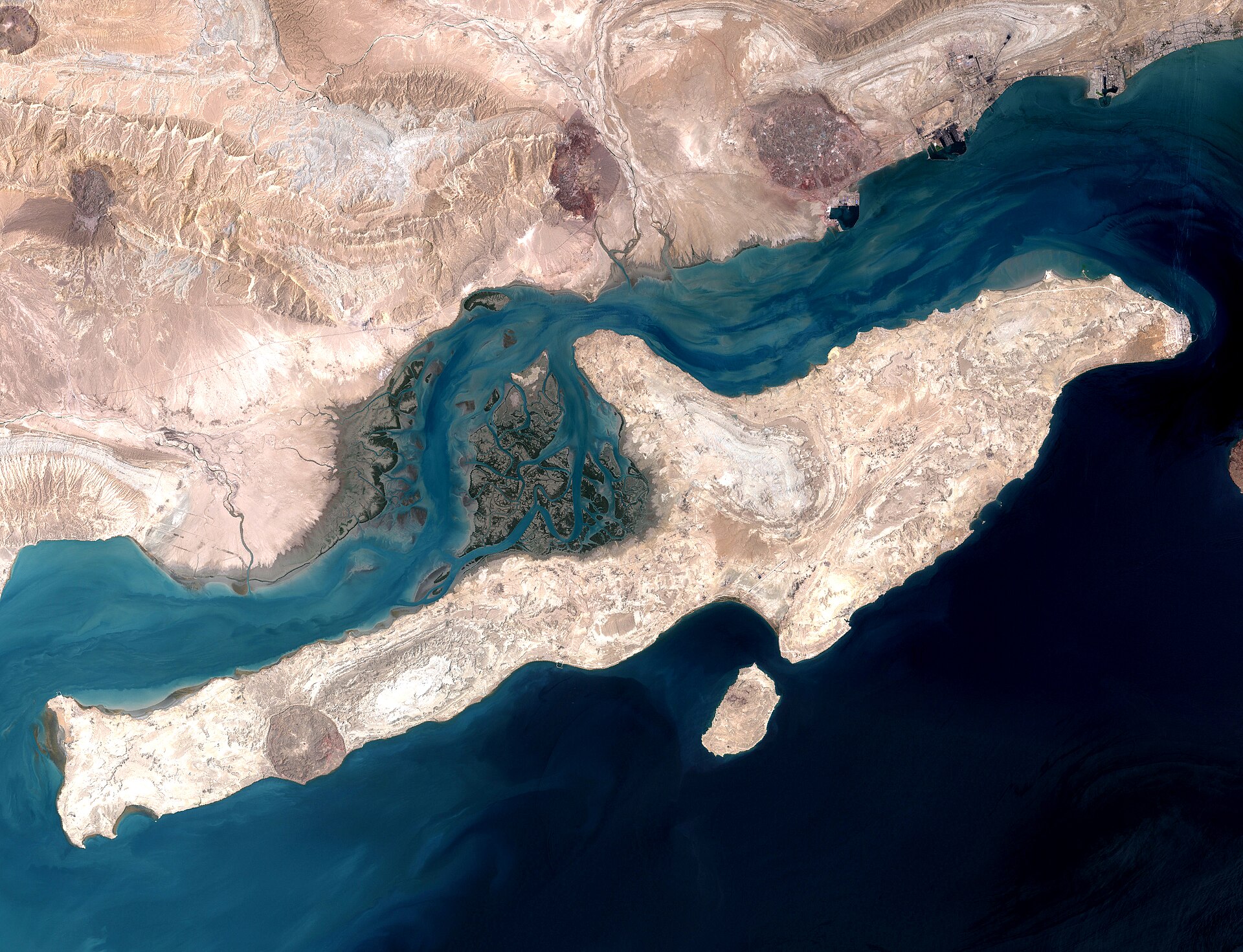
The legal consequence of this routing is precise and deliberate. Inside territorial waters, the applicable regime shifts from Article 38 transit passage to Article 17 innocent passage — a weaker right that a coastal state may suspend “if essential for the protection of its security.” The corridor physically relocates every transiting vessel from waters where Iran’s regulatory authority is limited to safety and environmental standards into waters where Tehran holds discretionary power including the authority to suspend passage entirely. Iran’s PGSA map also reportedly encroaches on UAE territorial waters, a claim that five GCC states protested but that no maritime boundary tribunal has adjudicated — and the map, like the form, remains operative.
Iran’s Foreign Minister Abbas Araghchi stated in a March 2026 Al Jazeera interview that Iran currently applies the innocent passage regime in the Strait of Hormuz — a position that no other state bordering the strait has formally accepted but that every vessel filing a PGSA declaration implicitly validates by using the corridor. Iran signed UNCLOS in 1982 but never ratified it, and upon signature Tehran declared that transit passage was not customary international law but a “package deal” applicable only among UNCLOS parties. The Opinio Juris analysis published on May 6 established that most international law scholars consider transit passage to have acquired customary status binding all states regardless of ratification, but scholarly consensus and enforceable jurisdiction are not the same thing — and every vessel that files the declaration and transits the corridor adds to the body of practice on Iran’s side of the argument.
How Many Ships Have Already Filed?
More than three hundred non-Iranian vessels have submitted PGSA transit declarations since the authority began operating in early May 2026, according to data the PGSA published and Argus Media confirmed. Tankers account for 42% of applications, bulk carriers 27%, container ships 11%, and LNG carriers 8%, with 77% of all filings covering outbound transits headed primarily for China, India, and elsewhere in Asia.
| Vessel Type | Share of Applications |
|---|---|
| Oil Tankers | 42% |
| Bulk Carriers | 27% |
| Container Ships | 11% |
| LNG Carriers | 8% |
| Other Vessel Types | 12% |
| Destination Region | Share of Outbound Filings |
|---|---|
| China | 28% |
| India | 19% |
| Rest of Asia | 23% |
| Europe | 12% |
| Africa | 10% |
| Other | 8% |
The destination breakdown maps directly onto global energy dependency. These are not marginal transits by obscure operators testing the edges of the system — they represent the core commercial flow of the world’s most concentrated energy chokepoint, and every one of them filed the forty-category declaration voluntarily before entering Iran’s corridor. China and India alone account for nearly half of all outbound filings, which means the two largest importers of Persian Gulf crude have allowed their supply chains to become fully visible to an Iranian state agency under Western sanctions designation.
The filings carry a compounding legal effect that operates independently of the fee question. Each submission contributes to what international lawyers call “state practice” — the accumulated behavior of states and commercial actors that, over time, can harden into customary international law or at minimum establish an operational norm that is difficult to reverse. Iran’s position has never required a favorable ruling from a court it does not recognize; it requires the continued accumulation of voluntary compliance, and the PGSA is generating that compliance at a rate of several filings per day. When the authority processed its first batch of NITC tankers in early June under a blanket exemption, the asymmetry was already visible — Iran’s own vessels transited freely while every third-party operator queued for a permit, filed the form, and surrendered the data, all before the sixty-day waiver clock had even started.
What Happens After Sixty Days?
Iran’s June 19 announcement stated that “insurance fees will be waived by the PGSA for 60 days, but after that the unspecified fees will be announced.” The insurance mandate is permanent and the premium waiver is temporary. No official PGSA fee schedule has been published, and the post-waiver rate remains entirely at Tehran’s discretion.
The widely reported figure is $1 per barrel, which at Saudi Arabia’s 5.5 million barrels per day of output implies $5.5 million per day or approximately $2 billion per year in transit costs. But that number has never appeared in any official PGSA tariff document. Lloyd’s List, which ran the exclusive on mandatory PGSA-approved hull war voyage insurance for every transiting vessel, framed the insurance mandate as the fee’s delivery mechanism — “Iran imposes mandatory insurance on ships transiting Strait of Hormuz, with fees likely to follow.” The PGSA also reserves the right to designate which insurers qualify under its mandatory coverage requirement, giving Tehran authority to determine not only whether a vessel may transit but which commercial entities are permitted to underwrite the risk of doing so. The insurance architecture is the permanent structure; the fee is the variable that Iran can adjust at will once the waiver expires.
| Date | Event |
|---|---|
| May 5, 2026 | PGSA founded as Iran’s formal Hormuz transit authority |
| May 27, 2026 | OFAC designates PGSA on SDN List |
| June 8, 2026 | EU designates PGSA |
| June 17, 2026 | US-Iran MOU signed with 60-day insurance waiver |
| June 18, 2026 | First Saudi crude transit since Feb 28 (Bahri convoy) |
| June 19, 2026 | PGSA publishes formal operational rules |
| Mid-August 2026 | 60-day waiver expires; “unspecified fees will be announced” |
The sixty-day clock introduces an additional structural problem for any state hoping the fee will not materialize. Vessels that paid for pre-MOU transits reportedly settled in Chinese yuan routed through Kunlun Bank and the CIPS network, or in Bitcoin and stablecoins — channels that bypass the Western banking system entirely. If the post-60-day fee is announced and operationalized through the same payment rails, the PGSA will have built a sanctions-resistant revenue stream that Western enforcement cannot interdict without physically intercepting vessels. Whether the sixty-day window runs its full course depends on developments the PGSA’s rules do not address: the June 19 Lebanon ceasefire cleared one path toward Phase 2 negotiations, but Iran’s tools for disrupting the broader deal extend well beyond the strait, and any collapse of the parallel diplomatic track could accelerate the fee announcement.
The MOU’s two incompatible public versions deepen the ambiguity. The US version, reported by Axios, describes toll-free passage with a dismantlement track; the Iranian version, reported by Mehr, describes a $24 billion framework with ongoing service fees. The MOU text has not been released. The structural contradiction — that the MOU banned tolls while the fee collector continued operating — is that the PGSA’s institutional infrastructure — the form, the corridor, the insurance mandate, the permit system — exists independently of whatever the MOU says about pricing. The fee can be zero and the architecture still functions.
The Sanctions Double Bind
OFAC designated the PGSA on May 27, adding it to the Specially Designated Nationals list with language that left no room for ambiguity: “The PGSA spearheads an Iranian-controlled scheme that flagrantly violates international law.” The warning explicitly stated that shipowners face sanctions exposure for “arranging transits with or paying tolls or fees to the PGSA,” and the prohibition applies to both US and non-US entities. The EU followed on June 8 with its own designation, and those sanctions remain in force on the body collecting the Hormuz fee even as the MOU waives the fee itself — a gap that neither Washington nor Brussels has addressed.
The trap applies to virtually every commercial vessel afloat. Approximately 95% of the world’s tanker fleet holds insurance from EU-based Protection and Indemnity clubs, according to Steptoe’s sanctions analysis, making those vessels subject to EU primary sanctions prohibiting interaction with the PGSA. But the PGSA’s June 19 rules impose a mandatory PGSA-approved hull war voyage insurance on every transiting vessel — a parallel insurance requirement that exists entirely outside the P&I system and creates a direct compliance conflict for any operator carrying EU-backed coverage. An unnamed insurance executive quoted by Insurance Business called the mandate “madness,” and the publication’s headline — “‘It’s Madness’ — Shock Iranian announcement upends marine insurance” — reflected the industry’s disbelief at the regulatory collision Iran had engineered.
The collision produces a compliance impossibility that no amount of diplomatic framing resolves. Filing the PGSA form means engaging with an OFAC-designated entity; not filing means forfeiting access to the strait. Accepting the mandatory PGSA insurance means creating an EU sanctions exposure; declining it means Iran can deny the transit permit. Lexology named this the “structural double bind: compliance with Iran’s fee system means potential US sanctions exposure; OFAC compliance means operational risk in Iranian-claimed waters.” The bind does not depend on the fee level and does not expire with the sixty-day waiver, because the form and the insurance mandate persist regardless of price — and for Saudi Arabia, which must move 5.5 million barrels per day through this system, the bind is tightest of all.
Saudi Arabia Cannot Contest a Permit It Must Use
Saudi Arabia is the largest captive counterparty to the PGSA system. The Bahri convoy that carried the first Saudi crude through Hormuz since February 28 — the tankers Shaden, Jaham, and Awtad, loaded with approximately six million barrels — implies a PGSA payment of roughly $6 million for that single three-vessel transit alone. At 5.5 million barrels per day, the post-waiver fee exposure runs to $5.5 million daily. Neither Aramco, Bahri, nor the Saudi Ministry of Foreign Affairs has confirmed whether payment was made, and no Iranian state source has confirmed receipt.
The convoy’s AIS transponders were switched off during the Qeshm-Larak corridor segment, making independent verification of compliance impossible from commercial tracking data. What can be verified is that the vessels used the mandatory PGSA corridor, not the standard international shipping lanes — meaning that the first Saudi crude transit since the conflict began operated under the PGSA’s terms, through Iran’s territorial waters, under the innocent passage regime Tehran claims the right to suspend at any time. Saudi Arabia’s fiscal position eliminates the option of simply not shipping. Brent stands at $80.59 against a fiscal breakeven of $108-111, a gap of $28-31 on every barrel before any transit fee is applied. The Q1 2026 deficit of SAR 125.7 billion — more than double the prior year’s SAR 58.7 billion — and Aramco’s 0.85x dividend coverage ratio mean the kingdom cannot leave crude in the ground as an alternative to filing the form.
The GCC-IMO letter of May 21, in which five of six GCC states protested the PGSA and instructed shipowners not to engage with it, has not been rescinded — but it has been operationally overtaken by the vessels it was supposed to protect. Saudi tankers have now transited under PGSA terms, and Kuwait lifted its force majeure on June 18 and began shipping through the same corridor without bearing any of the diplomatic or military costs Saudi Arabia absorbed to make transit possible. Iran signed the deal and kept the minefield that created Saudi Arabia’s export gap, and the kingdom’s mine-clearing exposure alone runs forty days or more before the first barrel can move with full insurance confidence. Chatham House’s June assessment captured the residual risk: “Even if Trump’s deal holds, Iran retains the ability to close Hormuz again, and if the Houthis were to simultaneously disrupt shipping in the Bab al-Mandab Strait, the consequences would be disastrous.” Saudi Arabia is betting its primary export route on a permit system it publicly opposes and privately uses.
Can Any Court Reverse What Three Hundred Ships Have Accepted?
No international court currently holds compulsory jurisdiction over Iran’s PGSA regime. Iran signed UNCLOS in 1982 but never ratified it, placing it outside ITLOS jurisdiction. The ICJ requires consent from both parties to any dispute, and no member state has initiated proceedings at the IMO against the authority’s operations.
The Eno Center for Transportation noted that there is no historical precedent for fee-charging on transit through a natural international strait — but the absence of precedent cuts both ways. No state has done this before, which means no court has ever ruled against it, and the legal framework for challenge remains entirely untested in practice. Opinio Juris’s May 6 analysis established the theoretical case that the PGSA violates customary transit passage rights, but it simultaneously acknowledged the jurisdictional void: the argument cannot be adjudicated in any forum Iran is obligated to attend. The Washington Institute’s assessment of Iran’s “smart control gambit” reached a compatible conclusion — that the PGSA operates in a legal space that existing multilateral institutions were not designed to police, and that no state has yet demonstrated the political will to test.
This is where the form does its most durable work, independent of whatever fee is eventually attached to it. Every PGSA filing is a voluntary act of engagement with the authority, and voluntary engagement is the hardest category of commercial practice to reverse in any legal proceeding. A vessel operator who filed the declaration cannot later argue before a tribunal that the PGSA had no authority to request it — the filing itself stands as evidence that the authority was treated as operative by the party now challenging it. Three hundred filings do not create formal jurisdiction under international law, but they create something that courts tend to respect even more: an operational norm that every new transit reinforces and that no government has yet taken a concrete legal step to challenge.
The sixty-day waiver will expire in mid-August, and when it does, the fee will be whatever Tehran decides to announce. The form, the corridor, and the forty-eight-hour submission window will remain exactly as published on June 19 — because they were never part of the concession. The three hundred filings already on record at the PGSA cannot be unfiled, the data has already been transferred, and the precedent deepens with every new submission. The ships, for now, keep filing.
Qatar’s Prime Minister Al Thani arrived at Bürgenstock on June 20 as the Gulf state with an active mediating function in Phase 2 — the process that will determine whether the fee, once restored after Day 60, becomes the permanent toll the PGSA’s legal architecture was built to collect. Qatar PM Arrives for Iran Nuclear Talks That Exclude Saudi Arabia traces who is at the table and who is not as the clock enters Day 4.
When the June 29 stand-down reversed Iran’s missile posture without touching the PGSA’s pre-clearance requirement or corridor designations, the pattern documented here repeated at scale: the fee architecture survived the ceasefire intact, compounding Saudi Arabia’s exposure even as the shooting stopped.
Frequently Asked Questions
Has any country filed a formal legal challenge against the PGSA at the ICJ or ITLOS?
No state has initiated formal legal proceedings against the PGSA at any international court as of June 19, 2026. The GCC-IMO letter of May 21 constitutes a diplomatic protest but not a legal filing, and Oman — the only GCC state that shares a border with the strait alongside Iran, via the Musandam Peninsula — declined to sign it. The closest precedent for a maritime sovereignty dispute in Hormuz is the 2019 seizure of the UK-flagged Stena Impero, which was resolved through bilateral diplomatic channels between London and Tehran without any court ruling, establishing no binding legal precedent that could be applied to the PGSA’s permit regime.
Can a vessel legally transit Hormuz without filing the PGSA declaration?
Under international law, yes — UNCLOS Article 38 transit passage does not require prior authorization from a coastal state, and most legal scholars hold that this right has acquired customary status binding even non-ratifying states. In practice, vessels that have attempted to transit without PGSA coordination have been subject to IRGC Navy interception, and on April 18 a Channel 16 SOLAS broadcast warned all vessels in the Persian Gulf and Gulf of Oman that Hormuz was “closed…by Khamenei’s order, not by tweets of some idiot.” The practical choice confronting any commercial operator is binary: file the form and transit, or do not file and do not transit — which for Gulf crude producers means not exporting at all.
What currencies does the PGSA accept for fee payments?
No dollar-denominated payment has been publicly reported, consistent with OFAC sanctions prohibiting any US-nexus transaction with the designated authority. Reported settlements have been in Chinese yuan via Kunlun Bank’s CIPS (Cross-Border Interbank Payment System) network and in Bitcoin and stablecoins — channels that bypass Western banking infrastructure entirely. Vessels have reportedly paid up to $2 million per individual transit through these rails, a figure that predates any formal published tariff and reflects negotiated pre-rate arrangements outside the $1-per-barrel formula widely cited for Gulf crude producers.
How does the PGSA compare to other international strait or waterway fees?
The Turkish Straits — the Bosphorus and Dardanelles — charge a sanitary and lighthouse fee under the 1936 Montreux Convention, but that fee was established by multilateral treaty negotiation among signatory states and covers actual navigational services provided to transiting vessels. The Suez and Panama canals charge substantial transit fees but are artificial waterways, not natural straits, and neither invokes territorial sovereignty as the legal basis for the charge. The Eno Center for Transportation confirmed that there is no historical precedent for unilateral fee-charging on transit through a natural international strait, making the PGSA’s regime — whether framed as a toll, a service fee, or an insurance mandate — the first of its kind in modern maritime history.
Iran’s pre-authorization regime has since been enforced kinetically — the IRGC struck the Ever Lovely container vessel on June 25 on a route Iran had not authorized, exposing the enforcement gap at the heart of the MOU’s fee-waiver framework. How Iran subsequently applied that enforcement logic directly against four US bases on June 27 is detailed in Iran Struck Four Bases and Called It Compliance.