
WASHINGTON — The amended MOU text that Donald Trump sent back to Iran on May 31 cannot be read by the one man authorized to approve it for at least 72 hours, because Mojtaba Khamenei is in an underground bunker, communicating through motorcycle couriers, and has not responded to even the previous draft. “They’re literally in caves and they’re not using email,” a senior US administration official told Axios — nine words that compress the negotiation’s central dysfunction into a single operational fact.
While the text travels through a counter-assassination courier network built to keep the Supreme Leader alive rather than to facilitate diplomacy, three clocks run against Saudi Arabia. Brent crude at $91.37 sits $17-20 below the kingdom’s $108-111 fiscal breakeven, draining approximately $153-180 million per day in revenue shortfall. Iran’s Persian Gulf Shipping Administration collects roughly $2 million per Hormuz transit. And Mohammad Bagher Ghalibaf — parliament speaker, former IRGC commander, one vertex of Tehran’s “triangle of power” — declared on X what the diplomatic track cannot say aloud: that Iran seizes its concessions through missiles, not through dialogue.
Table of Contents
- The Courier and the Cave
- What Did Trump Change in the MOU Text?
- Missiles, Not Dialogue
- How Many of Khamenei’s Conditions Does the Amended Text Violate?
- The Ratification Chain Without Larijani
- What Does Each Day of Delay Cost Saudi Arabia?
- Why Can’t Iran’s Foreign Minister Accept the Deal?
- The 90-Day Precedent With a Visible Leader
- Frequently Asked Questions
The Courier and the Cave
The 72-hour estimate is not an analyst’s guess — it comes from the US government itself. A senior administration official told Axios on May 31 that Iran “would take around three days” to respond to the amended text, and offered an explanation unusual in its candor about a counterpart’s operational security: the Supreme Leader is underground, severed from electronic communication, reachable only through a physical courier chain designed to survive the same February 28 strikes that killed his father, Ali Khamenei, and wounded Mojtaba himself. US intelligence confirmed to CBS News (May 25) that Mojtaba has not been seen publicly since before the war began, and senior Iranian officials authorized to negotiate told reporters they do not know where he is.
An unnamed Western official described the resulting information loop to the Times of Israel in terms rarely permitted in diplomatic briefings: “Watching them try to figure out how to talk to each other is almost like watching a sitcom — they are completely exasperated.” The same official added that “every piece of information he receives is dated and there’s a lot of latency to his responses,” which means the man constitutionally required to approve or reject a nuclear agreement is operating on intelligence that is, at minimum, days old by the time it arrives — and days old again by the time his response reaches anyone who can act on it. The courier system, built to prevent a decapitation strike, has introduced a temporal distortion into the negotiation itself: each cycle of proposal and response takes not the hours that a heads-of-state channel requires but days, during which the underlying military, fiscal, and diplomatic conditions continue to shift.
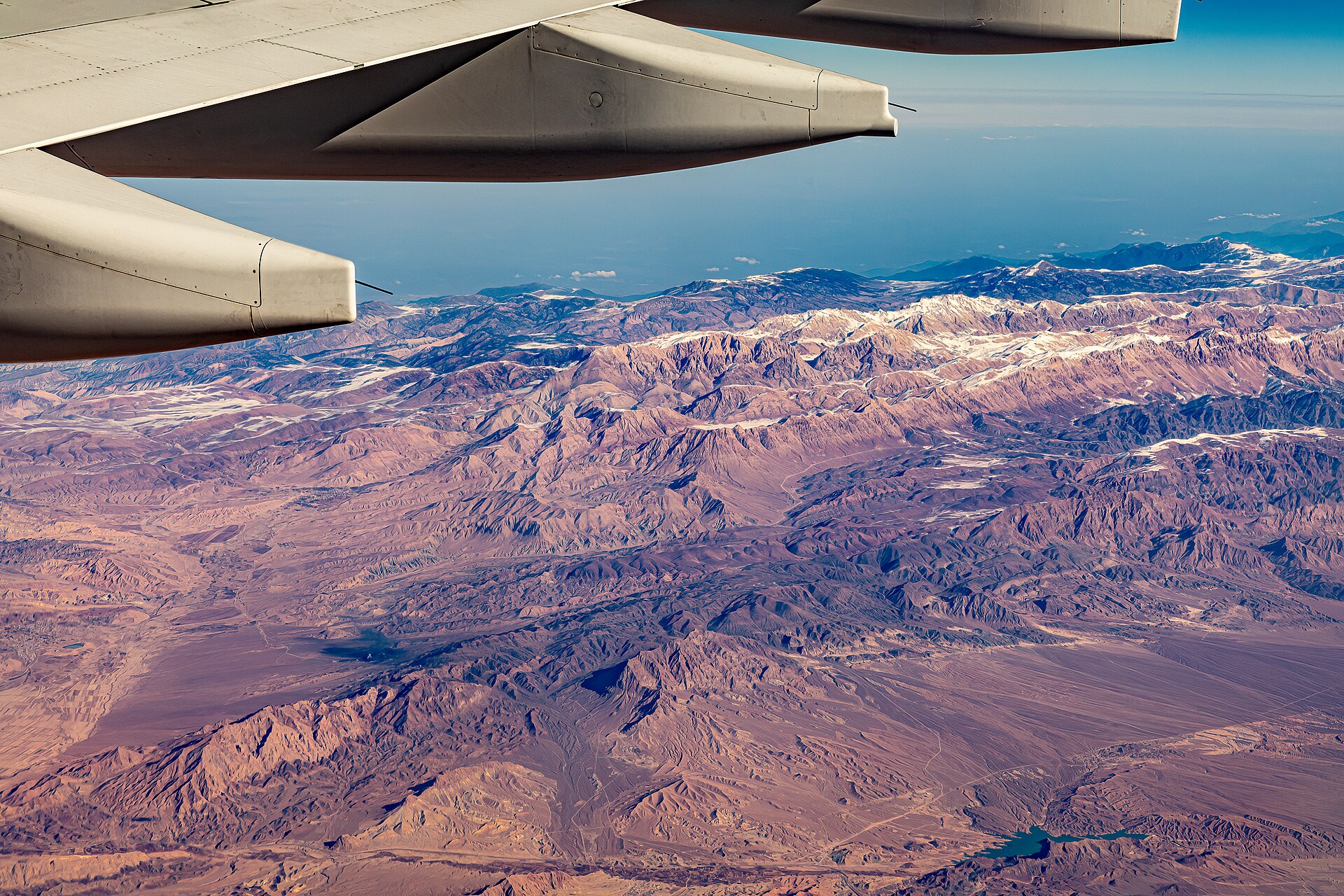
The physical reality of the channel matters because it is not merely slowing the negotiation but deforming it. A text drafted to reflect conditions on May 29 arrives to a leader who last received comprehensive intelligence days earlier, whose response will reflect the world as he understood it when the courier reached him, and whose counter-proposal — if one comes — will arrive in Washington describing circumstances that have already moved on. Trump toughened the MOU because Khamenei hadn’t responded to the previous draft, but the non-response was physical, not political, and the toughening guarantees that the next courier cycle carries a harder text into the same slow channel — on the same motorcycle, to the same bunker whose location Iran’s own foreign minister does not know.
What Did Trump Change in the MOU Text?
Trump’s amendments target two of Iran’s hardest red lines: the disposition of Iran’s enriched uranium stockpile and the operational status of the Strait of Hormuz. According to Axios (May 31), the president demanded specifics on “how the US gets the enriched uranium material and the timing,” effectively folding Phase 2 HEU removal demands into Phase 1, and amended the wording on the reopening of Hormuz.
The Middle East briefing 3,000+ readers start their day with.
One email. Every weekday morning. Free.
The enrichment demand confronts a physical and political impossibility that the original negotiated text carefully deferred. Iran’s last IAEA-verified stockpile stood at 440.9 kilograms of 60-percent enriched uranium as of June 13, 2025 — enough for approximately ten nuclear warheads — but the agency has had no access since February 28, 2026, a 93-day blackout that means no one, including Washington, can say with certainty how much material exists today or precisely where it is stored. Roughly 200 kilograms sit in Isfahan tunnels sealed since the war began. Foreign Minister Abbas Araghchi has placed the transfer of HEU abroad “categorically off the table,” and Khamenei’s standing directive is that enriched material stays on Iranian soil. The enrichment moratorium gap — Iran proposed five years, the US demanded twenty, with a reported landing zone of twelve to fifteen years (Axios, April 2026) — remains formally unresolved, and Trump’s amendments push toward the US end of the range rather than the compromise position his own negotiators had approached.
Trump told Fox News on May 31 that Iran had agreed to “not develop or in any way purchase a military weapon,” framing the unamended negotiators’ text as a settled commitment. But the text he was describing has not been read, let alone approved, by the man constitutionally required to ratify it — a gap between presidential description and documentary reality that has been a recurring feature of the negotiation, in which each public statement treats the most optimistic reading of an unsigned document as accomplished fact. The amended version, which toughens the terms beyond anything the negotiators agreed, is now in a courier’s hands rather than on a counterpart’s desk.
On Hormuz, the amendment’s full contents have not been disclosed, but the direction is clear from context. The original negotiated text left the strait’s operational framework ambiguous enough for Iran to maintain its PGSA toll system under the label of “navigational services” — a formulation crafted to satisfy UNCLOS Article 26’s prohibition on charges for transit passage. Trump’s toughened wording appears aimed at eliminating precisely the ambiguity that made the draft survivable in Tehran, which means the amended text likely fails on Hormuz for the same reason it fails on enrichment: it demands clarity where constructive vagueness was the only path to agreement.
Missiles, Not Dialogue
On May 29 — the same day Trump convened his Situation Room meeting and decided to toughen the text — Mohammad Bagher Ghalibaf posted a series of statements to X that read less like a politician’s commentary and more like a doctrine from a man who expects the deal to fail. “We have no trust in guarantees or words — only actions are the measure,” Ghalibaf wrote. “No action will be taken before the other side acts.” And the sentence that functions as both threat and thesis: “The winner of any agreement is the one who is better prepared for war from the day after.”
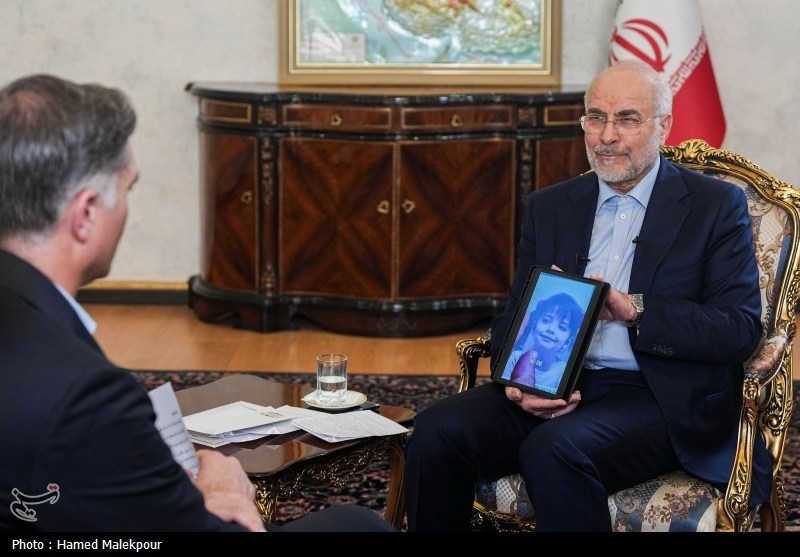
Ghalibaf is not a political commentator voicing an opinion from outside the process. He is the speaker of Iran’s parliament, a former IRGC aerospace commander who ran Iran’s air defenses during the Iran-Iraq War, and one vertex of what Iranian analysts call the “triangle of power” — alongside Hossein Taeb and Mohsen Rezaei — that holds institutional authority parallel to, and in practice often above, the civilian government. His statements on May 29 were issued not from outside the negotiating structure but from within its most consequential layer: the IRGC track that operates independently of the Foreign Ministry under Article 150 of the Iranian constitution. When Ghalibaf says missiles produce concessions and dialogue merely formalizes them, he is not editorializing about Araghchi’s work — he is defining the framework within which Araghchi is permitted to operate.
The timing compounds the message. Ghalibaf posted his statements hours before Trump decided to harden the MOU, which means the IRGC’s public posture was already calibrated for rejection before the toughened text existed. IRGC-affiliated Tasnim had denied the MOU was “finalized” days earlier (Iran International, May 28), and an Iranian MP told Iran International the same week that the draft “violates Khamenei’s red lines” on Hormuz, the nuclear issue, and compensation demands. The FM track — Araghchi, his team, the Omani mediators — was negotiating a text that the IRGC had already publicly repudiated before Trump made it harder to accept. Iran’s Tasnim counter-amendment announcement on June 1 — paired with the White House’s earlier “fabrication” denial of Tehran’s version — marks the beginning of the competing realities phase: the point at which Iran’s counter-amendments deepened a document war neither side can resolve through drafting alone.
“We seize concessions not through dialogue, but with missiles; in negotiations, we merely make them understand.”
— Mohammad Bagher Ghalibaf, Iranian Parliament Speaker, X post, May 29, 2026
For the amended text now traveling through the courier chain, the consequence is concrete: even if it reaches Mojtaba Khamenei, and even if the SNSC convenes and reviews it, the draft must survive not only Khamenei’s personal assessment but the institutional veto of an IRGC apparatus whose third-ranking figure has publicly declared that the negotiation is a performance overlay on a military campaign. Araghchi told IRNA on May 31 that “dialogue and an exchange of messages are ongoing” but that “it is not possible to judge until a clear conclusion is reached” — language that preserves the diplomatic track without committing to anything his office cannot constitutionally deliver, and that reads very differently when set against Ghalibaf’s declaration that the real power sits in the launch tubes, not in the text.
How Many of Khamenei’s Conditions Does the Amended Text Violate?
At least eight of ten. Mehdi Khanalizadeh, an Iranian state television pundit who accompanied the negotiating team to Islamabad, told Iran International (May 29) that the unamended draft already violated eight of the ten conditions Mojtaba Khamenei approved for negotiations. Trump’s amendments tighten the text on the two issues — HEU disposition and Hormuz — that the remaining conditions most directly address.
Khanalizadeh’s count is sourced from inside the process: he identified the draft as contradicting not only Khamenei’s conditions but also the SNSC’s ceasefire statement, the institutional document that frames Iran’s formal negotiating mandate. The ten conditions have not been published in full, but reporting across Iran International, Tasnim, and IRNA throughout the negotiation indicates they include: no transfer of enriched uranium abroad, no permanent enrichment moratorium, no dismantlement of centrifuge infrastructure, restoration of Hormuz to exclusive Iranian sovereign control, no permanent foreign naval presence in the Persian Gulf, and compensation for war damage. The unamended negotiators’ text — drafted with considerable ambiguity precisely to avoid triggering these conditions explicitly — still failed Khanalizadeh’s test on eight of them.
Trump’s amendments directly aggravate at least two of the surviving conditions. By demanding specifics on “how the US gets the material and the timing,” the amended text transforms what was already a difficult enrichment framework into an explicit demand for HEU removal — the condition Iran’s foreign minister has said his government will not accept under any terms. By tightening Hormuz language, it narrows the interpretive space that allowed Iran to rebrand its toll system as “navigational services,” a rebranding that was itself the product of weeks of careful drafting designed to create exactly the kind of productive ambiguity that Trump has now eliminated. The arithmetic of the situation is clarifying: if the softer text violated eight of ten conditions, and the harder text is tougher on the two most sensitive issues, the courier is carrying a document that sits further from approval by every available metric from inside the Iranian system than the one it replaced.
The Ratification Chain Without Larijani
Even if Mojtaba Khamenei were inclined to accept the amended text — and nothing in the available reporting suggests he is — the constitutional ratification chain between reception and approval runs through an institution that lost its most experienced operator ten weeks ago. Under Article 176 of the Iranian constitution, all national security decisions require Supreme National Security Council approval, and SNSC decisions are effective only after Supreme Leader confirmation. The SNSC must convene, review, and transmit any text before a formal response can issue — and since the assassination of Ali Larijani on March 17, 2026, the council has been led by Mohammad Bagher Zolghadr, appointed March 24, who brings no comparable experience in the discipline of nuclear-agreement drafting that this moment demands.
Larijani’s loss is not merely a personnel gap — it is the removal of institutional memory from the ratification chain at the precise moment it is needed most. He participated directly in both the 2003 nuclear negotiations and the 2015 JCPOA, maintained relationships across Iran’s factional lines that allowed him to translate diplomatically viable language into formulations the Supreme Leader’s office could accept, and understood the specific red lines not as public positions but as operationally binding constraints that any text needed to navigate. Zolghadr, a former deputy interior minister and IRGC ground forces commander, brings security credentials appropriate to a wartime SNSC secretary but no record of managing the legal-diplomatic calibration that determines whether a nuclear text lives or dies in the Supreme Leader’s review.
The constitutional chain thus adds its own latency on top of the courier’s physical transit time. The amended text must reach Mojtaba Khamenei, but before it does, it must pass through an SNSC operating with a new secretary, under wartime conditions, in a security environment where the previous secretary was killed by the same adversary now proposing the agreement. The 72-hour US estimate accounts for the courier’s travel time to and from the bunker — it does not appear to account for the SNSC’s deliberation time, which under the JCPOA took weeks with a far more experienced team, or for the possibility that Zolghadr’s inexperience in this specific domain may produce procedural delays that Larijani would have avoided.
What Does Each Day of Delay Cost Saudi Arabia?
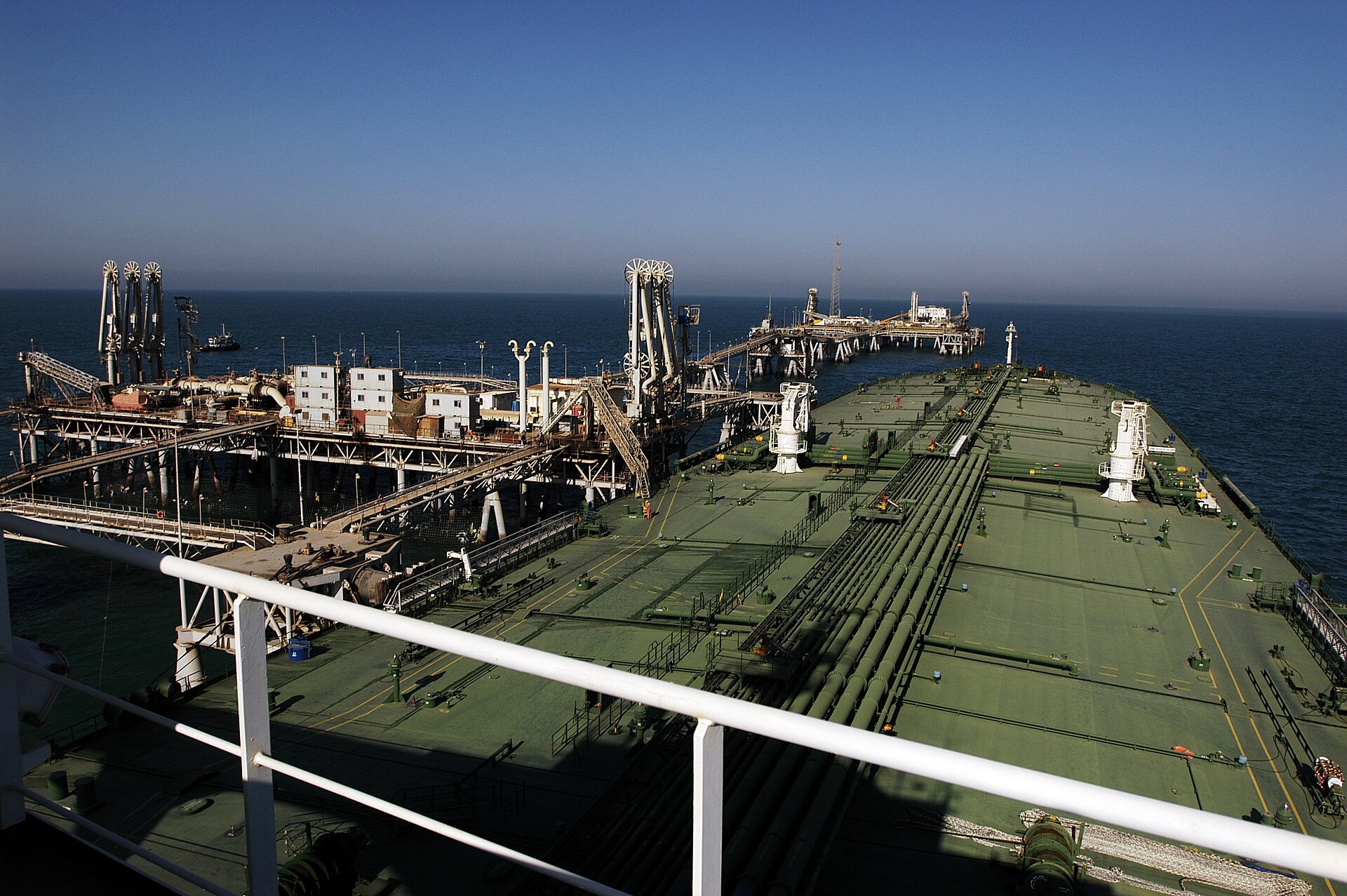
Between $153 million and $180 million per day in revenue shortfall against fiscal breakeven, based on a $17-20 per barrel gap between Brent crude at $91.37 and Saudi Arabia’s $108-111 PIF-inclusive breakeven at approximately 9 million barrels per day of production. This figure does not include PGSA accruals to the IRGC or the compounding effects of term-contract renegotiation as Asian buyers lock in alternative supply commitments.
The fiscal damage is not theoretical and not future-tense. Saudi Arabia’s Q1 2026 deficit reached SAR 125.7 billion ($33.5 billion), consuming 76 percent of the full-year SAR 165 billion deficit target in the first 90 days — a pace that Goldman Sachs has used to revise its projected full-year deficit to $80-90 billion, or 6 to 6.6 percent of GDP. The National Debt Management Center had described itself as “approximately 90 percent funded” before the Q1 overshoot, leaving residual borrowing capacity of roughly $5.8 billion to absorb a deficit that has already outrun its budget framework. Aramco’s $21.89 billion quarterly dividend — payable June 9, with eligibility on June 1 — now exceeds the company’s quarterly free cash flow of $18.6 billion, and the Public Investment Fund’s liquid cash position of $15 billion represents a six-year low at just 1.6 percent of assets under management.
| Metric | Figure | Source |
|---|---|---|
| Brent crude close (May 29) | $91.37/bbl | Bloomberg |
| Saudi fiscal breakeven (PIF-inclusive) | $108-111/bbl | Bloomberg consolidated |
| Daily revenue shortfall vs breakeven | $153-180M | Calculated at ~9M b/d |
| Q1 2026 deficit | $33.5B (76% of full-year target) | Saudi MoF |
| Goldman revised full-year deficit | $80-90B (6-6.6% GDP) | Goldman Sachs |
| Aramco quarterly dividend (June 9) | $21.89B | Aramco |
| Aramco Q1 free cash flow | $18.6B | Aramco |
| PIF liquid cash | $15B (six-year low) | PIF filings |
| PGSA per-transit toll | ~$2M (yuan/BTC) | Industry reports |
Each 72-hour courier cycle costs the kingdom roughly $459-540 million in revenue shortfall against breakeven — and the amended MOU, by toughening terms that were already unacceptable to the Iranian system, all but guarantees a response timeline longer than one cycle. A rejection would initiate a new round of Washington deliberation followed by yet another courier transit; a counter-proposal would require the same; even a request for clarification adds days. The kingdom cannot afford the peace it is asking for, and Trump’s decision to harden the text — motivated by frustration with delay — produces the conditions for more of it.
The downstream effects extend beyond the daily shortfall. Wood Mackenzie’s “Quick Peace” scenario projects Brent at $80 by end-2026 and $65 through 2027; Goldman Sachs models an 800,000-barrel-per-day Iranian supply return within six months of any signature. The war premium that has kept Brent above $90 is the only thing preventing a steeper decline, which means the MOU’s delay is paradoxically supporting the price level that makes Riyadh’s position survivable — while each day of that delay bleeds the treasury at the rate described above. Peace, if it arrives at current oil-market fundamentals, may prove worse for Saudi fiscal solvency than the war that preceded it, a bind from which no courier cycle offers an exit.
Why Can’t Iran’s Foreign Minister Accept the Deal?
Under Iran’s constitutional architecture, the Foreign Ministry can negotiate but cannot ratify. Article 176 requires Supreme National Security Council approval with Supreme Leader confirmation for all national security decisions. Araghchi’s authority extends to the wording of drafts, not to their acceptance — a constitutional fact that Washington has repeatedly treated as a procedural footnote rather than an operative constraint.
Araghchi’s public statements on May 30-31 reflect the limits of his position with a precision that reads differently depending on whether you understand the architecture behind them. He told IRNA on May 31 that “dialogue and an exchange of messages are ongoing” but that “it is not possible to judge until a clear conclusion is reached” — language that preserves the diplomatic track without making a single commitment his office lacks the constitutional authority to fulfill. In a call with his Omani counterpart, he was sharper: reaching a final agreement, he said, “is contingent upon the cessation of the American side’s greedy approach and variable and contradictory stances” (IRNA, May 30). The burden of failure is placed on Washington; the burden of acceptance is placed constitutionally above Araghchi’s head, where a courier must carry it.
The irony is that Trump’s amendments may have been prompted by frustration with exactly this dynamic. According to the Jerusalem Post (May 31), the toughened US position came specifically because Trump was angered by Khamenei’s failure to respond to the previous draft — anger directed at a man who cannot respond quickly because the counter-assassination protocol that protects him from a follow-up strike also prevents him from engaging in real-time diplomacy. Trump toughened the text to punish a delay that is physical, not political, and in doing so guaranteed a longer delay on the return. The courier carries a harder text into the same slow channel, and Araghchi — who can see the text, who can discuss it with Oman, who can describe it to IRNA — cannot do the one thing Washington wants, because the Iranian constitution placed that authority in a bunker that has no email, no phone, and no timeline compatible with American impatience.
The 90-Day Precedent With a Visible Leader
The closest precedent for the current negotiation is the 2015 JCPOA, which took 90 days from UN Security Council endorsement on July 20, 2015, to Adoption Day on October 18, 2015 — and that timeline operated under conditions that no longer exist in any form. Ali Khamenei was publicly visible, constitutionally uncontested, and reachable through normal government channels. The SNSC was led by Ali Shamkhani, who had served in the role for more than a decade and held deep relationships across every faction. The negotiating team was led by Mohammad Javad Zarif, who carried the trust of both the Supreme Leader’s office and his Western counterparts. The ratification chain was functional, tested, and staffed by people who had navigated it before.
None of these conditions obtain in May 2026. The Supreme Leader is wounded, underground, and reachable only through motorcycle couriers whose routes are designed to avoid the satellites and signals intelligence that killed his father. The SNSC is led by a secretary appointed ten weeks ago to replace one who was assassinated. The parliament speaker is an IRGC commander who has publicly declared that missiles, not diplomacy, produce results. The foreign minister can negotiate but cannot accept, and JD Vance told PBS NewsHour in late May that “it’s hard to say exactly when or if the president’s going to sign” — uncertainty from the American side layered on top of incapacity on the Iranian one.
“There will be a deal. At the turn of the week, we hope to have something.”
— Senior US administration official, Axios, May 31, 2026
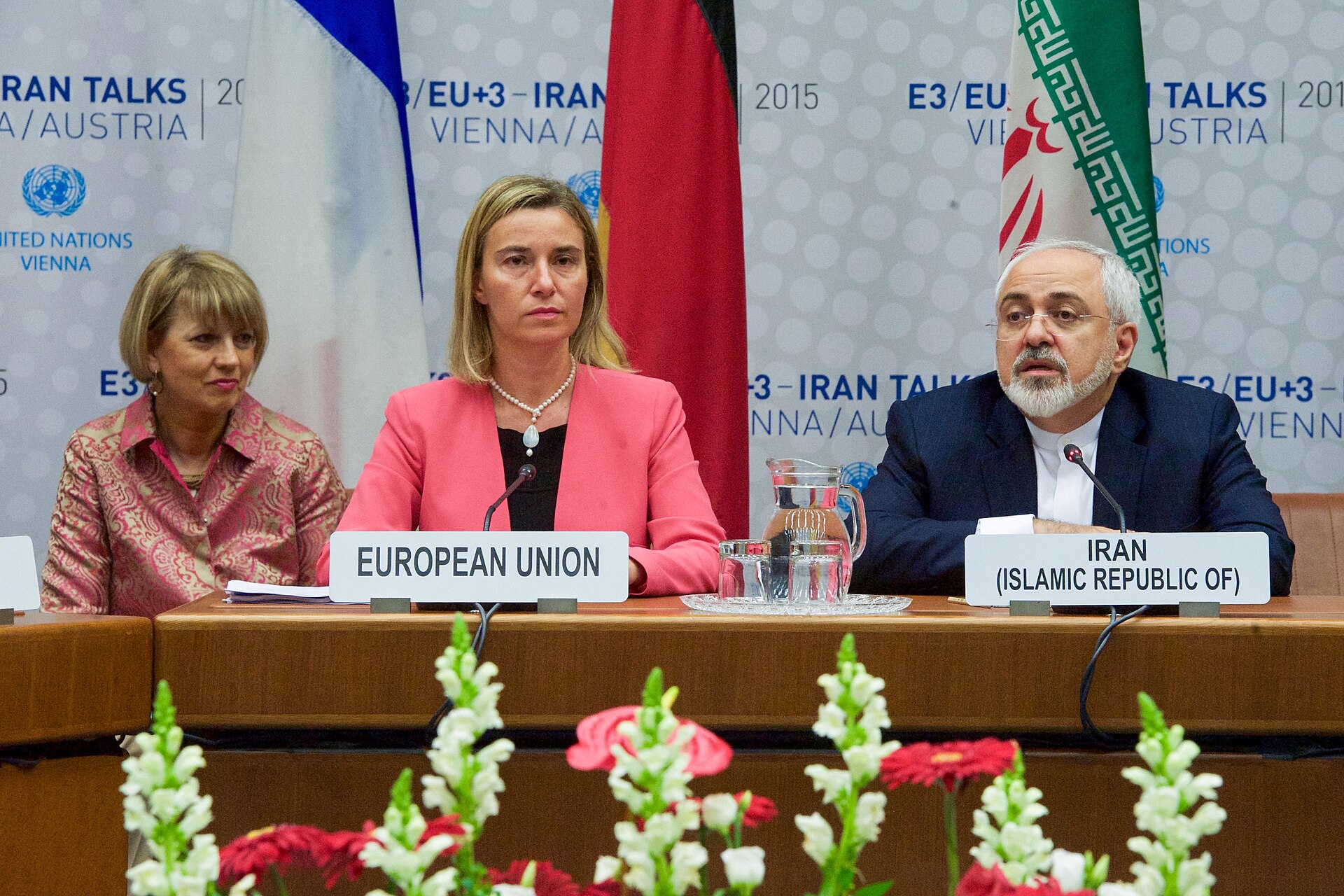
The JCPOA precedent suggests that even under optimal conditions — visible leader, seasoned SNSC, trusted negotiators, functioning communications — a nuclear agreement with Iran requires months between political alignment and formal adoption. Under current conditions, with a 93-day IAEA verification blackout, a courier-dependent ratification authority, an untested SNSC secretary, and a parliament speaker who has told the world that missiles produce the concessions while texts travel on motorcycles, the 72-hour timeline is the minimum before a response — not before an agreement. The distance between response and signature, if signature comes at all, is measured in weeks or months, and every one of those weeks costs the kingdom that can least afford the wait another billion dollars against a breakeven that the oil market has already left behind.
Frequently Asked Questions
Has the US set a deadline for Iran to respond to the amended MOU?
No formal deadline has been announced. A senior administration official told Axios on May 31 that “there will be a deal” and expressed hope for progress “at the turn of the week,” but these are aspirations framed as confidence, not ultimatums backed by consequence. Trump’s previous “blow ’em up” posture (May 25-26) dissolved into Situation Room deliberation rather than kinetic escalation, suggesting the administration is not currently prepared to enforce a timeline with military action. The 72-hour figure describes Iran’s physical communication constraint — the time it takes a courier to reach an underground bunker and return — not a US-imposed response window, and the official who provided it framed the number as an explanation of Iranian incapacity, not as a warning.
Could Iran’s parliament block the MOU even if Khamenei approves?
The Majlis does not formally ratify international security agreements the way Western legislatures do — the SNSC-to-Supreme-Leader chain is the constitutional approval mechanism. However, Ghalibaf’s role as parliament speaker gives him institutional tools to delay or obstruct implementation legislation, and his May 29 statements indicate he would use them aggressively. The 2015 JCPOA faced a parallel dynamic: the Majlis passed a law imposing conditions on implementation that complicated but did not block the agreement. In 2026, with Ghalibaf explicitly aligned with the IRGC’s military-first posture and holding a seat in the “triangle of power” that operates above the civilian government, parliamentary obstruction would be more institutionally supported and more confrontational than the 2015 precedent suggested was possible.
What role does Oman play in transmitting messages between Washington and Tehran?
Oman has served as the primary diplomatic intermediary throughout the MOU negotiations, reprising a role Muscat has played in US-Iran diplomacy since the secret back-channel that preceded the JCPOA. Araghchi’s call to his Omani counterpart on May 30 (IRNA) confirms the channel remains active, and Iran’s deputy foreign minister Baqerpour led a legal drafting team to Muscat on May 13. But Oman’s intermediary function operates at the FM-to-FM diplomatic layer — it does not bypass the internal Iranian courier system connecting the civilian government to Mojtaba Khamenei. Omani mediation can compress the diplomatic layer’s timeline but cannot touch the physical-security layer that produces the 72-hour minimum, because that layer exists precisely to exclude foreign intelligence services, including friendly ones, from the Supreme Leader’s location and communication protocols.
What is the latest IAEA assessment of Iran’s nuclear stockpile?
The last verified figure is 440.9 kilograms of 60-percent enriched uranium — confirmed by IAEA inspectors as of June 13, 2025, before the agency lost physical access on February 28, 2026. IAEA reporting since the blackout has characterized the stockpile as having grown to a record level, but inspectors have had no physical access for over 90 days, meaning no specific current figure can be verified and the agency’s director-general has described restoring any baseline as “absolutely possible, terribly difficult.” Trump’s demand for specifics on “how the US gets the material” therefore applies to a quantity that the US, Iran, and the IAEA itself cannot confirm — a negotiation over material whose precise amount, composition, and location have not been independently assessed since the war began.
While the text travels by motorcycle through terrain that American satellites can observe but cannot reach, the PGSA continues collecting approximately $2 million per Hormuz transit, the Iranian parliament speaker has already told his country the negotiation is a military operation performed in diplomatic clothes, and the man whose signature turns the courier’s cargo into a binding commitment remains in a bunker whose location his own foreign minister does not know. On June 1, CENTCOM struck Iranian drone C2 sites at Goruk and Qeshm Island — inside the same 72-hour window — while Iran announced counter-amendments to the draft. The counter-amendment never arrived: Iran instead suspended all mediator-channel communications, citing Israeli operations in Lebanon as a ceasefire violation. When a reporter informed Trump of the suspension in a phone interview on NBC News, he replied that he had not been briefed — the courier window had closed, the channel had gone dark, and the White House found out from the press. Ghalibaf’s summary, issued before Trump toughened the terms, may be the most accurate description of where the MOU stands: “The winner of any agreement is the one who is better prepared for war from the day after.”