VIENNA — The International Atomic Energy Agency reported on May 31, 2026, that Iran has accumulated a “record” stockpile of military-grade enriched uranium — a finding delivered without the agency having set foot inside an Iranian enrichment facility since February 28. Hours later, President Trump told Fox News that Iran has “agreed” to forgo nuclear weapons. “The one guarantee that I have to have is that there will be no nuclear weapons,” he said. “They’ve agreed to that, and it was very interesting.”
One statement tracks a growing stockpile the IAEA can project but cannot measure. The other treats the nuclear file as a deliverable already secured — announced not through a signed document or a Congressional briefing but in a Fox News interview with the president’s daughter-in-law. For Saudi Arabia — excluded from every negotiating track, financing a Q1 deficit that consumed 76 percent of its annual target in ninety days, and watching Brent trade $17-20 below its fiscal breakeven — the combination is the worst available: a deal declared done whose terms cannot be verified and whose underlying stockpile, by the IAEA’s own word, is at a record.
Table of Contents
- What Did the IAEA Report on May 31?
- What Did Trump Claim on the Same Day?
- A Record No One Measured
- Why Can’t Both Statements Be True?
- The Negotiator Who Did Not Know What a Centrifuge Was
- What Has Iran Actually Agreed To?
- A Deal That Lives in Fox News Interviews
- Saudi Arabia Pays for a Deal It Cannot Read
- Frequently Asked Questions
What Did the IAEA Report on May 31?
The IAEA reported on May 31 that Iran holds a “record” amount of military-grade enriched uranium. The agency has not inspected any Iranian enrichment facility since February 28, 2026 — a ninety-three-day gap during which its last verified measurement, 440.9 kilograms of uranium enriched to 60 percent, recorded on June 13, 2025, became the only official figure in existence.
The IAEA’s own Board of Governors report, GOV/2026/8, issued February 27, states the agency cannot provide information on “the current size, composition, or whereabouts of Iran’s enriched uranium stockpile.” It cannot verify whether Iran has suspended enrichment-related activities. It cannot confirm what survived the June 2025 US-Israeli strikes on Natanz, Isfahan, and Fordow, what was moved before them, or what has been produced since access ended.
“Record,” in this context, is a projection. Pre-strike inventory plus estimated enrichment capacity over ninety-three days of zero access yields a number larger than 440.9 kg. The IAEA knows this arithmetically. It does not know it empirically. The word carries the weight of a measurement without the measurement behind it.
CNN, Fox News, and MSN all reported the IAEA’s May 31 characterization. None noted that the agency possesses no new data underlying it. “Record” entered the news cycle as a finding. In the IAEA’s own framework, it is an acknowledgment that the stockpile — whatever its actual size — almost certainly exceeds the last figure anyone was permitted to count.
The Middle East briefing 3,000+ readers start their day with.
One email. Every weekday morning. Free.
What Did Trump Claim on the Same Day?
On the same day the IAEA described a record it could not measure, President Trump told Fox News that Iran has “agreed” to forgo nuclear weapons — describing the commitment as already obtained. “So now [the agreement] says, ‘We will not develop or in any way purchase a military weapon,'” Trump stated. Iran’s chief negotiator responded within hours that “the nuclear issue was not part of the preliminary agreement.”
“The one guarantee that I have to have is that there will be no nuclear weapons. They’ve agreed to that, and it was very interesting.”
— President Trump, Fox News “My View with Lara Trump,” May 31, 2026
Trump added that he was “in no hurry” and that rushing would prevent a good deal. The tone was transactional — the nuclear file as one more line item being negotiated down. This was the third distinct position the president has taken on Iran’s enriched uranium stockpile in eight weeks.
| Date | Trump Statement on Iran’s HEU | Source |
|---|---|---|
| Early April 2026 | “We’re going to go in… and start excavating with big machinery — we’ll bring it back to the United States” | CNN Politics |
| May 14, 2026 | “No, I don’t think it’s necessary except from a public relations standpoint” | Fox News / Hannity |
| May 31, 2026 | “They’ve agreed to [no nuclear weapons], and it was very interesting” | Fox News / Lara Trump |
In April, the stockpile was a physical object requiring American machinery to extract. By mid-May, it was a public relations question. By May 31, it had become a diplomatic commitment Iran had already made. The material itself — hundreds of kilograms of uranium enriched to within a short technical step of weapons grade, stored in tunnels the IAEA cannot enter — did not change between those statements. The president’s description of it did.
A Record No One Measured
The word “record” implies a measurement. What the IAEA delivered on May 31 was closer to an inference — and the physical evidence suggests even that inference may be incomplete.
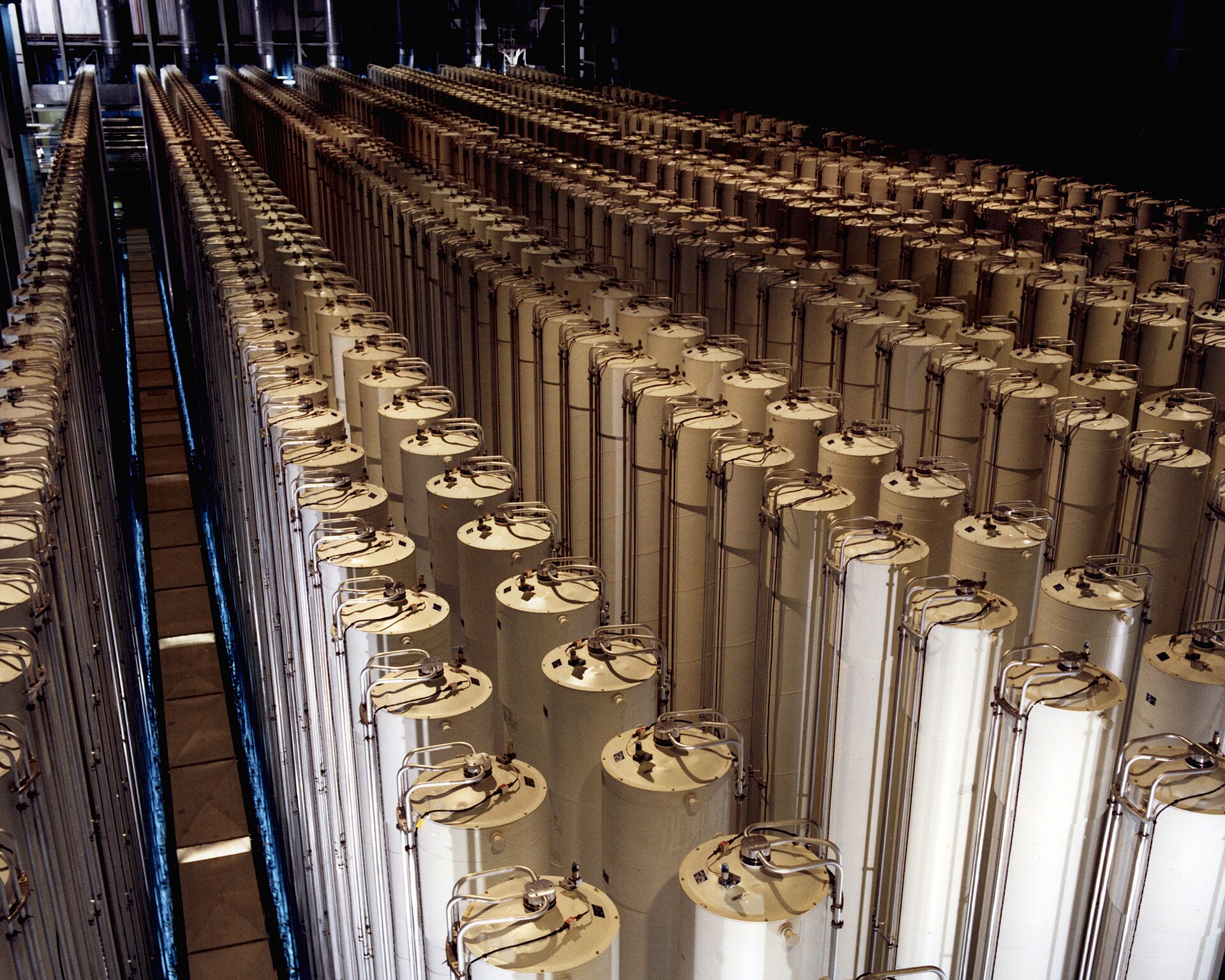
Satellite imagery analyzed by the Bulletin of the Atomic Scientists in March 2026 showed that Iran likely transferred up to 540 kilograms of HEU — possibly its entire stockpile — to the Isfahan underground tunnel complex before the June 2025 strikes began. A joint Le Monde/Bulletin visual investigation identified a truck carrying eighteen containers at the south tunnel entrance at Isfahan on June 9, 2025, five days before the first bombs fell. IAEA Director General Rafael Grossi confirmed in March that the agency believes “a bit more than 200 kilograms, maybe a little bit more than that” of 60 percent HEU is stored in those tunnels. He could not account for the remainder.
The tunnels are no longer accessible. CSIS satellite imagery from late 2025 and early 2026 shows the entrances at Isfahan backfilled with soil. Roofs have been built over damaged buildings at both Isfahan and Natanz. At Fordow and Natanz, CSIS found “virtually zero activity or attempts to rehabilitate” the stricken facilities — leaving open whether material at those sites was destroyed in the strikes, remains buried under rubble, or was evacuated before the bombing began.
One mile south of Natanz, CSIS identified continued construction at a deeply buried site it calls “Pickaxe Mountain” — assessed as a possible clandestine centrifuge assembly facility or enrichment site. The IAEA has no access to verify whether the site is operational. If it is, the “record” stockpile figure is a floor, not a ceiling.
The inventory problem compounds. The Bulletin’s estimate that up to 540 kg was transferred to Isfahan before the strikes exceeds the last verified IAEA figure by nearly a hundred kilograms — a gap that could reflect additional production in the five days between the agency’s final measurement and the start of the bombing, or uncertainty in the satellite-based estimates, or both. In either case, the baseline from which the IAEA projects its “record” designation is itself imprecise.
Grossi described restoring the verification baseline as “absolutely possible, terribly difficult.” The technical distance between the current stockpile and a weapon is short. Enriching from 60 percent to weapons-grade 90 percent requires roughly 564 separative work units — about 1 percent of the total enrichment effort needed to reach 60 percent from natural uranium. At 440.9 kilograms of 60 percent HEU — and the current figure is assessed as higher — the material, if further enriched to 90 percent, would yield enough fissile material for approximately ten nuclear warheads. The Arms Control Association and multiple independent analysts assess the timeline from 60 to 90 percent at days to weeks. When asked in March whether Iran was “days or weeks away from building a bomb,” Grossi answered: “No.” But that answer rested on his assessment that “we don’t see a structured program to manufacture nuclear weapons” — an assessment itself constrained by the same access gap that makes the stockpile figure a projection.
Why Can’t Both Statements Be True?
Trump’s claim that Iran “agreed” to forgo nuclear weapons and the IAEA’s finding of a record stockpile cannot coexist. An agreement to forgo nuclear weapons is meaningful only if an independent body can confirm compliance. The IAEA — the only such body — reports it has no access, no current measurement, and no means to confirm whether enrichment has stopped.
The logical chain is direct. For Trump’s statement to be operative, Iran would need to have committed, in binding form, to forgo nuclear weapons. For that commitment to mean anything beyond the interview in which it was announced, a verification mechanism would need to exist. For that mechanism to function, the IAEA would need physical access to Iran’s enrichment facilities. The IAEA has not had access since February 28. Its own report states it cannot determine the stockpile’s “size, composition, or whereabouts.”
For the IAEA’s finding to be accurate — and even as a projection, the agency’s track record on direction-of-travel estimates is strong — Iran’s enrichment capacity either continued to operate through the strikes or the pre-strike stockpile survived in quantities exceeding all prior accumulation. Either scenario contradicts the premise that the nuclear problem has been resolved by verbal commitment.
The structure of the MOU makes the contradiction self-sustaining. Phase 1 addresses ceasefire terms and Hormuz reopening. Nuclear issues are deferred to Phase 2 — a phase with no timeline, no defined trigger, and no verification provisions. The agreement Trump describes as including a nuclear commitment does not, in its current draft, contain one. What he announced on Fox News belongs to a negotiation that has not begun, addressing a stockpile no one can measure, to be verified by an agency barred from the facilities where the material sits.
The Foundation for Defense of Democracies published six “essential requirements for a good Iran nuclear deal” on May 29. Each requires verified dismantlement. None appears in the current MOU framework, which defers nuclear issues entirely to Phase 2. “Diplomacy,” FDD wrote, is “only worthwhile if it verifiably and permanently constrains the regime’s nuclear weapons capabilities.” The IAEA’s May 31 report is a formal statement that no such constraint currently exists.
The Negotiator Who Did Not Know What a Centrifuge Was
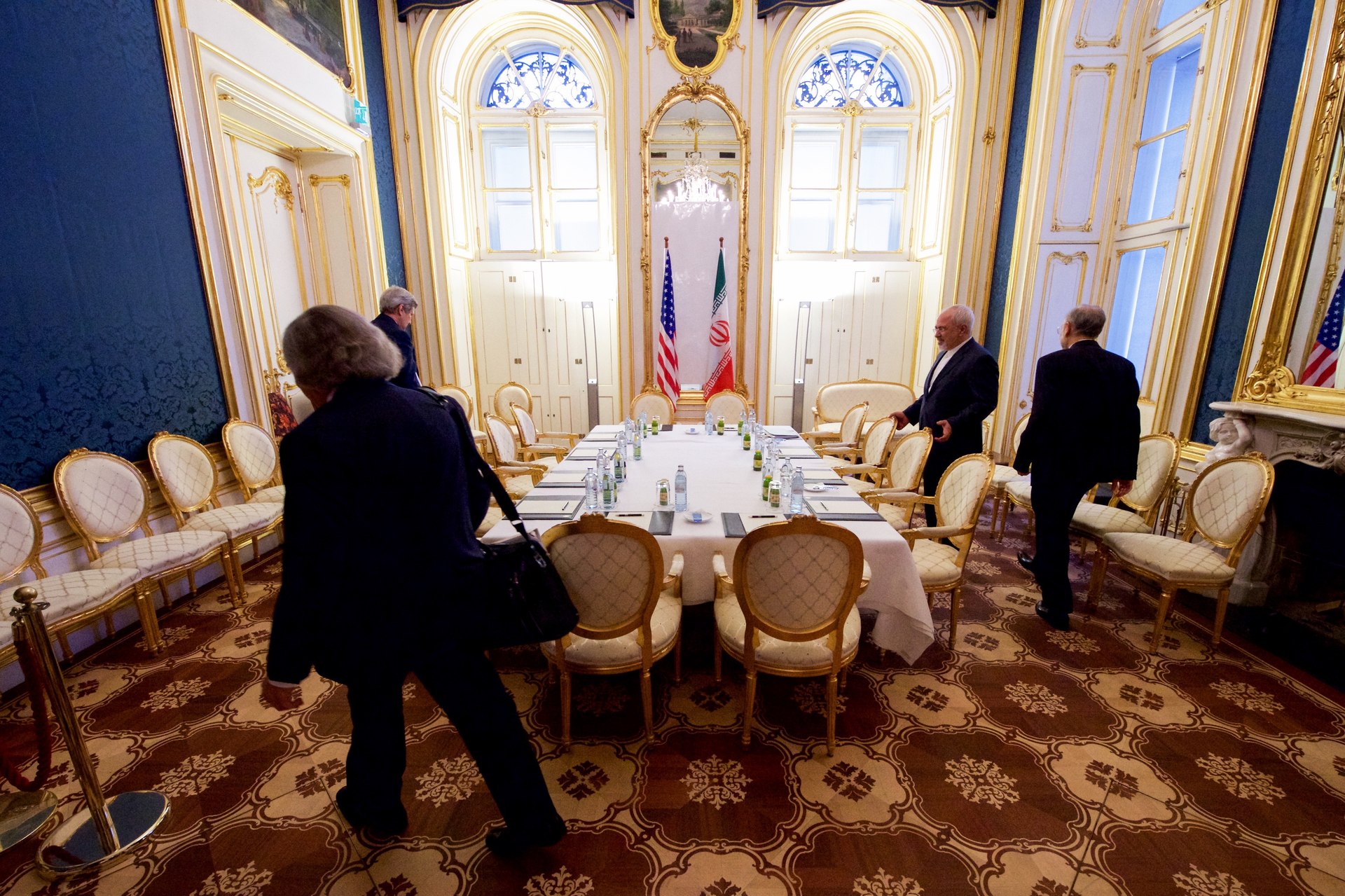
The distance between what Trump claims and what can be verified has a human dimension. The Arms Control Association documented that Steve Witkoff, the US special envoy who led the Iran negotiations, expressed surprise during background briefings on February 28 and March 3, 2026, that Iran produces centrifuges. He referred to Natanz, Fordow, and Isfahan as “industrial reactors.” None is a reactor. He described the IR-6 centrifuge as “probably the most advanced centrifuge in the world.” Iran’s own IR-9 exceeds it in separative capacity, as do several European and Pakistani designs.
These are not terminological slips. Calling an enrichment facility a “reactor” reflects a gap in understanding what the facility does — the difference between producing electricity and concentrating fissile isotopes. The person negotiating the nuclear dimensions of the MOU did not possess a working understanding of the infrastructure that produces the material the MOU is supposed to address.
The ACA warned that “including activities such as HEU removal and/or down blending without clearly articulating the IAEA’s role in monitoring and verifying such a process could undermine Congressional support for a deal.” The current MOU draft does not articulate the IAEA’s role — nuclear provisions are deferred entirely to Phase 2. Trump’s “they’ve agreed” was delivered on a day when the agreement text contains no nuclear verification provisions and the lead negotiator could not name the machines producing the material under discussion.
What Has Iran Actually Agreed To?
Iran says it has agreed to nothing on the nuclear file. A senior Iranian source stated within hours of Trump’s Fox News appearance that Tehran “has not agreed to hand over its highly enriched uranium stockpile” and that “the nuclear issue was not part of the preliminary agreement with the US.” Iran’s chief negotiator added that “no one can claim that the signing of an agreement is imminent.”
Fars News, the IRGC-affiliated outlet that often previews hardliner positions before they become official policy, pushed back directly. Trump’s claims, Fars said, “raise issues that contradict the provisions of the agreement’s text.” The outlet insisted that “the most important part of the agreement” is “the immediate payment of $12 billion of Iran’s frozen assets” — framing the asset release as a precondition that must be satisfied before any nuclear discussion begins.
PressTV reported on May 25 that “talks with the US focus on ending the war, not Hormuz management or the nuclear issue.” This is not a negotiating position within the same framework Trump described. It is a description of a different framework entirely — one in which the nuclear file has been explicitly excluded from the current round of talks.
The gap is not one of emphasis. Trump describes a nuclear agreement. Iran describes a ceasefire arrangement with an asset-release payment attached. Iran maintains that the “peaceful use of nuclear science and technology” is an “inalienable right” — language unchanged since the JCPOA era, language that categorically rejects the premise of stockpile transfer or destruction. When Trump says “they’ve agreed,” the “they” in question says otherwise, on the record, through multiple channels, on the same day.
A Deal That Lives in Fox News Interviews
The Iran Nuclear Agreement Review Act requires the president to submit any Iran nuclear agreement to Congress within five days of conclusion, accompanied by a verification assessment from the Secretary of State. Four Republican senators — Cruz, Wicker, Graham, and Cotton — and former Secretary Pompeo have already staked positions demanding full dismantlement, terms the MOU does not contain and Iran has explicitly rejected.
Trump’s May 31 declaration creates a specific legal problem. If his statement that Iran “agreed” to no nuclear weapons describes an actual agreement, INARA’s five-day clock should be running. If it does not describe an actual agreement, the president publicly mischaracterized the status of negotiations on the most consequential national security file of his second term. The first option triggers Congressional review by a Senate whose leading voices on Iran oppose the deal’s terms. The second is a credibility problem with no procedural remedy.
The 2015 parallel runs in reverse. The Cotton letter, signed by forty-seven Republican senators, warned Iran that any agreement not ratified by the Senate could be revoked by the next president. Trump was among the loudest critics of the JCPOA. The institutional architecture Republicans constructed to constrain Obama-era nuclear diplomacy — INARA’s mandatory review periods, the Senate’s treaty prerogatives, the demand for verification assessments — now applies to a Republican president whose own party holds both chambers.
Trump’s “in no hurry” framing may function partly as INARA management. A deal that is never formally concluded need never be formally submitted. A nuclear commitment that exists in Fox News interviews rather than in treaty text occupies a space Congressional review cannot reach. The MOU remains unsigned after 106 days. Phase 2 — where nuclear issues are deferred — has no timeline. The IAEA’s record stockpile grows in the interval between the deal Trump describes and the deal that does not yet exist on paper.
Saudi Arabia Pays for a Deal It Cannot Read
Every version of the outcome leaves Riyadh worse off than it was on February 27.
If Trump’s framing is accurate and Iran has committed to forgo nuclear weapons, the deal was negotiated without Saudi input, by an envoy who could not identify Iran’s enrichment facilities, under terms Riyadh has not seen, with verification mechanisms the IAEA says do not function. The kingdom’s security rests on a commitment extracted by Steve Witkoff and announced during a family program on Fox News.
If the IAEA’s finding is accurate and the stockpile has reached a record, Saudi Arabia faces an accelerating nuclear threshold across the Gulf while its primary security patron treats the problem as resolved. Nour Eid of the Stimson Center observed that Saudi Arabia’s evolving nuclear posture “reflects not only Iran’s program but also eroding U.S. security guarantees.” The challenge, Eid wrote, is “less in an imminent Iranian bomb than in the gradual weakening of the external security framework” Riyadh has relied upon.
“Neither outcome is fully congenial to the Saudi leadership, and neither lies within its power to determine.”
— Arab Center Washington DC, May 21, 2026
The fiscal dimension compounds the strategic exposure. Brent closed May 29 at $91 — seventeen to twenty dollars below the $108-111 PIF-inclusive breakeven Goldman Sachs calculates for the kingdom. The Q1 2026 deficit reached SAR 125.7 billion, consuming 76 percent of the full-year SAR 165 billion target in ninety days. PIF liquid cash sits at $15 billion, a six-year low. Aramco’s Q1 free cash flow of $18.6 billion fell short of its $21.9 billion quarterly dividend — a coverage ratio of 0.85x.
A deal of the kind Trump describes accelerates the fiscal problem. Wood Mackenzie’s “Quick Peace” scenario projects Brent at $80 by end of 2026 and $65 through 2027. Goldman Sachs estimates 800,000 barrels per day of Iranian supply returning within six months of any signed agreement. Each dollar off Brent costs the Saudi treasury roughly $3 billion per year. The deal Trump announced as nearly done, if it holds, floods the market with the barrels that collapse the budget the war was supposed to protect.
The arithmetic is unforgiving. Saudi Arabia’s $108-111 breakeven assumes PIF spending continues at planned levels. At $80 Brent — Wood Mackenzie’s post-deal scenario — the annual shortfall exceeds $80 billion. At $65, it approaches $140 billion. These are not projections from a distant future. They are Goldman Sachs and Wood Mackenzie estimates for 2027, premised on the kind of deal the president described as nearly concluded on the same day a record stockpile was announced.
The Arms Control Association reported in February 2026 that the Trump administration may be “jeopardizing nonproliferation efforts to get a nuclear cooperation deal with Saudi Arabia” — a 123 Agreement that would grant the kingdom enrichment capacity. The logic is circular: declare Iran’s nuclear program resolved without verification, then offer Saudi Arabia nuclear technology as compensation for a resolution Riyadh cannot confirm and normalization commitments it cannot deliver.
Riyadh cannot verify what the IAEA cannot verify. It has no channel to Mojtaba Khamenei, who holds MOU ratification authority. It has no seat at the Board of Governors deliberations. It has no influence over the Congressional review INARA mandates. Iran’s Hormuz toll system collects $2 million per transit of Saudi crude while the unsigned MOU enters its 107th day.
The IAEA says “record.” The president says “agreed.” The Aramco dividend — $21.9 billion against $18.6 billion in quarterly free cash flow — comes due June 9.
Frequently Asked Questions
How quickly could Iran enrich its 60 percent stockpile to weapons grade?
Prior to the June 2025 strikes, independent analysts assessed the timeline from 60 percent to weapons-grade 90 percent at one to two weeks. The current timeline is unknown: the IAEA cannot verify how many centrifuges survived, how many have been rebuilt, or whether new cascades are operating at undeclared sites. This renders the JCPOA’s “breakout time” concept — twelve months under full compliance — operationally meaningless. That metric assumed continuous IAEA monitoring. Without it, a breakout is not detected in advance. It is a fait accompli discovered after the fact.
Has the United States ever declared a nuclear agreement without submitting it under INARA?
No. INARA was enacted in 2015 specifically to require Congressional review of Iran nuclear agreements, and the JCPOA was submitted under its provisions — surviving a disapproval vote in the Senate. No president has tested whether a verbal declaration of nuclear agreement on television, without a signed text, triggers INARA’s five-day submission requirement. The act’s language covers any “agreement related to the nuclear program of Iran” regardless of the label applied to it. If Trump’s May 31 statement describes something Iran agreed to regarding nuclear weapons, INARA’s plain text arguably applies. The administration’s likely position is that no formal agreement has been concluded — which raises the separate question of why the president characterized one as though it had been.
What would it take for the IAEA to regain access to Iran’s facilities?
Iran’s Comprehensive Safeguards Agreement with the IAEA, which predates the JCPOA, legally obligates Tehran to permit inspections of declared nuclear facilities. Iran has not formally withdrawn from the agreement — it has prevented inspectors from entering. Restoration could come through a Board of Governors resolution demanding access, requiring a majority of the 35-member board; a UN Security Council resolution, subject to Russian and Chinese vetoes; or a bilateral agreement with Iran negotiated as part of a broader deal. The physical obstacles are separate from the legal ones. Backfilled tunnels at Isfahan would require excavation before inspectors could access stored material. Rebuilt structures at Natanz would need to be deconstructed or re-instrumented with monitoring equipment. Pickaxe Mountain — the deeply buried site CSIS identified near Natanz — has never been subject to IAEA safeguards at all. Grossi’s “absolutely possible, terribly difficult” described the legal and political challenge. The physical challenge may prove harder still.
Does Saudi Arabia have a pathway to its own enrichment capability?
Saudi Arabia has been negotiating a 123 Agreement with the United States — the bilateral framework required before Washington can share civilian nuclear technology. Crown Prince Mohammed bin Salman stated in 2018 that “if Iran developed a nuclear bomb, we will follow suit as soon as possible.” The kingdom has two nuclear reactors under construction with South Korean and Chinese partners, but neither requires domestic enrichment. A 123 Agreement that includes enrichment rights — the so-called “gold standard” waiver — would represent a departure from US nonproliferation policy, which has historically required partners to forswear enrichment and reprocessing. The Arms Control Association flagged in February 2026 that the administration’s pursuit of this agreement simultaneously with the unverified closure of Iran’s nuclear file creates a proliferation cascade risk: Saudi enrichment capacity, justified by an Iranian nuclear program the US has declared resolved but cannot verify is resolved, in a region where Egypt, Turkey, and the UAE would each face pressure to match Riyadh’s capability.