NEW DELHI — Indian Shipping Minister Sarbananda Sonowal confirmed on 11 November 2026 that MT Fujairah Energy, a Liberia-flagged VLCC carrying six Indian seafarers among a crew of 22, was hit by a projectile in the Persian Gulf on 10 November while transiting from Al Ruwais to Dubai. Four crew members were injured, including one Indian national who sustained minor injuries and was taken ashore for further medical examination, Sonowal said.
The remaining 18 crew, including five other Indian seafarers, were “safe and accounted for,” Sonowal wrote on X, adding that the government was “continuously monitoring the situation” and in close contact with the ship management company. No fatalities were reported. The United Kingdom Maritime Trade Operations (UKMTO) confirmed the incident but said the extent of damage, crew status, and environmental impact remained “unknown,” ANI reported. No government or armed group has claimed responsibility for the strike.
The House of Saud Daily Briefing
Saudi Arabia's news in 3 minutes, every morning. Free. See today's issue
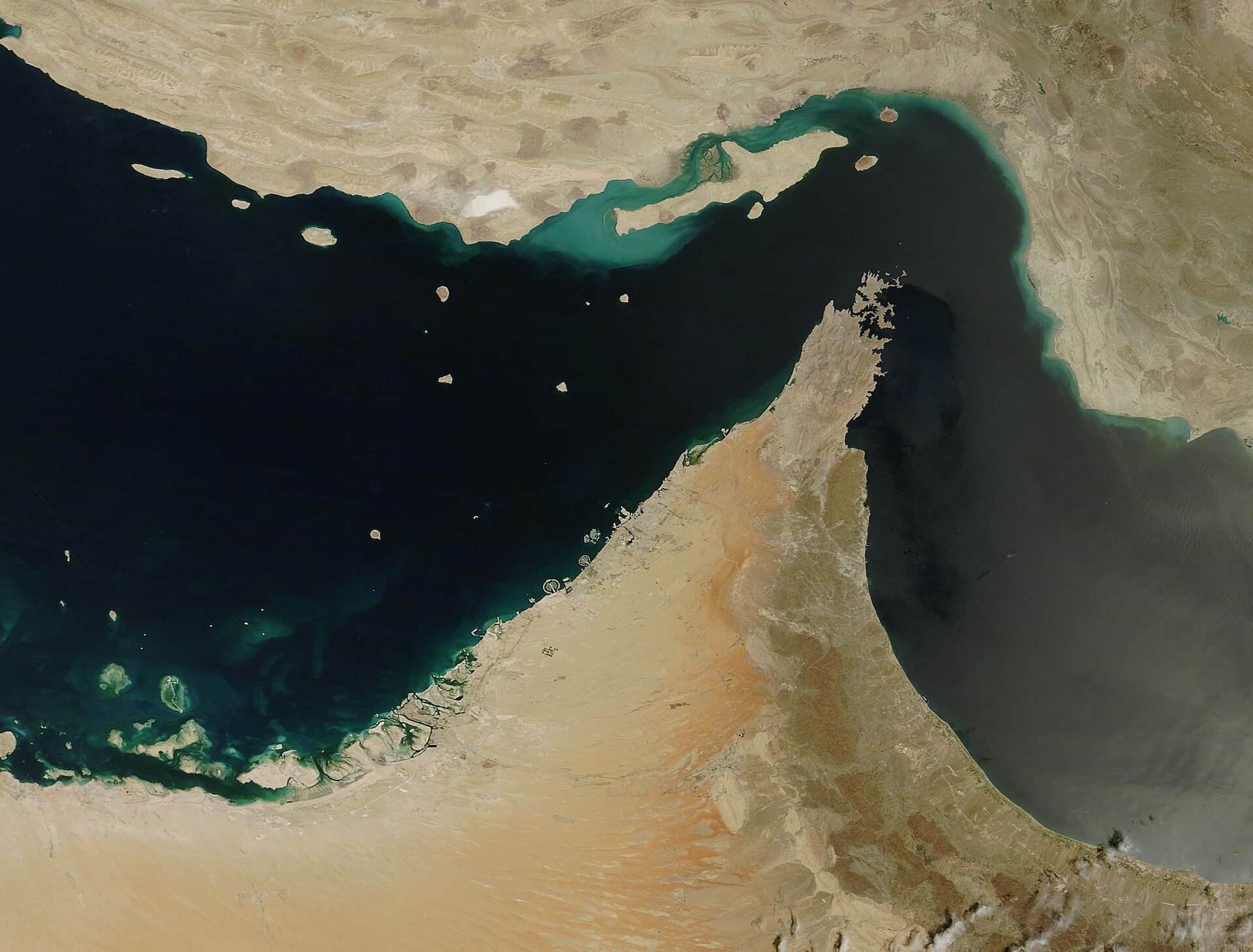
Table of Contents
What Happened to MT Fujairah Energy?
The vessel was transiting from Al Ruwais — the site of Abu Dhabi’s ADNOC refinery terminal — to Dubai when it “came under attack,” Sonowal said in a post on X on 11 November. Gulf News described the weapon as a “projectile.” The vessel’s operator, cargo, and tonnage have not been publicly identified by any source.
“MT Fujairah Energy was travelling from Al Ruwais to Dubai when it came under attack.”
— Sarbananda Sonowal, Union Minister of Ports, Shipping and Waterways, 11 November 2026
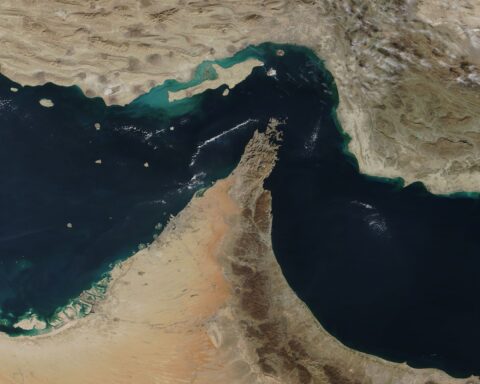
UKMTO confirmed the strike but provided few specifics. Its advisory said the extent of damage, crew injuries, and environmental impact were “unknown,” according to ANI. No follow-up advisory had been issued as of 11 November. The attack occurred in the Persian Gulf between Abu Dhabi and Dubai — inside the Gulf proper, short of the Strait of Hormuz chokepoint itself.
As a VLCC (Very Large Crude Carrier) — the largest class of crude oil tanker — MT Fujairah Energy would be capable of carrying more than two million barrels. The Al Ruwais–Dubai route is consistent with petroleum transport from the ADNOC terminal, but the vessel’s actual cargo has not been confirmed. Its condition after the strike is also unverified; UKMTO’s description of damage extent as “unknown” suggests no detailed assessment had reached the reporting chain by the time the advisory was filed.
The Al Ruwais–Dubai route does not transit the Strait of Hormuz, but it runs through Persian Gulf waters where the Islamic Revolutionary Guard Corps (IRGC) has claimed multiple strikes on commercial shipping since declaring the strait closed on 26 October. The IRGC has framed some commercial transits as operating on “unauthorized” routes — a designation it has applied across a widening geographic area, not only to traffic passing through the narrow strait itself.
India’s Official Response
Sonowal’s statement was specific in ways that Indian government responses to Gulf maritime incidents have not always been. He named the vessel, the flag state, the crew composition, the route, and the injury count. “The remaining 18 crew members, including the other 5 Indian seafarers, are safe and accounted for,” he wrote, adding that the government was in close contact with the ship management company, ETV Bharat reported.
The four crew injuries included one Indian national, whose injuries Sonowal described as minor. That crew member was taken ashore for further medical examination, according to ETV Bharat. The nationalities of the other three injured crew have not been disclosed. The 22-person crew complement is consistent with the manning scale of a VLCC, which typically requires 20 to 30 crew depending on the operator.
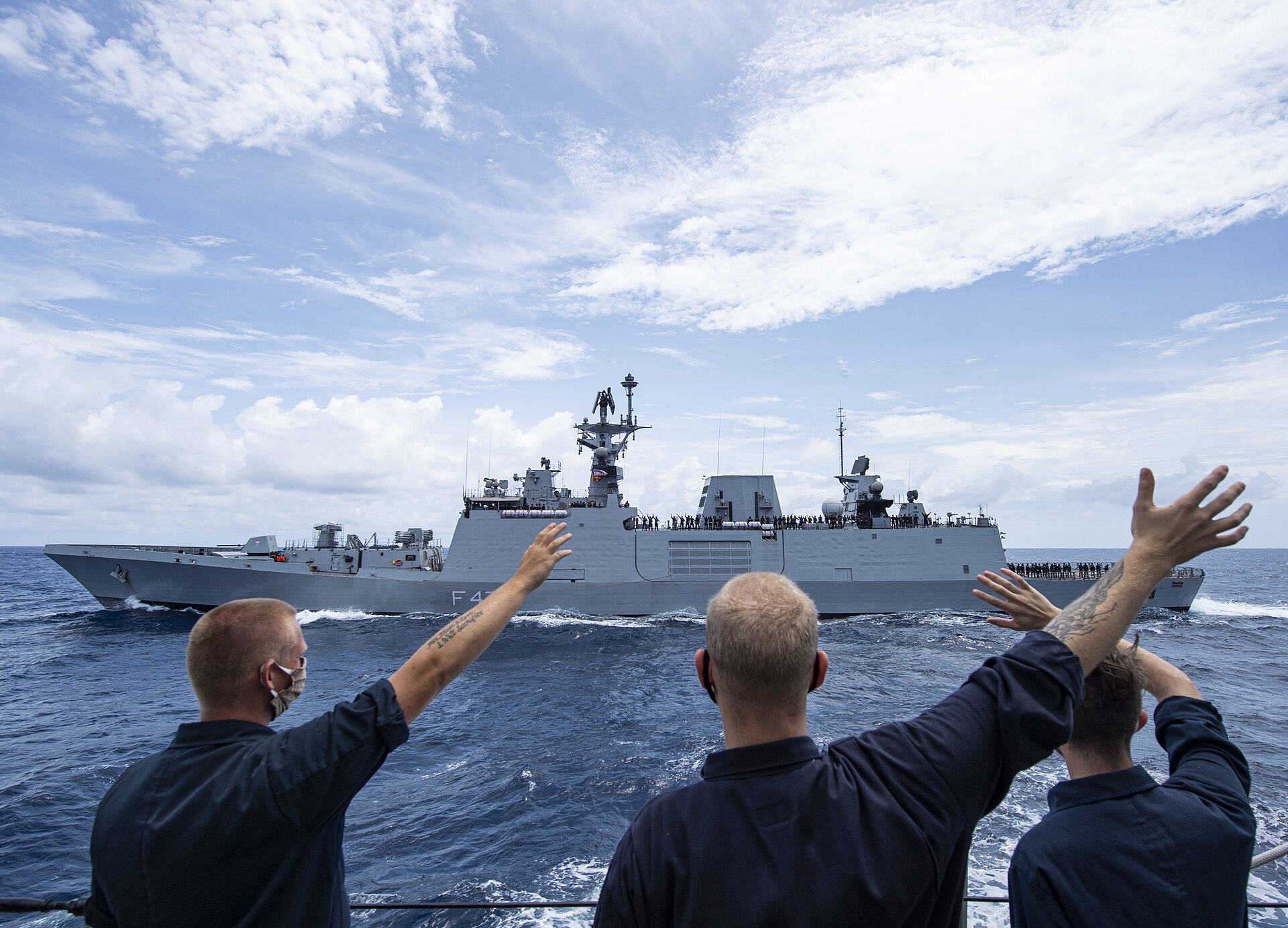
The confirmation followed a pattern set after the MSV Al Jusufi attack on 2 November, when an Indian-flagged vessel was struck near Limah, Oman. Indian sailor Gandhar Nahim Ajij of Gujarat was killed in that attack, and 13 crew were rescued by Omani authorities, Tribune India reported. Ministry of External Affairs (MEA) spokesperson Randhir Jaiswal responded by saying that “the targeting of commercial shipping and civilian infrastructure in the region must end” — language that stopped short of naming Iran or the IRGC but was blunter than earlier Indian diplomatic responses to the broader conflict at sea.
“The targeting of commercial shipping and civilian infrastructure in the region must end.”
— Randhir Jaiswal, MEA Spokesperson, 3 November 2026 (Tribune India)
As of the MEA’s 3 November briefing, India’s total fatalities from the West Asia conflict stood at 23 nationals, including 15 seafarers, the Daily Pioneer reported citing the ministry. The MT Fujairah Energy attack did not add to that toll — all four injured crew are expected to survive, and the Indian national’s injuries were described as minor. Eight days separated Ajij’s death aboard the Al Jusufi from the strike on MT Fujairah Energy, with Indian crew aboard both vessels.
What Did the IRGC Say About the Strike?
No Iranian official source has claimed responsibility for the attack on MT Fujairah Energy or mentioned the vessel by name. Searches of IRNA, Mehr News, and Tasnim — Iran’s three main state-affiliated news agencies — returned no results for the vessel as of 11 November.
The IRGC Navy did issue a statement on 10 November claiming that two oil tankers experienced “explosions and fires” in the Strait of Hormuz on “unauthorized” routes, IranWire reported. The IRGC named neither vessel and did not identify crew nationalities. Whether either of those unnamed tankers corresponds to MT Fujairah Energy is unclear — the IRGC’s statement referenced the Strait of Hormuz, while MT Fujairah Energy was on an Al Ruwais–Dubai route inside the Persian Gulf, a geographic discrepancy that has not been addressed by either side.
The IRGC has designated commercial transits as “unauthorized” since declaring the Strait of Hormuz closed on 26 October. On 10 November, the IRGC Navy claimed it had struck three tankers and 11 ships over the preceding 10 days, a tally that does not specify which vessels were involved. India named the vessel, the flag state, and the crew count; the IRGC offered no vessel names and no crew details in its own accounting of the same day’s events.
The DGShipping Ban and Its Limits
India’s Directorate General of Shipping (DGShipping) ordered in July 2026 that recruitment agencies and ship managers must not deploy Indian seafarers on vessels with a planned passage through the Strait of Hormuz “until further orders,” the Maritime Executive reported. The directive was issued as war-risk insurance premiums surged and commercial traffic through the strait collapsed to a fraction of its pre-war volume.
The ban applies to new placements. It does not reach Indian crew already under contract on foreign-flagged vessels. MT Fujairah Energy flies the Liberian flag — one of the world’s largest open registries — and its six Indian crew members were employed through a foreign ship management company that falls outside DGShipping’s direct regulatory authority. Whether those crew were contracted before the July ban, or through intermediary channels beyond DGShipping’s enforcement reach, has not been addressed by Indian authorities.
The structural gap between the ban’s intent and its reach reflects the realities of the global maritime labor market. India is the world’s second-largest supplier of seafarers, with more than 300,000 sailors serving in global fleets, according to the BIMCO-ICS Seafarer Workforce Report 2026. DGShipping can regulate Indian recruitment agencies and flag-state operators, but the industry routes crew through intermediaries in Singapore, Dubai, and Manila that are not bound by Indian directives. A union leader estimated in July 2026 that more than 15,000 Indian seafarers were still serving on vessels west of the Strait of Hormuz, Maritime Executive reported. That estimate preceded the IRGC’s 26 October closure declaration by three months; the current number is not publicly known.
How Dangerous Is the Gulf for Commercial Shipping?
MT Fujairah Energy was attacked three days after the tanker Navig8 Messi caught fire off Khasab following a strike in the Strait of Hormuz on 7 November. On the same day as the MT Fujairah Energy attack, Iran claimed a strike on Oman’s Didamar Island navigation aids in the Strait of Hormuz. The International Maritime Organization has recorded 25 seafarers of all nationalities killed in the Strait of Hormuz since the war began.
Daily ship transits through the Strait of Hormuz have fallen from a Joint Maritime Information Centre (JMIC) baseline of 138 per day to 12–13 per day by early September 2026, according to Fairway ETA. VLCC war-risk premiums for Hormuz transits have risen from a pre-war level of roughly 0.25 percent of hull value to 6–10 percent by October 2026, with single VLCC transits quoted above $10 million in premium, The National News reported citing Fairway ETA. The premium alone — before fuel, crew, and port costs — now exceeds the entire cost of a pre-war VLCC transit for many operators.
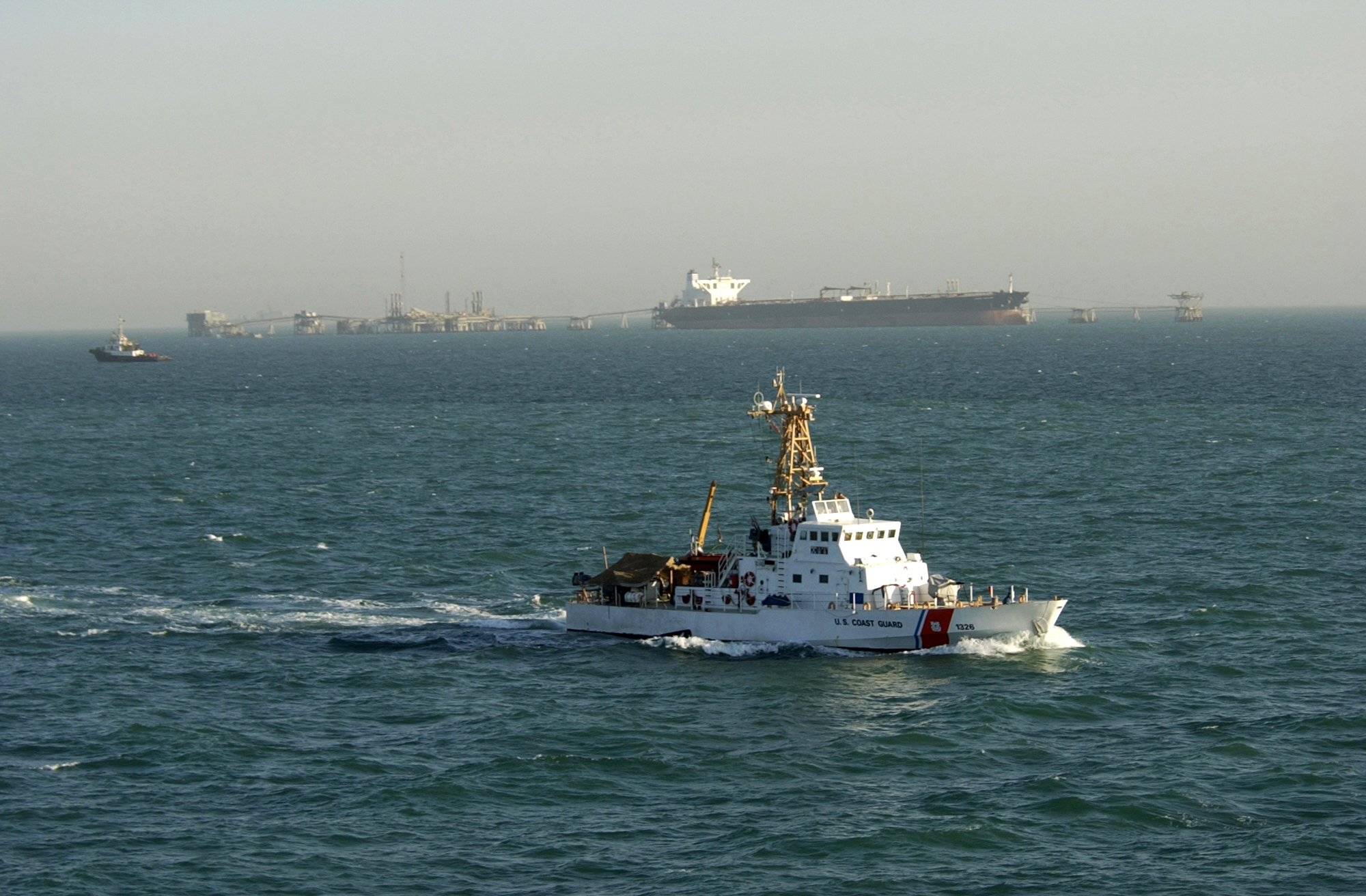
India imports more than 80 percent of its petroleum through the Persian Gulf and Hormuz corridor, according to government data cited in reports on Operation Urja Suraksha. India’s energy supply chain, from crude oil to liquefied natural gas, runs through waters where the IRGC is claiming strikes on an almost daily basis. Aramco’s November pricing for Arab Light to Asia reflected the broader market dislocation, but for Indian refiners, the delivered cost of Gulf crude now depends as much on the insurance invoice as on the barrel price.
Background
The IRGC first declared the Strait of Hormuz closed in April 2026, then again on 26 October, designating vessels that continued to transit as operating on “unauthorized” routes. Attacks on commercial shipping have intensified since the October declaration. India launched Operation Urja Suraksha in late March 2026 to escort Indian-flagged and India-bound vessels out of the Persian Gulf, and the Indian Navy moved to close-protection escorts for LPG and crude tankers as the crisis deepened.
DGShipping’s July ban on new seafarer deployments to Hormuz-bound vessels was the regulatory follow-up, but its enforcement is limited to Indian-regulated recruitment channels. The ban cannot compel Liberian-flagged, Greek-managed, or Singaporean-crewed vessels to avoid deploying Indian nationals already under contract. MT Fujairah Energy, as a Liberia-flagged vessel crewed through international labor markets, fell outside the scope of both the Indian naval escort program — which prioritizes Indian-flagged and India-bound tonnage — and the DGShipping directive.
The MSV Al Jusufi attack on 2 November — in which an Indian sailor was killed near Limah, Oman — prompted the MEA’s sharpest public statement on maritime violence in the Gulf. The MT Fujairah Energy strike eight days later produced a faster and more detailed official response, with Sonowal’s X post disclosing the vessel name, flag, route, crew count, and injury status within hours. Whether that shift represents a change in diplomatic posture or simply reflected the availability of information from the ship management company is not clear.
Frequently Asked Questions
What is Operation Urja Suraksha?
Operation Urja Suraksha (“Energy Security”) is an Indian Navy operation launched between 23 and 25 March 2026 to escort Indian-flagged and India-bound commercial vessels through and out of the Persian Gulf. The Navy deployed warships for close-protection escort of LPG carriers and crude oil tankers transiting near the Strait of Hormuz, according to government data. The operation was initiated before the IRGC’s first Hormuz closure declaration in April and remains active as of November 2026.
What is the Bharat Maritime Insurance Pool?
India’s Union Cabinet approved the Bharat Maritime Insurance Pool in 2026, providing a national war-risk guarantee of up to ₹12,980 crore — approximately $1.4 billion — to cover Indian-flagged and India-linked vessels operating in high-risk zones, according to government data cited in reports on the operation. The pool was created in response to the surge in commercial war-risk premiums that made insuring Gulf transits prohibitively expensive for Indian-flagged operators. It does not cover foreign-flagged vessels such as MT Fujairah Energy.
Did Iran grant India a transit exemption for Hormuz?
Iran reportedly reached an informal understanding in March 2026 allowing ships from India, China, Russia, Iraq, and Pakistan to continue transiting the Strait of Hormuz, according to reports on Operation Urja Suraksha. The arrangement was never formalized in a public agreement, and its status after the IRGC’s 26 October re-closure of the strait is not publicly confirmed. MT Fujairah Energy, as a Liberia-flagged vessel, would not have been covered by any India-specific exemption regardless of the understanding’s current status.
What is UKMTO and what does its advisory mean for this incident?
UKMTO stands for United Kingdom Maritime Trade Operations, a maritime safety body that liaises with commercial vessels and issues public advisories when incidents are reported in the Persian Gulf, Gulf of Oman, and Red Sea. When UKMTO issues an advisory — as it did for the MT Fujairah Energy incident, reported by ANI — the advisory confirms that an incident occurred based on initial reports from the vessel or its management company. The advisory can still carry “unknown” status on damage extent, crew injuries, and environmental impact when that information has not yet reached the reporting chain, as was the case here. No follow-up advisory had been issued as of 11 November.
Why does MT Fujairah Energy fly a Liberian flag?
Liberia operates one of the world’s largest open ship registries. Vessel owners register under the Liberian flag for regulatory, tax, and labor-law advantages — a practice known in the maritime industry as “flag of convenience.” A Liberian-flagged vessel is governed by Liberian maritime law, not the law of the owner’s or crew’s home country. For Indian seafarers serving aboard such vessels, DGShipping’s July 2026 Hormuz ban has no direct enforcement mechanism over the operator; the directive restricts Indian recruitment agencies from placing crew on new Hormuz-bound contracts, but cannot compel a Liberian-flagged ship management company to release Indian nationals already under contract.
The House of Saud Daily Briefing
Saudi Arabia's news in 3 minutes, every morning. Free. See today's issue