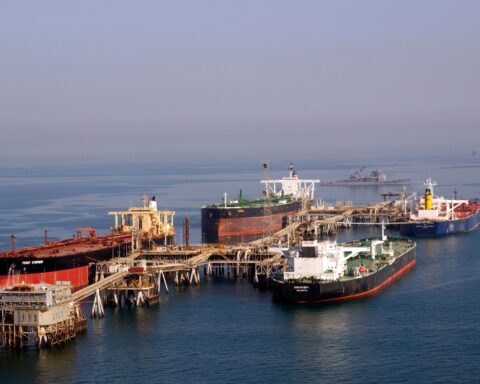
DHAHRAN — Saudi Aramco set its November official selling price for Arab Light crude to Asian customers at $5 per barrel below the average of Oman and Dubai benchmarks, a reduction of $3 from the previous month and the widest discount since June 2020, Reuters reported on October 5. A Reuters survey of traders and analysts conducted before the announcement had expected increases of up to $5 a barrel. Multiple outlets described the cut as unexpected.
Three Asian refining sources told Reuters the price reduction appeared intended partly to offset buyers’ higher freight costs. VLCC charter rates from the Persian Gulf to China reached approximately $1.2 million per day in early October, compared with roughly $80,000 a day a year earlier, according to LSEG data cited by Reuters.
The House of Saud Daily Briefing
Saudi Arabia's news in 3 minutes, every morning. Free. See today's issue
Table of Contents
What Prices Did Aramco Set for November?
Aramco reduced prices across all five crude grades shipped to Asian term-contract buyers. The cuts ranged from $3 per barrel on Arab Light and Arab Extra Light to steeper reductions on the heavier grades that compete most directly with Iraqi and Kuwaiti barrels in Asian refining slates.
| Grade | OSP ($/bbl) |
|---|---|
| Arab Super Light | -3.35 |
| Arab Extra Light | -4.50 |
| Arab Light | -5.00 |
| Arab Medium | -6.00 |
| Arab Heavy | -7.35 |
Source: Argaam, October 5, 2026.
While Asian buyers received across-the-board cuts, Aramco raised prices for northwest Europe and the Mediterranean by $3 per barrel on all grades, according to Argaam. Arab Light to northwestern Europe was set at $0.85 above ICE Brent, and Arab Light to the Mediterranean at $0.65 above the same benchmark. North American prices were unchanged, with Arab Light held at $4.60 above the Argus Sour Crude Index, Egypt Oil & Gas reported.
The regional split was symmetrical: Asia down $3, Europe up $3, North America flat. European-bound Saudi crude typically reaches buyers via the Red Sea and Suez Canal rather than through the Strait of Hormuz, giving those cargoes a different freight profile from barrels heading east. The discount on Arab Heavy — $7.35 below the Oman-Dubai average — was the deepest of the five grades, reflecting the competition that Saudi heavy barrels face from Iraqi Basrah Heavy in the coking units of Chinese and Indian refineries.
Why Did the Market Expect a Price Hike?
Before the announcement, physical demand for Saudi crude in Asia pointed toward tighter pricing. Chinese refiners had secured at least 80 million barrels of Saudi crude for September-to-November loading through spot trades since mid-September, according to Kpler. China’s onshore crude stocks fell at a record pace of approximately 1.6 million barrels per day in September — the fastest drawdown the consultancy had recorded, surpassing a previous high of 950,000 barrels per day in October 2017.
Shell CEO Wael Sawan told Bloomberg in October that Middle Eastern crude flows had recovered to about 80% of prewar levels. Aramco offered approximately 40 million barrels of November-loading crude on the spot market, and buyers took roughly half, Kpler reported. Those dynamics — recovering supply, depleting inventories, strong spot demand — were the basis for the analysts’ forecasts of a price increase in the Reuters survey.
The gap between the survey’s $5 expected hike and the actual $3 cut amounted to an $8-per-barrel swing from consensus. Aramco last set Arab Light at a deeper discount in June 2020, when pandemic lockdowns collapsed Asian refining demand and crude stockpiles swelled across the region.
Freight Costs and Ship-to-Ship Transfers
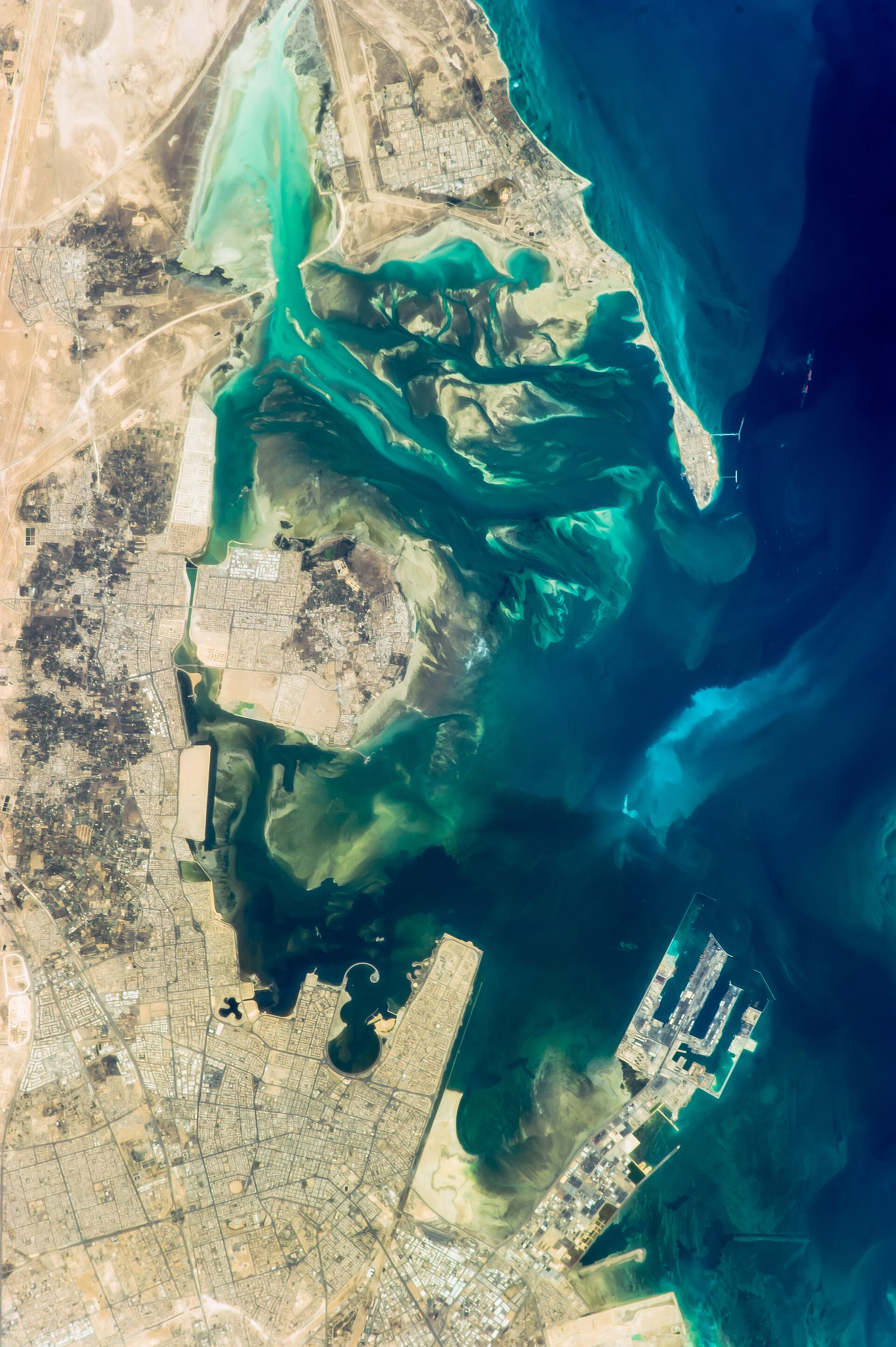
The cost of moving crude from the Persian Gulf to Asian ports has reshaped the economics of every barrel Aramco sells east. By early November, freight costs on tanker routes to Asia had risen to an estimated $30 per barrel, compared with roughly $5 before the war, according to discoveryalert.com. Continued IRGC operations in the Strait and incidents such as the Navig8 Messi fire off Khasab have kept the risk premium on Gulf-to-Asia routes elevated.
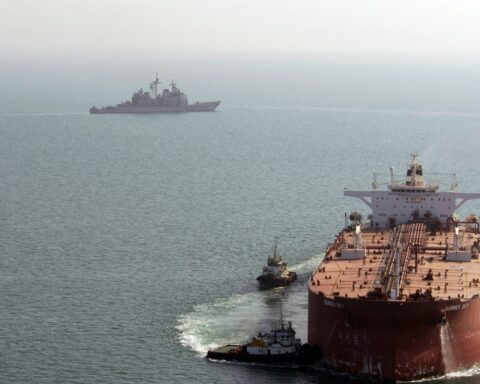
Aramco has adapted its logistics. Since September, the company has conducted ship-to-ship transfers outside the Strait of Hormuz to load Asian-bound tankers without requiring them to transit the chokepoint, Reuters reported. Aramco had also been considering separate discounts for crude loaded off Oman’s coast to account for the non-standard operations, the wire service said. The SUMED pipeline through Egypt, the other major alternative for redirecting Gulf crude, was already operating near its approximate 1.9-million-barrel-per-day capacity with limited headroom, according to industry data cited by Al Jazeera.
The Strait’s share of regional crude exports fell from approximately 83% to 63%, according to TankerTrackers data cited by discoveryalert.com. The main alternative for Asian-bound cargoes — routing through the Red Sea and around the Cape of Good Hope — adds approximately 30 days to the voyage, covering 13,140 nautical miles against 3,370 through Hormuz, Al Jazeera reported in September. The East-West pipeline, struck by drones in September, was restarted at partial capacity. Rystad Energy estimated 40% to 60% restoration within two weeks of the restart, Al Jazeera reported, while Gibson Shipbrokers analyst Matthews said that higher Yanbu loadings “doesn’t look to be a quick fix.”
On a delivered-to-China basis, Saudi barrels for November loading were priced approximately $20 per barrel above the OSP once freight and logistics were added, Kpler estimated. The three Asian refining sources cited by Reuters put the motive plainly: Aramco’s cut was an attempt to offset part of the freight burden that its own buyers were absorbing.
How Are Gulf Rivals Pricing Their Crude?
Iraq’s State Organisation for Marketing of Oil set its November Basrah Medium for Asian buyers at $2.80 below the Oman-Dubai average, according to Iraqi News. For December, SOMO cut deeper: Basrah Medium fell to $8.80 below the benchmark, and Basrah Heavy to $11.80 below, the outlet reported.
Iraq’s December reductions were proportionally steeper than Saudi Arabia’s. Aramco widened Arab Light from $5 below in November to $7 below in December — a $2 move. SOMO widened Basrah Medium from $2.80 below to $8.80 below — a $6 move, Iraqi News data showed.
Russia, by contrast, priced itself out of key Asian markets. Urals crude surged to premiums above $10 per barrel over Dated Brent by early October, Bloomberg reported. Chinese state-owned refiners absorbed most available Russian barrels, while China’s independent “teapot” refiners turned to Iraqi crude as US sanctions limited Iranian supply, according to Kpler. Russia’s share of Indian crude imports fell from 56% in July to approximately 35% by September, according to Kpler analyst Sumit Ritolia cited by Bloomberg. Indian refiners increased purchases from Saudi Arabia, the UAE and Iraq for November deliveries instead.

From $19.50 Premium to $7 Discount
The November cut extended a seven-month slide that began after Aramco set its May premium at $19.50 above the Oman-Dubai average — a wartime peak driven by supply disruptions and surging demand for the barrels that could still reach Asian ports. By December, the premium had turned into a $7 discount.
| Month | OSP | Change | Source |
|---|---|---|---|
| January | +0.60 | — | MarketScreener/Reuters |
| May | +19.50 | — | Bloomberg |
| June | +15.50 | -4.00 | Oilprice.com/Reuters |
| July | +9.50 | -6.00 | BOE Report |
| August | -1.50 | -11.00 | BOE Report/Reuters |
| September | -2.00 | -0.50 | Energies Media |
| November | -5.00 | -3.00 | Reuters/Argaam |
| December | -7.00 | -2.00 | QCIntel |
The August reduction of $11 per barrel was the largest single-month move in the series since Reuters records began in 2003, BOE Report reported. The December discount of $7 was described by QCIntel as a new six-year low, extending the record set by the November pricing just a month earlier.
Brent crude, which rose to approximately $117 per barrel on October 30 according to Oilprice.com market data, had fallen to roughly $91 to $94 by November 10 — a decline of approximately 20% in less than two weeks. The drop coincided with diplomatic signals from Qatar on a Hormuz deal and reduced US strike threats against Iran, Vantage Markets reported.
The Budget Under Strain
Saudi Arabia’s third-quarter fiscal results showed oil revenue falling 23% year on year to 116.5 billion riyals, from 150.8 billion in the same quarter of 2025, according to the Ministry of Finance data reported by The Private Banker. The quarterly deficit was 84 billion riyals, approximately $22.4 billion.
The cumulative deficit for the first nine months of 2026 reached approximately 244 billion riyals — nearly matching the full-year revised projection of 245 billion riyals, with one quarter remaining. The government raised its 2026 deficit estimate from an original 165 billion riyals to 245 billion riyals in a pre-budget statement in late September, Reuters reported via Zawya. The same statement forecast real GDP contracting 3.6% in 2026, with oil activities falling 21.8%, before a projected 12.8% rebound in 2027.
Production volumes have partially recovered. Saudi crude output stood at 9.2 million barrels per day as of November 9, and exports recovered to 5.52 million barrels per day by early November. The recovery followed a deep trough: crude loadings averaged 3.23 million barrels per day in the first 23 days of August, the lowest monthly level since the war began, according to The Kobeissi Letter cited by BusinessToday India. The previous low had been 3.65 million barrels per day in May.
In the second quarter, when the OSP was still at a premium, Aramco reported net income of $32.69 billion and an average realised crude price of $108.1 per barrel, according to Zawya citing the company’s earnings release. CEO Amin Nasser credited the East-West pipeline for sustaining shipments amid what he called “unprecedented supply disruption through the Strait of Hormuz,” the same report said. Since then, Arab Light’s pricing differential has swung from a $19.50 premium in May to a $7 discount for December.

Frequently Asked Questions
What is a crude oil official selling price?
An OSP is a monthly differential that Aramco sets against a regional benchmark for term-contract buyers. Asian contracts use the average of Oman and Dubai crude as the reference point, European contracts reference ICE Brent, and North American contracts reference the Argus Sour Crude Index. Aramco typically announces OSPs in the first week of the month for crude loading the following month. Spot-market transactions are priced separately and may diverge from the term-contract OSP.
Can Saudi Arabia bypass Hormuz entirely for Asian exports?
The East-West pipeline connecting the Eastern Province oilfields to Yanbu on the Red Sea has a design capacity of approximately 7 million barrels per day and can export roughly 5 million, according to Aramco. The pipeline sustained drone damage in September 2026 and was restarted at partial capacity. Even at full throughput, cargoes leaving Yanbu for Asia via the Cape of Good Hope face a voyage of approximately 13,140 nautical miles — roughly 30 additional days compared with the Hormuz route, Al Jazeera reported. Full bypass of the Strait remains logistically difficult for the kingdom’s entire export volume.
How do Saudi OSP cuts compare with OPEC+ output targets?
OPEC+ held Saudi Arabia’s November production target at 10.5 million barrels per day, according to Enerdata. Actual output in early November stood at 9.2 million barrels per day — well below the ceiling. The OSP is a separate mechanism: it sets the per-barrel price differential for term-contract buyers but does not determine how many barrels Aramco produces or ships. Production and export levels depend on refinery capacity, pipeline throughput and the security environment along export corridors.
What is ship-to-ship crude transfer?
Ship-to-ship transfer involves pumping crude from one tanker to another while both vessels are at sea, typically in sheltered waters outside a port or chokepoint. Aramco began using STS operations outside the Strait of Hormuz in September 2026 to load Asian-bound tankers without requiring them to transit the Strait, Reuters reported. The method adds time and cost but allows exports to continue when a waterway is disrupted. Aramco was also considering specific pricing discounts for oil loaded off Oman’s coast via STS, according to Reuters.
The House of Saud Daily Briefing
Saudi Arabia's news in 3 minutes, every morning. Free. See today's issue