
Iran’s Power Vacuum — Who Replaces Khamenei?
The assassination of Supreme Leader Ali Khamenei has decapitated the Islamic Republic’s command structure. As a temporary council scrambles to hold power, the question consuming every capital from Riyadh to Washington is not whether Iran will change — but how violently the transition unfolds, and who emerges to wield the machinery of the state.
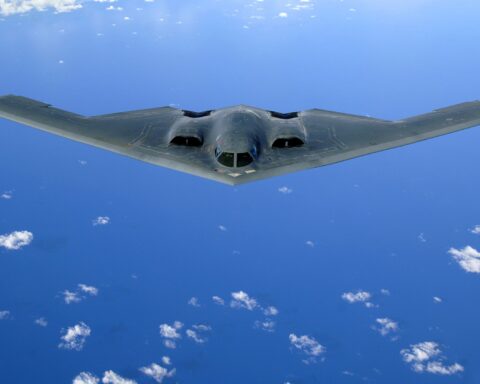
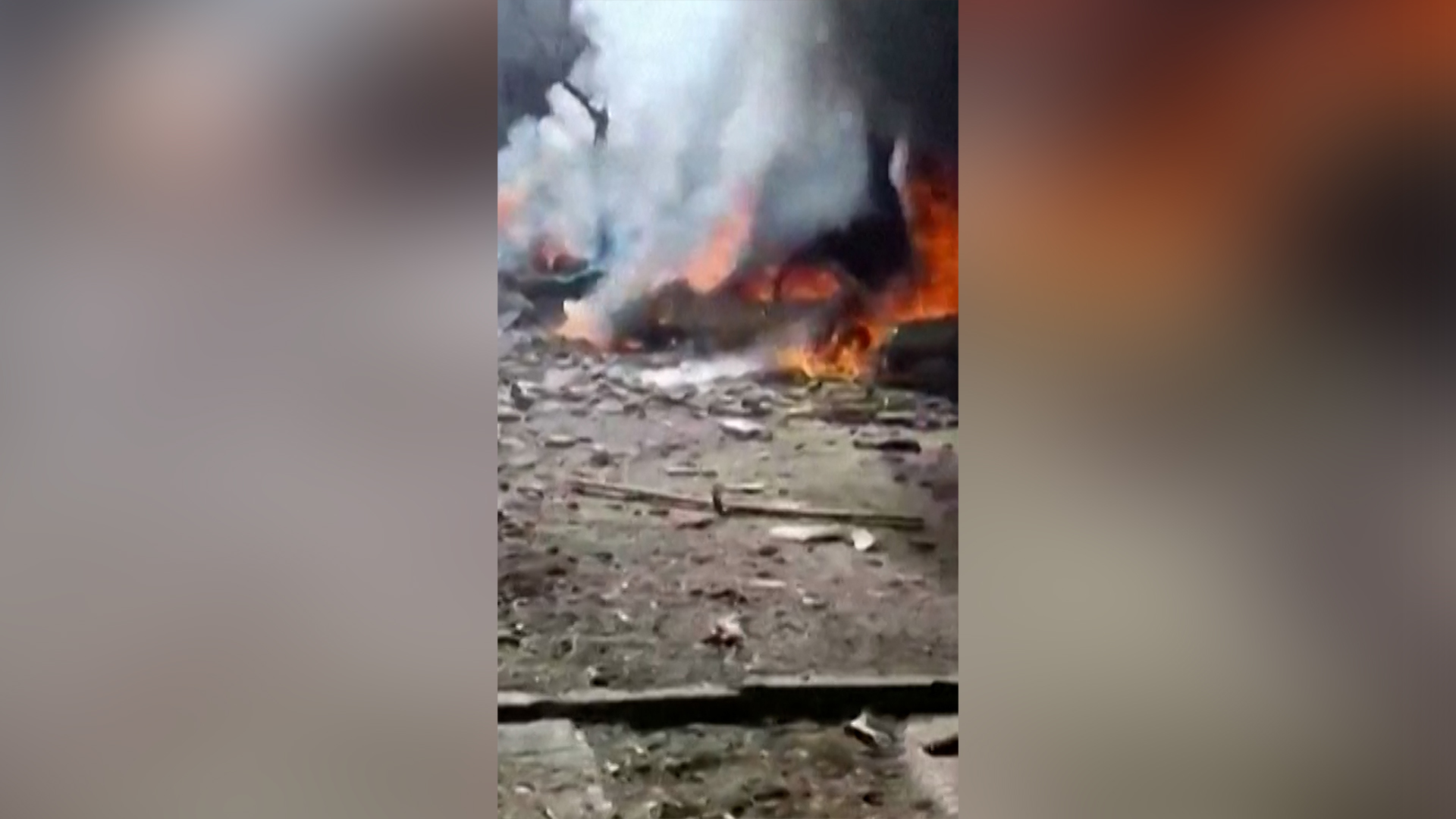
In the early hours of February 28, 2026, a joint US-Israeli military operation — dubbed Operation Epic Fury by Washington and Operation Roaring Lion by Tel Aviv — struck deep into the heart of the Iranian security apparatus. Supreme Leader Ayatollah Ali Khamenei, the man who had governed the Islamic Republic for thirty-six years, was killed. He was not alone. Approximately forty senior Iranian officials perished in the cascading strikes, including IRGC Ground Forces Commander Brigadier General Mohammad Pakpour, Admiral Ali Shamkhani — the veteran security official who had brokered Iran’s historic 2023 rapprochement with Saudi Arabia in Beijing — and, by March 1, Iran’s Chief of General Staff Major General Abdolrahim Mousavi. The decapitation was surgical, comprehensive, and without modern precedent.
For the Kingdom of Saudi Arabia, which had spent the previous three years carefully rebuilding diplomatic ties with Tehran through the Beijing-brokered agreement, the implications are seismic. The architect of that rapprochement on the Iranian side is dead. The supreme authority who sanctioned it is dead. The military chain of command that could be engaged through back channels is shattered. And yet, even as Iran’s leadership lies in ruins, the Islamic Revolutionary Guard Corps has demonstrated that its retaliatory capability remains very much intact — launching Operation True Promise 4, a barrage of strikes targeting Saudi Arabia, the UAE, Qatar, Bahrain, Kuwait, Jordan, and Israel. The IRGC has also effectively closed the Strait of Hormuz, threatening the arterial route through which roughly one-fifth of the world’s oil supply flows.
Iran is now a country simultaneously decapitated and dangerous — leaderless at the top, yet armed and lashing out through its most powerful institution. Understanding who fills the vacuum, and how fast, will determine the trajectory of Gulf security for a generation.
Who Was Khamenei and Why His Death Reshapes the Middle East
Ali Khamenei became Supreme Leader in 1989 following the death of the Islamic Republic’s founder, Ayatollah Ruhollah Khomeini. He was, by virtually every measure, the most consequential figure in Iranian politics for over three decades. The Supreme Leader in Iran’s theocratic system is not a ceremonial figurehead. He is the commander-in-chief of all armed forces, the final arbiter of foreign policy, the authority who approves or vetoes presidential candidates, and the figure to whom the IRGC — Iran’s most powerful military and economic institution — ultimately answers. Presidents come and go in Iran. The Supreme Leader endured.
Khamenei’s tenure was defined by confrontation with the West, the expansion of Iran’s regional proxy network — Hezbollah, the Houthis, various Iraqi Shia militias, and allies in Syria — and a relentless pursuit of nuclear capability that brought Tehran to the brink of weapons-grade enrichment. But Khamenei was also, critically, the man who authorized diplomatic pivots when survival demanded them. It was Khamenei who gave the green light for the 2015 nuclear deal with the Obama administration. And it was Khamenei who, after years of hostility, approved the stunning March 2023 agreement in Beijing that saw Iran and Saudi Arabia restore diplomatic relations, exchange ambassadors, and begin lowering the temperature across the Gulf.
The Middle East briefing 3,000+ readers start their day with.
One email. Every weekday morning. Free.
His death does not merely remove a leader. It removes the single point of authority capable of making grand strategic decisions for the Iranian state. Iran’s elected president can negotiate, but cannot commit. The IRGC can fight, but cannot formally make peace. Only the Supreme Leader held the constitutional and religious authority to do both. That office is now empty.
The Temporary Leadership Council: Holding Power or Holding On?
Within hours of confirmation of Khamenei’s death, a temporary leadership council was announced, comprising President Masoud Pezeshkian, Chief Justice Gholam-Hossein Mohseni Ejei, and one member of the Guardian Council. This troika is operating under Article 111 of Iran’s constitution, which provides for an interim collective leadership when the Supreme Leader dies or becomes incapacitated, pending the selection of a successor by the Assembly of Experts.
On paper, this arrangement is constitutional. In practice, it is fraught with dysfunction. Pezeshkian is a reformist who won the presidency in 2024 following the death of Ebrahim Raisi in a helicopter crash in May of that year. He campaigned on engagement with the world, economic relief for ordinary Iranians, and a softening of the regime’s social restrictions. He has no base within the IRGC. He has no clerical authority. He is, in the bluntest terms, the weakest member of the troika in the currency that matters most in the Islamic Republic: coercive power.
Ejei, by contrast, is a hardliner with deep connections to the judiciary and the intelligence services. He was sanctioned by the European Union for his role in the brutal suppression of the 2009 Green Movement protests. He represents the regime’s enforcement wing — the apparatus of political prisoners, show trials, and ideological conformity. The unnamed Guardian Council member likely serves a similar function: ensuring that the clerical establishment retains a veto over any decisions the council makes.
The fundamental problem is that this council was designed to be temporary — a bridge of days or weeks, not months. It was never intended to govern during a simultaneous military crisis, an internet blackout affecting ninety million citizens, popular unrest in the provinces, and the complete absence of the security chiefs who would normally manage such emergencies. The council can issue statements. Whether it can issue orders that the IRGC will obey is an entirely different question.
The Succession Question: Inside the Assembly of Experts
Iran’s constitution vests the power to select the next Supreme Leader in the Assembly of Experts, an eighty-eight-member body of senior clerics elected by popular vote — though candidates must first be vetted and approved by the Guardian Council, effectively ensuring that only regime loyalists sit on the body. The Assembly’s deliberations are conducted in secret, and its last major act was confirming Khamenei himself in 1989.
The challenge facing the Assembly is unprecedented. When Khomeini died, Khamenei was elevated as a compromise candidate — a mid-ranking cleric who lacked the traditional scholarly credentials for the role but was politically acceptable to the various factions. That transition occurred in peacetime, with the institutional infrastructure of the state intact and a clear consensus among the revolutionary old guard. None of those conditions obtain today.
Several names have circulated as potential successors in the years leading up to this moment. The most controversial is Mojtaba Khamenei, the late Supreme Leader’s son. Mojtaba has operated largely in the shadows, cultivating relationships within the IRGC and the Basij paramilitary organization. He is believed to control significant financial assets tied to the Supreme Leader’s office. His elevation would represent a dynastic turn — the Islamic Republic effectively becoming a hereditary theocracy — and would be deeply contentious among clerics who view the position as requiring genuine scholarly authority, not merely a family name. On 8 March, the Assembly of Experts confirmed those fears by naming Mojtaba Khamenei as Iran’s new supreme leader in a vote that Iran International reported was secured through IRGC pressure on Assembly members.
Other candidates who have been discussed over the years include senior members of the Assembly itself, though the strikes have raised questions about whether any of these figures were among the approximately forty officials killed. The information blackout inside Iran — the country is operating at roughly one percent of normal internet connectivity — makes it nearly impossible to verify who among the senior clerical establishment has survived.
What can be said with confidence is that the selection process will be shaped less by theological deliberation than by raw power politics. The next Supreme Leader will be whoever the IRGC is willing to accept — or, more precisely, whoever the IRGC believes it can control.
The IRGC as Kingmaker
The Islamic Revolutionary Guard Corps has always been the true center of gravity in the Iranian system. It is not merely a military organization. It controls vast economic enterprises — construction firms, telecommunications companies, import-export networks — that account for an estimated one-third of the Iranian economy. It runs Iran’s ballistic missile program and its nuclear infrastructure. It commands the Quds Force, which manages Tehran’s relationships with proxy groups across the region. And it operates its own intelligence apparatus, parallel to and often in competition with the civilian Ministry of Intelligence.
The strikes of February 28 damaged the IRGC’s senior command structure — the loss of Pakpour alone removes one of the most experienced ground forces commanders in the organization’s history — but they did not destroy the institution. The IRGC’s organizational depth is considerable. It has layers of regional commanders, intelligence officers, and operational planners who can step into senior roles. The launch of Operation True Promise 4 within hours of the strikes demonstrated that the IRGC’s ballistic missile and naval forces remain operational and capable of coordinated, multi-theater action.
This is the paradox that the temporary leadership council faces. The IRGC is the only institution with the capacity to maintain order inside Iran and project power beyond its borders. But the IRGC’s interests — ideological, economic, and institutional — may not align with those of a reformist president or even the clerical establishment. If the succession process drags on, the IRGC may simply govern in fact if not in name, making the selection of the next Supreme Leader a formality that ratifies IRGC dominance rather than a genuine exercise in theocratic governance.
For the Gulf states, this is a critical variable. A Supreme Leader chosen by and beholden to the IRGC hardliners would likely pursue a more confrontational posture than Khamenei himself, who for all his hostility toward the West, understood the value of strategic restraint. A figurehead leader rubber-stamped by the Guards would mean that Iran’s foreign policy is effectively being set by the same institution that just launched missiles at Riyadh.
The Death of Ali Shamkhani and the Collapse of the Beijing Channel
Of all the officials killed alongside Khamenei, none carries more significance for Saudi-Iran relations than Admiral Ali Shamkhani. A veteran of the Iran-Iraq War, former secretary of Iran’s Supreme National Security Council, and a member of the ethnic Arab minority in Khuzestan province, Shamkhani was a rare figure in the Iranian system: a security hardliner who nonetheless possessed the political capital and personal networks to negotiate with adversaries.
It was Shamkhani who sat across the table from Saudi National Security Advisor Musaed bin Mohammed Al-Aiban in Beijing in March 2023, hammering out the agreement that stunned the world. The deal — brokered by Chinese President Xi Jinping in a pointed demonstration of Beijing’s growing diplomatic influence in the Gulf — saw Iran and Saudi Arabia agree to restore diplomatic relations after seven years of rupture, reopen embassies, and reactivate a dormant security cooperation agreement. Ambassadors were exchanged. Trade resumed. The two most powerful states in the Gulf, which had spent years waging proxy wars from Yemen to Lebanon, appeared to be stepping back from the brink.
Shamkhani was the institutional memory of that agreement on the Iranian side. He understood its logic, its compromises, and — critically — its limits. He knew what the Saudis had conceded privately and what they expected in return. He was the interlocutor that Riyadh could call when tensions flared or misunderstandings arose. With his death, that channel is not merely disrupted — it is severed.
The broader Beijing rapprochement was already under strain before the strikes. Iran’s continued support for the Houthis, whose attacks on commercial shipping in the Red Sea had directly threatened Saudi economic interests, had tested the agreement’s durability. But the framework held, in part because both sides had invested political capital in it and because back-channel communication — facilitated by figures like Shamkhani — allowed crises to be managed before they escalated.
That framework is now, for all practical purposes, dead. Operation True Promise 4, which included direct strikes on Saudi territory, represents an unambiguous act of war — the kind of escalation that no diplomatic agreement can survive. The question is not whether the Beijing rapprochement can be revived. It cannot, at least not in its current form. The question is what replaces it.
The Double Game of Mohammed bin Salman
Crown Prince Mohammed bin Salman — MBS — has emerged as the pivotal figure in the Gulf’s response to the crisis, and the most controversial. Reporting by the Washington Post has revealed that MBS privately lobbied then-President Trump to carry out military strikes against Iran, even as he publicly assured Iran’s President Pezeshkian that Saudi airspace would not be used against the Islamic Republic. This double game — whispering war in Washington while speaking peace in Tehran — is now the defining narrative of MBS’s Iran strategy.
The Crown Prince’s calculus appears to have been straightforward, if ruthless. The Beijing rapprochement served its purpose: it bought time, reduced the immediate threat of Iranian aggression, and allowed Saudi Arabia to focus on the domestic economic transformation at the heart of Vision 2030. But MBS never appears to have viewed the agreement as a permanent settlement. Iran’s nuclear program continued to advance. The IRGC’s proxy network remained intact. The Houthis, backed by Tehran, continued to threaten Saudi security. From Riyadh’s perspective, the rapprochement was a tactical pause, not a strategic resolution.
When the opportunity arose to encourage Washington to deal a crippling blow to the Iranian command structure, MBS seized it — while maintaining plausible deniability by publicly opposing the use of Saudi airspace. The result is a Crown Prince who has simultaneously weakened his most dangerous regional adversary and positioned himself as a peacemaker who was betrayed by events beyond his control. It is a strategy of breathtaking audacity, and its success or failure will depend entirely on what happens next.
The House of Saud has, throughout its history, demonstrated a capacity for strategic patience combined with decisive action when the moment demands it. From the founding campaigns of Abdulaziz ibn Saud to the modern era under King Salman, the royal family has navigated existential threats by balancing diplomacy with the willingness to act. MBS’s handling of the Iran file fits squarely within that tradition — though at a scale and with consequences that dwarf anything his predecessors faced.
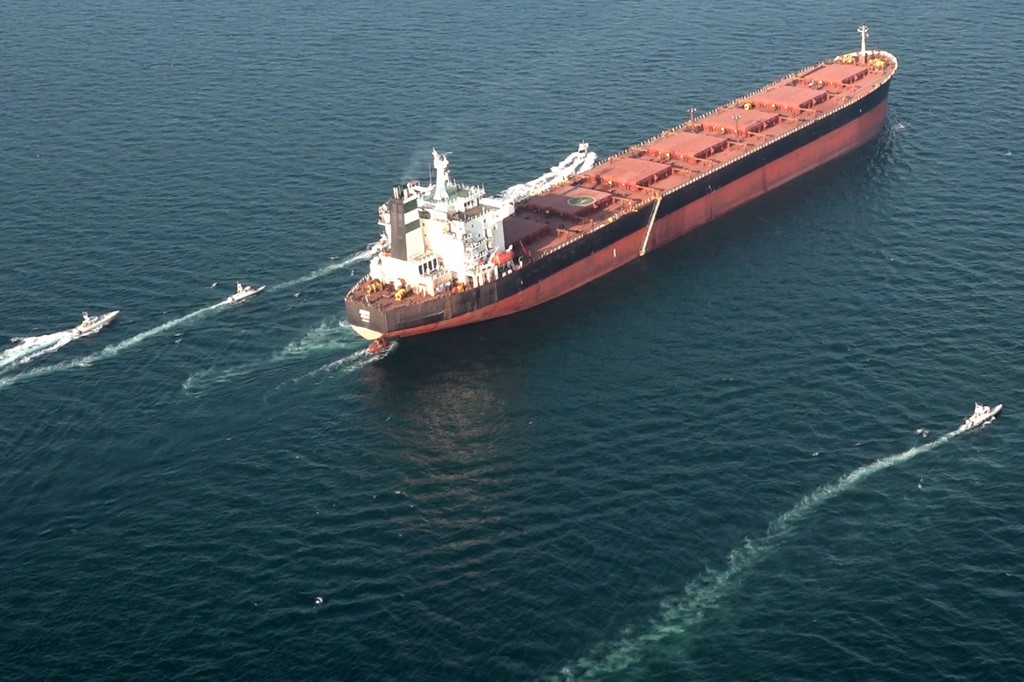
Operation True Promise 4 and the Strait of Hormuz
The IRGC’s retaliatory strikes under the banner of Operation True Promise 4 have fundamentally altered the security environment of the Gulf. The operation targeted not just Israel — the expected focus of Iranian retaliation — but virtually every US-allied state in the region: Saudi Arabia, the UAE, Qatar, Bahrain, Kuwait, and Jordan. This was not a targeted response. It was a regional broadside, designed to demonstrate that Iran’s capacity for inflicting pain extends far beyond the specific countries that participated in the strikes against Khamenei.
The inclusion of Saudi Arabia among the targets is particularly significant. Even if one accepts that MBS privately encouraged the American strikes, the Saudi government’s public position was one of non-involvement. Iran’s decision to strike Saudi territory regardless suggests that Tehran — or more precisely, the IRGC commanders now making operational decisions — has concluded that the Beijing rapprochement was a Saudi deception from the outset. Whether this assessment is accurate matters less than the fact that the IRGC believes it. Trust, once destroyed at this level, does not rebuild in months or years. It takes decades.
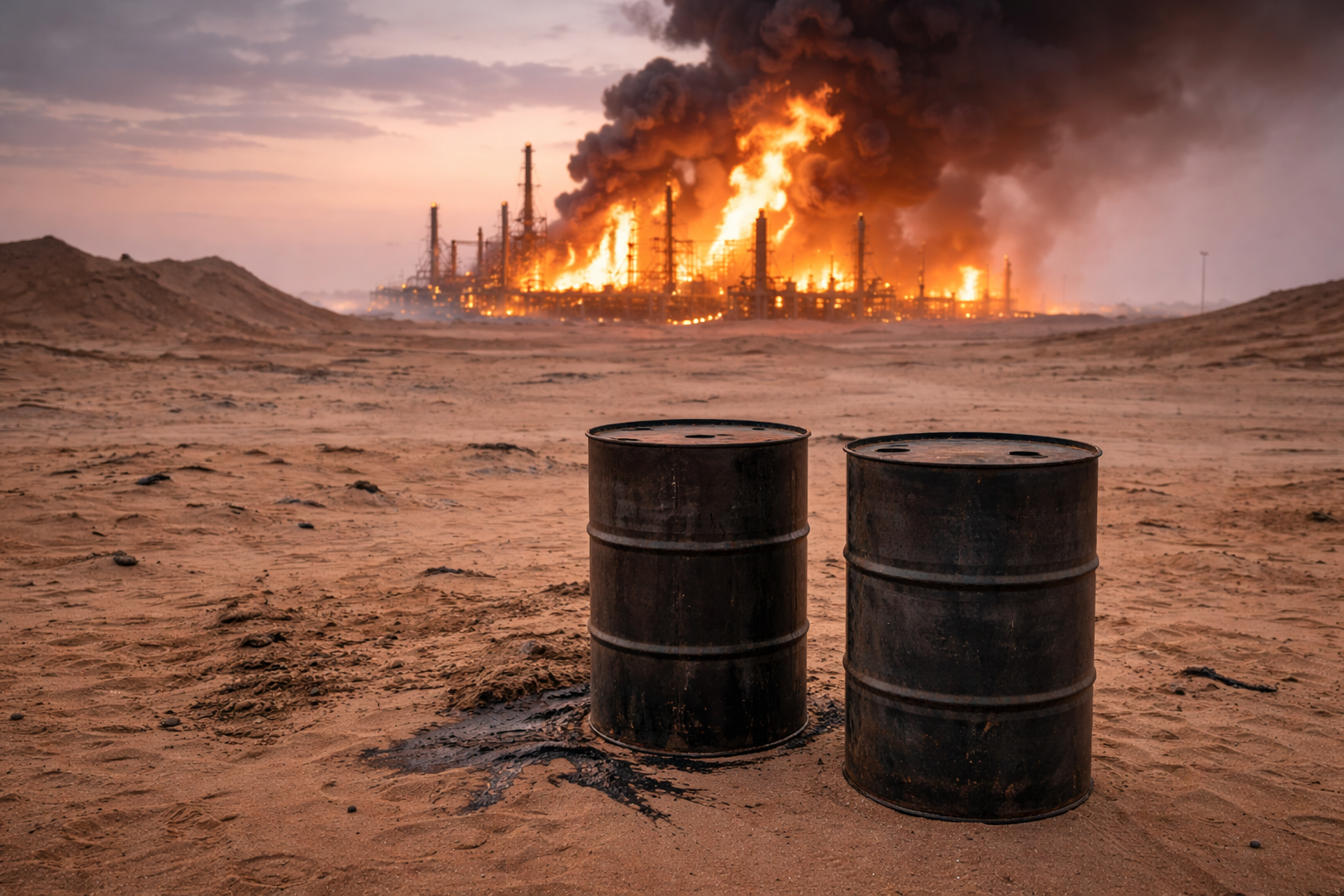
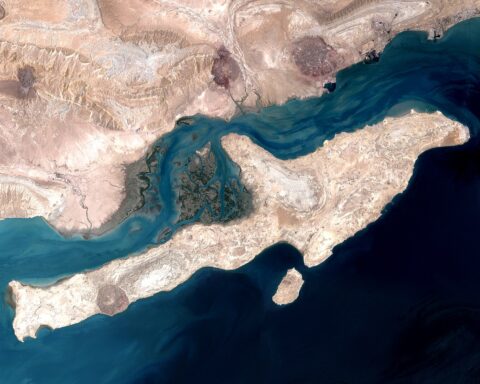
The closure of the Strait of Hormuz represents an escalation of a different order. Approximately twenty percent of the world’s petroleum passes through this narrow waterway, including the vast majority of exports from Saudi Arabia, the UAE, Kuwait, Qatar, and Iraq. A sustained closure would trigger a global energy crisis of a magnitude not seen since the 1973 oil embargo — and possibly far worse, given the integration of modern supply chains. Oil markets have already reacted with extreme volatility, and every day the strait remains closed raises the economic stakes for every nation on Earth.
For Saudi Arabia specifically, the Hormuz closure strikes at the economic foundations of Vision 2030. The Kingdom’s transformation plan depends on sustained oil revenue to fund the massive infrastructure projects, new cities, and economic diversification initiatives that MBS has staked his legacy on. A prolonged disruption to oil exports would force painful choices between maintaining the pace of Vision 2030 and funding the military response that the current crisis demands.
What This Means for the Gulf: Five Scenarios
The coming weeks and months will be shaped by which of several possible trajectories Iran’s internal crisis follows. Each carries distinct implications for Saudi Arabia and the wider Gulf.
In the first scenario, the Assembly of Experts moves quickly to select a new Supreme Leader — likely a figure acceptable to the IRGC — and the temporary council manages to maintain basic order. The new leader, seeking to consolidate authority, might signal willingness to de-escalate in order to focus on internal stabilization. This is the optimistic scenario, and it is the least likely. The depth of the leadership losses, the internet blackout, and the emerging unrest in provinces like Ilam all argue against a smooth transition.
In the second scenario, the succession process becomes a protracted power struggle between IRGC-aligned hardliners and the remnants of the reformist camp represented by Pezeshkian. The IRGC uses the external military crisis to justify expanding its domestic authority, effectively marginalizing the civilian government. Iran becomes more militarized, more unpredictable, and more dangerous — but also more internally fragile as economic conditions deteriorate under the combined weight of sanctions, military expenditure, and popular discontent.
In the third scenario, the protests already visible in Ilam province spread to other restive regions — Kurdish areas, Balochistan, Khuzestan — and the regime faces a simultaneous external war and internal uprising. The 2022 Mahsa Amini protests demonstrated that Iranian society contains deep reservoirs of anger against the Islamic Republic. A leadership vacuum, combined with economic collapse and military defeat, could crack open fissures that the security apparatus, now missing many of its senior commanders, may struggle to contain.
A fourth scenario involves Mojtaba Khamenei being installed as a successor in a bid for dynastic continuity. This would consolidate IRGC support in the short term — Mojtaba’s relationships with the Guards are well-documented — but would face significant clerical resistance and could further inflame popular opposition. The Islamic Republic’s founding ideology explicitly rejected hereditary rule; embracing it now would represent an existential contradiction that even the regime’s most creative propagandists would struggle to paper over.
The fifth scenario, and perhaps the most consequential for the Gulf, is a period of prolonged ambiguity — no clear successor, the temporary council operating on borrowed authority, the IRGC acting autonomously in military matters while nominally deferring to civilian leadership on everything else. This is the scenario most likely to produce miscalculation. Without a single authority capable of making binding decisions, the risk of unintended escalation — a rogue IRGC commander launching additional strikes, a misinterpreted military movement in the Gulf — rises dramatically.
Implications for Vision 2030 and Saudi Strategic Planning
The crisis arrives at a critical juncture for Saudi Arabia’s domestic transformation. Vision 2030 was conceived in an era when MBS believed — or at least hoped — that the regional security environment could be managed through a combination of deterrence, diplomacy, and American partnership. The NEOM megaproject, the entertainment and tourism sectors, the planned diversification away from oil dependence — all of these require foreign investment, stable energy markets, and a perception of security that is now severely compromised.
The Hormuz closure, even if temporary, will force a recalculation. Saudi Arabia has invested heavily in alternative export routes — the East-West pipeline to the Red Sea port of Yanbu, expanded capacity at ports outside the Gulf — but these alternatives cannot fully replace the volume that flows through the strait. More fundamentally, the perception of risk matters as much as the reality. International investors and corporate boards making decisions about locating facilities in Saudi Arabia will weigh the events of the past seventy-two hours heavily.
There is, however, a countervailing argument that MBS and his advisors are certainly making. If the strikes succeed in their strategic objective — permanently degrading Iran’s capacity to threaten the Gulf — then the short-term economic pain may be worth the long-term strategic gain. A weakened, internally focused Iran would reduce the military threats that have constrained Saudi ambitions for decades. It would diminish the Houthi threat in Yemen. It would reduce the risk of Iranian interference in Iraq, Lebanon, and Syria. In this reading, the current crisis is not a setback for Vision 2030 but a necessary precondition for its ultimate success.
Which reading proves correct depends on variables that no analyst can predict with confidence: how quickly Iran stabilizes, whether the Hormuz closure can be broken, how the global energy market adapts, and whether the United States remains committed to the military posture required to contain Iran’s response. What is certain is that the next chapter of Vision 2030 will be written in a fundamentally different strategic environment than the one in which it was conceived. For a deeper examination of what that new environment looks like, our analysis of the day after Tehran falls and why a defanged Iran could become Saudi Arabia’s most dangerous victory explores the strategic paradoxes awaiting Riyadh on the other side of this conflict.
The Unrest Factor: Ilam Province and Beyond
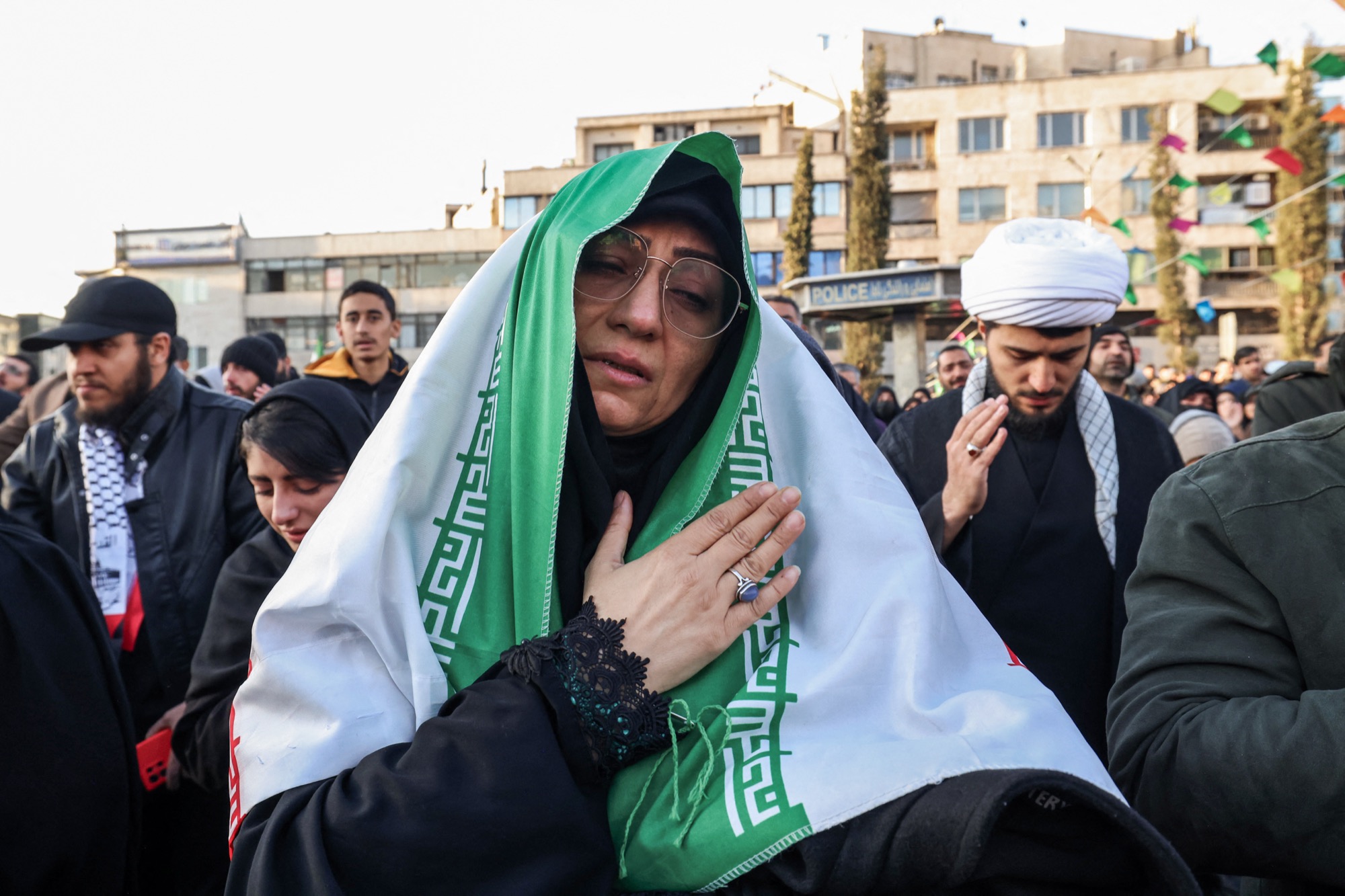
Reports of protests in Ilam province — including the torching of the governorate building in Dehloran — offer a glimpse of the internal pressures building inside Iran. Ilam is a predominantly Kurdish and Luri province along the Iraqi border, with a long history of economic marginalization and ethnic grievance. That unrest is emerging there first is not surprising. The question is whether it spreads.
Iran’s internet blackout — reducing connectivity to approximately one percent of normal levels and cutting off some ninety million people — is a deliberate strategy to prevent the kind of social media-driven protest coordination that fueled the 2022 uprising. But the blackout is a double-edged sword. It also prevents the regime from communicating with its own citizens, from broadcasting messages of reassurance or authority, and from coordinating its own security response across a vast and geographically diverse country. In the absence of information, rumor fills the void — and rumor, in a time of national crisis, tends toward the inflammatory.
The security forces that would normally suppress provincial unrest — the IRGC’s domestic security units, the Basij, the Law Enforcement Command — are now operating without several layers of senior leadership. Unit-level commanders may maintain discipline, or they may hesitate, unsure of who is giving orders and whether those orders carry legitimate authority. The fragmentation of command is not merely a military problem. It is a governance problem that touches every aspect of the Iranian state’s ability to function.
A New Chapter in an Ancient Rivalry
The Saudi-Iranian rivalry predates the Islamic Republic, predates the House of Saud in its modern form, and has roots in sectarian, ethnic, and geopolitical fault lines that stretch back centuries. But the events of late February 2026 have opened a new and unpredictable chapter. The institutional frameworks that managed this rivalry — the Beijing agreement, the back-channel relationships, the unspoken rules of proxy competition — have been swept away in a matter of hours.
What remains is a power vacuum in Tehran that could take months or years to fill, a Gulf security environment that has been fundamentally destabilized, and a Saudi leadership that has placed an enormous strategic bet on the outcome. The stakes could not be higher — not just for the two nations, but for the global energy market, the balance of power in the Middle East, and the hundreds of millions of people across the region whose lives are shaped by decisions made in Riyadh and Tehran.
The vacuum will be filled. The only questions are by whom, and at what cost.
Frequently Asked Questions
Who is currently leading Iran after Khamenei’s death?
A temporary leadership council comprising President Masoud Pezeshkian, Chief Justice Gholam-Hossein Mohseni Ejei, and one member of the Guardian Council has assumed control under Article 111 of Iran’s constitution. This arrangement is intended to be temporary, pending the selection of a new Supreme Leader by the Assembly of Experts. However, real operational power — particularly military decision-making — appears to rest with the IRGC’s surviving command structure rather than the civilian council.
How is the next Supreme Leader of Iran selected?
Under Iran’s constitution, the Assembly of Experts — an eighty-eight-member body of senior clerics — is responsible for selecting the Supreme Leader. The Assembly’s deliberations are conducted in secret, and there is no fixed timeline for the selection. In 1989, Khamenei was chosen within hours of Khomeini’s death, but the current circumstances — with the leadership apparatus devastated and the country under military attack — make a similarly rapid transition unlikely. The Assembly itself must first convene, which requires a quorum that may be difficult to achieve given the internet blackout and security conditions.
Could Mojtaba Khamenei become the next Supreme Leader?
Mojtaba Khamenei, the son of the late Supreme Leader, has long been discussed as a potential successor. He has cultivated significant relationships within the IRGC and controls financial networks associated with the Supreme Leader’s office. However, his elevation would represent a dynastic succession that contradicts the Islamic Republic’s founding ideology. He also lacks the senior clerical credentials traditionally expected of the Supreme Leader. His candidacy would likely face resistance from parts of the clerical establishment, though IRGC backing could prove decisive.
What does the closure of the Strait of Hormuz mean for global oil markets?
The Strait of Hormuz is the world’s most critical oil chokepoint, with approximately twenty percent of global petroleum supply transiting through it daily. The IRGC’s effective closure of the strait threatens to trigger a severe global energy crisis, with oil prices likely to spike dramatically. Saudi Arabia has some alternative export capacity through pipelines to the Red Sea, but these cannot fully compensate for lost Gulf exports. A prolonged closure would have cascading effects on global inflation, transportation costs, and economic growth.
Is the 2023 Beijing-brokered Saudi-Iran rapprochement over?
For all practical purposes, yes. The rapprochement was built on personal relationships — particularly Ali Shamkhani’s role as Iran’s principal negotiator — institutional trust, and a mutual commitment to de-escalation. Shamkhani’s death removes the key Iranian interlocutor. Iran’s retaliatory strikes on Saudi territory under Operation True Promise 4 represent an act of war that no diplomatic framework can absorb. While some form of Saudi-Iranian diplomatic engagement may eventually resume, it will be built on entirely different foundations, with different actors and different assumptions.
How does this affect Saudi Arabia’s Vision 2030?
The crisis poses both risks and potential opportunities for Vision 2030. In the short term, the Strait of Hormuz closure threatens oil revenue, the regional instability may deter foreign investment, and military expenditures could divert resources from development projects. However, if the strikes ultimately result in a weakened Iran that is less capable of threatening Gulf security, the long-term strategic environment for Saudi economic diversification could improve significantly. The outcome depends heavily on how quickly the current military crisis is resolved and whether Iran’s retaliatory capacity can be contained.
What is happening inside Iran right now?
Iran is operating under a near-total internet blackout, with connectivity reduced to approximately one percent of normal levels — effectively cutting off some ninety million people from both domestic and international communication. Protests have erupted in Ilam province, where demonstrators torched the governorate building in Dehloran. The full extent of internal unrest is impossible to assess given the communications blackout, but the combination of leadership decapitation, military crisis, and economic pressure creates conditions conducive to wider social instability. The security apparatus, missing many of its senior commanders, faces the challenge of maintaining order with a fragmented chain of command.
Update, March 9, 2026: The Assembly of Experts has since named Mojtaba Khamenei as Iran’s new Supreme Leader, ending the power vacuum described in this analysis. His appointment, however, has triggered a deeper legitimacy crisis that may prove more consequential than the vacuum it replaced.