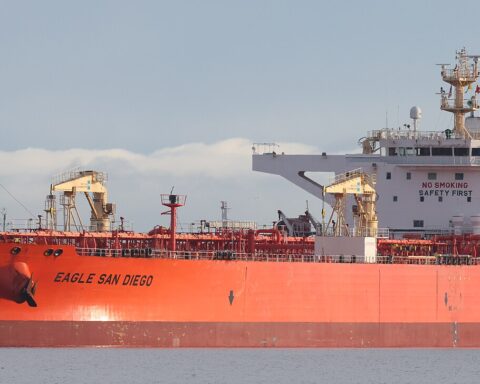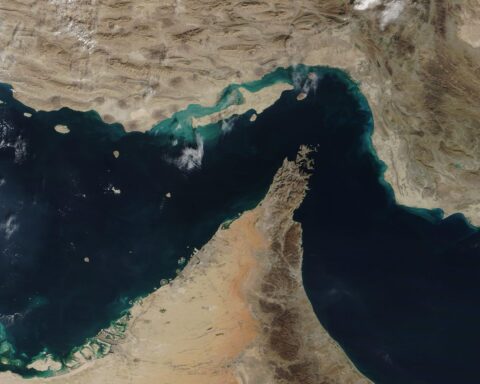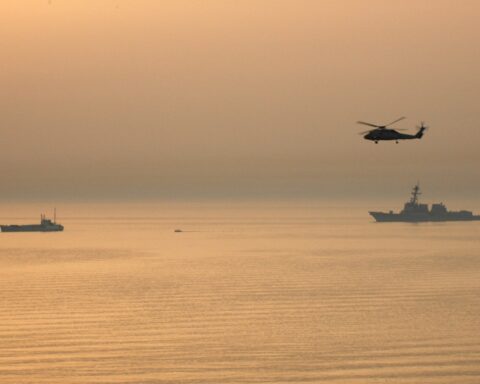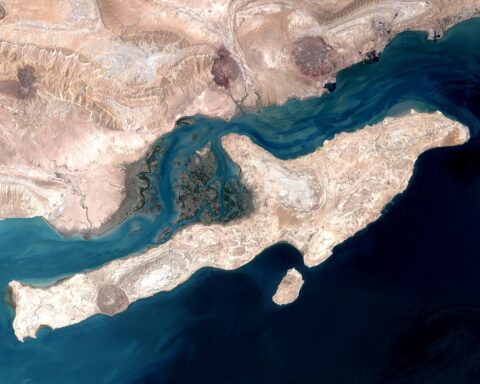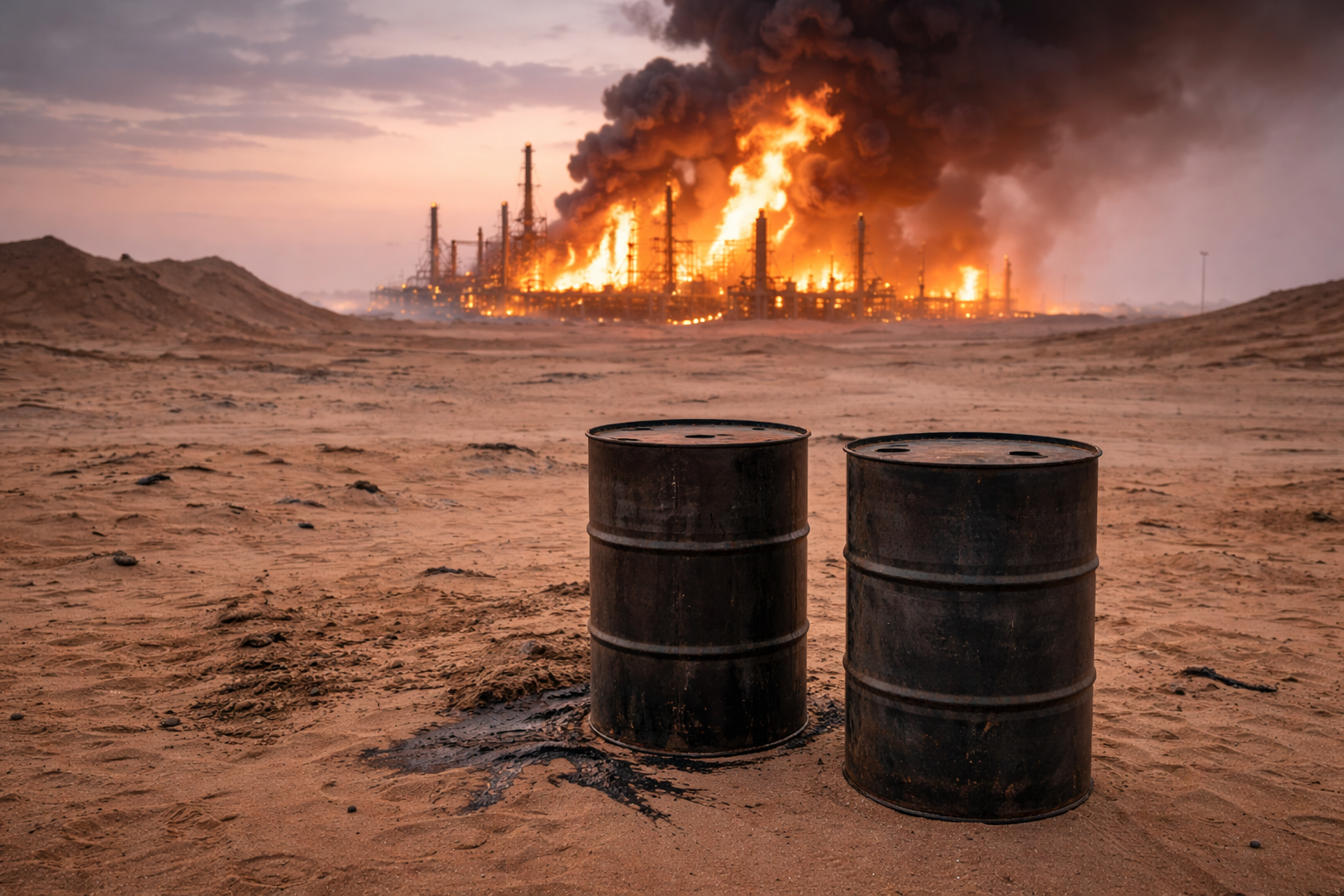

Somewhere in the Gulf of Oman this morning, more than 150 tankers sit at anchor in open water, engines idling, crews waiting. Crude carriers, LNG vessels, chemical tankers — collectively holding tens of millions of barrels of hydrocarbons that the global economy desperately needs. They are staring at the mouth of the Strait of Hormuz, the most important 21 miles of water on Earth, and they cannot enter. The strait is closed. The doomsday scenario that energy analysts have war-gamed for decades is no longer theoretical. It arrived on a Saturday morning, riding on the shockwaves of American and Israeli ordnance.
For the Asian economies that consume the majority of Gulf oil — India, Japan, South Korea, and China — the tanker standstill has triggered an energy emergency measured in weeks of remaining reserves, exposing decades of unchecked dependency on a single maritime chokepoint.
It has been 72 hours since Operation Epic Fury began. In that time, the United States and Israel have launched the most concentrated aerial bombardment of a sovereign nation since the opening nights of the Iraq War. Iran’s nuclear facilities are in ruins. Its air defenses are shattered. Its navy is being hunted and sunk, vessel by vessel. But the military campaign, devastating as it is, may prove to be the lesser story. What is unfolding now — in trading floors from Singapore to London, in shipping offices in Rotterdam and Dubai, in energy ministries from Tokyo to Riyadh — is an economic crisis of a magnitude not seen since the 1973 Arab oil embargo.
This is no longer just a war. It is an energy shock. And the damage is only beginning.
The Strait Is Closed
The Islamic Revolutionary Guard Corps Navy broadcast VHF warnings on maritime channels early Saturday morning, declaring the Strait of Hormuz closed to all commercial traffic. The declaration was confirmed within hours by UK Maritime Trade Operations and the EU’s EUNAVFOR ASPIDES naval force, both of which issued navigational warnings advising all merchant vessels to avoid the waterway until further notice.
Bloomberg ship-tracking data tells the story in blunt terms. By Sunday evening, only a handful of vessels had been observed exiting the strait — tankers that were already in transit when the shooting started, running south at maximum speed. None have entered. Hapag-Lloyd, the German container shipping giant, suspended all Hormuz transits “until further notice.” Other major lines are expected to follow.
The Middle East briefing 3,000+ readers start their day with.
One email. Every weekday morning. Free.
The numbers are staggering by any measure. Twenty-one percent of global oil supply passes through this narrow waterway every day — roughly 17 to 18 million barrels. A quarter of the world’s liquefied natural gas transits the strait. At any given time, dozens of laden supertankers are in the shipping lanes. Now those lanes are empty, and the tankers are stacking up outside, burning fuel at anchor, their cargo going nowhere.
Iranian messaging has been characteristically contradictory. General Mohsen Rezaei told the Financial Times on Saturday that the strait “remained open” to commercial shipping, a claim transparently at odds with the IRGC’s own maritime broadcasts. In the same breath, Iranian military officials declared all American warships in the Persian Gulf “legitimate targets” — a statement not designed to reassure the master of a 300,000-deadweight-ton crude carrier about the safety of his transit.
Energy analysts have spent decades modeling a Hormuz closure. It was always the nightmare scenario — the one that appeared in every risk assessment, every stress test, every Pentagon planning document. The assumption was always that rational self-interest would prevent it: Iran needs the strait open as much as anyone, since its own oil exports transit the same waterway. That assumption held for forty years. It held through the Tanker War of the 1980s, through decades of Iranian saber-rattling, through the tense summer of 2019 when the IRGC seized tankers and the world held its breath. It is not holding now. When a nation’s nuclear program is being destroyed from the air, rational self-interest takes on a different calculus entirely.
The Destruction of Iran’s Navy
President Trump announced on Saturday that the US military had destroyed nine Iranian warships in the opening phase of Operation Epic Fury. US Central Command subsequently confirmed the sinking of an Iranian Jamaran-class corvette — the pride of Iran’s domestically built surface fleet — struck at its pier in Chabahar, on Iran’s southeastern coast. Three additional vessels were attacked near the mouth of the Persian Gulf, caught in open water with nowhere to hide.
CENTCOM released gun-camera footage of the naval strikes: infrared imagery showing warships bracketed by precision munitions, followed by the unmistakable secondary explosions of ammunition cooking off. The videos are clinical, almost antiseptic — the detached perspective of a killing machine doing what it was designed to do.
Iran’s conventional navy was always overmatched. Its surface fleet — a collection of aging frigates, light corvettes, and patrol boats — was never designed to contest control of the sea against American carrier strike groups. The Iranian naval order of battle reads like a catalog of targets: vessels too slow to run, too lightly armed to fight, and too visible to hide. The destruction has been swift and comprehensive.
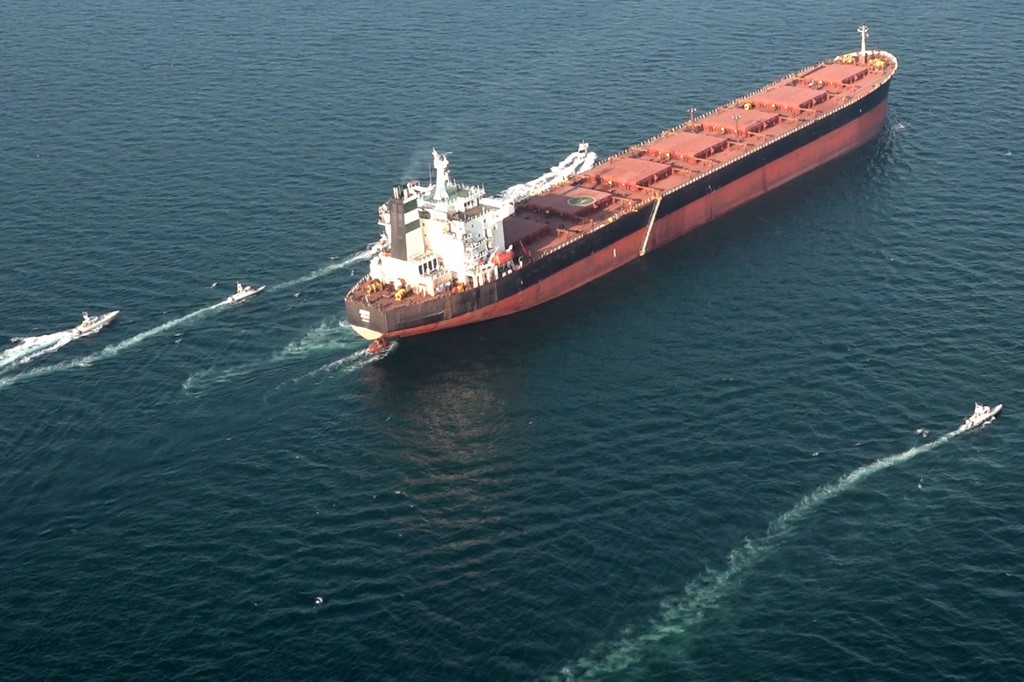
But the sinking of Iran’s conventional warships, while militarily significant, addresses only half the naval threat. It is not the Iranian Navy’s frigates that keep maritime security planners awake at night. It is the IRGC Navy’s fleet of fast attack craft — dozens of small, fast boats capable of swarming commercial vessels — and, more critically, Iran’s extensive mine warfare capability. Iran is estimated to possess thousands of naval mines, from sophisticated modern variants to crude but effective contact mines that can be laid from fishing boats. The Strait of Hormuz is shallow, narrow, and perfectly suited to mine warfare. Clearing those waters, even after the shooting stops, could take weeks or months. The naval strikes ensure American warships can operate. They do not ensure that a laden supertanker can transit safely.
The Dual Chokepoint Crisis
If the closure of Hormuz were the only disruption, the global shipping industry might adapt. It would be painful, but manageable. It is not the only disruption. With Houthi forces in Yemen resuming attacks on commercial shipping in the Red Sea — emboldened by the chaos and motivated by solidarity with Tehran — both of the world’s most critical maritime chokepoints are now compromised simultaneously.
The Strait of Hormuz and the Bab el-Mandeb strait at the southern entrance to the Red Sea together form the arterial system of global energy and trade. Close one, and shipping can reroute at enormous cost. Close both, and there is no viable route through the region at all. This is unprecedented in modern maritime history. Not during the Suez Crisis of 1956, not during the Tanker War of the 1980s, not during the Houthi campaign of 2024 have both chokepoints been denied to commercial shipping at the same time.
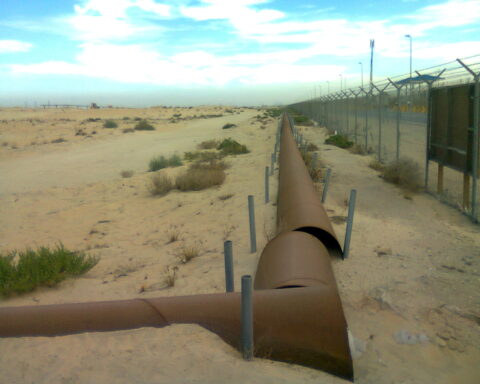
The alternative route — south around the Cape of Good Hope — adds ten to fourteen days to the voyage from the Persian Gulf to Europe, with corresponding increases in fuel consumption, crew costs, and insurance premiums. For container shipping, already operating on razor-thin margins, the economics are brutal. Maersk, the Danish shipping giant, had only just resumed Red Sea transits in January 2026, following the October 2025 Gaza ceasefire that briefly calmed Houthi aggression. Those transits are now suspended again. Aramco has begun activating the East-West Pipeline to reroute crude to Yanbu on the Red Sea, but the terminal’s limited loading capacity means this bypass cannot fully replace Gulf coast exports. Meanwhile, Europe confronts its deepest energy crisis since the Russian gas cutoff, with the Kingdom holding leverage that recalls the 1973 oil embargo.
The collapse in Suez Canal traffic has also devastated Egypt, which depends on canal tolls as one of its largest sources of foreign currency. Yet despite enormous Saudi pressure, Egypt’s Suez Canal revenue crisis has paradoxically reinforced Cairo’s determination to stay out of the war, calculating that military involvement would only deepen the economic damage.
Insurance premiums for Gulf shipping have surged to levels that effectively price many operators out of the market. Several major insurers have stopped writing war-risk cover for the region entirely. Without insurance, ships cannot sail — and without ships, cargo does not move. VLCC freight rates from the Middle East to China have hit an all-time record, as the Hormuz shipping crisis drives the maritime insurance market into total collapse and forces the few remaining tankers into convoy operations not seen since the 1980s. The global supply chain, still bearing the scars of COVID-era disruptions and the 2024 Red Sea crisis, now faces its most severe test since the pandemic.
The Oil Shock
When trading desks opened in Asia on Sunday evening, the numbers moved fast. Brent crude futures surged as much as 13 percent before paring gains — trading around $79 per barrel by Monday morning, up more than 8 percent from Friday’s close. West Texas Intermediate futures hit $72.52 per barrel. Gold futures jumped 2.3 percent on safe-haven demand, with investors scrambling to price in a conflict whose duration and escalation potential remain radically uncertain.
The magnitude of the spike, while alarming, is arguably modest given the scale of the disruption. Oil was trading at relatively subdued levels before the crisis, weighed down by sluggish global demand and a well-supplied market. The surge is driven entirely by supply fear — the market pricing in the possibility, now the reality, that a significant share of global crude simply cannot reach buyers. This is not a demand-driven rally. It is panic.
If the military operation persists for the “four weeks or less” that President Trump has indicated, energy analysts warn that $100-per-barrel oil is not merely plausible but likely. At that level, the inflationary consequences cascade through every sector of every economy on Earth. Transport costs spike. Petrochemical feedstocks — the building blocks of plastics, fertilizers, and pharmaceuticals — become scarce and expensive. Food prices rise as agricultural inputs grow costlier. Central banks that were cautiously easing monetary policy suddenly face the specter of stagflation.
The historical comparisons write themselves, but each one underscores the severity. The 1973 Arab oil embargo quadrupled prices and triggered a global recession. Iraq’s 1990 invasion of Kuwait sent oil above $40 (the equivalent of roughly $90 today). The 2019 drone and cruise missile attacks on Saudi Aramco facilities at Abqaiq and Khurais briefly knocked out 5.7 million barrels per day — roughly 5 percent of global supply — and sent prices surging 15 percent in a single session. A Hormuz closure threatens four times that volume.
Asia is the most exposed continent. China imports approximately 40 percent of its crude oil through the Strait of Hormuz — a vulnerability that has driven Beijing to pressure Iran to keep the strait open rather than defend Tehran against the strikes. India, Japan, and South Korea are similarly dependent on Gulf supply. For these economies — already navigating the headwinds of slowing growth, demographic pressure, and trade friction with the West — a sustained energy shock could tip the balance from slowdown into recession. Beijing, which has spent years building strategic petroleum reserves and diversifying supply sources, is better positioned than it was a decade ago. But no amount of strategic reserves can substitute indefinitely for the daily flow of Gulf crude.

Markets in Freefall
Asian equity markets opened on Monday, March 2, with the kind of broad, indiscriminate selling that signals genuine fear rather than orderly repricing. The Nikkei 225 dropped roughly 2 percent to approximately 37,500, with export-heavy industrials and airlines leading the decline. Futures on the S&P 500 and Nasdaq 100 slid more than 1 percent in pre-market trading, signaling a ugly open when New York begins trading.
The dollar surged on safe-haven demand, strengthening against virtually every major currency — a move that compounds the pain for emerging markets with dollar-denominated debt. Treasury yields fell as investors fled to the perceived safety of US government bonds. The VIX, Wall Street’s fear gauge, spiked.
When US markets open Monday morning, the sectoral picture will be starkly bifurcated. Defense contractors — Lockheed Martin, Raytheon, Northrop Grumman, General Dynamics — will almost certainly gap higher, riding the grim logic that sustained military operations mean sustained orders. On the other side of the ledger, airlines and shipping companies face a reckoning. Every carrier with Gulf exposure is staring at grounded fleets, cancelled routes, and surging fuel costs. Cruise lines, already trading at depressed valuations, face another body blow.
But the economic damage extends far beyond the oil price and the equity indices. The global economy’s dependence on Gulf hydrocarbons is not limited to crude oil and gasoline. Petrochemical feedstocks — ethylene, propylene, benzene — are the molecular foundation of modern industry. Plastics, synthetic textiles, pharmaceutical precursors, agricultural chemicals: all originate in refineries and petrochemical complexes that depend on a steady flow of Gulf crude and natural gas liquids. Disrupt that flow, and the consequences ripple through supply chains that most consumers never think about until the shelves start to empty.
The LNG disruption is particularly acute for Japan and South Korea, both of which depend heavily on Gulf liquefied natural gas for electricity generation and industrial use. Neither nation has substantial domestic energy reserves. Japan maintains approximately 90 days of strategic petroleum reserves; South Korea holds a similar buffer. These reserves exist for precisely this scenario — but they are designed for short-term disruptions, not a sustained blockade measured in weeks or months. Every day the strait remains closed, the clock ticks louder.
Dubai — A City Under Siege
Dubai International Airport — DXB, the busiest international airport on Earth by passenger traffic — has been effectively shut since the first strikes landed on February 28. More than 3,400 flights were cancelled across Middle Eastern airports on March 1 alone. Emirates and flydubai, the UAE’s two major carriers, extended operational suspensions until 3:00 PM UAE time on Monday, March 2, with further extensions likely. Hundreds of thousands of passengers are stranded — in terminals, in hotels, in a city that has suddenly become very difficult to leave.
The physical damage to Dubai, while limited relative to the bombardment Iran absorbed, has been psychologically devastating. Iranian drones penetrated UAE air defenses and struck civilian targets. An explosion at the Fairmont Hotel on Palm Jumeirah — one of Dubai’s most iconic luxury properties — left the building in flames, images of which have circulated worldwide on social media and news broadcasts. Four people were injured on Palm Jumeirah from missile or interceptor debris. Three foreign nationals — Pakistani, Nepali, and Bangladeshi workers who form the backbone of Dubai’s service economy — were killed by Iranian drone strikes. Fifty-eight others were injured.
The UAE government stated that Iran fired 165 ballistic missiles, 2 cruise missiles, and 541 drones at Emirati territory. The vast majority were intercepted and destroyed — a testament to the UAE’s substantial investment in air defense systems. But 21 drones reached civilian targets. In the calculus of missile defense, a 96 percent intercept rate is exceptional. In the calculus of public perception, 21 drones hitting a city that sells itself on safety, luxury, and stability is catastrophic.
Dubai’s economic model is built on a brand promise: this is the safest, most connected, most cosmopolitan city in the Middle East. Come here to do business. Come here on holiday. Park your wealth here. That promise is reinforced by every gleaming tower, every direct flight route, every frictionless visa process. And it is undermined by every hour the airport stays closed, every image of the Fairmont in flames, every report of workers killed by drones. The physical reconstruction will take weeks. The reputational repair will take years. Tourism and business travel — the twin engines of Dubai’s post-oil economy — face a recovery timeline measured in quarters, not days, even after the last missile falls.
The Saudi Calculus — Oil as Weapon and Shield
For Crown Prince Mohammed bin Salman, the economic dimensions of this crisis are as consequential as the military ones — and far more ambiguous. Saudi Arabia occupies a position that is simultaneously enviable and excruciating: the world’s swing producer, sitting atop roughly two million barrels per day of spare production capacity, watching the global energy system convulse while its own infrastructure sits within range of the same Iranian missiles that struck Dubai.
The Kingdom is both victim and potential beneficiary of the chaos. Iranian-backed Houthis launched attacks against Saudi territory in the opening hours of the crisis — a reminder that Saudi oil infrastructure, for all the investment in Patriot batteries and upgraded air defenses since the 2019 Aramco attacks, remains vulnerable. The Saudi military is on its highest alert posture, with air defense systems active across the Eastern Province, where the bulk of the Kingdom’s oil production and export infrastructure is concentrated.
MBS privately supported the strikes, according to reporting by the Washington Post — a diplomatic posture consistent with the dual-track approach that has defined his handling of the Iran file. Publicly, Riyadh has called for restraint while quietly facilitating the American military operation. Now the economic consequences of that facilitation are arriving, and they demand decisions that will shape the Kingdom’s trajectory for years.
Prince Abdulaziz bin Salman, the energy minister and half-brother to MBS, faces the most consequential portfolio decisions of his career. The OPEC+ decision to boost output by 206,000 barrels per day in April even as Iranian drones struck Saudi refineries represents one such calculation — a paradoxical move with profound strategic implications. Saudi Arabia’s spare capacity — the only meaningful production buffer on the planet — gives the Kingdom extraordinary leverage. But leverage is only useful if you know how to deploy it, and every option carries profound trade-offs.
If Saudi Arabia opens the taps and floods the market with additional barrels, it stabilizes global energy prices and earns the gratitude of consuming nations from Washington to Beijing. But it also keeps prices below the Kingdom’s fiscal breakeven — estimated at $85 to $95 per barrel depending on which government spending commitments are included — at precisely the moment when the Vision 2030 transformation program is consuming hundreds of billions in investment capital. Every dollar of forgone oil revenue is a dollar not spent on NEOM, on The Line, on the entertainment and tourism megaprojects that are supposed to build the post-oil economy.
If Saudi Arabia holds production steady and lets the market find its own level, oil could breach $100 per barrel — a boon for government revenue but a disaster for the global economy. Sustained triple-digit oil prices raise inflation, slow growth, and breed resentment among the very nations whose investment and partnership the Kingdom needs for its transformation. It also provides ammunition for the perennial critics who accuse OPEC+ of manipulating markets at the expense of consumers. More practically, it risks accelerating the energy transition that Saudi Arabia is trying to navigate on its own terms — nothing drives investment in renewables and electric vehicles faster than $100 oil.
King Salman and the Crown Prince must weigh these calculations against an immediate security reality: Saudi infrastructure is a target, Saudi airspace is contested, and the conflict is not over. The Kingdom’s ability to increase production is theoretical until the military situation stabilizes. Even spare capacity means little if the export terminals at Ras Tanura and Yanbu are under threat.
What Comes Next — The Four-Week Clock
President Trump told reporters that Operation Epic Fury would last “four weeks or less.” Whether that timeline reflects genuine military planning or political messaging is unclear. What is clear is that every day the Strait of Hormuz remains closed, the economic damage compounds in ways that are difficult to reverse.
Energy analysts are modeling three broad scenarios with increasing severity. In the optimistic case — Hormuz reopens within a week, Iran’s mine-laying capability is neutralized, and commercial traffic resumes with military escorts — oil likely settles in the $80 to $85 range. Markets recover. The damage is real but contained, a shock absorbed by strategic reserves and spare capacity. Supply chains adapt and reroute.
In the intermediate case — closure persists for two to four weeks, sporadic Iranian attacks on commercial shipping continue, mine-clearing operations are slow and dangerous — oil breaches $100 per barrel and stays there. At that level, recession risk rises sharply for import-dependent economies across Asia and Europe. Central banks face impossible choices between fighting inflation and supporting growth. Consumer confidence, already fragile, collapses in energy-importing nations. The political consequences — in Japan, South Korea, India, across the EU — are severe.
In the worst case — sustained conflict, Iranian retaliation that damages Gulf oil infrastructure, a regional escalation that draws in additional actors — the models break down. The historical parallel is not 1990 or 2019 but 1973: a structural rupture in the global energy system that reshapes economies, alliances, and the geopolitical order. Given the degree of global economic integration that has occurred since the 1970s — the just-in-time supply chains, the financialization of commodity markets, the interconnected web of trade and capital flows — the consequences would be more severe, not less, than they were half a century ago.
Strategic petroleum reserves provide a buffer, but they are finite and designed for emergencies measured in weeks, not months. The US Strategic Petroleum Reserve, drawn down significantly during the Biden administration’s releases in 2022, holds roughly 350 million barrels — meaningful, but not inexhaustible. Japan and South Korea maintain approximately 90 days of reserves each. China is less transparent about its holdings but is estimated to have accumulated 80 to 100 days of import cover. These stockpiles buy time. They do not buy a solution.
The clock is ticking for every economy that depends on Gulf energy — which is to say, virtually every economy on Earth. Each day of closure depletes reserves, elevates prices, disrupts supply chains, and erodes the confidence that underpins global trade and investment. The compounding nature of the damage means that a resolution in week one produces a fundamentally different outcome than a resolution in week four.
The Economic Shockwave
There is a persistent tendency, in the early hours of military conflict, to assess the damage in purely kinetic terms. How many targets were struck. How many aircraft were deployed. How many missiles were intercepted. The Pentagon briefings provide numbers, and the numbers are impressive in the way that American military power is always impressive — overwhelming, precise, technologically unassailable.
But wars are not won or lost on target lists alone. They are won and lost in the economic wreckage that follows the ordnance. The 1990 Gulf War liberated Kuwait in 100 hours and left Saddam Hussein’s military in ruins, but the economic aftershocks — oil price volatility, regional instability, the long bleed of sanctions and containment — lasted a decade. The 2003 Iraq invasion was militarily decisive and economically catastrophic, its costs measured in trillions rather than billions, its consequences still unfolding twenty years later.
Operation Epic Fury may accomplish its stated military objectives. Iran’s nuclear program may be set back years or decades. The theocratic regime in Tehran may be weakened, perhaps fatally. The strikes may, in the cold logic of strategic deterrence, prove to have been necessary. None of that changes the economic reality now confronting the global system.
One hundred and fifty tankers sit at anchor in the Gulf of Oman. The world’s busiest international airport is closed. Three workers are dead on the streets of Dubai. Oil is climbing toward levels that threaten recession across half the planet. Two of the world’s three most critical maritime chokepoints are denied to commercial shipping. And a four-week clock is counting down, with no certainty about what happens when it reaches zero.
The energy crisis is only one dimension of the war’s economic impact on Saudi Arabia. The conflict has placed the entire Vision 2030 programme — from NEOM to the 2034 World Cup to the Kingdom’s $155 billion entertainment sector investment — under what our analysis calls the most severe stress test in the programme’s decade-long history, threatening $840 billion in committed investment across 11 of 14 major economic pillars.
The bombs have stopped falling on Tehran — for now. The economic shockwaves are just beginning. Whatever happens in the skies over Iran and the waters of the Persian Gulf in the coming weeks, the global energy landscape that existed on February 27, 2026, is gone. What replaces it will be determined not by the precision of American munitions but by the depth of the economic crater they have created — and by whether the leaders in Riyadh, Washington, Beijing, and every other capital that depends on Gulf energy can navigate the aftermath without tipping the world into a crisis that outlasts the war itself.
The price shock has been compounded by the shutdown of Aramco’s Ras Tanura refinery, which processes 550,000 barrels per day. Aramco’s emergency plan to reroute oil through the East-West Pipeline to Yanbu has become the single most important variable in determining whether prices stabilise near $85 or surge toward triple digits.