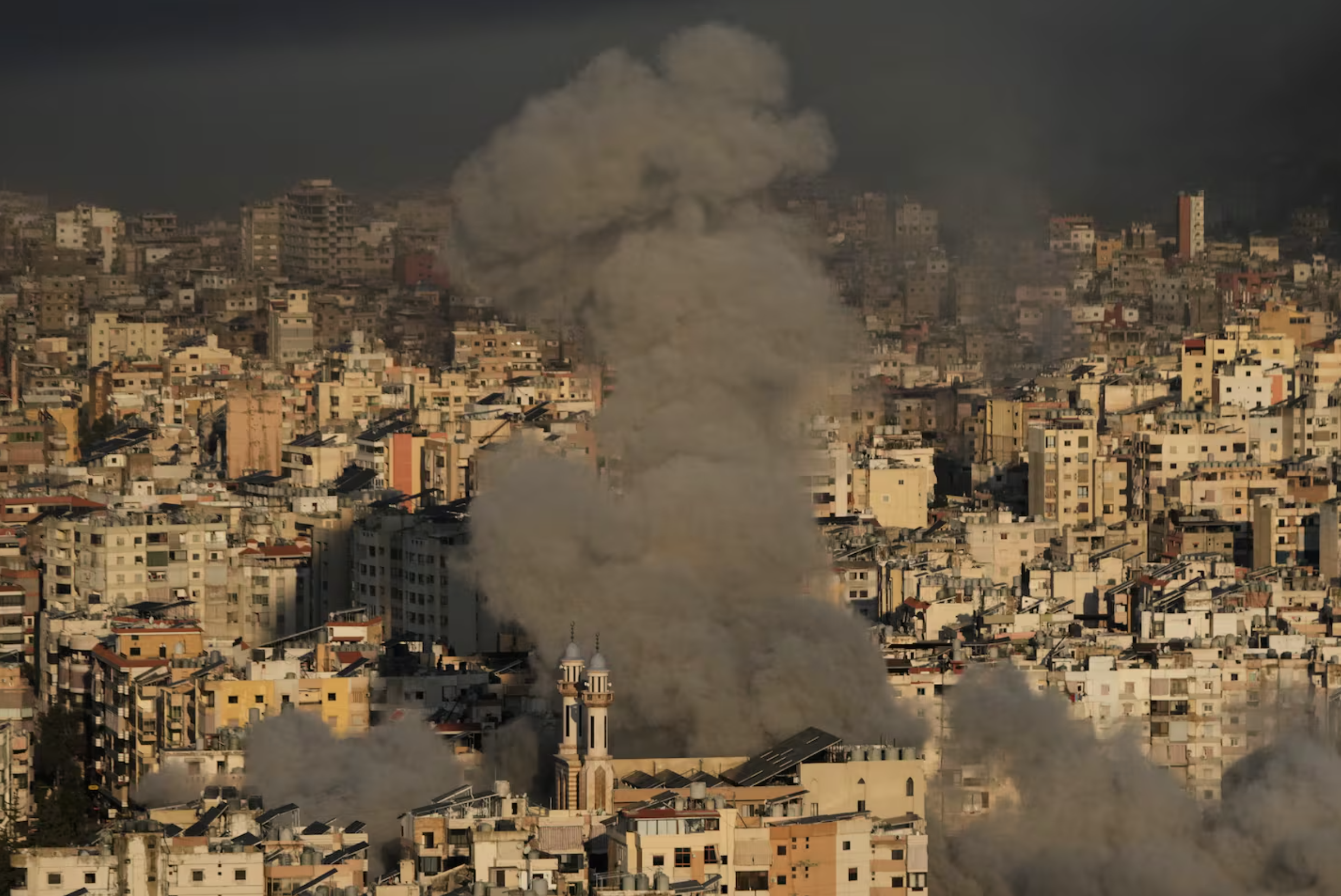

Two Iranian drones struck the United States Embassy in Riyadh on Tuesday morning, setting a small fire and causing what the Saudi Ministry of Defence described as “limited material damage.” No casualties were reported. But the symbolic weight of the strike — Iranian munitions hitting American sovereign territory inside the Saudi capital — marks a turning point in a conflict that has now reached the doorstep of every major power in the Gulf.
The attack came on the fifth day of hostilities following the US-Israeli strikes that killed Ayatollah Khamenei on February 28. President Trump, speaking to NewsNation hours after the embassy was hit, promised that the American response would come “soon.” The US Embassy in Saudi Arabia issued shelter-in-place warnings for American citizens in Riyadh, Jeddah, and Dhahran.
For Saudi Arabia, the embassy strike underscores an uncomfortable truth: the Kingdom’s capital is now a target in a war that Crown Prince Mohammed bin Salman helped set in motion, and its air defence systems failed to prevent Iranian drones from reaching one of the most sensitive diplomatic compounds in the country.
What Happened at the US Embassy in Riyadh?
According to the Saudi Ministry of Defence and US Central Command statements issued Tuesday, two Shahed-series drones penetrated Saudi airspace in the early hours of March 3 and struck the US Embassy compound in Riyadh’s Diplomatic Quarter. The drones caused a fire on the embassy grounds that was quickly contained. No American or Saudi personnel were injured.
The US State Department confirmed the attack and said the embassy remained operational but with reduced staff. Non-essential personnel were ordered to evacuate. Security perimeters around the Diplomatic Quarter were extended, with Saudi National Guard units deploying additional checkpoints along King Fahd Road and the approaches to the compound.
The attack followed a pattern Iran established over the preceding 72 hours: retaliatory strikes against US-allied targets across the Gulf in response to Operation Epic Fury, the joint US-Israeli campaign that killed Khamenei and destroyed key elements of Iran’s nuclear and military infrastructure. Earlier Iranian strikes had targeted Prince Sultan Air Base, King Khalid International Airport in Riyadh, and — most consequentially — Saudi Aramco’s Ras Tanura refinery, which was forced to shut down its 550,000-barrel-per-day operations.
The Middle East briefing 3,000+ readers start their day with.
One email. Every weekday morning. Free.
Why the Embassy Strike Changes the Calculus
Attacking a US Embassy is not the same as striking a military base or an oil refinery. Under international law, diplomatic premises are inviolable. An attack on a foreign embassy constitutes an attack on the sending state’s sovereignty. The 1979 seizure of the US Embassy in Tehran defined Iranian-American relations for a generation. The 2012 Benghazi attack ended political careers and reshaped American foreign policy debate for years.
The Riyadh embassy strike carries similar escalatory potential. Trump has faced domestic pressure over the six US service members killed since the start of operations — including six killed in a single Iranian missile strike on a makeshift operations centre in Kuwait. An attack on the embassy gives the administration both the justification and the political cover to escalate further.
For Riyadh, the calculus is more complex. The embassy sits in the Diplomatic Quarter, a heavily secured enclave that houses dozens of foreign missions. Iranian drones reaching this zone means they can reach anywhere in the capital. If Shahed-136 drones can penetrate Saudi airspace and hit the most protected square kilometre in Riyadh, they can hit the Royal Court, the Ministry of Defence, or King Salman‘s own residences.
Saudi Arabia’s Patriot PAC-3 and THAAD systems were designed to intercept ballistic missiles on predictable trajectories. Low-flying, slow-moving drones present a categorically different challenge — one that the cost asymmetry of drone warfare makes almost impossible to solve at scale. A Shahed-136 costs Iran roughly $20,000 to produce. A Patriot interceptor costs $4 million. The mathematics do not favour the defender.
Timeline of Iranian Strikes on Saudi Territory
| Date | Target | Weapon | Outcome |
|---|---|---|---|
| Feb 28, 2026 | Prince Sultan Air Base | Ballistic missiles | Intercepted; no reported damage |
| Feb 28, 2026 | King Khalid International Airport, Riyadh | Ballistic missiles | Intercepted; flight operations briefly suspended |
| Mar 1, 2026 | Eastern Province (multiple targets) | Drones, missiles | Saudi Arabia reports all intercepted |
| Mar 2, 2026 | Aramco Ras Tanura refinery | Shahed-136 drones | Debris hit facility; 550K bbl/day refinery shut |
| Mar 3, 2026 | US Embassy, Riyadh | Shahed-series drones | Limited fire, minor damage, no injuries |
Saudi Arabia’s Air Defence Gap
The Saudi military claimed to have intercepted every Iranian missile and drone aimed at the Kingdom. The embassy strike makes that claim difficult to sustain. If the drones were intercepted, their debris should not have caused a fire inside the embassy compound. If they were not intercepted, the claim of total defence is false.
This is the same dilemma Saudi Arabia faced after the September 2019 Abqaiq-Khurais attack, when 18 drones and seven cruise missiles evaded the Kingdom’s air defence network and temporarily knocked out 5.7 million barrels per day of oil production. That attack — widely attributed to Iran despite Houthi claims of responsibility — exposed the fundamental vulnerability of Saudi critical infrastructure to low-cost aerial threats.
Seven years and tens of billions of dollars in defence procurement later, the vulnerability persists. A detailed analysis of Saudi Arabia’s entire $80 billion air defense shield and its performance against Iranian attacks confirms that the Kingdom’s layered defenses remain structurally ill-suited to the drone threat. Saudi Arabia has invested in counter-drone systems, including radar upgrades and short-range air defence platforms. But the geographic reality is punishing: Iran’s western coastline sits fewer than 300 kilometres across the Persian Gulf from Saudi Arabia’s Eastern Province, giving attack drones minimal flight time and minimal detection windows.
The embassy attack adds a new dimension. Riyadh sits roughly 800 kilometres from Iran’s western border — well beyond the range of a standard Shahed-136 (which has a maximum range of approximately 2,500 kilometres). Drones that reach Riyadh must either fly a long southern route around the Empty Quarter or transit directly through airspace that Saudi Arabia claims to monitor continuously. Either way, the failure to prevent them reaching the Diplomatic Quarter raises pointed questions about the effectiveness of the Kingdom’s integrated air defence architecture. Subsequent Iranian strikes confirmed the Diplomatic Quarter’s vulnerability: on March 12, Tehran launched its largest aerial assault on the capital to date, forcing Saudi forces to intercept 31 drones and three ballistic missiles over Riyadh’s diplomatic enclave in a single engagement.
The Joint Condemnation and What It Signals
Hours after the embassy strike, a joint statement from the United States, Saudi Arabia, Bahrain, Jordan, Kuwait, Qatar, and the UAE condemned what they called Iran’s “indiscriminate and reckless missile and drone attacks against sovereign territories across the region.” The statement declared that the signatories would “take all necessary measures” to defend themselves and their allies.
The breadth of the coalition is notable. Qatar, which maintains open diplomatic channels with Tehran and shares the North Dome/South Pars gas field with Iran, signed the statement alongside Saudi Arabia and the UAE. So did Kuwait, which has historically sought to balance its relationships between Riyadh and Tehran. The fact that every GCC state plus Jordan aligned publicly against Iran reflects the severity of the Iranian retaliation campaign — strikes on multiple countries have a way of concentrating diplomatic minds. But the joint statement leaves the hardest question unanswered: whether the GCC’s collective response will extend to invoking Article 51 and mobilizing for war, a decision that would mark the most significant Gulf military commitment since the liberation of Kuwait in 1991.
But joint statements are not military alliances. The statement did not commit any signatory to offensive operations against Iran. It did not invoke mutual defence provisions. It expressed solidarity without specifying action. For Crown Prince Mohammed bin Salman, the statement provides political cover — proof that the Kingdom is not isolated — without binding him to an escalation he may not be able to control.
What Trump’s “Soon” Means for Saudi Arabia
Trump’s promise of retaliation “soon” after the embassy attack creates immediate implications for Saudi Arabia whether the Kingdom wants them or not. Any American military response launched from Saudi bases — including Prince Sultan Air Base, which already hosts US fighter squadrons and Patriot batteries — makes Saudi territory a launch pad for strikes against Iran. That, in turn, makes Saudi territory a legitimate military target under the laws of armed conflict.
This is the trap that MBS faces. The Kingdom’s security depends on the American military presence. Without US-supplied Patriot and THAAD systems, Saudi Arabia’s air defences would be substantially weaker. Without American intelligence, surveillance, and reconnaissance assets, the Kingdom’s ability to detect incoming threats would be degraded. But the same American presence that protects Saudi Arabia also makes it a target.
The embassy attack crystallises this dynamic. Iran struck not a Saudi military installation but an American one on Saudi soil. The message to Riyadh is unmistakable: hosting American forces carries a cost, and that cost is denominated in Iranian munitions aimed at Saudi cities.
MBS reportedly told Gulf leaders in private calls over the weekend to “avoid any steps that could further inflame tensions” — a striking instruction from the leader who, according to the Washington Post, privately lobbied Trump to strike Iran in the weeks before Operation Epic Fury. The crown prince wanted someone else to fight the war. The retaliation, however, does not distinguish between the combatant and the host.
Riyadh Under Threat: The Domestic Impact
For ordinary Saudi citizens, the embassy attack brings the war home in a way that distant refinery strikes do not. The Diplomatic Quarter is in central Riyadh, surrounded by residential neighbourhoods, shopping centres, and the King Faisal Conference Centre. Drone debris falling in this area — even from intercepted drones — carries the potential for civilian casualties.
The US Embassy’s shelter-in-place warnings extended to Americans in Jeddah and Dhahran, signalling that Washington considers the threat to extend beyond Riyadh. Saudi authorities have not issued comparable public warnings, maintaining a posture of confidence in the Kingdom’s defences. But the gap between official reassurance and the physical reality of embassy fires is not lost on Riyadh’s population of eight million, many of whom have access to real-time social media footage that the government cannot easily control.
The Kingdom’s entertainment and tourism sectors — centrepieces of Vision 2030 — face immediate consequences. Riyadh Season events, international conferences, and the steady stream of business travellers that MBS has cultivated as evidence of the Kingdom’s modernisation all depend on the perception that Riyadh is safe. An embassy burning in the Diplomatic Quarter challenges that perception in ways that no amount of official messaging can fully counteract.
Six US Service Members Dead: The American Domestic Pressure
The embassy strike does not exist in isolation. Six US service members have died since the start of operations against Iran — all killed by Iranian retaliatory strikes on American military positions in the Gulf. The deadliest single incident occurred when an Iranian missile hit a makeshift operations centre in Kuwait, killing six soldiers.
These casualties create domestic political pressure on the Trump administration that intersects directly with Saudi interests. Congressional calls for a War Powers Act resolution are growing. Democratic lawmakers have questioned whether the strikes on Iran were properly authorised. The deaths of American service members — combined now with an attack on the embassy — give both hawks and doves ammunition.
For Saudi Arabia, the critical question is whether American casualties harden or soften Washington’s commitment to the campaign. The historical precedent is mixed. The 1983 Beirut barracks bombing killed 241 US Marines and led to American withdrawal from Lebanon. The 2003 invasion of Iraq, by contrast, persisted despite thousands of American casualties. The trajectory depends on whether Trump frames the embassy attack as a reason to escalate (punish Iran for daring to strike American territory) or a reason to seek an off-ramp (protect American personnel from further harm).
Trump’s initial response — promising retaliation “soon” — suggests escalation. But “soon” is not “now,” and the gap between the two words may contain the space for diplomacy that Iran’s foreign minister has tentatively offered, telling international media that Tehran remains “open to serious efforts to halt escalation.”
What Happens Next
Three factors will determine whether the embassy strike becomes a footnote or a turning point.
The American response. If Trump retaliates with strikes on Iranian territory, the conflict escalates further and Saudi Arabia’s exposure deepens. If Washington uses the attack to push for a ceasefire framework, the Kingdom gets breathing room.
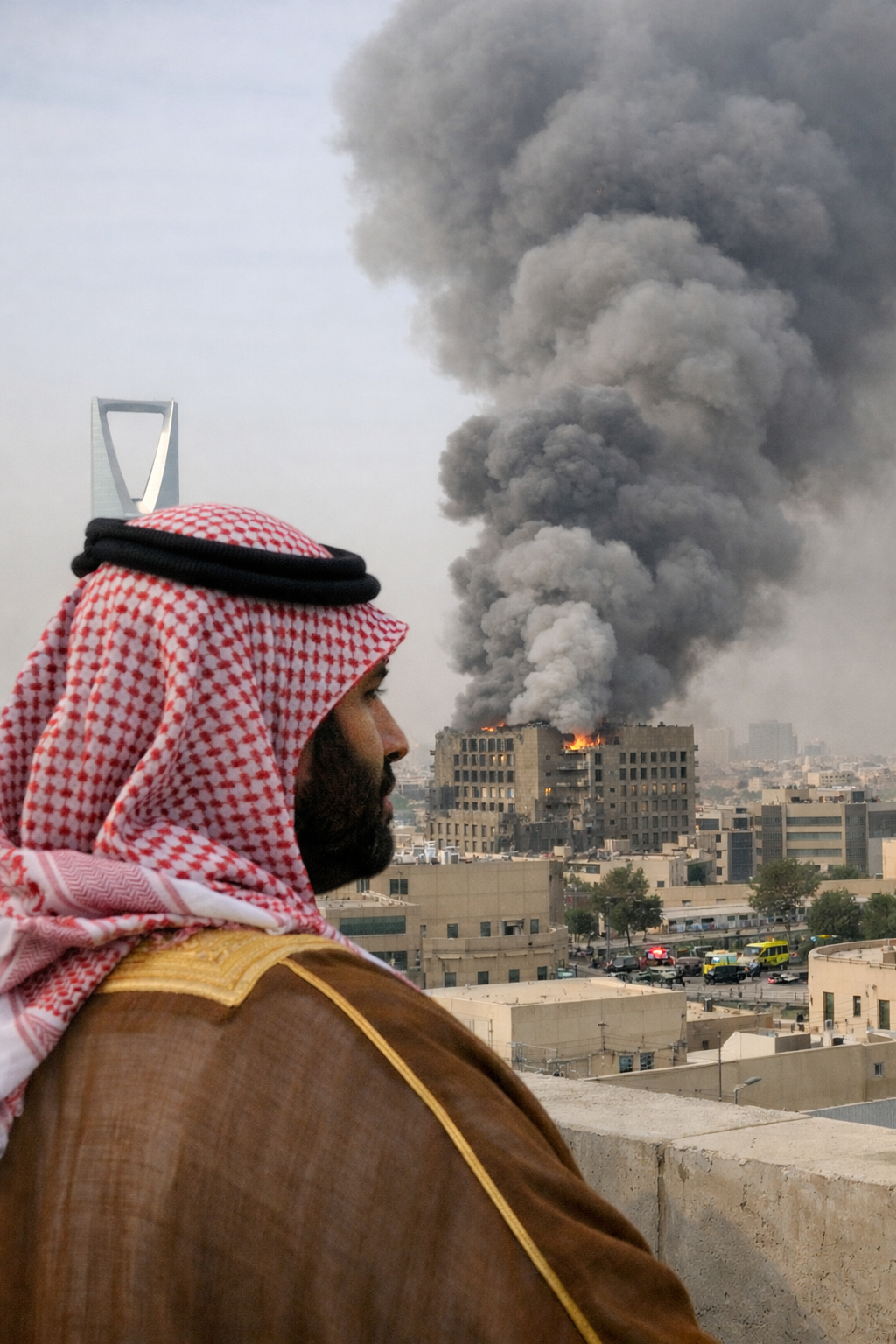
Iran’s target selection. The embassy strike was symbolically powerful but operationally limited — no casualties, minor damage. If Iran shifts to higher-value targets in Riyadh (government buildings, military headquarters, or civilian infrastructure), the conflict enters a qualitatively different phase. The activation of Iran’s proxy network across the region could compound the direct threat with indirect ones from Houthi forces in Yemen, Shia militias in Iraq, and Hezbollah remnants in Lebanon.
Saudi Arabia’s own posture. MBS has so far positioned the Kingdom as a victim of unprovoked Iranian aggression — a framing that requires considerable cognitive flexibility given the Washington Post’s reporting on his pre-strike lobbying. If Saudi Arabia retaliates independently against Iranian targets, the fiction of victimhood collapses and the Kingdom becomes a full combatant. If it does not retaliate, MBS risks appearing weak at the moment his credibility as a war-time leader is being tested.
The fire at the US Embassy in Riyadh was small. The damage was minor. Nobody died. But two Iranian drones reached the most heavily defended diplomatic compound in the Saudi capital, and neither Saudi nor American air defences stopped them. For a Kingdom that has staked its future on the promise of security and stability, that failure speaks louder than any official statement of condemnation.
FAQ
Was anyone killed in the US Embassy attack in Riyadh?
No. The Saudi Ministry of Defence and US Central Command confirmed that the two drones caused “limited fire and minor material damage” but no casualties among American or Saudi personnel at the embassy compound.
How did Iranian drones reach Riyadh?
Riyadh is approximately 800 kilometres from Iran’s western border. Shahed-series drones have a maximum range of roughly 2,500 kilometres, well within reach. The drones likely flew a low-altitude trajectory that exploited gaps in Saudi Arabia’s radar coverage, which is optimised for ballistic missile detection at higher altitudes. Saudi authorities closed their airspace but the drones penetrated defences regardless.
Did Saudi air defences intercept the drones?
Saudi Arabia claimed to have intercepted all Iranian attacks on its territory. The fact that debris — or the drones themselves — caused a fire inside the US Embassy compound contradicts the claim of total interception. The drones either evaded defences entirely or were intercepted at such close range that debris struck the compound, which amounts to a defensive failure either way.
What has Trump said about the embassy attack?
President Trump told NewsNation that the American response would come “soon” and that Iran would face consequences for striking US territory. The White House also confirmed adherence to the War Powers Act. No specific retaliatory action has been announced as of March 3.
Is it safe to travel to Saudi Arabia right now?
The US Embassy issued shelter-in-place warnings for American citizens in Riyadh, Jeddah, and Dhahran and advised against non-essential travel near military installations. Multiple countries have issued travel advisories for the Gulf region. Commercial flights to and from Riyadh have been intermittently disrupted since the start of the conflict.