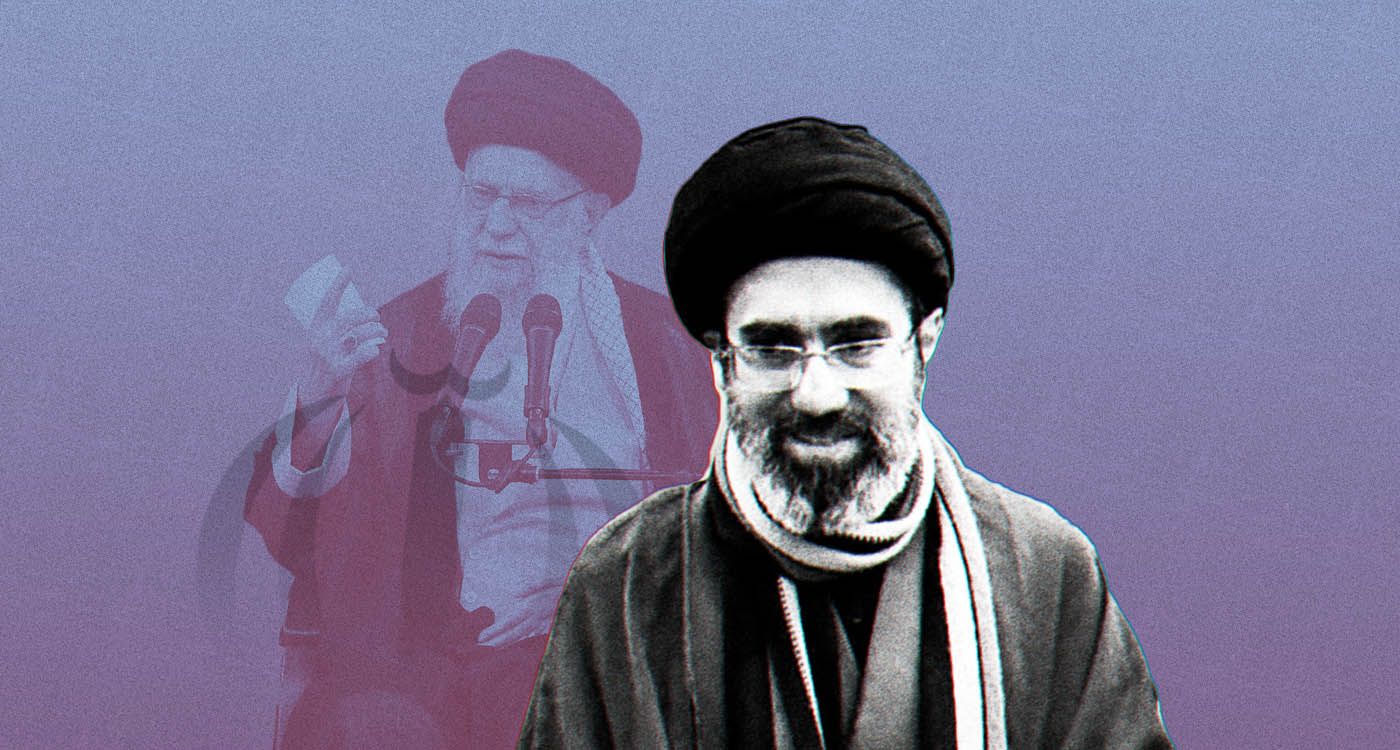

RIYADH — Mojtaba Khamenei, the 56-year-old cleric who spent decades as the most powerful man in Iran that most Iranians never saw, is now the country’s Supreme Leader — and the single most consequential figure in determining whether the war engulfing the Persian Gulf escalates or ends. Named by the Assembly of Experts on March 8, 2026, just eight days after American and Israeli strikes killed his father, Ayatollah Ali Khamenei, Mojtaba inherits wartime command of a bruised but defiant Islamic Republic, an arsenal of thousands of ballistic missiles and drones, and a personal alliance with the Islamic Revolutionary Guard Corps so deep that analysts across the region describe him not as the IRGC’s superior but as its political instrument. For Saudi Arabia, whose cities have already absorbed more than 1,200 Iranian missiles and drones since February 28, understanding who Mojtaba Khamenei is — what he believes, who he controls, and who controls him — is no longer an academic exercise. It is a matter of national survival.
This analysis examines the life, ideology, power base, and financial empire of Iran’s new Supreme Leader, the contested process that elevated him, the arsenal he now commands, and the specific implications for Saudi Arabia and the Gulf Cooperation Council as the war enters its second week under new and potentially more dangerous Iranian leadership.
Table of Contents
- Who Is Mojtaba Khamenei?
- From Mashhad to the Shadows
- How Did the Assembly of Experts Choose Iran’s New Supreme Leader?
- The IRGC’s Man in the Supreme Leader’s Chair
- What Role Did Mojtaba Play in the 2009 Crackdown?
- The Khamenei Financial Empire
- How Does Mojtaba Differ From His Father?
- The Nuclear Question Under Mojtaba
- What Does Mojtaba Khamenei Mean for Saudi Arabia?
- The Power Consolidation Matrix
- Can Saudi Arabia Negotiate With Mojtaba Khamenei?
- The War Under a New Commander
- Frequently Asked Questions
Who Is Mojtaba Khamenei?
Mojtaba Hosseini Khamenei is the second son of the late Supreme Leader Ayatollah Ali Khamenei, a mid-ranking Shia cleric with no elected office, no public portfolio, and no formal government title — who nevertheless controlled access to the most powerful man in the Islamic Republic for more than two decades and built the deepest network of loyalists inside Iran’s security apparatus. Born on September 8, 1969, in the northeastern city of Mashhad, Mojtaba grew up inside the revolutionary elite and forged battlefield relationships during the final stages of the Iran-Iraq War that later became the foundation of an extraordinary concentration of informal power.
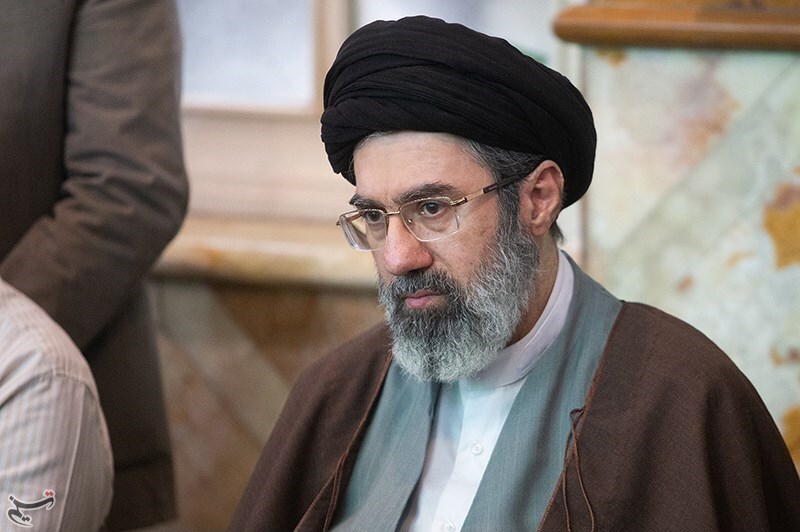
His ascent matters far beyond Iran’s borders. As Supreme Leader, Mojtaba commands the Islamic Revolutionary Guard Corps, the Basij paramilitary militia, and the constellation of proxy forces — from Hezbollah in Lebanon to the Houthis in Yemen — that have launched a sustained campaign of missile and drone strikes against Saudi Arabia since the war began. Unlike his father, who balanced competing factions with a mixture of theological authority and political cunning, Mojtaba is a creature of the security state. His elevation signals a tilt toward military hardliners at precisely the moment when diplomatic off-ramps are narrowing.
The selection of Ali Khamenei’s own son also shatters a precedent. Iran’s revolutionary constitution was designed to prevent dynastic succession. The first Supreme Leader, Ruhollah Khomeini, was succeeded not by a family member but by a cleric chosen on institutional merit. That the IRGC pressured the Assembly of Experts into a rushed wartime vote for Mojtaba suggests the Guards prioritized controllability over legitimacy — a calculation that may shape the Islamic Republic for decades.
From Mashhad to the Shadows
Mojtaba Khamenei’s biography reads like a handbook for accumulating power without attracting scrutiny. Born the year that the Iranian Revolution was still gestating — his father was a mid-level revolutionary activist in 1969, not yet the political figure he would become — Mojtaba was raised in an environment where loyalty to the Islamic Republic and proximity to military power were indistinguishable from personal identity.
The Middle East briefing 3,000+ readers start their day with.
One email. Every weekday morning. Free.
He studied at the religious seminary in Qom, Iran’s most influential centre of Shia scholarship, where he acquired the clerical credentials that remain a prerequisite for political authority in the Islamic Republic. His rank of Hojjat al-Islam — one tier below Ayatollah — is considered modest by the standards of Iran’s senior clerical hierarchy. Several members of the Assembly of Experts outrank him theologically, a fact that fuelled opposition to his candidacy. The theological implications of this credential gap extend far beyond Iran — the religious dimension of the Iran-Saudi war has exposed the velayat-e faqih system as a military-political institution stripped of its theological foundations.
The formative experience was military, not academic. In the late stages of the Iran-Iraq War, Mojtaba served in the Habib ibn Mazaher Battalion of the IRGC’s 27th Mohammad Rasulullah Division. The unit was a crucible of ideological warfare, attracting young men driven by revolutionary fervour rather than conscription. Veterans of the formation went on to dominate Iran’s security establishment. Among those who served in the broader division and its affiliated units were Qasem Soleimani, the architect of Iran’s regional proxy network who was killed by a US drone strike in 2020, and Hossein Hamedani, a senior IRGC commander killed in Syria in 2015, as well as Hossein Taeb, who led the IRGC’s intelligence organisation for more than a decade.
After the war, Mojtaba moved into his father’s inner circle — first as an informal adviser, then as a political gatekeeper who controlled access to the Supreme Leader’s office. By the early 2000s, analysts at the Brookings Institution, the Carnegie Endowment, and the International Crisis Group were noting that access to Ayatollah Khamenei increasingly ran through his second son. Officials, commanders, and clerics who needed the Supreme Leader’s ear learned to approach Mojtaba first.
How Did the Assembly of Experts Choose Iran’s New Supreme Leader?
The 88-member Assembly of Experts selected Mojtaba Khamenei in a compressed and controversial process that began just three days after his father’s assassination on February 28, 2026. The Assembly convened its first electoral session online on March 3, after the IRGC argued that the wartime emergency required immediate succession. An in-person session was impossible — US and Israeli airstrikes had destroyed critical infrastructure across Iran, and many Assembly members could not safely travel to the traditional meeting venues in Tehran and Qom.
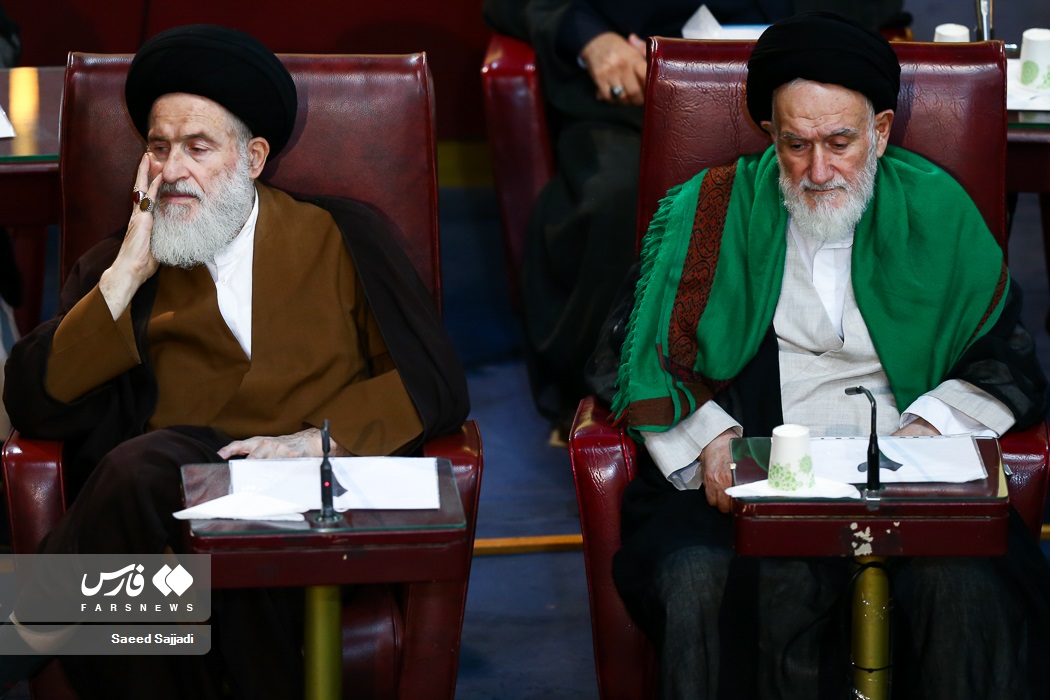
The process was immediately contested. US and Israeli bombs struck the Assembly of Experts office in Qom after votes had been cast but before counting was completed. Several Assembly members raised procedural objections, arguing that an online vote lacked constitutional validity and that the IRGC’s pressure amounted to coercion. A second session was scheduled for March 5, and the final result was announced on March 8, with Assembly leaders declaring that Mojtaba had been elected in a “decisive vote.”
Independent verification was impossible. Iran International, the London-based opposition media outlet, reported that IRGC intelligence officers had met with Assembly members individually in the days before the vote, delivering what one source described as “recommendations, not threats — but the distinction was academic.” The speed of the process — eight days from assassination to installation — broke with the precedent set in 1989, when the Assembly took formal deliberations over several weeks to select Ali Khamenei as Ruhollah Khomeini’s successor.
| Factor | 1989 Succession (Ali Khamenei) | 2026 Succession (Mojtaba Khamenei) |
|---|---|---|
| Trigger | Natural death of Khomeini (age 86) | Assassination by US-Israeli strikes |
| Days to selection | ~14 days | 8 days |
| Voting method | In-person assembly | Online first round, hybrid second |
| Military pressure | Moderate (IRGC lobbying) | Intense (IRGC direct intervention) |
| Dynastic precedent | No family connection | Son of predecessor (first in Republic history) |
| Clerical rank | Hojjat al-Islam (later elevated) | Hojjat al-Islam |
| Prior government office | President of Iran (1981-1989) | None |
| International context | Post-Iran-Iraq War recovery | Active war with US and Israel |
The implications of the selection process are as significant as the choice itself. A Supreme Leader installed by IRGC pressure during wartime, without the institutional legitimacy of a thorough deliberative process, begins his tenure indebted to the military establishment in a way that his father never was. Ali Khamenei spent 35 years painstakingly balancing the IRGC against the civilian government, the reformists against the principlists, and the clerical establishment against the technocrats. Mojtaba begins his rule with one of those pillars — the IRGC — holding veto power over his authority.
The IRGC’s Man in the Supreme Leader’s Chair
The relationship between Mojtaba Khamenei and the Islamic Revolutionary Guard Corps is the central variable in understanding where the war goes next. Every analyst consulted for this analysis — from the Washington Institute for Near East Policy to the Middle East Institute, from Chatham House to the International Institute for Strategic Studies — identifies the IRGC-Mojtaba dynamic as the single most important power relationship in the Islamic Republic.
The IRGC is not merely a military organisation. It controls approximately 40 percent of the Iranian economy through a network of foundations, construction companies, banks, and import-export firms, according to a 2023 assessment by the Foundation for Defense of Democracies. It operates Iran’s ballistic missile programme, commands the Quds Force that manages relationships with proxy groups including Hezbollah, Hamas, and the Houthis, and runs a parallel intelligence service that competes with the civilian Ministry of Intelligence. The IRGC’s annual budget is estimated at $20 billion, according to IISS Military Balance data, though off-budget revenue from commercial enterprises likely doubles that figure.
Mojtaba’s wartime service in the 27th Division gave him personal relationships with the generation of IRGC commanders who now sit at the top of the organisation. His two decades as political gatekeeper in his father’s office gave him leverage over the appointments, promotions, and budgets that determine career trajectories within the Guards. And his role coordinating the crackdown on the 2009 Green Movement protests — directing Basij paramilitaries against civilian demonstrators — established him as someone willing to use lethal force to preserve the system.
The result is a Supreme Leader who speaks the IRGC’s language, shares its threat perceptions, and owes his position to its intervention. Whether this makes Mojtaba a commander of the Guards or a prisoner of their institutional interests is the question that Saudi Arabia’s defense strategists must now answer.
What Role Did Mojtaba Play in the 2009 Crackdown?
Mojtaba Khamenei’s involvement in the suppression of Iran’s 2009 Green Movement protests is the most revealing episode of his political career and the strongest indicator of how he will exercise power as Supreme Leader. According to reformist presidential candidate Mehdi Karroubi, who accused the Khamenei family publicly, Mojtaba leveraged his IRGC connections to influence the outcome of the disputed 2005 presidential election in favour of hardliner Mahmoud Ahmadinejad. When the same pattern repeated in 2009 — with Ahmadinejad’s re-election triggering massive street protests — Mojtaba was reported to have played a direct role in coordinating the security response.
The crackdown was savage by any standard. Basij paramilitaries fired into crowds. Security forces broke into private homes during midnight raids. According to Amnesty International, dozens of protesters were killed, hundreds were injured, and thousands were detained in the weeks following the election. Videos filmed on mobile phones and smuggled out of Iran showed plainclothes Basij members beating unarmed demonstrators with batons and chains. The death of Neda Agha-Soltan, a 26-year-old philosophy student shot by a Basij sniper during a protest, became a global symbol of the regime’s brutality.
Western intelligence assessments, detailed in reporting by PBS Frontline’s Tehran Bureau, identified Mojtaba as one of the key figures who argued within the Supreme Leader’s inner circle for maximum force. Where other voices — including some within the IRGC itself — cautioned that extreme violence would radicalise the opposition, Mojtaba reportedly advocated for a decisive demonstration of state power that would end the protests quickly and deter future challenges.
The episode established three patterns that are likely to define Mojtaba’s leadership. First, he favours overwhelming force over graduated response. Second, he views domestic dissent and external threats through the same lens — as existential challenges to the Islamic Republic that require the same instruments. Third, he is willing to accept international condemnation as the price of regime survival. For Saudi Arabia, which has spent three years building a diplomatic backchannel to Tehran predicated on the assumption that Iran’s leadership was capable of pragmatic self-restraint, the 2009 precedent is deeply unsettling.
The Khamenei Financial Empire
The financial resources available to Iran’s new Supreme Leader extend far beyond the state budget. Mojtaba Khamenei inherits control of Setad, a quasi-governmental organisation that a Reuters investigation in 2013 valued at $95 billion — a figure that analysts at the Foundation for Defense of Democracies now estimate has grown to approximately $200 billion through two decades of strategic acquisitions, property seizures, and investment across nearly every sector of the Iranian economy.
Setad — formally the Execution of Imam Khomeini’s Order, or EIKO — was created in 1989 to manage properties confiscated from Iranians who fled the country after the revolution and from religious minorities whose assets were deemed forfeit. Under Ali Khamenei’s supervision, it metastasised into what Bloomberg described as an “off-the-books hedge fund” with stakes in finance, oil, telecommunications, pharmaceuticals, and real estate. Its operations are shielded from parliamentary oversight, executive scrutiny, and public audit.
| Entity | Estimated Value | Key Sectors | Oversight |
|---|---|---|---|
| Setad (EIKO) | $200 billion | Finance, oil, telecom, real estate | Supreme Leader only |
| IRGC commercial enterprises | ~$40 billion | Construction, import/export, banking | IRGC command |
| Bonyad foundations | ~$20 billion | Agriculture, industry, charity | Supreme Leader appointees |
| Mojtaba personal assets (est.) | $3+ billion | International real estate, banking | None (hidden via proxies) |
Mojtaba’s personal wealth, though difficult to verify, has been the subject of multiple investigations. A year-long Bloomberg inquiry found evidence of an overseas real-estate network directed through intermediaries, with assets distributed across banks in the United Arab Emirates, Syria, Venezuela, and several African countries. No assets appear directly in Mojtaba’s name — a structure designed to evade international sanctions.
The financial empire matters strategically because it provides the new Supreme Leader with resources to sustain the war effort independently of Iran’s formal government budget — which has been devastated by the destruction of oil infrastructure in US-Israeli strikes. According to the International Energy Agency, Iranian oil exports have dropped by approximately 85 percent since the war began, eliminating the Islamic Republic’s primary source of hard currency. Setad’s diversified portfolio and offshore holdings offer a financial lifeline that could sustain missile production, proxy payments, and regime operations for months even if the formal economy collapses.
How Does Mojtaba Differ From His Father?
The differences between father and son are more structural than ideological, but they are no less consequential. Ali Khamenei’s authority rested on three pillars: his revolutionary credentials from 1979, his theological standing (elevated to Ayatollah by political consensus rather than scholarly achievement), and his mastery of institutional balance — the art of playing the IRGC, the clergy, the parliament, and the presidency against each other so that no single faction could challenge his supremacy.
Mojtaba possesses none of these advantages. He was born a decade after the revolution and has no personal connection to the foundational mythology of the Islamic Republic. His clerical rank remains Hojjat al-Islam — respectable but unexceptional, and several notches below the Ayatollahs who populate the Assembly of Experts. He has never held elected or appointed office, has never addressed the nation publicly, and has never undergone the scrutiny of a political campaign or parliamentary confirmation.
“He is, in many ways, the supreme leader the IRGC always wanted — someone who depends on them for legitimacy, who shares their threat perceptions, and who will never challenge their commercial or military prerogatives.”Sanam Vakil, Director, Middle East and North Africa Programme, Chatham House, March 2026 The Pentagon has since claimed Khamenei was wounded and likely disfigured in the strikes that killed his father.
Where Ali Khamenei balanced institutions, Mojtaba will lean on the security apparatus. Where the father maintained deliberate ambiguity on critical questions — including the nuclear programme and the pace of regional escalation — the son is more likely to defer to IRGC operational commanders who favour decisive action. A former US diplomat described Mojtaba as “more hardline than his father,” while a Middle East Institute fellow suggested he would follow the “same playbook” — but the playbook itself will be executed by a leader with fewer constraints and narrower options.
The personality differences are also significant. Ali Khamenei cultivated a public persona as a scholarly, contemplative leader who issued fatwas, gave Friday sermons, and maintained a Twitter presence in multiple languages. Mojtaba has cultivated opacity. No book-length biography exists. Few photographs circulated before his appointment. His public statements can be counted on one hand. This is a leader whose power derived not from visibility but from proximity — and that model of influence does not naturally translate into the symbolic and rhetorical demands of supreme leadership.
The Nuclear Question Under Mojtaba
The most dangerous variable in Mojtaba Khamenei’s leadership is his reported position on nuclear weapons. Ali Khamenei issued a fatwa in the early 2000s declaring nuclear weapons haram — forbidden under Islamic law. Western intelligence agencies debated whether the fatwa reflected genuine theological conviction or political calculation, but it served as a diplomatic tool that constrained Iran’s nuclear programme and provided the framework for the 2015 Joint Comprehensive Plan of Action (JCPOA).
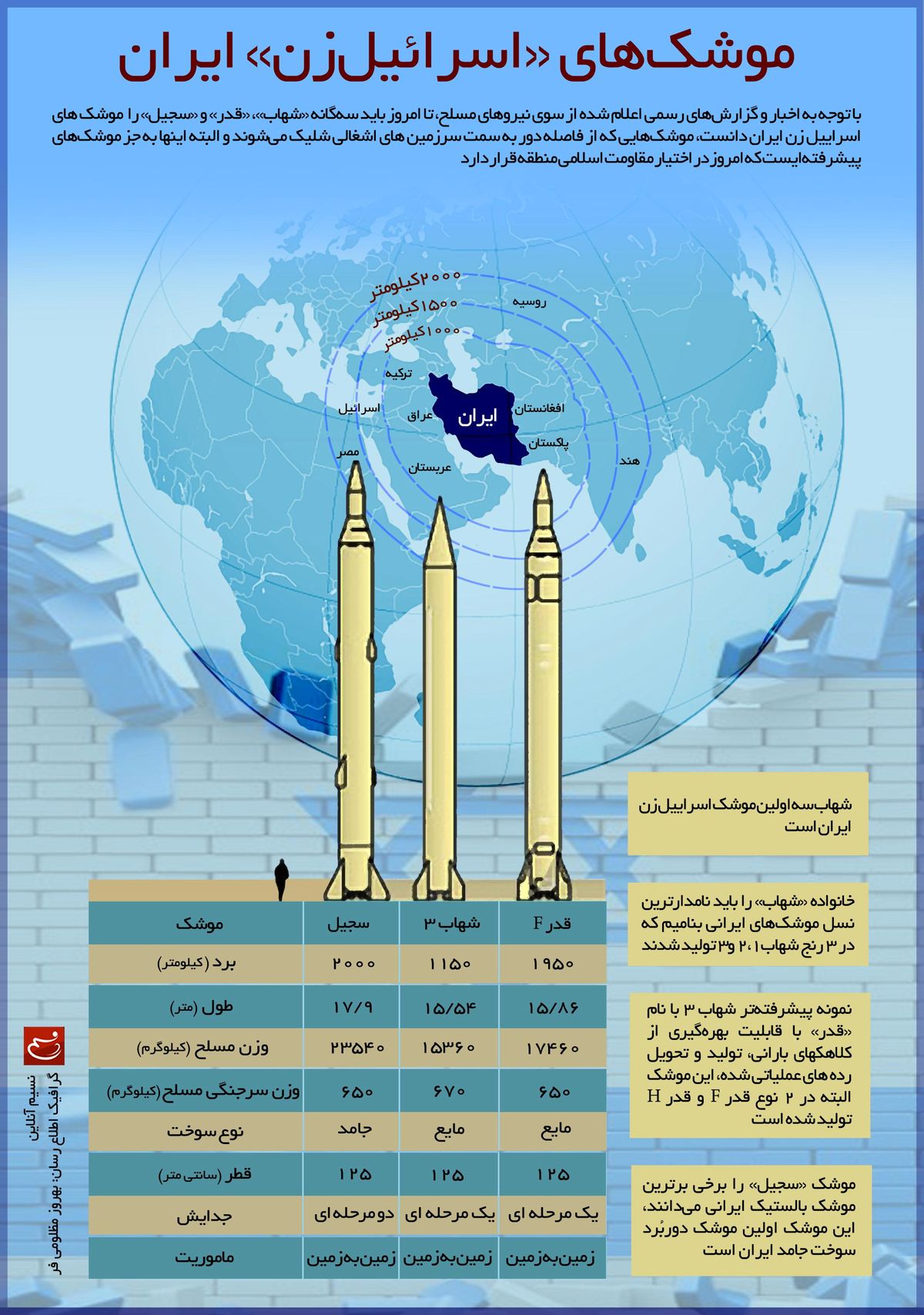
Mojtaba is widely assessed to favour a reinterpretation. Analysts at the Carnegie Endowment for International Peace and the Atlantic Council have noted that figures within Mojtaba’s circle — particularly senior IRGC commanders — have long argued that the fatwa was a political statement, not an immutable religious decree, and that the strategic environment has changed sufficiently to justify reconsideration. The assassination of a Supreme Leader by American and Israeli weapons constitutes precisely the kind of existential threat that nuclear deterrence was designed to address.
Before the war, the International Atomic Energy Agency reported that Iran had enriched uranium to 60 percent purity — a threshold that requires only a modest additional step to reach the 90 percent weapons-grade level. Estimates from the Institute for Science and International Security suggested Iran’s breakout time — the period required to produce enough fissile material for a single weapon — had shrunk to approximately two weeks. Whether the US-Israeli strikes destroyed Iran’s enrichment facilities at Fordow and Natanz remains unclear. If they did not, or if backup enrichment capability exists, a nuclear-armed Iran under Mojtaba Khamenei becomes a near-term possibility rather than a theoretical concern.
The physical infrastructure for any reconstitution effort is now in ruins. An assessment of what the destruction of Iran’s nuclear program means for Saudi Arabia reveals both the radiological risks created by the strikes and the strategic paradox Mojtaba inherits: the motivation to rebuild is stronger than ever, but the capability to do so has been set back by years.
For Saudi Arabia, this prospect is existential. Crown Prince Mohammed bin Salman warned in a 2023 interview with Fox News that if Iran developed nuclear weapons, Saudi Arabia would pursue its own nuclear capability “as soon as possible.” A nuclear-armed Mojtaba Khamenei accelerates that timeline and potentially triggers a regional arms race that fundamentally reshapes the security architecture of the Persian Gulf.
What Does Mojtaba Khamenei Mean for Saudi Arabia?
The elevation of Mojtaba Khamenei forces Saudi Arabia to recalculate three critical strategic assumptions that have underpinned Riyadh’s approach to Iran since the 2023 Chinese-brokered rapprochement: that Iran’s leadership is capable of pragmatic restraint, that economic incentives can moderate Iranian behaviour, and that diplomatic engagement through back channels can produce binding commitments.
Mojtaba’s appointment also reshapes MBS’s three-front strategic dilemma, compressing the Crown Prince’s diplomatic options at the very moment he must balance military defence, economic stability, and a search for negotiated off-ramps with a more volatile Iranian leadership.
Each assumption is now weaker. Saudi Arabia invested significant diplomatic capital in the 2023 detente, reopening embassies, restoring direct flights, and establishing the communication channels that Saudi officials have used intensively since the war began to urge Iranian restraint. The March 6 Bloomberg report that Saudi officials are in near-daily contact with the Iranian ambassador in Riyadh, reiterating that the Kingdom’s territory is not being used to attack Iran, reflects a strategy of de-escalation through communication. Mojtaba’s appointment does not necessarily invalidate that strategy, but it changes the interlocutor — from a Supreme Leader who valued stability alongside ideology to one whose primary constituency views aggression against Gulf states as both strategically rational and ideologically necessary.
The military calculus is equally stark. Iran has already demonstrated its willingness to strike Saudi civilian areas, with the March 8 attack on Al-Kharj killing two foreign nationals and injuring 12. The Saudi Ministry of Defence has intercepted hundreds of incoming projectiles — ballistic missiles, cruise missiles, and one-way attack drones — using a layered air defence network that includes American-built Patriot systems, THAAD batteries, and Saudi-manufactured systems. But interception is not cost-free. Each Patriot interceptor costs approximately $4 million, while the Iranian drones it destroys cost as little as $30,000 — an asymmetry that favours Iran in a prolonged war of attrition.
A Mojtaba-led Iran is more likely to exploit this asymmetry deliberately. The new Supreme Leader’s power base within the IRGC aligns him with the commanders who designed the current campaign of dispersed, multi-vector strikes intended to exhaust Saudi air defences while avoiding the kind of concentrated attack that might trigger a direct Saudi military response. The strategy is calibrated escalation — steady, painful, and just below the threshold that would force Riyadh into a war it does not want.
The Power Consolidation Matrix
Understanding Mojtaba Khamenei’s grip on power requires mapping the five institutions that collectively govern the Islamic Republic and assessing his control over each. Unlike his father, who spent 35 years building leverage across all five, Mojtaba enters the role with overwhelming strength in two, contested influence in two, and potential opposition in one.
| Institution | Function | Ali Khamenei Control (2024) | Mojtaba Control (March 2026) | Key Risk |
|---|---|---|---|---|
| IRGC | Military, intelligence, economy | Strong (balanced) | Dominant (dependent alliance) | IRGC holds veto power over decisions |
| Basij | Paramilitary, social control | Strong | Strong (personal ties from 2009) | Institutional inertia |
| Assembly of Experts | Supreme Leader oversight | Controlled | Contested (procedural objections) | Legitimacy challenges from dissenting clerics |
| Parliament (Majlis) | Legislation, budget | Managed | Uncertain (reformists marginalised but not eliminated) | Potential friction over war spending |
| Presidency | Executive, diplomacy | Subordinate | Antagonistic (Pezeshkian favours negotiation) | Parallel power centres undermine coherence |
The matrix reveals a structural vulnerability that analysts are only beginning to examine. Mojtaba’s dominance over the IRGC and Basij gives him unquestioned control of the instruments of force. But the Assembly of Experts — which constitutionally has the authority to dismiss a Supreme Leader — contains members who objected to the selection process and may seek to constrain his authority if the war produces catastrophic outcomes. President Masoud Pezeshkian, a reformist who has publicly advocated for diplomatic resolution, represents a civilian counterweight whose relevance will increase if military options fail to produce results.
The critical insight is that Mojtaba’s apparent strength — his IRGC alliance — is simultaneously his greatest constraint. A Supreme Leader who depends on the Guards for legitimacy cannot overrule their operational preferences, even when those preferences conflict with strategic wisdom. If the IRGC wants to continue striking Gulf states, Mojtaba cannot order them to stop without undermining the relationship that sustains his power. If the Guards assess that nuclear breakout is necessary for regime survival, Mojtaba lacks the independent authority to veto the decision.
This is the paradox at the heart of the succession: the man who appears most powerful may in fact be the most constrained leader Iran has ever had. That vulnerability has not gone unnoticed in Washington, where the State Department has placed a $10 million bounty on Mojtaba Khamenei and nine IRGC officials through the Rewards for Justice programme — a designation that treats Iran’s supreme leader not as a head of state to be negotiated with but as a target to be neutralised.
Can Saudi Arabia Negotiate With Mojtaba Khamenei?
The conventional wisdom emerging from Western capitals and Gulf think tanks is that Mojtaba Khamenei’s appointment makes negotiation harder, escalation more likely, and the war longer. This assessment contains a significant element of truth — but it overlooks a structural factor that may, counterintuitively, create negotiating opportunities that did not exist under his father.
The factor is fragility. Ali Khamenei’s authority was self-sustaining. He had survived assassination attempts, economic sanctions, mass protests, and a pandemic. His theological credentials, however contested, were established. His institutional balancing act had been refined over decades. He could afford to reject offers, delay decisions, and outlast his opponents because his position was fundamentally secure.
Mojtaba has none of this institutional depth. His theological credentials are questioned by clerics who outrank him. His selection process is tainted by accusations of IRGC coercion. He has no public constituency — no millions of supporters who marched for him, no electoral mandate, no record of governance. His position depends entirely on the continued support of the IRGC, which in turn depends on the Guards’ assessment that Mojtaba serves their interests better than any alternative. The theological legitimacy crisis engulfing the theocracy may ultimately prove more destabilizing than the war itself.
This fragility creates a potential vulnerability that Saudi diplomacy could exploit — not through direct negotiation with Mojtaba, which is unlikely to produce results in the short term, but through strategic patience that allows internal contradictions to emerge. If the war continues to devastate Iran’s economy, if civilian suffering generates domestic pressure, and if the IRGC’s commercial interests are damaged by prolonged conflict, the Guards’ calculus may shift. A Supreme Leader who was installed to prosecute a war becomes expendable if the war turns unwinnable.
Saudi Arabia’s current strategic posture — maintaining diplomatic channels while strengthening military defences and avoiding direct retaliation — is, whether by design or necessity, well calibrated for this scenario. Riyadh has told Iran repeatedly that its territory is not being used to stage attacks on the Islamic Republic, a message designed to give Tehran a face-saving reason to de-escalate strikes against Saudi targets. The question is whether Mojtaba Khamenei possesses the political flexibility to accept such an off-ramp — or whether his dependence on IRGC hardliners traps him in a cycle of escalation from which there is no exit.
The War Under a New Commander
Ten days into the conflict, the war that Mojtaba Khamenei inherits is simultaneously punishing and inconclusive. Iran has fired more than 1,200 missiles and drones at targets across six GCC countries, according to the Saudi Ministry of Defence. Two people have been killed on Saudi soil — both foreign nationals in the Al-Kharj strike — and dozens injured. The Strait of Hormuz is functionally closed to commercial shipping, oil prices have surged above $110 per barrel, and the US embassy in Riyadh has evacuated non-essential staff.
From the IRGC’s perspective, these results vindicate a strategy of dispersed, asymmetric retaliation that imposes economic and psychological costs on the Gulf states without providing the concentrated target that American air power could destroy. The attacks have demonstrated that Iranian missiles and drones can reach every major population centre and critical infrastructure node in Saudi Arabia, Qatar, the UAE, Bahrain, Kuwait, and Oman — a capability that constitutes permanent deterrence even if the current war ends.
Under Mojtaba’s leadership, analysts at the International Institute for Strategic Studies expect three adjustments to Iran’s war strategy. First, a shift toward higher-value infrastructure targets — particularly desalination plants, power grids, and data centres — that would impose disproportionate economic costs with limited military risk. Second, increased activation of proxy forces, particularly the Houthis in Yemen, whose geographic proximity to Saudi Arabia’s southern border and Red Sea shipping lanes offers a sustained, low-cost harassment capability. Third, accelerated reconstitution of missile production facilities that were damaged in the initial US-Israeli strikes — leveraging Setad’s financial resources to fund an industrial surge that could restore Iran’s launch capacity within weeks.
The Saudi response has been calibrated restraint. Despite absorbing strikes on residential areas, oil infrastructure, and military bases, Riyadh has not launched retaliatory strikes against Iranian territory. This restraint reflects a strategic calculation — shared with the other GCC states — that direct Saudi entry into the war would transform a US-Israeli conflict into a regional conflagration that would devastate the Gulf economies, endanger millions of foreign workers, and set Vision 2030 back by a decade.
Mojtaba Khamenei’s challenge is that this restraint may not last. Saudi Arabia has warned that continued attacks could force retaliation. The Trump-MBS alliance, while focused on containing the conflict, includes security guarantees that could be activated if Saudi civilian casualties escalate. And the deployment of a third US aircraft carrier to the Gulf provides the military capability for a devastating response that would dwarf the initial strikes on Iran.
The new Supreme Leader has inherited a war that his predecessor started through retaliation but that his own decisions will determine the trajectory of. Whether he possesses the wisdom to seek an exit — or the recklessness to push toward a conflagration — is the question on which millions of lives across the Persian Gulf now depend.
Frequently Asked Questions
Who is Mojtaba Khamenei and when was he named Supreme Leader?
Mojtaba Hosseini Khamenei is the 56-year-old son of the late Supreme Leader Ayatollah Ali Khamenei. He was named Iran’s third Supreme Leader by the Assembly of Experts on March 8, 2026, eight days after his father was killed in US-Israeli airstrikes. Despite never holding elected office, he had served as his father’s chief political gatekeeper for more than two decades.
What is Mojtaba Khamenei’s connection to the IRGC?
Mojtaba served in the IRGC’s 27th Mohammad Rasulullah Division during the Iran-Iraq War, forging personal bonds with commanders who now lead the organisation. He cultivated deep ties with both the IRGC and Basij paramilitary forces throughout the 2000s, and the IRGC pressured the Assembly of Experts to install him as Supreme Leader during the current war.
How does Mojtaba Khamenei differ from his father?
Ali Khamenei balanced multiple institutions — the IRGC, clergy, parliament, and presidency — to maintain control. Mojtaba depends primarily on the IRGC for legitimacy, lacks his father’s revolutionary credentials and theological standing, and has never held public office. Analysts describe him as more hardline on nuclear weapons and less inclined toward diplomatic compromise.
What does Mojtaba’s appointment mean for Saudi Arabia?
Saudi Arabia faces a potentially more aggressive Iranian leadership with deeper ties to the military establishment responsible for strikes against Saudi territory. The diplomatic backchannel Riyadh has maintained with Tehran since 2023 may be less effective under a leader whose power base favours military escalation over diplomatic compromise.
Could Mojtaba Khamenei pursue nuclear weapons?
Analysts at the Carnegie Endowment and Atlantic Council assess that Mojtaba is more favourable toward nuclear weapons development than his father, who issued a fatwa declaring them forbidden. Iran’s uranium enrichment had already reached 60 percent purity before the war, and the assassination of a Supreme Leader may be used as justification to reinterpret or revoke the fatwa.
How wealthy is the Khamenei family?
The Khamenei family controls Setad, a quasi-governmental organisation valued at an estimated $200 billion, with holdings across finance, oil, telecommunications, and real estate. Mojtaba personally is estimated to have accumulated assets exceeding $3 billion, distributed through proxy networks across the UAE, Syria, Venezuela, and Africa.