
RIYADH — Ten days into the most dangerous military confrontation the Kingdom has faced since its founding, the missiles and drones striking Saudi territory from Iran represent only the visible dimension of a far deeper crisis. Beneath the air defense interceptions and diplomatic manoeuvring lies a challenge that will ultimately determine whether Saudi Arabia survives this war intact: maintaining the loyalty, order, and basic survival of 35 million people — nearly half of them foreign nationals — across a territory the size of Western Europe while the bombs fall. The wartime homefront, not the battlefield, is where the Saudi state faces its most consequential test.
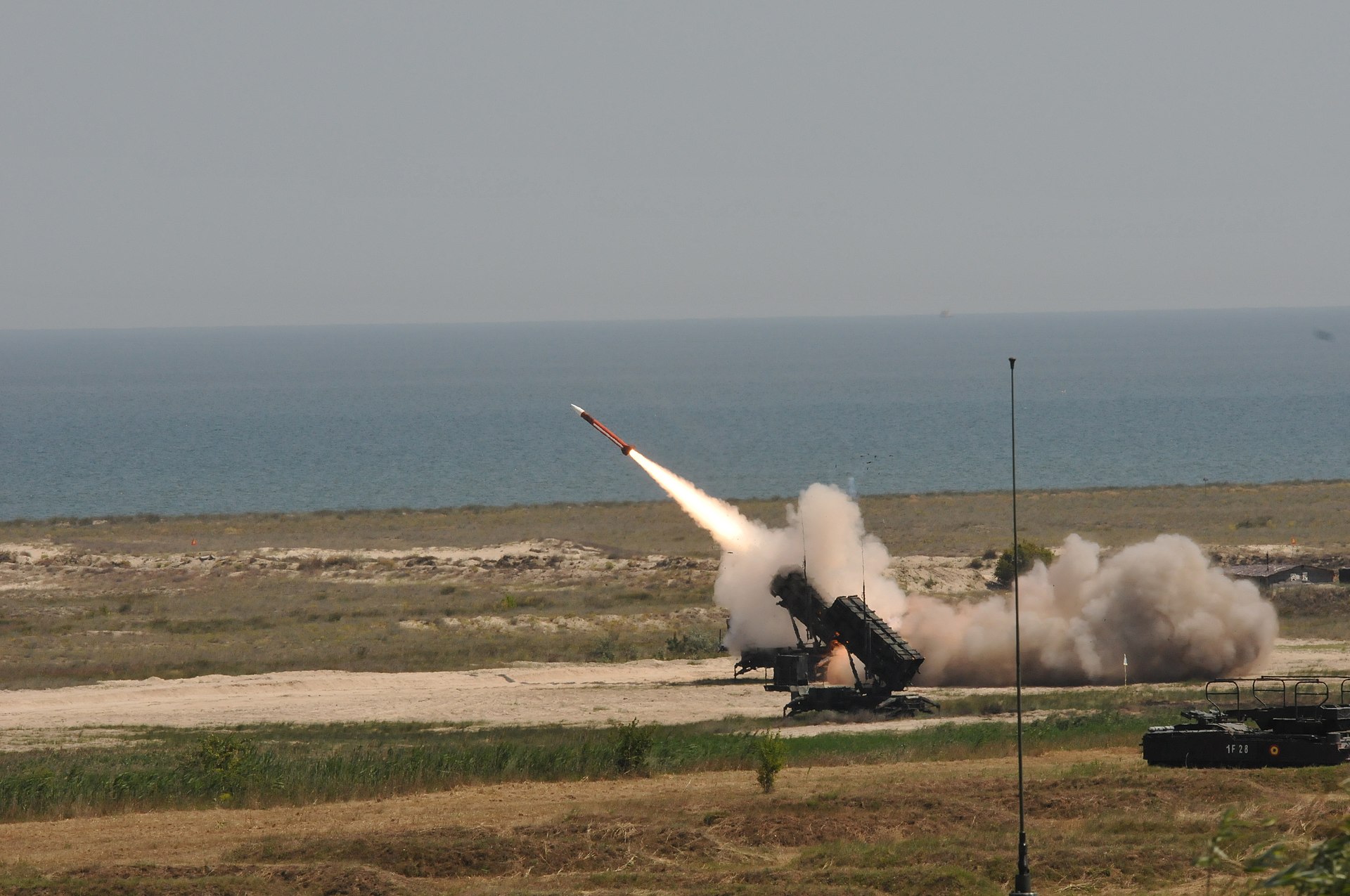
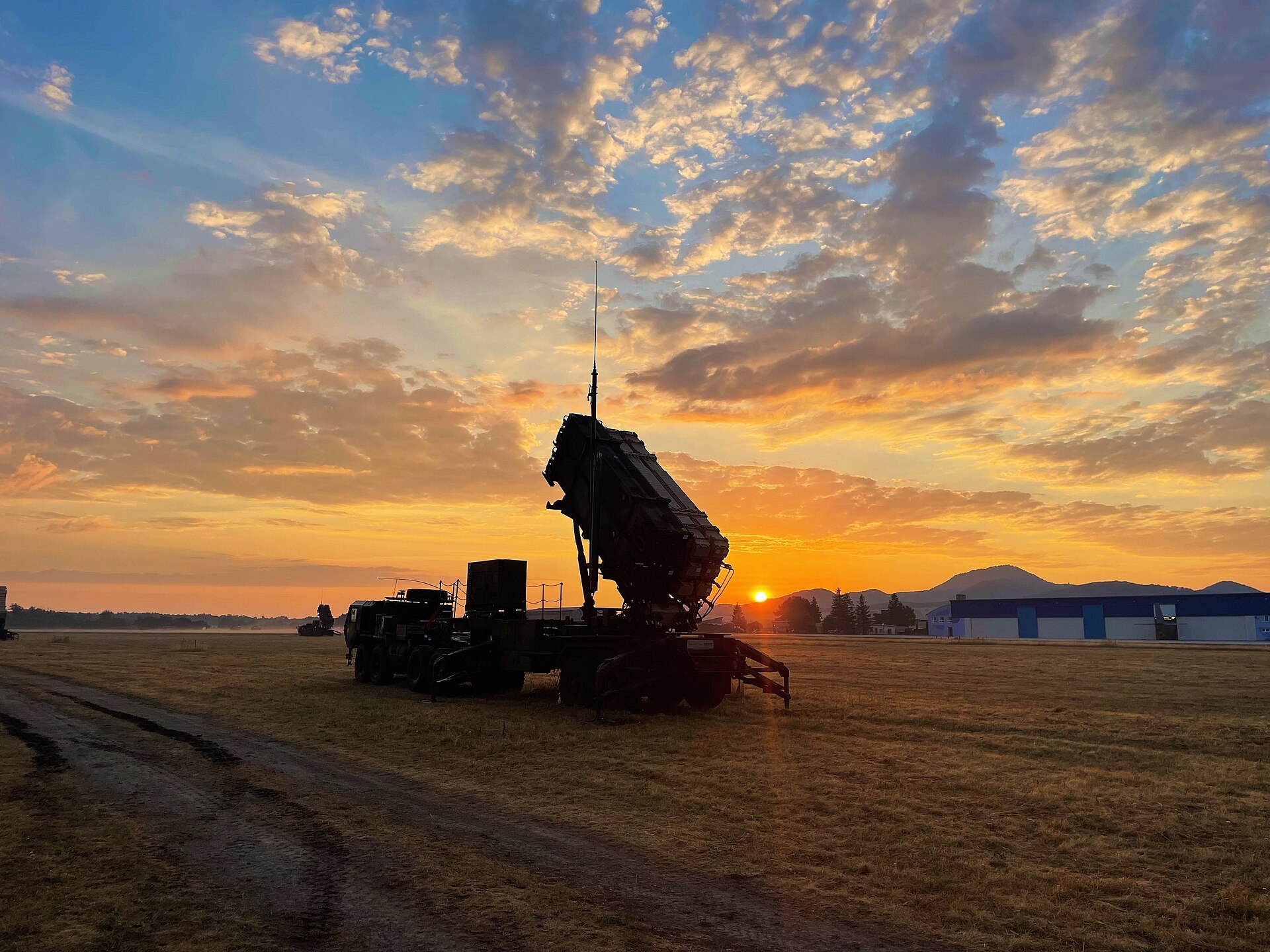
The Kingdom’s internal security architecture — a deliberately fragmented network of military, intelligence, police, and tribal forces answering to different branches of the royal family — was designed to prevent coups, not to manage a population under sustained bombardment. With Iranian drones striking residential areas, desalination plants under threat, flights grounded, and 13.4 million migrant workers trapped without evacuation plans, Mohammed bin Salman’s government is fighting a war on a front that no amount of Patriot interceptors can defend. The next ten days on Saudi Arabia’s homefront will reveal whether the social contract that has sustained the modern Kingdom — prosperity in exchange for political acquiescence — can survive its first real stress test.
Table of Contents
- The Kingdom’s Security Architecture — Four Armies, One Crown Prince
- Why Is the Saudi National Guard More Important Than the Regular Army in This War?
- What Makes the Eastern Province Saudi Arabia’s Most Dangerous Internal Front?
- How Does Saudi Arabia Control 13.4 Million Foreign Workers During a War?
- Can Saudi Arabia Protect Its Civilians Without Bomb Shelters?
- The Information Front — How Riyadh Controls the Wartime Narrative
- What Happens to a Desert Kingdom When Supply Lines Break?
- The Wartime Stability Matrix — Measuring the Kingdom’s Resilience
- The Social Contract Under Fire — Can MBS Keep 23 Million Citizens Loyal?
- Defending the Holy Cities — The Security Challenge Nobody Discusses
- The Presidency of State Security and the Invisible War
- What Breaks First — And What Holds
- Frequently Asked Questions
The Kingdom’s Security Architecture — Four Armies, One Crown Prince
Saudi Arabia does not have a single military. It has four separate armed forces, each with distinct chains of command, recruitment bases, and institutional loyalties — a structure designed by the Kingdom’s founders not to maximize battlefield effectiveness but to prevent any single commander from accumulating enough power to threaten the throne. Understanding this fragmented architecture is essential to grasping how Saudi Arabia manages its wartime homefront.
The Royal Saudi Armed Forces (RSAF), under the Ministry of Defense headed by Crown Prince Mohammed bin Salman, comprise the regular army, air force, navy, air defense force, and strategic missile force. These roughly 227,000 active-duty personnel handle external defense — the air interceptions over Prince Sultan Air Base, the naval patrols in the Persian Gulf, the fighter jets on combat air patrol. They are the forces making headlines.
The Saudi Arabian National Guard (SANG), with 125,000 standing troops and 28,000 tribal militia reservists known as the Fouj, operates entirely outside the Ministry of Defense. Historically reporting to its own minister — for decades, the late King Abdullah when he was crown prince — SANG now falls under the direct oversight of the Crown Prince. Its primary missions are internal: protecting the royal family, guarding critical infrastructure including oil facilities and desalination plants, providing security for Mecca and Medina, and serving as a counterweight to any potential military coup.
The Ministry of Interior (MOI), with approximately 35,000 security personnel dedicated to protecting petroleum infrastructure alone, oversees the General Directorate of Public Security — the civilian police force — plus the Special Security Forces, the Special Emergency Force, border guards, and civil defense. The MOI handles daily law enforcement, crowd control, immigration, and emergency response.
The Middle East briefing 3,000+ readers start their day with.
One email. Every weekday morning. Free.
The Presidency of State Security (PSS), created by royal decree in July 2017, consolidated counterterrorism and domestic intelligence under a single roof. It absorbed the General Directorate of Investigations — the Mabahith, Saudi Arabia’s domestic intelligence service — along with the Special Security Forces, technical surveillance capabilities, and the National Information Center. The PSS reports directly to the King.
| Force | Reports To | Personnel | Primary Role | Wartime Function |
|---|---|---|---|---|
| Saudi Arabian National Guard | Crown Prince | 153,000 | Internal security, royal protection | Critical infrastructure defense, coup prevention |
| MOI Security Forces | Minister of Interior | ~100,000+ | Law enforcement, border control | Civil order, immigration control, emergency response |
| Presidency of State Security | King | Classified | Counterterrorism, intelligence | Threat detection, surveillance, information control |
| Civil Defense | MOI | ~15,000 | Emergency services | Shelter management, evacuation, disaster response |
This deliberate fragmentation — four separate chains of command, four separate budgets, four separate intelligence streams — creates redundancy that protects the throne. If the regular army attempted a coup, the National Guard would stop it. If a regional commander went rogue, the Mabahith would detect it before the first order was issued. But in a fast-moving conventional war with missiles raining down on civilian areas, the fragmentation that prevents internal threats also prevents the kind of unified rapid response that protects populations. Coordination between these forces requires royal arbitration, which means every significant decision flows through Mohammed bin Salman’s war council — a leader already managing three simultaneous crises.
Why Is the Saudi National Guard More Important Than the Regular Army in This War?
The Saudi Arabian National Guard — known colloquially as the White Army for its ceremonial dress — is the single most important institution on the Kingdom’s wartime homefront. While the regular military intercepts Iranian missiles and the air force runs combat patrols, SANG troops stand guard at every oil facility, every desalination plant, every royal palace, and every critical junction in Saudi Arabia’s internal order. Without the National Guard, the Kingdom’s domestic stability would collapse within days regardless of how many Patriot batteries line the horizon.
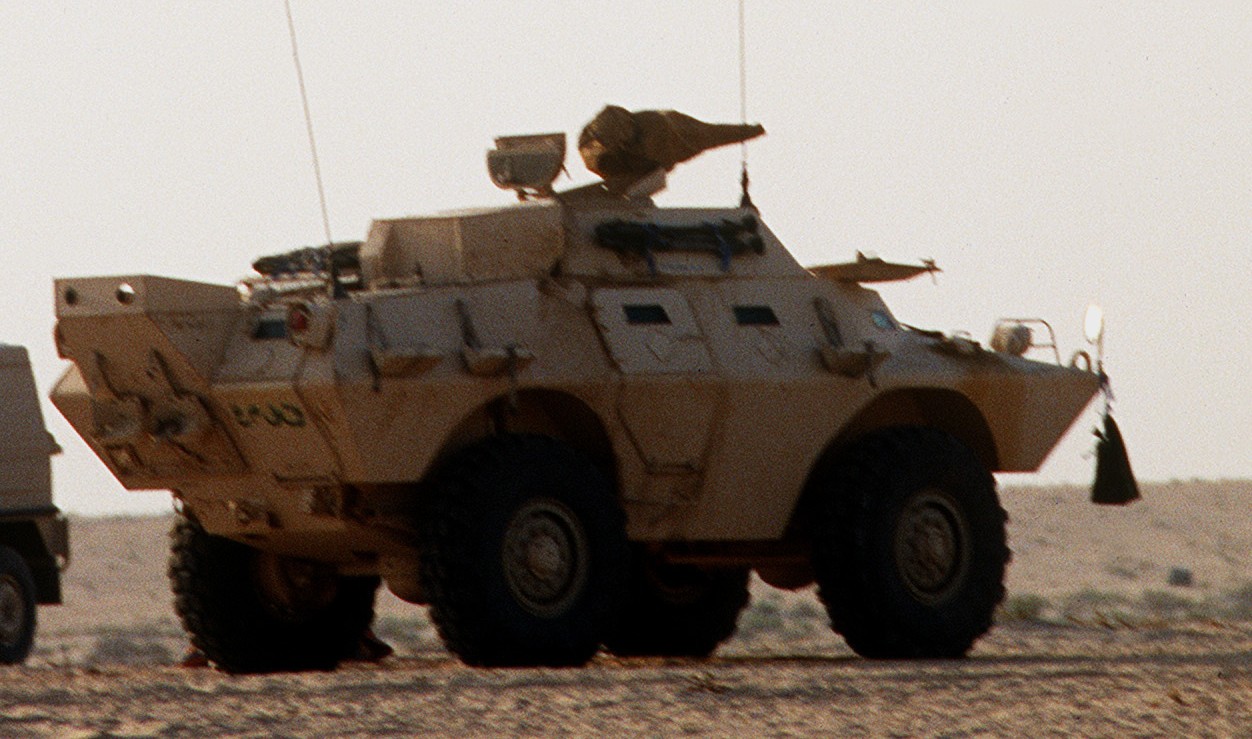
SANG’s 125,000 active-duty soldiers and 28,000 Fouj tribal militia are not primarily trained for conventional warfare. Their equipment reflects their mission: V-150 Commando armored cars for urban patrol, LAV-25 light armored vehicles for rapid deployment to trouble spots, and small arms optimized for counterterrorism and crowd control rather than armored maneuver warfare. The United States Army has maintained a continuous modernization partnership with SANG since 1973 through the Office of the Program Manager-Saudi Arabian National Guard (OPM-SANG), one of the longest-running military cooperation agreements in U.S.-Saudi relations. That partnership trained the Guard for exactly this scenario — maintaining internal order while the regular military fights.
The Guard’s recruitment base is deliberately tribal. Where the regular Saudi military draws from the general population, SANG recruits heavily from Bedouin tribes loyal to the House of Saud — the Otaibah, the Mutair, the Shammar, and other confederations whose alliance with the Al Saud family predates the Kingdom itself. This tribal recruitment creates a force with deep personal loyalty to the ruling family, insulated from the ideological currents that have historically destabilized Middle Eastern militaries. In a war where regime legitimacy is under pressure, the Guard’s tribal loyalty may matter more than its firepower.
SANG currently deploys forces across three critical zones. In the Eastern Province, Guard units protect Aramco facilities at Dhahran, Ras Tanura, and the pipeline network that carries crude from the Persian Gulf coast to the Red Sea terminal at Yanbu. In the Hejaz, SANG provides the inner security ring around the Grand Mosque in Mecca and the Prophet’s Mosque in Medina. And in Riyadh, Guard units protect the royal court, the Diwan, and the key government buildings where the war is being directed.
What Makes the Eastern Province Saudi Arabia’s Most Dangerous Internal Front?
The Eastern Province is where every dimension of Saudi Arabia’s wartime vulnerability converges. The region that produces virtually all of the Kingdom’s oil wealth is also home to its most marginalized minority population, the most concentrated cluster of critical infrastructure anywhere in the Middle East, and now the primary target zone for Iranian drone and missile attacks. The province is simultaneously Saudi Arabia’s economic engine and its greatest internal security liability.
Between 10 and 15 percent of Saudi Arabia’s population is Shia Muslim, and the vast majority live in the Eastern Province — particularly in the Qatif and al-Ahsa governorates that sit directly atop the Kingdom’s largest oil reserves. The Shia population has historically faced systemic discrimination: restricted mosque construction, limited access to government employment, and economic marginalization despite living on top of the world’s largest petroleum deposits. Human Rights Watch has documented anti-Shia bias as a driver of unrest, and the Washington Institute for Near East Policy has tracked Saudi security forces killing Shia militants near major oil facilities.
In January 2026 — weeks before the war began — a clash in the Qatif area resulted in six militants killed and five security personnel injured, the worst such incident since mid-2017. The timing was coincidental, but the underlying tension was not. Iran has historically sought to exploit Shia grievances in Saudi Arabia’s Eastern Province as a vector for destabilization, according to analysis by the Brookings Institution. With Iranian missiles now striking Saudi territory and Tehran’s propaganda apparatus framing the conflict as a war against Sunni Gulf monarchies allied with the United States and Israel, the risk of sectarian radicalization in the Eastern Province has increased dramatically.
Saudi security forces have responded by increasing SANG and MOI deployments to the Qatif and al-Ahsa areas, tightening movement controls at provincial checkpoints, and — according to regional security analysts — intensifying digital surveillance of social media activity in Shia-majority communities. The challenge is calibration: too light a security touch risks allowing Iranian-inspired cells to target oil infrastructure from within, while too heavy a crackdown risks provoking the very uprising it seeks to prevent. Saudi authorities have historical precedent for both outcomes — the 2011-2013 Qatif unrest saw security forces deploy armored vehicles into residential neighborhoods, generating international condemnation and deepening local resentment.
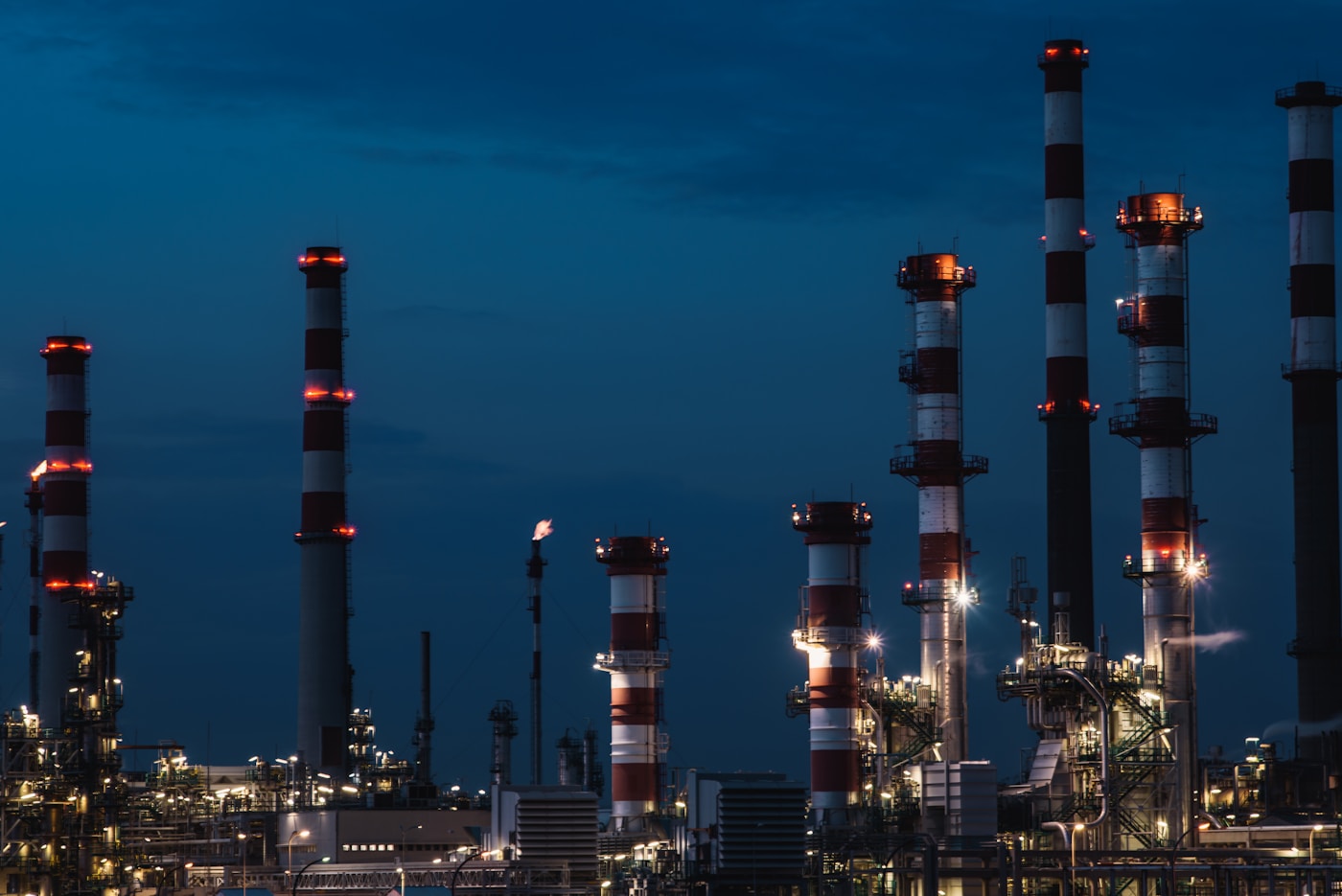
The Eastern Province also hosts the densest concentration of critical infrastructure in the Kingdom. The Ras Tanura refinery complex, the Abqaiq processing facility, the Shaybah production field in the Empty Quarter, and the massive Jubail desalination and industrial complex are all within the province or connected to it by pipeline. A 2008 U.S. diplomatic cable, later published by WikiLeaks, warned that the Saudi capital of Riyadh would have to be evacuated within a week if the Jubail desalination plant or its associated pipelines were seriously damaged. That assessment has not changed.
The internal security calculus in the Eastern Province involves three overlapping threat rings. The outermost ring is the external military threat — Iranian drones and missiles targeting oil facilities from across the Persian Gulf, a distance of roughly 250 kilometres at the narrowest point. The middle ring is the cross-border infiltration threat — the possibility of trained operatives entering the province from Iraq or by sea, exploiting the chaos of war to position assets near high-value targets. The innermost ring is the insider threat — radicalised individuals with legitimate access to petroleum facilities, desalination plants, or telecommunications infrastructure who could conduct sabotage from within. SANG, MOI, and PSS forces each address different rings, but the seams between jurisdictions represent potential blind spots that an adversary with good intelligence — and Iran’s Quds Force has demonstrated exactly that capability — could exploit.
Saudi authorities are managing the Eastern Province through a combination of visible deterrence and invisible surveillance. SANG armored vehicles patrol the approaches to major facilities. MOI checkpoints control movement on the highways connecting Dammam, Dhahran, and the oil towns. PSS operatives monitor communications networks and social media activity. Religious authorities have been enlisted to preach unity and condemn sectarian provocation. Local tribal leaders — whose influence in the Eastern Province’s Shia communities is less than in Sunni-majority regions but not negligible — have been consulted in what regional analysts describe as a structured outreach programme designed to prevent the narrative of an anti-Shia war from taking root.
How Does Saudi Arabia Control 13.4 Million Foreign Workers During a War?
Nearly half the people inside Saudi Arabia’s borders are not Saudi. The Kingdom’s 13.4 million foreign workers — from Indian construction labourers to Filipino nurses, Bangladeshi drivers to Pakistani engineers, Indonesian domestic workers to Western oil executives — represent one of the most concentrated populations of non-citizens in any conflict zone in modern history. Managing this population during wartime presents challenges without historical parallel.
The kafala (sponsorship) system, which ties each foreign worker’s legal status to a specific Saudi employer, creates both control mechanisms and vulnerabilities. Workers cannot change jobs, leave the country, or even move between cities without their sponsor’s permission. In peacetime, this system gives the state extraordinary control over labour mobility. In wartime, it creates a population that cannot flee, cannot organize, and cannot access the consular services of their home countries — the U.S. Embassy in Riyadh itself was struck by Iranian drones on March 2, and most diplomatic missions have since issued shelter-in-place orders.
The first casualties of the war on Saudi soil were foreign workers. A military projectile that struck a residential area in Al-Kharj governorate on March 8 killed an Indian national and a Bangladeshi national, marking the first fatalities in Saudi territory since the conflict began. Twelve more workers were wounded. The symbolism was unmistakable: the people most at risk in Saudi Arabia’s war are the people with the least ability to protect themselves.
The same Al-Kharj governorate also hosts Prince Sultan Air Base, where an American soldier became the conflict’s first U.S. fatality on Saudi soil. Army Sergeant Benjamin Pennington died on March 8 from wounds sustained during a March 1 Iranian ballistic missile strike on the base, highlighting that the front line runs not only through Riyadh’s residential neighbourhoods but through the military installations that are supposed to defend them.
Evacuation has proved almost impossible. More than 12,000 flights across the Middle East were cancelled in the war’s first week. India’s Ministry of Civil Aviation managed to repatriate approximately 52,000 passengers using both Indian carriers and chartered flights, but millions more remain stranded. Indonesia reported 58,000 of its citizens trapped in Saudi Arabia, most of them Umrah pilgrims visiting Mecca and Medina during the pre-Ramadan season who were caught when the war erupted. The Philippines, Bangladesh, Pakistan, Nepal, and Sri Lanka each have hundreds of thousands of nationals in the Kingdom with no clear path home.
| Nationality | Estimated Population | Primary Sectors | Evacuation Status |
|---|---|---|---|
| Indian | 2,600,000 | Construction, IT, retail, healthcare | 52,000 evacuated; millions remain |
| Bangladeshi | 1,300,000 | Construction, services | Limited charter flights |
| Pakistani | 1,500,000 | Transport, construction, services | Pakistan invoking defense pact |
| Filipino | 1,000,000 | Healthcare, hospitality, domestic | Shelter-in-place advised |
| Indonesian | 900,000+ | Domestic work, pilgrimage visitors | 58,000 stranded pilgrims |
| Egyptian | 2,900,000 | Education, services, construction | No organized evacuation |
| Other nationalities | 3,200,000+ | Various | Varying consular assistance |
The Saudi government’s response has been to extend visas automatically, waive overstay penalties, and issue directives to employers to continue paying salaries regardless of work stoppages — measures designed to prevent the social instability that would result from millions of unpaid, undocumented, and desperate workers in a country under bombardment. Whether these measures hold as the war continues is one of the most important and least discussed questions of the conflict.
Can Saudi Arabia Protect Its Civilians Without Bomb Shelters?
The short answer is that it cannot — not at scale. Saudi Arabia’s civil defense infrastructure, managed by the General Directorate of Civil Defense under the Ministry of Interior, was designed for peacetime emergencies: fires, industrial accidents, sandstorms, and flooding. It was never built for sustained aerial bombardment by a state-level adversary.
The Kingdom has no public bomb shelter system comparable to those in Israel, Switzerland, or South Korea. A Washington Institute for Near East Policy assessment warned that in the event of a chemical, biological, radiological, or nuclear (CBRN) attack, Saudi Arabia could protect no more than a fraction of its population due to a complete lack of hardened civilian shelters. The civil defense executive regulations for evacuation and sheltering, while they exist on paper, have not been updated to reflect the realities of modern drone and missile warfare.
What Saudi Arabia does have is a sprawling network of underground parking garages, basement levels of shopping malls, and subway stations — none purpose-built as shelters, but all offering some degree of blast protection. Riyadh’s metro system, which opened in 2024 with six lines and 85 stations, has become a de facto shelter network, though it lacks the ventilation, water supply, and blast door systems that would be required for genuine civil defense. During the March 3 shelter-in-place order from the U.S. Embassy, Saudi civil defense authorities directed Riyadh residents to lower floors of reinforced concrete buildings — an improvisation, not a plan.
The civil defense directorate has activated its wartime protocols, which include organizing warning sirens for air raids, controlling lighting and vehicle movement during nighttime attacks, and appointing competent officers to manage evacuation and shelter operations at designated sites. But these protocols were written for a theoretical war, and the gap between theory and the reality of Iranian drones flying over residential neighbourhoods at 3 a.m. is vast.
The scale of this civil defense failure is staggering when measured against the Kingdom’s military spending. Our separate investigation into Saudi Arabia’s civil defense gap found that the Kingdom invested $80 billion in air defence systems designed to stop missiles in the sky while building nothing to protect its people when those missiles get through.
The numbers reveal the scale of the problem. Saudi Arabia has approximately 7.4 million residential buildings, of which fewer than 10 percent have underground levels of any kind. Riyadh, a sprawling low-rise city of 7.6 million people spread across 1,798 square kilometres, has almost no high-rise residential towers with basement parking — the kind of improvised shelter space that residents of Tel Aviv or Kyiv have used during rocket attacks. The Kingdom’s residential construction boom under Vision 2030 focused on expanding supply, not on building civil defense features into new housing stock. No Saudi building code requires blast-resistant construction or shelter space.
Hospital capacity adds another dimension to the civil defense challenge. Saudi Arabia has approximately 495 hospitals with a combined capacity of roughly 78,000 beds, according to the Ministry of Health. In peacetime, the system operates at high utilization rates. Mass casualty events — a scenario that becomes more likely with each passing day of bombardment — would overwhelm emergency departments within hours. The Kingdom’s healthcare workforce is itself roughly 65 percent foreign nationals, many of whom are seeking to evacuate. A wartime surge in demand coinciding with a flight of medical professionals represents a civil defense failure that no amount of missile interception can prevent.
The Information Front — How Riyadh Controls the Wartime Narrative
Saudi Arabia entered this war with one of the most sophisticated information control systems in the Middle East — and the conflict has given Riyadh the justification to tighten it further. The wartime narrative inside the Kingdom is carefully managed through a combination of direct censorship, algorithmic manipulation, patriotic mobilization, and the simple fact that a population under bombardment tends to rally around its government rather than question it.
Freedom House rated Saudi Arabia’s internet freedom score at 24 out of 100 in its 2024 assessment — among the lowest in the world. Authorities routinely block websites, remove social media content, and deploy what critics describe as an electronic army of pro-government accounts that use hashtag poisoning and coordinated amplification to dominate online discourse. The General Authority for Media Regulation (GAMR), which oversees all media content, has broad powers to restrict reporting that is deemed harmful to national security — a category that now encompasses virtually any war-related information not released through official Ministry of Defense channels.
The Presidency of State Security’s National Information Center, which absorbs signals intelligence and social media monitoring data, has the technical capacity to track online conversations in real time and identify users posting content that contradicts official narratives. Amnesty International and Human Rights Watch have documented Saudi authorities prosecuting individuals for social media posts, including sentences of decades in prison for tweets critical of government policy. In wartime, these surveillance capabilities serve a dual purpose: suppressing dissent and detecting potential security threats.
The government’s wartime messaging has been disciplined. The Ministry of Defense issues daily operational updates — number of drones intercepted, number of missiles destroyed — that frame the conflict as a defensive success story. Saudi state media emphasizes the Kingdom’s restraint in contrast to Iran’s aggression, MBS’s diplomatic activism in calling world leaders, and the international community’s solidarity with the Gulf states. The narrative is one of a peaceful Kingdom forced to defend itself — and the messaging appears to be working, at least domestically.
International media access has been sharply curtailed. Foreign journalists are confined to designated areas, battlefield reporting is prohibited, and satellite uplink equipment requires government permits that are not being granted. The information environment inside Saudi Arabia during this war is essentially what the government decides it is — a reality that simplifies domestic management but creates credibility problems when Saudi claims must compete with Iranian propaganda in the global information space.
The paradox of Saudi information control is that it works too well for the government’s own good. By suppressing independent reporting, Riyadh prevents the kind of bottom-up intelligence that effective wartime governance requires — reports from citizens about infrastructure damage, supply shortages, or emerging social tensions that official channels may miss or minimize. Authoritarian information systems are excellent at preventing panic but poor at detecting problems before they become crises. The gap between the official narrative (Saudi Arabia is calmly managing a defensive war) and ground-level reality (widespread anxiety, economic disruption, and a trapped foreign population) could produce a dangerous disconnect if the war persists. For a detailed analysis of how Riyadh is weaponizing its $1.12 billion media empire — from Al Arabiya broadcasts to social media dominance — see MBS’s Media Empire Enters the Battlefield.
What Happens to a Desert Kingdom When Supply Lines Break?
Saudi Arabia imports between 80 and 85 percent of its total food requirements. The Kingdom imports 100 percent of its rice, 100 percent of its barley and corn, approximately 74 percent of its wheat, and more than 75 percent of its red meat. The annual food import bill exceeded $25 billion before the war began. In 2022, 85.7 percent of total food and beverage trade was dependent on foreign imports, according to Statista. No country on earth with Saudi Arabia’s population size is more dependent on imported food.
Approximately 70 percent of Saudi Arabia’s drinking water comes from desalination plants — the Kingdom produces more desalinated water than any other nation. More than 90 percent of the Gulf region’s desalinated water comes from just 56 plants, each representing a single point of failure. A CIA assessment from 2010 warned that disrupting desalination facilities in Gulf Arab states could have more serious consequences than the loss of any other industry or commodity. The leaked 2008 U.S. diplomatic cable’s warning that Riyadh would need evacuation within a week if the Jubail complex were destroyed reflects a vulnerability that remains the Kingdom’s most dangerous wartime exposure.
With the Strait of Hormuz effectively closed to commercial shipping and Iranian mines threatening vessels in the Persian Gulf, Saudi Arabia’s primary food import route — through Gulf ports at Dammam and Jubail — has been severed. The Kingdom is redirecting food shipments to its Red Sea ports at Jeddah and Yanbu, but the logistics chain was not designed for this volume. The General Food Security Authority (GFSA), which manages Saudi Arabia’s subsidised wheat imports, had contracted for 3.73 million metric tonnes of wheat at an average price of $291.26 per tonne for the 2023-2024 marketing year. Replacement contracts at wartime prices through alternative shipping routes will cost dramatically more.
Saudi Arabia maintains strategic grain reserves — the exact quantity is classified, but regional analysts estimate roughly six months of wheat supplies are stored across the Kingdom’s silo network. Rice reserves are believed to cover approximately three months. Fresh produce, dairy, and meat — which cannot be stockpiled at scale — are already experiencing shortages in some Eastern Province markets where supply trucks have been delayed by military checkpoints and road closures.
| Resource | Import Dependency | Primary Source Route | Alternative Route | Strategic Reserve |
|---|---|---|---|---|
| Wheat | 74% | Gulf ports (Hormuz) | Red Sea ports (Jeddah) | ~6 months estimated |
| Rice | 100% | Gulf ports (Hormuz) | Red Sea ports | ~3 months estimated |
| Drinking water | 70% from desalination | Jubail, Ras al-Khair plants | Shoaiba (Red Sea coast) | 3-7 days municipal storage |
| Red meat | 75%+ | Gulf and Red Sea ports | Air freight (limited) | Minimal cold storage |
| Pharmaceuticals | ~80% | Gulf ports, air freight | Red Sea ports, land routes | 90-day hospital stocks |
The war has also exposed a less obvious vulnerability: the Kingdom’s pharmaceutical supply chain. Saudi Arabia imports approximately 80 percent of its medicines, with most arriving through the same Gulf ports now disrupted by the Hormuz closure. Hospital pharmacies maintain 90-day strategic stocks under Ministry of Health regulations, but specialty medications — cancer treatments, dialysis supplies, insulin, and blood products — have shorter shelf lives and more fragile supply chains. The Saudi Food and Drug Authority (SFDA) has authorised emergency imports through Red Sea ports and activated mutual recognition agreements with European regulatory bodies to fast-track alternative sourcing. Whether these measures prevent drug shortages will depend on how long the war lasts and whether Red Sea shipping routes remain open.
The Saudi government has implemented price controls on essential goods, directed supermarket chains to maintain stable pricing, and reportedly activated elements of its national food security plan — a programme developed after the COVID-19 pandemic exposed similar supply chain vulnerabilities. The government-owned Saudi Agricultural and Livestock Investment Company (SALIC), which owns farmland in Argentina, Ukraine, Australia, and several African countries, is attempting to redirect production from these overseas holdings. But growing food abroad is a long-term strategy; in the short term, the Kingdom is burning through reserves while its logistics network reconfigures around a war.
The Wartime Stability Matrix — Measuring the Kingdom’s Resilience
Assessing Saudi Arabia’s domestic stability requires moving beyond anecdotal reporting to a structured evaluation of the factors that determine whether a state maintains internal cohesion under wartime pressure. Six dimensions matter most, and Saudi Arabia’s performance across them varies dramatically.
| Dimension | Assessment Criteria | Current Status | Risk Level | Trajectory |
|---|---|---|---|---|
| Sectarian Cohesion | Shia-Sunni relations, Eastern Province unrest, Iranian influence operations | Elevated surveillance; January 2026 Qatif clash; no mass unrest | HIGH | Deteriorating |
| Expat Management | 13.4M foreign workers: employment continuity, movement control, evacuation capacity | Visa extensions granted; salary mandate issued; no evacuation infrastructure | HIGH | Deteriorating |
| Economic Resilience | Food supply, currency stability, employment continuity, price controls | Strategic reserves adequate short-term; SAR peg stable; price controls active | MEDIUM | Stable (for now) |
| Information Control | Media censorship, social media monitoring, narrative dominance, rally effect | Tight control; patriotic rally effect strong; international media restricted | LOW | Stable |
| Security Force Readiness | SANG deployment, MOI capacity, police effectiveness, checkpoint operations | Full deployment; no reports of desertion or failure; overstretched in EP | MEDIUM | Stable |
| Social Contract Durability | Citizens’ tolerance for wartime disruption; trust in government; alternative leadership | Rally-around-the-flag effect active; no visible dissent; tolerance untested beyond 10 days | MEDIUM | Unknown — depends on war duration |
The matrix reveals a pattern: Saudi Arabia’s institutional controls — information management, security force deployment, economic intervention — are performing effectively in the short term. The systemic vulnerabilities — sectarian fault lines, expat management, supply chain dependency — represent medium-term risks that compound over time. The critical variable is war duration. A two-week conflict that ends with a ceasefire leaves the Kingdom’s internal order intact. A two-month conflict tests every dimension to breaking point.
The comparison with other states that have managed civilian populations under aerial bombardment is instructive. Israel, which has decades of experience with rocket attacks, maintains a nationwide shelter system (required in every building since 1951), a mobile alert application (Home Front Command), and a population conditioned by regular drills. South Korea, facing the North Korean threat, has 3,300 designated underground shelters in Seoul alone. Saudi Arabia has none of these systems. What it does have is oil revenue, which in the short term can substitute for preparedness — buying food at wartime prices, paying workers to stay calm, and funding security deployments at scale. Whether money alone can sustain internal order is the Kingdom’s trillion-dollar question.
The Social Contract Under Fire — Can MBS Keep 23 Million Citizens Loyal?
The Saudi social contract has historically been straightforward: the state provides economic prosperity, subsidised services, and physical security in exchange for political acquiescence and loyalty to the ruling family. Mohammed bin Salman updated this bargain after 2016, adding social liberalisation — concerts, cinemas, women driving, mixed-gender entertainment — to the prosperity package while simultaneously crushing any form of political dissent. The Vision 2030 programme was the economic vehicle for this new contract: diversify the economy, create private-sector jobs, and transform Saudi Arabia into a modern state that young Saudis would choose to live in rather than leave.
The war threatens every pillar of this bargain simultaneously. Economic prosperity depends on oil revenue that is now constrained by production cuts and disrupted export routes. Social liberalisation requires the entertainment venues, sporting events, and cultural programmes that have been suspended since missiles started falling. Physical security — the most fundamental element of any social contract — is visibly in question when an Iranian projectile kills two workers in Al-Kharj, just 77 kilometres from the royal capital.
For now, the rally-around-the-flag effect is strong. Wartime nationalism is a powerful cohesive force, and Saudi social media — whether organic or government-amplified — is filled with patriotic content celebrating Saudi air defense successes and condemning Iranian aggression. The Saudi public’s identification with the state against an external enemy is, for the moment, far more powerful than any domestic grievances.
But rally effects are temporary. Research by political scientists John Mueller and Matthew Baum shows that wartime public support follows a predictable curve: an initial surge of patriotic unity, followed by a gradual decline that accelerates with casualties, economic hardship, and the absence of clear victory. The United States experienced this curve in Vietnam, Iraq, and Afghanistan. Saudi Arabia has never tested it because Saudi Arabia has never fought a war that directly affected its civilian population at this scale.
The most dangerous scenario for the social contract is not a sudden crisis but a slow erosion: rising food prices that price controls cannot fully contain, unemployment as construction projects stall, electricity rationing as power plants divert capacity to military needs, and the gradual realisation among young Saudis that the modern, globalised Kingdom they were promised may not survive the war. This erosion would not produce protests — the security apparatus ensures that — but it could produce something more corrosive: a quiet withdrawal of the enthusiasm and voluntary compliance that MBS requires for his transformation programme to work.
Defending the Holy Cities — The Security Challenge Nobody Discusses
Mecca and Medina present unique security challenges that exist nowhere else on earth. The Grand Mosque in Mecca — the Masjid al-Haram — receives approximately 2.5 million worshippers during peak periods and hosted 1.8 million pilgrims during Hajj 2025. The Prophet’s Mosque in Medina draws similar numbers. With Ramadan 2026 coinciding with active hostilities, these crowds are expected to swell further as worshippers seek spiritual refuge during wartime. These concentrations of humanity in fixed, predictable locations represent ideal targets for terrorist attacks, and the theological significance of any strike on the holy cities would generate consequences far beyond the immediate casualties.
The Saudi National Guard provides the primary security perimeter around both mosques, supplemented by Special Security Forces and a dedicated holy cities police command. The security operation for Hajj 2026, scheduled for June, has become the most fraught planning exercise in the pilgrimage’s modern history. Saudi authorities must decide whether to proceed with the pilgrimage at full scale, reduce capacity, or — in an unprecedented move — postpone or cancel it entirely.
Iran has not directly targeted Mecca or Medina, and doing so would almost certainly unite the entire Muslim world against Tehran. But the holy cities face indirect threats: disrupted air travel preventing pilgrims from arriving or departing, missile debris or interceptor fragments falling on urban areas near the mosques, and the possibility that Iran-aligned cells could attempt a spectacular attack on the pilgrimage to discredit Saudi stewardship of the holy sites. The 1979 Grand Mosque seizure, in which Saudi security forces took two weeks to retake the Masjid al-Haram from armed militants, remains the foundational trauma of Saudi internal security planning.
The Presidency of State Security and the Invisible War
While missiles and drones dominate public attention, the Presidency of State Security (PSS) is fighting a parallel war that receives almost no coverage — the war against Iranian intelligence operations inside Saudi Arabia. The PSS, headed by Abdul Aziz bin Mohammed al-Howairini with ministerial rank, combines the capabilities of the Mabahith domestic intelligence service, the Special Security Forces, signals intelligence units, and the National Information Center into a single organisation designed specifically for this moment.
Iran’s intelligence services — primarily the Ministry of Intelligence and Security (MOIS) and the Quds Force intelligence directorate — have historically maintained networks inside Saudi Arabia’s Eastern Province, primarily among disaffected Shia communities but also through commercial and diplomatic channels. The PSS’s wartime mission is to identify and neutralise these networks before they can target critical infrastructure from the inside — a threat that, if realised, would be far more damaging than any external drone attack because it would strike at facilities from within the security perimeter.
The PSS is also managing what intelligence services call “insiders with access” — the tens of thousands of foreign workers employed at Aramco facilities, military bases, government buildings, and telecommunications infrastructure who could, under duress or ideological motivation, provide targeting information or conduct sabotage. This is not a theoretical risk: the September 2019 Abqaiq-Khurais attack demonstrated that Iran possesses precise intelligence on Saudi facility layouts, suggesting either signals intelligence capability, satellite imagery analysis, or — most concerning — human intelligence sources with direct access.
The PSS’s counterintelligence operations represent the invisible war behind the visible one. For every Iranian drone that Saudi air defenses shoot down, there may be an intelligence operation that the PSS disrupts before it can provide targeting data for the next salvo. This shadow conflict will never make headlines, but its outcome may determine the war’s trajectory more decisively than any air defense interception.
What Breaks First — And What Holds
Saudi Arabia’s wartime homefront will not collapse suddenly. The Kingdom has too much money, too many security forces, and too tight a grip on information flows for a sudden implosion. What could happen instead is a gradual degradation — a slow unwinding of the systems that keep 35 million people fed, employed, housed, and compliant — that becomes visible only after it has progressed beyond easy repair.
The most likely pressure point is the intersection of expat management and economic disruption. If construction companies begin laying off workers because projects have stalled, if food prices rise beyond what minimum-wage labourers can afford, and if the government’s directive to continue paying salaries is ignored by sponsors who themselves are running out of cash, the Kingdom could face a humanitarian crisis within its own borders — millions of foreign workers without income, food, or the ability to leave. This scenario does not require Iranian sabotage or sectarian uprising. It requires only that the war last longer than Saudi Arabia’s economic buffers can sustain.
The Eastern Province remains the wild card. The sectarian dimension, the concentration of critical infrastructure, the physical proximity to Iran and Iranian-aligned networks in Iraq — all create conditions where a single catalysing event (a mosque bombing blamed on one side or the other, a major oil facility fire, a mass casualty incident at a worker housing compound) could trigger an escalatory spiral that overwhelms the security forces’ ability to maintain order. The January 2026 Qatif clash suggests that tensions were elevated before the war began. Ten days of bombardment, economic disruption, and wartime anxiety have not eased them.
What holds, at least in the short term, is the security apparatus itself. The SANG, the MOI, the PSS, and the regular military have shown no signs of institutional failure. Morale appears high, deployment patterns are coherent, and the fragmented command structure that complicates rapid response also prevents any single institutional failure from cascading across the entire system. The royal family’s control over the security forces — the fundamental purpose of the four-army architecture — remains intact.
The comparison with the 1990-1991 Gulf War is instructive but ultimately misleading. During Operation Desert Shield and Desert Storm, Saudi Arabia hosted over 500,000 coalition troops but faced no sustained bombardment of its civilian infrastructure. Iraqi Scud missiles struck Riyadh and Dhahran, killing 28 American soldiers in a single barracks attack, but the attacks were sporadic and inaccurate. The current conflict involves precision-guided munitions, autonomous drones that can loiter over targets for hours, and a volume of attacks that exceeds anything Saudi Arabia experienced in 1991 by an order of magnitude. The internal security apparatus that managed the 1991 crisis — successfully, on the whole — is being tested against a fundamentally different threat.
MBS’s wartime leadership is the other element that holds. Whatever criticisms exist of the Crown Prince’s governance style, his centralisation of decision-making authority means that the Kingdom’s wartime response has a single directing intelligence — for better or worse. There is no bureaucratic paralysis, no factional infighting visible in the security establishment, no competing power centres issuing contradictory orders. The Crown Prince’s war council makes decisions, and those decisions are implemented. Whether those decisions are the right ones will be judged by history. That they are being made clearly and quickly is, for now, sufficient to maintain internal order.
The Kingdom’s internal stability ultimately rests not on the Patriot batteries or the National Guard’s armored vehicles, but on a calculation made independently by 35 million individuals every morning: is my government keeping me alive, and do I believe it will continue to do so tomorrow?
Editorial analysis, March 2026
Frequently Asked Questions
Does Saudi Arabia have bomb shelters for civilians?
Saudi Arabia does not maintain a nationwide public bomb shelter system comparable to those in Israel, Switzerland, or South Korea. The Washington Institute for Near East Policy has assessed that the Kingdom could protect only a fraction of its population in a CBRN attack scenario. Civil defense authorities have directed residents to lower floors of reinforced concrete buildings and underground parking structures, and Riyadh’s metro system serves as an improvised shelter network, but no purpose-built civilian shelters exist.
How many security forces does Saudi Arabia have for internal security?
Saudi Arabia maintains approximately 153,000 Saudi Arabian National Guard troops (including 28,000 tribal militia), over 100,000 Ministry of Interior security personnel including police, special forces, and border guards, an undisclosed number of Presidency of State Security intelligence officers, and approximately 15,000 civil defense personnel. The total internal security apparatus exceeds 270,000 personnel — separate from the 227,000-strong regular military focused on external defense.
What is the Saudi Arabian National Guard and why is it separate from the military?
The Saudi Arabian National Guard (SANG) is a 153,000-strong military force that operates independently of the Ministry of Defense. Created as a counterbalance to prevent military coups, SANG recruits primarily from Bedouin tribes loyal to the House of Saud and is tasked with internal security, royal family protection, safeguarding critical infrastructure, and providing security for the holy cities of Mecca and Medina. The U.S. Army has maintained a continuous modernization partnership with SANG since 1973.
How dependent is Saudi Arabia on food imports?
Saudi Arabia imports between 80 and 85 percent of its total food requirements, including 100 percent of its rice, barley, and corn, approximately 74 percent of its wheat, and over 75 percent of its red meat. The annual food import bill exceeded $25 billion before the 2026 conflict. With the Strait of Hormuz effectively closed, the Kingdom is redirecting food shipments to Red Sea ports at significantly higher costs while drawing on strategic grain reserves estimated at roughly six months for wheat and three months for rice.
Is Saudi Arabia’s Eastern Province at risk of internal unrest during the Iran war?
The Eastern Province faces elevated risk due to a convergence of factors: a historically marginalized Shia Muslim minority comprising 10-15 percent of the national population, concentration of virtually all Saudi oil production facilities, physical proximity to Iran and Iranian-allied networks in Iraq, and the January 2026 Qatif security clash that killed six militants weeks before the war began. Saudi security forces have increased National Guard and MOI deployments to the region, tightened movement controls, and intensified digital surveillance. No mass unrest has occurred, but the Brookings Institution has documented Iran’s historical efforts to exploit Shia grievances in the province.
How does the Saudi wartime homefront compare to Israel’s civil defense system?
Israel maintains one of the world’s most advanced civil defense systems, including the Iron Dome and David’s Sling missile defense, a nationwide public shelter system required in every building since 1951, the Home Front Command mobile alert app providing 15-90 seconds of warning before impact, and a population conditioned by regular drills. Saudi Arabia has superior air defense systems — multiple Patriot PAC-3 and THAAD batteries — but lacks public shelters, a mobile alert system, and a population experienced with wartime emergency procedures. The Kingdom compensates with vast financial reserves that allow it to subsidise essentials and pay security forces at scale, a resource Israel does not match.