
DUBAI — Iran approved the passage of Turkish, Indian, and Saudi-chartered vessels through the Strait of Hormuz on March 13, marking the first coordinated opening of the contested waterway since the Iran war erupted on February 28. The selective approvals, confirmed by Turkey’s transport minister and Iran’s deputy foreign minister, reveal that Tehran is not enforcing a total blockade but rather operating the world’s most important oil chokepoint as a diplomatic sorting mechanism — granting passage to nations it considers neutral or friendly while denying transit to countries aligned with the U.S.-Israeli military campaign.
The development carries immediate significance for Saudi Arabia, which loaded the Shenlong suezmax tanker with 135,335 metric tonnes of crude at its Ras Tanura terminal on March 1. That vessel, carrying Saudi oil bound for Mumbai, became the first India-bound tanker to complete the Hormuz transit since hostilities began. With more than 3,000 ships and 20,000 sailors stranded in the Persian Gulf, the question of who Iran allows through — and on what terms — now sits at the centre of both the war’s economic impact and its eventual diplomatic resolution.
Table of Contents
- What Happened on March 13
- How Did Turkey Secure Passage for the Rozana?
- Why Did Iran Call India a Friend?
- The Shenlong Voyage
- Iran’s Selective Blockade Policy
- Washington’s Response
- What Does This Mean for Saudi Arabia’s Oil Exports?
- Hormuz Traffic by the Numbers
- Which Countries Remain Blocked?
- Frequently Asked Questions
What Happened on March 13
Three separate approvals confirmed by multiple governments on March 13 shattered the assumption that Iran had fully closed the Strait of Hormuz. Turkey’s Transport Minister Abdulkadir Uraloğlu announced that Iran had approved the passage of a Turkish-owned commercial vessel called the Rozana. Two Indian liquefied petroleum gas carriers received clearance to exit the strait under what Indian officials described as a diplomatic arrangement with Tehran. And a Liberia-flagged suezmax tanker named the Shenlong, carrying Saudi crude oil, docked in Mumbai after transiting the strait earlier in the week.
Iran’s Deputy Foreign Minister Majid Takht-Ravanchi confirmed the selective approach in a statement to reporters. “Some countries have already talked to us about passing the strait and we have cooperated with them,” he said, adding that “those countries that joined the aggression should not benefit from safe passage through the Strait.” He denied allegations that Iran had deployed sea mines, stating: “Not at all. This is not true.”
The approvals came on day 14 of the war, at a point when maritime traffic through Hormuz had fallen by approximately 90 per cent compared with pre-war levels, according to ship-tracking data compiled by Bloomberg. Brent crude was trading near $100 a barrel, up more than 38 per cent from pre-conflict levels, and the UK Maritime Trade Operations Centre had logged 17 reported incidents affecting vessels in and around the strait since February 28, including 13 direct attacks.
How Did Turkey Secure Passage for the Rozana?
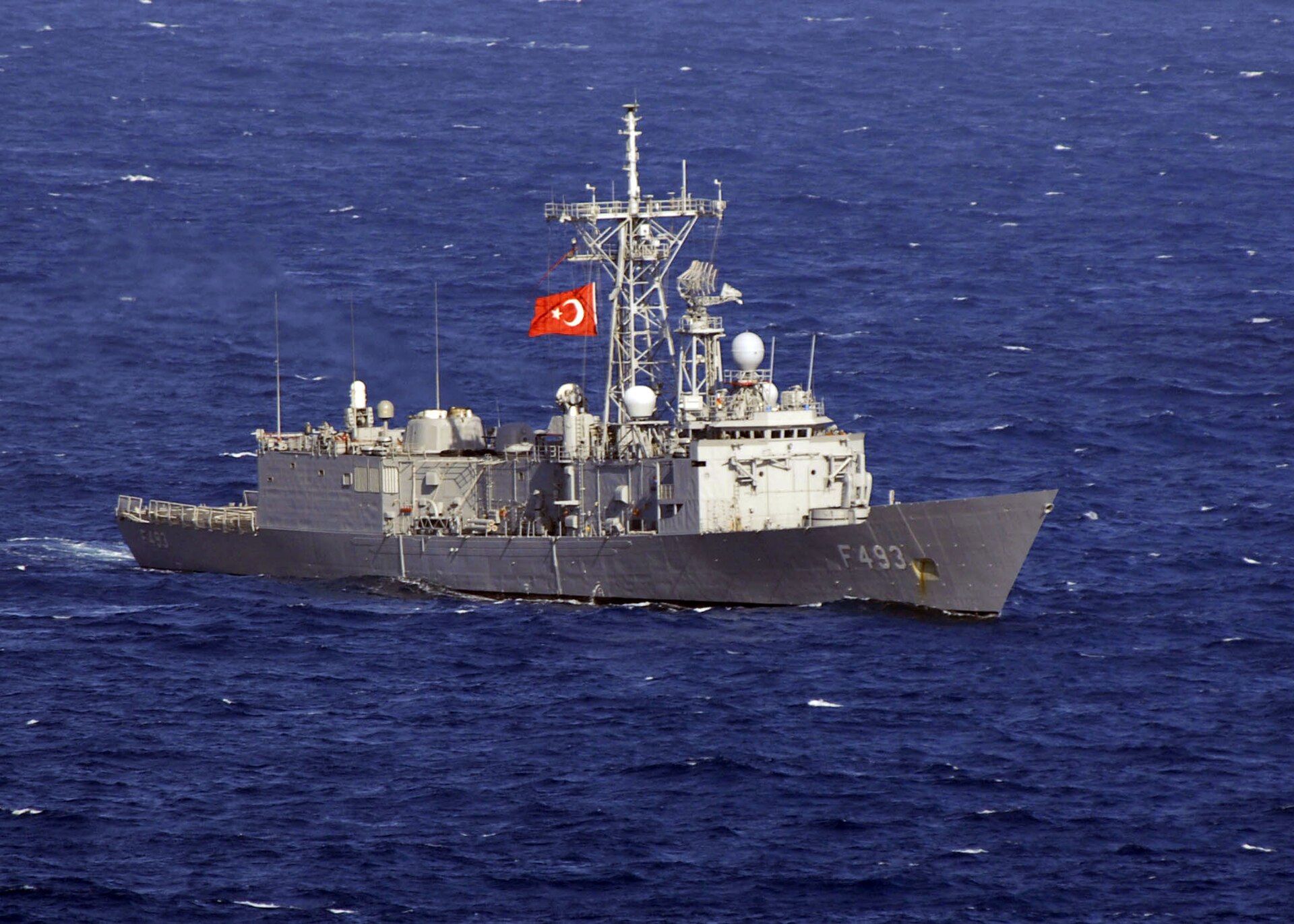
Turkey’s success in getting a vessel through the strait illustrates the transactional nature of Iran’s blockade. According to Transport Minister Uraloğlu, 15 ships with Turkish owners were waiting near the strait when the Rozana received clearance. The vessel was approved specifically because it had previously used an Iranian port, which Uraloğlu described as a factor that “facilitated coordination between Turkish and Iranian authorities for safe transit.”
The Middle East briefing 3,000+ readers start their day with.
One email. Every weekday morning. Free.
The remaining 14 Turkish-owned vessels, carrying 171 crew members, were still waiting near Iranian territorial waters as of March 13, according to the Turkish transport ministry. Ankara has maintained the highest maritime security alert for the region while continuing to negotiate with Tehran regarding the remaining ships.
Turkey’s position in the conflict has been distinct from most NATO allies. Ankara has not participated in the U.S.-Israeli military operation against Iran and has maintained diplomatic channels with both Tehran and Washington. Turkish Airlines and Pegasus Airlines suspended flights to multiple Middle Eastern destinations after the war began, and 76 international flights have been diverted to Turkish airports since late February, but Ankara’s political posture has remained that of a non-combatant NATO member maintaining independent foreign policy.
The Rozana’s passage suggests that Iran is prepared to reward that stance with tangible economic concessions — a signal that other non-aligned nations are likely watching closely.
Why Did Iran Call India a Friend?
The most diplomatically significant moment of March 13 came from Iran’s ambassador to India, Mohammad Fathali, who was asked whether Indian-flagged vessels would receive safe passage through the strait. His response was unambiguous: “Yes, because India is our friend. You will see it within two or three hours.”
Fathali elaborated on the bilateral context, telling Indian media: “As ambassador in India, I say that the government of India in this situation, after the war, helped us in different fields.” He did not specify the nature of that assistance, but India has maintained a policy of strategic neutrality throughout the conflict, declining to join either the U.S.-led coalition or Iran’s public condemnation of the strikes.
India’s energy crisis provides essential context for Tehran’s decision. India imports approximately 4.5 million barrels of oil per day, with a significant share transiting the Strait of Hormuz. The country’s strategic petroleum reserve covers only about 10 days of import requirements. By the second week of the war, Indian refineries were already drawing down emergency stocks, and the government was in active diplomatic contact with Tehran to prevent a full supply disruption.
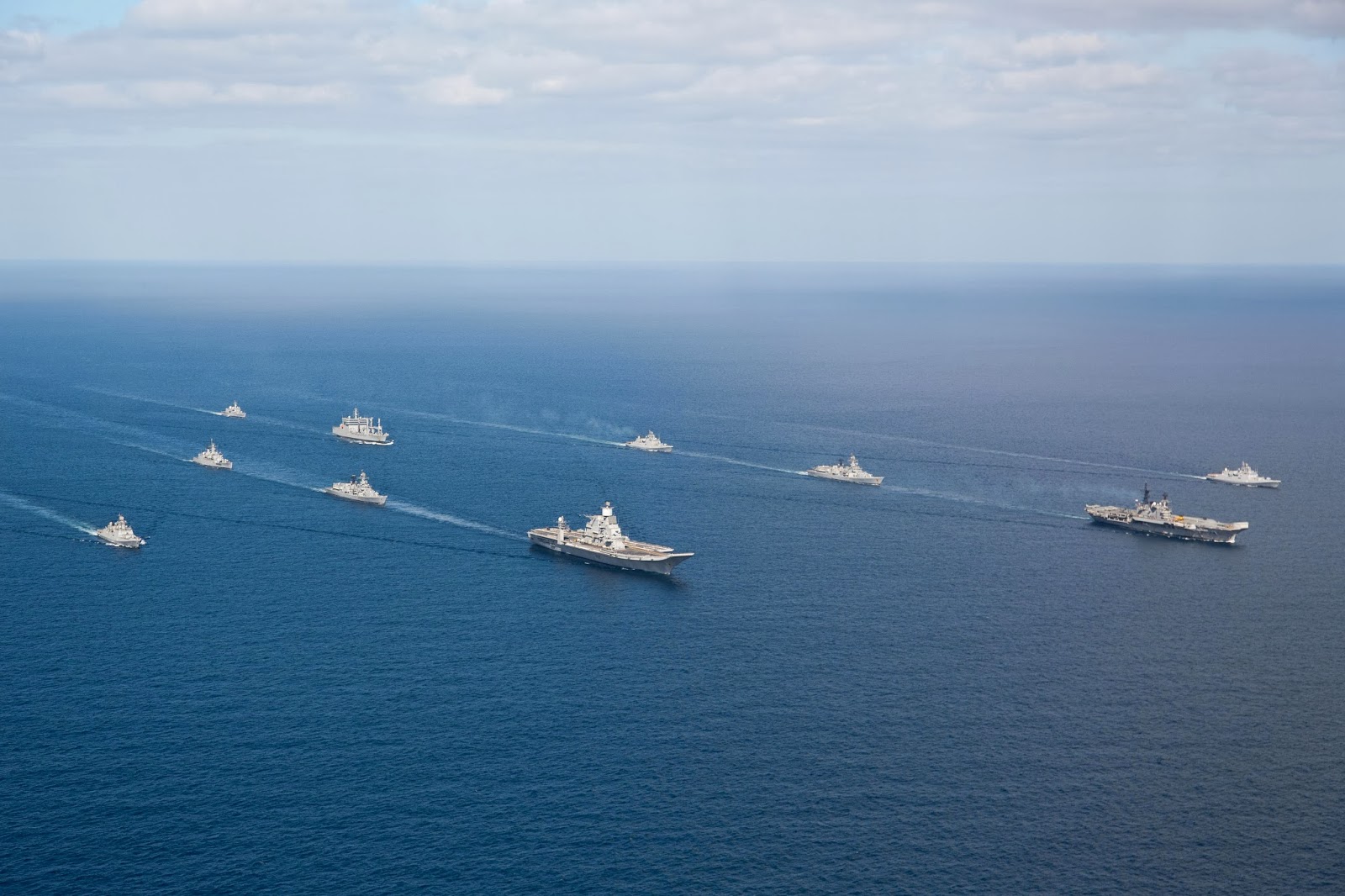
Two Indian LPG tankers received approval to exit the strait on March 13, carrying thousands of metric tonnes of liquefied petroleum gas. The vessels were expected to reach Indian ports within days. Indian authorities did not confirm whether Indian Navy escorts accompanied the vessels through the strait, though India had earlier positioned naval assets in the Arabian Sea.
The Shenlong Voyage
The most dramatic passage of the week involved the Shenlong, a Liberia-flagged suezmax tanker owned by Shenlong Shipping Ltd and managed by Dynacom Tanker Management Ltd. The vessel loaded 135,335 metric tonnes of Saudi crude oil at Aramco’s Ras Tanura terminal on March 1 and departed on March 3 — five days after the war began.
Maritime tracking data showed the Shenlong entering the Strait of Hormuz on March 8, at which point the vessel’s Automatic Identification System transponder went dark. The tanker reappeared on tracking systems on March 9, suggesting it had crossed the strait’s most dangerous stretch with its AIS deliberately switched off to avoid detection or targeting. The ship carried 29 crew members of Indian, Pakistani, and Filipino nationality, captained by an Indian national.
Port officials at Mumbai’s Jawahar Dweep Terminal confirmed the tanker arrived at approximately 13:00 local time on March 12 and began unloading its cargo. Deputy conservator Praveen Singh of the Mumbai Port Authority confirmed the cargo volume and described the arrival as routine despite the extraordinary circumstances of the transit.
The Shenlong’s voyage carries particular significance for Saudi Arabia. The crude originated at Ras Tanura, Saudi Aramco’s largest oil terminal, and was bound for one of Saudi Arabia’s most important Asian customers. That an Indian-bound vessel carrying Saudi crude was permitted through the strait while Western-flagged vessels remained blocked suggests Iran is willing to separate Saudi commercial shipping from the broader category of hostile state traffic — at least when the cargo serves a friendly destination.
Iran’s Selective Blockade Policy
The March 13 approvals did not emerge from a vacuum. Iran’s Islamic Revolutionary Guard Corps announced on March 5 — one week into the war — that it would keep the Strait of Hormuz closed only to ships from the United States, Israel, and their Western allies. The IRGC confirmed that position on March 8, explicitly stating that nations not participating in the military campaign would not be affected.
By March 12, the IRGC Navy had formalised the arrangement into what amounted to a permission-based transit system, demanding that all vessels seek Iranian authorisation before entering the strait. The March 13 approvals were the first confirmed instances of ships actually receiving and using that authorisation.
The policy creates a two-tier system in the world’s most critical maritime chokepoint. Nations aligned with the U.S.-Israeli operation — including the United Kingdom, France, Australia, and other coalition partners — face denial of passage. Nations that have maintained neutrality or friendly relations with Iran — including India, Turkey, China, and several Southeast Asian states — can negotiate transit.
| Category | Countries | Access Status | Basis |
|---|---|---|---|
| Blocked | United States, Israel, United Kingdom | Denied | Direct participants in military operations |
| Blocked | France, Australia, coalition partners | Denied | Participants in Operation Epic Fury |
| Approved | India | Granted | “Friend” — maintained neutrality, provided assistance |
| Approved | Turkey | Partial (1 of 15) | NATO member but non-combatant; ship used Iranian port |
| Negotiating | China, Japan, South Korea | Under discussion | Major energy importers with varying coalition ties |
| Unclear | Saudi Arabia (via third-party flag) | Case-by-case | Crude approved for Indian-bound Shenlong but status of Saudi-flagged vessels uncertain |
The arrangement gives Iran significant diplomatic leverage. Nations seeking passage must effectively demonstrate their non-alignment with the Western military campaign — a political cost that extends far beyond maritime logistics.
The Hormuz leverage forms one half of a broader Iranian pressure campaign. Foreign Minister Abbas Araghchi has simultaneously demanded that Gulf nations expel American military forces, framing the selective blockade and the basing ultimatum as two sides of the same strategic choice Tehran is imposing on the region.
Washington’s Response
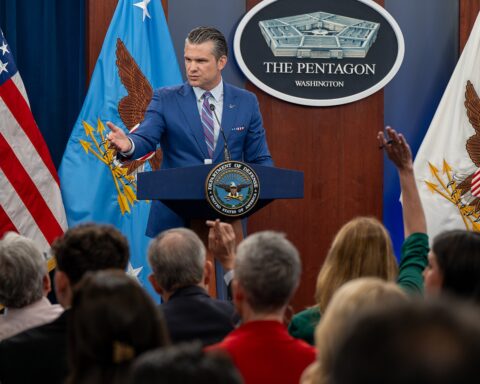
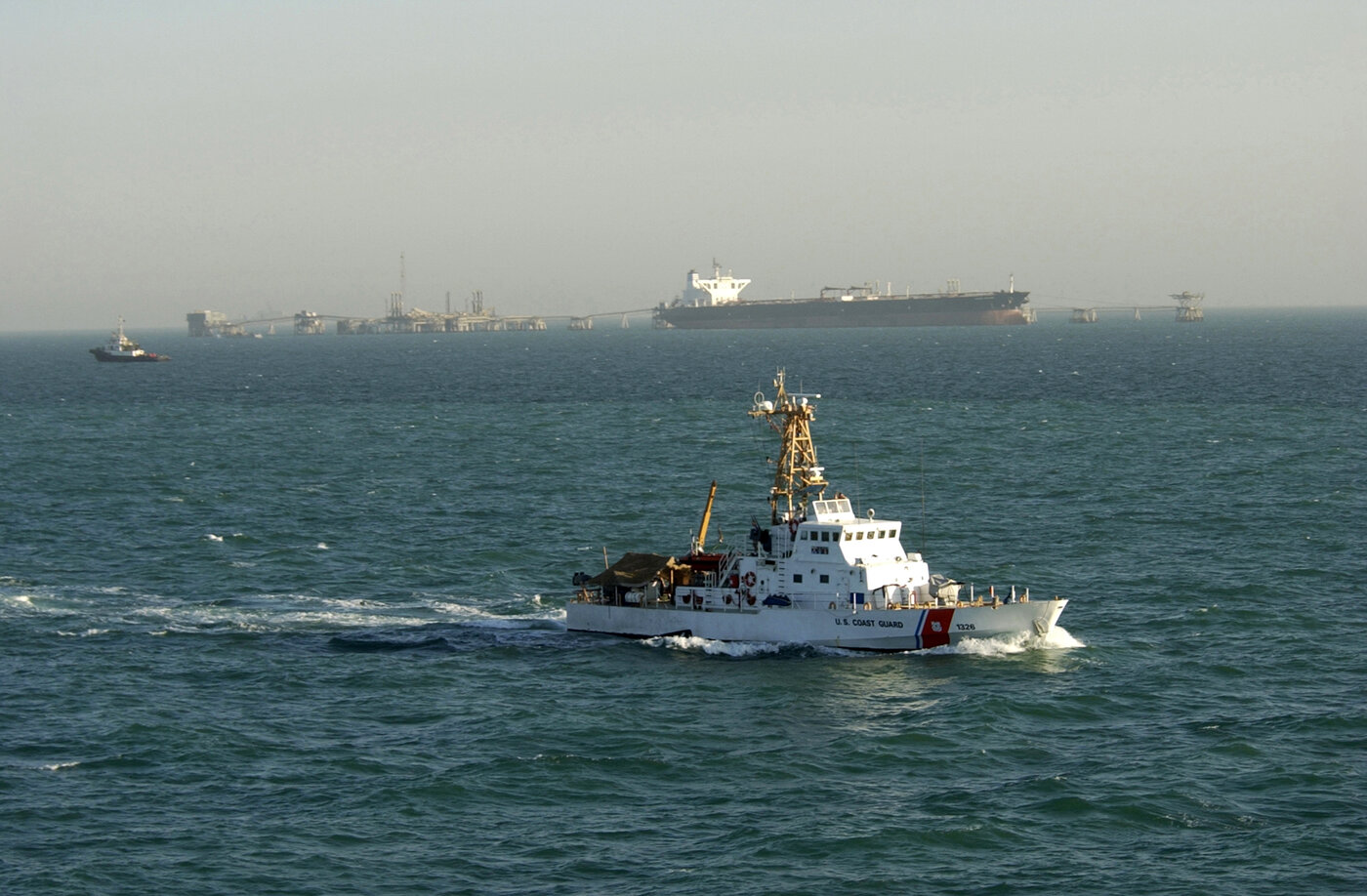
U.S. Defence Secretary Pete Hegseth addressed the Hormuz situation at a Pentagon briefing on March 13, dismissing concerns about Iran’s control of the strait. “It’s something we’re dealing with, we have been dealing with it, and don’t need to worry about it,” Hegseth told reporters, adding that the U.S. would not allow the strait to “remain contested.”
Hegseth characterised Iran’s maritime actions as “sheer desperation” and asserted the military was “on plan to defeat, destroy and disable all of their meaningful military capabilities on a pace the world has never seen before.” He challenged media reports suggesting the Pentagon had lacked a plan to reopen Hormuz before launching strikes on Iran, and stated there was “no clear evidence” that Iran had placed sea mines in the waterway.
That assessment contrasts sharply with the operational reality. U.S. tanker escort operations remain weeks away from full deployment, according to military officials cited by ABC News. And Iran’s selective blockade, rather than a total closure, creates a more complex challenge for Washington: military action to forcibly reopen the strait would not only risk escalation but could also disrupt the very passages Iran is allowing for friendly nations.
The selective approach complicates the American narrative that Iran’s Hormuz activity constitutes an act of piracy or an illegal blockade. By allowing neutral nations through while blocking only those participating in strikes, Tehran can argue it is exercising lawful self-defence rather than violating freedom of navigation — a distinction that carries weight in international law and at the United Nations Security Council.
What Does This Mean for Saudi Arabia’s Oil Exports?
Saudi Arabia sits in an unusual position within Iran’s access framework. The Kingdom is not participating in military strikes against Iran but has allowed U.S. forces to operate from bases on Saudi territory, and its airspace has been used for coalition operations. Iran has simultaneously attacked Saudi infrastructure with drones and missiles while permitting Saudi-origin crude to reach Indian markets. The Kingdom has responded by pivoting exports to the Red Sea, but Yanbu’s capacity constraints have created a new oil allocation hierarchy that determines which Asian buyers receive crude and which face rationing.
The Shenlong transit suggests Iran distinguishes between Saudi Arabia as a territorial staging ground for American forces — which it considers a hostile act — and Saudi crude oil as a commodity serving friendly nations. The vessel was Liberia-flagged, not Saudi-flagged, and its destination was India, a country Iran has explicitly designated as a friend. Whether Saudi-flagged vessels or Saudi-destination cargo would receive the same treatment remains untested and unclear.
Saudi Energy Minister Prince Abdulaziz bin Salman has not publicly commented on the selective passage arrangements. Aramco has increasingly routed exports through the East-West pipeline to Yanbu on the Red Sea coast, bypassing Hormuz entirely, but that pipeline’s 5-million-barrel-per-day capacity cannot replace the Kingdom’s full 9-million-barrel-per-day export capacity. The UAE’s Fujairah bypass option narrowed further on 14 March when Iranian drones struck the Fujairah oil terminal, forcing a suspension of loading operations at the world’s second-largest bunkering hub.
For Riyadh, the selective blockade creates a strategic dilemma. Saudi Arabia needs Hormuz open to maintain its economic lifeline, but the mechanism Iran has created for opening it — diplomatic engagement that implicitly requires distancing from the U.S. campaign — is politically impossible for the Kingdom to pursue while American jets fly from Saudi bases. The currency dimension of this dilemma is even more consequential: reports that Tehran is considering yuan-denominated passage as a condition for Hormuz transit threaten the petrodollar system that has underpinned Saudi Arabia’s relationship with Washington for fifty years.
Hormuz Traffic by the Numbers
The scale of disruption at Hormuz dwarfs any previous crisis in the waterway’s history. Before the war, the strait handled approximately 21 million barrels of oil per day — roughly 20 per cent of global consumption — plus significant volumes of liquefied natural gas, primarily from Qatar.
| Metric | Pre-War | Week 1 | Week 2 |
|---|---|---|---|
| Daily oil transit (million barrels) | 21.0 | ~6.3 | ~2.1 |
| Traffic reduction | — | 70% | 90% |
| Ships stranded in Persian Gulf | 0 | ~1,500 | 3,000+ |
| Crew members stranded | — | ~10,000 | 20,000+ |
| Vessel incidents (UKMTO reports) | 0 | 8 | 17 |
| Brent crude ($/barrel) | ~72 | ~95 | ~100 |
| Confirmed passages (friendly nations) | — | 0 | 4+ |
The four confirmed passages on March 12-13 — the Shenlong, the Rozana, and two Indian LPG carriers — represent a tiny fraction of normal traffic. But they establish a precedent that could gradually expand if more nations negotiate bilateral arrangements with Tehran. The question is whether Iran can maintain a functioning permission system at the scale required to serve even friendly nations’ full energy needs, or whether the selective approach will prove operationally unsustainable.
Bloomberg reported on March 13 that traffic had “bottomed out” and Tehran had “hardened” the blockade against Western shipping even as it opened channels for selected vessels. That pattern — tightening the grip on adversaries while loosening it for allies — represents a more sophisticated strategy than the total closure many analysts expected.
Which Countries Remain Blocked?
Iran’s definition of “countries that joined the aggression” encompasses a broader list than just the United States and Israel. The UK has deployed naval assets to the Gulf and participated in intelligence sharing for the strike campaign. France has deepened its military engagement after an Iranian drone killed a French soldier in the region. Australia, Canada, and several other Western nations have provided various levels of support to the operation.
For these countries’ commercial fleets, the blockade remains absolute. No Western-flagged vessel has successfully transited Hormuz since the war began, and insurance rates for Gulf shipping have risen to levels not seen since the 1987-88 Tanker War. Lloyd’s of London quoted war-risk premiums of 5-10 per cent of hull value for vessels attempting the strait, effectively pricing most commercial transit out of viability.
Japan and South Korea occupy a particularly uncomfortable middle ground. Both are major U.S. allies and host American military bases, but their energy dependence on Gulf oil rivals India’s. Neither has confirmed whether it has sought passage from Iran, and both face potential domestic political crises if their oil supplies remain cut off through the end of March. South Korean refineries were already reporting shortfalls by the second week of the war.
China’s position is perhaps the most consequential. Beijing has maintained careful neutrality and dispatched a peace envoy to the region, but it has not publicly confirmed whether its vessels have sought or received Iranian authorisation. China imports approximately 10 million barrels of oil per day, with a significant share originating from Gulf producers.
Frequently Asked Questions
Is the Strait of Hormuz fully closed?
The Strait of Hormuz is not fully closed. Iran is operating a selective blockade, blocking vessels from the United States, Israel, and allied Western nations while granting passage to ships from countries it considers neutral or friendly, including India and Turkey. Traffic through the strait has dropped approximately 90 per cent from pre-war levels, but confirmed passages by Turkish, Indian, and Saudi-chartered vessels on March 12-13 demonstrate the waterway is partially operational.
Which ships has Iran allowed through the Strait of Hormuz?
As of March 13, 2026, Iran confirmed passage for the Turkish merchant vessel Rozana, two Indian LPG tankers, and the Liberia-flagged suezmax tanker Shenlong carrying 135,335 metric tonnes of Saudi crude oil bound for Mumbai. The Shenlong loaded its cargo at Saudi Aramco’s Ras Tanura terminal and arrived at Mumbai’s Jawahar Dweep Terminal on March 12. Iran’s deputy foreign minister confirmed the selective approach, stating countries that “talked to us” received cooperation.
Can Saudi Arabia export oil through Hormuz during the blockade?
Saudi crude oil has successfully transited the strait — the Shenlong tanker carried Saudi oil from Ras Tanura to Mumbai — but the passage was under a Liberian flag bound for India, a country Iran considers a friend. Whether Saudi-flagged vessels or shipments to Western destinations would receive the same treatment remains untested. Saudi Aramco has increasingly used the East-West pipeline to Yanbu on the Red Sea to bypass Hormuz, though that route handles only about 5 million barrels per day of the Kingdom’s 9 million barrel export capacity.
Why did Iran call India a friend?
Iran’s ambassador to India, Mohammad Fathali, stated “because India is our friend” when confirming safe passage for Indian vessels. India has maintained strategic neutrality throughout the conflict, declining to join the U.S.-Israeli military campaign or publicly condemn it. Fathali also said India “helped us in different fields” after the war began, though he did not specify the nature of that assistance. India imports approximately 4.5 million barrels of oil per day, with a significant share transiting Hormuz.
What is the United States doing about Iran’s Hormuz blockade?
Defence Secretary Pete Hegseth said on March 13 that the U.S. is “dealing with” the Hormuz situation and that Americans “don’t need to worry about it.” He described Iran’s actions as “sheer desperation” and denied evidence of Iranian mine-laying. However, U.S. tanker escort operations under Operation Maritime Shield remain weeks from full deployment, and Iran’s selective approach — allowing friendly nations through while blocking coalition partners — complicates the legal and military case for forcible reopening.