
DHAHRAN — Iran’s blockade of the Strait of Hormuz has achieved in sixteen days what a decade of BRICS summits, petroyuan proposals, and de-dollarization manifestos never could. Tehran is now deciding which tankers pass through the world’s most critical shipping lane based on a single criterion: whether the cargo is priced in Chinese yuan. The implications for Saudi Arabia’s five-decade petrodollar compact with the United States are existential, and Riyadh knows it.
On March 15, Bloomberg reported that an Iranian supertanker pushed through the Strait bound for China, while Fortune confirmed that Tehran is “giving some countries access” to Hormuz while denying it to others. The Islamic Revolutionary Guard Corps closed the strait to vessels linked to the United States, Israel, and their Western allies on March 5. But for India, Turkey, and China, the waterway remains navigable — provided the right diplomatic channels are activated and, increasingly, the right currency is tendered. A senior U.S. official told CNN that Iran is considering allowing limited tanker passage on the condition that cargo is priced in yuan, not dollars. If confirmed, the 2026 war will be remembered not only for the missiles that struck Ras Tanura but for the moment the dollar lost its monopoly on the world’s most important energy chokepoint.
Table of Contents
- What Is the Petrodollar and Why Does It Matter to Saudi Arabia?
- How Is Iran Deciding Who Passes Through Hormuz?
- The Yuan Condition That Changes Everything
- India’s Bilateral Deal Exposes the System’s Fragility
- Beijing’s Supertanker Through the Blockade
- Was the Petrodollar Already Dying Before the War?
- The Currency Alignment Matrix
- Why Saudi Arabia Cannot Afford to Choose
- Can the Riyal’s Dollar Peg Survive a Multipolar Oil Market?
- The War Did Not Kill the Petrodollar. It Revealed the Cause of Death.
- What Does the Hormuz Precedent Mean for Global Energy Markets?
- What Happens When the Shooting Stops?
- Frequently Asked Questions
What Is the Petrodollar and Why Does It Matter to Saudi Arabia?
The petrodollar system is the informal arrangement, originating in 1974, under which Saudi Arabia and other OPEC producers price crude oil exclusively in United States dollars, recycling their surplus revenues into American Treasury securities, defence contracts, and dollar-denominated assets. In exchange, Washington provides military protection for the Kingdom’s oil fields and guarantees the security of the ruling House of Saud. The arrangement underpins the dollar’s status as the world’s reserve currency and has shaped every major decision in Saudi foreign policy for half a century.
The mechanics are straightforward. Every barrel of Saudi crude sold on global markets generates dollar-denominated revenue. Those dollars flow back into the U.S. financial system through Treasury purchases, military procurement contracts, and investments in American real estate and equities. The recycling loop creates perpetual demand for dollars, suppresses U.S. borrowing costs, and ensures that any country wishing to buy oil must first acquire American currency — a structural advantage that costs the United States nothing and earns it everything.
For Saudi Arabia, the arrangement delivered three benefits that no alternative could match. First, it locked in American military protection at a time when the Kingdom lacked the capacity to defend its own oil fields against regional rivals. Second, it gave the Saudi riyal an anchor of stability: pegged to the dollar at 3.75 since 1986, the riyal imported America’s monetary credibility without requiring Riyadh to build its own. Third, it positioned the Kingdom as Washington’s indispensable partner in the Middle East, ensuring that American presidents from Nixon to Trump would treat Saudi security concerns as extensions of American national interest. Tehran’s diplomatic messaging has added further complexity, with Iran’s ambassador to Riyadh denying responsibility for strikes on Saudi oil infrastructure and calling for a reset in Gulf relations.
The foundations of this system were laid in the aftermath of the 1973 oil embargo, when Secretary of State Henry Kissinger and Treasury Secretary William Simon negotiated a framework with King Faisal and his successors. The precise terms remain classified, but the operational reality is well documented: by 1975, every OPEC member had adopted dollar pricing for crude oil exports, and the petrodollar recycling loop had become the circulatory system of global finance. The framework was never a formal treaty — it rested on mutual interest, personal relationships between American and Saudi leaders, and the absence of any credible alternative currency. For fifty years, those conditions held. The 2026 Iran war is testing whether they still do.
The Middle East briefing 3,000+ readers start their day with.
One email. Every weekday morning. Free.
How Is Iran Deciding Who Passes Through Hormuz?
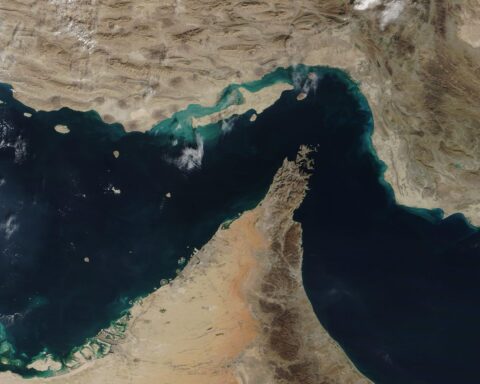
Iran’s blockade of the Strait of Hormuz is not total. It is selective, strategic, and designed to fracture the Western-led order that has governed maritime energy trade since the Second World War. The IRGC announced on March 5 that the strait would remain closed to vessels linked to the United States, Israel, and their Western allies. But from the first days of the blockade, exceptions appeared — and each exception carried a geopolitical price tag.
Foreign Minister Abbas Araghchi told reporters on March 14 that Tehran had been “approached by a number of countries” seeking safe passage for their vessels. “This is up to our military to decide,” he said, confirming that the IRGC Navy holds the final authority over which ships transit and which are turned back. The selective approach transforms Hormuz from a contested waterway into a geopolitical loyalty test: countries must demonstrate their independence from the American-led coalition to earn passage. Araghchi’s combative posture extends beyond maritime policy — he told CBS News on March 16 that Tehran has never asked for a ceasefire and has no interest in negotiations with Washington.
The evidence of selective transit is accumulating rapidly. On March 7, a Liberia-flagged bulk carrier, the Sino Ocean, broadcast its Chinese ownership to navigate the strait after loading cargo in the UAE. On March 13, Turkey’s transport minister Abdulkadir Uraloğlu confirmed that Iran had approved the passage of a Turkish vessel. On March 14, two Indian-flagged LPG tankers, Shivalik and Nanda Devi, transited with naval escort after bilateral negotiations between New Delhi and Tehran. Even a Saudi oil tanker carrying one million barrels destined for India was reportedly allowed through — a remarkable concession given that Saudi Arabia is a primary target of Iran’s retaliatory strikes.
| Date | Vessel / Flag | Cargo | Destination | Basis for Passage |
|---|---|---|---|---|
| Mar 7 | Sino Ocean / Liberia (Chinese-owned) | Bulk cargo | China | Chinese ownership broadcast |
| Mar 13 | Unnamed / Turkey | General cargo | Turkey | Bilateral approval via transport ministry |
| Mar 14 | Shivalik / India | 46,350 tonnes LPG | India | PM Modi–Pezeshkian phone call |
| Mar 14 | Nanda Devi / India | 46,350 tonnes LPG | India | PM Modi–Pezeshkian phone call |
| Mar 14 | Unnamed / Saudi (India-bound) | 1 million barrels crude | India | Indian diplomatic channel |
| Mar 15 | Iranian supertanker | Crude oil | China | Iranian-flagged vessel |
The pattern is unmistakable. Countries that have maintained diplomatic relationships with Tehran, avoided joining the American-Israeli military campaign, and demonstrated willingness to engage on Iran’s terms are receiving passage. Countries that have not are watching their energy supplies evaporate. The blockade has become, in effect, a geopolitical sorting mechanism that rewards neutrality and punishes alignment with Washington.
The Yuan Condition That Changes Everything
The most consequential development is not the blockade itself but the currency condition Iran appears to be attaching to passage. A senior U.S. official told CNN on March 14 that Iran is considering allowing limited tanker traffic through Hormuz on the condition that the oil cargo is priced and settled in Chinese yuan rather than U.S. dollars. If implemented, this policy would represent the first time in modern history that a military actor has used physical control of a strategic chokepoint to dictate the currency of energy trade.
The logic from Tehran’s perspective is straightforward. Iran has been cut off from the dollar-based financial system since the reimposition of American sanctions. Its primary trade partner is China, and its oil exports — roughly 1.5 million barrels per day before the war — are already priced predominantly in yuan. By requiring yuan settlement for Hormuz passage, Iran achieves three objectives simultaneously: it strengthens the only currency in which it can actually transact, it rewards its most important economic partner, and it undermines the financial architecture of the country that is bombing its cities.
The operational implications are profound. Roughly 20 percent of global oil supply — approximately 17 to 20 million barrels per day under normal conditions — transits the Strait of Hormuz. If even a fraction of that volume shifts to yuan settlement as a condition of passage, the structural demand for dollars in global energy markets drops measurably. The Shanghai International Energy Exchange, which already handles 200,000 to 300,000 crude oil futures contracts daily, would see a surge in activity. China’s already aggressive push to internationalise the yuan through energy trade would receive its most powerful accelerant yet — not from a BRICS communiqué but from an IRGC naval commander.
The Financial Times reported on March 15 that several Asian trading houses have already begun exploring yuan-denominated crude contracts for cargoes originating in the Persian Gulf. Three major commodity traders told Reuters that they had received inquiries from Gulf-based charterers about structuring voyage charters with yuan settlement options. The infrastructure exists: the $7 billion China-Saudi currency swap agreement signed in 2024 provides a framework for direct yuan-riyal settlement, and Saudi Arabia’s participation in the mBridge cross-border payment system offers a digital settlement layer that bypasses SWIFT entirely.
“Iran is doing with gunboats what Beijing could never do with white papers. The yuan-for-passage policy at Hormuz is the most significant threat to dollar hegemony in oil markets since 1974 — and it came from the one actor the United States and Saudi Arabia failed to deter.”Former senior U.S. Treasury official, speaking to the Financial Times, March 2026
India’s Bilateral Deal Exposes the System’s Fragility
India’s successful negotiation of tanker passage through Hormuz reveals how quickly the American-guaranteed maritime order can be bypassed when individual nations pursue bilateral solutions. On March 14, two Indian-flagged LPG tankers — the Shivalik and Nanda Devi, carrying a combined 92,700 tonnes of liquefied gas — transited the strait under Indian Navy escort after direct diplomatic engagement between New Delhi and Tehran.
The passage followed a phone call between Prime Minister Narendra Modi and Iranian President Masoud Pezeshkian, during which the two leaders discussed “the transit of goods and energy from the Gulf,” according to India’s Ministry of External Affairs. Iran’s ambassador to India, Mohammad Fathali, subsequently confirmed the arrangement with a phrase that will be studied in foreign ministries worldwide: “Because India is our friend.”
India’s approach is significant for what it represents structurally. Rather than waiting for the United States to assemble a multinational naval escort — an effort the Pentagon has acknowledged will take weeks to become operational — New Delhi moved independently. The Indian Navy deployed three warships to the Gulf of Oman under Operation Sankalp, an existing framework for protecting Indian commercial shipping that has operated since 2019. The escorts were unilateral, not part of any American-led coalition, and they succeeded precisely because India maintained its diplomatic relationship with Iran while the United States was bombing Iranian territory. The bilateral deals struck by India, China, and Turkey have rendered Trump’s proposed multinational Hormuz coalition stillborn before a single allied warship was committed.
The bilateral model India has established carries three implications that Saudi Arabia must reckon with. First, it demonstrates that access to Gulf energy is no longer guaranteed by American naval dominance. Countries that maintain independent relationships with Iran can secure their own supply lines without Washington’s permission or assistance. Second, it creates a template for other major importers — Japan, South Korea, and European nations — to pursue their own bilateral deals with Tehran. Third, it weakens the foundational premise of the petrodollar compact: that Saudi Arabia needs American military protection to ensure the safe transit of its oil exports. If India can protect its own tankers through Hormuz, the question becomes whether Saudi Arabia’s security guarantee from Washington is worth the currency constraints that come with it.
Beijing’s Supertanker Through the Blockade
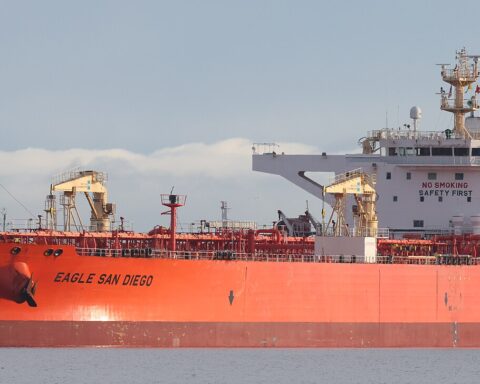
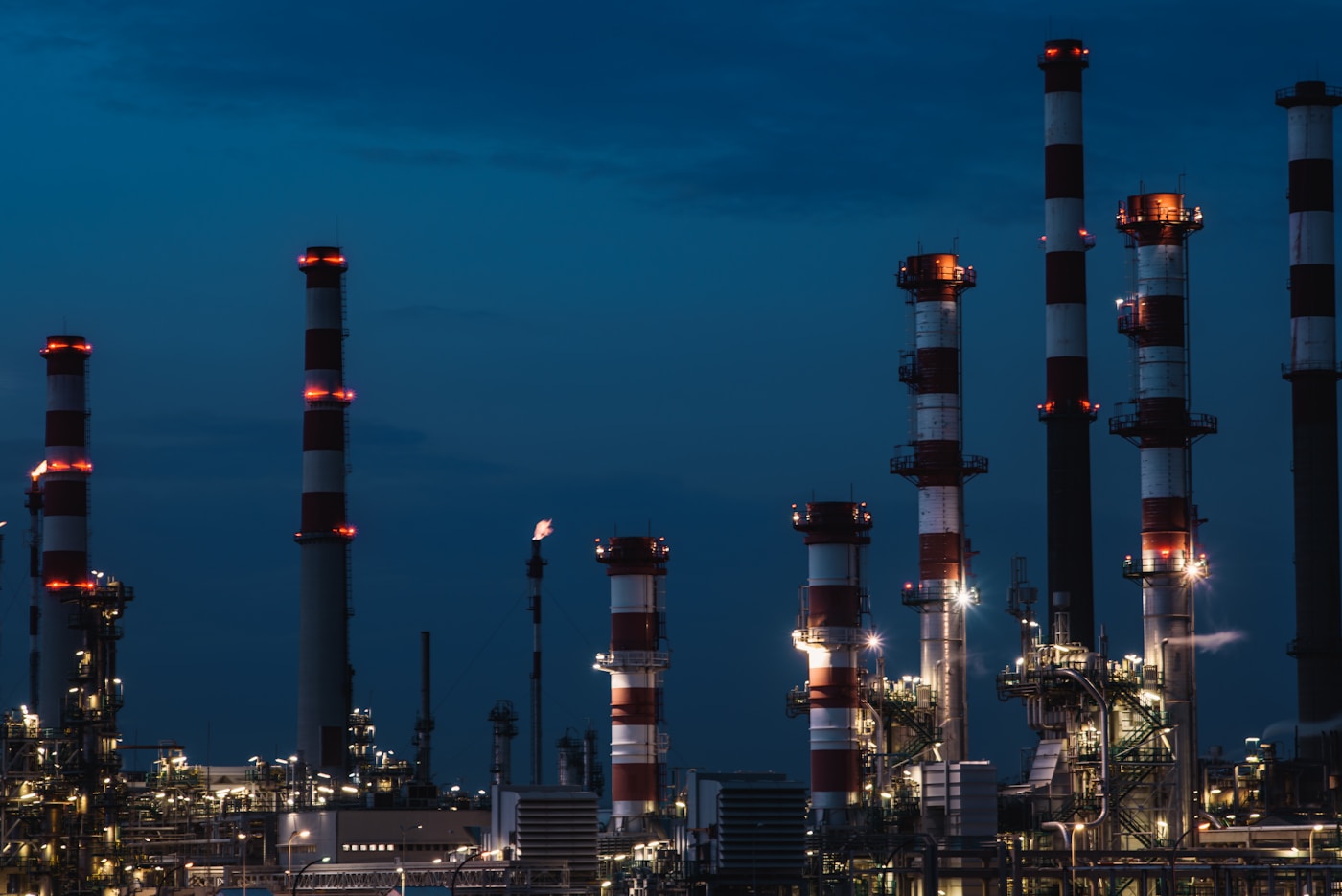
On March 15, Bloomberg’s Hormuz Tracker confirmed that an Iranian supertanker had pushed through the strait bound for China. The vessel’s passage, unremarkable in peacetime, carried extraordinary weight in the context of a selective blockade. Iran was demonstrating that its closure of Hormuz is not a blunt instrument of desperation but a calibrated tool of statecraft — one that serves Chinese interests at least as effectively as it punishes American ones.
China’s position in the Hormuz crisis is uniquely advantageous. Before the war, China imported approximately 10.5 million barrels of oil per day, with roughly 40 percent transiting the Strait of Hormuz. Beijing has invested years in building alternative supply relationships — Russian pipeline crude through the ESPO system, Central Asian oil through Kazakhstan, West African and Brazilian seaborne cargoes routed around the Cape of Good Hope. But the Gulf remains critical, and Iran’s willingness to grant passage to Chinese-linked vessels ensures that Beijing’s energy security is less disrupted than that of Washington’s allies.
The yuan-for-passage condition, if formalised, would represent the culmination of a strategy Beijing has pursued since 2018, when the Shanghai International Energy Exchange launched its yuan-denominated crude oil futures contract. Monthly trading volumes on the exchange reached 24.93 trillion yuan in November 2025, an 11 percent annual increase, according to exchange data. The infrastructure for yuan-priced oil trade exists. What has been missing is the forcing function — a crisis severe enough to compel buyers to abandon dollar settlement. Iran’s blockade provides exactly that.
For Saudi Arabia, the Chinese supertanker through the blockade poses a direct challenge. The Kingdom’s largest customer is China, which purchases roughly 1.76 million barrels of Saudi crude per day under normal conditions. If Beijing can secure energy supplies through bilateral arrangements with Iran while the strait remains closed to Western-linked shipping, the economic calculus shifts. Saudi Arabia risks losing market share to Iranian, Russian, and Iraqi crude priced in yuan — the very competitors it has spent decades trying to outproduce. The oil partnership with Russia that served Saudi interests within OPEC+ now appears increasingly fragile as Moscow and Beijing deepen their own yuan-settled energy corridor.
Was the Petrodollar Already Dying Before the War?
The war accelerated a process that was already underway. The question is whether the erosion was cosmetic or structural — and the data suggests the latter.
In June 2024, Saudi Arabia effectively ended its exclusive commitment to dollar pricing for oil exports. The Kingdom did not sign a new agreement with the United States, and the informal understanding that had governed oil pricing since 1974 lapsed without renewal. Riyadh subsequently signalled its openness to accepting yuan, euros, Japanese yen, and Indian rupees for crude sales. The move was widely reported but its significance was debated: sceptics argued that the dollar’s dominance in oil markets rested on infrastructure and habit rather than formal agreements, and that Saudi Arabia’s stated openness to alternatives would not translate into actual diversification.
The sceptics were partially right — until the war. Between June 2024 and February 2026, the share of global oil trade settled in dollars declined by roughly 3 to 5 percentage points, according to estimates from the Bank for International Settlements. The shift was real but gradual, driven primarily by increased Russian-Chinese yuan trade and Iran’s existing yuan-denominated exports. Saudi Arabia itself continued to settle the overwhelming majority of its crude sales in dollars.
| Year | Event | Impact on Dollar Share of Oil Trade |
|---|---|---|
| 2018 | Shanghai INE launches yuan crude futures | Minimal — limited to Chinese domestic market |
| 2022 | Russia shifts to yuan/rupee settlement after sanctions | 2–3% of global oil trade moves off-dollar |
| 2023 | Saudi Arabia joins BRICS, signals currency openness | Symbolic — no operational change |
| 2024 | Saudi-China $7 billion currency swap; mBridge participation; petrodollar non-renewal | Infrastructure built but barely used |
| 2025 | Shanghai INE monthly volume reaches 24.93 trillion yuan | Yuan oil futures gain liquidity but dollar dominates |
| 2026 | Iran’s selective Hormuz blockade; yuan-for-passage condition | Potential forcing function for rapid shift |
The pattern reveals a distinction that matters enormously for Saudi Arabia. Before the war, de-dollarization in oil markets was a choice — one that countries could make gradually, experimentally, and reversibly. Iran’s blockade is converting it into a necessity. Countries that cannot access Hormuz through American naval escorts — and the Pentagon has admitted it lacks the capacity to provide them for weeks — must either accept yuan settlement or watch their energy supplies dry up. The IRGC has done what ten years of BRICS summits could not: create a real-time, high-stakes incentive to abandon dollar settlement in oil markets.
The Currency Alignment Matrix
The Hormuz blockade has created a new taxonomy of nations, sorted not by military alliances or ideological affinities but by their currency relationships. Three categories are emerging, and Saudi Arabia’s position within this taxonomy will determine the trajectory of the petrodollar system for the next decade.
| Category | Countries | Hormuz Access | Oil Settlement Currency | Saudi Relationship |
|---|---|---|---|---|
| Dollar Bloc | United States, United Kingdom, Australia, Japan (current), South Korea (current) | Denied / requires military escort | Dollar | Traditional allies |
| Yuan Corridor | China, Russia, Iran, select African states | Granted or self-provided | Yuan / local currencies | Competitors or adversaries |
| Neutral Bridge | India, Turkey, UAE (partial), Brazil, Indonesia | Negotiated bilaterally | Mixed — dollar/yuan/local | Diversifying partners |
The “Neutral Bridge” category is the most significant for Saudi Arabia. These are countries that maintain economic relationships with both Washington and Beijing, refuse to join military coalitions against Iran, and have demonstrated the diplomatic agility to negotiate their own passage through Hormuz. India is the prototype. Turkey, despite its NATO membership, is another. The UAE, which has maintained a more ambiguous posture than Saudi Arabia toward the conflict, may be positioning itself to join this group. Japan, despite its treaty alliance with the United States, has secured a transit offer from Tehran after refusing to deploy warships to the strait — the clearest example yet of neutrality yielding concrete energy access.
Saudi Arabia currently sits in the Dollar Bloc by default. Its oil exports are priced overwhelmingly in dollars, its currency is pegged to the dollar, its sovereign wealth fund holds hundreds of billions in dollar-denominated assets, and its primary security guarantor is the United States. But the war is exposing the costs of this positioning. Saudi crude exports through Hormuz are disrupted. American military protection has not prevented Iranian drones from striking Ras Tanura, the diplomatic quarter in Riyadh, and commercial shipping lanes throughout the Persian Gulf. The Kingdom is absorbing the consequences of its dollar alignment without receiving the security benefits that justified it.
The emerging alternative is not a wholesale shift to the Yuan Corridor — that would alienate Washington, jeopardise the $1 trillion investment compact with the Trump administration, and destabilise the riyal’s dollar peg. Instead, Saudi Arabia faces pressure to migrate toward the Neutral Bridge — a position that would require accepting multiple settlement currencies for oil exports while maintaining the dollar peg and the American security relationship. The question is whether such a middle position is sustainable, or whether the structural logic of the conflict forces a binary choice.
Why Saudi Arabia Cannot Afford to Choose
Mohammed bin Salman’s government confronts a dilemma that has no precedent in the Kingdom’s modern history. Every option available carries existential risk, and inaction is itself a choice with consequences.
Choosing the dollar means maintaining the American security guarantee, preserving the riyal’s peg, and protecting the approximately $440 billion in foreign reserves held by the Saudi Arabian Monetary Authority, the vast majority of which are denominated in dollars or dollar-linked assets. But it also means accepting that the United States cannot guarantee Hormuz passage, that American military protection did not prevent Iranian strikes on Saudi territory, and that dollar-priced oil may become structurally disadvantaged as the Yuan Corridor develops its own settlement infrastructure.
Choosing the yuan — or even a significant partial shift — means securing access to the world’s fastest-growing energy import market, strengthening the trade relationship with China that already accounts for roughly 17 percent of Saudi exports, and gaining a hedge against potential American sanctions in the event of a future policy disagreement. But it would provoke a severe reaction from Washington at exactly the moment the riyal’s dollar peg faces wartime pressure, and it would undermine the Kingdom’s $800 billion in dollar-denominated reserve assets by signalling reduced commitment to the currency they are held in.
The financial exposure is staggering. SAMA’s net foreign assets stood at approximately $448 billion at the start of March 2026. The Tadawul All Share Index fell 12 percent in the first week of the conflict, erasing roughly $300 billion in market capitalisation. Net foreign selling exceeded $8 billion in the same period. Every basis point of uncertainty about the Kingdom’s currency commitment amplifies these outflows. A credible signal that Riyadh is considering yuan settlement for even a fraction of its oil exports could trigger a speculative attack on the riyal peg that would cost tens of billions in reserve drawdowns to defend.
The Public Investment Fund, with its $930 billion in assets under management, is itself a dollar-dependent institution. Its investments in American technology companies, European infrastructure, and global real estate are denominated and valued in dollars. A structural shift toward yuan settlement would require the PIF to begin hedging its currency exposure — a rebalancing that would take years and cost billions in transition friction.
Can the Riyal’s Dollar Peg Survive a Multipolar Oil Market?
The Saudi riyal has been pegged to the U.S. dollar at a fixed rate of 3.75 since 1986. The peg functions as a cornerstone of economic stability, importing American monetary credibility and insulating Saudi consumers and businesses from exchange rate volatility. It works because Saudi Arabia earns its export revenue overwhelmingly in dollars, holds its reserves in dollars, and denominates its government debt in dollars. The peg is not merely a currency mechanism; it is a declaration of alignment.
A multipolar oil market — one in which significant volumes of Saudi crude are settled in yuan, rupees, or euros — would stress this arrangement in measurable ways. If 15 to 20 percent of Saudi oil revenue shifted to non-dollar currencies, SAMA would need to maintain larger yuan and rupee reserves to manage the resulting currency mismatches. The cost of defending the peg would rise because SAMA could no longer assume that oil revenue would automatically replenish its dollar reserves at a predictable rate.
SAMA Governor Ayman al-Sayari stated in January 2026 that the riyal-dollar peg “maintains domestic price stability” and that Saudi Arabia remains “committed” to the arrangement. Finance Minister Mohammed al-Jadaan reinforced the message at Davos, telling CNBC that the peg was “not under discussion.” These statements carry weight — they signal to markets that Riyadh will deploy reserves to defend the peg regardless of wartime pressures.
But the war is creating conditions that test the peg’s sustainability. Saudi oil exports through the East-West pipeline to the Red Sea port of Yanbu provide an alternative to Hormuz, but the pipeline’s capacity of roughly 5 million barrels per day cannot replace the 7 to 8 million barrels that normally flow through the strait. The revenue shortfall compounds the fiscal pressure from war-related spending, increased defence procurement, and the ongoing capital demands of Vision 2030. The terminal capacity gap has also created a buyer rationing system that gives Saudi Arabia unexpected leverage over its largest customers. If oil revenue declines while spending accelerates, SAMA’s reserves become the shock absorber — and every month of conflict reduces the buffer available to defend the peg.
| Indicator | Pre-War Level | Current Level | Threshold |
|---|---|---|---|
| SAMA net foreign assets | $448 billion | ~$435 billion (est.) | $300 billion (danger zone) |
| Forward market implied rate | 3.7500 SAR/USD | 3.7515 SAR/USD | 3.76+ (speculative pressure) |
| Oil revenue (monthly, est.) | $22 billion | $14 billion | $15 billion (fiscal break-even) |
| Tadawul foreign net selling (weekly) | -$500 million | -$2.1 billion | -$3 billion (sustained capital flight) |
The peg is not in immediate danger. SAMA’s reserves provide years of coverage at current draw-down rates, and the Saudi government has access to additional liquidity through sovereign debt markets and PIF asset sales. But the forward market is watching. Any signal that Riyadh is preparing for yuan settlement — even as a minor share of total exports — would be interpreted as the first step toward peg reassessment, triggering the very capital flight that makes reassessment necessary. It is a trap without an obvious exit.
The War Did Not Kill the Petrodollar. It Revealed the Cause of Death.
The conventional narrative frames Iran’s yuan-for-Hormuz policy as a sudden disruption — a war-induced shock that threatens to upend a stable system. This reading is wrong in a fundamental way that most analysts have failed to recognise. The petrodollar system was already in structural decline, and Saudi Arabia’s own actions accelerated that decline more substantially than any adversary’s hostile manoeuvre.
Three decisions by Riyadh in the two years before the war created the conditions for the system’s current vulnerability. First, the Kingdom’s decision in 2024 to join BRICS and signal currency diversification — however symbolic — gave legitimacy to the de-dollarization narrative at a moment when it lacked credibility. Markets do not distinguish between symbolic and operational signals; they price uncertainty, and Saudi Arabia introduced uncertainty into a system that had depended on certainty for fifty years.
Second, the $7 billion currency swap with China and Saudi Arabia’s participation in the mBridge cross-border payment platform built the infrastructure for yuan settlement before any crisis demanded it. The pipes were laid when no oil needed to flow through them. Now that a crisis has arrived, the pipes are available. Iran’s blockade did not create the petroyuan infrastructure; it merely provided the pressure to use it.
Third, and most importantly, Saudi Arabia’s deepening trade relationship with China made the Kingdom’s dollar commitment increasingly artificial. China is Saudi Arabia’s largest trading partner, its most important crude oil customer, and its fastest-growing source of technology imports. The economic reality pointed toward yuan; the currency arrangement pointed toward dollars. The gap between economic gravity and monetary architecture was widening before the first Iranian drone was launched.
The contrarian implication is uncomfortable for Riyadh. The war did not create a threat to the petrodollar; it exposed a contradiction that Saudi Arabia’s own strategy had produced. The Kingdom pursued Chinese investment, Chinese technology, and Chinese market access while maintaining a currency and security architecture designed for an era of unchallenged American dominance. The Iran war revealed that these two positions are incompatible — and that the moment of reckoning could not be deferred indefinitely.
“The petrodollar didn’t die in March 2026. It had been on life support since Riyadh started building its Beijing portfolio in 2022. The Hormuz blockade just unplugged the machine.”Energy analyst, Chatham House, March 2026
What Does the Hormuz Precedent Mean for Global Energy Markets?
The Hormuz precedent extends beyond Saudi Arabia. The blockade has demonstrated that physical control of a maritime chokepoint can be weaponised to reshape currency markets — a lesson that will not be lost on any government with access to a strategic waterway. The Malacca Strait, through which 25 percent of global trade passes, the Suez Canal, and the Bab el-Mandeb are all potential sites where similar dynamics could emerge. Every energy-importing nation is now recalculating the currency risk embedded in its supply chain geography.
The insurance markets have already responded. War risk premiums for Persian Gulf voyages reached 7.5 percent of hull value by March 14, according to Lloyd’s of London syndicates, compared to 0.05 percent before the conflict. But the more significant development is that several Asian reinsurance pools are now quoting premiums in yuan rather than dollars — a small shift that signals the beginning of non-dollar financial infrastructure for maritime energy trade. If the reinsurance market migrates to yuan pricing, the commodity trade it underwrites will follow.
The International Energy Agency’s decision on March 11 to release 400 million barrels from strategic petroleum reserves — the largest coordinated release in history — underscores the severity of the supply disruption. But strategic reserves are a temporary measure. They buy time; they do not resolve the structural question of which currency will price the oil that replaces them. The longer the blockade persists, the more permanent the trading arrangements built around it become.
Goldman Sachs warned on March 15 that Qatar and Kuwait could each see GDP contract by 14 percent if the conflict continues through April, while Oxford Economics downgraded its GCC growth forecast by 1.8 percentage points. These projections assume dollar-denominated trade resumes when the shooting stops. If it does not — if a meaningful share of post-war Gulf energy trade settles in yuan — the economic models that have governed Gulf fiscal planning for decades will require fundamental revision.
What Happens When the Shooting Stops?
The currency dynamics unleashed by the Hormuz blockade will outlast the conflict that created them. Even if a ceasefire is reached — and Iran’s foreign minister stated on March 15 that Tehran has “never asked for a ceasefire” — the precedent has been set. A sovereign actor has demonstrated the ability to control access to the world’s most critical energy chokepoint and to attach currency conditions to that access. The next crisis, whether it originates in Iran, the South China Sea, or a future Gulf confrontation, will reference this template.
For Saudi Arabia, the post-war calculus breaks into three scenarios, each with distinct currency implications.
In the first scenario — a rapid ceasefire followed by a return to pre-war conditions — the dollar reasserts its dominance, the yuan-for-passage episode becomes a footnote, and the petrodollar system survives with minor scars. This outcome requires that no permanent trading infrastructure migrates to yuan settlement during the conflict period, that American naval dominance is convincingly restored at Hormuz, and that China and Russia do not formalise the bilateral energy corridors the war has accelerated. Each of these conditions is becoming less likely with every passing week.
In the second scenario — a protracted conflict lasting through April or May — the yuan-settlement infrastructure becomes operational at scale, Asian trading houses build yuan-denominated crude portfolios, and the dollar’s share of global oil trade falls by 10 to 15 percentage points. This shift would be difficult to reverse because market participants would have invested in systems, hedging instruments, and counterparty relationships that do not depend on dollar clearing. Saudi Arabia would face pressure to accept yuan for Chinese-bound cargoes simply to maintain market share against Iranian, Russian, and Iraqi competitors already selling in yuan.
In the third scenario — post-war settlement that includes a permanent change to Hormuz governance — the implications are transformational. If any future security arrangement for the strait includes provisions for multi-currency settlement or Iranian oversight of transit conditions, the petrodollar system’s geographic foundation would be permanently altered. The strait that guaranteed dollar-denominated oil flows for fifty years would become a multi-currency corridor, and Saudi Arabia’s decision about which currency bloc to align with would become the defining geopolitical question of the 2030s.
| Scenario | Duration | Dollar Share of Saudi Oil Revenue | Yuan Share | Riyal Peg Status |
|---|---|---|---|---|
| Rapid ceasefire (by end March) | ~30 days | 92–95% | 3–5% | Stable |
| Protracted conflict (through May) | ~90 days | 78–85% | 10–15% | Stressed but defensible |
| Post-war Hormuz governance change | Permanent | 60–70% | 20–30% | Peg review within 3–5 years |
The uncertainty itself is damaging. Saudi Arabia’s wartime social contract depends on economic stability — the implicit promise that the state will continue to provide employment, subsidies, and infrastructure investment regardless of external shocks. A currency crisis, even a contained one, would undermine that contract at the worst possible moment. Crown Prince Mohammed bin Salman has staked his domestic legitimacy on Vision 2030’s promise of modernisation and growth. A forced choice between the dollar and the yuan would redefine the terms of that promise in ways the Crown Prince did not anticipate and cannot easily control.
Frequently Asked Questions
What is Iran’s yuan-for-Hormuz policy?
According to a senior U.S. official cited by CNN on March 14, 2026, Iran is considering allowing limited oil tanker traffic through the Strait of Hormuz on the condition that cargo is priced and settled in Chinese yuan rather than U.S. dollars. The policy would use military control of the strait to force a currency shift in global energy trade, undermining the dollar’s dominance in oil markets.
Has Saudi Arabia agreed to sell oil in yuan?
Saudi Arabia has not formally agreed to price oil in yuan on a permanent basis. However, the Kingdom effectively ended its exclusive commitment to dollar pricing in June 2024 and has built the technical infrastructure for yuan settlement through a $7 billion currency swap with China and participation in the mBridge payment platform. Wartime pressures may accelerate a partial shift to yuan settlement for Chinese-bound cargoes.
Is the petrodollar system officially over?
The petrodollar system has no formal expiration date because it was never codified in a formal treaty. The informal arrangement has been eroding since 2022, when Russia shifted oil sales to yuan and rupees after Western sanctions. Iran’s Hormuz blockade represents the most significant operational challenge to dollar dominance in oil markets since the system’s creation in 1974, but the dollar still accounts for an estimated 80 to 85 percent of global oil settlement.
How does Iran’s blockade affect Saudi Arabia’s currency peg?
The Saudi riyal’s peg to the dollar at 3.75 remains stable but faces wartime stress. SAMA’s foreign reserves declined from approximately $448 billion to an estimated $435 billion in the first two weeks of the conflict, and oil revenue has dropped due to Hormuz disruption. The peg is not in immediate danger — SAMA has years of coverage — but any signal of yuan diversification could trigger speculative pressure that would increase the cost of maintaining it.
Which countries has Iran allowed through the Strait of Hormuz?
As of March 15, 2026, Iran has granted passage to vessels linked to China, India, Turkey, and select other nations that have maintained diplomatic relationships with Tehran and avoided joining the American-Israeli military campaign. India secured passage for two LPG tankers after a direct phone call between Prime Minister Modi and Iranian President Pezeshkian. Iran has denied passage to vessels linked to the United States, Israel, the United Kingdom, and other Western coalition members.
What is the mBridge payment platform?
mBridge is a cross-border central bank digital currency platform developed by the Bank for International Settlements Innovation Hub in collaboration with the central banks of China, Thailand, the UAE, and Hong Kong. Saudi Arabia joined as a participant in 2024. The platform enables direct settlement between participating currencies without routing through SWIFT or the U.S. dollar clearing system, providing technical infrastructure for non-dollar energy trade.
The de-dollarisation trend has accelerated further since Ghalibaf’s declaration that Treasury bondholders are legitimate targets. Iran’s financial warfare escalation is pushing even traditional American allies to explore alternatives to dollar-denominated settlement systems.