
BAGHDAD — Rockets and at least five explosives-laden drones struck the United States Embassy compound and surrounding areas in Baghdad’s fortified Green Zone early on Tuesday in what Iraqi security officials described as the most intense militia assault since the Iran war began on 28 February. The C-RAM air defence system intercepted two of the drones before a third penetrated the compound’s perimeter, sending fire and smoke rising over the diplomatic enclave, according to Reuters and Al Jazeera, citing Iraqi security sources and eyewitnesses.
The assault — which also struck the Royal Tulip Al-Rasheed Hotel, a landmark that houses several foreign diplomatic missions including Saudi Arabia’s — marks a sharp escalation in Iraq’s slide from cautious neutrality into active conflict zone. For Riyadh, the attack carries direct implications: the kingdom shares an 814-kilometre desert border with Iraq, and Saudi Defence Minister Prince Khalid bin Salman has identified Iraq’s instability as a potential second front in a war that has already stretched Saudi air defences to their operational limits.
Table of Contents
- What Happened at Baghdad’s Green Zone on 17 March?
- How Did Embassy Air Defences Respond to the Drone Assault?
- Drone Strikes Al-Rasheed Hotel in the Heart of the Green Zone
- Who Are the Islamic Resistance in Iraq?
- Why Does Iraq’s Escalation Matter for Saudi Arabia?
- Iraq’s Government Caught Between Washington and Tehran
- How Many Attacks Have Iraqi Militias Launched Since the War Began?
- Iraq’s Oil Collapse Adds Economic Pressure to the Saudi Border
- Frequently Asked Questions
What Happened at Baghdad’s Green Zone on 17 March?
At least five explosives-laden drones and multiple rockets were launched at the US Embassy in Baghdad early on Tuesday from launch sites scattered around the Iraqi capital, according to Iraqi security sources who spoke to Reuters and Al-Monitor. The coordinated attack represented the heaviest single assault on the Green Zone since the United States and Israel launched joint strikes against Iran on 28 February, killing Supreme Leader Ali Khamenei and triggering a broader regional war.
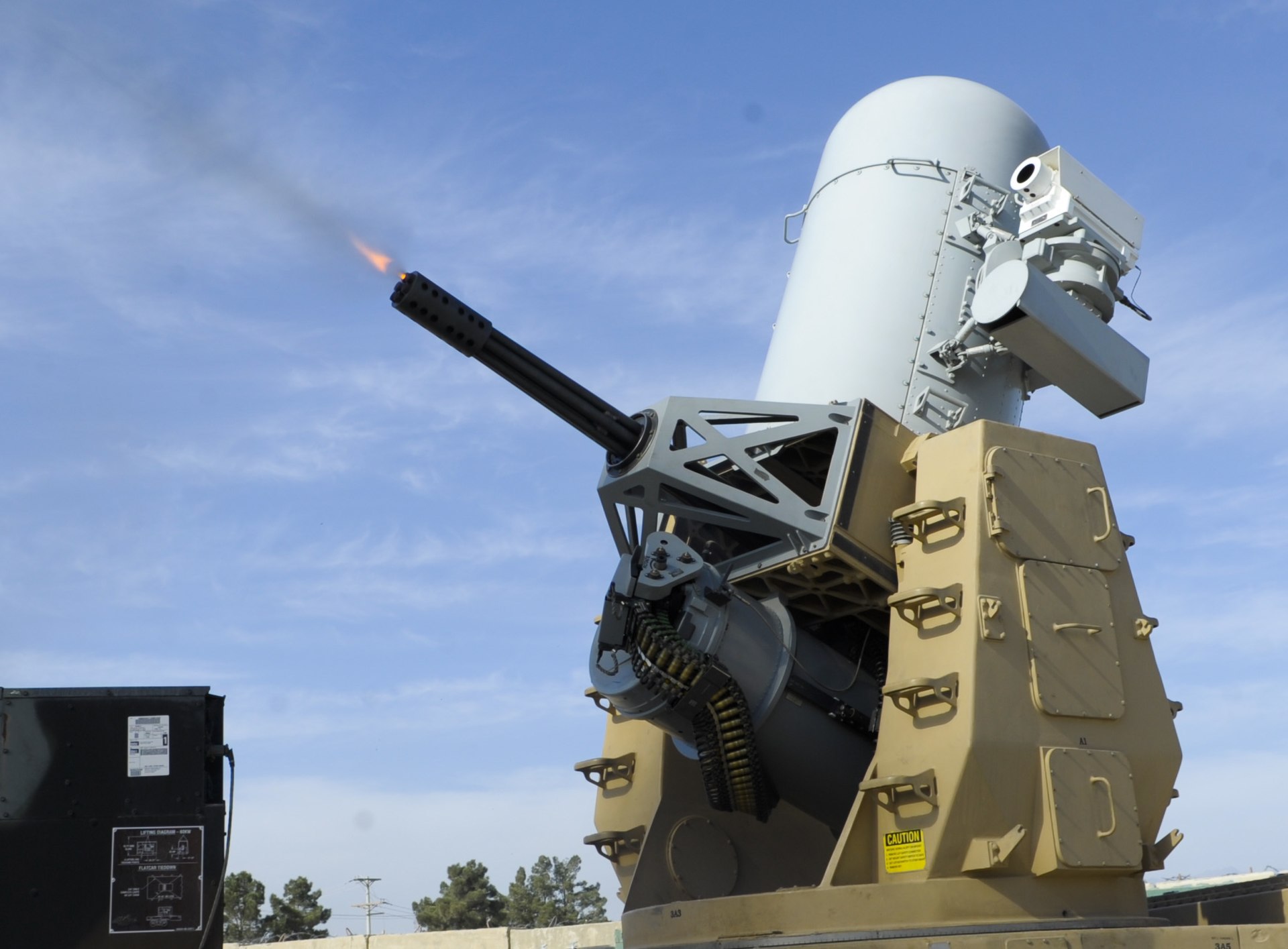
The American-operated C-RAM — Counter Rocket, Artillery, and Mortar — defence system intercepted two of the incoming drones, Reuters reported, while a third struck inside the embassy compound perimeter. A powerful explosion was heard across central Baghdad, and fire and smoke were visible rising from the compound, according to a Reuters witness. Iraqi security officials confirmed that additional rockets were intercepted in the hours before the main assault, indicating a sustained multi-wave attack pattern.
Separately, a strike on a residential building in Baghdad killed four people early Tuesday. Initial reports from Iraqi security sources, cited by Al Jazeera, indicated that two of the dead were Iranian military advisers attached to Tehran-backed groups operating in Iraq. The strikes on the residential building were unclaimed, but analysts at the Foundation for Defense of Democracies attributed them to likely coalition counter-strikes targeting militia leadership nodes.
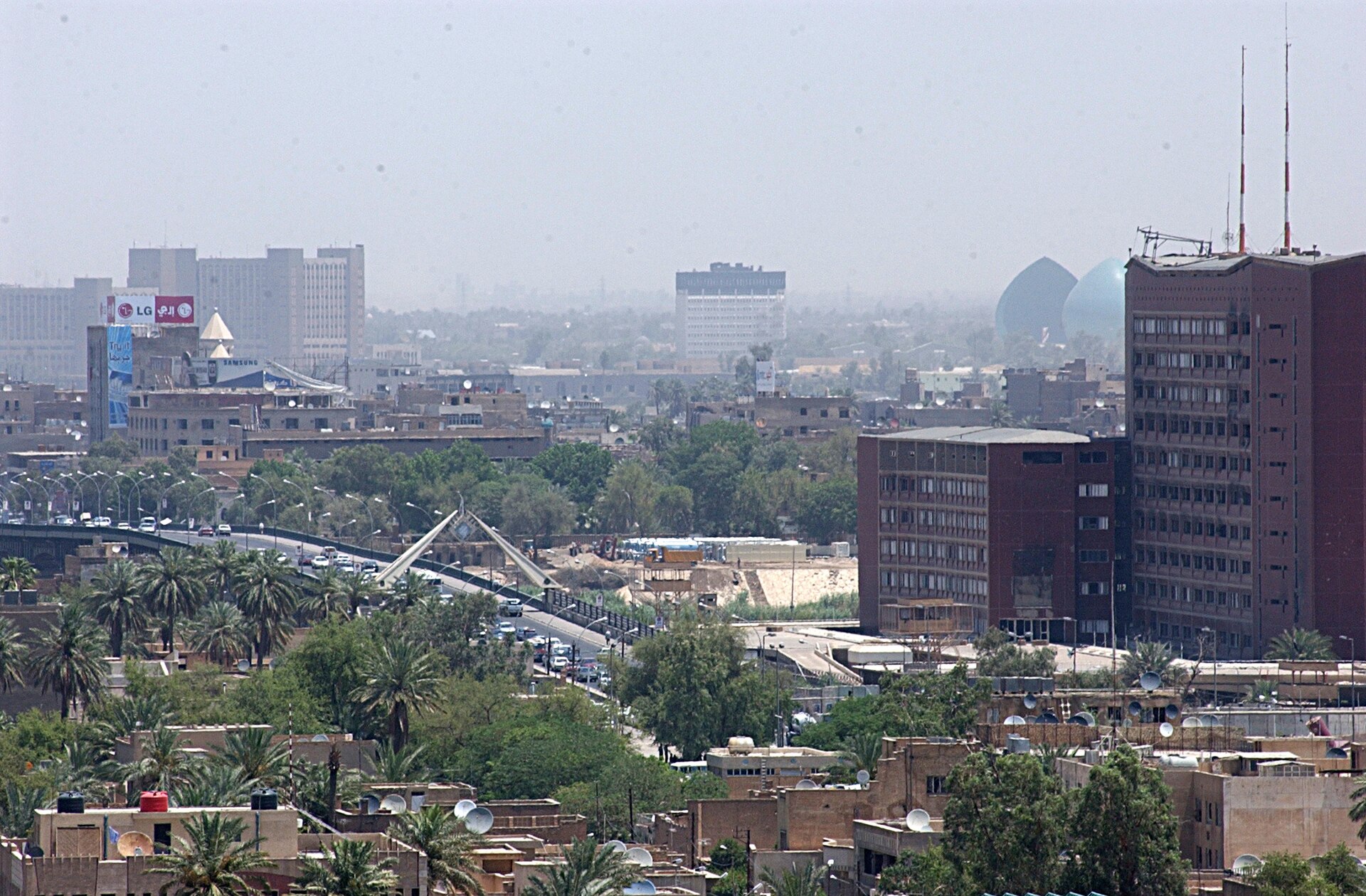
The Green Zone, a heavily fortified 10-square-kilometre enclave on the west bank of the Tigris River, houses Iraq’s parliament, the prime minister’s office, and dozens of foreign embassies. Its walls and blast barriers, built during the 2003 American occupation, were designed to protect against exactly the kind of indirect fire that has now become a near-daily occurrence.
The Middle East briefing 3,000+ readers start their day with.
One email. Every weekday morning. Free.
How Did Embassy Air Defences Respond to the Drone Assault?
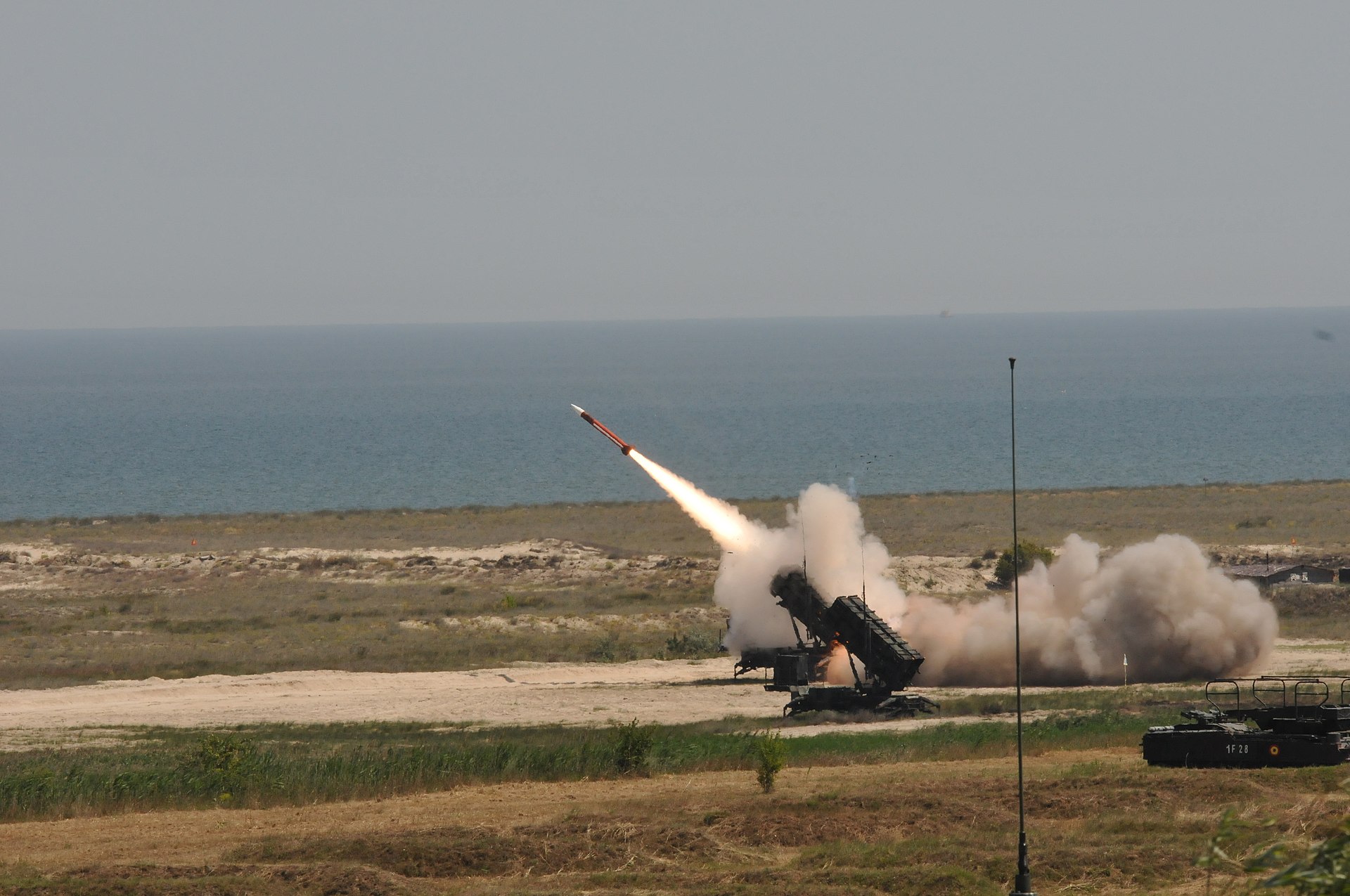
The C-RAM system — a land-based adaptation of the US Navy’s Phalanx Close-In Weapon System — uses a 20-millimetre M61 Vulcan Gatling gun capable of firing 4,500 rounds per minute to destroy incoming rockets, artillery shells, and mortar rounds. The system has been deployed at US military installations in Iraq since 2005 and has intercepted hundreds of indirect fire attacks over two decades of operations.
According to Iraqi security sources cited by Al-Monitor, the C-RAM successfully engaged two of the five incoming drones before the third breached the embassy compound’s defensive envelope. The system’s radar detected the incoming threats within seconds of launch, but the simultaneous arrival of five drones from multiple vectors overwhelmed the single-point defence system’s engagement capacity, security analysts told the Jerusalem Post.
The attack exposed a vulnerability that Saudi and Gulf military planners have studied closely: the saturation problem. A single C-RAM installation can track and engage one target at a time, cycling between threats at approximately four-second intervals. When five or more drones arrive within a narrow window — a tactic the Islamic Resistance in Iraq appears to have borrowed from Iran’s own massed drone operations against Gulf energy infrastructure — the mathematics of interception favour the attacker.
The US military has not commented publicly on the number of drones intercepted or the damage sustained inside the compound. The US Embassy in Baghdad issued a security alert on 16 March warning American citizens to “shelter in place and avoid the International Zone until further notice,” according to a notice published on the embassy’s official website.
Drone Strikes Al-Rasheed Hotel in the Heart of the Green Zone
Hours before the main embassy assault, an explosives-laden drone struck the Royal Tulip Al-Rasheed Hotel, one of Baghdad’s most prominent buildings and a fixture of the Green Zone since its construction in 1982. The drone hit the hotel’s upper structure, sparking a fire that Iraqi civil defence teams extinguished without casualties, according to Iraq’s Ministry of Interior.
The Al-Rasheed is not merely a hotel. According to reporting by the South China Morning Post and Al Jazeera, the building currently houses diplomatic missions from several countries including the European Union and Saudi Arabia, as well as foreign employees of oil companies operating in Iraq. The strike on a building hosting Saudi diplomatic personnel underscores the direct threat that Baghdad’s deteriorating security poses to Riyadh’s interests in Iraq.
The hotel has a grim history with indirect fire. During the 2003 Iraq War, a rocket attack on the Al-Rasheed killed one American soldier and injured fifteen others, including Deputy Defense Secretary Paul Wolfowitz, who was staying at the hotel at the time. The building’s return to the crosshairs in 2026 is, for many Iraqi officials and foreign diplomats, a signal that Baghdad’s security environment has regressed to levels not seen in over a decade.
Iraqi Prime Minister Mohammed Shia’ al-Sudani condemned the hotel strike as a “terrorist act” and ordered security forces to track down those responsible, according to the prime minister’s office. Sudani’s government has described the attack as an assault on Iraqi sovereignty, though it pointedly avoided naming the Iran-backed militias widely assessed to be responsible.
Who Are the Islamic Resistance in Iraq?
The Islamic Resistance in Iraq is an umbrella coalition of Iranian-backed Shia militia groups that has claimed responsibility for the majority of attacks on US interests in Iraq since the war began. The coalition includes Kata’ib Hezbollah, Asa’ib Ahl al-Haq, Harakat Hezbollah al-Nujaba, and several smaller factions that operate under varying degrees of Iranian Revolutionary Guard Corps command, according to the Foundation for Defense of Democracies and the Long War Journal.
The coalition claimed in a statement on 11 March that it had carried out 291 attacks since the start of the war, including 31 operations on 10 and 11 March alone, according to the FDD’s Long War Journal. During the first three days of the conflict, the Islamic Resistance in Iraq claimed 67 drone and missile attacks against what it described as “enemy bases in Iraq and the region.”
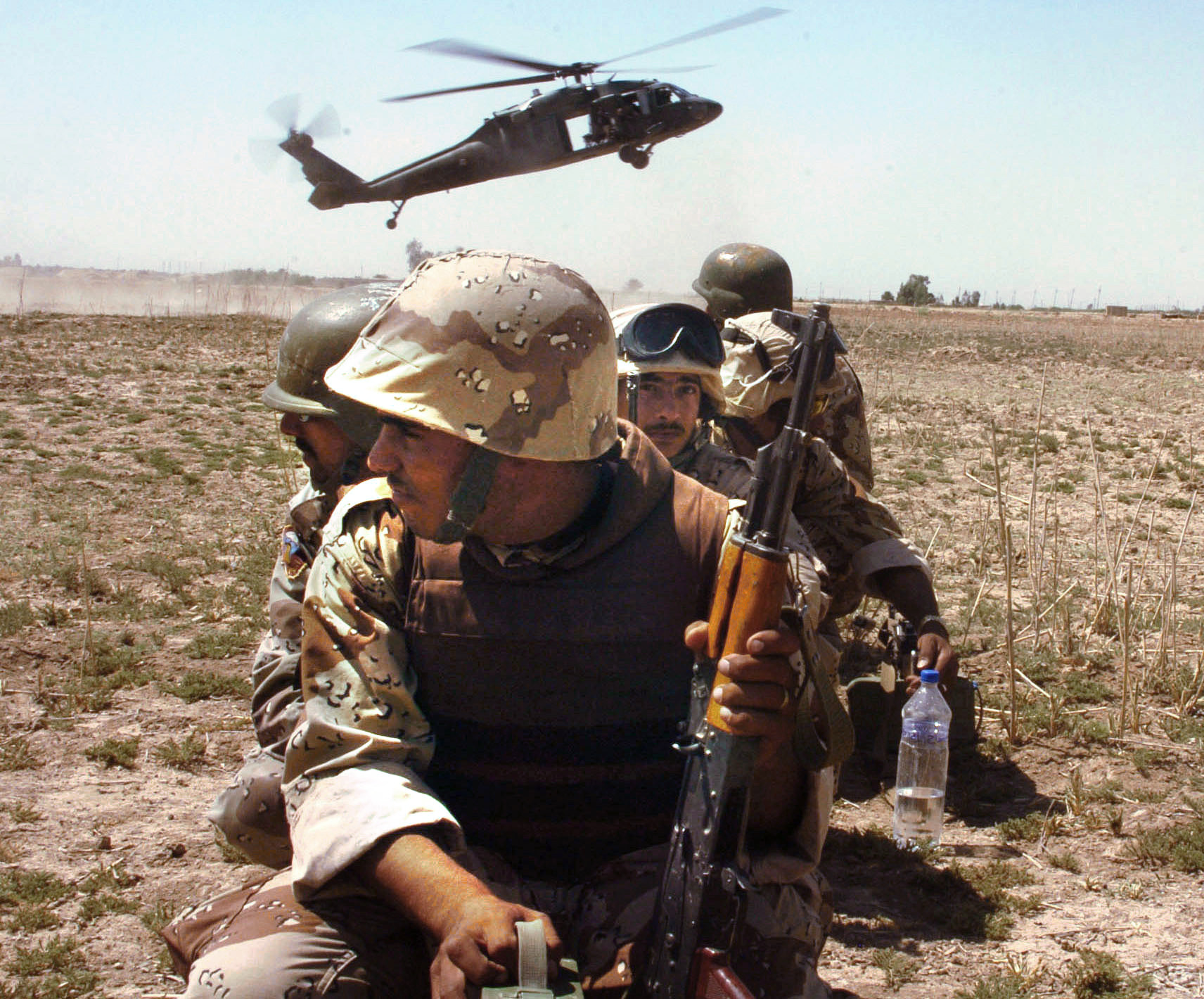
The groups operate with a degree of legal cover inside Iraq. Many of their fighters are members of the Popular Mobilization Forces, a state-sanctioned umbrella militia organisation that was formally integrated into Iraq’s security architecture in 2016 after playing a decisive role in the fight against the Islamic State. This dual status — simultaneously part of Iraq’s official security forces and operationally controlled by Tehran’s IRGC Quds Force — gives the militias access to military bases, intelligence, and logistical networks that purely clandestine groups could not match.
The primary targets since 28 February have been Harir Air Base in the Kurdistan Region, the Baghdad Diplomatic Support Centre near Baghdad International Airport, the US Consulate in Erbil, and the US Embassy compound in the Green Zone. The Jerusalem Post reported that the militias have also struck Iraqi military installations that host or previously hosted coalition personnel, including the former Balad Air Base north of Baghdad.
Why Does Iraq’s Escalation Matter for Saudi Arabia?
Saudi Arabia shares an 814-kilometre desert border with Iraq — flat, sparsely populated terrain with limited surveillance infrastructure and a history of smuggling, tribal movement, and militant infiltration. Since 2019, Iranian-backed Iraqi militias have used Iraqi territory to launch drone attacks toward Saudi Arabia and the United Arab Emirates, a capability that has only expanded since the war began.
The escalation in Baghdad carries three distinct risks for Riyadh, according to analysts at the Critical Threats Project and the RAND Corporation. First, if Iran-backed militias consolidate operational control over wider areas of Iraqi territory, they gain additional launch points for cross-border drone and rocket attacks against Saudi oil infrastructure, military installations, and population centres. Iraq’s western desert provides shorter flight paths to Saudi targets than launches from Iranian territory, reducing warning time for Saudi air defences.
Second, the degradation of US military capacity in Iraq — fewer than 2,000 American troops remain at Harir Air Base under a drawdown agreement that predates the war — weakens the broader US force posture in the region. Every American asset diverted to defending installations in Iraq is an asset unavailable for the defence of Saudi Arabia, where US forces are already stretched thin across multiple threat axes from Hormuz to the Red Sea.
Third, Iraq’s oil production collapse — down from 4.1 million barrels per day to roughly 2.6 million barrels following militia strikes near Basra and the suspension of southern exports, according to Bloomberg — has removed a major source of non-Saudi crude from the global market. This has contributed to the oil price surge above $100 per barrel that has simultaneously boosted Saudi revenues and complicated Riyadh’s efforts to present itself as a stabilising force in the energy market.
| Factor | Pre-War Status | Current Status (March 2026) | Saudi Risk Level |
|---|---|---|---|
| Border security | Stable, limited incidents | Militia activity near border zones rising | High |
| US troop presence in Iraq | ~2,500 at multiple bases | <2,000, concentrated at Harir | Elevated |
| Iraqi oil exports | 4.1 million bpd | ~2.6 million bpd | Moderate |
| Militia drone capability | Short-range, limited | 291+ claimed attacks since 28 Feb | Critical |
| Baghdad government stability | Fragile but functional | PM acting as own defence minister | High |
Iraq’s Government Caught Between Washington and Tehran
Iraqi Prime Minister Mohammed Shia’ al-Sudani faces what analysts at the New Arab described as an impossible balancing act: maintaining Iraq’s diplomatic relationship with Washington while acknowledging that components of Iraq’s own security forces are actively attacking American installations. Sudani’s response to the escalation has followed a careful pattern — condemning individual attacks, ordering investigations, and asserting Iraqi sovereignty — while carefully avoiding direct confrontation with the Iranian-backed factions whose parliamentary allies form part of his governing coalition.
US Secretary of State Marco Rubio called Sudani on 15 March to demand action against militia attacks on American personnel and facilities, according to a State Department readout. Rubio “emphasized that Iraq must take concrete steps to prevent its territory from being used as a base for attacks against US interests,” the statement read. Sudani’s office, in its own readout of the call, affirmed Iraq’s commitment to protecting diplomatic missions but did not specifically mention Iran or the militias by name, the FDD noted.
Sudani issued a decree to assume the duties of defence minister on an interim basis, a move that analysts interpreted as an attempt to consolidate control over security operations during the escalation. The prime minister chaired an extraordinary meeting of the Ministerial Council for National Security and directed the military to ensure “that Iraqi airspace, territory, and waters are not used for any military action targeting neighbouring countries or the region,” according to his office.
Fox News reported that Washington warned Iraq it “must act” against militia attacks or face consequences, though the nature of those consequences remains undefined. The US maintains fewer than 2,000 troops at Harir Air Base under a January 2026 handover agreement that saw the last major US installation in western Iraq — Ain al-Asad Air Base — transferred to the Iraqi Army, according to data compiled by the World Data research group. The limited American footprint leaves Washington with few options for direct military response inside Iraqi territory without Baghdad’s consent.
How Many Attacks Have Iraqi Militias Launched Since the War Began?
The scale of militia operations in Iraq since 28 February has exceeded anything seen during the 2023-2024 escalation cycle that followed the Gaza war. The Islamic Resistance in Iraq claimed 291 attacks by 11 March, according to the Long War Journal, a rate of approximately 24 attacks per day during the first 12 days of the conflict. Local Iraqi estimates, cited by the National, put the total closer to 200 attacks focused primarily on the Kurdistan Region. By March 22, the pace had intensified further, with Iraqi militias hitting US bases 21 times in a single 24-hour window, confirming that the saturation strategy extends well beyond Baghdad.
The targets have spanned Iraq’s geography. In Baghdad, the US Embassy has been struck or targeted at least four times, including a missile that hit the embassy helipad on 14 March, according to Al Jazeera. Harir Air Base in Erbil has absorbed the heaviest volume of attacks, with the US Embassy in the Kurdistan capital also targeted repeatedly. Baghdad International Airport — where a US logistics hub operates adjacent to the main runway — has been struck by rockets at least twice, according to NewSX and Iraqi media.
The militia attacks have not been limited to American targets. Iranian air and missile strikes have also hit Iraqi territory directly, with Tehran targeting locations it claims harbour US military assets. Iraq’s Ministry of Defense confirmed that two Iraqi air bases — the Martyr Muhammad Alaa Air Base near Baghdad International Airport and the former Balad Air Base — were struck by Iranian drones and missiles, an extraordinary development in which Iran attacked a country with which it maintains formal diplomatic relations.
| Date | Target | Weapon | Outcome |
|---|---|---|---|
| 28 Feb – 2 Mar | Multiple US bases across Iraq | 67 drone and missile attacks | Damage reported at several facilities |
| 1 Mar | US troops in Erbil | Rockets | Attacked as militants “consider options” (The National) |
| 10 Mar | Baghdad Diplomatic Support Centre | Drone | Hit facility near airport (Washington Post) |
| 14 Mar | US Embassy Baghdad helipad | Missile | Direct hit on helipad (Al Jazeera) |
| 16 Mar | Al-Rasheed Hotel, Green Zone | Drone | Fire on upper floors, no casualties |
| 17 Mar | US Embassy Baghdad compound | 5 drones + rockets | 1 drone breached compound; fire and smoke |
Iraq’s Oil Collapse Adds Economic Pressure to the Saudi Border
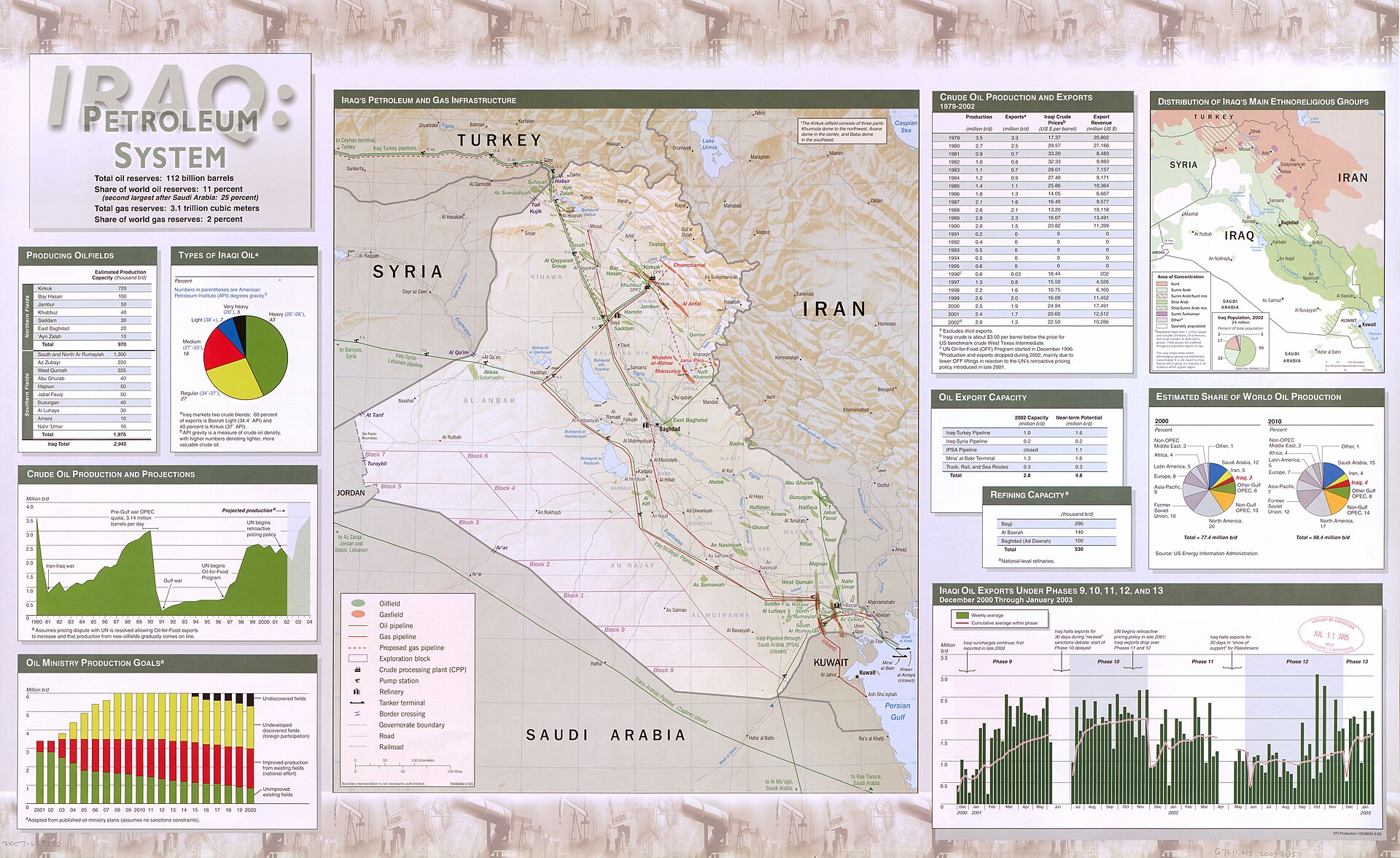
Iraq’s descent into the conflict has had immediate consequences for the global oil market that directly affect Saudi Arabia’s economic calculus. Before the war, Iraq produced approximately 4.1 million barrels per day, making it OPEC’s second-largest producer after Saudi Arabia. Militia strikes near the southern port of Basra — through which over 90 percent of Iraq’s oil exports flow — forced a partial suspension of operations, slashing output by more than a third according to Bloomberg data.
The loss of 1.5 million barrels per day of Iraqi crude from the global market, combined with the broader Hormuz disruption, has helped push oil prices above $100 per barrel for the first time since 2022. Saudi Aramco raised its official selling price for Arab Light crude by $2.40 per barrel for March deliveries — the largest single monthly increase since August 2022 — reflecting both tightened supply and surging demand for non-Gulf alternatives.
For Saudi Arabia, the oil price windfall coexists with a more sobering reality. As neighbouring states are drawn deeper into the conflict, the economic costs of defence spending, infrastructure protection, and commercial disruption are mounting. Saudi GDP growth is forecast at 4.6 percent for 2026 according to the Middle East Insider, but that projection was calculated before the full extent of war-related damage and trade disruption became clear.
The Iraqi oil collapse also removes a key competitor from the market at a moment when Saudi Arabia is trying to balance production restraint under OPEC+ with the need to fund a wartime economy. Eight OPEC+ countries, including Saudi Arabia and Russia, agreed to add 206,000 barrels per day in April, according to Fortune — a modest increase that reflects the tension between market management and revenue maximisation.
Frequently Asked Questions
What happened at the US Embassy in Baghdad on 17 March 2026?
At least five explosives-laden drones and multiple rockets targeted the US Embassy compound in Baghdad’s Green Zone early on Tuesday. The C-RAM defence system intercepted two drones, but a third struck inside the compound, causing fire and smoke. Iraqi security officials described the attack as the most intense militia assault since the Iran war began on 28 February, according to Reuters.
Who carried out the attack on Baghdad’s Green Zone?
The attack is attributed to the Islamic Resistance in Iraq, an umbrella coalition of Iranian-backed Shia militias including Kata’ib Hezbollah and Asa’ib Ahl al-Haq. The coalition has claimed 291 attacks on US and allied targets in Iraq since the war began, according to the Foundation for Defense of Democracies’ Long War Journal.
Was the Al-Rasheed Hotel in Baghdad attacked?
A drone struck the Royal Tulip Al-Rasheed Hotel in the Green Zone hours before the main embassy assault. The hotel, which houses diplomatic missions from several countries including Saudi Arabia and the European Union, suffered minor fire damage with no casualties reported, according to Iraq’s Ministry of Interior.
How does Iraq’s instability affect Saudi Arabia?
Saudi Arabia shares an 814-kilometre desert border with Iraq, and Iranian-backed militias have used Iraqi territory to launch drone attacks toward the kingdom. The escalation in Baghdad risks creating a second front for Saudi air defences, diverts US military resources from Gulf protection, and has removed 1.5 million barrels per day of Iraqi oil from the global market.
How many US troops are still in Iraq?
Fewer than 2,000 US troops and coalition personnel remain at Harir Air Base in Iraq’s Kurdistan Region, down from approximately 2,500 before the January 2026 handover of Ain al-Asad Air Base to the Iraqi military. The residual force is scheduled for full drawdown by September 2026 under a bilateral agreement between Washington and Baghdad.