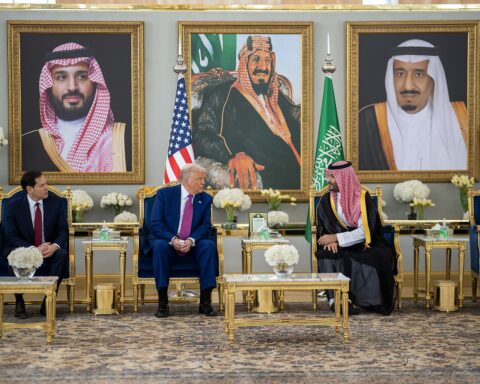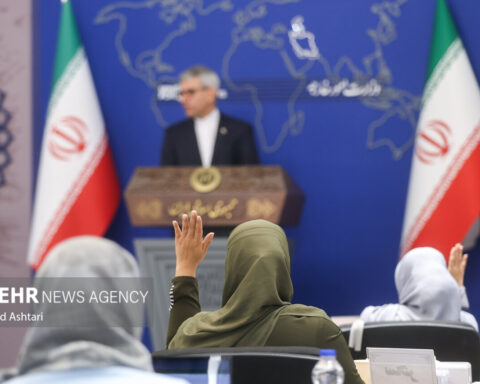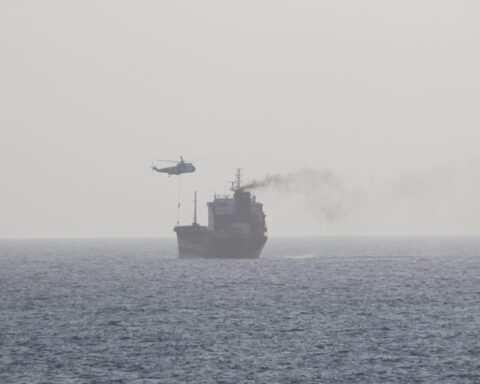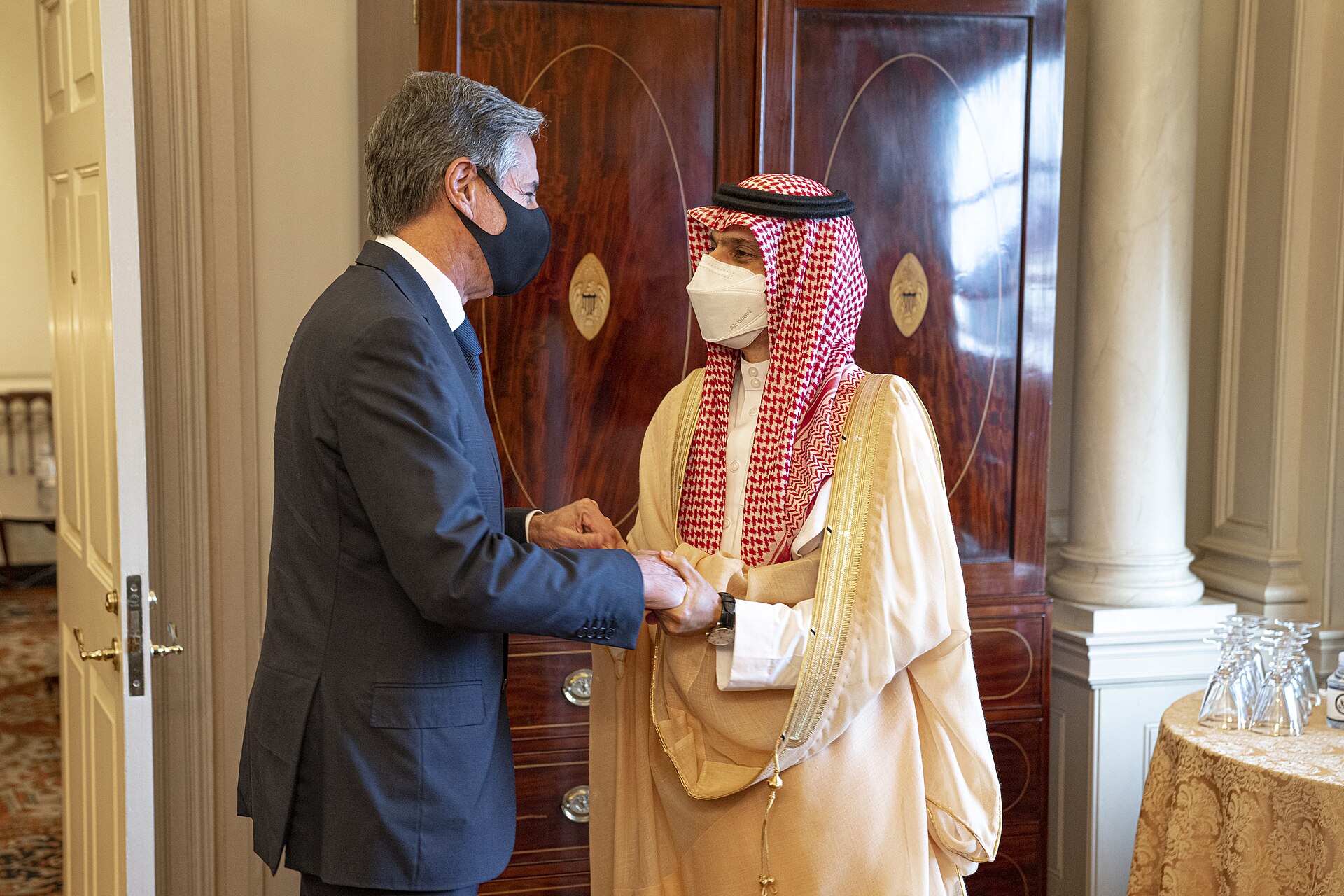

RIYADH — Ali Larijani spent decades navigating the corridors of Iranian power as philosopher, nuclear negotiator, and parliament speaker. On March 17, an Israeli strike killed him alongside his son and the head of the Basij militia, Gholamreza Soleimani. With Larijani’s death, Iran lost the last senior figure who combined the political authority and the pragmatic temperament to negotiate an end to the war that has consumed the Persian Gulf for eighteen days. For Saudi Arabia, which has maintained a diplomatic backchannel to Tehran even as Iranian missiles struck Riyadh’s diplomatic quarter, the implications are immediate and severe. The Kingdom did not start this war. It is not a belligerent. Yet it absorbs daily attacks, watches its economic infrastructure come under threat, and now faces the prospect that the very people it needs at the other end of the telephone line no longer exist. Approximately 40 Iranian officials have been killed since hostilities began on February 28, according to an Axios tally, and the ranks of those with both the power and the inclination to say yes to peace have been reduced to near zero.
Table of Contents
- Why Does Saudi Arabia Need This War to End?
- Who Had the Power to Negotiate in Tehran?
- What Happened to Iran’s Leadership in Eighteen Days?
- Who Speaks for Iran Now?
- How Did Saudi Arabia Build Its Backchannel to Tehran?
- What Does Iran Actually Want to End the War?
- The Peace Architecture Matrix
- Is Oman Still the Best Mediator?
- Can China Deliver What It Promised in 2023?
- Saudi Arabia Has More Leverage Than Anyone Realizes
- How Has Saudi Arabia Ended Previous Regional Conflicts?
- Frequently Asked Questions
Why Does Saudi Arabia Need This War to End?
Saudi Arabia occupies the most uncomfortable position in the 2026 Iran war. The Kingdom is neither a combatant nor a neutral. It hosts American military installations that serve as staging grounds for operations against Iran, making it a target. Yet Riyadh has pointedly refused to participate in offensive operations, a calculation shaped by Defence Minister Khalid bin Salman’s assessment that Saudi Arabia gains nothing from an expanded conflict.
The economic mathematics reinforce the urgency. At $102 per barrel of Brent crude and daily production near 9 million barrels, Saudi Arabia generates approximately $900 million in daily oil revenues, according to data compiled by the Middle East Insider. That figure dwarfs the Kingdom’s fiscal breakeven of $78-85 per barrel, producing a daily surplus between $135 million and $198 million. But the windfall is illusory. Foreign direct investment inflows could decline by 60-70 percent in the first quarter of 2026 compared with the previous year, threatening the $840 billion portfolio of Vision 2030 projects that form the centrepiece of Crown Prince Mohammed bin Salman’s economic transformation agenda.
The emergency summit convened in Riyadh on March 18 brought together Arab and Islamic foreign ministers precisely because Saudi Arabia recognises that every additional day of conflict compounds the damage. The Strait of Hormuz, through which 20 million barrels of petroleum liquids pass daily under normal circumstances, has been reduced to a trickle of 21 tanker transits since the war began, according to S&P Global Market Intelligence. Saudi Arabia has diverted exports through the East-West Pipeline to the Red Sea port of Yanbu, where Bloomberg reported at least 27 crude carriers were anchored as of March 16. The workaround functions but the cost in efficiency, insurance premiums, and capacity constraints grows daily.
The war also tests Saudi Arabia’s social contract with its 35 million residents. The U.S. Embassy in Riyadh issued a new security alert on March 18 directing all American government employees to shelter in place and recommending the same for all Americans in Saudi Arabia. On March 8, the State Department had already ordered non-emergency personnel to leave. The departure of Western expatriates, financial firms, and international organisations erodes the human capital infrastructure that Vision 2030 depends upon.
Who Had the Power to Negotiate in Tehran?
Before February 28, Iran’s decision-making architecture contained identifiable figures who could authorise diplomatic agreements. Understanding who they were reveals why their absence matters.
The Middle East briefing 3,000+ readers start their day with.
One email. Every weekday morning. Free.
Supreme Leader Ali Khamenei sat atop the system. His authority was not merely symbolic. He held veto power over foreign policy, nuclear negotiations, and military strategy. When Iran agreed to the 2023 China-brokered rapprochement with Saudi Arabia, Khamenei personally approved the terms, according to Carnegie Endowment for International Peace analysis. His death on the first day of the war removed the single individual who could simultaneously command the loyalty of the IRGC, the clerical establishment, and the civilian government.
Ali Larijani occupied the second-most-important position in the pragmatist camp. CBS News described him as a man “who wrote books on the 18th-century German philosopher Immanuel Kant and negotiated nuclear deals with the West.” He served as Iran’s chief nuclear negotiator, speaker of parliament for over a decade, and secretary of the Supreme National Security Council. After Khamenei’s death, many in the diplomatic community considered Larijani Iran’s de facto leader, according to Al Jazeera’s analysis. CNN characterised him as “a true insider of Iran’s regime and its public face” whose killing “could prolong the war.”
Defence Minister Aziz Nasirzadeh, Armed Forces Chief of Staff Abdolrahim Mousavi, and IRGC Commander Mohammad Pakpour all died alongside Khamenei on February 28. Their replacements, drawn from lower-ranking IRGC officers, lack both the institutional relationships and the political capital to negotiate on behalf of the Iranian state.
The significance of Larijani’s death on March 17 cannot be overstated. He was not merely a senior official. He was the last remaining figure who combined four essential attributes: knowledge of previous diplomatic agreements, personal relationships with foreign counterparts, institutional authority within the regime, and a demonstrated willingness to negotiate.
What Happened to Iran’s Leadership in Eighteen Days?
The scale of Iran’s leadership losses has no modern parallel. Approximately 40 senior officials have been killed since February 28, according to a running tally maintained by Axios. The Washington Post, PBS, and NPR have each confirmed elements of the list. The casualties span the full spectrum of Iranian governance.
| Official | Position | Date Killed | Negotiation Role |
|---|---|---|---|
| Ali Khamenei | Supreme Leader | February 28 | Ultimate decision-maker on all foreign policy |
| Ali Shamkhani | Top Security Adviser | February 28 | Key interlocutor in 2023 Saudi deal |
| Abdolrahim Mousavi | Armed Forces Chief of Staff | February 28 | Military authorisation for ceasefire compliance |
| Aziz Nasirzadeh | Defence Minister | February 28 | Controlled military-to-military communications |
| Mohammad Pakpour | IRGC Commander | February 28 | Operational authority over IRGC forces |
| Hossein Jabal Amelian | SPND Chair (nuclear weapons research) | February 28 | Nuclear programme oversight |
| Ali Larijani | SNSC Secretary | March 17 | De facto leader, chief diplomatic interlocutor |
| Gholamreza Soleimani | Basij Commander | March 17 | Internal security apparatus control |
| Majid ibn al-Reza | Replacement Defence Minister | March 1 | Killed one day after appointment |
The pattern reveals a deliberate strategy. US and Israeli forces targeted not only military commanders but the civilian-security officials who form the connective tissue between Iran’s military operations and its diplomatic capacity. Ali Shamkhani, killed on February 28, was the specific individual who negotiated the 2023 China-brokered deal with Saudi Arabia. His death severed one of the few personal connections between Riyadh and Tehran’s decision-making elite. The IRGC intelligence directorate has also suffered significant losses, with four unnamed top officials from the Ministry of Intelligence killed, further degrading Iran’s capacity for the kind of backchannel communication that precedes formal negotiations. The prospect of a Saudi-brokered ceasefire dimmed further on March 21 when Riyadh expelled five Iranian diplomats, closing the last formal communication channel between the two nations.
Saudi Foreign Minister Prince Faisal bin Farhan has maintained contact with Iranian counterparts throughout the conflict, according to Bloomberg reporting from March 6. But the question is no longer whether Saudi Arabia wants to talk. The question is whether anyone in Tehran has the authority to respond with a binding commitment.
Who Speaks for Iran Now?
Mojtaba Khamenei was named Supreme Leader on March 9, eleven days after his father’s assassination. The selection was not a conventional succession. Iran’s Islamic Revolutionary Guard Corps forced through the choice, according to reporting by the Times of Israel citing multiple sources. Alex Vatanka, a senior fellow at the Middle East Institute, told media outlets that “Mojtaba owes his position to the Revolutionary Guards and as such he is not going to be as supreme as his father was.”
CNN reported on March 14 that Mojtaba “has yet to appear” publicly since his appointment, characterising him as an “unseen leader” whose absence suggested that “powerful security bodies such as the Islamic Revolutionary Guard Corps are likely directing wartime strategy regardless of Mojtaba’s presence.” The Foreign Affairs essay “The New Khamenei” and the Just Security analysis of “The Entrenchment of Iran’s Security State” both concluded that Mojtaba functions less as a decision-maker than as a source of institutional legitimacy for IRGC commanders who hold actual operational power.
The implications for peace negotiations are stark. A Foreign Affairs analysis identified three conditions necessary for any ceasefire: a leader with the authority to order military forces to stand down, the institutional mechanism to enforce that order, and the political legitimacy to survive the domestic backlash. Under Khamenei senior, all three existed in one person. Under Mojtaba, none does. The IRGC can order its own forces to stop, but it cannot bind the Basij, the regular army, or the proxy networks in Lebanon, Iraq, and Yemen. Mojtaba can issue declarations, but IRGC field commanders, many of whom are second-tier officers promoted rapidly to replace killed superiors, have limited reason to obey a figurehead they installed.
As analysis of Iran’s internal military divisions has shown, the fragmentation of command authority makes a centralised ceasefire agreement nearly impossible. Iran now resembles less a unitary state actor and more a coalition of armed factions operating under a single flag. The IRGC’s thirty-one autonomous provincial armies and their Fourth Successor protocol ensure that this fragmentation is a feature of the system, not a bug.
How Did Saudi Arabia Build Its Backchannel to Tehran?
The diplomatic relationship between Riyadh and Tehran is one of the most consequential and volatile in modern geopolitics. Saudi Arabia and Iran severed diplomatic relations in January 2016 after Iranian protesters stormed Saudi diplomatic missions in response to the execution of Shia cleric Nimr al-Nimr. For seven years, communication between the two capitals depended entirely on intermediaries.
The breakthrough came on March 10, 2023, when Saudi and Iranian security officials met in Beijing under Chinese mediation. The resulting agreement, which the United States Institute of Peace described as a potential turning point for the Middle East, included a commitment to reopen embassies within two months. Iran’s embassy in Riyadh reopened in June 2023, and Saudi Arabia resumed diplomatic operations in Tehran in August of the same year, according to multiple reports including Al Jazeera and NPR.
The Carnegie Endowment for International Peace identified Saudi Arabia’s primary motivation as a loss of confidence in American security commitments. Riyadh calculated that direct engagement with Tehran offered better risk management than dependence on Washington’s unpredictable posture. Iran’s motivation, per Carnegie’s analysis, centred on escaping diplomatic isolation. Supreme Leader Khamenei personally approved the terms because rapprochement with Saudi Arabia offered a counterweight to American-imposed isolation following the collapse of the nuclear deal.
The backchannel that Bloomberg reported on March 6, 2026 — “Saudi Arabia has intensified direct engagement with Iran” — grew directly from this 2023 infrastructure. The talks involved security agencies and diplomats, though Bloomberg noted it was unclear whether higher-ranking officials participated. Fortune’s coverage added that Saudi Foreign Minister Prince Faisal bin Farhan “has been the primary interlocutor, maintaining contact with Iranian counterparts even as the Saudi Defence Ministry issued daily statements condemning ‘failed and cowardly’ attacks.”
The dual-track approach — public condemnation paired with private engagement — echoed the 2023 playbook. But the détente forged over three years was destroyed in eleven days of war, and the individuals who built it on the Iranian side are now dead. Ali Shamkhani, who personally negotiated the Beijing agreement, was killed on February 28. Ali Larijani, who had emerged as a key interlocutor, was killed on March 17. Prince Faisal bin Farhan’s phone line to Tehran may still be open, but the question of who answers it — and whether that person can deliver anything meaningful — remains unanswered.
What Does Iran Actually Want to End the War?
Iran’s public demands are clear. Its actual decision-making capacity to agree to anything is not. Iran’s president stated on March 12 that “the only way to end this war — ignited by the Zionist regime and US — is recognising Iran’s legitimate rights, payment of reparations, and firm international guarantees against future aggression,” according to Al Jazeera reporting. Bloomberg separately reported that Iran told regional intermediaries it wants the United States to guarantee that neither America nor Israel will strike Iran in the future.
Three specific conditions have emerged through intermediary channels, according to reporting from the Intel Drop and Bloomberg:
- Recognition of Iran’s sovereign and territorial rights, including acknowledgement that the strikes constituted unprovoked aggression
- Payment of reparations for infrastructure destroyed during 18 days of bombing
- Binding international guarantees, potentially through the UN Security Council, against future military action
Yet Iran simultaneously maintains that it has not requested peace. Foreign Minister Abbas Araghchi told NPR on March 15: “No, we never asked for a ceasefire, and we have never asked even for negotiation. We are ready to defend ourselves as long as it takes.” Iran International reported Araghchi saying: “We don’t ask for ceasefire, but this war must end, in a way that our enemies never again think about repeating such attacks.”
The apparent contradiction — issuing conditions for ending the war while denying any desire for a ceasefire — reflects Iran’s internal fragmentation. The presidential establishment, led by President Masoud Pezeshkian, has communicated conditions through intermediaries. The IRGC, which controls operational military decisions, has rejected the very concept of negotiation as long as attacks continue. Mojtaba Khamenei, from an undisclosed location, has vowed to hold Hormuz closed and continue strikes on Gulf states.
For Saudi Arabia, parsing these signals is an intelligence challenge as much as a diplomatic one. The Kingdom’s security establishment must determine whether any of these voices can bind the others, and whether a commitment from one faction will be honoured by the rest.
The Peace Architecture Matrix
Five distinct pathways to ending the war exist. Each requires different actors, carries different risks, and offers Saudi Arabia varying degrees of influence. The matrix below maps these pathways against the critical variables that determine their viability.
| Pathway | Key Actors Required | Iranian Counterpart | Saudi Leverage | Probability | Timeline | Primary Risk |
|---|---|---|---|---|---|---|
| Direct Saudi-Iran negotiation | Faisal bin Farhan, Iranian SNSC | Unknown — Larijani dead | High | 15% | Weeks | No counterpart with binding authority |
| Omani mediation | Badr al-Busaidi, IRGC leadership | Araghchi (limited authority) | Medium | 25% | Weeks-months | Oman lacks enforcement mechanism |
| Chinese-led multilateral | Zhai Jun, Saudi FM, Iranian FM | Presidential establishment | Medium-High | 20% | Months | China unwilling to pressure Iran economically |
| UN Security Council resolution | P5, General Assembly | Formal government (if it functions) | Low | 10% | Months-quarters | US/Russian veto dynamics |
| Military exhaustion / stalemate | None — organic process | Field commanders | Low | 30% | Months-quarters | Prolonged suffering, no formal settlement |
The matrix reveals an uncomfortable reality. The pathway with the highest probability — military exhaustion leading to a de facto ceasefire without formal agreement — is also the one that gives Saudi Arabia the least control over the outcome. Wars that end through exhaustion rather than negotiation leave unresolved grievances, contested borders, and no framework for preventing recurrence. The Iran-Iraq War, which lasted eight years before ending in a UN-brokered ceasefire in 1988, offers a cautionary precedent. Both sides claimed victory. Neither achieved its war aims. The region remained destabilised for a generation.
The pathways that offer Saudi Arabia the most influence — direct negotiation and Chinese-led multilateral talks — both depend on finding an Iranian counterpart who can deliver. Larijani’s death reduced the already slim pool of such counterparts to essentially zero. Araghchi, the foreign minister, represents the presidential establishment but lacks authority over the IRGC. Mojtaba Khamenei has authority in theory but has demonstrated neither the visibility nor the independence to exercise it.
Saudi Arabia’s strategic interest therefore lies in a hybrid approach: maintaining its direct backchannel (in case a counterpart emerges), actively supporting the Omani and Chinese mediation tracks (to keep multiple channels alive), and preparing for the exhaustion scenario (by ensuring its own economic and military resilience). The matrix does not point to a single answer. It points to the need for simultaneous effort across all pathways.
Is Oman Still the Best Mediator?
Oman has served as the primary intermediary between Iran and the West for over a decade. The Sultanate facilitated the secret talks that led to the 2015 nuclear agreement, and its foreign minister, Badr bin Hamad al-Busaidi, was personally shuttling between American and Iranian delegations in the weeks before the war began. On February 27 — one day before the strikes — al-Busaidi told media that a “breakthrough” had been reached on Iran’s nuclear programme, with Tehran agreeing to full IAEA verification and irreversible downgrading of enriched uranium. That deal died 24 hours later.
Since the war began, Oman has maintained its mediator role. Al Jazeera reported on March 3 that al-Busaidi said “off-ramps” for the conflict remained “available.” Asharq Al-Awsat reported that he urged a ceasefire in a direct call with Iranian Foreign Minister Araghchi, and that Araghchi responded by saying Iran was “open to de-escalation” — the closest any Iranian official has come to acknowledging a willingness to stop fighting.
Oman’s advantages as a mediator are well-established. The Sultanate maintains diplomatic relations with both Iran and the United States. It shares a maritime border with Iran across the Strait of Hormuz, giving it a direct stake in the waterway’s reopening. Sultan Haitham has cultivated a reputation for neutrality that neither China nor Russia can match. And Oman’s own security was damaged when Iranian drones struck Salalah port, giving Muscat moral authority to demand restraint from Tehran.
The limitation is enforcement. Oman can facilitate talks and transmit proposals, but it lacks the economic or military leverage to compel compliance. If an agreement is reached through Omani mediation, enforcement depends entirely on the willingness of the signatories to honour it. Given the fragmentation of Iranian command authority described above, that willingness is far from guaranteed. The Jeddah talks on Yemen, which Oman also facilitated, achieved a truce in 2022 that gradually unravelled because the parties lacked institutional mechanisms to sustain it.
A broader coalition of intermediaries has emerged. The Jerusalem Post reported that Oman, Egypt, Pakistan, and Turkey are holding behind-the-scenes talks with senior Iranian officials in an attempt to initiate dialogue with Washington. The involvement of Pakistan, which deployed air defences and troops to Saudi Arabia in early March, adds military credibility. Turkey’s participation brings NATO-adjacent communication channels. But the multiplication of mediators risks confusion. Each intermediary brings its own interests, its own interpretation of Iranian signals, and its own definition of an acceptable outcome.
Can China Deliver What It Promised in 2023?
China brokered the 2023 Saudi-Iran rapprochement and positioned itself as a new force in Middle Eastern diplomacy. The war represents the most severe test of that claim. Beijing dispatched its special envoy for Middle East affairs, Zhai Jun, on a regional tour beginning in early March. On March 8, Zhai met Saudi Foreign Minister Prince Faisal bin Farhan in Riyadh, according to reporting by Modern Diplomacy and Bloomberg.
China’s mediation strategy rests on three pillars, according to Chinese Foreign Ministry spokesperson Guo Jiakun: immediate ceasefire, return to the negotiating table, and civilian protection. The Global Times, closely aligned with Beijing’s messaging, emphasised that “force is not the way to solve problems” and called for all parties to exercise restraint.
China possesses one form of leverage no other mediator can match: economic influence over Iran. China imports approximately 80 percent of Iranian oil exports, according to 2025-2026 data cited by Modern Diplomacy. Beijing could, in theory, threaten to reduce purchases or enforce secondary sanctions if Iran refuses to negotiate. In practice, China has shown no inclination to exert such pressure. Beijing’s Middle East strategy prioritises maintaining relationships with all parties simultaneously, a posture that maximises diplomatic influence but minimises willingness to take sides.
The Georgetown Journal of International Affairs described the 2023 deal as a “test case” of China’s capacity as an international mediator. That test case produced a genuine agreement. But the conditions were fundamentally different. In 2023, both Saudi Arabia and Iran wanted a deal. Both had leaders with the authority to agree. And the United States, while not a party, did not actively oppose rapprochement. In 2026, one party has been decapitated, another is conducting daily strikes, and Washington is an active belligerent. The conditions that made Chinese mediation work in 2023 no longer exist.
China’s most realistic contribution may be indirect. By maintaining communication with the IRGC through intelligence channels and by providing economic reassurance to Iran’s presidential establishment, Beijing can keep the possibility of future negotiation alive without brokering an immediate ceasefire. For Saudi Arabia, this means China is a long-term ally in the peace process but not a short-term solution.
Saudi Arabia Has More Leverage Than Anyone Realizes
The conventional narrative of the Iran war casts Saudi Arabia as a passive victim — attacked by Iranian missiles, dependent on American protection, unable to shape events. The reality is considerably more nuanced. Saudi Arabia holds a unique combination of assets that no other actor in the conflict possesses, and deploying them effectively may determine whether the war ends in months or years.
The first asset is relationships. Saudi Arabia maintains active diplomatic engagement with every significant party to the conflict. Through the backchannel reported by Bloomberg, it talks to Iran. Through Crown Prince Mohammed bin Salman’s regular telephone calls with President Trump, reported by the New York Times, it talks to the United States. Through long-standing intelligence cooperation, it communicates with Israel. Through the 2023 rapprochement infrastructure and Zhai Jun’s March 8 visit, it talks to China. Through its diplomatic network, it maintains contact with Russia, Pakistan, Turkey, and the Omani mediators. No other country involved in the conflict can claim simultaneous access to all of these actors.
The second asset is economic leverage. Saudi Arabia’s OPEC leadership gives it the ability to influence global oil markets in ways that directly affect every party’s cost-benefit calculation. The OPEC+ agreement of March 1 to increase production by 206,000 barrels per day for April, with Saudi Arabia accounting for roughly half the OPEC output increase of 640,000 barrels per day reported by Bloomberg, demonstrated Riyadh’s willingness to use production policy as a strategic tool. Higher production volumes, routed through Yanbu rather than Gulf ports, simultaneously signal confidence, generate revenue, and reduce the pressure on consuming nations that might otherwise push for a hasty settlement unfavourable to Saudi interests.
The third asset is non-belligerent status. Saudi Arabia’s refusal to participate in offensive operations against Iran preserves its credibility as a potential mediator. Iran’s Foreign Ministry, even while condemning Saudi Arabia for hosting US forces, has not classified the Kingdom as a hostile state in the way it has designated Israel and the United States. The distinction matters. A mediator who is also a combatant carries zero credibility. Saudi Arabia, by absorbing Iranian strikes without retaliating, has maintained a diplomatic posture that allows it to sit on either side of the negotiating table.
The fourth asset is religious authority. Saudi Arabia’s custodianship of Islam’s two holiest cities gives it moral standing in the Islamic world that neither China nor Russia possesses. The approach of Eid al-Fitr, marking the end of Ramadan during wartime, provides a natural inflection point for calling for restraint on religious grounds — a message that resonates differently coming from the custodian of Makkah than from Beijing or Washington.
The conventional wisdom is that Saudi Arabia must wait for others to end this war. The evidence suggests otherwise. Riyadh possesses the relationships, the economic tools, the diplomatic credibility, and the religious authority to actively shape the peace process. The challenge is not capability but the absence of a viable counterpart in Tehran — a problem that, paradoxically, Saudi Arabia may be better positioned than anyone to solve.
How Has Saudi Arabia Ended Previous Regional Conflicts?
Saudi Arabia’s track record in conflict resolution is underappreciated. The Kingdom has brokered or facilitated the end of several regional disputes, and the patterns from those efforts illuminate the current situation.
The 2021 Al-Ula Declaration ended a three-and-a-half-year blockade of Qatar by Saudi Arabia, the UAE, Bahrain, and Egypt. Crown Prince Mohammed bin Salman personally drove the resolution, hosting Qatari Emir Tamim at the GCC summit in January 2021. The lesson from Al-Ula is that Saudi Arabia is most effective when it can operate bilaterally with a clear counterpart and when the cost of continued conflict exceeds the cost of concessions for all parties.
The question of whether Saudi Arabia can end this war gained new urgency on March 19, when Foreign Minister Prince Faisal bin Farhan declared that Saudi patience with Iranian attacks was “not unlimited” and the Kingdom reserves the right to military action — a statement that could reshape the conflict from a proxy confrontation into a direct Saudi-Iranian military engagement.
In Yemen, Saudi Arabia facilitated the 2022 truce between the internationally recognised government and the Houthi movement, working through Omani intermediaries. The truce eventually lapsed, but during its six-month duration, it demonstrated Saudi Arabia’s ability to use economic incentives — fuel shipments, port access, salary payments — to induce compliance from non-state armed actors. The Yemen experience also illustrated the limits of Saudi mediation: without a comprehensive political settlement, ceasefires become pause buttons rather than endings.
The 2023 China-brokered deal with Iran itself represents Saudi Arabia’s most ambitious diplomatic achievement of the past decade. The agreement required Riyadh to make significant concessions, including accepting Iranian behaviour in Yemen and Syria that it had previously deemed unacceptable. The willingness to compromise — to accept an imperfect deal in exchange for reduced tension — may need to be replicated on a larger scale if the current war is to end through negotiation rather than exhaustion.
| Conflict | Saudi Role | Mechanism | Outcome | Lesson for 2026 |
|---|---|---|---|---|
| Qatar blockade (2017-2021) | Initiator and resolver | Bilateral summit, personal MBS diplomacy | Blockade lifted, relations normalised | Direct engagement with clear counterpart works |
| Yemen truce (2022) | Facilitator via Oman | Economic incentives, phased confidence-building | Six-month truce (later lapsed) | Economic leverage effective for short-term compliance |
| Saudi-Iran détente (2023) | Co-equal party via China | Chinese mediation, third-party guarantees | Embassies reopened, tensions reduced | Third-party guarantors needed when trust is absent |
| Taif Agreement for Lebanon (1989) | Host and sponsor | Constitutional reform conference | End of civil war, power-sharing | Institutional frameworks outlast personal agreements |
The Taif Agreement, brokered in the Saudi city of Taif in 1989 to end Lebanon’s fifteen-year civil war, offers perhaps the most relevant precedent. Saudi Arabia hosted the conference, provided financial guarantees, and used its regional influence to secure compliance from multiple Lebanese factions. The agreement succeeded not because it resolved every grievance but because it created institutional structures — a reformed parliament, a power-sharing formula, a timeline for Syrian withdrawal — that channelled future disputes into political rather than military arenas. An Iran war settlement would require similar institutional innovation: mechanisms for verification, guarantees backed by major powers, and economic incentives for compliance.
Frequently Asked Questions
Why can’t the United States simply negotiate a ceasefire with Iran?
The United States is an active combatant, which eliminates its credibility as a mediator. Iran’s leadership has explicitly refused direct negotiations with Washington, with Foreign Minister Araghchi stating “we have never asked even for negotiation” with the Americans. Additionally, the fragmentation of Iranian command authority means that even if Washington reached an agreement with one faction, other factions — particularly IRGC field commanders — might refuse to comply. A ceasefire requires a neutral intermediary, which is why Oman, China, and Saudi Arabia itself are better positioned than the United States for this role.
Is there any Iranian official left who can agree to peace?
The short answer is that no single individual currently combines the authority, willingness, and institutional capacity to negotiate a binding ceasefire. The problem was compounded when Israel killed intelligence minister Esmaeil Khatib on March 18, the third senior official assassinated in 48 hours, further dismantling Iran’s institutional capacity for structured negotiations. President Masoud Pezeshkian has communicated conditions through intermediaries, but he lacks control over the IRGC, which directs military operations. Mojtaba Khamenei holds nominal supreme authority but, as CNN reported, has yet to appear publicly and is widely viewed as dependent on the IRGC generals who installed him. Foreign Minister Araghchi can participate in talks but cannot bind military commanders. A peace agreement would likely require the collective assent of multiple Iranian power centres rather than the signature of a single leader.
What role is Russia playing in ceasefire efforts?
Russia has engaged in limited diplomatic contacts regarding the conflict. President Trump and President Putin discussed the war in their first 2026 telephone call on March 11. Russia maintains significant influence in Tehran through arms sales, intelligence cooperation, and shared strategic interests. However, Russia benefits from the conflict’s disruption of Gulf oil markets, which drives up prices for Russian crude and undermines Western energy security. Moscow’s incentive to facilitate a quick resolution is therefore ambiguous. For Saudi Arabia, Russia remains an important OPEC+ partner but an unreliable peace broker. Russia is one of twelve mediators that have offered to broker a ceasefire, none of which has succeeded due to structural deficits in access, credibility, and impartiality.
Could the war end without a formal ceasefire?
Military exhaustion or a de facto ceasefire — where fighting simply stops without a formal agreement — is the single most likely outcome, estimated at roughly 30 percent probability in the Peace Architecture Matrix. Iran’s military capacity has been significantly degraded, with Pentagon reports indicating a 90 percent drop in missile fire at one point during the conflict. As Iran’s arsenal diminishes and its economy contracts under the strain of Hormuz’s closure, the tempo of attacks may decline organically. The risk of this scenario is that it resolves nothing permanently. Without formal agreements, the underlying grievances persist and the war can resume at any time.
A detailed probability analysis of all five endgame scenarios — including mutual exhaustion, negotiated ceasefire, and Saudi co-belligerence — can be found in the Conflict Termination Matrix assessment.
What happens to Vision 2030 if the war continues for months?
Vision 2030’s timeline was already under stress before the war. Foreign direct investment was projected to decline 60-70 percent in the first quarter of 2026. The departure of Western expatriates, the cancellation of major events including the Saudi Arabian and Bahrain Formula 1 Grands Prix, and the diversion of government resources toward defence all threaten the programme’s milestones. However, higher oil revenues provide a financial cushion, and some Vision 2030 projects — particularly those on the Red Sea coast, away from the vulnerable eastern regions — continue to progress. The longer the war lasts, the more Saudi Arabia’s economic transformation shifts from a peacetime luxury to a wartime necessity, as diversification away from Gulf-facing infrastructure becomes a strategic imperative rather than an aspiration.
How long could Saudi Arabia sustain the current situation?
Saudi Arabia’s financial position is strong relative to its regional peers. Daily oil revenues of approximately $900 million, combined with the Public Investment Fund’s $930 billion in assets under management, provide a substantial buffer. The Kingdom’s foreign reserves exceeded $440 billion as of early 2026. Militarily, Saudi Arabia’s air defence systems have performed effectively, and the deployment of Pakistani troops and Ukrainian drone defence teams has bolstered resilience. The constraint is not financial or military but social and economic: the longer the war persists, the greater the erosion of the expatriate workforce, international business confidence, and the momentum of economic reform that defines the MBS era. Saudi Arabia can endure. The question is at what cost.