
DHAHRAN — Brent crude oil surged past $119 per barrel on March 19 before crashing back below $111 within hours, capping the most volatile single trading session since the Iran war began three weeks ago. The whipsaw — driven by Iranian missile strikes on energy infrastructure across the Persian Gulf and then reversed by Israeli Prime Minister Benjamin Netanyahu’s claim that Israel was helping reopen the Strait of Hormuz — sent shockwaves through global financial markets, wiping hundreds of billions of dollars from stock exchanges in Asia and Europe before a partial recovery in New York.
The price spike from roughly $70 per barrel before the war to a peak of $119 represents a 70 percent increase in the cost of the world’s most critical commodity in just 21 days. For Saudi Arabia, the world’s largest crude exporter and de facto leader of OPEC+, the implications are both lucrative and perilous. Higher prices bring short-term revenue gains, but the Strait of Hormuz closure that caused them is simultaneously strangling the Kingdom’s ability to ship crude to its biggest customers in Asia. The scale of the disruption has drawn comparisons to the 1973 Arab embargo, with cascading effects on inflation, food security, and central bank policy across three continents.
Table of Contents
- What Drove Oil to $119 on March 19?
- How Did Global Markets React to the Oil Spike?
- Netanyahu’s Hormuz Claim Reverses the Surge
- Can OPEC+ Production Increases Close the Gap?
- Iran’s Escalating Campaign Against Gulf Energy Infrastructure
- What Does $119 Oil Mean for Saudi Arabia?
- The Global Inflation Threat No Central Bank Can Contain
- Frequently Asked Questions
What Drove Oil to $119 on March 19?
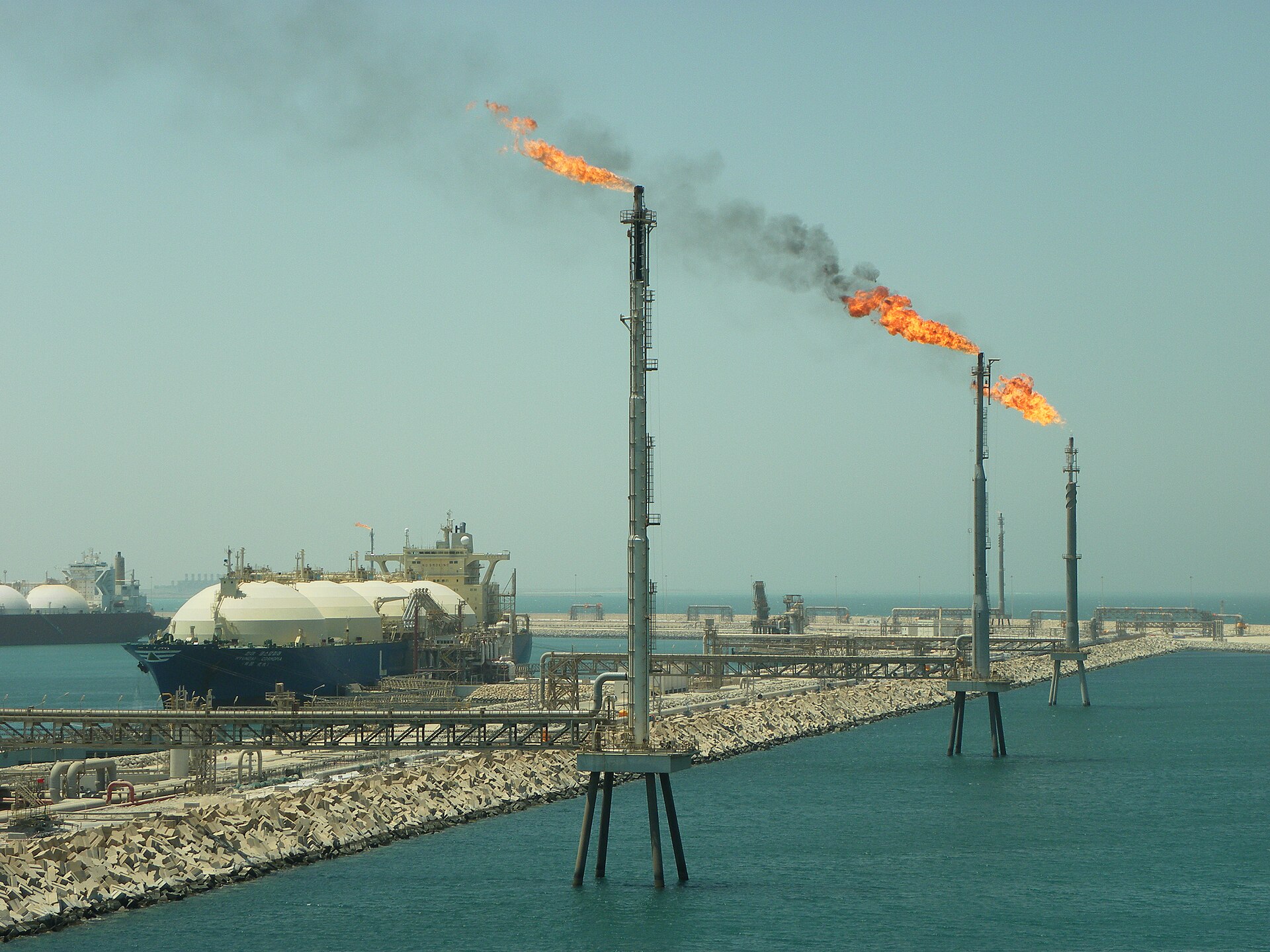
Brent crude touched $119.17 per barrel during early Asian trading on March 19, according to ICE Futures data, after Iran launched a coordinated wave of missile and drone attacks on energy facilities in Qatar, Saudi Arabia, and the United Arab Emirates. The immediate trigger was Israel’s strike on Iran’s South Pars gas field — the largest natural gas reserve on Earth, shared between Iran and Qatar — which Tehran treated as an attack on its most valuable economic asset.
Iran’s retaliation was swift and devastating. Missiles struck Qatar’s Ras Laffan Industrial City, the world’s largest liquefied natural gas export facility, causing three fires and what QatarEnergy CEO Saad al-Kaabi later described as damage that knocked out 17 percent of the country’s LNG export capacity. Repairs, Reuters reported citing QatarEnergy, will take three to five years and sideline 12.8 million tonnes per year of LNG production.
The attacks extended to Saudi Arabia’s Jubail industrial complex and facilities in the UAE, according to statements from the Saudi and Emirati defense ministries. Saudi air defenses intercepted and destroyed four ballistic missiles launched toward Riyadh on the same day, just hours before a meeting of regional and Islamic foreign ministers in the Saudi capital, according to the Saudi Ministry of Defense.
By mid-morning in London, Brent had retreated from its $119 peak to around $115, but the damage to market confidence was already done. The attacks added to fears, analysts told CNBC, that fighting may knock out production of oil and gas in the Gulf for a long time — a scenario that would mean high prices could persist and cause inflation to accelerate around the world.
The Middle East briefing 3,000+ readers start their day with.
One email. Every weekday morning. Free.

How Did Global Markets React to the Oil Spike?
The $119 oil price spike triggered a cascade of selling across global equity markets. Asian shares led the decline, with Japan’s Nikkei 225 falling more than 3 percent and Hong Kong’s Hang Seng dropping 2.8 percent as traders priced in the prospect of sustained energy costs above $100 per barrel.
European markets followed. The FTSE 100 in London fell sharply at the open, dragged down by airlines, logistics firms, and consumer discretionary stocks — all sectors acutely sensitive to fuel costs. Germany’s DAX and France’s CAC 40 posted similar declines, with European energy companies the sole sector in the green as higher crude prices boosted their earnings outlook.
The pain was most acute in energy-importing economies. South Korea’s KOSPI index, heavily weighted toward manufacturers dependent on Gulf oil and gas, fell 3.4 percent. India’s Sensex dropped 2.1 percent as the country, which imports more than 80 percent of its crude oil, faced the prospect of a deepening current account deficit.
In the United States, stocks initially tumbled but pared their losses as the trading day progressed and oil prices pulled back from their highs. The S&P 500, which had fallen more than 2 percent in pre-market trading, closed down approximately 0.8 percent, according to market data from Bloomberg. The Motley Fool described the session as evidence that oil prices are now “dictating where financial markets and maybe even the global economy are heading.”
The volatility was not confined to equities. Gold surged above $3,200 per ounce as investors sought safe haven assets, while the U.S. dollar strengthened against most major currencies — a classic flight-to-safety pattern that analysts at Goldman Sachs said reflected growing fears of a global stagflationary shock, echoing warnings the bank issued earlier in March about the Gulf facing its worst recession in a generation.
Netanyahu’s Hormuz Claim Reverses the Surge
The oil price reversal began in late European trading when Israeli Prime Minister Benjamin Netanyahu told reporters that Israel was actively helping the United States reopen the Strait of Hormuz. Netanyahu said Iran had lost the ability to enrich uranium and manufacture ballistic missiles, and predicted the war “may end sooner than people think,” according to a report by CNBC.
The comments were enough to send Brent crude tumbling from above $115 to $110.80 by the close of New York trading — still a 3.2 percent gain from the previous day’s close, but a dramatic reversal from the morning’s peak. West Texas Intermediate, the U.S. benchmark, followed a similar trajectory, closing at approximately $107 per barrel.
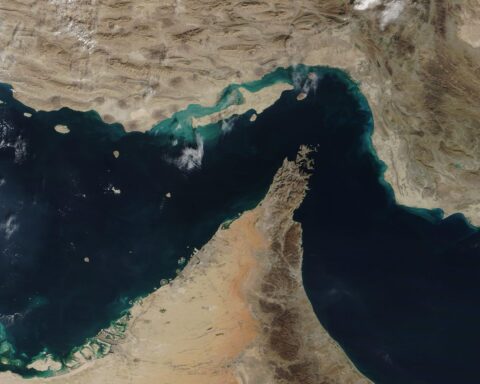
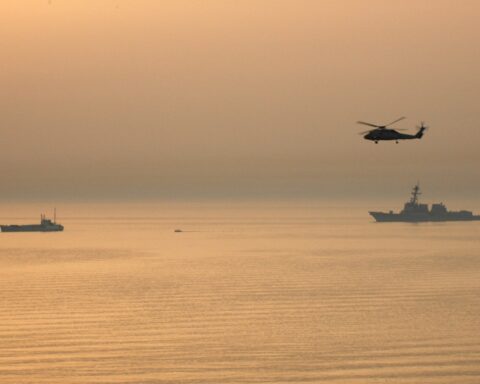
Analysts expressed skepticism about the substance behind Netanyahu’s claims. The Strait of Hormuz, through which approximately 20 percent of global oil supplies transit, has been effectively closed to Western-aligned shipping since March 5, when the Islamic Revolutionary Guard Corps announced that the waterway would remain shut to vessels from the United States, Israel, and their allies. Iran has mined sections of the strait and deployed naval assets to enforce the closure.
A senior energy analyst at Kpler told Bloomberg that Netanyahu’s comments “may have provided short-term relief, but the physical reality of Hormuz remains unchanged.” The strait cannot be reopened by political statements alone — it requires a major naval operation to clear mines, suppress Iranian coastal defenses, and establish a secure shipping corridor.
Still, the price decline reflected a market eager for any signal of de-escalation. The $119-to-$111 swing within a single trading session underscored how sensitive oil markets have become to even the smallest diplomatic signals from the war zone.
Can OPEC+ Production Increases Close the Gap?
OPEC+ agreed on March 1 to increase production by 206,000 barrels per day starting in April — a 50 percent larger boost than the 137,000 barrels per day that most analysts had expected, according to Bloomberg. The decision, led by Saudi Arabia and Russia within the V8 group of key producers, was intended to calm markets after the war’s first week sent prices soaring past $100.
The increase, however, faces a fundamental logistical problem. Saudi Arabia holds roughly 2 to 3 million barrels per day of spare production capacity, the largest reserve of any OPEC+ member. The UAE has expanded its capacity to approximately 4.5 million barrels per day, and Kuwait aims for 3.2 million barrels per day by the end of 2026, according to the Columbia University Center on Global Energy Policy.
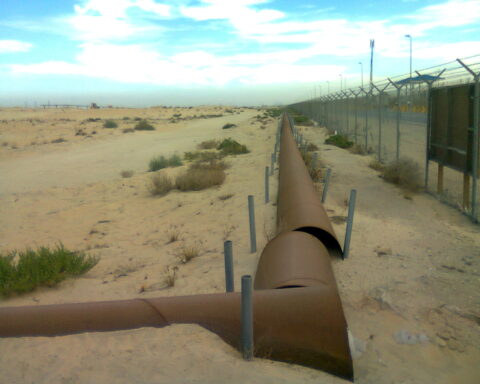
But spare capacity means little when it cannot reach global markets. With the Strait of Hormuz closed, Gulf producers cannot ship crude from their primary export terminals in the Persian Gulf. Saudi Arabia’s East-West Pipeline, which runs from the Eastern Province to the Red Sea port of Yanbu, has a capacity of approximately 7 million barrels per day — but terminal infrastructure at Yanbu limits actual throughput. A deeper analysis of why Saudi spare capacity has become an illusion reveals the systemic failure extends far beyond one port.
“If oil cannot move through Hormuz, an extra 206,000 barrels per day does very little to ease the market,” one analyst told France24. “Logistics and transit risk matter more than production targets right now.”
The collective production loss among Gulf states has been staggering. Oil production from Kuwait, Iraq, Saudi Arabia, and the UAE dropped by a reported 6.7 million barrels per day by March 10, and by at least 10 million barrels per day by March 12, according to the Wikipedia page tracking the economic impact of the 2026 Iran war. That shortfall dwarfs the OPEC+ increase by a factor of roughly 50.
Iraq alone accounts for a substantial share of that deficit. Baghdad’s unprecedented force majeure declaration on all foreign-operated oil fields has frozen contracts with BP, ExxonMobil, and a dozen other international operators, effectively removing Iraqi crude from the global supply equation for the duration of the conflict and likely beyond.
| Metric | Volume (mb/d) | Source |
|---|---|---|
| Pre-war global oil supply | ~103 | IEA, February 2026 |
| Gulf production lost (Hormuz closure) | -10.0 | Wikipedia / multiple sources |
| OPEC+ April production increase | +0.206 | Bloomberg |
| IEA Strategic Reserve release (annualized) | +2.7 | IEA, March 11 |
| Saudi East-West Pipeline capacity | ~5.0 (effective) | Columbia CGEP |
| Estimated net supply shortfall | ~2-3 | Analyst consensus |
Iran’s Escalating Campaign Against Gulf Energy Infrastructure
The March 19 attacks represent the latest escalation in what has become a systematic Iranian campaign to target energy infrastructure across all six Gulf Cooperation Council states. Since the war began on February 28, Iran has launched more than 3,000 projectiles — missiles and drones — at GCC countries, according to Human Rights Watch, with more than half directed at the UAE.
The escalation has followed a clear pattern. In the war’s first week, Iranian strikes focused on military installations hosting U.S. forces. By the second week, the target set expanded to include civilian infrastructure — airports, hotels, and financial centers. By mid-March, energy facilities became the primary focus, with Iran explicitly framing its attacks as retaliation for Israeli strikes on Iranian oil and gas infrastructure.
| Date | Target | Country | Damage |
|---|---|---|---|
| March 2 | Ras Laffan, Mesaieed Industrial City | Qatar | LNG production suspended |
| March 4 | Multiple oil fields | Saudi Arabia | Drones intercepted |
| March 9 | Fujairah Oil Terminal | UAE | Terminal damaged |
| March 11 | Salalah Port | Oman | Hormuz bypass destroyed |
| March 12 | Bahrain fuel depot | Bahrain | Fire at depot near airport |
| March 14 | Fujairah Oil Terminal | UAE | Three more ports threatened |
| March 17 | Shah Gas Field | UAE | Field set ablaze |
| March 18 | Jubail Industrial Complex | Saudi Arabia | Under assessment |
| March 18-19 | Ras Laffan LNG | Qatar | 17% capacity lost for 3-5 years |
“For the first time in history, all the GCC states were targeted by the same actor within 24 hours,” a researcher at Qatar University’s Gulf Studies Center told Al Jazeera, calling it the GCC’s “long-standing nightmare scenario.” The attacks have shattered any remaining trust between Gulf capitals and Tehran, with Saudi Foreign Minister Prince Faisal bin Farhan warning on March 19 that “nonpolitical options are on the table” if Iran does not halt its strikes.
The damage to Qatar’s Ras Laffan facility is particularly significant for global energy markets. Qatar is the world’s second-largest LNG exporter after the United States, accounting for nearly a fifth of global shipments. The loss of 12.8 million tonnes per year of LNG capacity will tighten global gas markets for years, even if a ceasefire is reached, as energy analysts have warned.
What Does $119 Oil Mean for Saudi Arabia?
The paradox facing Saudi Arabia is stark. Higher oil prices should be a windfall for the world’s largest crude exporter, which based its 2026 national budget on an assumed oil price of approximately $70 per barrel, according to the Saudi Ministry of Finance. At $119, every barrel sold generates roughly $49 more revenue than budgeted — a potential bonanza worth tens of billions of dollars annually.
But that calculation assumes Saudi Arabia can actually sell its oil. With the Strait of Hormuz effectively closed, the Kingdom’s primary export route to Asia — which accounts for roughly 70 percent of Saudi crude sales, according to Aramco’s most recent investor disclosures — is severed. The East-West Pipeline to Yanbu on the Red Sea coast provides a partial alternative, but its effective throughput falls short of the roughly 7 million barrels per day Saudi Arabia was exporting before the war.
Even that partial alternative is now under direct threat. The strike that reached Saudi Arabia’s Red Sea coast on March 19 — when Iranian drones hit the Samref refinery at Yanbu — demonstrated that the bypass corridor helping moderate crude prices is itself vulnerable, raising the prospect that the next price spike could lack even the Yanbu safety valve that pulled Brent back from $119.
Aramco, the state oil company that accounts for approximately 60 percent of Saudi government revenue, finds itself in an unprecedented position. Production costs remain among the lowest in the world at roughly $3 to $5 per barrel, but the company cannot move all of its output to customers. Tanker insurance rates for Gulf-bound vessels have surged to prohibitive levels, and many shipping companies have simply stopped sending vessels into the war zone.
Aramco has responded by activating the East-West Pipeline to full capacity and rerouting exports through Yanbu on the Red Sea, but the company still faces the largest operational crisis in its history, with production cut by 20 percent and supergiant offshore fields shut down indefinitely.
The Tadawul, Saudi Arabia’s stock exchange, has shown surprising resilience during the war. The index outperformed most regional peers in the first two weeks of fighting, supported by expectations of higher oil revenue and strong domestic liquidity. But the March 19 volatility tested that resilience, with the exchange closing down 1.2 percent after initially falling more than 3 percent on the $119 spike, according to Bloomberg data.
Saudi Arabia’s fiscal position is stronger than during previous oil crises. The Public Investment Fund holds assets exceeding $930 billion, foreign reserves at the Saudi Central Bank stand above $400 billion, and the Kingdom has successfully diversified some revenue streams through tourism, entertainment, and financial services. But a prolonged Hormuz closure — measured in months rather than weeks — would erode even these formidable buffers.
The Global Inflation Threat No Central Bank Can Contain
The $119 oil price, even if it proves temporary, carries inflationary consequences that will ripple through the global economy for months. Transportation costs, petrochemical feedstock prices, fertilizer costs, and heating fuel bills all move in lockstep with crude. The International Energy Agency warned in its March Oil Market Report that supply is set to significantly lag demand if the Hormuz disruption continues, creating what it called a “sustained structural deficit.”
The IEA’s decision on March 11 to release a record 400 million barrels from member countries’ strategic petroleum reserves — the largest coordinated release in the agency’s history — provided only temporary relief. The release, equivalent to approximately 2.7 million barrels per day if sustained for five months, partially offset the Gulf shortfall but falls far short of replacing 10 million barrels per day of lost Gulf production.
Allianz Research, in a March analysis, outlined three scenarios for the war’s economic impact. The most optimistic assumed a ceasefire within 30 days and oil prices stabilizing around $90. The baseline scenario projected prices between $100 and $120 for six to twelve months, with global GDP growth cut by 0.5 to 1.0 percentage points. The worst case — a prolonged conflict lasting beyond mid-2026 — projected prices above $130 and a global recession.
Food prices are already responding. The United Nations Food and Agriculture Organization reported that its food price index rose 4.2 percent in the first two weeks of March, driven primarily by higher transport and fertilizer costs. Countries in North Africa and South Asia, which depend heavily on Gulf grain shipments and fertilizer imports, face the most acute food security risks.
For central banks, the dilemma is acute. The U.S. Federal Reserve, the European Central Bank, and the Bank of Japan all face the same impossible choice: raise interest rates to combat inflation, risking recession, or hold rates steady and allow prices to spiral. Goldman Sachs warned in a March 17 note that the global economy has entered a stagflationary environment not seen since the 1970s oil crisis — a comparison that sent further tremors through bond markets.
Frequently Asked Questions
Why did Brent crude hit $119 per barrel on March 19?
Iran launched coordinated missile and drone strikes on energy infrastructure across Qatar, Saudi Arabia, and the UAE on March 18-19, following an Israeli attack on Iran’s South Pars gas field. The strikes damaged 17 percent of Qatar’s LNG export capacity at Ras Laffan and targeted Saudi Arabia’s Jubail industrial complex, triggering fears of prolonged Gulf energy supply disruptions.
Why did oil prices fall back from $119?
Israeli Prime Minister Benjamin Netanyahu told reporters that Israel was helping the United States reopen the Strait of Hormuz and predicted the war could end sooner than expected. The comments eased some market anxiety, pushing Brent crude back to approximately $110.80 by the New York close, though analysts expressed skepticism about the physical feasibility of reopening the strait quickly.
How much oil has the Iran war removed from global markets?
The Strait of Hormuz closure and direct attacks on energy infrastructure have removed an estimated 10 million barrels per day of Gulf oil production from international markets, according to multiple sources. OPEC+ agreed to boost output by 206,000 barrels per day for April, and the IEA released a record 400 million barrels from strategic reserves, but neither measure fully compensates for the shortfall.
What is the impact on Saudi Arabia’s oil exports?
Saudi Arabia’s primary export route through the Persian Gulf and Strait of Hormuz is effectively closed. The Kingdom is rerouting crude through the East-West Pipeline to Yanbu on the Red Sea coast, but terminal capacity limits throughput below pre-war export levels of approximately 7 million barrels per day. Higher prices generate more revenue per barrel, but the inability to sell full volumes partially offsets that gain. Iran’s continued targeting of Gulf refining capacity, including drone strikes on Kuwait’s Mina Al-Ahmadi refinery during Eid al-Fitr, has further tightened refined product supply.
The price volatility reflected a deeper strategic contradiction within the Trump administration itself. On the same day oil breached $119, the Treasury Department was preparing to release 140 million barrels of Iranian crude to suppress the very rally the war had caused — a decision that simultaneously funded Iran’s war effort and undercut Saudi Arabia’s revenue.
Could oil prices go even higher?
Analysts at Goldman Sachs, the IEA, and Allianz Research have warned that prices could exceed $130 per barrel if the conflict continues beyond mid-2026 or if Iran escalates attacks on remaining operational energy infrastructure. The key variable is whether the Strait of Hormuz can be reopened — a military operation that analysts say would require weeks of mine clearing and naval action, regardless of diplomatic signals.