
YANBU — An Iranian drone crashed into Saudi Arabia’s Samref oil refinery in the Red Sea port city of Yanbu on Thursday, the Kingdom’s Defense Ministry confirmed, marking the first time Tehran’s weapons have struck energy infrastructure on Saudi Arabia’s western coast since the war began three weeks ago. A separate ballistic missile targeting Yanbu port was intercepted and destroyed before impact, according to an official statement. The attacks signal a dangerous expansion of Iran’s campaign from the Persian Gulf’s eastern oil fields to the 1,200-kilometer pipeline corridor that Saudi Arabia has relied upon as its primary bypass route since the Strait of Hormuz effectively closed in early March. The U.S. military has since deployed A-10 Warthogs and Apache helicopters to hunt Iranian fast-attack boats in the strait, but the mine threat will delay reopening for months.
Samref, a joint venture between Saudi Aramco and ExxonMobil that processes more than 400,000 barrels of crude oil per day, said a damage assessment was underway. Saudi Aramco stated that the impact of the attack was “minimal,” with no significant disruption reported immediately, according to Al Arabiya. The attack arrived as Yanbu loadings had surged to a record 3.8 million barrels per day in March, according to Pakistan Today, up from 1.4 million barrels per day in February — making the port the most critical chokepoint in Saudi Arabia’s wartime energy network.
Table of Contents
- What Happened at the Samref Refinery?
- Why Does the Yanbu Attack Matter for Global Oil?
- How Much Oil Does Saudi Arabia Export Through the Red Sea?
- Iran’s Three-Week Drone Campaign Against Saudi Arabia
- What Is Saudi Arabia Doing to Protect Yanbu?
- The ExxonMobil Dimension
- How Have Oil Markets Responded?
- What Comes Next for Saudi Arabia’s Red Sea Corridor?
- Frequently Asked Questions
What Happened at the Samref Refinery?
Saudi Arabia’s Ministry of Defense confirmed that a drone struck the Samref refinery in Yanbu Industrial City on the morning of Thursday, March 20, while a ballistic missile targeting the nearby port was intercepted and destroyed. The drone, believed to be an Iranian-manufactured Shahed-type one-way attack munition, penetrated Saudi air defenses covering the Red Sea coast and impacted within the refinery’s perimeter, according to Arab News.
Samref — the Saudi Aramco Mobil Refinery Company — is a 50-50 joint venture between Saudi Aramco and Mobil Yanbu Refining Company, a wholly owned subsidiary of ExxonMobil Corporation. Established in 1984 during the Iran-Iraq War, the facility processes more than 400,000 barrels per day of Arabian Light crude oil into propane, automotive diesel, marine heavy fuel oil, and sulfur, according to the company’s official website. It is one of the largest and most technologically advanced refineries in the Middle East.
Saudi Aramco said the impact was “minimal,” with no reported casualties and no immediate disruption to production, Al Arabiya reported. Emergency response teams were deployed within minutes. A separate damage assessment team was evaluating structural and operational impacts, the defense ministry said. Gulf Insider reported that the ballistic missile intercepted over the port area was tracked from launch to interception, with debris falling into unpopulated areas north of the city.
The strike occurred on the first day of Eid al-Fitr, a timing that echoed Iran’s earlier decision to launch drones across the Gulf as Eid prayers began. Iranian forces have not explicitly claimed the Yanbu attack, but the trajectory and drone type are consistent with launches from western Iraq or southern Iran, according to defense analysts cited by Reuters.
The Middle East briefing 3,000+ readers start their day with.
One email. Every weekday morning. Free.
Why Does the Yanbu Attack Matter for Global Oil?
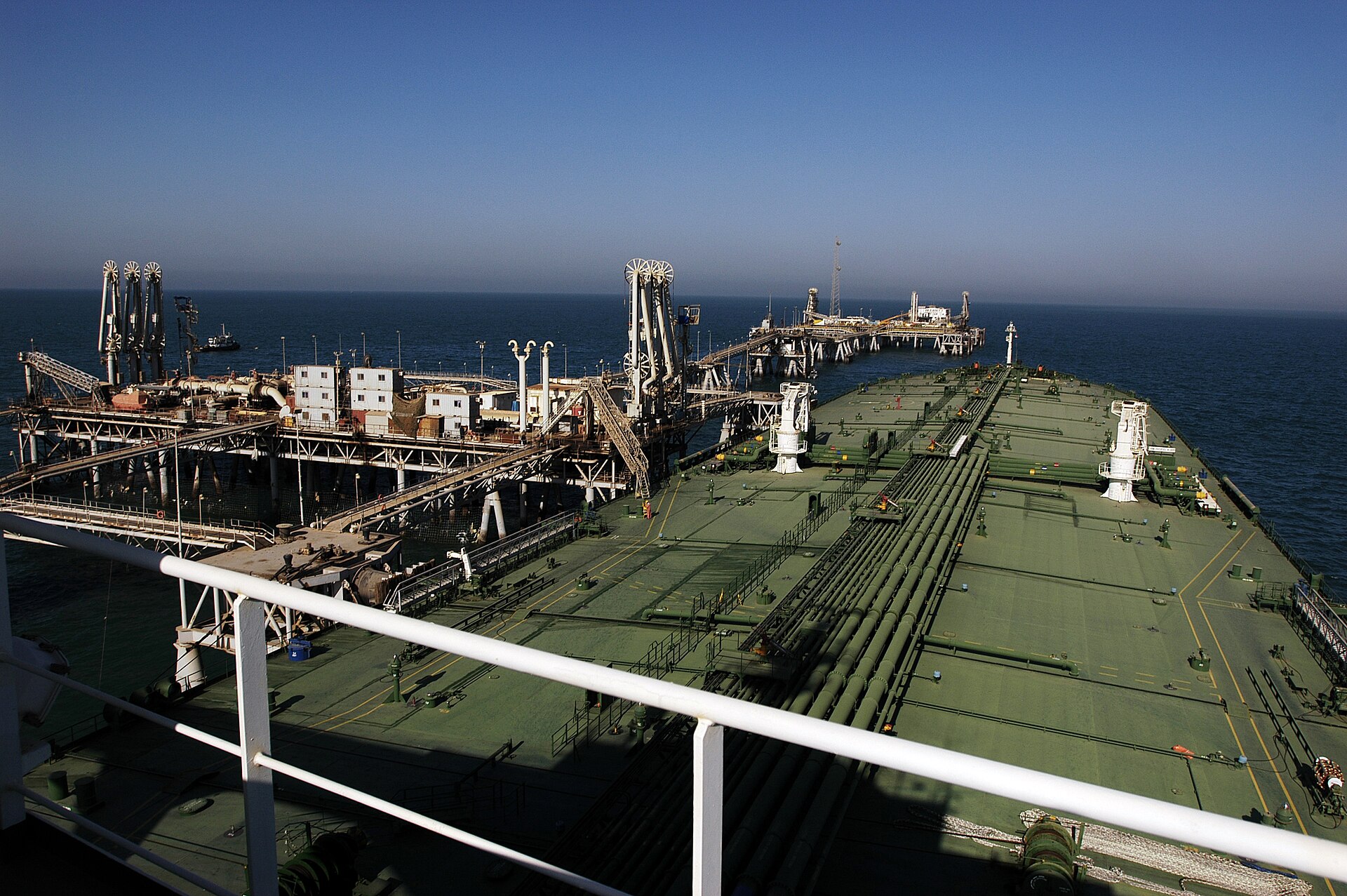
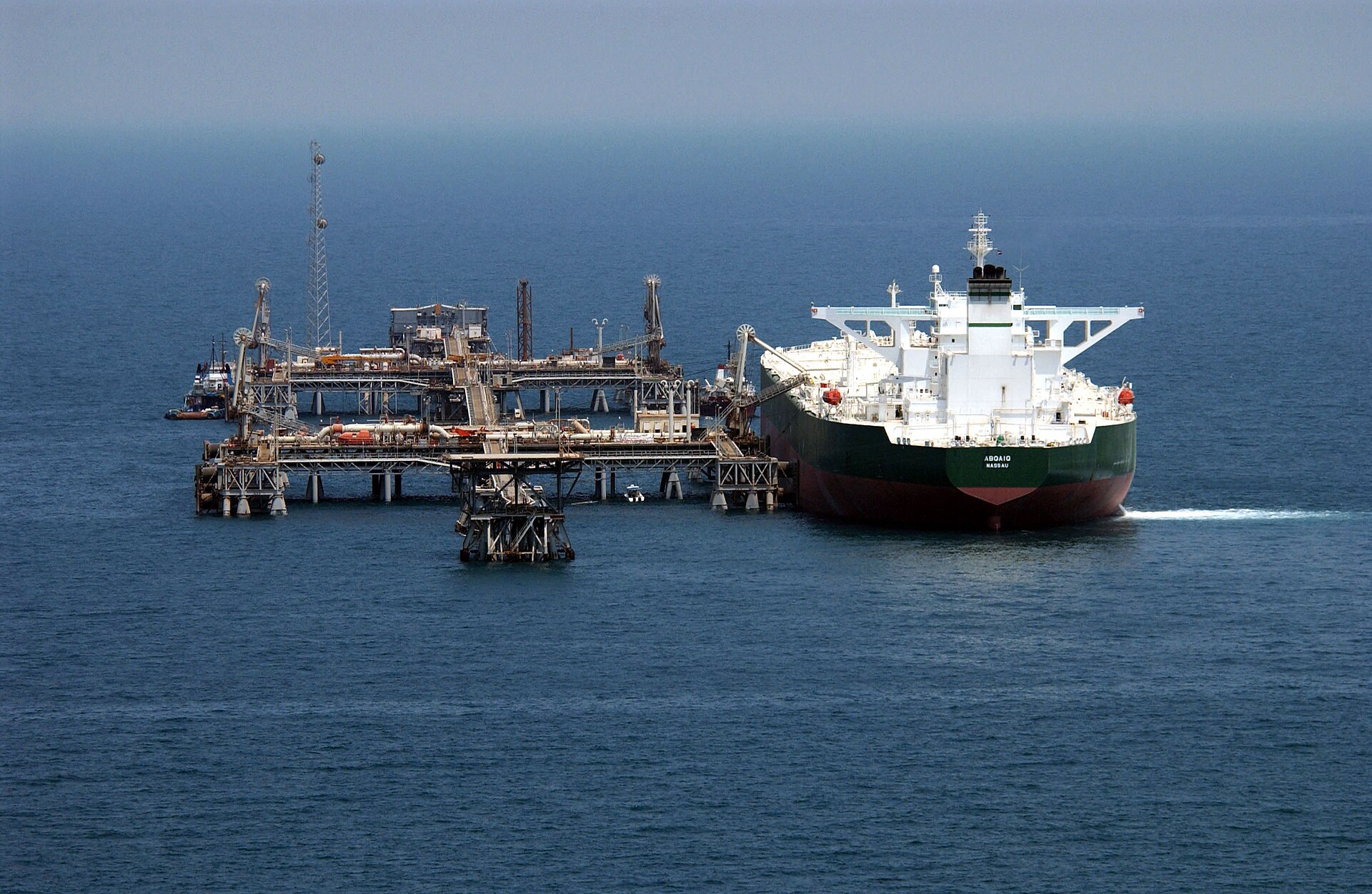
The attack on Samref is strategically significant because Yanbu is not merely another oil facility — it is the terminal point of Saudi Arabia’s primary contingency route for bypassing the Strait of Hormuz. Since the strait effectively closed to most commercial shipping in early March, Yanbu has become the single most important chokepoint in Saudi Arabia’s wartime energy architecture, handling the majority of the Kingdom’s crude exports to global markets.
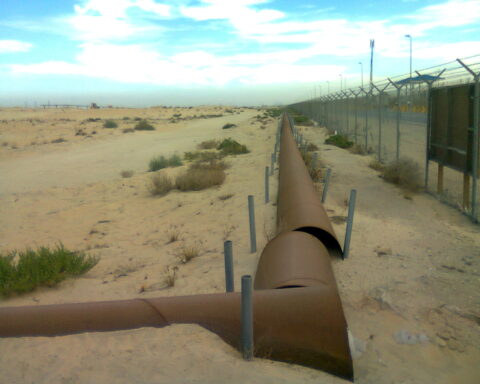
The East-West Crude Oil Pipeline — known as Petroline — runs 1,200 kilometers from the Abqaiq processing complex in the Eastern Province to the Red Sea export terminals at Yanbu. Built in 1981 during the Iran-Iraq War specifically to reduce Saudi Arabia’s dependence on Hormuz, the pipeline system was expanded over subsequent decades. In 2019, following Houthi drone strikes on Abqaiq, Saudi Aramco converted parallel natural gas liquids lines to carry crude oil, raising emergency capacity to approximately 7 million barrels per day, according to the Engineering News-Record — a figure that had never been tested at sustained flows until the current conflict.
Aramco activated the pipeline’s full capacity on March 11, according to MercoPress. Yanbu’s two export terminals — Yanbu North and Yanbu South — have a combined nominal loading capacity of approximately 4.5 million barrels per day, according to Argus Media, though effective throughput has been closer to 3.8 million barrels per day during the current surge.
Before Thursday’s attack, Yanbu was considered relatively safe. Located on the Red Sea coast, more than 1,200 kilometers from Iran’s western border, the port sits well beyond the typical range of the cheaper Iranian drones that have targeted Eastern Province facilities in waves of 50 to 100 per day. The fact that at least one drone reached the facility — and that a ballistic missile was launched at the port — suggests Iran has either extended the range of its one-way attack munitions or is routing them through Iraqi territory to reach the Red Sea coast, according to defense analysts cited by the Maritime Executive.
How Much Oil Does Saudi Arabia Export Through the Red Sea?
Saudi Arabia’s Red Sea oil exports have surged to unprecedented levels since the Strait of Hormuz closure. Yanbu loadings reached a record 3.8 million barrels per day in March 2026, according to Pakistan Today, up from 1.4 million barrels per day in February and 1.3 million barrels per day in January. The near-tripling of volume in a single month reflects the urgency of rerouting crude away from the Gulf.
Shipping data compiled by Arab News showed that up to 25 oil tankers were sailing toward Yanbu at any given time in mid-March, compared to the normal flow of 5 to 8 vessels. China-bound tankers have been particularly active, with the South China Morning Post reporting that Chinese buyers were among the first to tap Saudi Arabia’s Red Sea route after Hormuz closed. European refiners have also shifted procurement to Red Sea loadings, though tankers bound for Asia face a longer journey south through the Bab el-Mandeb Strait and around the Cape of Good Hope.
| Month | Yanbu Loadings (bpd) | Change vs. January | Notes |
|---|---|---|---|
| January 2026 | 1.3 million | Baseline | Pre-war normal operations |
| February 2026 | 1.4 million | +7.7% | War begins Feb 28; modest initial increase |
| March 2026 (est.) | 3.8 million | +192% | Record; near terminal capacity |
The Red Sea route carries its own risks. The Bab el-Mandeb Strait at the southern end of the Red Sea has been subject to ongoing Houthi militant activity, though attacks on commercial shipping had diminished before the current conflict. Aramco CEO Amin Nasser warned of “catastrophic consequences” if shipping disruptions spread to the Red Sea, according to Arab News, a statement that carried additional weight after Thursday’s Yanbu attack. The day after the SAMREF strike, Iran’s Parliament Speaker Ghalibaf — a former IRGC missile commander — publicly catalogued commodity flows through Bab el-Mandeb by volume and country, a post our analysis reads as a targeting signal, not commentary.
Iran’s Three-Week Drone Campaign Against Saudi Arabia
The Yanbu attack comes amid a relentless three-week campaign of Iranian drone and missile strikes against Saudi Arabian territory. Since the war began on February 28, Saudi Arabia has intercepted at least 439 hostile drones and 36 ballistic and cruise missiles, according to a comprehensive tally published by Arab News on March 20. The majority of strikes have targeted the oil-rich Eastern Province, home to Aramco’s Abqaiq processing facility, Ras Tanura terminal, and Shaybah field.
Iran escalated its daily attack rate significantly in mid-March. On a single day in the week of March 17, Tehran launched nearly 100 drones at Saudi territory, far above the previous daily average of fewer than 25, Bloomberg reported — marking the largest single-day strike on the Kingdom since the war began. The intensity has not diminished during Eid al-Fitr, with strikes continuing on Thursday morning.
| Category | Total | Primary Target Areas |
|---|---|---|
| One-way attack drones (Shahed-type) | 439+ | Eastern Province oil fields, Riyadh, Al-Kharj, Yanbu |
| Ballistic missiles | 28+ | Prince Sultan Air Base, Riyadh, Yanbu port |
| Cruise missiles | 8+ | Al Jouf, Eastern Province |
| Civilian casualties | 15+ | Riyadh (4 injured), Diplomatic Quarter, residential areas |
The geographic scope of attacks has widened with each passing week. In the first week, strikes concentrated on the Eastern Province and Prince Sultan Air Base at Al-Kharj. In the second week, Riyadh itself came under fire, with missiles intercepted over the capital and debris falling in residential neighborhoods. Saudi Foreign Minister Prince Faisal bin Farhan warned on March 19 that the Kingdom’s patience was “not unlimited,” signaling that military retaliation remained on the table.
Now, in the third week, the Yanbu attack demonstrates Iran’s willingness and ability to strike Saudi Arabia’s Red Sea coast — a region that had been considered beyond the effective range of Tehran’s cheaper drone systems. Defense analysts have noted that the route from western Iraq to Yanbu covers approximately 1,100 to 1,300 kilometers, near the maximum range of the Shahed-136 drone, which has a published range of approximately 2,500 kilometers when launched from Iranian territory, according to the International Institute for Strategic Studies.
What Is Saudi Arabia Doing to Protect Yanbu?
Saudi Arabia has significantly reinforced air defense coverage along its Red Sea coast since the war began, but the Yanbu drone strike exposed gaps in the western defensive perimeter. The Kingdom’s primary air defense network — built around American-made Patriot PAC-3 and THAAD (Terminal High Altitude Area Defense) systems — was originally configured to protect Eastern Province oil infrastructure and Riyadh from threats originating in Iran, Yemen, and Iraq.
The $16 billion emergency arms sale approved by Secretary of State Marco Rubio, which bypassed congressional review, includes additional Patriot interceptors and radar systems that could be deployed to cover western Saudi Arabia. However, defense logistics experts quoted by Reuters estimated that new batteries would take 8 to 12 weeks to arrive and become operational — far too slow for the current threat.
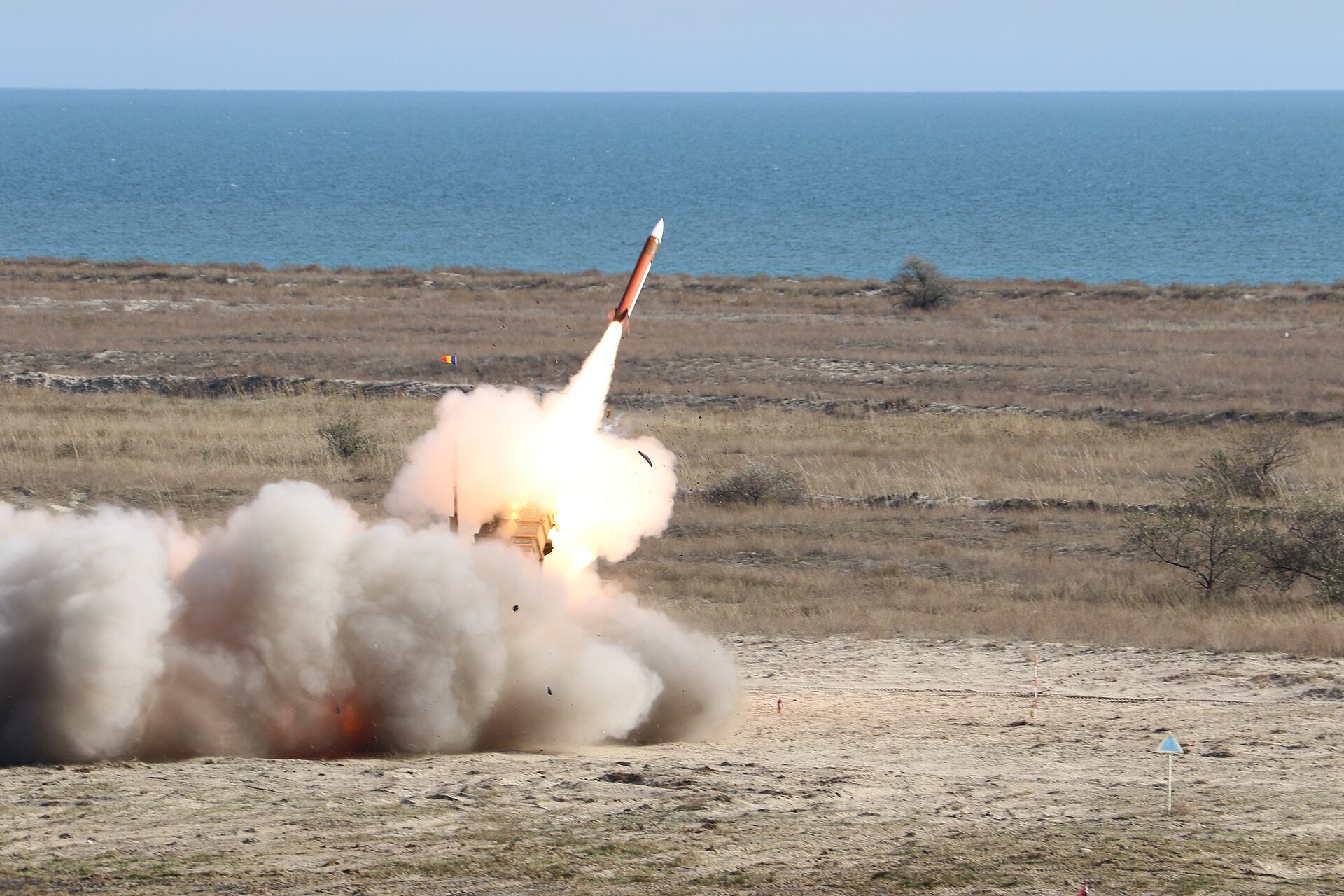
In the interim, Saudi Arabia has redeployed existing Patriot batteries from secondary positions to cover Yanbu and the Petroline corridor, according to two defense officials who spoke to Bloomberg on condition of anonymity. The redeployment has thinned coverage in other areas, creating what one official described as “a defense shell game” in which protecting Yanbu means accepting higher risk at eastern facilities that are already under daily attack.
The successful interception of the ballistic missile targeting Yanbu port suggests that at least one Patriot or THAAD battery is operational in the area. The military infrastructure Saudi Arabia has built over decades gives it one of the most capable air defense networks in the Middle East. Saudi Arabia operates approximately 80 Patriot launchers and 7 THAAD batteries, according to the International Institute for Strategic Studies’ Military Balance 2025. A Greek Patriot battery deployed under a bilateral defense agreement has also been intercepting Iranian missiles over Saudi territory, according to earlier reporting.
The challenge is interceptor stockpiles. Each Patriot PAC-3 missile costs approximately $4 million, while the Iranian Shahed-type drones they are designed to destroy cost between $20,000 and $50,000 each, according to estimates from the Royal United Services Institute. At 439 drones intercepted in three weeks, Saudi Arabia has likely expended interceptors worth more than $1.7 billion — an exchange ratio that is unsustainable without continuous resupply from the United States.
The ExxonMobil Dimension
The Samref strike carries additional significance because of ExxonMobil’s 50 percent ownership stake in the facility. It is the first direct hit on an American corporate energy asset in Saudi Arabia since the war began, raising questions about the liability, insurance, and political implications of the attack.
ExxonMobil and Saudi Aramco signed a Venture Framework Agreement in 2025 to upgrade the Samref refinery and build a new adjacent petrochemical complex, according to an Aramco press release. The expansion was expected to increase refining capacity and add integrated petrochemical production lines. The drone attack puts the timeline and viability of that investment under direct threat.
ExxonMobil has not issued a public statement on the Samref strike as of Thursday evening. The company’s involvement means the attack will receive heightened attention in Washington, where Congressional pressure to escalate American military involvement in the Gulf has been building. Senator Lindsey Graham had already warned that he would oppose the US-Saudi defense pact if Riyadh continued to refrain from striking Iran directly, according to earlier reporting.
War-risk insurance premiums for ships calling at Saudi Red Sea ports have surged since the conflict began. Lloyd’s of London and the Joint War Committee added Yanbu to the listed area for heightened war-risk coverage in the first week of March, according to the Maritime Executive. Thursday’s attack is expected to push premiums higher still, adding cost to every barrel of crude loaded at the port.
How Have Oil Markets Responded?
Oil markets had already been in turmoil before the Yanbu attack. Brent crude briefly touched $119 per barrel on Wednesday before pulling back sharply after Israeli Prime Minister Benjamin Netanyahu said Israel was helping to reopen the Strait of Hormuz. By Thursday morning, Brent was trading at approximately $113.71 per barrel, according to Fortune — more than $42 above its price a year earlier.
The Yanbu attack specifically threatens the market’s assumption that Saudi Arabia’s Red Sea bypass provides a reliable alternative to Hormuz-dependent exports. Analysts at Wood Mackenzie had described the Petroline-Yanbu system as the “relief valve” preventing oil prices from exceeding $130, according to CNBC. If that valve is compromised, the price ceiling could disappear.
| Date | Brent Crude ($/bbl) | Trigger Event |
|---|---|---|
| February 27, 2026 | ~$71 | Pre-war baseline |
| March 1, 2026 | ~$85 | Operation Epic Fury begins; Hormuz disrupted |
| March 9, 2026 | ~$106 | Hormuz effectively closed; EU emergency meeting |
| March 19, 2026 | $119 (intraday) | Iran strikes Qatar Ras Laffan LNG complex |
| March 20, 2026 | ~$114 | Yanbu attack + Netanyahu Hormuz statement |
OPEC and allied producers agreed on Sunday to boost output by a larger-than-expected amount to offset any shortfall from Iran, according to Axios. However, the production increase is limited by the same infrastructure constraints that make Yanbu critical — most OPEC surplus capacity is in Saudi Arabia and the UAE, both of which depend on pipelines and ports now under threat.
The supply picture deteriorated further when Baghdad invoked force majeure on all foreign-operated oil fields, pulling Iraq’s entire internationally managed production offline and widening the gap that OPEC+ cannot fill through incremental output pledges alone.
The Iranian strike on Qatar’s Ras Laffan LNG complex on March 18 — which damaged 17 percent of Qatar’s liquefied natural gas export capacity and will require 3 to 5 years of repairs, according to Bloomberg — had already rattled energy markets. The Yanbu attack compounds those fears by demonstrating that no Gulf energy facility is beyond Iran’s reach.
What Comes Next for Saudi Arabia’s Red Sea Corridor?
The immediate question facing Saudi Arabia’s military planners is whether Thursday’s attack was a one-off probe or the beginning of a sustained campaign against Red Sea infrastructure. If Iran can routinely threaten Yanbu, the Kingdom faces the prospect of having both its eastern and western export routes under simultaneous attack — a scenario that would eliminate Saudi Arabia’s ability to maintain crude exports at anything approaching normal levels.
The war has already damaged or disrupted refining capacity across the Gulf. With Ras Tanura and Jubail under daily threat in the east and Yanbu now targeted in the west, the geographic footprint of Iranian strikes encompasses the entirety of Saudi Arabia’s oil export infrastructure. Kuwait’s Mina Al-Ahmadi refinery was struck twice in 24 hours in a parallel assault that shut down 730,000 barrels per day of refining capacity.
Saudi Arabia’s options are constrained. Diplomatically, Foreign Minister Prince Faisal bin Farhan has warned that Riyadh’s patience is finite. Militarily, the Kingdom faces what analysts have called a “restraint trap” — the longer it refrains from retaliating directly against Iran, the more emboldened Tehran becomes to escalate. But entering the war actively risks drawing the Kingdom into a conflict that could shatter Vision 2030 and destabilize the regional economy for years.
For now, Aramco’s damage assessment at Samref will determine the immediate impact on refining operations. The fact that a 400,000-barrel-per-day facility was struck — even if damage was minimal — sends a message that extends well beyond the physical impact of a single drone. The Red Sea was supposed to be Saudi Arabia’s insurance policy. On Thursday, Iran tore the first page out of it.
The Yanbu strike exposed a deeper vulnerability in Aramco’s wartime pivot. The company has rerouted the bulk of its exports through the East-West Pipeline to Yanbu, but the port’s infrastructure cannot match the volumes that eastern terminals handled before the Hormuz closure. A full analysis of Aramco’s operational crisis and wartime production strategy reveals that the Kingdom can deliver less than half its pre-war crude volumes even under optimal conditions.
The strike on Yanbu is part of a broader environmental catastrophe unfolding across the Gulf, where over 300 documented incidents — from nuclear contamination risks at Natanz to 85 stranded oil tankers — threaten to inflict damage that outlasts the war itself.
Frequently Asked Questions
What is the Samref refinery?
Samref is a 50-50 joint venture between Saudi Aramco and ExxonMobil located in Yanbu Industrial City on Saudi Arabia’s Red Sea coast. Established in 1984, it processes more than 400,000 barrels per day of Arabian Light crude oil into diesel, propane, marine fuel, and sulfur. It is one of the largest refineries in the Middle East and the first American-linked energy asset directly hit in the 2026 Iran war.
Why is Yanbu important for Saudi oil exports?
Yanbu is the terminal point of Saudi Arabia’s 1,200-kilometer East-West Pipeline (Petroline), which carries crude oil from eastern fields to the Red Sea coast, bypassing the Strait of Hormuz. With Hormuz effectively closed since early March, Yanbu has become Saudi Arabia’s primary oil export hub, handling a record 3.8 million barrels per day — nearly triple its January volume.
How far is Yanbu from Iran?
Yanbu is located on Saudi Arabia’s western Red Sea coast, approximately 1,200 kilometers from Iran’s western border and more than 1,600 kilometers from the main Iranian drone launch sites. The distance had been considered a natural buffer against Iranian strikes, making Thursday’s attack strategically significant as the first confirmed hit on Red Sea energy infrastructure.
What type of drone was used in the attack?
The drone that struck Samref is believed to be an Iranian-manufactured Shahed-type one-way attack munition, based on trajectory analysis and debris characteristics described by Saudi defense officials. The Shahed-136 has a published range of approximately 2,500 kilometers and carries a warhead of 30 to 50 kilograms. The drone may have been launched from western Iraq to reduce the distance to Yanbu.
Will the attack disrupt Saudi oil production?
Saudi Aramco initially described the impact as “minimal,” and exports from Yanbu port continued on Thursday. However, the attack raises the risk premium on Red Sea oil shipments and may force Saudi Arabia to divert additional air defense assets to protect Yanbu — potentially at the expense of eastern facilities that face daily bombardment. Sustained attacks on Yanbu would severely constrain Saudi Arabia’s ability to export crude oil.