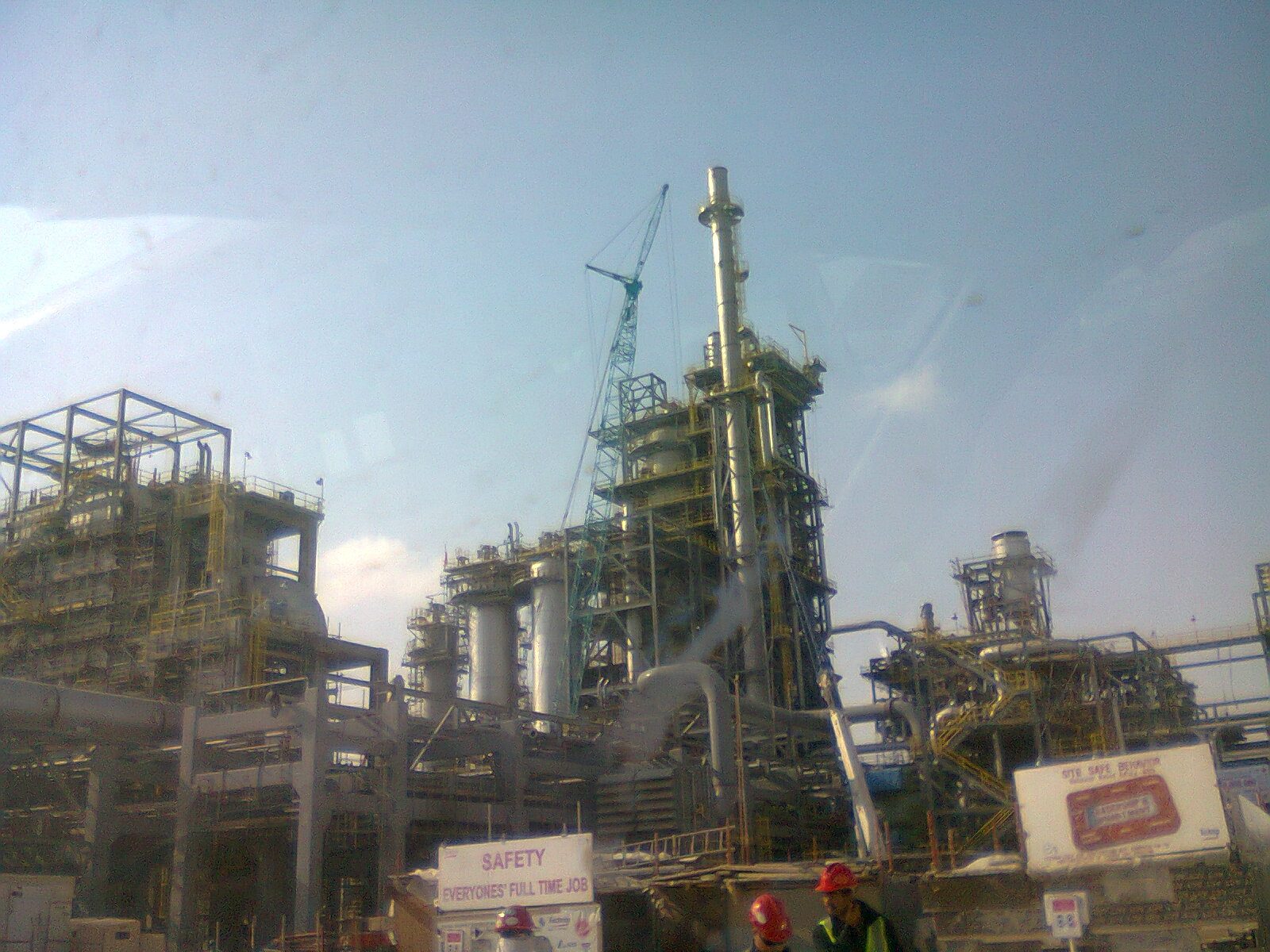

Saudi Arabia’s oil industry is the foundation upon which the modern Kingdom was built. From the discovery of crude at Dammam No. 7 in 1938 to the creation of the world’s most valuable energy company, petroleum has shaped every dimension of Saudi economic life, geopolitical influence, and national identity. Today, the Kingdom holds the world’s second-largest proven oil reserves, operates the planet’s most extensive spare production capacity, and wields unmatched influence over global energy markets through its leadership of OPEC+.
As of 2026, Saudi Arabia produces approximately 10.1 million barrels per day under OPEC+ coordination, generates over $100 billion annually in net income through Saudi Aramco alone, and is undertaking the most ambitious energy transition programme of any major oil-producing nation. This guide provides a comprehensive overview of the Saudi oil industry — its infrastructure, economics, strategic role, and future trajectory under Vision 2030.
Saudi Aramco: The World’s Most Valuable Energy Company
Saudi Arabian Oil Company — Saudi Aramco — is not merely a corporation. It is the engine of the Saudi state, the world’s largest oil producer, and by most measures the most profitable company on Earth. Wholly government-owned until its landmark initial public offering in December 2019, Aramco listed 1.5% of its shares on the Tadawul (Saudi stock exchange) at 32 riyals per share, raising $25.6 billion in what remains the largest IPO in history.
As of March 2026, Aramco’s market capitalisation stands at approximately $1.74 trillion, making it the world’s sixth-most valuable listed company. The Saudi government, through the Ministry of Energy and the Public Investment Fund (PIF), retains approximately 98% ownership, ensuring petroleum revenues continue to flow directly into state coffers and sovereign investment vehicles.
Financial Performance
For the full year 2025, Aramco reported net income of $104.7 billion — a decline from the previous year’s $117 billion but still a figure that dwarfs the combined profits of most Western oil majors. Cash flow from operations reached $136.2 billion, funding both shareholder distributions and capital expenditure programmes.
Total shareholder distributions amounted to $85.5 billion in 2025, including a base dividend of $21.89 billion — the fourth consecutive year of dividend growth — and a performance-linked component. The company also announced a share buyback programme worth up to $30 billion over 18 months, signalling confidence in long-term fundamentals despite oil price volatility.
Aramco CEO Amin Nasser characterised the results as “robust growth and strong cash flows,” emphasising the company’s lower-cost, adaptable operational model. Revenue for the trailing twelve months stands at approximately $461.6 billion, with 2026 projections broadly flat at SAR 1.7 trillion based on an average oil price assumption of $62.4 per barrel.
Corporate Structure and Governance
Aramco operates as a vertically integrated energy company spanning upstream exploration and production, midstream pipeline and tanker operations, downstream refining and marketing, and chemicals manufacturing. Its workforce numbers approximately 70,000 employees across more than 85 nationalities, with aggressive Saudisation targets pushing local hiring in engineering, management, and technical fields.
The company is headquartered in Dhahran, Eastern Province, where its vast compound houses research laboratories, training centres, and administrative facilities. Aramco’s governance structure includes an independent board with international directors, though strategic decisions on production levels remain the domain of the Ministry of Energy.
Production Capacity and Output
Saudi Arabia possesses a maximum sustainable crude oil production capacity of approximately 12.2 million barrels per day, with ongoing infrastructure upgrades designed to push this beyond 13 million bpd. However, actual production levels are determined not by technical capability but by strategic calculation within the OPEC+ framework.
Current Output Levels
As of early 2026, Saudi crude oil production stands at approximately 10.1 million barrels per day, following a period of voluntary OPEC+ cuts that began in 2023. In February 2026, production reached 10,111 thousand bpd, with the April 2026 target set at 10.2 million bpd following an agreed OPEC+ increase of 206,000 bpd across the eight core members.
Crude exports have risen to approximately 7.37 million barrels per day — the highest level since April 2023 — reflecting a measured response to both evolving geopolitical risks and the Kingdom’s desire to protect market share against growing non-OPEC supply from the United States, Brazil, and Guyana.
Major Oil Fields
Saudi Arabia’s petroleum wealth is concentrated in a series of supergiant and giant oil fields, predominantly located in the Eastern Province along the Persian Gulf coast and extending into the Rub’ al Khali (Empty Quarter):
| Field | Type | Estimated Capacity | Significance |
|---|---|---|---|
| Ghawar | Onshore | 3.8 million bpd | World’s largest conventional oil field; over 30% of Saudi capacity |
| Safaniya | Offshore | 1.5 million bpd | World’s largest offshore oil field |
| Khurais | Onshore | 1.2–1.5 million bpd | Major expansion completed in late 2000s |
| Shaybah | Onshore (desert) | 1 million bpd | Located in the Rub’ al Khali; high-quality Arabian Extra Light crude |
| Manifa | Offshore/onshore | 900,000 bpd | Heavy crude; major infrastructure including artificial islands |
| Berri | Offshore | 400,000 bpd | One of Saudi Arabia’s oldest producing fields |
Together, the top four fields — Ghawar, Safaniya, Khurais, and Shaybah — account for nearly 70% of total national production. Aramco employs advanced enhanced oil recovery (EOR) techniques, including CO₂ injection and smart well technology, to maintain reservoir pressure and extend field lifespans.
Proven Reserves: A Strategic Endowment
Saudi Arabia holds approximately 267–270 billion barrels of proven crude oil reserves, representing roughly 15% of the global total and ranking second worldwide behind Venezuela. Unlike Venezuela’s heavy crude reserves, which require extensive and costly processing, Saudi reserves are predominantly light and medium grades that command premium pricing on international markets.
At current production rates of approximately 10 million bpd, the Kingdom’s reserves-to-production ratio exceeds 70 years — among the most favourable of any major producer. However, Saudi authorities have long been suspected of understating reserves; some analysts suggest actual recoverable reserves may be significantly higher when accounting for undeveloped fields and advances in extraction technology.
The Eastern Province remains the centre of gravity for Saudi petroleum geology, though the Rub’ al Khali and Red Sea basins represent frontier exploration areas with significant untapped potential. Aramco’s ongoing exploration programme continues to identify new reservoirs and expand the resource base.
OPEC+ Leadership and Market Strategy
Saudi Arabia is the de facto leader of the Organisation of the Petroleum Exporting Countries (OPEC) and the broader OPEC+ alliance that includes Russia, Kazakhstan, and other non-OPEC producers. The Kingdom’s role within this framework is unique: it is the only member with sufficient spare capacity to meaningfully influence global supply in either direction.
Spare Capacity as Geopolitical Capital
With an estimated 1.8–2 million bpd of immediately available spare capacity — representing over 50% of total identified spare capacity across all OPEC+ members — Saudi Arabia functions as the world’s central bank of oil. This spare capacity, once primarily a revenue management tool, has been increasingly repurposed as geopolitical capital.
During periods of crisis — whether the 2019 Abqaiq drone attacks, the COVID-19 demand collapse, or the 2026 Iran conflict — Saudi spare capacity has served as the market’s ultimate shock absorber. The ability to rapidly increase or decrease output gives Riyadh leverage that no other producer can match, and it forms a cornerstone of the Saudi-American strategic relationship.
2026 Market Strategy
The eight core OPEC+ members agreed to increase production by 206,000 bpd effective April 2026, following a pause in January through March. This calibrated approach reflects a dual imperative: supporting oil prices amid geopolitical uncertainty while preventing non-OPEC producers from capturing additional market share.
Looking ahead, the primary tension for 2026 is a projected global liquids surplus of over 3 million bpd, which could force OPEC+ to choose between defending a price floor and aggressively pursuing volume. Saudi Arabia’s elevation of crude exports to multi-year highs suggests a strategic tilt toward market share protection.
Downstream, Refining, and Petrochemicals
Saudi Arabia has invested heavily in moving beyond crude oil exports to capture greater value through downstream processing. The Kingdom’s total refining capacity is estimated at approximately 6.6 million barrels per day as of 2026, making it one of the world’s largest refining centres.
Key Refining Assets
Aramco operates domestic refineries at Ras Tanura, Yanbu, and Riyadh, and holds stakes in major international refining joint ventures including Motiva (Port Arthur, Texas — the largest refinery in the Americas), SASREF (Jubail), and S-Oil (South Korea). The Jazan Economic City refinery, with a capacity of 400,000 bpd, integrates refining with power generation and desalination to serve the southern region’s industrial ambitions.
SABIC and Petrochemicals
The Saudi Basic Industries Corporation (SABIC) — 70% owned by Aramco since 2020 — is the Kingdom’s petrochemical flagship and one of the world’s largest chemical companies. SABIC produces approximately 62 million tonnes per annum of chemicals, polymers, fertilisers, and specialty materials at industrial cities in Jubail and Yanbu.
Vision 2030 targets a doubling of petrochemical output by the end of the decade, driven by the Amiral crude-oil-to-chemicals complex and the planned COTC (Crude Oil to Chemicals) facility with capacity to produce 9 million tonnes of chemicals per year. These investments aim to reduce the Kingdom’s dependence on selling raw crude and capture higher margins in the value chain.
Oil Revenue and the Saudi Economy
Despite decades of diversification rhetoric, oil remains the lifeblood of the Saudi economy. Petroleum revenues account for approximately 55% of total government revenue and around 22% of GDP directly, though the indirect contribution through petrochemicals, refining, and energy-dependent industries is substantially higher.
Economic Performance in 2025–2026
Saudi GDP grew 4.5% in 2025 — the strongest expansion since 2022 — driven by gains across both oil and non-oil sectors. Oil activities increased 5.7% while non-oil sectors rose 4.9%, demonstrating measurable progress on diversification. The International Monetary Fund has forecast 4.5% growth for 2026, citing higher oil production and a healthy non-oil sector.
However, the fiscal breakeven oil price — the price per barrel at which the government budget balances — remains a critical vulnerability. Estimates place this at $85–95 per barrel for 2026, well above the $62–70 range that has prevailed for much of the year. This structural deficit drives continued borrowing and reinforces the urgency of non-oil revenue growth.
Revenue Distribution
Oil revenues flow through multiple channels: direct government budget allocation, dividends and taxes from Aramco to the Ministry of Finance, and transfers to sovereign wealth vehicles including the PIF. Aramco’s total government payments — including royalties, income tax, and dividends — typically exceed $200 billion annually, funding everything from public sector salaries to mega-project construction.
The Post-Oil Transition Strategy
Saudi Arabia’s relationship with oil is undergoing a fundamental renegotiation. Under Vision 2030, the Kingdom aims to reduce oil’s contribution to GDP, grow non-oil exports to 50% of non-oil GDP, and develop alternative revenue streams in tourism, technology, renewable energy, and financial services.
Aramco’s Green Pivot
Aramco itself is investing in a portfolio of sustainability initiatives designed to position the company for a lower-carbon future while continuing to meet global hydrocarbon demand:
- Jubail CCS Hub: A large-scale carbon capture and storage facility with capacity to store up to 9 million tonnes of CO₂ annually from gas plants and industrial facilities, targeting completion in 2027
- NEOM Green Hydrogen: An $8.4 billion joint venture with ACWA Power and Air Products to produce 600 tonnes of green hydrogen daily, converted to ammonia for export, expected to commence operations in 2026
- Jafurah Gas Field: A $110 billion unconventional gas development that will provide feedstock for blue hydrogen production at a target cost of $1.50 per kilogram
- Direct Air Capture: Piloting DAC technology in partnership with Siemens Energy, including investment in Germany’s largest DAC demonstration plant
- Sustainability Fund: A $1.5 billion fund launched in 2022 to invest in enabling technologies including CCS, hydrogen, and advanced materials
- Price volatility: With fiscal breakeven prices above current market levels, sustained low prices would force difficult choices between production cuts and budget austerity
- OPEC+ cohesion: Managing an alliance with divergent interests — particularly as the UAE seeks higher quotas and Russia faces sanctions-related constraints — requires constant diplomatic effort
- Energy transition uncertainty: The pace of global decarbonisation will determine whether the “last barrel standing” strategy succeeds or leaves the Kingdom holding a depreciating asset
- Geopolitical risk: The 2026 Iran conflict has demonstrated the vulnerability of Gulf energy infrastructure, reinforcing the need for both military defence and economic diversification
- Non-OPEC supply growth: Record production from the United States, Brazil, and Guyana continues to erode OPEC+ market share, complicating output management
Aramco has set a target of achieving net-zero Scope 1 and 2 greenhouse gas emissions across wholly owned assets by 2050, while the Ministry of Energy has outlined plans to capture and store 44 million tonnes of CO₂ annually by 2035.
The Paradox of Transition
Saudi Arabia’s energy transition strategy is fundamentally different from Western models. Rather than reducing oil production, the Kingdom aims to produce hydrocarbons more cleanly while developing parallel revenue streams. The logic is straightforward: Saudi oil has among the lowest production costs and carbon intensities of any major source, so if the world is going to consume oil — and it will for decades — Saudi barrels should be the last to be displaced.
This “last barrel standing” strategy underpins both Aramco’s capacity expansion plans and the Kingdom’s aggressive investment diversification through the PIF and other vehicles. It is a bet that peak oil demand, when it arrives, will eliminate higher-cost competitors long before it threatens Saudi volumes.
Employment, Saudisation, and Human Capital
The Saudi oil industry employs approximately 70,000 workers directly through Aramco, with tens of thousands more in contractor, service company, and downstream roles. Under the Kingdom’s Saudisation policies — known as Nitaqat — energy companies face increasing mandates to hire Saudi nationals in technical, engineering, and management positions.
Aramco operates one of the most extensive corporate training programmes in the world, including the King Abdulaziz University of Science and Technology (KAUST) partnership, international scholarship programmes, and in-house technical academies. The company’s apprenticeship and graduate development schemes are designed to build a deep national talent pool capable of operating increasingly sophisticated facilities.
Vision 2030 is reshaping workforce requirements across the energy sector, with growing demand for specialists in digital transformation, artificial intelligence, renewable energy engineering, advanced analytics, and sustainability management. The oil industry remains the Kingdom’s most prestigious employer, though competition from giga-projects like NEOM and the entertainment sector is intensifying.
Key Challenges and Outlook
The Saudi oil industry faces a complex set of challenges as it navigates the mid-2020s:
Despite these headwinds, Saudi Arabia’s oil industry enters the second half of the decade from a position of structural strength. The combination of the world’s lowest-cost reserves, unmatched spare capacity, a vertically integrated national champion in Aramco, and a sovereign wealth fund flush with petroleum capital provides a foundation that no competitor can replicate. The question is not whether Saudi oil will remain relevant — it will — but how effectively the Kingdom can convert its hydrocarbon advantage into a durable, diversified economic future.