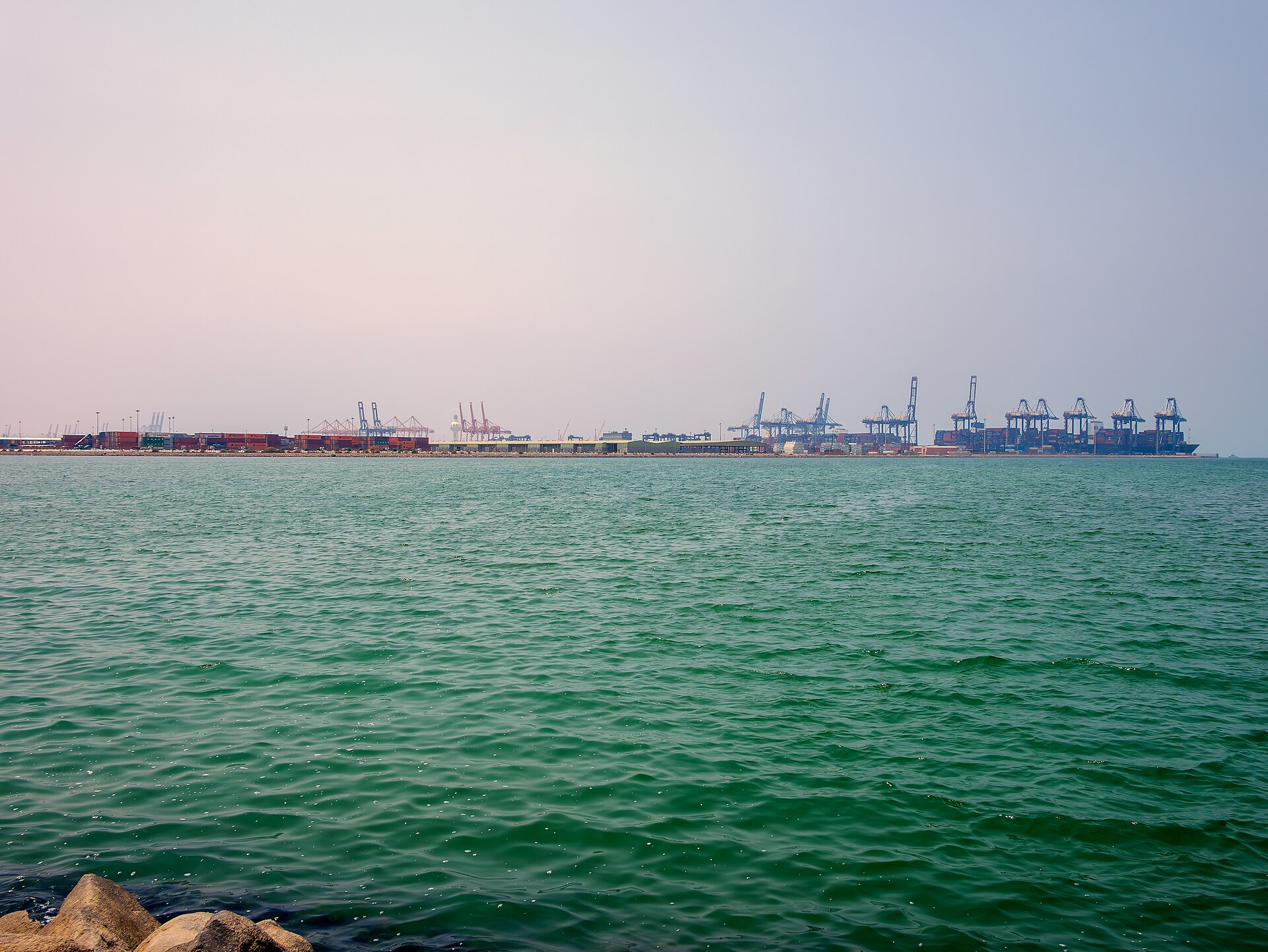

JEDDAH — Saudi Arabia’s largest port is bracing for a 50 percent surge in ship arrivals within the next two weeks as the closure of the Strait of Hormuz forces Gulf nations to reroute food, medicine, and consumer goods through Jeddah Islamic Port on the Red Sea coast. Port officials told CNN during a visit on Sunday that the facility is preparing round-the-clock operations to handle a flood of rerouted cargo that once transited the Persian Gulf, transforming the western Saudi city into the primary supply chain gateway for the entire Arabian Peninsula.
The shift marks a dramatic reordering of Gulf trade patterns less than four weeks into the Iran war. Approximately 85 percent of the food consumed across the six Gulf Cooperation Council states arrives by sea, according to the Food and Agriculture Organization, and the near-total halt of commercial shipping through Hormuz has forced importers to find alternative routes or face shortages of wheat, rice, sugar, cooking oil, and basic pharmaceuticals. More than 50 million people in the GCC depend on these supply lines, and Jeddah has emerged as the largest and most capable port outside the danger zone.
Table of Contents
- Jeddah Port Prepares for 50 Percent Surge in Arrivals
- Why Has Jeddah Become the Gulf’s Emergency Trade Hub?
- How Vulnerable Are Gulf States to a Food Supply Disruption?
- Which Ports Are Handling Rerouted Gulf Trade?
- Yanbu Handles Oil, Jeddah Handles Everything Else
- Can Jeddah Port Handle the Demand?
- Security Threats Follow the Cargo West
- WTO Warns Gulf Disruption Could Cut Global Trade Growth
- Frequently Asked Questions
Jeddah Port Prepares for 50 Percent Surge in Arrivals
Officials at Jeddah Islamic Port, the largest port in Saudi Arabia, confirmed this week that the facility expects a roughly 50 percent increase in vessel arrivals within the coming two weeks as global shipping lines reroute container traffic away from the Strait of Hormuz. The port, situated on the Red Sea roughly 650 kilometres from the nearest Iranian military position, sits well outside the engagement zone that has made Persian Gulf ports hazardous since late February.
The announcement follows weeks of accelerating disruption. When US and Israeli strikes against Iran began on February 28, more than 60 cargo ships en route to ports inside the Persian Gulf were forced to divert, according to data from MarineTraffic. Some turned back toward home ports in China and India. Others rerouted south around the Arabian Peninsula toward the Red Sea.
Traffic through the Strait of Hormuz collapsed from an average of 138 commercial vessels per day before the conflict to as few as five on some recent days, according to maritime intelligence firm Windward. The near-total closure has choked supply chains across the Arabian Peninsula, severing import routes that feed 35 million people in Saudi Arabia alone and supply the construction, manufacturing, and retail sectors of the UAE, Qatar, Bahrain, and Kuwait.
Red Sea traffic has risen by roughly one-third since the war began, according to Saudi officials. Much of that increase reflects oil rerouted through the East-West Pipeline to Yanbu. Jeddah’s container terminals are now absorbing the non-oil share of that surge, handling food, building materials, industrial components, and consumer products that can no longer reach the Gulf coast.
The Middle East briefing 3,000+ readers start their day with.
One email. Every weekday morning. Free.
Why Has Jeddah Become the Gulf’s Emergency Trade Hub?
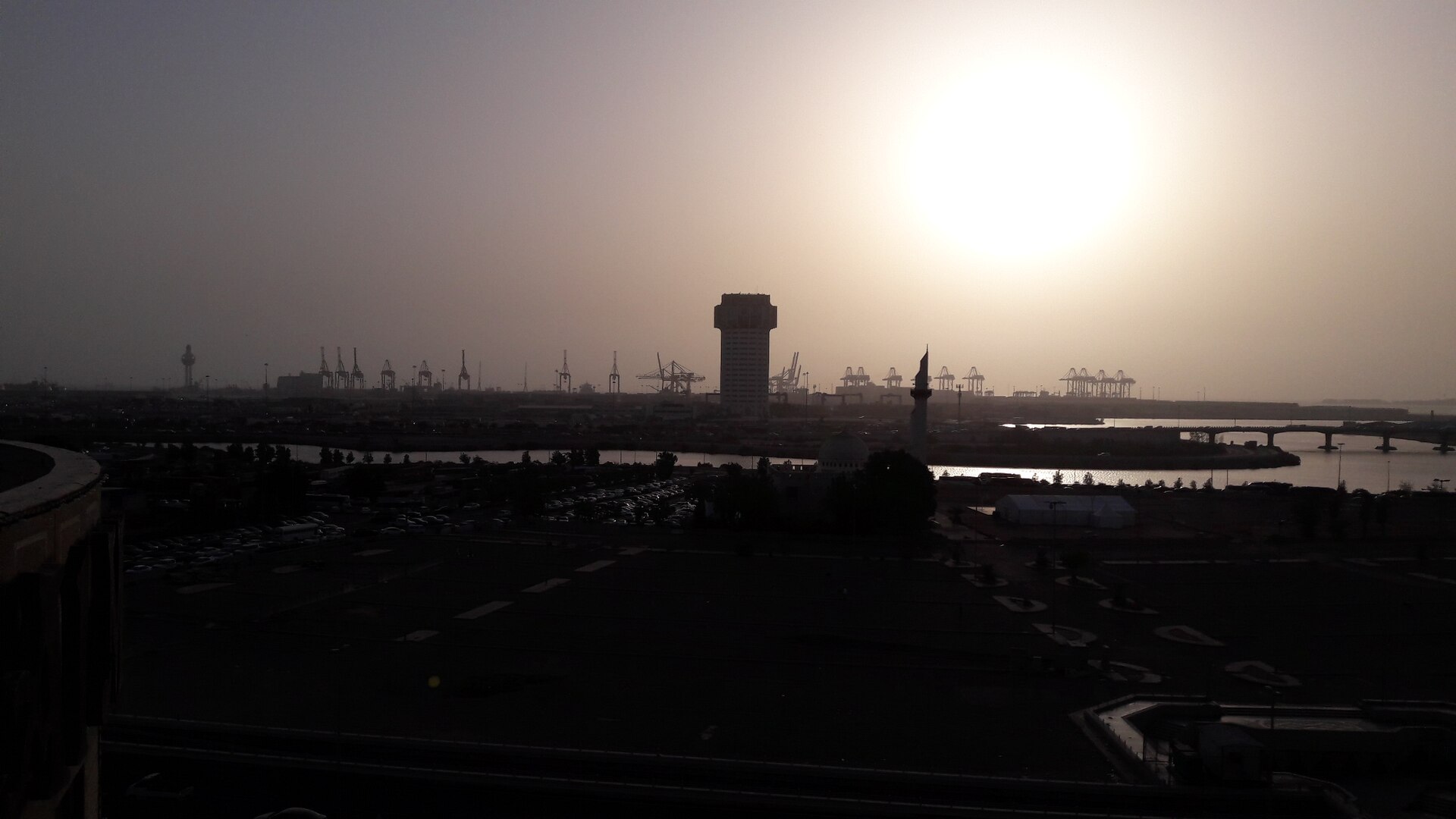
Jeddah Islamic Port has become the Gulf’s emergency trade hub because it combines three advantages no other regional port can match: geographic safety, existing capacity, and road and rail connections to the rest of the peninsula. The port sits on the Red Sea, separated from the combat zone in the Persian Gulf by the full width of the Arabian Peninsula. It is Saudi Arabia’s busiest container terminal and one of the top 40 container ports globally, with an annual throughput capacity of 7.5 million twenty-foot equivalent units (TEUs) following a major expansion completed in 2025.
Before the war, Jeddah handled roughly five million TEUs annually. The gap between that throughput and the port’s expanded capacity leaves room for the anticipated surge. DP World completed an $800 million expansion of the South Container Terminal in March 2025, doubling its capacity to four million TEUs per year. Red Sea Gateway Terminal, jointly operated with CMA CGM, has additional capacity earmarked for a new Terminal 4, designed to push the port’s total handling to 8.8 million TEUs.
The geographic logic is straightforward. Ships arriving from Asia through the Indian Ocean can reach Jeddah via the Bab al-Mandab Strait and the Red Sea without passing through the Strait of Hormuz. Ships from Europe transit the Suez Canal directly to Jeddah. Neither route requires entering the Persian Gulf, where Iranian naval forces and missile batteries have made commercial transit untenable since early March.
From Jeddah, goods move overland to their final destinations across the peninsula. Saudi Arabia’s road network connects Jeddah to Riyadh, Dammam, and the eastern industrial cities. Cross-border trucking routes link the kingdom to the UAE, Bahrain, Qatar, and Kuwait. The land corridor adds transit time and cost compared with direct sea delivery through the Gulf, but it delivers cargo that would otherwise not arrive at all.
How Vulnerable Are Gulf States to a Food Supply Disruption?
The Gulf Cooperation Council states import approximately 85 percent of their food, making the region one of the most import-dependent in the world, according to the FAO. The dependency is even more acute for specific commodities: rice import dependency averages 75 percent across GCC nations, while imports of corn, soybeans, and vegetable oil exceed 90 percent. That dependency is now colliding with the most food-intensive period on the Islamic calendar, as Saudi Arabia’s 80 percent import dependency meets a wartime Ramadan.
The Hormuz closure has placed that supply chain under immediate strain. The strait normally handles more than 30,000 ship transits per year, carrying roughly 11 percent of global seaborne trade by volume, according to the World Trade Organization. With commercial transit near zero since early March, importers have been forced to reroute shipments through alternative ports or face empty shelves.
Bahrain and Kuwait have already seen consumer prices for meat and fish rise by more than 30 percent, according to France 24 reporting on March 19. The UAE has claimed four to six months of strategic food reserves, drawing on stockpiling programmes established after the 2017 blockade of Qatar. Qatar itself invested heavily in domestic food production and strategic reserves after that experience, giving it a larger buffer than some neighbours. Saudi Arabia moved early, with the Public Investment Fund redirecting capital from megaprojects toward grain purchases in the opening days of the conflict.
The FAO warned in March that the Hormuz crisis threatens food supplies for more than 50 million people across the Gulf states. The Council on Foreign Relations noted that the disruption extends beyond food to fertiliser, with approximately one-third of global fertiliser exports normally transiting the strait. A prolonged closure raises the prospect of cascading agricultural disruptions far beyond the Middle East.
| Commodity | Import Dependency | Primary Source Regions |
|---|---|---|
| Rice | ~75% | India, Pakistan, Thailand |
| Wheat | ~80% | Australia, Canada, EU |
| Corn | >90% | Brazil, Argentina, US |
| Soybeans | >90% | Brazil, US, Argentina |
| Vegetable oil | >90% | Indonesia, Malaysia, India |
| Meat (overall) | ~70% | Brazil, India, Australia |
| Overall food basket | ~85% | Global |
Which Ports Are Handling Rerouted Gulf Trade?
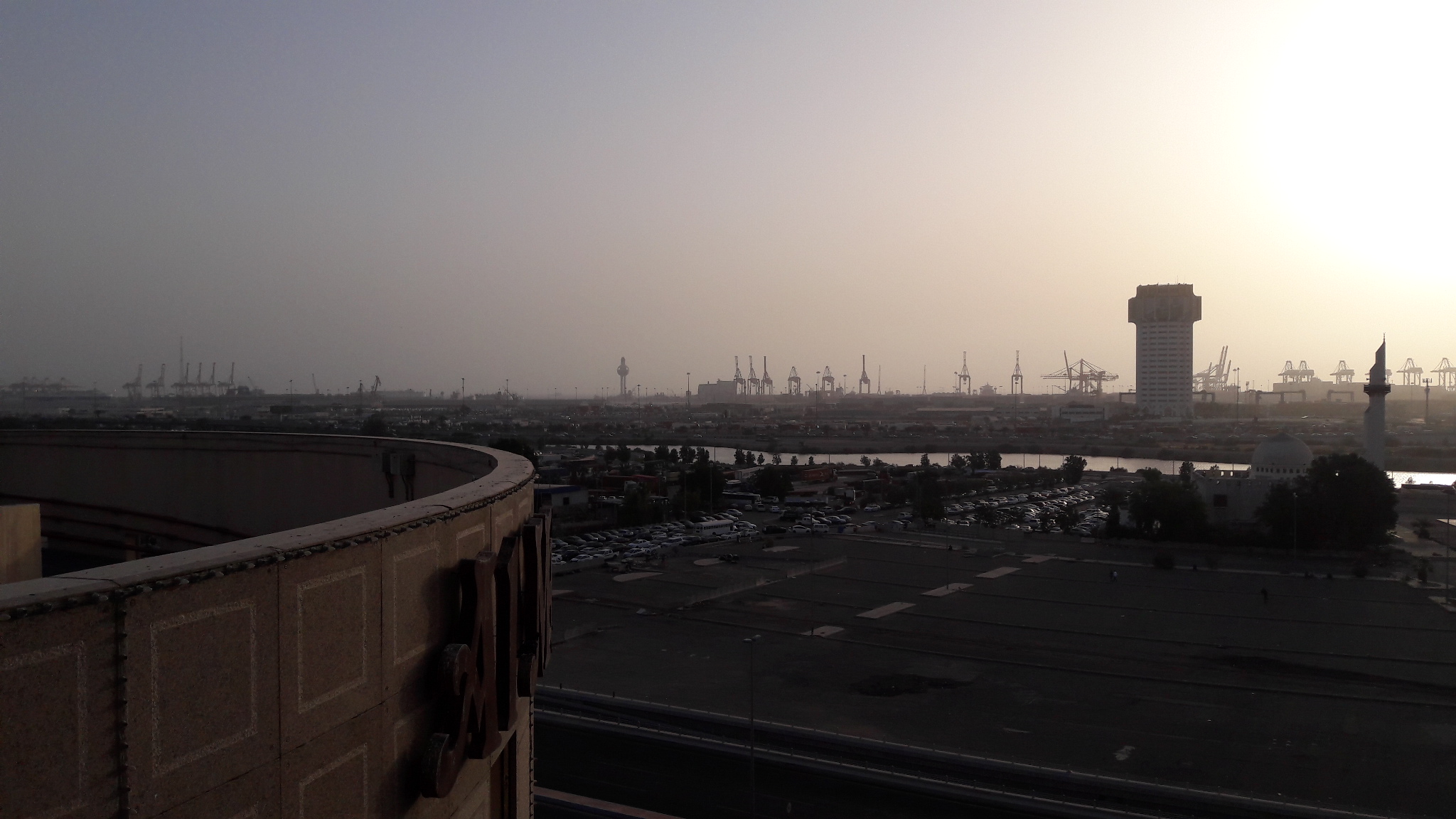
Jeddah is the largest alternative, but it is not alone. A network of ports outside the Strait of Hormuz has absorbed rerouted trade since the conflict began. The Omani ports of Sohar and Salalah, the Emirati port of Khor Fakkan, and Oman’s Duqm have all reported increased activity, according to Inchcape Shipping Services operational updates.
Khor Fakkan, on the UAE’s eastern coast facing the Gulf of Oman, sits just outside the Strait of Hormuz. It has become a transshipment hub where cargo is offloaded from large container vessels and moved by truck to Dubai, Abu Dhabi, and other Gulf destinations. Fujairah, on the same coast, is handling similar operations. Both ports are working at increased capacity, though neither approaches Jeddah’s scale.
DP World, which operates port facilities across the region, confirmed that shippers are staging goods in India and Pakistan for onward feeder runs into Fujairah and Khor Fakkan. Maersk, the world’s second-largest container shipping line, has adopted a split routing strategy: delivering to Oman’s Salalah on the Arabian Sea for eastbound cargo, and entering the Red Sea from the Suez Canal for westbound deliveries to Jeddah.
Clearance times at Khor Fakkan and Fujairah have increased due to congestion, according to shipping industry sources. Neither port was designed to handle the volume of trade that normally flows through Dubai’s Jebel Ali, one of the world’s largest container ports, which sits inside the Persian Gulf and remains effectively cut off from most international shipping.
| Port | Country | Location | Primary Role | Congestion Status |
|---|---|---|---|---|
| Jeddah Islamic Port | Saudi Arabia | Red Sea | Main container hub, non-oil imports | Preparing for 50% surge |
| Yanbu | Saudi Arabia | Red Sea | Oil export terminal (East-West Pipeline) | Near capacity at 2.6M bpd |
| Khor Fakkan | UAE | Gulf of Oman | Transshipment, trucking to Gulf cities | Increasing delays |
| Fujairah | UAE | Gulf of Oman | Container offload, feeder distribution | Increasing delays |
| Salalah | Oman | Arabian Sea | Maersk hub for eastbound cargo | Operating normally |
| Sohar | Oman | Gulf of Oman | Industrial and container cargo | Operating normally |
| Duqm | Oman | Arabian Sea | Overflow capacity | Operating normally |
Yanbu Handles Oil, Jeddah Handles Everything Else
The distinction between Jeddah and Yanbu is critical to understanding Saudi Arabia’s wartime logistics. Yanbu, roughly 300 kilometres north of Jeddah on the Red Sea coast, is the terminus of Aramco’s 700-mile East-West Crude Oil Pipeline. That pipeline, originally built in the 1980s as an insurance policy against a Hormuz disruption, has been pushed to full capacity since early March.
Aramco CEO Amin Nasser confirmed in early March that the East-West Pipeline would reach its full capacity of seven million barrels per day after companion natural gas liquids pipelines were converted to carry crude. Average loadings at Yanbu have increased from 1.3 million barrels per day in January to 2.6 million barrels per day in March, with projections targeting 3.8 million barrels per day by month-end, according to the consultancy Vortexa.
Yanbu’s two terminals have a nominal loading capacity of roughly 4.5 million barrels per day, but the tested actual capacity under wartime conditions is approximately three million barrels per day. That creates a ceiling. Even at full pipeline throughput, Saudi Arabia cannot replace the estimated 20 million barrels per day of oil that normally transits Hormuz from multiple Gulf producers.
Jeddah’s role is complementary. While Yanbu handles crude oil and petroleum products, Jeddah handles containers, dry bulk cargo, roll-on-roll-off vehicle shipments, and general cargo. The separation matters because the food, medicine, industrial equipment, and consumer goods that Gulf populations depend on cannot flow through an oil pipeline. They require container ports with cranes, storage, customs processing, and onward truck distribution.
Saudi Arabia’s Red Sea oil exports have surged 192 percent since the war began, according to Discovery Alert. The non-oil cargo surge through Jeddah is building more gradually but may ultimately prove more consequential for the daily lives of Gulf residents who need wheat, not West Texas Intermediate.
Can Jeddah Port Handle the Demand?
Jeddah Islamic Port has significant headroom, but absorbing the entire Gulf’s rerouted trade will test its infrastructure. The port processed nearly five million TEUs in 2023, its most recent full-year figure, against a current capacity of 7.5 million TEUs. That leaves roughly 2.5 million TEUs of unused capacity, equivalent to a 50 percent increase in throughput, which aligns with the surge port officials described to CNN.
The timing of recent investments works in Jeddah’s favour. DP World’s $800 million expansion of the South Container Terminal, completed in March 2025, doubled that facility’s capacity to four million TEUs annually. The Saudi Ports Authority has invested in new gantry cranes, expanded yard stacking areas, and upgraded truck gates to reduce turnaround times. Saudi Arabia handled 320.78 million tonnes of cargo across all ports in 2024, a 14.45 percent increase year-on-year, according to Arab News.
The bottleneck is not at the quayside. It is inland. Jeddah’s road connections to the eastern Gulf states run through Riyadh and then east to Dammam, a journey of roughly 1,200 kilometres. From Dammam, cross-border trucking adds further time and cost to reach Qatar, Bahrain, Kuwait, and the UAE. A container that once took three days from origin port to Dubai via Jebel Ali may now take two weeks via Jeddah and overland trucking.
Saudi Arabia’s nascent rail network offers a partial solution. The Saudi Landbridge railway, connecting Jeddah to Riyadh and eventually to the eastern coast, could move containers more efficiently than trucks, but the railway remains under development. The Saudi Railway Company has, however, already opened a 1,700-kilometre freight corridor from its Eastern Province ports to the Jordanian border, establishing an overland trade artery that bypasses maritime chokepoints entirely and positions rail as a wartime logistics backbone. For now, the road network must bear the bulk of the load.
Security Threats Follow the Cargo West
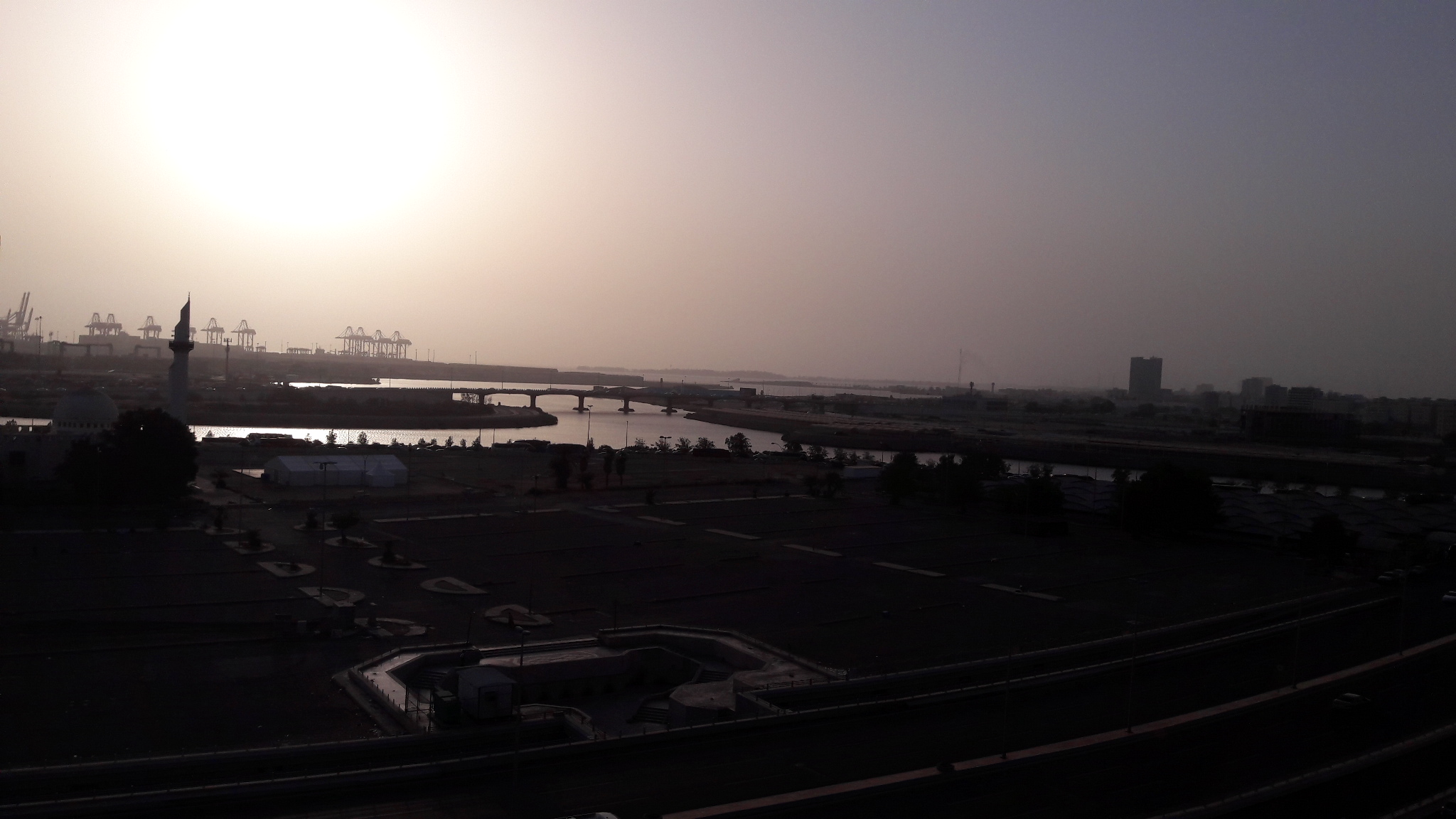
The rerouting of Gulf trade to the Red Sea coast raises a question that logistics planners have been forced to confront since mid-March: are Jeddah and Yanbu safe from the same attacks that closed the Persian Gulf?
The answer is not entirely reassuring. Iranian drones struck fuel depots and oil facilities near Yanbu on March 20, when the war reached the Red Sea coast for the first time. The Samref refinery, co-owned by Aramco and ExxonMobil, was hit during Iranian retaliatory strikes following Israel’s attack on Iran’s South Pars gas field. The strike on a facility adjacent to Yanbu’s oil export terminals demonstrated that Iran’s weapons can reach the Red Sea coast, even if the range and frequency of attacks remain lower than in the Eastern Province.
Saudi air defence forces have intercepted hundreds of Iranian drones and missiles since the war began, with the Eastern Province bearing the brunt. The Saudi military’s performance in the air defence war has been stronger than many analysts expected, but extending that umbrella to cover the entire Red Sea coast adds geographic breadth to an already demanding mission.
The Houthi threat compounds the risk. Yemen’s Houthi forces, aligned with Iran, have disrupted Red Sea shipping since late 2023 during the Gaza conflict and remain capable of targeting vessels approaching Jeddah from the south. Houthi drone and missile attacks on commercial shipping in the Red Sea forced global carriers to reroute around the Cape of Good Hope in 2024, adding weeks to transit times. Whether the Houthis will target rerouted Gulf supply chains is an open question that adds another layer of risk to an already fragile corridor.
That question was answered on March 28, when the Houthis launched missiles at Israel and declared the Bab al-Mandab strait a viable target, directly threatening the southern approach to both Jeddah and Yanbu.
WTO Warns Gulf Disruption Could Cut Global Trade Growth
The World Trade Organization published its Global Trade Outlook and Statistics report on March 19, warning that the Middle East conflict is weighing heavily on the global trade outlook. The WTO forecasts global merchandise trade growth will slow to 1.9 percent in 2026, down from 4.6 percent in 2025. If energy prices remain elevated throughout the year, trade growth could fall further to 1.4 percent, with global GDP trimmed by 0.3 percentage points.
The Hormuz disruption sits at the centre of that warning. The strait normally handles approximately 11 percent of global seaborne trade by volume, and its closure has disrupted energy markets, fertiliser supply chains, and container shipping routes simultaneously. The WTO noted that over 40,000 flights have been cancelled across the Gulf region, further damaging services trade.
For Saudi Arabia, the trade rerouting through Jeddah carries a paradoxical upside. The kingdom is positioning itself as the peninsula’s indispensable logistics hub, a role that could outlast the war. Twenty-five days of conflict have already reversed decades of dependence patterns across the Gulf, and Jeddah’s emergence as the region’s primary import gateway may represent one of the most durable changes the war produces.
The economic costs remain steep. Saudi Arabia’s wartime spending extends well beyond military operations to include subsidised food prices, logistics infrastructure investment, and support for disrupted commercial partners across the GCC. Whether the strategic dividends of becoming the Gulf’s supply chain hub justify those costs is a calculation that will take months to resolve.
What is already clear is that the map of Gulf trade has been redrawn. Before February 28, Jebel Ali in Dubai was the undisputed hub. Jeddah was a busy but secondary port focused on Red Sea trade and Hajj pilgrim logistics. Four weeks of war have inverted that hierarchy, at least temporarily, and every day the Strait of Hormuz remains closed strengthens Jeddah’s claim to permanence.
Frequently Asked Questions
Why is Jeddah port important for Gulf supply chains during the Iran war?
Jeddah Islamic Port sits on the Red Sea, well outside the range of the heaviest Iranian attacks targeting Persian Gulf ports. It is Saudi Arabia’s largest container port with 7.5 million TEU annual capacity and has road connections to every GCC state, making it the only facility capable of absorbing the Gulf’s rerouted non-oil imports at scale.
How much food do Gulf states import through the Strait of Hormuz?
GCC nations import approximately 85 percent of their food, with dependency exceeding 90 percent for corn, soybeans, and vegetable oil. More than 50 million people depend on supply lines that previously transited the Strait of Hormuz, according to the FAO. The closure has already driven meat and fish prices up by more than 30 percent in Bahrain and Kuwait.
What is the difference between Jeddah and Yanbu in the current crisis?
Yanbu, 300 kilometres north of Jeddah on the Red Sea, handles crude oil exports via Aramco’s East-West Pipeline, currently operating at up to 2.6 million barrels per day. Jeddah handles containers, dry bulk, and general cargo, including food, medicine, and consumer goods. Together they form Saudi Arabia’s two-port bypass of the Strait of Hormuz.
Can ships reach Jeddah without passing through the Strait of Hormuz?
Ships from Asia reach Jeddah via the Indian Ocean and Bab al-Mandab Strait into the Red Sea, bypassing Hormuz entirely. European vessels transit the Suez Canal directly to Jeddah. Neither route requires entering the Persian Gulf, which is why major carriers including Maersk have rerouted container services to Jeddah and Salalah in Oman.
Is Jeddah port safe from Iranian attacks?
Jeddah is roughly 650 kilometres from the nearest Iranian military position and significantly harder for Iran to target than Eastern Province facilities. However, Iranian drones struck the Samref refinery near Yanbu on March 20, demonstrating that Red Sea coast targets are not entirely beyond reach. Houthi forces in Yemen also pose a threat to Red Sea shipping approaching from the south.