
DHAHRAN — The attack that shut down Saudi Aramco’s Ras Tanura terminal on March 12 destroyed more than a loading dock. It destroyed the assumption that had underwritten seventy years of global economic planning: that Persian Gulf oil would always flow. One month into the 2026 Iran war, with the Strait of Hormuz effectively blockaded, ten million barrels per day of production offline, and Brent crude oscillating between $94 and $119, governments from Tokyo to Berlin are making decisions that will outlast the war by decades. They are not merely scrambling for alternative supply. They are abandoning the architecture of oil dependence itself. The war that threatened to plunge the world into recession may end up doing what three decades of climate summits, carbon pledges, and activist campaigns could not: kill the age of oil.
Table of Contents
- The Hormuz Vulnerability That Nobody Priced
- How Does the 2026 Oil Shock Compare to Previous Crises?
- Europe’s Emergency Energy Pivot
- Why Are Japan and South Korea Abandoning Fifty Years of Energy Policy?
- India and China Face Opposite Energy Futures
- The Energy Security Vulnerability Index
- What Is the War Doing to Renewable Energy Investment?
- Saudi Arabia’s Paradox — The Oil Kingdom That Needs Oil to Die
- Is the Iran War Saving or Destroying Vision 2030?
- The Contrarian Case — Why This War Is the Best Thing That Happened to the Planet
- When Will Global Oil Demand Peak?
- What Comes After Oil — The Post-Hormuz Energy Order
- Frequently Asked Questions
The Hormuz Vulnerability That Nobody Priced
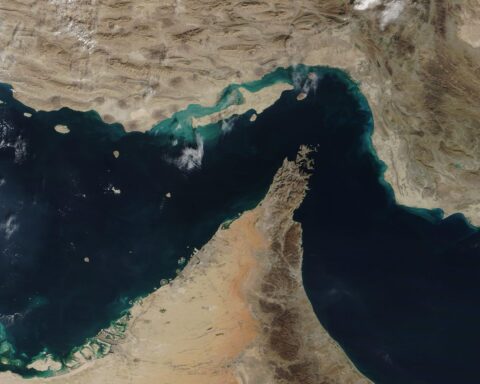
For half a century, the global economy treated the Strait of Hormuz as furniture — always there, never questioned, too fundamental to fail. Approximately twenty-one percent of the world’s petroleum and twenty-five percent of its liquefied natural gas transited the 21-mile-wide chokepoint every day, according to the U.S. Energy Information Administration. Insurance underwriters priced Hormuz transit risk at fractions of a basis point. Energy security planners in Washington, Brussels, and Tokyo acknowledged the theoretical vulnerability in classified briefings and did nothing about it.
Then Iran shut it down.
The closure was not instantaneous. It unfolded over the first seventy-two hours of the war in a sequence that exposed every assumption the energy market had built around Gulf supply reliability. On February 28, as American and Israeli strikes hit targets across Iran, the Islamic Revolutionary Guard Corps Navy began turning back commercial vessels. By March 3, Lloyd’s of London had suspended all marine war risk coverage for Hormuz transits, according to Reuters. By March 10, oil production across Saudi Arabia, Kuwait, the UAE, and Iraq had fallen by 6.7 million barrels per day, according to Bloomberg. By March 12, that figure exceeded ten million — the largest supply disruption in the history of the global oil market.
The OPEC reference basket price reflected the chaos. In February 2026, the basket averaged $67.90 per barrel. By March, it had surged to $115.88, according to OPEC’s official pricing data By March 28, Brent crude had surged to $112.57, earning Saudi Arabia an estimated $119 million per day above its pre-war baseline even as its export infrastructure degraded. — a seventy-one percent increase in a single month. Brent crude touched $119 on March 20 before falling below $100 on March 26 as diplomatic signals emerged, only to climb again when those signals proved hollow.
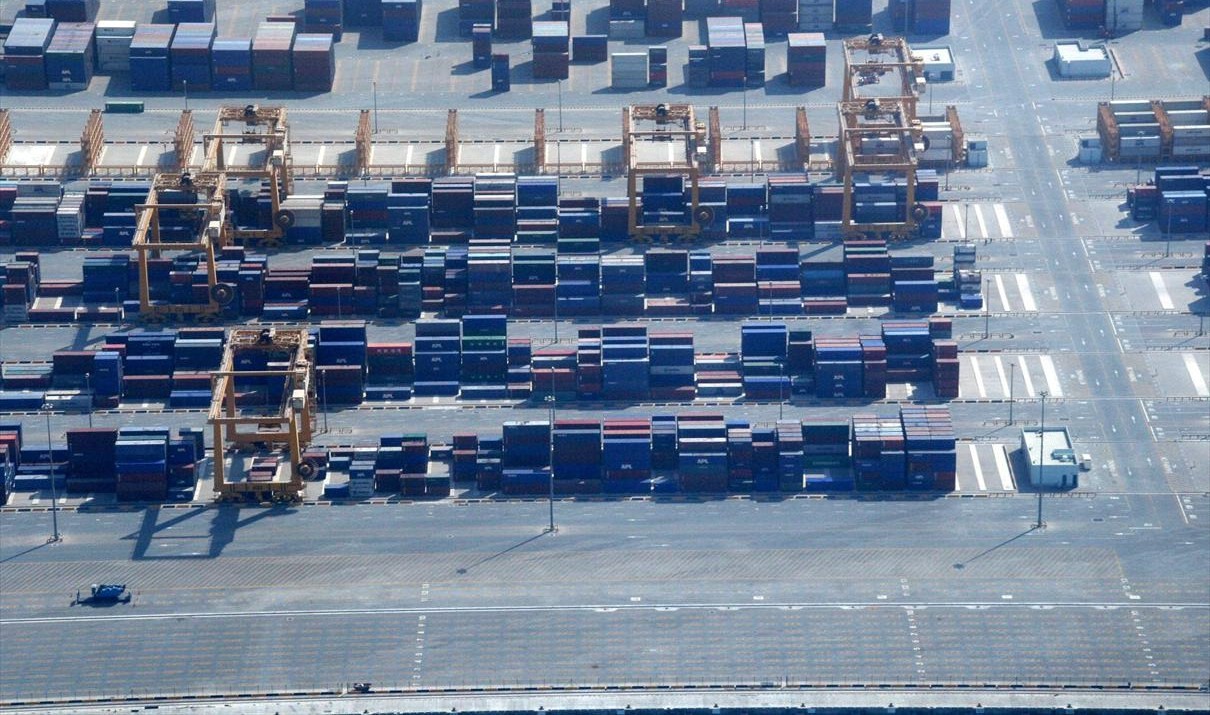
The numbers told only part of the story. The deeper shock was psychological. Energy planners who had spent careers assuring governments that Hormuz would never close discovered they had built an entire global energy system around an assumption that failed in less than seventy-two hours. The question was no longer whether the strait would reopen — it was whether any government would ever again trust its economy to a shipping lane that a single hostile state could shut with mines, missiles, and fast boats.
The Middle East briefing 3,000+ readers start their day with.
One email. Every weekday morning. Free.
How Does the 2026 Oil Shock Compare to Previous Crises?
The 2026 Hormuz disruption is the fourth great oil shock in modern history, and by every quantitative measure, it dwarfs its predecessors. The 1973 Arab oil embargo removed approximately 4.4 million barrels per day from global supply. The 1979 Iranian Revolution took out 5.6 million. The 1990 Iraqi invasion of Kuwait disrupted 4.3 million. The 2026 Iran war has removed more than ten million barrels per day — roughly double the worst previous disruption — while simultaneously blocking LNG shipments that the previous crises never touched.
| Crisis | Year | Supply Lost (mb/d) | Peak Price Increase | Duration | LNG Disrupted |
|---|---|---|---|---|---|
| Arab Oil Embargo | 1973 | 4.4 | +300% | 5 months | No |
| Iranian Revolution | 1979 | 5.6 | +150% | 12 months | No |
| Iraq-Kuwait War | 1990 | 4.3 | +130% | 9 months | No |
| Iran War / Hormuz Blockade | 2026 | 10+ | +71%* | Ongoing | Yes |
*Peak increase measured from February 2026 average to March OPEC basket. Brent spot touched +78% intraday on March 20.
The SolAbility research consultancy estimated that if the conflict ends quickly, losses to the global economy would reach approximately $590 billion, or 0.54 percent of global GDP. In a prolonged closure scenario extending beyond six months, that figure rises to $3.5 trillion — 3.15 percent of global GDP, according to their March 2026 analysis. Goldman Sachs projected that Saudi GDP would contract by just over three percent, while Kuwait and Qatar faced potential contractions of fourteen percent.
The critical difference between 2026 and all previous shocks is the LNG dimension. The 1973 embargo never touched natural gas. The 2026 blockade has driven LNG prices up more than fifty percent from the 2025 average, according to analysis from the Bruegel think tank, because the Strait of Hormuz is not merely an oil chokepoint but the transit route for roughly a quarter of the world’s liquefied natural gas. Qatar alone exports seventy-seven million tonnes of LNG annually, virtually all of it through Hormuz.
Europe’s Emergency Energy Pivot
The European Union entered the 2026 crisis believing it had already learned its energy security lesson. After Russia’s invasion of Ukraine in 2022, Europe slashed its dependence on Russian pipeline gas from forty percent to under ten percent in two years. That achievement, celebrated in Brussels as proof of European resilience, masked a dangerous substitution: much of the Russian gas had been replaced by LNG imports, a significant portion of which flowed through the same Hormuz chokepoint now under Iranian control.
The Atlantic Council warned in a March 2026 dispatch that Europe’s most pronounced vulnerability lay in LNG, as curtailed flows via the Strait of Hormuz would tighten global spot availability immediately, forcing Europe to compete with Asian buyers for flexible cargoes. The lesson of 2022 — diversify away from a single hostile supplier — had been learned. The lesson of 2026 — diversify away from a single vulnerable chokepoint — was only now sinking in.
The policy response has been swift and, by European legislative standards, unprecedented. The European Commission activated emergency energy security protocols on March 5, releasing strategic petroleum reserves equivalent to forty-five days of net imports. France announced on March 14 a ten-billion-euro acceleration of its nuclear energy programme, fast-tracking the construction of six new EPR2 reactors that had previously been scheduled for completion in the 2030s. Germany reversed its 2023 decision to phase out remaining nuclear capacity, passing emergency legislation to extend the operating licenses of three reactors through 2030, according to Reuters.
The numbers behind Europe’s renewable energy foundation offered a measure of structural resilience. In 2025, for the first time in history, wind and solar generated more electricity than fossil fuels within the European Union, according to data from Ember, the energy think tank. Nearly fifty percent of the EU’s electricity mix now came from renewable sources, compared to just thirty-six percent five years earlier. That foundation meant Europe could absorb a fossil fuel shock more effectively than at any point in its industrial history — but it also revealed how much of the remaining fifty percent remained exposed.
Why Are Japan and South Korea Abandoning Fifty Years of Energy Policy?
Japan and South Korea face a fundamentally different energy vulnerability than Europe. Where European nations could accelerate an existing renewable transition, East Asian economies had spent decades pursuing a strategy of import diversification rather than structural transformation. Solar and wind generated just eleven percent of Japan’s electricity in 2025, according to the International Energy Agency. South Korea’s figure was lower still. Both nations imported more than eighty percent of their total energy needs, with Gulf crude comprising the single largest share.
The Council on Foreign Relations noted in a March 2026 analysis that the Iran war was reshaping Asia’s energy security strategies more profoundly than any event since the 1973 oil embargo. In import-dependent Japan, policy responses to past shocks had historically focused on diversifying fossil fuel imports rather than investing in domestic renewables. That approach — buying oil from more places instead of needing less oil — had reached its logical dead end. There were no more places to diversify to that did not carry their own geopolitical risk.

Japan’s Prime Minister announced on March 18 a 4.5-trillion-yen emergency energy independence programme, the largest such investment since the post-Fukushima nuclear rebuild. The package includes fast-tracked approval for twelve offshore wind projects, a doubling of residential solar installation subsidies, and the restart of seven idled nuclear reactors. South Korea followed on March 21 with a comparable programme valued at forty-two trillion won, centred on nuclear power expansion and battery storage deployment.
The significance of these decisions extends beyond their immediate impact. Both governments described them as permanent structural shifts, not emergency stopgaps. Japan’s Energy Minister told parliament that the country would never again allow more than forty percent of its energy supply to transit a single maritime chokepoint. South Korea’s president used the phrase “energy sovereignty” — a term previously reserved for resource-rich nations — in a nationally televised address.
India and China Face Opposite Energy Futures
India imports approximately eighty-five percent of its crude oil, and the Gulf accounts for more than sixty percent of those imports, according to the Indian Ministry of Petroleum and Natural Gas. The war’s disruption of Hormuz-transiting crude cut India’s accessible supply by roughly half overnight. Strategic petroleum reserves covered only nine and a half days of consumption at pre-war import levels, the lowest buffer of any major economy.
India’s response has been characteristically pragmatic. New Delhi dispatched warships to escort oil tankers on alternative routes, cooperating with Pakistan in a historic joint naval escort mission. Simultaneously, India accelerated negotiations with Russia to increase overland oil deliveries via the Central Asian pipeline network. Iran’s own offer of safe passage to Indian vessels through Hormuz created a diplomatic tightrope that New Delhi navigated with deliberate ambiguity.
China’s position differed starkly. Beijing had built the world’s most diversified oil import portfolio, drawing crude from Russia, Central Asia, West Africa, Brazil, and the Gulf. More critically, China had invested billions in the China-Pakistan Economic Corridor, the China-Central Asia pipeline network, and overland supply routes that bypassed Hormuz entirely. When the strait closed, Chinese vessels were among the only commercial ships still transiting it — a diplomatic arrangement with Tehran that enraged Washington but demonstrated the strategic value of Beijing’s refusal to join the anti-Iran coalition.
The divergence in vulnerability created a divergence in policy response. India launched the largest renewable energy emergency programme in its history, announcing 150 gigawatts of accelerated solar and wind deployment over five years. China, shielded by its pipeline network, faced less immediate pressure but nonetheless used the crisis to justify accelerating its already-dominant renewable expansion, framing every new solar panel as a weapon against Western energy leverage.
The Energy Security Vulnerability Index
The war exposed a spectrum of vulnerability across the world’s major economies. Some nations had been investing in energy independence for decades. Others had been outsourcing their energy security to the U.S. Navy’s Fifth Fleet and hoping for the best. A structured assessment of each major economy’s exposure reveals why the policy responses have diverged so sharply — and which nations face the most painful transitions ahead.
| Dimension | European Union | Japan | South Korea | India | China | United States |
|---|---|---|---|---|---|---|
| Hormuz dependency (% of oil imports) | 12% | 62% | 68% | 60% | 35% | 8% |
| Domestic oil production (mb/d) | 1.2 | 0.01 | 0.03 | 0.8 | 4.1 | 13.2 |
| Renewable share of electricity (%) | 50% | 11% | 9% | 24% | 35% | 22% |
| Strategic reserves (days of imports) | 90 | 145 | 96 | 9.5 | 80 | 400+ |
| Pipeline alternatives to Hormuz | Partial (Med.) | None | None | Minimal | Extensive | N/A (producer) |
| Emergency policy response (March 2026) | Nuclear + renewables | Nuclear + offshore wind | Nuclear + batteries | Solar + Russian crude | Minimal (shielded) | SPR release |
| Vulnerability Score (1-10, 10=most exposed) | 4 | 9 | 9 | 8 | 3 | 2 |
Japan and South Korea emerge as the most vulnerable economies — importing virtually all their energy, possessing no pipeline alternatives to maritime shipping, and having underinvested in domestic renewable capacity for decades. The United States, as the world’s largest oil producer with minimal Hormuz dependency, faces the least direct exposure. The European Union occupies a middle position: its fifty percent renewable electricity share provides a structural buffer, but its LNG dependency creates acute short-term vulnerability.
The index reveals a counterintuitive finding. China, the world’s largest oil importer by volume, scores lower on vulnerability than Japan or India because Beijing spent two decades building the pipeline infrastructure and diplomatic relationships that bypass maritime chokepoints. The Belt and Road Initiative, frequently dismissed as a geopolitical vanity project, turns out to have been an energy security programme disguised as a development strategy.
What Is the War Doing to Renewable Energy Investment?
The global renewable energy investment response to the Hormuz crisis has been faster and larger than any climate policy in history. According to the International Energy Agency’s March 2026 Oil Market Report, governments announced more than $480 billion in accelerated clean energy spending in the first four weeks of the conflict — roughly equivalent to the total global renewable investment for the entire year of 2020.
The acceleration operates through three channels. The first is emergency procurement: governments buying solar panels, wind turbines, and battery storage systems at any price to reduce immediate fossil fuel exposure. The second is regulatory fast-tracking: environmental reviews that previously took three to five years being compressed into months under emergency powers. The third is private capital reallocation: institutional investors pulling money from fossil fuel assets — now seen as carrying unacceptable geopolitical risk — and directing it toward domestically produced clean energy.
“In the same way Ukraine compelled Europe to cut gas dependency, Hormuz will push Asia to cut oil dependency — but with even cheaper technology available.”
Carbon Brief analysis, March 2026
The technology economics that made this possible had been building for years before the war. Solar electricity costs fell eighty-nine percent between 2010 and 2024, according to the International Renewable Energy Agency. Lithium-ion battery prices declined ninety-seven percent over the same period. When the Hormuz crisis hit, the alternative to oil was not expensive, immature, and theoretical — it was cheap, proven, and deployable at scale. The war provided the political will. The technology provided the means.
Electric vehicle adoption provides the most concrete long-term threat to oil demand. The IEA projected before the war that EVs would displace 5.4 million barrels per day of oil demand by 2030. Post-Hormuz, analysts at BloombergNEF revised that estimate upward to 7.2 million barrels per day, as governments from Delhi to Berlin announced emergency EV subsidy programmes and accelerated internal combustion engine phase-out dates. South Korea moved its ICE ban from 2035 to 2032. France advanced its timeline from 2035 to 2030. India, which had previously set no formal phase-out date, announced a target of fifty percent EV market share by 2030.
Saudi Arabia’s Paradox — The Oil Kingdom That Needs Oil to Die
The irony at the heart of the 2026 crisis is that Saudi Arabia — the world’s largest oil exporter, the nation whose identity is most entwined with petroleum, the kingdom that transformed itself from a desert backwater into a global power on the back of crude — may be the country that benefits most from the long-term decline of oil.
This is not an abstract proposition. It is the explicit strategic logic of Vision 2030, Crown Prince Mohammed bin Salman’s decade-old programme to transform Saudi Arabia from an oil-dependent economy into a diversified global hub for tourism, technology, entertainment, and finance. Non-oil activities already constituted fifty-two percent of Saudi GDP in 2025, according to official Saudi statistics. Non-oil government revenues hit a record 505.3 billion Saudi riyals the same year, reflecting genuine structural diversification rather than mere statistical artifact of oil price movements.
The war has inflicted severe short-term damage on the diversification programme. The Middle East Insider reported that Vision 2030’s associated investments totalling approximately $840 billion were now at risk. Foreign direct investment inflows could decline by sixty to seventy percent in the first quarter of 2026 compared to the same period the previous year. Luxury hotel bookings dropped an estimated forty-five percent during the first two weeks of March. The NEOM megaproject terminated $6 billion in Trojena ski resort contracts.
Yet the longer-term calculus points in the opposite direction. Saudi Arabia has more to gain from being prepared for the end of oil than any other nation on Earth, precisely because it has more to lose from being unprepared. Every other oil producer — Russia, Iraq, Nigeria, Venezuela — faces the same terminal decline in petroleum demand without anything resembling Saudi Arabia’s alternative revenue base, sovereign wealth reserves, or diversification infrastructure.
Is the Iran War Saving or Destroying Vision 2030?
Vision 2030 was designed for a world in which oil revenue gradually declined over decades, giving Saudi Arabia time to build alternative economic pillars. The war compressed that timeline from decades to years. The question is whether the programme can survive the acceleration.
The answer depends on which dimension of Vision 2030 is under examination. The tourism pillar — which targeted 150 million annual visits by 2030 — has been devastated. Airspace closures, embassy evacuations, and missile strikes over Riyadh make Saudi Arabia a destination only for war correspondents and arms dealers. The Red Sea Global luxury resort complex, NEOM’s The Line, and the AlUla heritage tourism project all face indefinite delays.
The technology and finance pillars, however, have proven more resilient than critics expected. Saudi Arabia’s fintech sector continued to process transactions. NEOM’s technology research divisions pivoted to defence applications. The Public Investment Fund, the Kingdom’s $930-billion sovereign wealth vehicle, shifted its allocation from megaproject construction to strategic grain reserves, defence procurement, and energy infrastructure hardening — moves that critics initially derided as panic but which increasingly resemble prudent portfolio rebalancing.
PIF Governor Yasir Al-Rumayyan confirmed the scope of this recalibration at the FII PRIORITY Miami summit in March 2026, unveiling a new five-year strategy that cuts capital spending by 15 percent and redirects investment toward AI infrastructure, pharmaceuticals, and eight planned IPOs.
The most significant Vision 2030 development may be one that attracted no headlines at all. Saudi Arabia’s renewable energy capacity reached 10.2 operational gigawatts connected to the grid by early 2026, according to the Saudi Electricity Company. That figure falls short of the original 2030 target of 58.7 gigawatts — but it represents functional capacity that reduces the Kingdom’s own dependence on burning crude oil for domestic power generation. Every gigawatt of solar that powers a Saudi air conditioning unit frees a barrel of oil for export — or, increasingly, for the strategic reserve that cushions against Hormuz-style disruptions.
The IEA noted before the war that substitution away from oil would feature prominently in Saudi Arabia’s power generation sector, where displacement of oil burning by natural gas and renewables was driving the single largest decline in oil demand for any country through 2030. The war has given that substitution existential urgency.
The Contrarian Case — Why This War Is the Best Thing That Happened to the Planet
The conventional wisdom treats the 2026 Iran war as an unmitigated catastrophe for the global energy transition. Oil prices above $100 incentivise new fossil fuel exploration. Emergency coal plant restarts in Germany and Japan increase carbon emissions. Supply panic overrides climate commitments. This narrative is popular because it is intuitive. It is also wrong.
The 2022 Russia-Ukraine war provided the template. When Russia invaded Ukraine, energy analysts predicted that Europe’s desperate need for alternative gas supplies would slow the continent’s decarbonisation by a decade. Instead, the opposite occurred. Europe built more renewable capacity in 2023 and 2024 than in any previous two-year period. The reason was not altruism but arithmetic: domestic solar and wind carried no geopolitical risk, no supply chain vulnerability, and no price volatility. Every watt of renewable electricity was a watt that Vladimir Putin could not weaponise.
The 2026 Hormuz crisis applies that same logic at planetary scale, with the crucial advantage of even cheaper technology. Solar electricity in 2026 costs a fraction of what it cost in 2022. Battery storage has reached grid-scale economics. Electric vehicles have achieved cost parity with internal combustion engines in most major markets. The war did not create the economic case for energy transition — that case was already overwhelming. The war destroyed the political obstacles that had been delaying it.
Consider the counterfactual. Without the Iran war, the IEA projected global oil demand would plateau around 105.5 million barrels per day by the end of the decade before entering a slow decline. The plateau reflected a gradual, orderly transition — EV adoption rising, renewable deployment expanding, efficiency improvements accumulating. It was a transition measured in percentage points per year, comfortable enough for oil producers to adjust and for governments to avoid hard choices.
The war shattered that comfort. Governments that had been content with incremental progress — adding a few gigawatts of solar here, funding an EV subsidy there — suddenly faced electorates demanding immediate protection from $115 oil and economic recession. The political cost of delay became higher than the political cost of action. In the language of climate policy, the war turned the energy transition from a “should” into a “must.”
When Will Global Oil Demand Peak?
Before the war, the International Energy Agency and OPEC offered starkly different forecasts. The IEA’s Oil 2025 report projected that global oil demand would peak around 105.5 million barrels per day near the end of the decade, with annual growth slowing from roughly 700,000 barrels per day in 2025 and 2026 to negligible levels in subsequent years. OPEC rejected this entirely, with its Secretary General asserting that there was no “peak in oil demand on the horizon” and projecting growing demand into the 2040s.
The war has not settled this debate, but it has changed the terms decisively. The $480 billion in accelerated clean energy investment announced in March 2026 alone will, according to BloombergNEF modelling, displace approximately 3.2 million barrels per day of oil demand by 2030 — on top of the displacement already embedded in pre-war forecasts. Combined with accelerated EV adoption timelines, compressed nuclear construction schedules, and the permanent risk repricing of Hormuz-dependent supply, multiple independent analyses now converge on a peak demand date between 2027 and 2028 — three to five years earlier than pre-war forecasts.
| Forecaster | Pre-War Peak Year | Post-War Revised Peak Year | Key Driver of Revision |
|---|---|---|---|
| International Energy Agency | 2029-2030 | 2027-2028 | Emergency renewable deployment + EV acceleration |
| BloombergNEF | 2028-2029 | 2026-2027 | $480B clean energy surge + Hormuz risk repricing |
| OPEC | No peak forecast | No peak forecast (unchanged) | Maintains long-term demand growth thesis |
| Goldman Sachs | 2030-2032 | 2028-2029 | Insurance/shipping risk + policy acceleration |
| Rystad Energy | 2028-2030 | 2027-2028 | Asia nuclear restart + European LNG substitution |
OPEC’s refusal to acknowledge peak demand reflects institutional necessity more than analytical conviction. An oil producers’ cartel cannot publicly concede that its core product faces terminal decline without triggering a capital flight that accelerates that very decline. The more relevant signal is what OPEC members are doing rather than what they are saying. Saudi Arabia is building solar farms. The UAE is investing in nuclear power. Kuwait has established a sovereign wealth fund larger than its GDP. These are not the actions of nations that believe oil demand will grow indefinitely.
What Comes After Oil — The Post-Hormuz Energy Order
The energy order that emerges from the 2026 war will not resemble the one that preceded it. The pre-war system rested on three pillars: Gulf oil as the marginal supply source, the U.S. Navy as the guarantor of maritime shipping lanes, and OPEC as the price-setting mechanism. All three pillars have been damaged, and at least two may not recover.
Gulf oil will remain a significant global commodity for decades, but its role as the swing supply source — the capacity that balances global markets in a crisis — has been permanently compromised. No energy planner will again treat Hormuz transit as risk-free. The risk premium that now attaches to Gulf-origin crude will persist long after the last missile falls, making alternative sources — American shale, Brazilian deepwater, West African offshore, Canadian oil sands — permanently more competitive than they were before the war, despite higher production costs.
The U.S. Navy’s role as guarantor of free navigation has been tested and found wanting — not because of American military weakness, but because the cost of maintaining open sea lanes against a determined adversary proved higher than the market had priced. More than 300 American service members have been wounded in the conflict, according to U.S. Central Command. The political sustainability of bleeding for other nations’ oil shipments faces growing domestic opposition.
OPEC’s price-setting authority has been undermined by the most basic possible challenge: several of its largest members cannot deliver their oil to market. Saudi Arabia, Kuwait, and the UAE possess enormous production capacity that is functionally irrelevant if Hormuz remains closed. OPEC cannot set prices for oil that does not reach consumers. The cartel’s internal cohesion has frayed under the pressure of members demanding different responses to the crisis.
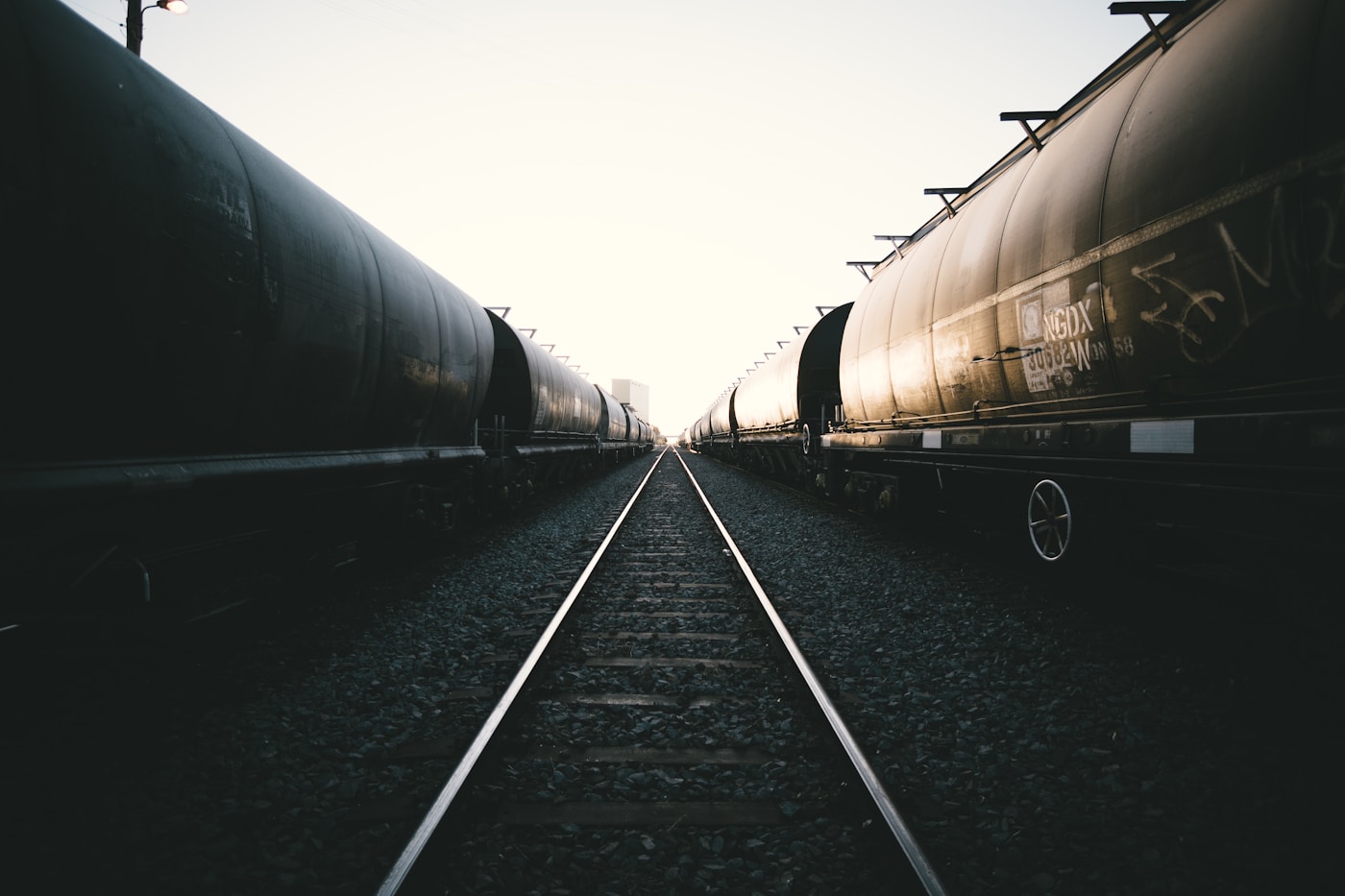
Saudi Arabia has already begun building the physical infrastructure for a post-Hormuz logistics order, with SAR opening a 1,700-kilometre rail freight corridor to the Jordanian border that turns the kingdom into an overland trade bridge between the Gulf and the Mediterranean. The post-Hormuz energy order will be characterised by three features: radical diversification of supply sources, accelerated deployment of domestic clean energy, and the permanent repricing of geopolitical risk in energy markets. The nations that adapted fastest — those that treated the crisis as a structural break rather than a temporary disruption — will emerge with stronger, more resilient economies. Those that treated it as a blip to be weathered before returning to normal will discover that normal no longer exists.
Frequently Asked Questions
Will oil prices stay above $100 after the war ends?
Oil prices are likely to decline from their March 2026 peaks once hostilities cease and Hormuz shipping resumes, but a permanent war risk premium of $10-15 per barrel on Gulf-origin crude is expected to persist for years, according to Goldman Sachs. The premium reflects the market’s reassessment of Hormuz reliability, not the immediate conflict.
How much of the energy transition acceleration is permanent?
The $480 billion in accelerated clean energy investment announced during the first month of the conflict represents physical infrastructure — solar farms, wind turbines, nuclear reactors, battery storage — that will generate electricity for twenty to fifty years. These commitments are permanent. Policy timelines, such as advanced ICE phase-out dates, could theoretically be reversed but rarely are once industrial planning adapts to the new schedule.
Can Saudi Arabia survive without oil revenue?
Saudi Arabia’s non-oil economy already generates fifty-two percent of GDP and produced record non-oil government revenues of 505.3 billion Saudi riyals in 2025. The Kingdom’s $930 billion Public Investment Fund provides a multi-decade financial cushion. Saudi Arabia cannot survive an immediate, total cessation of oil revenue, but it is better positioned than any other major oil producer for a gradual, multi-decade decline.
Is the Strait of Hormuz permanently compromised as a shipping lane?
The strait will reopen when the conflict ends, but the insurance industry, shipping companies, and energy planners will permanently price higher risk into Hormuz transits. This means alternative pipeline routes — such as the UAE’s Habshan-Fujairah pipeline and Saudi Arabia’s East-West Pipeline to the Red Sea — will carry larger volumes, even when the strait is technically open. The pre-war assumption that Hormuz was as safe as the English Channel has been permanently invalidated.
What does the energy transition mean for Saudi Arabia’s relationship with Asia?
Asia currently buys approximately seventy percent of Gulf oil exports. As Asian nations accelerate their transitions — Japan restarting nuclear reactors, India deploying solar at emergency pace, China expanding its already-dominant renewable sector — demand for Gulf crude will decline structurally over the next decade. Saudi Arabia is responding by positioning itself as a green hydrogen exporter, leveraging its vast solar potential and existing energy infrastructure to supply hydrogen to the same Asian customers that currently buy its oil.
Will OPEC survive the energy transition?
OPEC has survived four oil shocks, multiple internal conflicts, and repeated predictions of its demise. The cartel’s price-setting authority will diminish as oil’s share of the global energy mix declines, but the organisation is likely to persist in some form as long as oil remains a multi-trillion-dollar global commodity — which it will for at least two more decades, even under the most aggressive transition scenarios.