JUBAIL — Sadara Chemical Company, the $20 billion joint venture between Saudi Aramco and Dow Inc. that operates the world’s largest integrated chemical complex built in a single phase, completed a full shutdown of all 26 manufacturing units at its Jubail facility on Monday, with no timeline for restart. The closure — the first total production halt at a major Saudi industrial facility since the Iran war began on February 28 — removes more than three million metric tonnes of annual petrochemical capacity from global markets and starves the adjacent PlasChem Park industrial zone of the feedstock its tenants need to operate.
The shutdown lands 76 days before a $3.7 billion debt grace period expires on June 15, a date that now arrives with Sadara generating zero revenue. For the dozens of foreign companies that built factories in Jubail on the promise of cheap Saudi feedstock and political stability, the message is less about one plant going dark and more about whether the economic model that attracted them still holds.
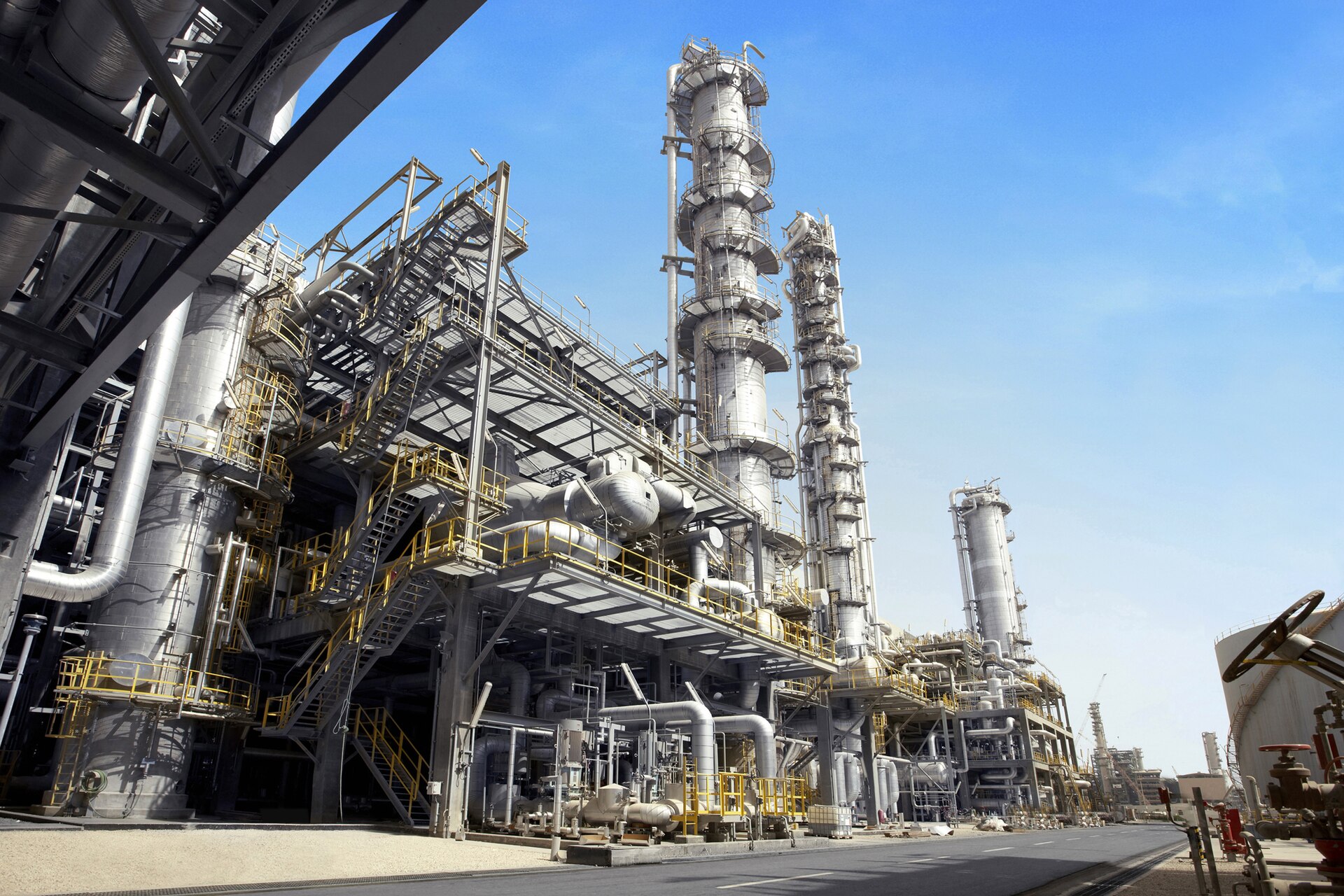
Table of Contents
What Sadara Said
In a regulatory filing published Monday, Sadara stated that it “cannot provide, at the present time, an estimate for the return to production, as this is contingent on domestic and international factors.” The company confirmed that the shutdown “is expected to have an impact on the financial results for 2026,” according to Arab News and Bloomberg reporting on the filing.
The language was spare for a company sitting on one of the largest petrochemical investments in history. No mention of damage. No reference to the Iranian strikes that hit Jubail petrochemical plants on March 19. No assurance to lenders. The phrase “domestic and international factors” carried the weight of what remained unsaid — that production cannot resume until either the military threat to Jubail recedes or the Strait of Hormuz reopens, and neither condition is within Sadara’s control.
Saudi Aramco had already evacuated personnel from its Samref refinery and Jubail facilities as a precautionary measure after Iran published its target list on March 18, according to The National and wire reports. Sadara’s shutdown followed a sequence rather than a single event: the Iranian target declaration, the March 19 strikes on Jubail petrochemical plants, and the effective closure of the Strait of Hormuz, which has blocked the primary export route for Middle Eastern petrochemical shipments.
The Debt Clock Starts Now
In 2021, Aramco and Dow restructured Sadara’s senior debt financing, with both shareholders guaranteeing an aggregate $3.7 billion in senior debt principal in proportion to their 65-35 ownership split. The restructuring, reported by Arab News and Argaam, included a principal repayment grace period extending to June 15, 2026, with final maturity pushed from 2029 to 2038. Aramco also agreed to increase the quantity of ethane and natural gasoline it supplied to the complex, while gaining expanded rights to market Sadara’s finished products.
The Middle East briefing 3,000+ readers start their day with.
One email. Every weekday morning. Free.
That grace period expires in 76 days. Every one of those days now passes with Sadara’s plants sitting idle and its revenue at zero. The restructuring was designed to give the complex breathing room as it ramped up to full commercial operation — by the second quarter of 2024, Sadara’s revenue had climbed 34 percent year-on-year with a 26 percent volume increase, according to company disclosures. The plant was hitting its stride. The war erased that trajectory in weeks.
The debt obligations fall on Aramco and Dow as guarantors. For Aramco, which is simultaneously managing an unprecedented repricing of its crude oil and the evacuation of multiple Eastern Province facilities, the Sadara guarantee is one line item among many wartime liabilities. For Dow, the guarantee represents exposure to a conflict its shareholders did not price in.
What Happens When PlasChem Park Loses Its Feedstock?
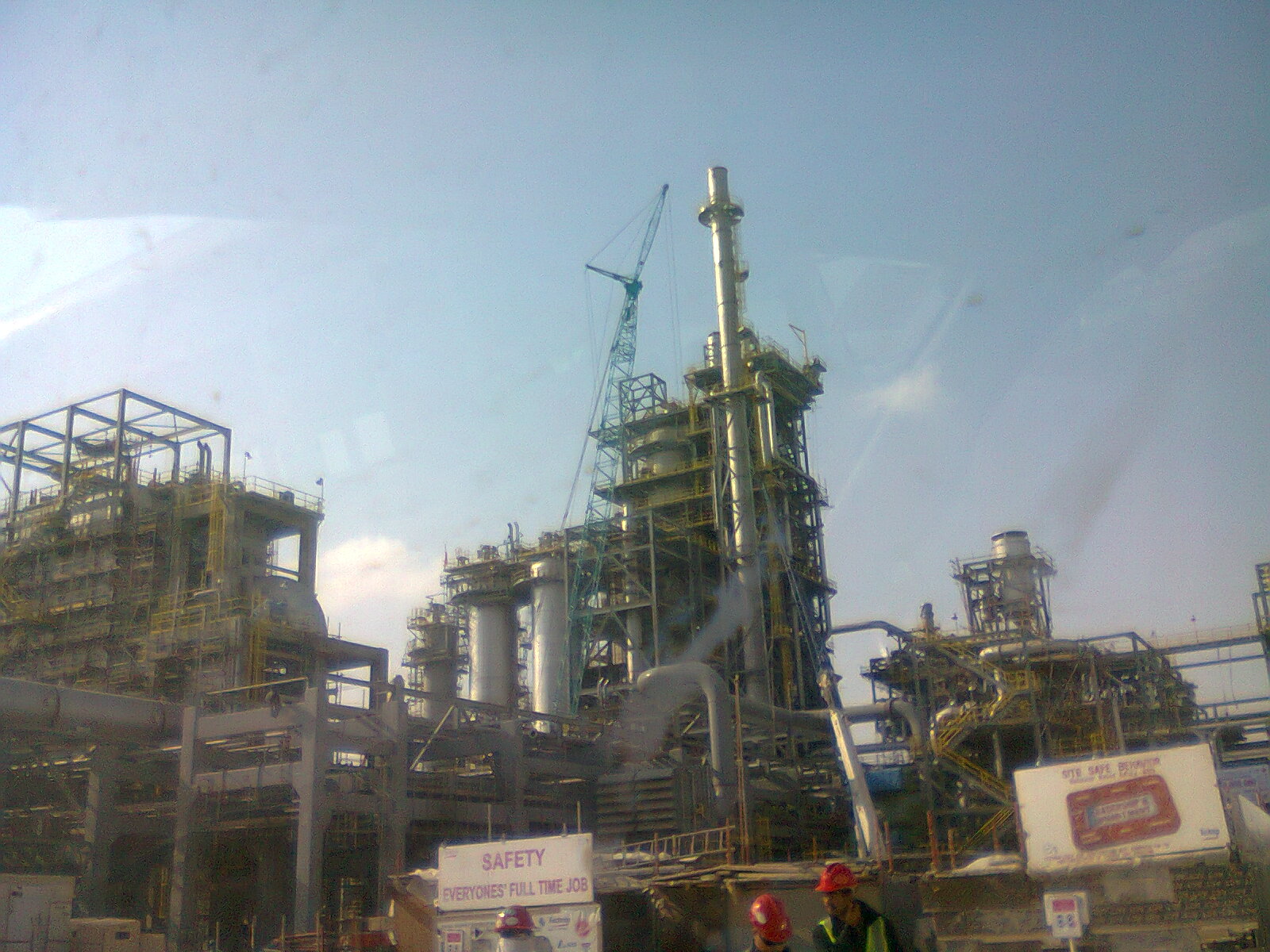
PlasChem Park, a 12-square-kilometre industrial zone adjacent to the Sadara complex in Jubail II, was built on a single premise: that Sadara would pipe ethylene oxide and propylene oxide directly to downstream tenants who would convert those intermediates into higher-value products. Sadara supplied 60,000 tonnes per year of ethylene oxide and 20,000 tonnes per year of propylene oxide through that pipeline network, according to Sadara’s own PlasChem Park disclosures and Arab News.
The tenants include Baker Hughes, which signed a 20-year supply agreement for ethylene and propylene oxides piped directly from the Sadara complex; E.A. Juffali & Brothers; ECSC; Veolia; Ravago Middle East; and Halliburton, according to Sadara’s published tenant roster and Chemical Engineering Online. Some of those facilities had already started operations. Others were under construction. All of them depend on a feedstock supply that, with the Sadara complex shut down, has effectively ceased.
There is no alternative source for these materials at the volumes PlasChem Park requires. The entire design of the park — its physical proximity to the Sadara complex, the pipeline infrastructure connecting the two, the long-term offtake contracts — assumed continuous production. Baker Hughes did not build a Saudi oilfield chemicals plant to source ethylene oxide on the spot market from Rotterdam. The park’s value proposition was integration, and integration works only when the anchor tenant produces.
From Energy Targets to Industrial Targets
Iran on March 18 published a list of 12 Gulf energy and industrial facilities declared “direct and legitimate targets,” according to reporting by Anadolu Agency and Al Jazeera. The list included the “Al Jubail petrochemical complex” alongside Saudi Aramco’s Ras Tanura, Qatar’s Ras Laffan, Kuwait’s Mina Al-Ahmadi and Mina Abdullah refineries, and the UAE’s Habshan gas facilities. Within 24 hours, ballistic missiles and drones struck Jubail petrochemical plants, the Saudi SAMREF refinery, and facilities across Qatar, Kuwait, and the UAE.
Since that target list was published, Iran has further refined its approach: the growing vulnerability of Ras Tanura is no longer measured only by volume of incoming fire but by the accuracy of what gets through — a shift that changes the risk calculus for every Aramco export node on the Eastern Province coast.
The target list also named the Saudi Iron and Steel Company (Hadeed), Emirates Steel Arkan in the UAE, Qatar Steel, and Foulath Holding in Bahrain, according to The Soufan Center and IranWire. That shift — from oil and gas infrastructure to steel, aluminium, and petrochemicals — marked a deliberate expansion of Iran’s economic warfare doctrine. The Soufan Center described the attacks as “a deliberate escalation by Tehran” as the Iranians “seek to raise the costs of this war for U.S. allies in the Middle East.”
The IRGC’s March 29 strikes on aluminium facilities in Bahrain and the UAE, reported by Al Jazeera, demonstrated that the shift from energy to non-energy industrial targets was already operational. That pattern was examined in detail after the aluminium strikes exposed the Gulf’s broader industrial vulnerability. Tehran’s strategic logic frames industrial targeting as symmetric retaliation: if the U.S.-Israeli coalition strikes Iran’s energy infrastructure, Iran strikes Gulf industrial infrastructure. Sadara, jointly owned by the world’s largest oil company and one of America’s largest chemical companies, sits squarely at that intersection.
How Big Is the Global Plastics Shock?
Dow CEO Jim Fitterling, speaking at CERAWeek in Houston on March 27, warned that almost 20 percent of global petrochemical capacity is now blocked by the effective closure of the Strait of Hormuz, according to Fortune. GCC states collectively produce approximately 12 percent of the world’s petrochemicals, or roughly 150 million tonnes per year, according to Gulf Petrochemicals and Chemicals Association data. Fitterling stated that petrochemical price spikes “will cause inflationary effects at least through the end of the year on construction materials, consumer goods, the automotive and aerospace industries, and much more.”
The numbers on the ground confirm Fitterling’s warning. Michael Greenberg, CEO of the Plastics Exchange, told CNN Business on March 30 that “in my 25 years [in the plastics industry], I’ve never before seen a [monthly] PE increase this large.” The Middle East accounts for roughly a quarter of global polyethylene and polypropylene exports, according to S&P Global Energy data, and approximately 84 percent of that Middle Eastern PE capacity relies on the Strait of Hormuz for waterborne exports. With Hormuz functionally closed — a situation that may persist well beyond the end of active hostilities — the price transmission is already reaching consumers.
Patrick Penfield, a supply chain professor at Syracuse University, told CNN Business that “products like disposable cutlery, bottled drinks and garbage bags could be among the first to rise” in price. Joseph Foudy of NYU’s Stern School of Business described the consumer experience more plainly: “It’s one of those things where you shake your head at the store.” Sadara’s own product line — which includes HDPE at 75,000 tonnes per year, LDPE at 350,000 tonnes per year, and LLDPE at 675,000 tonnes per year, according to S&P Global — now contributes to a supply gap that has driven the broader commodity shock already rippling through global markets.
Can Vision 2030’s JV Model Survive This?
Sadara was not just another petrochemical plant. It was the proof of concept. When Saudi Arabia pitched Vision 2030 as a post-oil economic model, the argument ran through Jubail: international partners would bring technology and capital, Saudi Arabia would provide feedstock and stability, and the resulting industrial base would generate non-oil GDP and jobs that would outlast the age of petroleum. Jubail Industrial City spans 1,016 square kilometres, produces 7 percent of global petrochemicals, contributes more than 11 percent of Saudi Arabia’s non-oil GDP, and had attracted over 50 percent of the Kingdom’s total foreign investment as of 2014, according to the Royal Commission for Jubail and Yanbu.
Sadara was the crown of that ecosystem — the only chemical company in the Middle East to use refinery liquids (naphtha) as feedstock, enabling 14 specialty products new to Saudi Arabia, according to Business Wire. The complex’s 26 integrated plants were commissioned in approximately eight years. It was the kind of achievement that investment promotion agencies put in slide decks. Dow committed $7 billion at a 35 percent stake. The project was meant to demonstrate that Western multinationals could build, operate, and profit in the Kingdom over multi-decade horizons.
That demonstration now sits idle while Iran names it a target, its export route is blocked, and its debt clock ticks toward June 15. The question for every foreign company with capital deployed in the Eastern Province — and for every company weighing a future commitment — is whether the Sadara experience is an aberration or a preview. NEOM’s effective dismemberment removed the most visible symbol of the Saudi diversification bet. The aviation shutdown severed the Kingdom’s physical connections to foreign capital markets. Sadara’s closure strikes at the industrial core: the actual, operating, revenue-generating factories that were supposed to prove the model worked.
Jubail’s share of global petrochemical production was built over four decades, plant by plant, JV by JV. Yanbu, the Red Sea alternative, lacks the port capacity to absorb even a fraction of Jubail’s export volume. The diversification that was supposed to insulate Saudi Arabia from oil-price volatility turns out to be concentrated in the same geography that oil always occupied — the Eastern Province littoral, within range of Iranian ballistic missiles and dependent on the Strait of Hormuz for market access.
Background
Sadara Chemical Company was established in October 2011 as a joint venture between Saudi Aramco (65 percent) and Dow Chemical (35 percent). The complex’s 14 specialty chemical plants produce propylene oxide, propylene glycol, glycol ethers, amines, isocyanates, and polyether polyols — products that had never previously been manufactured in Saudi Arabia, according to a Business Wire announcement on August 14, 2017. The Sadara cracker has a capacity of 1.5 million metric tonnes per year, according to S&P Global.
The Iran war, which began on February 28, 2026, has progressively expanded from strikes on oil infrastructure to a broader campaign against Gulf industrial targets. Iran’s March 18 target list and the subsequent strikes on March 19 marked the first time petrochemical facilities were explicitly targeted. The record monthly surge in Brent crude and the effective closure of the Strait of Hormuz have compounded the operational shutdown with a logistics blockade, leaving Saudi industrial exporters with product they cannot ship and plants they cannot safely run.
Frequently Asked Questions
Who are the lenders exposed to Sadara’s $3.7 billion guaranteed debt?
Sadara’s original project finance was arranged by a syndicate of more than 25 international and regional banks, including HSBC, JPMorgan, and several Saudi commercial banks, according to project finance disclosures at the time of closing. The 2021 restructuring consolidated the guarantee obligations onto Aramco and Dow in proportion to their 65-35 ownership split, meaning Aramco backstops approximately $2.4 billion and Dow approximately $1.3 billion of the principal.
Are any other Jubail petrochemical producers still operating?
Several Jubail-based producers, including SABIC affiliates and Saudi Kayan, have issued force majeure notices or reduced output since the March 19 strikes, though none has confirmed a total shutdown of the scale Sadara disclosed. ICIS counted 31 force majeure or sales allocation announcements for chemicals across Asia and the Middle East by mid-March 2026, with more expected as feedstock constraints tighten across the Jubail ecosystem’s interconnected supply chains.
What would it take to restart the Sadara complex?
Industry engineers estimate that restarting a fully shut-down integrated petrochemical complex of Sadara’s scale would require four to eight weeks under normal conditions, involving sequential recommissioning of the steam cracker, stabilization of feedstock flows, and gradual ramp-up of derivative units. In Sadara’s case, restart also depends on the security environment at Jubail, the reopening of export routes through the Strait of Hormuz, and the restoration of feedstock supply from Aramco — conditions that are determined by the trajectory of the war rather than by Sadara’s operational readiness.
How does the Sadara shutdown affect Dow’s global operations?
Dow operates 104 manufacturing sites across 31 countries, according to its corporate filings, so Sadara represents one node in a diversified global network. However, Sadara was Dow’s single largest investment outside the United States and its primary platform for Middle Eastern specialty chemical production. The shutdown removes products from Dow’s portfolio — particularly isocyanates and polyether polyols for the polyurethane chain — that are not easily replaced from other facilities, especially given the share of global petrochemical capacity simultaneously offline due to the Hormuz closure.
Has Dow commented publicly on the shutdown?
Dow has not issued a standalone statement on the Sadara shutdown as of March 31. CEO Jim Fitterling’s remarks at CERAWeek on March 27, four days before the shutdown announcement, addressed the broader market disruption but did not reference Sadara specifically. Dow holds 35 percent of Sadara and does not consolidate the venture on its balance sheet, reporting it instead as an equity-method investment — a structure that limits the immediate P&L impact but does not eliminate the guarantee exposure.