NEW YORK — The United Nations Security Council on Thursday postponed its vote on a Bahrain-drafted resolution authorizing naval force to reopen the Strait of Hormuz, pushing the ballot from Friday, April 4, to Saturday, April 5. The stated reason: the UN observes Good Friday as a holiday. Good Friday’s date was on the calendar when the vote was first scheduled.
The resolution that will face the Council on Saturday has been stripped of Chapter VII enforcement authority — the only provision under the UN Charter that gives Security Council resolutions binding legal force, including authorization for military action. Bahrain circulated the original zero draft on March 21 with explicit Chapter VII language. Over the next 15 days, Russia, China, and France rejected successive versions. Bahrain submitted six drafts in total. The sixth and final version, submitted “in blue” for the Saturday vote, replaces binding enforcement with a political authorization that carries no independent legal weight under the Charter.
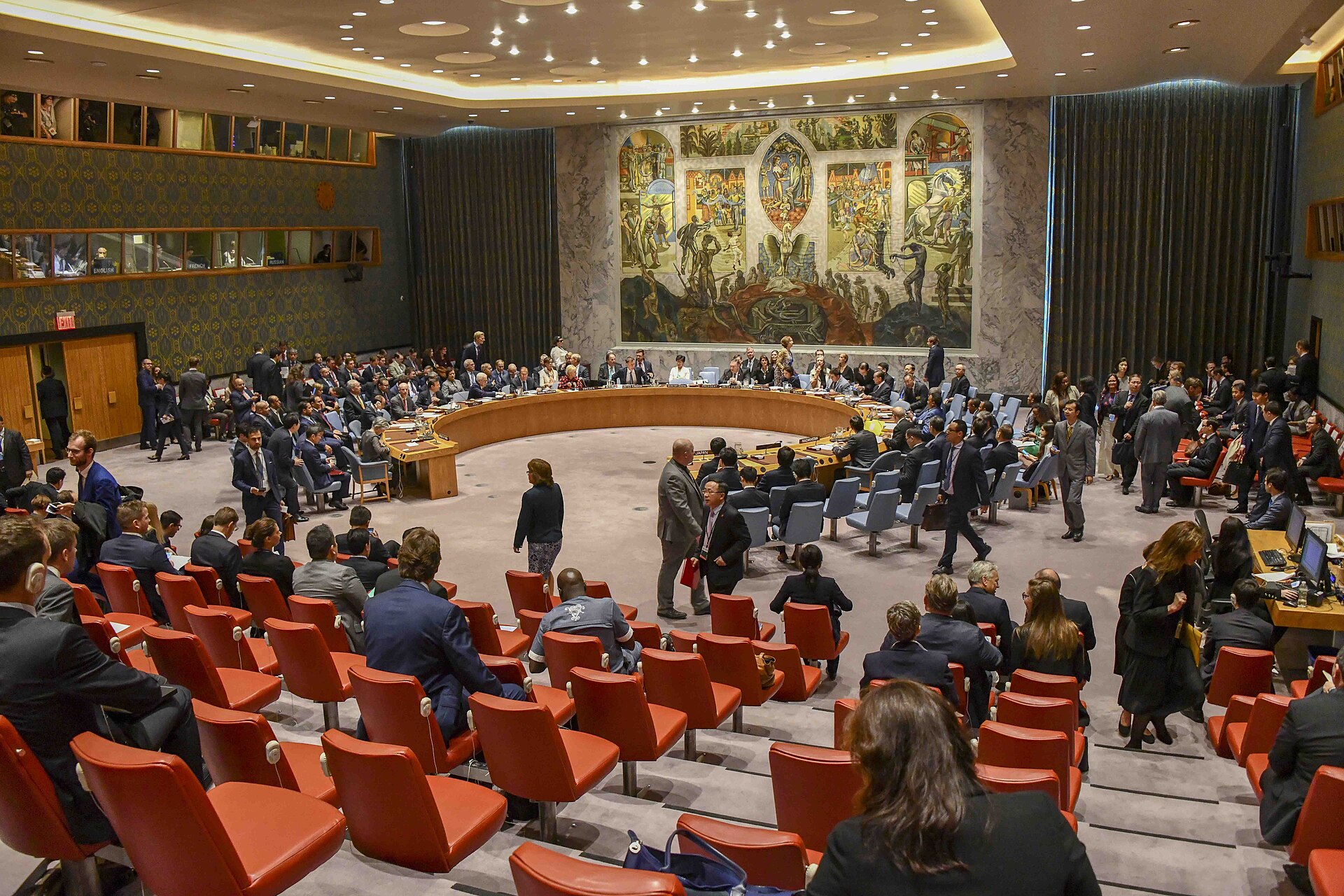
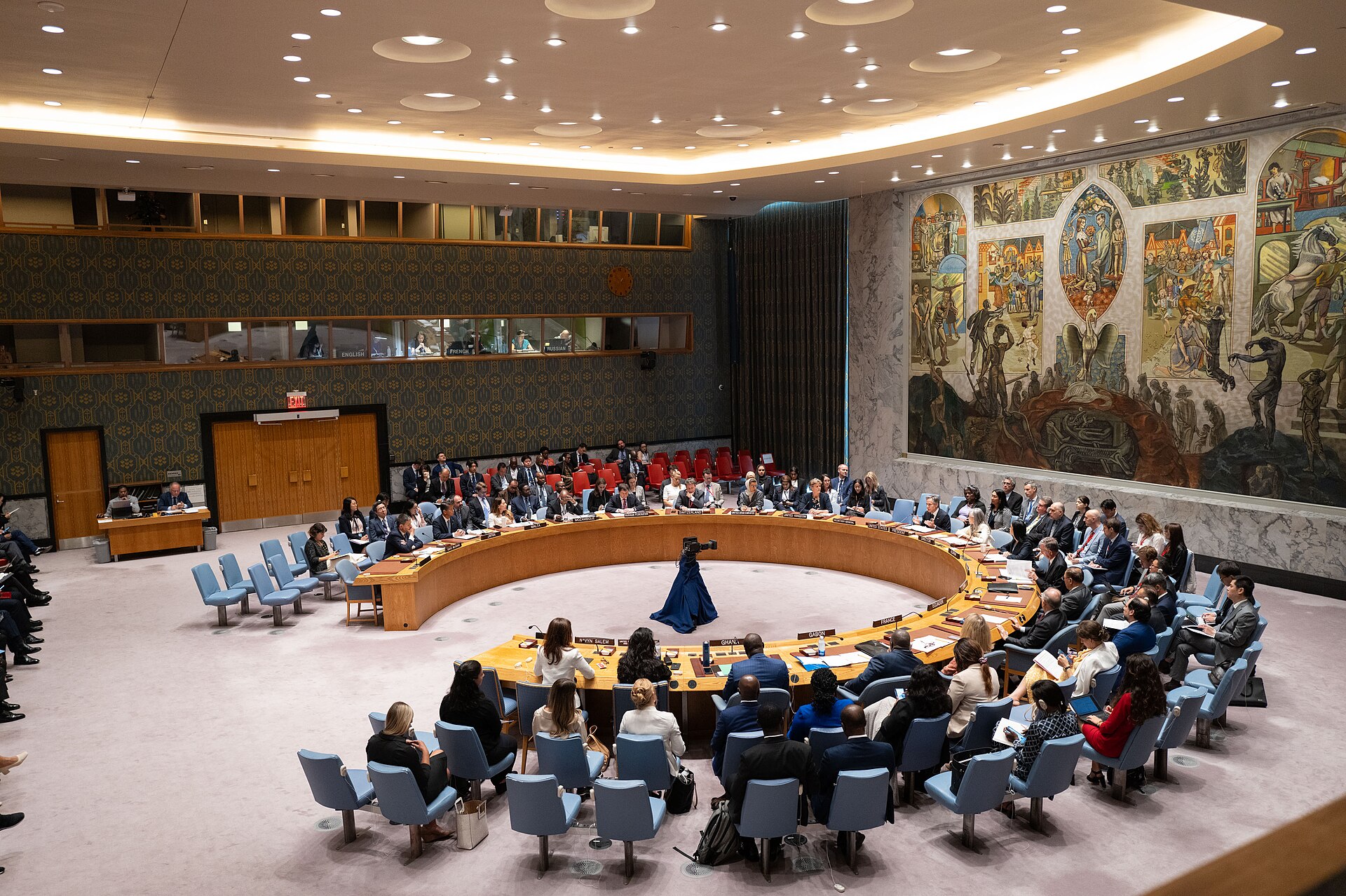
The postponement arrived one day after GCC Secretary-General Jasem Mohamed Albudaiwi made what was described as the first personal appearance by a GCC chief before the Security Council. “We are not facing a fleeting crisis, but a true test of the international system’s credibility,” Albudaiwi told the body on April 2. “Either collective security is upheld in practice, or it is left to the equations of power alone.”
The Council responded by adopting its first-ever presidential statement recognizing GCC expertise — a symbolic gesture. It did not hold a vote.
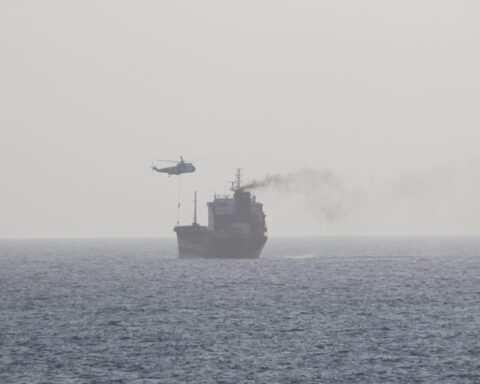
Approximately 20% of global oil trade — 17 to 18 million barrels per day — normally transits the Strait of Hormuz. Some 2,000 ships and 20,000 seafarers remain trapped by the conflict, now in its 35th day. The resolution’s path from Chapter VII enforcement draft to weakened political text, delayed by a holiday that was never a surprise, tracks a broader pattern: the Security Council can describe the Hormuz crisis but has not demonstrated the capacity to resolve it.
Table of Contents
Six Drafts in Fifteen Days
Bahrain, which holds the UNSC presidency for April 2026, circulated the first draft resolution on March 21. That text explicitly invoked Chapter VII of the UN Charter — the legal framework used in Resolution 678 (1990) to authorize the coalition that expelled Iraq from Kuwait, and the standard mechanism for UNSC-mandated use of force since the Charter entered into force in 1945.
The Middle East briefing 3,000+ readers start their day with.
One email. Every weekday morning. Free.
China and Russia rejected that draft and at least three subsequent revisions. According to the Security Council Report’s April 2026 monthly forecast, the Chapter VII citation was stripped after four earlier drafts failed to gain consensus. The fifth and sixth drafts abandoned the enforcement framework entirely.
France added a separate complication. Paris circulated its own competing draft to a limited number of Council members, calling for a cessation of hostilities rather than enforcement. France never formally tabled the text, but its existence split the Western position: Paris endorsed the principle of defending Hormuz while its competing resolution prioritized de-escalation over authorization.
The final “in blue” text — the version submitted for Saturday’s vote — is the product of 15 days of concession. Bahrain’s Ambassador Jamal Fares Alrowaiei, who is both the resolution’s primary sponsor and the presiding officer of the Council being asked to adopt it, told The National on April 2: “We cannot accept economic terrorism affecting our region and the world, and the whole world is being affected by this development. This resolution is of paramount importance, and it comes at a critical juncture.”
What Does the Final Draft Actually Authorize?
The sixth draft authorizes member states, “acting nationally or through voluntary multinational naval partnerships for which advance notification has been provided to the Security Council,” to use “all defensive means necessary and commensurate with the circumstances” in the Strait of Hormuz, the Persian Gulf, and the Gulf of Oman to secure transit passage. The authorization lasts at least six months and requires quarterly reporting to the Council.
The phrase “all necessary means” is the traditional operative language of Chapter VII enforcement resolutions. Resolution 678, which authorized the use of force against Iraq in 1990, used “all necessary means” under the Chapter VII chapeau. Resolution 1973, which authorized the intervention in Libya in 2011, used the same formula. The Bahrain draft deliberately echoed this language from its first iteration.
Without the Chapter VII chapeau, identical operative words carry a different legal status. A Chapter VII resolution is binding on all 193 UN member states under Article 25 of the Charter and provides legal authority for the use of force that overrides the general prohibition in Article 2(4). Stripped of Chapter VII, the same language creates a political authorization — a statement of the Council’s collective assessment — but not a legal mandate. Any state using force under the resolution would still need an independent legal basis to satisfy international law.
The most plausible independent basis is Article 51 of the UN Charter, which recognizes the inherent right of individual or collective self-defense. Six Arab nations — Saudi Arabia, the UAE, Kuwait, Bahrain, Qatar, and Jordan — formally invoked Article 51 in a joint declaration on March 26, establishing a collective self-defense claim. All six have been struck by Iranian missiles or drones since the war began on February 28.
Daniel Forti, an analyst at the International Crisis Group, said the resolution “faces tall odds to make it through the Security Council” even in its weakened form, given the likelihood of Russian and Chinese vetoes on Saturday.
The GCC Stakes Maximum Credibility
The 48 hours preceding Friday’s postponement represented the most concentrated Gulf diplomatic engagement with the Security Council in the body’s 80-year history.
On April 2, Albudaiwi became the first GCC secretary-general to personally brief the Security Council in an open session. “Iran has closed the Strait of Hormuz, prevented commercial vessels and oil tankers from transiting, and imposed conditions on some to pass through the Strait,” he told the Council. The selective transit regime Iran has imposed — allowing passage to vessels flagged by China, Russia, India, Iraq, Pakistan, the Philippines, Malaysia, and Thailand while blocking others — has divided Hormuz access along geopolitical lines. The countries granted passage correspond closely to those that did not join the British-convened coalition summit or the UNSC co-sponsorship effort. That framework extended on April 3, when the first Western ships transited under Iran’s IRGC toll system, paying in yuan — the first commercial passage by French- and Japanese-linked operators since the war began.
The same day, over 40 nations joined a virtual summit convened by UK Foreign Secretary Yvette Cooper. “We have seen Iran hijack an international shipping route to hold the global economy hostage,” Cooper said. A separate statement signed by 22 nations declared readiness to “contribute to appropriate efforts to ensure safe passage” through the strait. The phrase “appropriate efforts” was deliberately non-committal — crafted to preserve options for action outside the UNSC framework if the multilateral track failed.
The Council’s presidential statement recognizing GCC expertise, adopted April 2, was the first of its kind. Presidential statements, unlike resolutions, are adopted by consensus and carry no binding authority. The statement acknowledged the GCC’s role without authorizing the GCC — or anyone else — to act.
The accumulation of credibility gestures before the vote — the GCC secretary-general’s first-ever briefing, Bahrain presiding during its own presidency month, the 22-nation declaration, the 40-nation summit, the record 135 co-sponsors on Resolution 2817 — makes the outcome of Saturday’s vote a measure not only of the resolution’s fate but of the diplomatic capital spent to achieve it. The strategic petroleum reserve drawdown and the most consequential OPEC meeting in decades, both scheduled for mid-April, compress the timeline further.
Why Did Russia, China, and France Block Enforcement?
The three countries that killed Chapter VII came to their positions from different strategic directions.
Russia framed its objection as procedural equity. Ambassador Vassily Nebenzia’s complaint, lodged during debate over Resolution 2817 in March, was that the Council’s entire approach was “one-sided” for ignoring the US-Israeli strikes that triggered the crisis. Someone “unfamiliar with international affairs” reading the resolution, Nebenzia said, “will be left with the impression that Tehran, on its own volition and out of malice, conducted an unprovoked attack on Arab states.” Russia submitted its own competing resolution calling for an all-sides ceasefire, which failed — but was designed to split the Council and frame the Bahrain draft as factionally motivated rather than multilateral.
China’s objection was more categorical. Ambassador Fu Cong described the force-authorization draft as itself unlawful: “Authorising member states to use force would amount to legitimising the unlawful and indiscriminate use of force, which would inevitably lead to further escalation of the situation and lead to serious consequences.” China’s foreign minister separately characterized the US-Israeli attack on Iran as a clear violation of international law, positioning Beijing’s entire stance as one of legal principle. The principle is reinforced by material interest: Chinese-flagged vessels currently pass through Hormuz under Iran’s selective transit regime, giving China uninterrupted access to Gulf oil while Western-allied shipping is blocked. China and Pakistan have proposed a five-point diplomatic plan for the crisis, positioning Beijing as a peace broker.
France’s position was the most consequential for the resolution’s internal coherence because it came from within the Western alliance and from a P5 member that had co-sponsored Resolution 2817. President Emmanuel Macron, visiting Seoul on April 2, called a military operation to force open the Strait “unrealistic,” arguing it would expose any transiting force to IRGC coastal capabilities including ballistic missiles. France’s UN Ambassador Jérôme Bonnafont nonetheless told the Council, “It is up to the Council to quickly devise the necessary defensive response” — endorsing the need for action while Paris’s competing draft and Macron’s public remarks rejected the mechanism.
The pattern established by Resolution 2817 on March 11 held: that resolution — condemning Iran’s attacks but authorizing no enforcement — passed 13-0-2 with China and Russia abstaining rather than vetoing, and carried 135 co-sponsors, the highest in Security Council history. On Saturday, the same two countries that abstained on condemnation are expected to veto enforcement. Iran’s UN Ambassador Amir Saeid Iravani characterized even the condemnation resolution as “a blatant misuse of the Security Council mandate in pursuit of the political agendas” of the United States and Israel — “a manifest injustice against my country, the main victim of a clear act of aggression.”
What Options Remain After the Saturday Vote?
Whether the resolution passes in its weakened form, fails on a veto, or passes and proves operationally meaningless, the coalition confronting Iran’s Hormuz closure faces three paths forward. The resolution’s own text, notably, already contemplates two of them.
Article 51 collective self-defense. The March 26 six-nation declaration by Saudi Arabia, the UAE, Kuwait, Bahrain, Qatar, and Jordan formally invoked Article 51, establishing an independent legal basis for collective force that does not depend on Security Council authorization. Mark P. Nevitt, an associate professor of law at Emory University and former US Navy JAG Corps officer, has written that transit passage rights through Hormuz are “widely regarded as customary international law and binding on all States,” including non-UNCLOS parties such as Iran, the United States, and Israel. The Article 51 invocation provides legal cover for force whether or not the Saturday resolution passes.
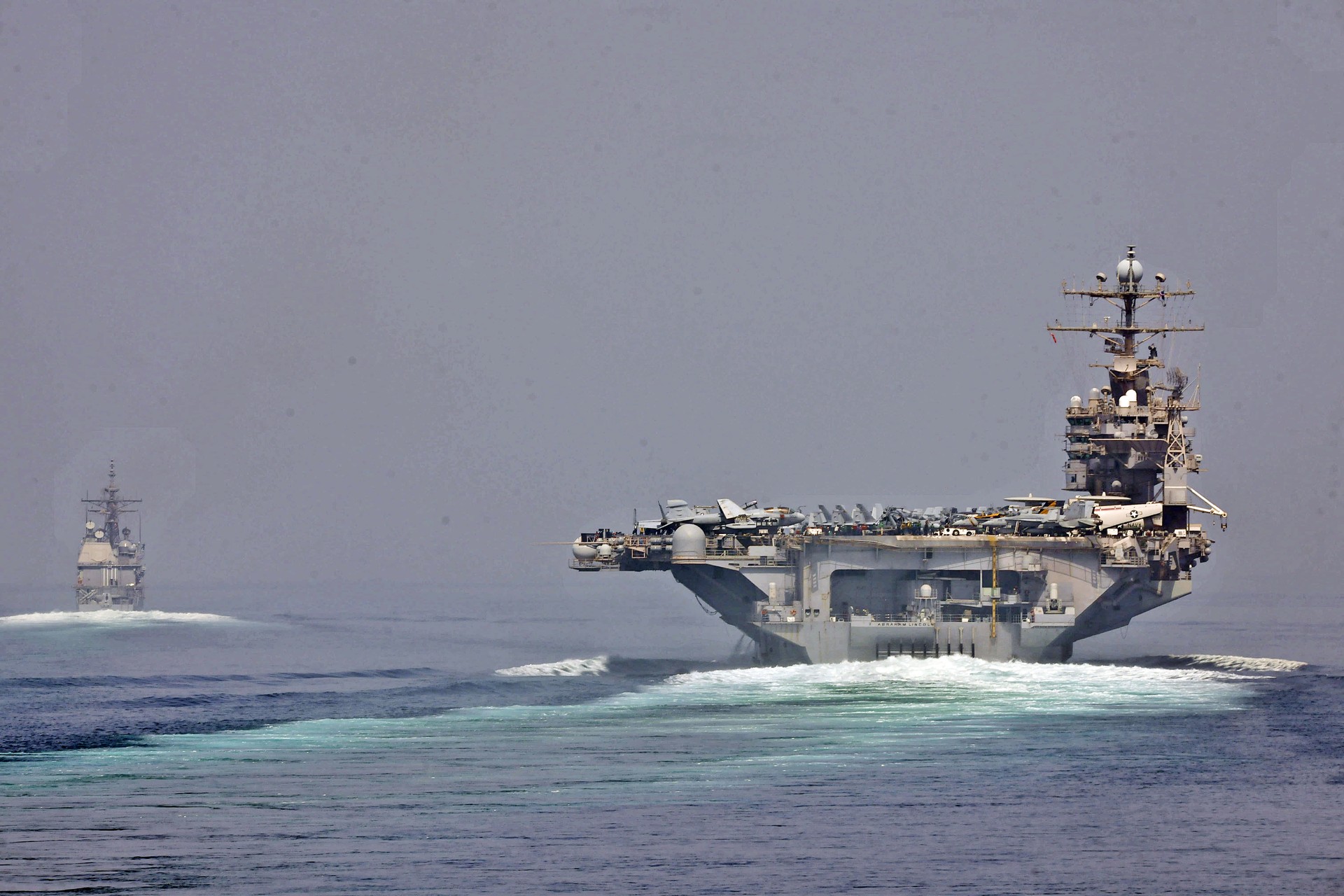
Coalition-of-the-willing naval action. The final draft’s own operative language already contemplates this structure: member states “acting nationally or through voluntary multinational naval partnerships for which advance notification has been provided to the Security Council.” Twenty-two nations have signaled willingness to contribute. The notable absences from the formal coalition commitment — Saudi Arabia and the United States among them — complicate force generation, but the legal and notification architecture is written into the resolution text regardless of the vote’s outcome.
De facto standdown framed as strategic patience. The March 19 joint statement from the UK, France, Germany, Italy, the Netherlands, Japan, and Canada declared readiness to act “once the hot phase of the war comes to an end” — language that defers military action indefinitely while hostilities continue. With Pakistan’s mediation effort having collapsed and no ceasefire framework on the table, “awaiting conditions” means waiting without a defined endpoint. That changed on April 4, when Pakistan Foreign Minister Dar briefed Saudi FM Prince Faisal on the rival China-backed diplomatic framework now in Riyadh’s inbox — a five-point plan that leads with ceasefire rather than nuclear dismantlement.
The ceasefire vacuum solidified on April 3-4, when Iran rejected a US 48-hour ceasefire proposal through battlefield action, confirming that the IRGC Military Council — not the civilian government — holds authority over all war and negotiation decisions before Trump’s April 6 deadline.
The shift from Chapter VII enforcement draft on March 21 to politically non-binding text delayed to a Saturday vote on April 5 has consumed the multilateral track’s credibility without producing a legal mandate. The coalition’s remaining tools are unilateral or sub-UNSC. The Article 51 invocation and the 22-nation readiness declaration were both structured before the resolution reached its final form, suggesting the Gulf states and their partners anticipated this outcome. Declining GCC air-defense interceptor stocks add a military clock to what has been, until now, a diplomatic calendar.
Background
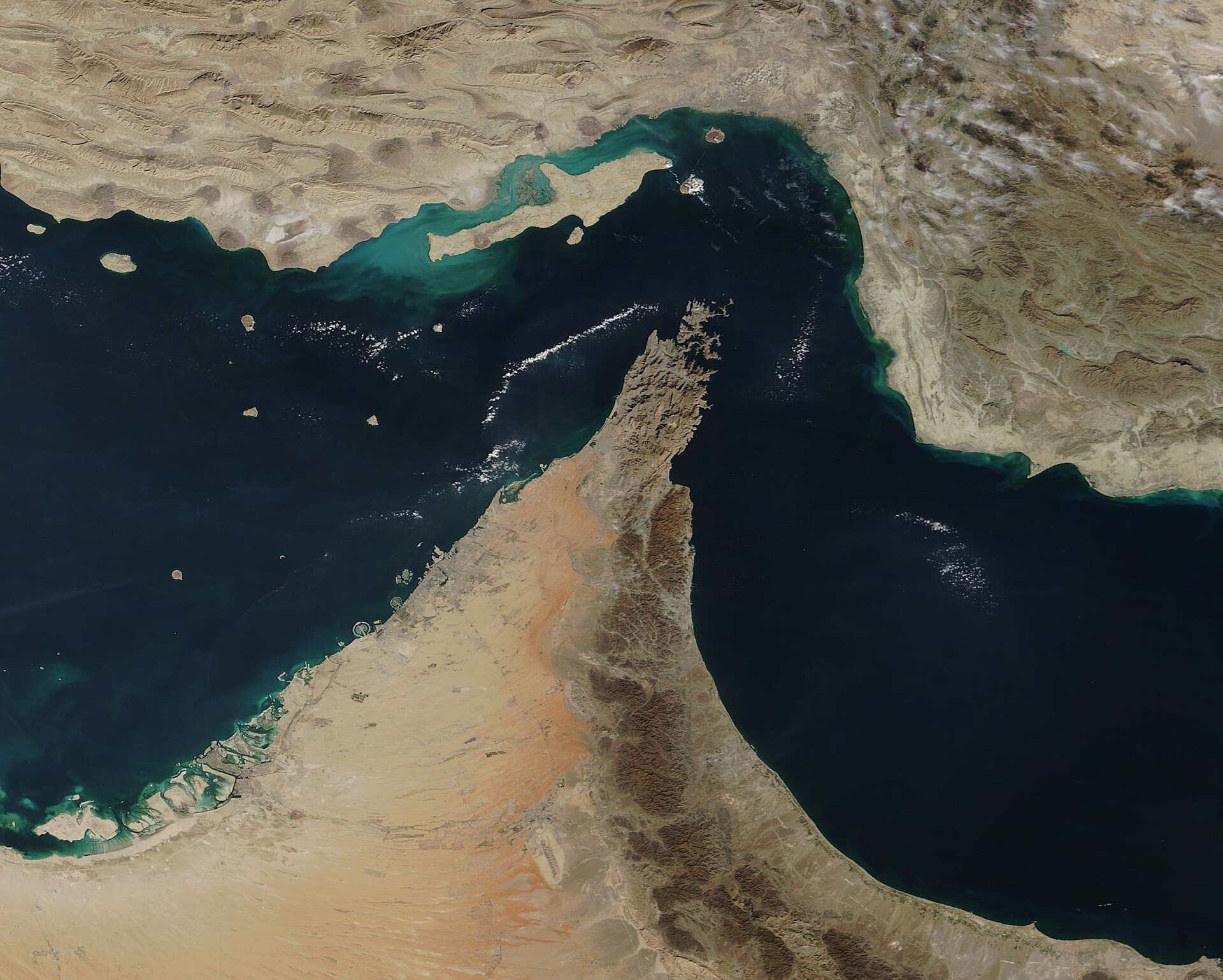
The Strait of Hormuz is 21 nautical miles wide at its narrowest point, connecting the Persian Gulf to the Gulf of Oman and the Arabian Sea. An estimated 4 million barrels per day of production capacity is currently locked behind the closure.
UNCLOS Article 38 establishes that transit passage through an international strait “shall not be impeded,” and Article 44 specifies that coastal states cannot suspend transit passage. Iran signed UNCLOS in 1982 but never ratified it, and at signing formally declared that the transit passage provisions are treaty-specific rather than customary international law. The United States is also not a party to UNCLOS. The prevailing view among international legal scholars, as Nevitt has noted, is that transit passage through Hormuz constitutes customary international law binding on all states regardless of UNCLOS party status, but Iran rejects this position.
The International Court of Justice established the foundational precedent in the Corfu Channel Case (1949), ruling that states “in time of peace have a right to send their warships through straits used for international navigation between two parts of the high seas without the previous authorization of a coastal State, provided that the passage is innocent.”
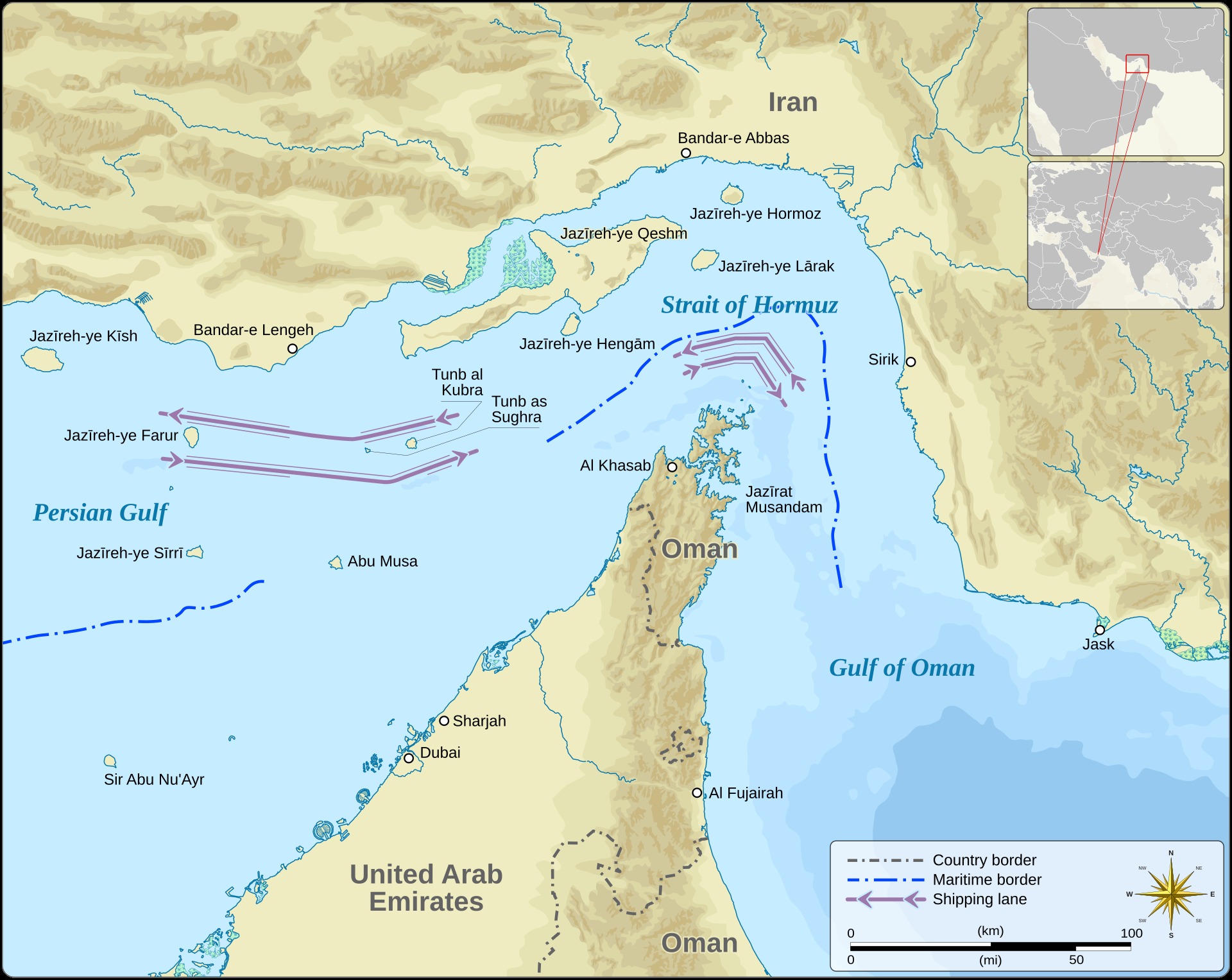
The US-Israel-Iran war began on February 28, 2026. Iran’s closure of the Strait and implementation of a selective transit regime — granting passage to Chinese, Russian, Indian, Iraqi, Pakistani, Philippine, Malaysian, and Thai-flagged vessels while blocking others — has transformed Hormuz into a two-tier maritime order that distributes access along geopolitical lines.
Resolution 2817, adopted March 11, was the Council’s first substantive response. It condemned Iran’s attacks and called on Tehran to halt interference with navigation, but contained no enforcement provisions.
Frequently Asked Questions
What happens if Russia and China veto the resolution on Saturday?
A veto kills the resolution, but the legal architecture for action survives it. The six-nation Article 51 declaration and the 22-nation readiness statement were structured independently of the UNSC track. A defeated resolution would likely accelerate coalition planning under those frameworks, removing the ambiguity about whether multilateral authorization was forthcoming.
What does “in blue” mean in UN Security Council procedure?
A resolution submitted “in blue” has been formally circulated to all 15 Council members in its final text — printed on blue paper by tradition — signaling that no further revisions will be made and a vote is imminent. Once a draft goes blue, sponsors cannot amend it without withdrawing and recirculating, which resets the procedural clock.
Could the resolution pass and still have no practical effect?
Yes. Without Chapter VII, the resolution creates no binding obligation on any state. A coalition that chose not to act could cite the non-binding character of the text; a coalition that chose to act would still require Article 51 or another independent legal basis. The resolution’s passage would carry political weight — particularly for states that need domestic legal cover — but would not itself compel any naval deployment.
Why is France’s position considered the most damaging to the resolution?
Russia and China opposing a Western-backed resolution is expected and discountable as great-power rivalry. France opposing it from inside the Western P5 — while having co-sponsored the earlier Resolution 2817 — signals that the Western coalition cannot hold even among its permanent members. That fracture is harder for Gulf states and smaller coalition contributors to explain domestically than a Russian or Chinese veto. The fracture’s strategic significance deepened on April 3 when a French-owned vessel paid Iran $2 million in yuan to cross Hormuz the same day Paris cast its veto — an episode that reveals how Iran’s selective access system is deliberately manufactured to fracture Western coalition cohesion.
What is Iran’s legal position on the Strait of Hormuz?
Iran signed UNCLOS in 1982 but never ratified it. At signing, Iran formally declared that the transit passage provisions of UNCLOS are treaty-specific and do not represent customary international law binding on non-parties. Most international legal scholars disagree, holding that transit passage through Hormuz constitutes customary international law applicable to all states regardless of UNCLOS status. The International Court of Justice’s 1949 Corfu Channel ruling established that states have a right to send vessels through international straits without coastal-state authorization.