Table of Contents
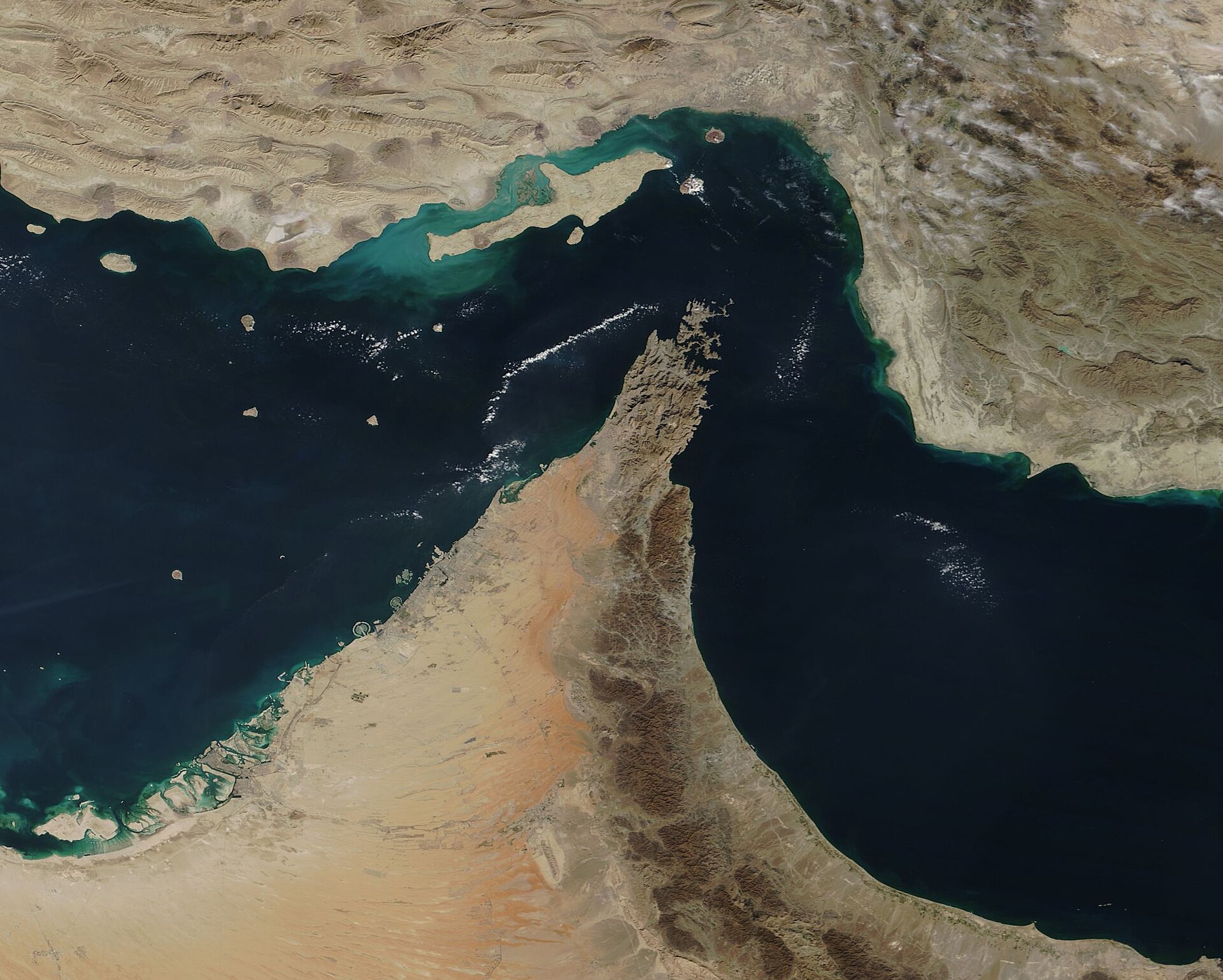
JEDDAH — Saudi Arabia has privately demanded that the United States end its naval blockade of the Strait of Hormuz and resume negotiations with Iran, warning that the blockade risks provoking Iranian proxies to close Bab el-Mandeb — the 29-kilometre strait through which nearly all Saudi crude now flows, according to Arab officials cited by the Wall Street Journal on April 14. The demand places Riyadh in direct opposition to a US military operation that was deployed, in part, on Saudi Arabia’s behalf.
The request, confirmed independently by The New Arab and The Hans India, arrived one day after CENTCOM formally declared the blockade on April 13, deploying 15 warships including A-10 Warthogs and Apache gunships to enforce it. Saudi Arabia’s objection was not humanitarian. It was an exercise in arithmetic: 3.97 million barrels per day of Saudi crude transited Bab el-Mandeb in March, per Kpler tracking data — representing virtually the entire seaborne export load of a country whose Hormuz-facing terminals have been idle since the war began. The blockade, designed to cost Iran an estimated $435 million per day according to former Treasury official Miad Maleki, threatens to cost Saudi Arabia its last functioning export route.
Saudi Arabia Told Washington to End the Blockade
The Wall Street Journal report described Saudi officials communicating through diplomatic channels that the blockade should be lifted and negotiations resumed. The timing was not incidental. Six days earlier, on April 7, a senior Iranian source had told Reuters: “If the situation gets out of control, Iran’s allies will also close the Bab el-Mandeb Strait.” That warning preceded the formal blockade declaration by nearly a week. Riyadh heard it.
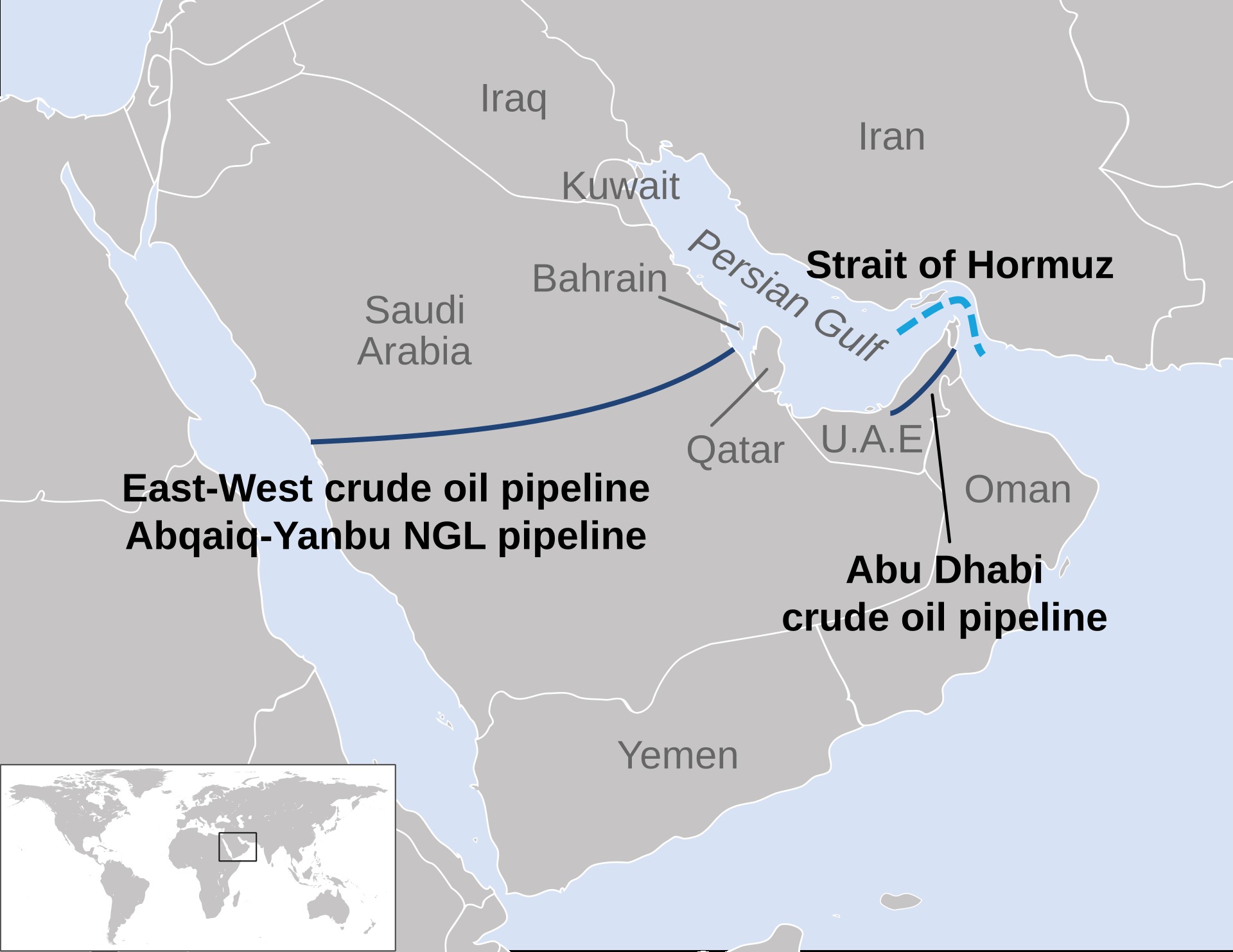
Saudi Arabia’s concern is grounded in a dependency that barely existed three months ago. In January 2026, the Yanbu terminal on the Red Sea coast loaded approximately 1.3 million barrels per day — roughly 18 percent of Saudi exports. By March, that figure had surged to nearly 5 million barrels per day, a 285 percent increase in under ten weeks, as the East-West Pipeline running from the Eastern Province across 1,200 kilometres of desert reached 7 million bpd for the first time in its history, according to Fortune. Every barrel now exits Saudi territory through a corridor whose southern gate is controlled, on its northeastern bank, by Ansar Allah.
The kingdom had already signalled its posture toward the broader conflict. On April 1, Saudi Arabia refused US use of its airspace or military bases for strikes against Iran, per the Christian Science Monitor. Riyadh’s pattern — refusing direct involvement, maximising the Yanbu bypass, insisting on diplomacy — has been consistent since the war’s first week. The blockade introduced a provocation that pattern was not designed to absorb.
The Yanbu Bottleneck
The East-West Pipeline’s 7 million bpd throughput — a wartime record — disguises a physical constraint at the other end. Yanbu’s loading terminals have a nominal capacity of approximately 4.5 million bpd, according to Argus Media. Wartime effective capacity is lower: Vortexa estimates 3 to 4.5 million bpd, reflecting the gap between what the pipeline can deliver and what the port can actually put on tankers. Saudi Arabia’s theoretical export ceiling through the Red Sea corridor already exceeds the infrastructure’s ability to service it.
The Middle East briefing 3,000+ readers start their day with.
One email. Every weekday morning. Free.
Saudi March 2026 production stood at 7.25 million bpd per the International Energy Agency, down from 10.4 million bpd in February — a 30 percent drop that the IEA called “the largest disruption on record.” Asia-bound oil exports fell 38.6 percent, per Kpler. Even operating at maximum capacity through Yanbu, Saudi Arabia cannot replace what it lost when the Eastern Province terminals went dark. The fiscal arithmetic is already dire: Bloomberg’s PIF-inclusive break-even sits at $108 to $111 per barrel, against a Brent price that has not exceeded $95 since the blockade was declared.
A Houthi disruption at Bab el-Mandeb would not need to halt all traffic to be catastrophic. It would need only to raise insurance premiums and war-risk surcharges to the point where tanker operators refuse the route — the same mechanism that cut Bab el-Mandeb throughput by roughly 50 percent during the 2023-2025 Gaza campaign, when crude flows dropped from 8.7 million bpd in 2023 to approximately 4.0 million bpd on average in 2024, according to SAFETY4SEA. The Houthis achieved that reduction without sinking a single vessel.
Can the Houthis Actually Close Bab el-Mandeb?
The Houthis have said they can. Mohammed Mansour, the Houthi Deputy Information Minister, told Al Jazeera that closing Bab el-Mandeb is “among our options” should aggression against Iran escalate. He forecast oil at $200 per barrel and confirmed “common action plan” discussions with Tehran. A separate official Houthi statement was more explicit: “The option of closing the Bab el-Mandeb Strait is a Yemeni option that can be implemented should the aggression against Iran and Lebanon escalate savagely, or if any Gulf state becomes directly involved in military operations in support of the entity or the United States,” per the Times of Israel.
Analysts who study the Houthis treat these statements as operationally credible, not as bluster. Elisabeth Kendall, president of Girton College at Cambridge University, told Al Jazeera that Houthi restraint to date reflects “strategic patience, not avoidance.” She added: “Asymmetric warfare suits the Houthis. They don’t need to be accurate or sophisticated.” Nabeel Khoury, former US Deputy Chief of Mission in Yemen, was blunter: “All they have to do is fire at a couple of ships coming through, and that would lead to the arrest of all commercial shipping through the Red Sea.” He characterised the current Houthi posture as “token participation, not full participation.” Ahmed Nagi of the International Crisis Group described it as “deliberate calculation rather than restraint born of weakness.”
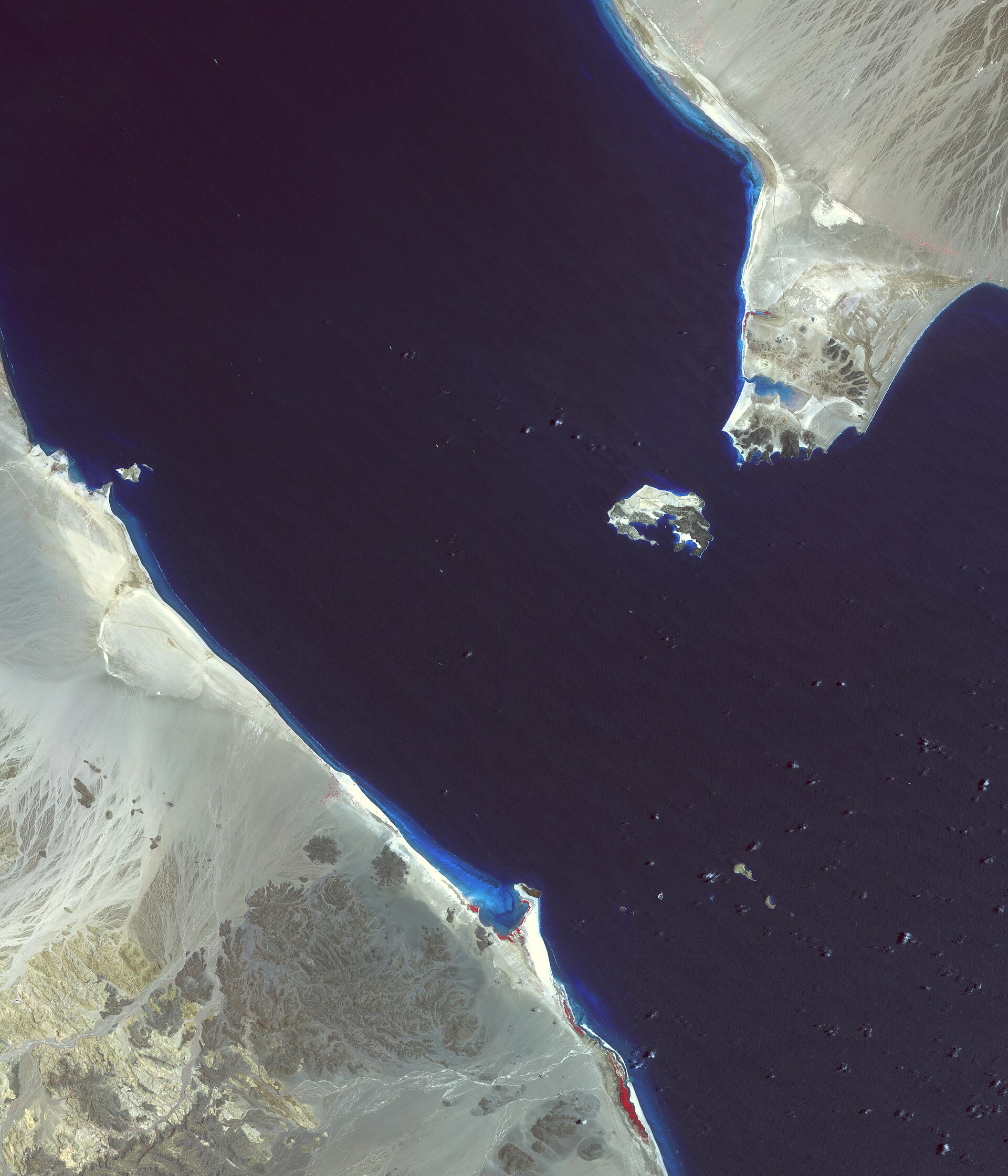
The Houthis formally entered the Iran war on March 28, 2026, when Brigadier-General Yahya Saree declared combat operations and launched cruise missiles and drones at Israel. They attacked a vessel off Yanbu’s coast on August 31, 2025 — the northernmost Houthi maritime strike on record, demonstrating reach well beyond the strait itself. Bab el-Mandeb is 29 kilometres wide at its narrowest point. The Houthis hold the Yemeni coastline on the northeastern bank.
Iran’s Unified Command Doctrine
Tehran has been explicit about the chain of command. Ali Akbar Velayati, senior adviser to Iran’s Supreme Leader, said on April 6: “The unified command of the Resistance front views Bab al-Mandeb as it does Hormuz. If the White House dares to repeat its foolish mistakes, it will soon realize that the flow of global energy and trade can be disrupted with a single move.” The language was reported by both Al Jazeera and Fox News. The phrase “unified command” was deliberate — it frames a Houthi closure of Bab el-Mandeb not as a Yemeni freelance decision but as an Iranian-directed strategic response co-equal with Hormuz operations.
The IRGC-Houthi command channel supplies anti-ship ballistic missiles, sea-skimming cruise missiles, and one-way attack drones capable of hitting vessels anywhere in the southern Red Sea. The IRGC’s declaration of the entire Persian Gulf as a targeting zone and its pattern of firing on vessels it had cleared for transit suggest an escalation posture in which Bab el-Mandeb becomes a second front rather than a dormant threat.
Mona Yacoubian, director of the Middle East Program at CSIS, told NavyTimes on April 14: “If the U.S. proceeds with its plan to blockade the strait, Iran’s escalation strategy could dictate that it ensures Gulf countries can’t export, either.” She identified “further attacks on Gulf energy infrastructure or even deploying the Houthis to blockade the Bab al-Mandeb” as part of Iran’s established playbook. The blockade does not deter Iranian escalation, in this reading. It provides the trigger.
Why Does Saudi Arabia Need the Strait More Than Iran?
The asymmetry is structural. Iran has collected zero dollars from its Hormuz toll scheme in 36 days of enforcement — 60 permits issued, 8 payment requests sent, none paid, per a April 18 report. Iranian oil exports travel overwhelmingly to China, which has demonstrated the ability to broker individual transits through IRGC-controlled waters and maintain alternative routing. Iran’s economic exposure to a Hormuz closure is real but partially buffered by the relationships Beijing has built with IRGC naval commanders.
Saudi Arabia has no equivalent buffer at Bab el-Mandeb. The kingdom’s current export load of approximately 3.97 million barrels per day, per Kpler, runs through a single corridor whose chokepoint is flanked by a hostile coast. There is no second bypass pipeline. There is no Red Sea alternative to Bab el-Mandeb. Al Jazeera reported on April 6 that simultaneous closure of both Hormuz and Bab el-Mandeb would block 25 percent of global oil and gas supply.
| Metric | Saudi Arabia | Iran |
|---|---|---|
| Current export corridor | Bab el-Mandeb (sole) | Hormuz (blockaded) + overland |
| March 2026 flow through chokepoint | 3.97M bpd (Kpler) | ~0 (blockade from April 13) |
| Revenue from chokepoint toll | N/A | $0 in 36 days |
| Primary buyer alternative routing | None | China (demonstrated transit capacity) |
| Hostile force at chokepoint | Houthis (northeast bank, 29km strait) | US Navy (15 warships) |
| Production (March 2026) | 7.25M bpd (IEA) | Blockaded since April 13 |
| Fiscal break-even | $108-111/bbl (Bloomberg) | N/A (war economy) |
The Carrier That Went Around Africa
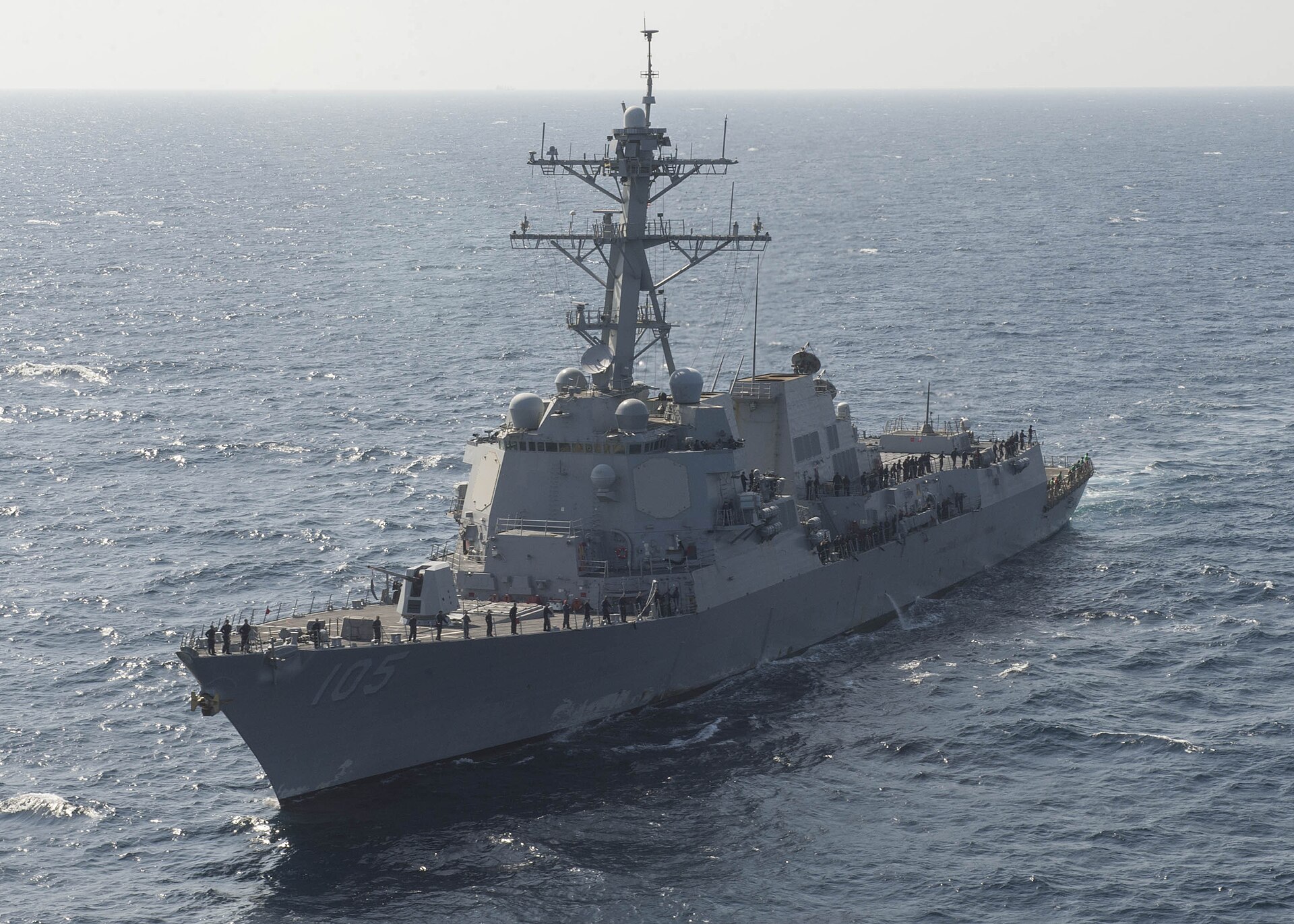
The USS George H.W. Bush carrier strike group was rerouted around the Cape of Good Hope to avoid the Houthi threat as of April 13 to 14, according to USNI News. No US carrier has transited Bab el-Mandeb since the USS Dwight D. Eisenhower in December 2023. The US Navy — the force enforcing the Hormuz blockade — has itself declined to transit the strait whose security it would need to guarantee for the blockade’s logic to hold.
The gap between the blockade’s ambition and the Navy’s own routing decisions illustrates the problem Saudi Arabia identified in its demand. The US can enforce a cordon at Hormuz with 15 warships. It cannot simultaneously guarantee safe passage through a second chokepoint 2,500 kilometres to the southwest, flanked by an adversary armed with Iranian-supplied anti-ship missiles, without committing a naval presence it does not currently have in position. The blockade’s cost to Iran — Maleki’s $435 million per day — is a real number. Saudi Arabia’s cost, should the Houthis execute their stated option, is measured in export volumes, not revenue foregone on trade that continues elsewhere.
Background
The US blockade of the Strait of Hormuz was declared on April 13, 2026, as a coercive measure targeting Iranian ports and toll-collecting vessels. It followed weeks of IRGC escalation at Hormuz, including the declaration of the strait as a managed corridor requiring Iranian authorization, the imposition of a $1-per-barrel toll that no country has paid, and repeated firings on transiting vessels. Saudi Arabia’s Hormuz-facing export terminals in the Eastern Province ceased operations after Iranian strikes in the war’s first weeks, forcing a rapid pivot to the East-West Pipeline and Yanbu.
The Houthis — formally Ansar Allah — have controlled most of northern and western Yemen since 2014. During the 2023-2025 Gaza-related Red Sea campaign, they launched over 100 attacks on commercial shipping, reducing Bab el-Mandeb transit volumes by roughly half and forcing major container lines including Maersk and Hapag-Lloyd to reroute around Africa. They entered the current Iran war on March 28, 2026, with missile and drone strikes against Israel. Their maritime capability has expanded with Iranian supply, including anti-ship ballistic missiles with ranges exceeding 200 kilometres.
Saudi Arabia refused US use of its airspace and bases for Iran strikes on April 1, 2026. It has pursued a consistent diplomatic line throughout the conflict, prioritising the Yanbu bypass and avoiding direct military participation. The kingdom’s demand to end the blockade is the most direct public divergence between Riyadh and Washington on the conduct of operations since the war began on February 28.
Frequently Asked Questions
Has Saudi Arabia publicly stated its opposition to the blockade?
No. The demand was communicated through diplomatic channels and reported by the Wall Street Journal citing Arab officials on April 14. Saudi Arabia has not issued a public statement opposing the blockade. The kingdom’s pattern throughout the war has been to communicate objections privately while maintaining a public posture of neutrality — consistent with its April 1 refusal to allow US use of Saudi airspace, which was also reported through diplomatic sources rather than an official Saudi announcement.
Could the US Navy protect Bab el-Mandeb and enforce the Hormuz blockade simultaneously?
Current force disposition suggests it cannot without redeployment. The 15-warship Hormuz blockade force is concentrated in the Persian Gulf and Gulf of Oman. The nearest carrier strike group — the USS George H.W. Bush — routed around Africa to avoid Bab el-Mandeb. US Fifth Fleet, headquartered in Bahrain, has operational responsibility for both waterways but would require splitting its assets across a 2,500-kilometre distance. During the 2023-2025 Houthi campaign, the US deployed two carrier strike groups to the Red Sea and still failed to eliminate Houthi launch capability.
What would happen to global oil prices if both straits were disrupted simultaneously?
Goldman Sachs modelled a dual-chokepoint scenario at $150 to $180 per barrel in a March 2026 research note. Houthi Deputy Information Minister Mohammed Mansour forecast $200 per barrel. Al Jazeera reported that simultaneous closure would remove 25 percent of global oil and gas supply from the market. For context, the 1973 Arab oil embargo removed approximately 7 percent of global supply and quadrupled prices in four months. A 25 percent removal has no modern precedent.
Does Saudi Arabia have any export route that bypasses both Hormuz and Bab el-Mandeb?
No seaborne route exists. The East-West Pipeline terminates at Yanbu on the Red Sea, and all Red Sea-origin tankers heading to Europe or Asia must transit either Bab el-Mandeb (southbound) or the Suez Canal (northbound). A theoretical overland option — trucking crude to Jordan’s Aqaba port on the Gulf of Aqaba, which exits through the Strait of Tiran into the Red Sea — has never been operationalised at scale and would handle a negligible fraction of Saudi volumes. Pipeline connections to Jordan or Iraq lack the capacity for crude export redirection.
What is the current Houthi military capability in the Bab el-Mandeb area?
The Houthis maintain anti-ship ballistic missiles with ranges exceeding 200 kilometres, sea-skimming cruise missiles, explosive-laden unmanned surface vessels, and one-way attack drones — all supplied through the IRGC command channel. Their August 2025 attack on a vessel off Yanbu’s coast demonstrated the ability to strike targets well north of the strait. During 2023-2025, they launched attacks across the full width of the Red Sea’s southern approaches, including strikes in the Gulf of Aden and as far as the central Red Sea. No anti-missile system aboard commercial vessels can intercept these weapons; deterrence depends entirely on naval escort or the threat of retaliation, neither of which eliminated the threat during the previous campaign.