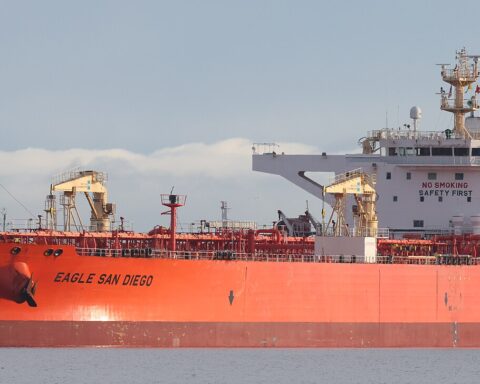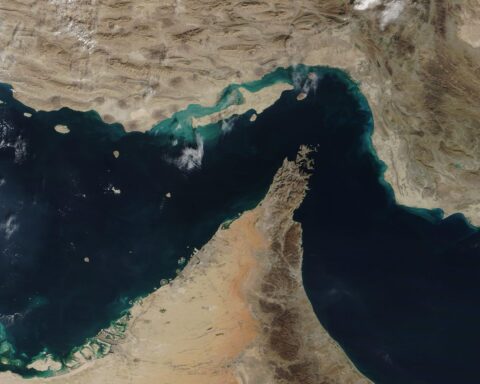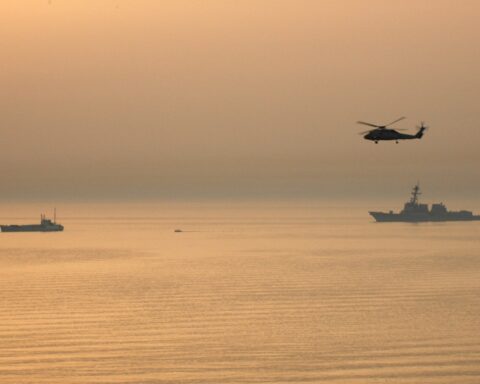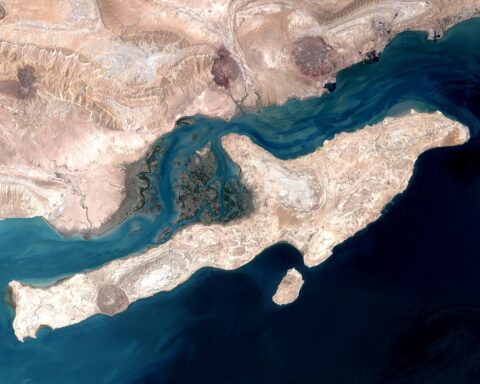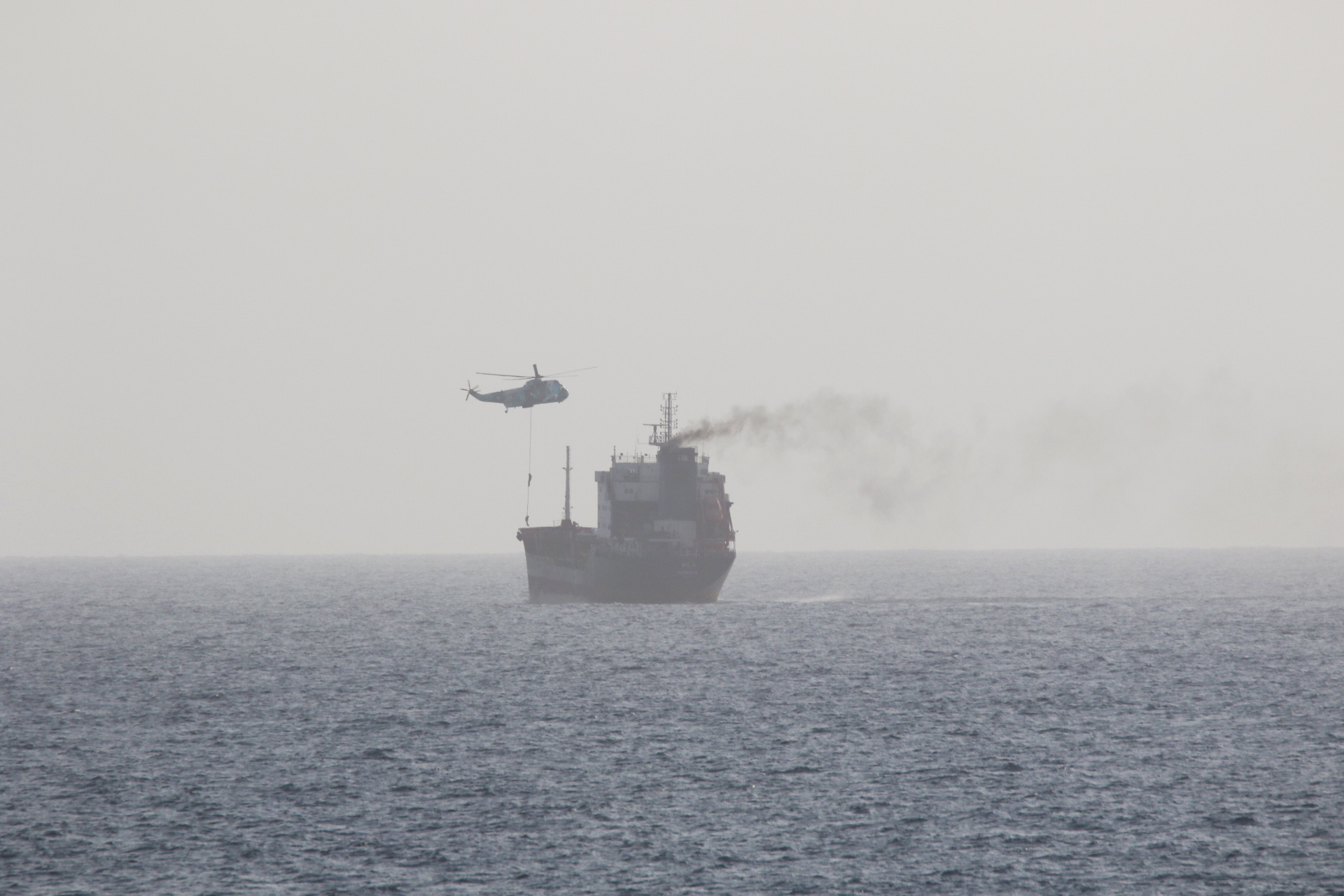

ABU DHABI — ADNOC chief executive Sultan Al Jaber declared on April 9 that 230 loaded oil tankers are sitting outside the Strait of Hormuz unable to sail, and that the waterway — despite a nominal ceasefire now in its second day — “is not open.” The statement, published on LinkedIn and confirmed by Reuters, amounts to the most senior commercial rebuke of Iran’s post-ceasefire Hormuz regime by any Gulf energy official, and it landed on the same day Saudi Foreign Minister Prince Faisal bin Farhan was on the phone to his Iranian counterpart discussing regional tensions.
Al Jaber’s intervention transforms the Gulf Cooperation Council’s post-ceasefire fracture from a diplomatic disagreement into an economic one. The UAE is now running a coordinated two-track campaign against Iran — the UAE MoFA reparations demand filed April 8, citing 2,819 projectiles and demanding Iran be “held accountable and fully liable,” formed the legal track. Al Jaber’s April 9 broadside, naming a specific tanker count and calling Iran’s Hormuz controls “coercion,” opens the economic track. Saudi Arabia has joined neither, and the gap between Abu Dhabi’s public confrontation and Riyadh’s silence is now wide enough to measure in dollars, barrels, and interceptor rounds.
Table of Contents
- What Al Jaber Said — and Why It Functions as Government Policy
- Two Tracks, One Target: The UAE’s Coordinated Campaign
- Why Is Saudi Arabia Silent on Hormuz Conditionality?
- The Pipeline Asymmetry That Explains Everything
- What Is Iran Actually Demanding?
- The Phone Call That Says More Than the Silence
- Frequently Asked Questions
What Al Jaber Said — and Why It Functions as Government Policy
Al Jaber’s LinkedIn post on April 9 was precise in a way that corporate messaging rarely is. “Let’s be clear: the Strait of Hormuz is not open,” he wrote. “Access is being restricted, conditioned and controlled.” He named 230 loaded ships waiting to sail, quantified the disruption at more than 20 percent of globally traded energy, and specified that 80 percent of Hormuz-transiting cargoes are bound for Asia — a detail aimed squarely at the buyers whose purchasing decisions will determine whether Iran’s toll regime becomes permanent or collapses under commercial resistance.
The sharpest passage targeted Iran directly. “Iran has made clear — through both its statements and actions — that passage is subject to permission, conditions and political leverage,” Al Jaber wrote. “That is not freedom of navigation. That is coercion.” He followed with a production commitment: “Energy producers must be able to swiftly and safely restore production at scale. At ADNOC, we have loaded cargoes and we will expand production within the constraints of the damage we have suffered.”
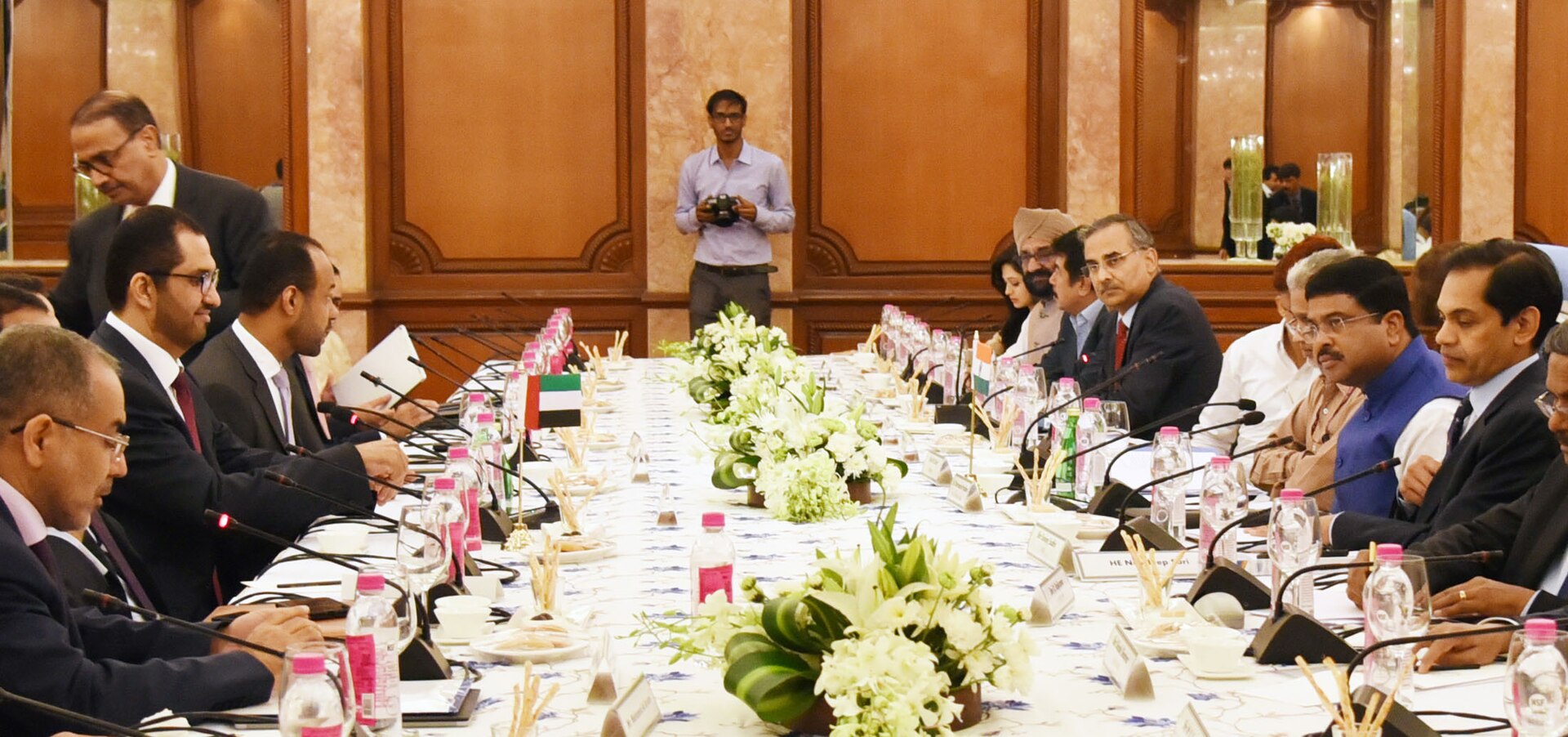
Al Jaber is not merely a CEO. He simultaneously serves as UAE Minister of Industry and Advanced Technology and chairman of Masdar, the state renewable energy company. When he speaks publicly about Hormuz, he speaks with the authority of a cabinet minister, and his language on April 9 was calibrated to function as government policy without requiring a separate MoFA statement. This was not his first escalation — he called Iran’s Hormuz closure “global economic extortion” in a Bloomberg interview on April 1, and the April 9 statement represented a deliberate ratcheting from general condemnation to specific commercial claims backed by a tanker count and a production pledge.
Richard Meade, editor-in-chief of Lloyd’s List, reinforced Al Jaber’s assessment on the same day, telling AGBI that hopes of Hormuz reopening had been “pretty much dashed” by the prospect of naval mines. The International Maritime Organization also weighed in on April 9, warning that Iran’s toll plan would “set a dangerous precedent” for global shipping, according to Bloomberg and Al-Monitor.
The Middle East briefing 3,000+ readers start their day with.
One email. Every weekday morning. Free.
Two Tracks, One Target: The UAE’s Coordinated Campaign
The sequencing is not coincidental. On April 8, the UAE Ministry of Foreign Affairs issued a formal demand that Iran be “held accountable and fully liable for damages and reparations” for projectiles fired at UAE territory during the conflict. Presidential Diplomatic Adviser Anwar Gargash told Al Jazeera the same day that “UAE triumphed in a war we sincerely sought to avoid,” and had previously told Euronews on April 7 that “with this regime there is no trust.” That was the legal and diplomatic track — a government-to-government accountability claim designed to establish a reparations baseline and signal that Abu Dhabi would not quietly absorb war costs the way it absorbed the projectiles.
Twenty-four hours later, Al Jaber’s statement opened the second front: commercial and economic. Where the MoFA demand spoke in the language of international law and state responsibility, Al Jaber spoke in the language of barrels, tankers, and market coercion. The two tracks reinforce each other — the reparations demand makes Iran legally answerable, while the ADNOC statement makes Iran’s ongoing Hormuz conditionality commercially visible to every Asian buyer, insurer, and shipping company watching the 230-ship queue from a Bloomberg terminal.
Foreign Policy reported on April 7 that the UAE had explicitly stated its openness to “joining military efforts to confront Tehran.” That willingness to match diplomatic language with military posture is what gives both tracks their credibility — Abu Dhabi is not asking for sympathy, it is building a multi-layered case that positions Iran as both a legal debtor and an active commercial threat to the global energy system.
Why Is Saudi Arabia Silent on Hormuz Conditionality?
Saudi Arabia’s response to the ceasefire, delivered via MoFA on April 8, used the phrase “comprehensive sustainable pacification” — no mention of Hormuz, no accountability language, no reparations demand, no named tanker count, and no direct criticism of Iran’s conditioning of strait access, according to Al Jazeera. When CNN contacted Aramco for comment on the Hormuz situation the same day, the company declined. The contrast with Al Jaber’s 230-ship broadside is total, and the reasons for it are structural rather than temperamental.
Saudi Arabia is caught in a three-way bind that makes confrontational public statements about Hormuz a luxury it cannot currently afford. The first constraint is the PAC-3 interceptor depletion and the Hajj timeline — with an estimated 400 rounds remaining and 1.8 million pilgrims beginning to arrive from April 18, Riyadh cannot risk provoking an Iranian escalation that would test air defenses already drawn down by 86 percent. The second is the Aramco May OSP inversion, which set pricing at +$19.50 per barrel above the Oman/Dubai benchmark when Brent was at $109, only for Brent to crash toward $94 by April 9 — leaving May-loading term contracts $11 to $14 per barrel above spot and a June repricing decision due around May 5 that could force the largest single-month OSP correction in Aramco’s history. The third is Saudi exclusion from the Islamabad bilateral talks scheduled for April 10, where Iran and the United States will negotiate directly while Riyadh watches from outside the room.
Omar H. Rahman of the Middle East Council on Global Affairs captured the posture in Foreign Policy on April 7: Saudi Arabia “have avoided clear public alignment with either escalation or restraint” and “appear to be quietly facilitating U.S. operations” while maintaining strategic ambiguity. That ambiguity is deliberate — Riyadh needs Iran to keep Hormuz conditionally open rather than fully closed, needs the ceasefire to hold through Hajj, and needs Asian buyers not to abandon Aramco term contracts at the worst possible moment in the OSP cycle. Public confrontation along UAE lines would jeopardize all three.
The Pipeline Asymmetry That Explains Everything
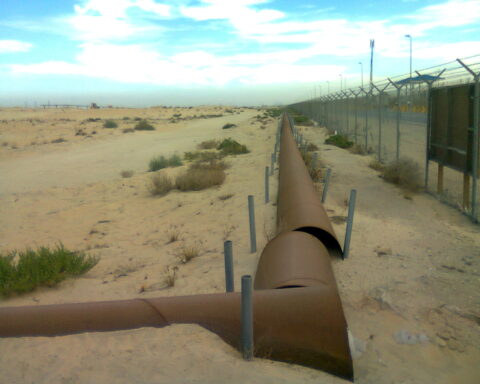
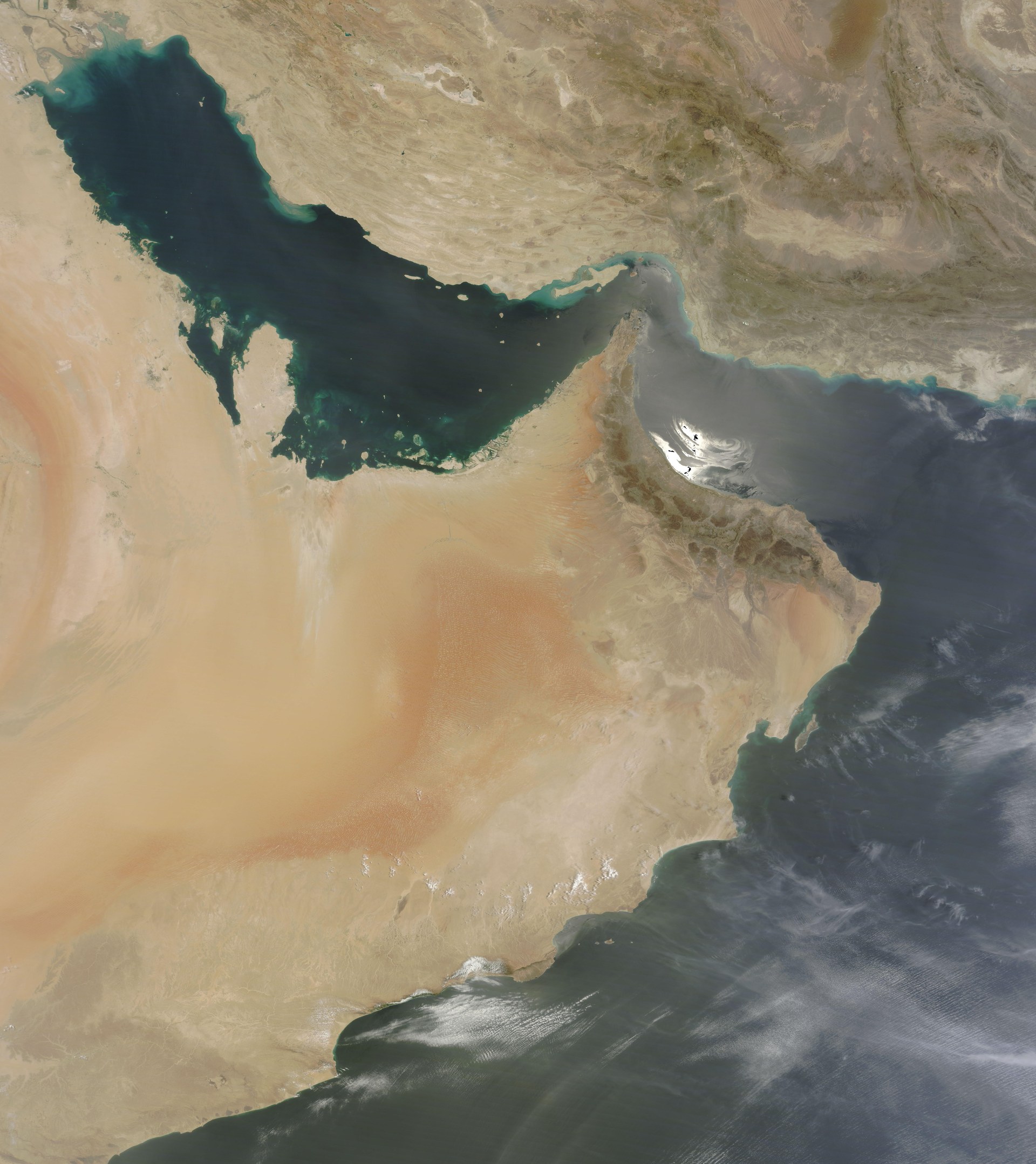
The infrastructure gap between UAE and Saudi bypass capacity explains why Abu Dhabi can afford confrontation and Riyadh cannot. ADNOC’s Abu Dhabi Crude Oil Pipeline exports approximately 1.5 million barrels per day through Fujairah on the Gulf of Oman, bypassing Hormuz entirely. At 71 percent utilization during the crisis, ADCOP retains roughly 440,000 barrels per day of spare bypass capacity, according to CNBC’s March 12 reporting. Al Jaber’s pledge to “expand production within the constraints of the damage we have suffered” is credible because ADNOC has a pipeline route to open water that Iran cannot interdict without attacking Fujairah directly — an act that would constitute an escalation well beyond anything attempted during the conflict.
Saudi Arabia’s East-West Pipeline to Yanbu on the Red Sea carries an estimated 4.0 to 4.5 million barrels per day at maximum capacity, which sounds substantial until measured against the kingdom’s pre-war Hormuz exports of 5.5 million bpd — the largest single-country exposure at 38 percent of total strait crude flows, according to CNBC and Visual Capitalist. That leaves a shortfall of 1.0 to 1.5 million barrels per day even at full pipeline utilization, and full utilization is now in question: the IRGC struck an East-West Pipeline pumping station on April 8, the first day of the ceasefire, demonstrating that the bypass route itself is within Iran’s targeting envelope.
| Metric | UAE (ADNOC) | Saudi Arabia (Aramco) |
|---|---|---|
| Pre-war Hormuz exports | ~2.0M bpd | ~5.5M bpd (38% of strait total) |
| Bypass pipeline capacity | ~1.5M bpd (ADCOP to Fujairah) | ~4.0-4.5M bpd (East-West to Yanbu) |
| Bypass gap | ~500K bpd | ~1.0-1.5M bpd |
| Spare bypass capacity | ~440K bpd (71% utilization) | Under stress (pumping station struck April 8) |
| Public Hormuz statement | “Not open” — Al Jaber, April 9 | “Comprehensive sustainable pacification” — MoFA, April 8 |
| Reparations demand | Filed April 8 (2,819 projectiles) | None |
The ratio tells the story. The UAE’s bypass gap is roughly 500,000 barrels per day — painful but manageable, and partially coverable by the spare ADCOP capacity Al Jaber referenced. Saudi Arabia’s gap is two to three times larger in absolute terms, the pipeline that fills it was attacked 24 hours ago, and the fiscal breakeven that depends on export revenue sits at approximately $94 per barrel when PIF commitments are included, according to Bloomberg — virtually identical to where Brent traded on April 9. There is no margin, and no margin means no room for rhetorical provocation that could trigger another IRGC salvo at energy infrastructure.
What Is Iran Actually Demanding?
Iran’s post-ceasefire Hormuz position has hardened rather than softened since the April 7 agreement. Deputy Foreign Minister Saeed Khatibzadeh told the BBC and NBC News on April 9 that ships would pass only once the United States ends “aggression” and Israel stops its attacks — a condition that effectively links Hormuz transit not to the bilateral ceasefire but to the broader regional conflict, including the Israeli strikes on Lebanon that triggered a second Hormuz re-closure on April 8. The Iranian parliament’s fee bill, passed March 31, codifies a baseline toll of $1 per barrel payable in yuan via Kunlun Bank or in USDT on the Tron blockchain, according to Bloomberg — a payment architecture designed to operate entirely outside Western financial infrastructure.
Simultaneously, Iran and Oman are co-drafting what Deputy Foreign Minister Kazem Gharibabadi described to IRNA on April 2 as a “Strait of Hormuz Maritime Monitoring Protocol,” which would establish Iranian oversight over transit coordination. Iran’s 10-point plan, presented at the Islamabad talks, includes as Point 7 a requirement for “coordination with the Armed Forces of Iran” over Hormuz passage — a demand that would transform the strait from an international waterway governed by customary transit passage into a controlled corridor requiring Iranian military approval for each vessel. As ceasefire Day 1 throughput data showed, only 15 to 20 ships transited in 24 hours versus the pre-war average of 138 per day — a 85 to 89 percent reduction that Al Jaber’s 230-ship count makes commercially tangible.
Iran has made clear — through both its statements and actions — that passage is subject to permission, conditions and political leverage. That is not freedom of navigation. That is coercion.
— Sultan Al Jaber, ADNOC CEO and UAE Minister of Industry (LinkedIn / Reuters, April 9, 2026)
The IMO’s April 9 warning that Iran’s toll plan would “set a dangerous precedent” gave Al Jaber’s statement multilateral backing within hours. But the IMO has no enforcement authority — its advisory role under the Convention for the Safety of Life at Sea does not extend to Chapter VII powers, and Iran, the United States, and Israel are all non-ratifiers of UNCLOS, the treaty that would otherwise govern transit passage rights. The legal vacuum means that whatever Hormuz regime emerges will be determined by commercial pressure and bilateral deals, not by international institutions — which is precisely why Al Jaber chose to make his case in the language of tanker counts and market disruption rather than legal abstractions.
The Phone Call That Says More Than the Silence
On the same day Al Jaber published his statement, Saudi Foreign Minister Prince Faisal bin Farhan spoke by phone with Iranian Foreign Minister Ali Araghchi to discuss regional tensions, as reported by the Times of Islamabad on April 9. The timing is the message — while Abu Dhabi was publicly naming 230 trapped tankers and calling Iran’s Hormuz controls coercion, Riyadh was privately maintaining the diplomatic channel that it hopes will keep those controls from becoming permanent or from escalating into a full closure that would leave the East-West Pipeline as the kingdom’s sole export route at reduced capacity.
The call also positions Saudi Arabia for the Islamabad bilateral talks on April 10, where Iran and the United States will negotiate directly. Riyadh has no seat at that table — a structural exclusion that makes the Faisal-Iran back channel one of the few remaining instruments Saudi Arabia has to influence outcomes on Hormuz access, ceasefire durability, and the Phase 2 negotiations where toll codification and IRGC “coordination” authority will be decided. Public confrontation along UAE lines would close that channel precisely when Saudi Arabia needs it most. What the call also reveals is that the Saudi-Iran backchannel described in Al Jaber’s account reached foreign-minister level on April 9: analysis of what Saudi Arabia’s escalation to foreign-minister-level contact with Tehran means for Riyadh’s information position — and why Araghchi called all six GCC foreign ministers on the same day — is examined in detail separately.
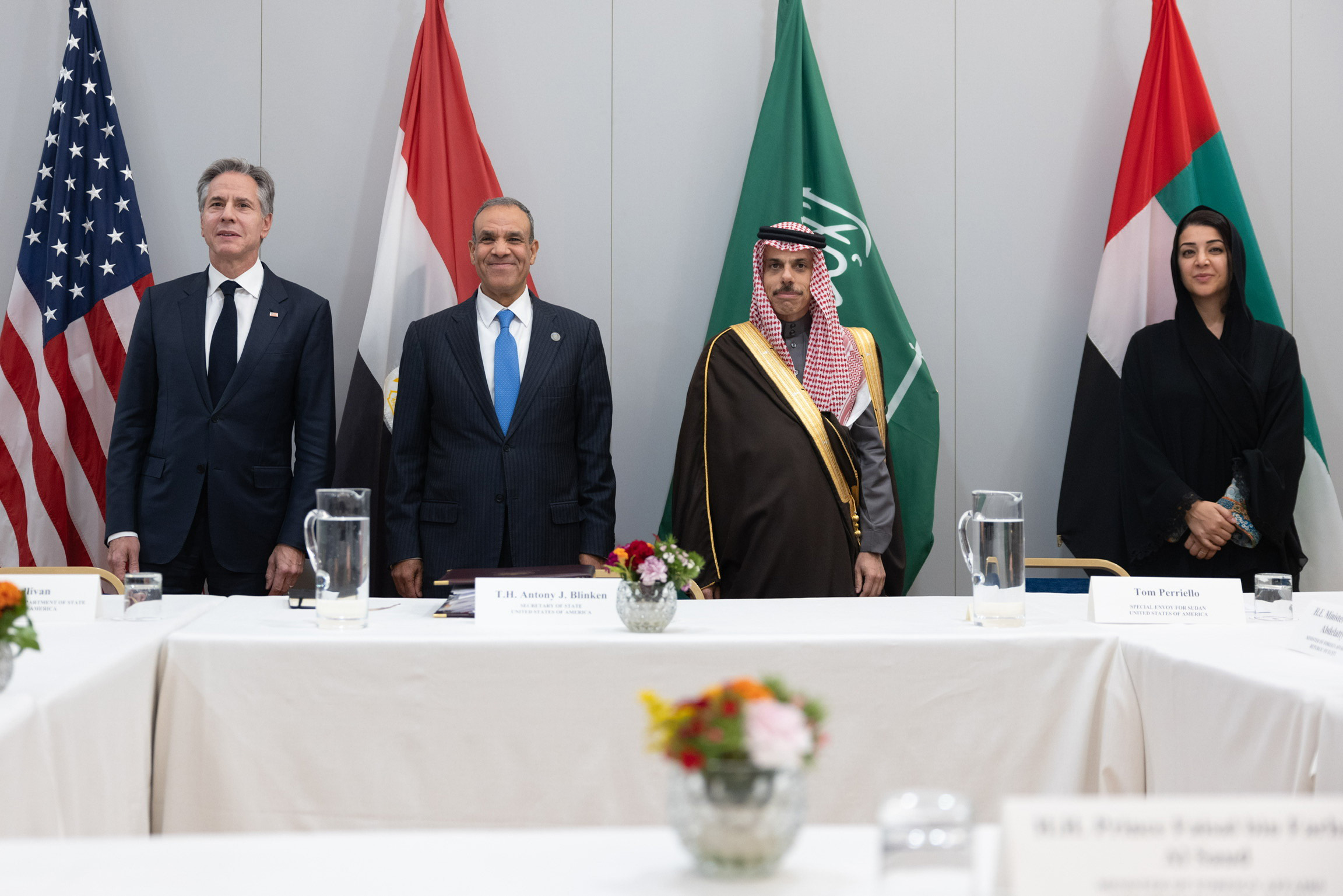
The divergence between Abu Dhabi and Riyadh is now visible across every dimension — legal, commercial, rhetorical, and diplomatic. The UAE filed reparations demands, named tanker counts, called Iran’s actions coercion, and signaled willingness to join military operations. Saudi Arabia welcomed the ceasefire in the most anodyne language available, declined press inquiries through Aramco, and picked up the phone to Tehran.
Neither response is irrational — the UAE can afford confrontation because its bypass infrastructure covers a larger share of its exports, its interceptor stockpile was not drawn down to Saudi levels, and it does not face a Hajj security obligation in 18 days. Saudi Arabia cannot afford confrontation because its bypass gap is three times larger, its air defenses are critically depleted, its OSP is underwater, and 1.8 million pilgrims are inbound.
What Al Jaber’s statement does is make the cost of Saudi silence visible. Every day that Riyadh declines to publicly challenge Iran’s Hormuz conditionality, the 230-ship queue grows, the precedent of conditioned access solidifies, and the commercial pressure on Asian buyers to accept Iran’s toll architecture rather than wait for a multilateral solution intensifies. With the PIF-inclusive fiscal breakeven virtually identical to where Brent traded on April 9, even a $2 per barrel drop pushes the kingdom into deficit territory that Goldman Sachs already estimates at $80 to $90 billion annually, far exceeding the official Saudi projection of $44 billion. The silence is rational, but it is not free, and Al Jaber just handed Abu Dhabi the microphone that Riyadh cannot pick up.
Frequently Asked Questions
Who is Sultan Al Jaber and why does his statement carry government weight?
Al Jaber holds three simultaneous positions: CEO of ADNOC (the UAE’s national oil company, producing roughly 4 million barrels per day), UAE Minister of Industry and Advanced Technology, and Chairman of Masdar (the state renewable energy company). He also served as President of the COP28 climate summit in Dubai in 2023. His public statements on energy policy function as de facto government positions because his ministerial role means he speaks with cabinet-level authority, not merely as a corporate executive.
How does the ADCOP pipeline give the UAE more freedom to confront Iran than Saudi Arabia has?
The Abu Dhabi Crude Oil Pipeline runs 404 kilometers from Habshan in Abu Dhabi’s interior to Fujairah on the Gulf of Oman coast, entirely bypassing the Strait of Hormuz. Completed in 2012 specifically as a strategic hedge against Hormuz disruption, it can carry 1.5 million bpd — covering roughly 75 percent of UAE crude exports without any vessel needing to enter the strait. Saudi Arabia’s East-West Pipeline to Yanbu covers a lower share of total exports and was struck by the IRGC on April 8, exposing its vulnerability in ways ADCOP has not experienced.
What would Iran’s $1-per-barrel Hormuz toll actually cost Saudi Arabia annually?
At pre-war Saudi Hormuz throughput of 5.5 million barrels per day, a $1-per-barrel fee would cost approximately $2 billion annually — payable in yuan via Kunlun Bank or USDT on the Tron blockchain, both outside Western financial systems. The toll would also establish a legal and commercial precedent that transforms Hormuz from an international waterway into a revenue-generating chokepoint under Iranian sovereign authority.
Has Saudi Aramco made any public statement about Hormuz since the ceasefire?
No. CNN reported on April 8 that Aramco declined to comment when contacted about the Hormuz situation and the ceasefire’s impact on operations. This silence mirrors Saudi MoFA’s avoidance of Hormuz-specific language in its April 8 ceasefire statement, and contrasts sharply with Al Jaber’s detailed April 9 accounting of 230 loaded tankers, production commitments, and direct accusation of Iranian coercion. Aramco’s next required public communication will be the June Official Selling Price announcement, expected around May 5.
Could the UAE-Saudi divergence on Iran affect OPEC+ coordination?
The two countries have clashed within OPEC+ before — most memorably during the July 2021 standoff over UAE baseline production quotas, which delayed an output deal by weeks. The current divergence is more acute because it involves not just production volumes but fundamental security posture toward a fellow OPEC member that is actively conditioning energy transit. OPEC+ agreed in early April to increase output by 206,000 bpd in May, a decision that now adds supply into a market where 230 loaded tankers cannot reach buyers — compounding the price pressure on both countries’ fiscal positions.