LONDON — Britain told the United States on April 12 that it would not join the naval blockade of Hormuz, and Donald Trump responded by calling Keir Starmer the new Neville Chamberlain — a comparison so historically illiterate it almost obscured what actually happened. What actually happened is that the country hosting America’s heavy bomber fleet at RAF Fairford, the country whose Royal Artillery battery is defending Saudi cities right now, chose to break publicly with Washington over the most consequential maritime escalation since the Tanker War — and in doing so, handed Riyadh exactly the diplomatic cover Mohammed bin Salman cannot manufacture for himself.
Saudi Arabia has said nothing about the blockade. Not a word. Not a calibrated Foreign Ministry statement, not an anonymous briefing to Bloomberg, not a Faisal bin Farhan appearance at a podium. That silence is not indecision. It is the sound of a country that depends on American Patriot batteries for survival and British air defense for the gaps those batteries can no longer fill, watching its two indispensable security partners diverge on the question that will determine whether Saudi oil reaches market for the rest of 2026.
Table of Contents
- The RAF Fairford Contradiction
- What Did the UK Actually Refuse?
- Saudi Arabia’s Silence as Architecture
- Why Was Saudi Arabia Absent from the 38-Nation Hormuz Statement?
- A Sky Sabre Battery and What It Buys
- The Proxy Diplomat: Does UK Dissent Serve Saudi Interests?
- The Suez Inversion
- Does the $4.76 Billion Arms Package Confirm Saudi Arabia’s Isolation?
- How Iran Reads the Fracture
- The Three-Command Problem
- FAQ
The RAF Fairford Contradiction
The geometry of British involvement in the Iran war is dishonest, and the UK government knows it. RAF Fairford in Gloucestershire — a quiet airfield in the Cotswolds surrounded by honey-stone villages and National Trust properties — has hosted what Starmer’s own Ministry of Defence describes as “a substantial portion of the US heavy bomber fleet” since February 2026. B-2 Spirits and B-1B Lancers launch from Fairford, fly south over the Bay of Biscay, refuel over the Mediterranean, and drop ordnance on Iranian military targets. They then fly back to Gloucestershire, where ground crews service them for the next sortie.
Starmer initially refused to allow US forces use of British bases for the February 28 opening strikes. He reversed that position within weeks, permitting Fairford operations designated as “collective self-defence” — meaning strikes against Iranian missile systems threatening commercial shipping. The legal distinction is gossamer-thin and operationally meaningless: the same aircraft, flying from the same runway, dropping the same munitions on the same country, are either an act of war or an act of maritime protection depending on which targeting package they carry that day.
This is the context the Trump-Chamberlain comparison erases. Britain is not standing aside. Britain is the runway. What Starmer refused on April 12 was not involvement in the war — that ship sailed from Fairford months ago — but involvement in the specific escalation of a naval blockade that even America’s closest Gulf allies have not unanimously endorsed. The distinction matters because it reveals the actual British calculation: support the air war that protects Saudi Arabia and Gulf shipping routes, refuse the blockade that would make Britain co-owner of whatever comes next in the Strait.
What Did the UK Actually Refuse?
The UK government’s April 12 statement was a masterpiece of diplomatic understatement — London “continued to call for freedom of navigation and the opening of the strait.” No condemnation of Washington. No withdrawal from the air campaign. No recall of the Sky Sabre battery defending Saudi territory. What Britain refused was participation in what Trump designated a “full naval blockade” — the deployment of US and allied warships to physically prevent vessels from transiting Hormuz without American authorization, effectively replacing Iran’s selective passage regime with an American one.
The Middle East briefing 3,000+ readers start their day with.
One email. Every weekday morning. Free.
Britain instead has been building something different: a 40-nation coalition, convened on April 2 in a virtual summit chaired by Foreign Secretary Yvette Cooper, oriented around mine clearance, escort operations, and diplomatic pressure on Tehran to restore unconditional transit. The US declined to participate in that summit. Germany, Spain, Italy, Japan, Australia, and South Korea all joined Britain’s framework while explicitly rejecting the American blockade. Spain’s Foreign Minister José Manuel Albares was bluntest: “The Strait of Hormuz falls outside NATO’s remit. NATO has no involvement in this war. We, the allies, have not been informed or consulted.”
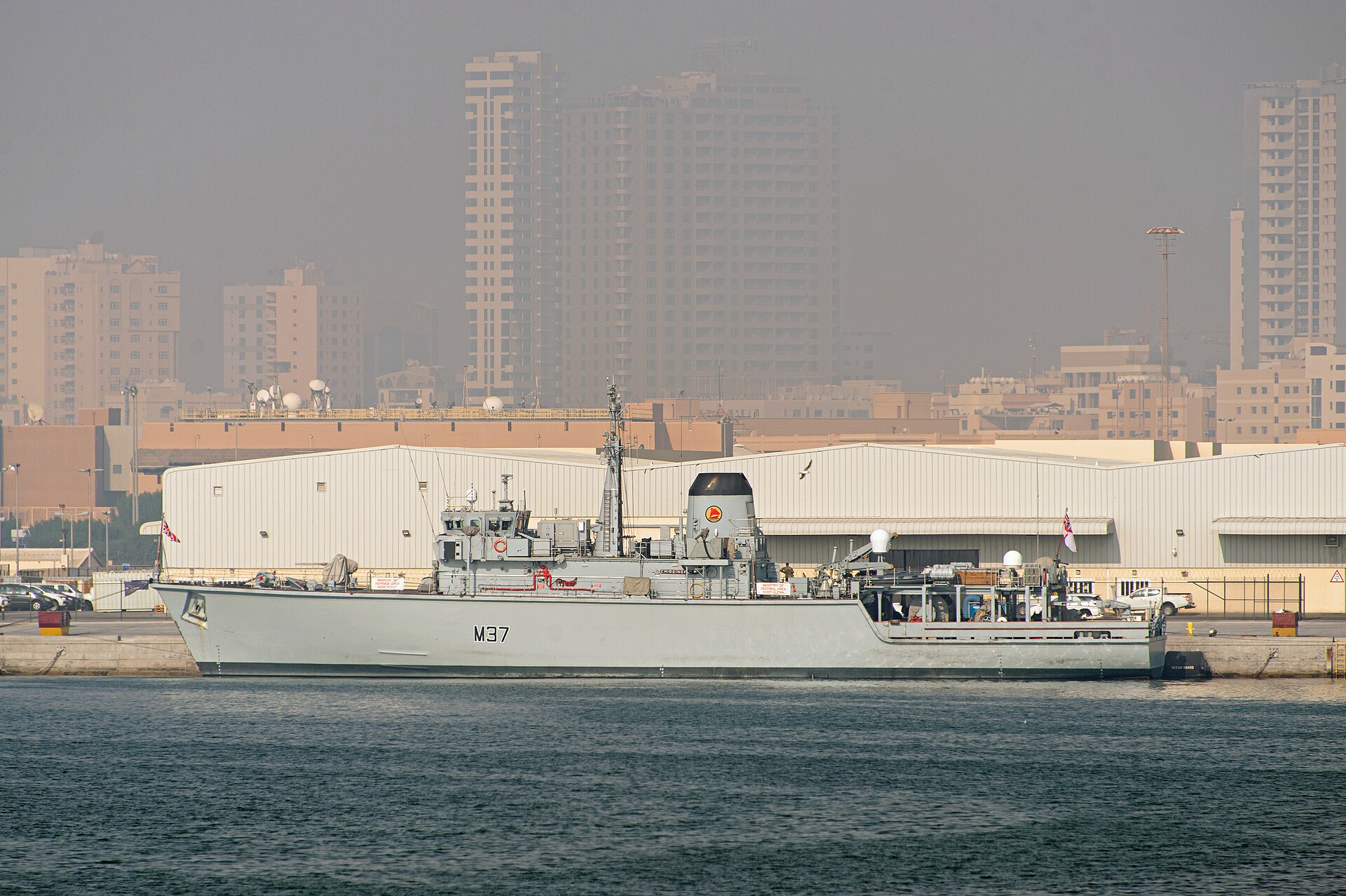
The Royal Navy has pre-deployed autonomous minehunting drones — Harrier surface systems and Iver4 underwater vehicles — to the Gulf, staging from RFA Cardigan Bay. The Adventure joint UK-France minehunting system, built by Thales, was delivered on April 3. Defence Minister Luke Pollard confirmed the deployment publicly, framing it as preparation for reopening the Strait rather than enforcing closure. The operational difference is real: mine clearance prepares a channel for commercial shipping to resume; a blockade prevents commercial shipping from moving at all.
Saudi Arabia’s Silence as Architecture
By April 13 — a full day after Britain’s public refusal, five days after Trump’s blockade declaration — Saudi Arabia had issued no statement on the blockade whatsoever. No position. No clarification. No background briefing. This from a kingdom whose Foreign Ministry has issued 14 statements on Iran-related matters since the war began on February 28, whose Crown Prince has spoken by phone to Trump, Starmer, Macron, Xi Jinping, and Vladimir Putin in the past three weeks, and whose state media apparatus operates in four languages around the clock.
Gulf diplomatic sources told Waryatv on April 8 that Riyadh is “reassessing its entire strategic posture before committing to a position” — language that suggests the silence is neither paralysis nor passivity but a deliberate refusal to be positioned before the strategic picture resolves. The same analysis called it “calculated strategy under pressure rather than indecision.” That framing, from sources close enough to the Saudi foreign policy establishment to describe its internal logic, is the most revealing data point available. Saudi Arabia’s silence is not the absence of a policy. It is the policy.
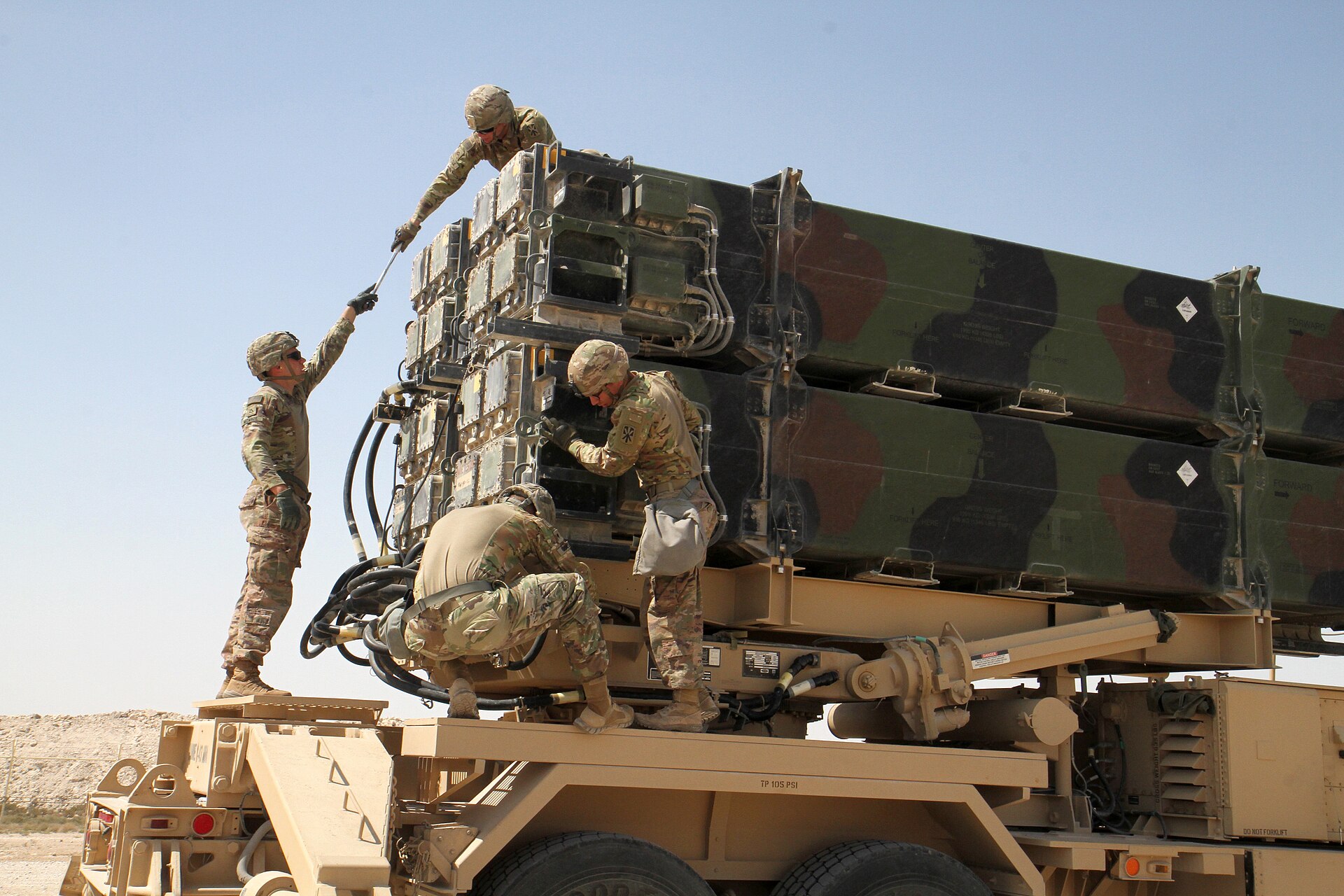
The structural reason is simple enough. Saudi Arabia has no formal mutual defense treaty with the United States. The Major Non-NATO Ally designation Trump granted in January 2026 — as the New Lines Institute noted — “does not provide any special or enforceable security guarantees, nor is a binding treaty.” The Strategic Defense Agreement signed in November 2025 is equally non-binding. Saudi Arabia’s $142 billion defense cooperation agreement with Washington, signed in May 2025 and the largest-ever US arms deal, is a procurement contract, not a security guarantee. Every Patriot battery, every KC-135 tanker at Prince Sultan, every CENTCOM officer at Al Udeid exists at American discretion. Endorsing the blockade risks antagonizing Iran further when PAC-3 stockpiles are 86% depleted. Opposing the blockade risks antagonizing the country whose discretion keeps those batteries operational.
Why Was Saudi Arabia Absent from the 38-Nation Hormuz Statement?
On March 19, thirty-eight countries signed a joint statement pledging to “contribute to safe passage efforts” in the Strait of Hormuz. The signatories included the UK, France, Germany, Italy, the Netherlands, Japan, Canada, and Australia. They included the UAE and Bahrain — Saudi Arabia’s closest Gulf allies. They did not include Saudi Arabia. The kingdom whose entire economic model depends on Hormuz remaining open, whose oil revenues transit the Strait at a rate of roughly $800 million per day at current prices, whose Vision 2030 megaprojects are funded by those revenues, declined to put its name on a document about keeping the Strait open.
The absence is even more striking given what followed. The UAE joined the US-led Hormuz security coalition. Bahrain publicly backed the American plan — unsurprising given that the US Fifth Fleet operates from Bahrain and NSA Bahrain occupies 79 acres of Manama waterfront. Saudi Arabia joined neither the 38-nation statement nor the US coalition nor the UK’s 40-nation alternative framework. It occupies a unique position among Gulf states: present in none of the formal structures designed to address the crisis that threatens it most directly. That isolation reached its sharpest expression on April 17, when Britain and France convened the 40-nation Hormuz summit — a concrete gathering of nations committed to the UK-France coalition framework — with Saudi Arabia holding no chair at that table either.
This is not an oversight. Saudi Arabia was not a signatory to the March 19 statement for the same reason it has said nothing about the blockade: any public position on Hormuz operations would require Riyadh to choose between Washington and its own vulnerability. Signing the 38-nation statement — which emphasized diplomacy and multilateral cooperation — would have aligned Saudi Arabia with the European position and implicitly against the US escalatory approach that Trump was already telegraphing. Joining the US coalition would have made Saudi oil infrastructure an even more explicit IRGC target than it already is, at a moment when PAC-3 interceptor stocks stood at roughly 400 rounds from an original inventory of approximately 2,800.
| Country | 38-Nation Statement (March 19) | US Blockade Coalition | UK 40-Nation Framework (April 2) | Public Statement on Blockade |
|---|---|---|---|---|
| Saudi Arabia | No | No | No | None |
| UAE | Yes | Yes | Yes | Endorsed US approach |
| Bahrain | Yes | Yes | Yes | Endorsed US approach |
| Qatar | No | No | Unknown | None |
| Kuwait | No | No | Unknown | None |
| Oman | No | No | No | Opposes tolls; bilateral track with Iran |
A Sky Sabre Battery and What It Buys
The UK deployed a Sky Sabre air defense battery to Saudi Arabia in the last week of March 2026 — a Royal Artillery unit equipped with a Giraffe radar capable of 360-degree sweeps to 120 kilometers and Land Ceptor launchers that can engage 24 separate targets simultaneously. The CAMM rounds travel at 3,700 kilometers per hour with a 25-kilometer engagement envelope. It is not a token deployment. When Saudi Arabia’s PAC-3 stockpile is down to approximately 400 rounds — enough for perhaps one more major Iranian barrage of the kind that hit Jubail on April 7 — a British system that does not consume American interceptors is operationally significant.
The battery operates under British command. This is not incidental. A 2012 British embassy admission, unearthed by Declassified UK, acknowledged that British military officers embedded in Saudi Arabia through the BMM SANG — the British Military Mission to the Saudi Arabian National Guard, established in 1964 — “take their orders directly from His Royal Highness” rather than operating under UK command and control as the Ministry of Defence publicly claimed. The Sky Sabre deployment corrects for that history by keeping the battery explicitly under Royal Artillery authority, which means London has a veto over its use that it did not have over the BMM SANG advisory mission.
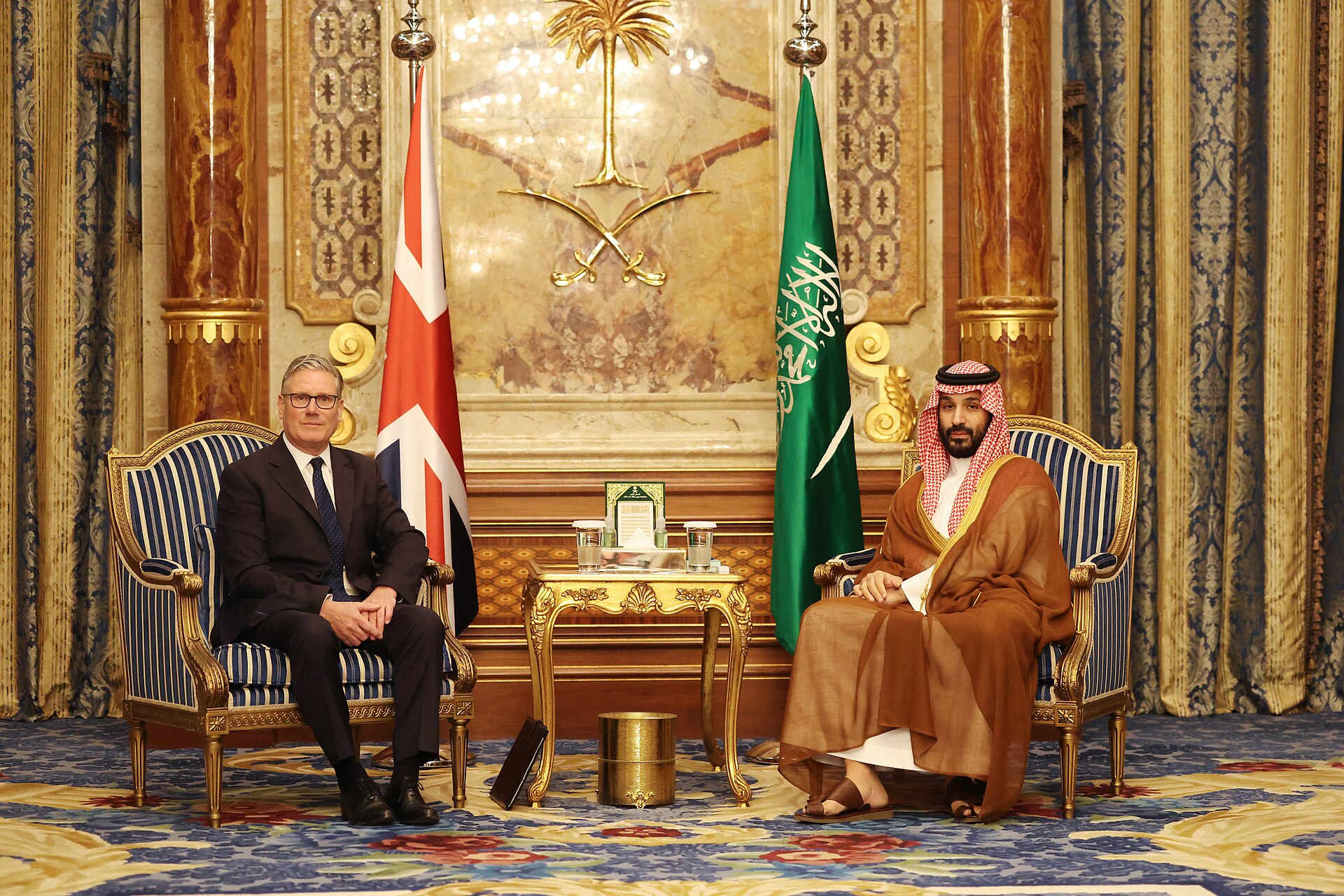
The trade relationship underneath the military deployment is substantial: £16.6 billion in current UK-Saudi bilateral trade, with a target of £30 billion by 2030 and a PIF-UKEF memorandum of understanding worth $6.8 billion. Starmer met MBS in Jeddah on April 8 — four days before refusing the blockade — and the sequencing is difficult to read as coincidental. Cooper’s Mansion House speech laid out Britain’s position with rare clarity: “Lebanon must be included, Hormuz must be fully reopened, no place for tolls.” Every element of that formulation aligns with Saudi interests: Lebanon inclusion (which Saudi Arabia wanted but could not demand publicly, because Netanyahu worked overnight with Washington to exclude it), Hormuz reopening (Saudi Arabia’s existential requirement), and toll rejection (Iran’s proposed $1-per-barrel transit fee would fall disproportionately on Gulf exporters).
The Proxy Diplomat: Does UK Dissent Serve Saudi Interests?
The thesis requires stating plainly: there is no evidence that Saudi Arabia asked Britain to refuse the blockade. There is no leaked cable, no anonymous briefing, no diplomatic back-channel confirmation. What there is, instead, is a structural alignment so precise that it demands examination. MBS cannot publicly oppose Trump’s blockade because the man who granted Saudi Arabia Major Non-NATO Ally status, who signed the $142 billion defense agreement, who controls the Patriot batteries defending Riyadh and Dhahran, is the man who declared the blockade. Opposing Trump is opposing the security umbrella. Every Saudi strategic planner understands that Trump’s threat to withdraw military contingents from non-supporting countries — made explicitly to NATO allies in March — applies with equal or greater force to a non-treaty partner whose entire air defense architecture depends on American hardware and American ammunition.
But Saudi Arabia also cannot support the blockade. The blockade destroys the freedom-of-navigation doctrine that underpins the legal framework Saudi Arabia has relied on for decades to keep its oil moving. It escalates a confrontation with Iran at the precise moment when Saudi interceptor stockpiles cannot sustain another major exchange. It transforms the Strait from a disputed zone into a declared combat zone, with implications for insurance rates, shipping costs, and the commercial viability of every barrel that leaves Ras Tanura or Jubail. The IRGC’s response to escalation has been consistent: when the US strikes Kharg, Iran strikes Yanbu; when the US tightens, Iran hits the infrastructure that pays for Vision 2030.
Into this impossible space steps Britain, which has the credibility to refuse Washington because it is simultaneously hosting Washington’s bomber fleet, defending Saudi cities with British missiles, and building a 40-nation alternative framework that every major US ally except the US itself has joined. The UK refusal does not free Saudi Arabia from its dilemma, but it creates a diplomatic environment in which Saudi silence reads as prudent multilateralism rather than capitulation. If Britain — America’s closest ally, the country Trump just compared to Chamberlain’s appeasement — can refuse the blockade and frame the refusal as a commitment to “freedom of navigation and the opening of the strait,” then Saudi Arabia’s failure to endorse the blockade becomes less conspicuous, less interpretable as defiance.
“The lack of any codified U.S.-Saudi mutual defense treaty raises the risk of a U.S. disengagement or an inadequate settlement with Iran, exposing the kingdom to prolonged instability and Iranian aggression with insufficient U.S. support.”
New Lines Institute, 2026
Whether this constitutes a deliberate proxy arrangement or an emergent alignment of interests is, in a sense, irrelevant. The effect is identical. Britain dissents; Saudi Arabia is shielded. The mechanism works whether or not MBS and Starmer discussed it over coffee in Jeddah on April 8 — though the timing of that meeting, four days before the refusal, is the kind of coincidence that intelligence analysts are trained to distrust.
The Suez Inversion
In October 1956, Britain and France launched a military operation to seize the Suez Canal after Egypt’s Gamal Abdel Nasser nationalized it. The United States, under Dwight Eisenhower, publicly opposed the operation, voted for UN resolutions condemning it, and — the killing blow — denied Britain financial support through the IMF at a moment when sterling was hemorrhaging reserves. Prime Minister Anthony Eden accepted a UN ceasefire. He resigned two months later, broken. The episode permanently recalibrated the “special relationship”: Britain learned it could not act against American wishes in the Middle East and survive the financial consequences.
The 2026 dynamic inverts the 1956 template with uncomfortable precision. The United States is now the escalator in the Middle East — declaring a naval blockade, comparing dissenting allies to appeasers, threatening to withdraw military protection from countries that refuse to participate. Britain is the restrainer, building a multilateral coalition, emphasizing diplomacy, refusing to endorse unilateral action. But the power asymmetry that made 1956 decisive has not reversed. Eisenhower could collapse sterling because the dollar was the world’s reserve currency and Britain’s post-war economy depended on American financial architecture. Trump can threaten to withdraw Patriot batteries from Saudi Arabia, pull military contingents from European allies, and impose tariff penalties on non-compliant nations — tools of coercion that, if less elegant than Eisenhower’s IMF maneuver, are no less effective.
Britain in 2026 has no equivalent lever. What it has instead is the 40-nation coalition, the minehunting drones, the Sky Sabre battery on Saudi soil, and the argument — which Cooper has made explicitly — that a blockade makes the Strait less navigable, not more. Starmer cannot force Trump to abandon the blockade any more than Trump can force Starmer to join it. But the 1956 lesson cuts both ways: Eden’s failure was not that he escalated, but that he escalated without securing American support. Trump declared a blockade that most of the Western alliance has refused to join — and unlike Eden, who at least had France, Trump’s coalition in the Gulf amounts to the UAE, Bahrain, and a collection of destroyers whose captains are receiving IRGC “last warning” radio transmissions as they transit the Strait.
Does the $4.76 Billion Arms Package Confirm Saudi Arabia’s Isolation?
On April 12 — the same day Britain refused the blockade — Washington announced a $4.76 billion emergency arms package. The recipients were the UAE, Kuwait, and Jordan. Saudi Arabia, the country with the most depleted air defenses, the largest oil infrastructure exposure, and the $142 billion defense cooperation agreement, was not on the list. The package included Patriot reload rounds — precisely the munitions Saudi Arabia’s depleted batteries need most urgently. Those rounds went to Abu Dhabi and Kuwait City instead.
The omission could be procedural: Saudi Arabia’s procurement pipeline may operate on different timelines, the $142 billion agreement may already cover reload provisions, and the kingdom may have existing stocks of THAAD and Patriot components that the smaller Gulf states lack. But in a war where Saudi Arabia has burned through the vast majority of its PAC-3 inventory since March 3 — with the Camden, Arkansas production line manufacturing roughly 620 rounds per year against a remaining stock of 400 — the optics of sending Patriot rounds to everyone except the country consuming them fastest are difficult to explain away as logistics.
Read alongside Saudi Arabia’s absence from every Hormuz framework — the 38-nation statement, the US coalition, the UK alternative — the arms package omission suggests something more troubling for Riyadh. Saudi Arabia’s position in the American security architecture may be shifting from anchor client to leverage target. A country that depends entirely on American interceptors and has no binding treaty guaranteeing their supply is a country that can be pressured by controlling the supply chain. Whether Washington is consciously applying that pressure — withholding Patriot rounds to incentivize Saudi endorsement of the blockade — or merely prioritizing allies who have publicly committed to the US position, the effect on Saudi strategic calculations is identical.
| System | Operator | Command Authority | Status |
|---|---|---|---|
| Patriot PAC-3 MSE | Saudi/US joint | CENTCOM engagement authority | ~400 rounds remaining (~86% depleted) |
| Sky Sabre / CAMM | Royal Artillery (UK) | British command | Deployed March 30; 24 simultaneous targets; 25km range |
| Pakistani military advisors | Pakistan Army | Pakistani command / SMDA framework | ~13,000 troops + 10 jets at King Abdulaziz AB (April 11) |
| THAAD | US Army | CENTCOM | Operational; limited inventory |
How Iran Reads the Fracture
The IRGC’s information operation since February 28 has pursued a single strategic objective with remarkable consistency: isolate the United States within its own alliance structure. The selective passage regime — allowing Chinese-brokered LNG tankers through while stopping Western-flagged vessels, permitting “harmless passage of civilian vessels” while issuing “last warning” radio calls to the USS Frank E. Petersen Jr. — was designed to create exactly the fracture that materialized on April 12. Iran did not need to close the Strait entirely. It needed to create conditions under which America’s allies would disagree about how to reopen it.
Iranian state media noted the UK coalition fracture as validation of Tehran’s strategic positioning within hours of Britain’s announcement. The framing was predictable but not wrong: the isolation of American unilateralism within the Western alliance is precisely what Iran’s selective passage architecture was engineered to produce. When Spain’s foreign minister says NATO has “no involvement in this war” and the allies “have not been informed or consulted,” he is reciting the IRGC’s preferred script — whether he knows it or not.
Iran’s ten-point peace plan includes, as Point 7, a requirement for IRGC “coordination” over Hormuz as a formal treaty provision. Tehran has positioned Hormuz authority not as a post-war outcome to be negotiated but as a ceasefire precondition — meaning Iran wants international recognition of its role in managing Strait transit before it agrees to stop fighting. The UK-US fracture serves this goal by making a unified Western position on Hormuz impossible. Washington says blockade. London says multilateral mine clearance. Berlin, Madrid, Rome, Tokyo, Canberra, and Seoul say they were never consulted. Into that cacophony, Tehran offers a simple proposition: we will open the Strait on our terms, to ships we approve, on a schedule we control. The longer the Western alliance argues about how to respond, the more Iran’s de facto authority over the waterway calcifies into something resembling a new normal.
The Three-Command Problem
Saudi Arabian airspace is now defended by three separate military forces operating under three separate command authorities with three separate political masters who, as of April 12, publicly disagree about the central strategic question of the war. American Patriot batteries at Prince Sultan Air Base and THAAD systems operate under CENTCOM engagement authority — meaning a US four-star general in Tampa, Florida, or at Al Udeid in Qatar, determines when and whether to fire. British Sky Sabre operates under Royal Artillery command — meaning a British officer on Saudi soil makes the engagement decision, reporting to London. Pakistani forces at King Abdulaziz Air Base operate under their own command structure within the Saudi-Pakistan Strategic Defense and Military Agreement framework.
There is no unified command. There is no combined air defense operations center integrating American, British, and Pakistani systems into a single engagement picture. When the IRGC launches its next barrage — and the pattern since March 3 suggests it is a question of when, not whether — three separate command chains will make three separate engagement decisions based on three separate sets of political constraints. The American commander must consider whether his government, which just declared a blockade, wants to expend scarce PAC-3 rounds defending a country that has not endorsed that blockade. The British commander must consider whether her government, which just refused the blockade, authorizes the use of CAMM rounds against Iranian missiles that may have been launched in retaliation for the blockade Britain explicitly rejected. The Pakistani commander must consider whether Islamabad — which is simultaneously serving as Iran’s ceasefire interlocutor — wants its forces shooting down Iranian ordnance.
This is not a hypothetical coordination problem. It is the lived reality of Saudi air defense in April 2026, and the UK-US split makes it worse. Before April 12, the fiction of a unified Western position at least provided a shared political framework within which American and British forces could coordinate. That fiction is now dead. The Sky Sabre battery is British, it is on Saudi soil, and its government disagrees with the country that provides the other air defense systems about whether the war should be escalated or wound down. Saudi Arabia sits underneath this arrangement — militarily dependent on both, aligned with neither, unable to choose — while Iranian ballistic missiles continue to arrive at a rate that has consumed 86% of the PAC-3 stockpile in forty-five days.
FAQ
Has the UK withdrawn any military assets from Saudi Arabia or the Gulf?
No. Britain’s refusal to join the blockade did not involve any drawdown of deployed forces. The Sky Sabre battery remains operational in Saudi Arabia under Royal Artillery command. RFA Cardigan Bay continues to serve as the Royal Navy’s forward staging base in the Gulf, and the autonomous minehunting drones — Harrier surface and Iver4 subsea systems — remain pre-deployed to Hormuz. RAF Fairford in Gloucestershire also continues to host US heavy bombers conducting strikes against Iranian targets, a fact that complicates any characterization of Britain as disengaged from the conflict. The UK’s April 12 position was specifically about the naval blockade designation, not about broader military involvement in the war.
What is the difference between a blockade and the UK’s proposed mine-clearance operation?
Under international law, a blockade is an act of war — it requires a belligerent to declare that no vessels may enter or leave designated ports or coastlines, enforced by naval force. The UK’s 40-nation framework is oriented around clearing Iranian-laid mines, providing military escort to commercial shipping, and pressuring Tehran diplomatically to restore unconditional transit. The operational distinction is that mine clearance opens a channel for all commercial vessels, while a blockade gives the enforcing navy the authority to stop, inspect, and turn back ships at its discretion — potentially including vessels carrying Iranian oil to China, which would trigger a confrontation with Beijing that most European and Asian capitals want to avoid.
Could Saudi Arabia join the UK framework instead of the US blockade?
Theoretically, yes — the UK’s 40-nation coalition has not published a closed membership list, and several Gulf states are understood to be participating informally. But public Saudi accession to the British framework would read as an explicit rejection of the American approach, which Riyadh cannot afford given its dependence on US Patriot systems. The more likely path is continued Saudi silence: participating in neither framework while accepting the practical benefits of both. British mine clearance helps Saudi tankers transit the Strait; American naval presence deters Iranian interdiction of those tankers. Saudi Arabia gets the outputs of both frameworks without endorsing the inputs of either.
Why did Trump compare Starmer to Chamberlain?
Trump’s comparison to Neville Chamberlain — “whose name is synonymous with the appeasement of Adolf Hitler” — was posted within hours of Britain’s April 12 announcement. The historical parallel is inapt for reasons that would require a separate article to fully enumerate, but the core distortion is this: Chamberlain at Munich in 1938 conceded territory (Czechoslovakia’s Sudetenland) to an aggressor in exchange for a promise of peace. Starmer in 2026 refused to join an escalation while maintaining 40 allied nations in a coalition, keeping British air defense batteries deployed in theater, and hosting the US bomber fleet on British soil. The comparison functioned as domestic political messaging aimed at framing any dissent from the blockade as weakness — a rhetorical pattern Trump applied equally to Germany, Spain, and South Korea when they declined participation.
What happens to Saudi oil exports if neither the blockade nor the UK coalition succeeds in reopening Hormuz?
Saudi Arabia’s contingency is the East-West Pipeline to Yanbu on the Red Sea, which has an effective throughput of 5.9-7 million barrels per day — covering roughly 80-85% of pre-war Saudi exports but leaving a structural gap of 1.1-1.6 million barrels per day that can only transit via Hormuz. The Yanbu route also faces its own vulnerability: Houthi activity in the Red Sea and the IRGC’s demonstrated willingness to strike pipeline infrastructure (the East-West pumping station was hit on April 8, after the ceasefire). If Hormuz remains functionally closed through the summer, Saudi Arabia faces a scenario in which neither export corridor is fully reliable, the fiscal break-even price of $108-111 per barrel (Bloomberg, PIF-inclusive) may not be met despite elevated crude prices, and the kingdom’s ability to fund Vision 2030 commitments depends on pipeline capacity that was designed as a backup, not a primary artery. The full strategic implications of Saudi Arabia’s inability to align with any of the three competing Hormuz security architectures are examined in Three Frameworks, One Strait. The Chinese security dependency analysis carries a further layer: the Chinese satellite TEE-01B, operating under IRGC tasking, imaged Prince Sultan Air Base days before the KC-135 strikes — a revelation that complicates how Saudi Arabia can calibrate its relationship with Beijing while remaining dependent on US Patriot coverage.